Basics of Cognitive-Behavioral Therapy: The Model and The Techniques Kevin D. Arnold, Ph.D., ABPP Director, The Center for Cognitive and Behavioral Therapy of Greater Columbus
The Basic CBT Model Psychopathology is bio-psycho-social Feelings can be managed through addressing cognitions and behaviors Psychopathology has deficits in behaviors and maladaptive or distorted cognitions Underlying assumptions have been learned in an “if-then” format Schemas create a construction that is maladaptive now, but not when first developed
Cognitive Triad Distorted Thoughts are those that are mood congruent but not reflective of the evidence in life These are sometimes referred to as Automatic Thoughts The thoughts fit basically into three categories:  Self, Others/World, or Future
Cognitive Blockade Mood or other pathologic processes create a filtering of information that is state-dependent Information, both internal and external, is filtered so that only mood congruent information is a) perceived, or b) valued. Overcoming the impact of the blockade is a major goal of CBT
Treatment Method: General Cognitive Therapy is collaborative so that the patient and therapist are a team working on problems together Cognitive Therapy is active and engages the patient through a treatment relationship that encourages but respects the patient through empathy Cognitive Therapy uses the Socratic Method, using questions whenever possible
Socratic Method Questions are used in CBT to  Help the patient become aware of thoughts Examine thoughts to identify distortions Replace distortions with health and evidenced based ideas Plan to develop new thinking patterns
Collaborative Therapy is guided by a team approach to problems The treatment conceptualization is created collaboratively as a basis for the treatment methods The structure of the sessions is agreed upon as a way of keeping the collaborative work moving Both agree on structure and direction
Structure and Direction All sessions use the following template Setting an agenda Bridging back to the previous session Setting a target for the session Application of the CBT techniques to the target Summarization of the session Setting homework Feedback on the session
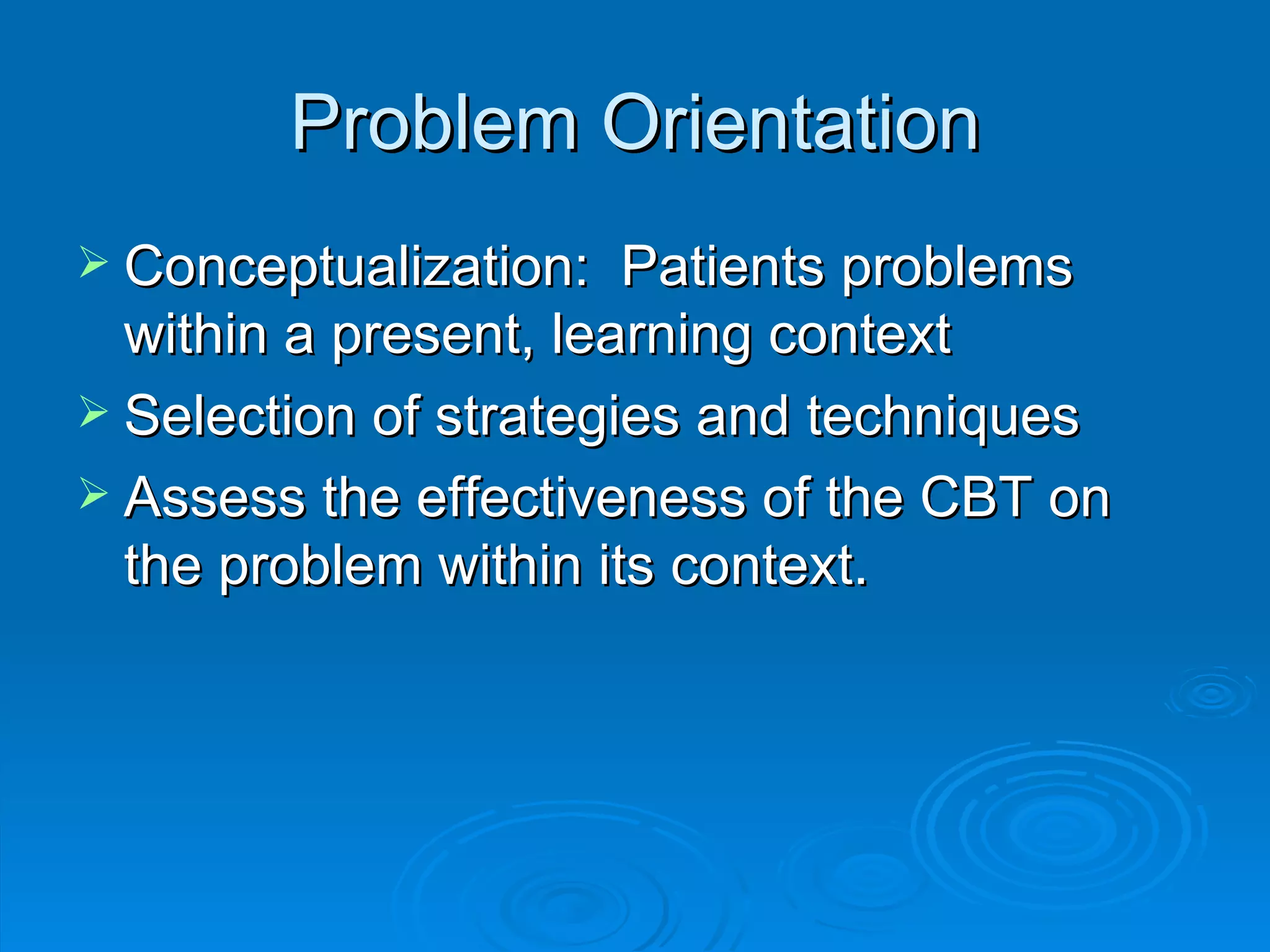
Problem Orientation Conceptualization:  Patients problems within a present, learning context Selection of strategies and techniques Assess the effectiveness of the CBT on the problem within its context.
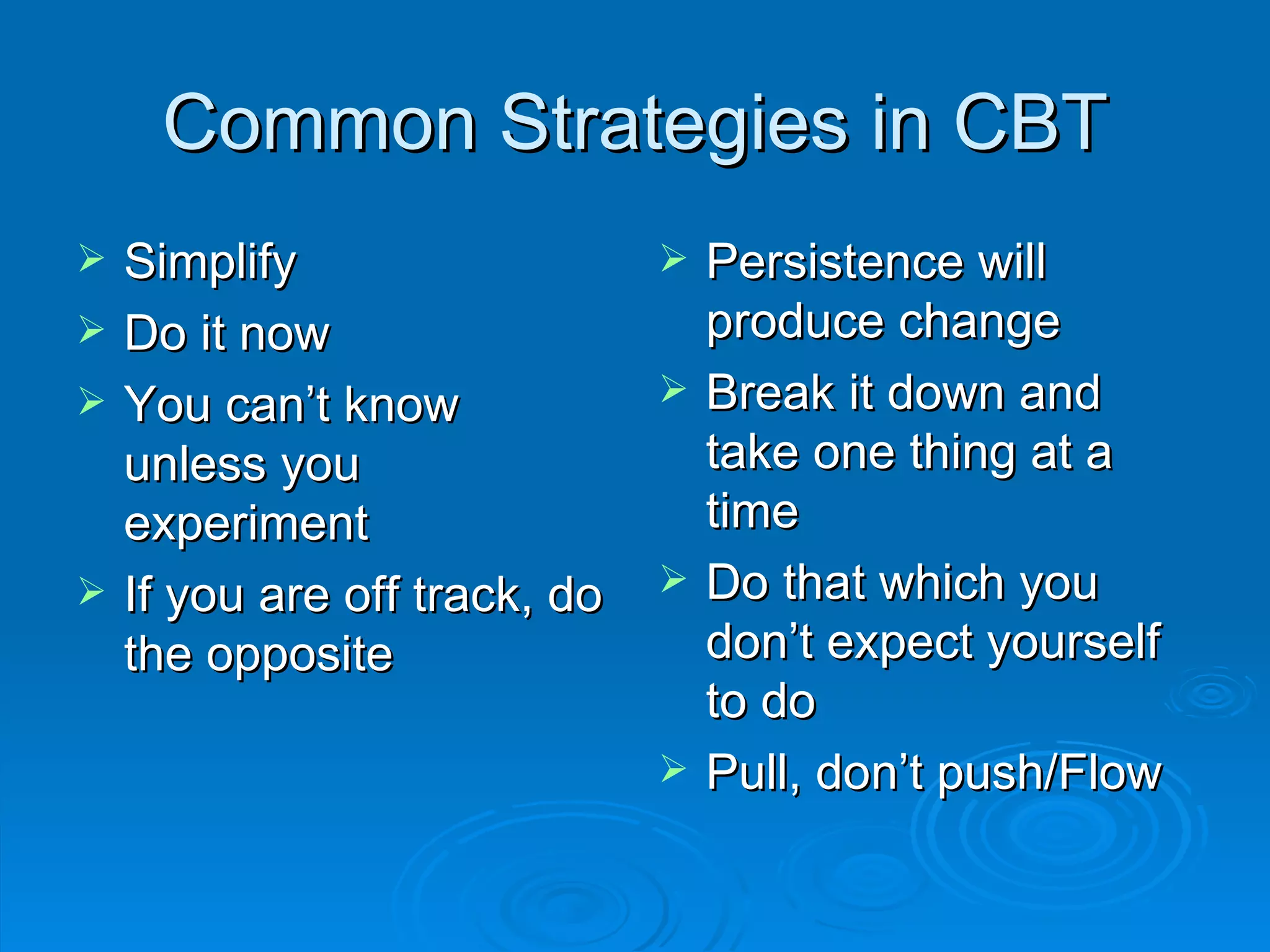
Common Strategies in CBT Simplify Do it now You can’t know unless you experiment If you are off track, do the opposite Persistence will produce change Break it down and take one thing at a time Do that which you don’t expect yourself to do Pull, don’t push/Flow
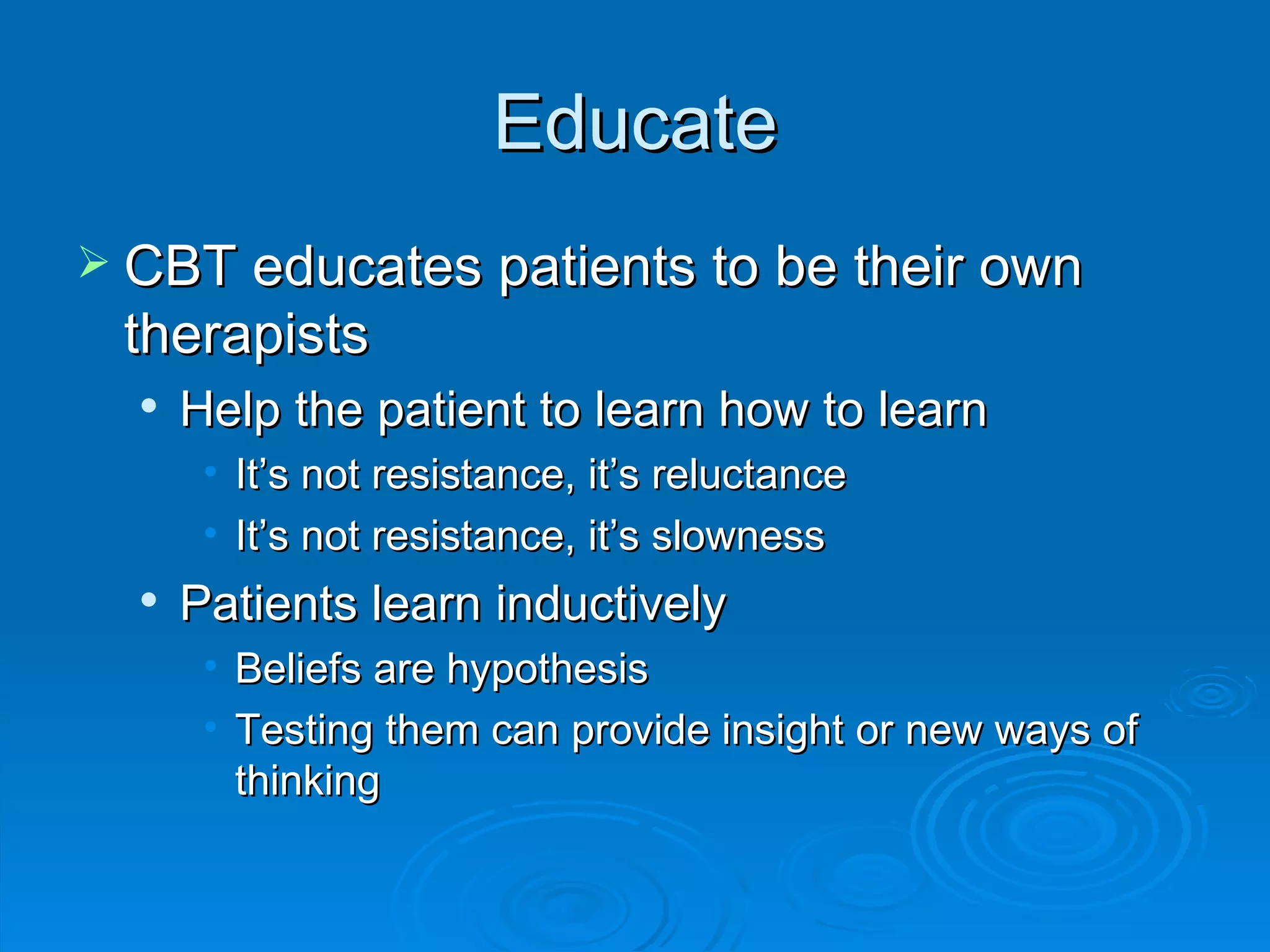
Educate CBT educates patients to be their own therapists Help the patient to learn how to learn It’s not resistance, it’s reluctance It’s not resistance, it’s slowness Patients learn inductively Beliefs are hypothesis Testing them can provide insight or new ways of thinking
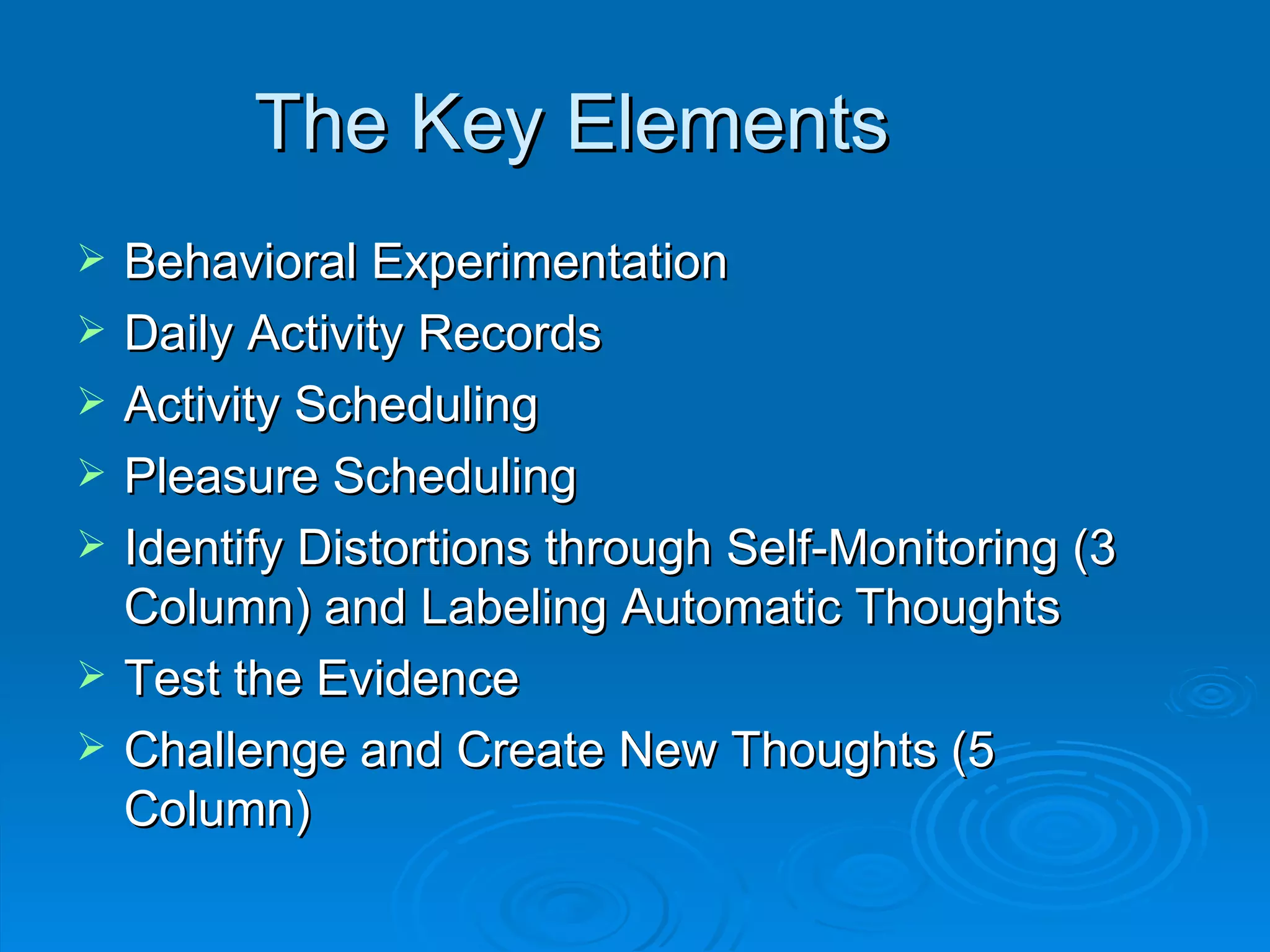
The Key Elements Behavioral Experimentation Daily Activity Records Activity Scheduling Pleasure Scheduling Identify Distortions through Self-Monitoring (3 Column) and Labeling Automatic Thoughts Test the Evidence Challenge and Create New Thoughts (5 Column)
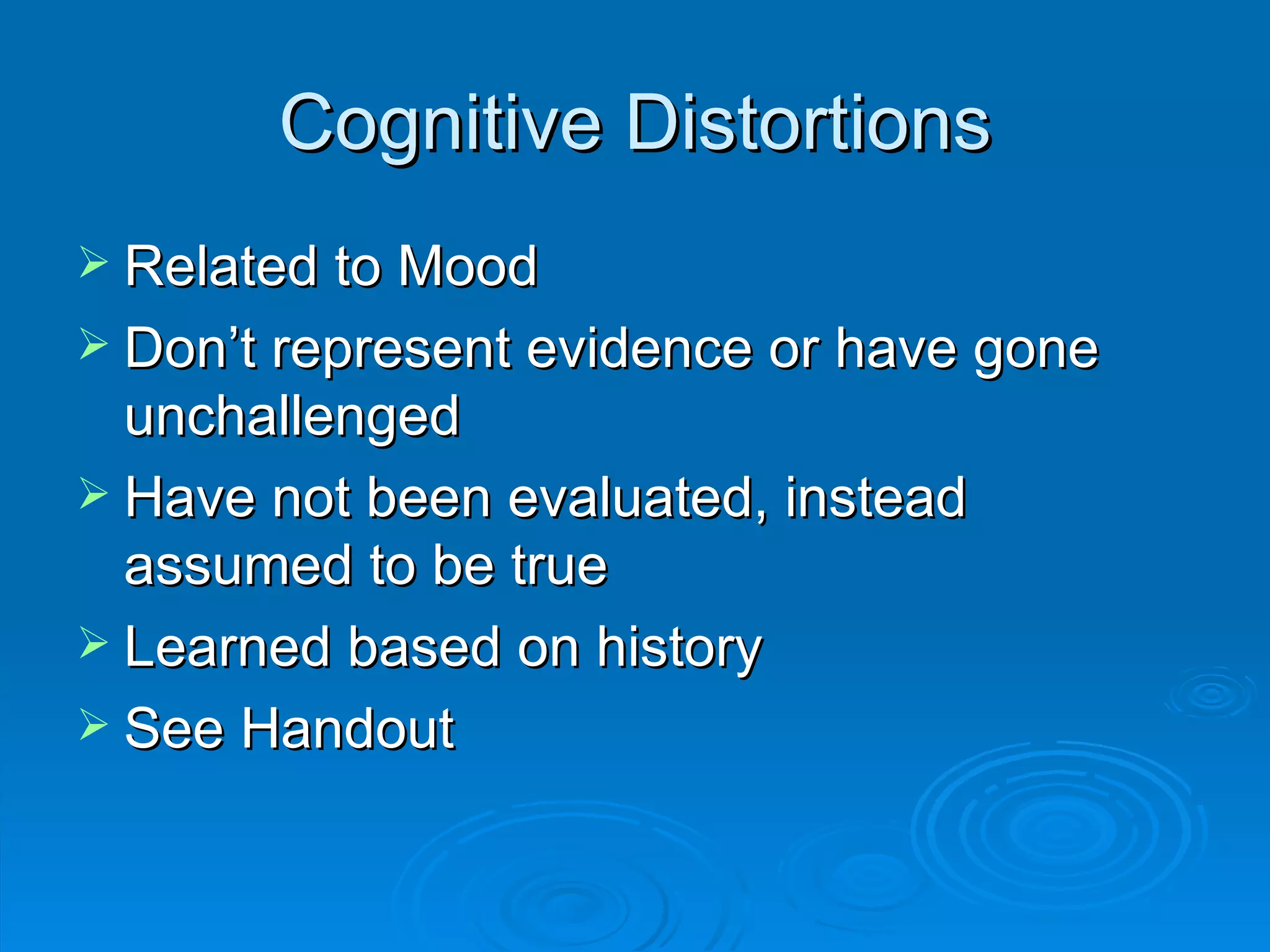
Cognitive Distortions Related to Mood Don’t represent evidence or have gone unchallenged Have not been evaluated, instead assumed to be true Learned based on history See Handout
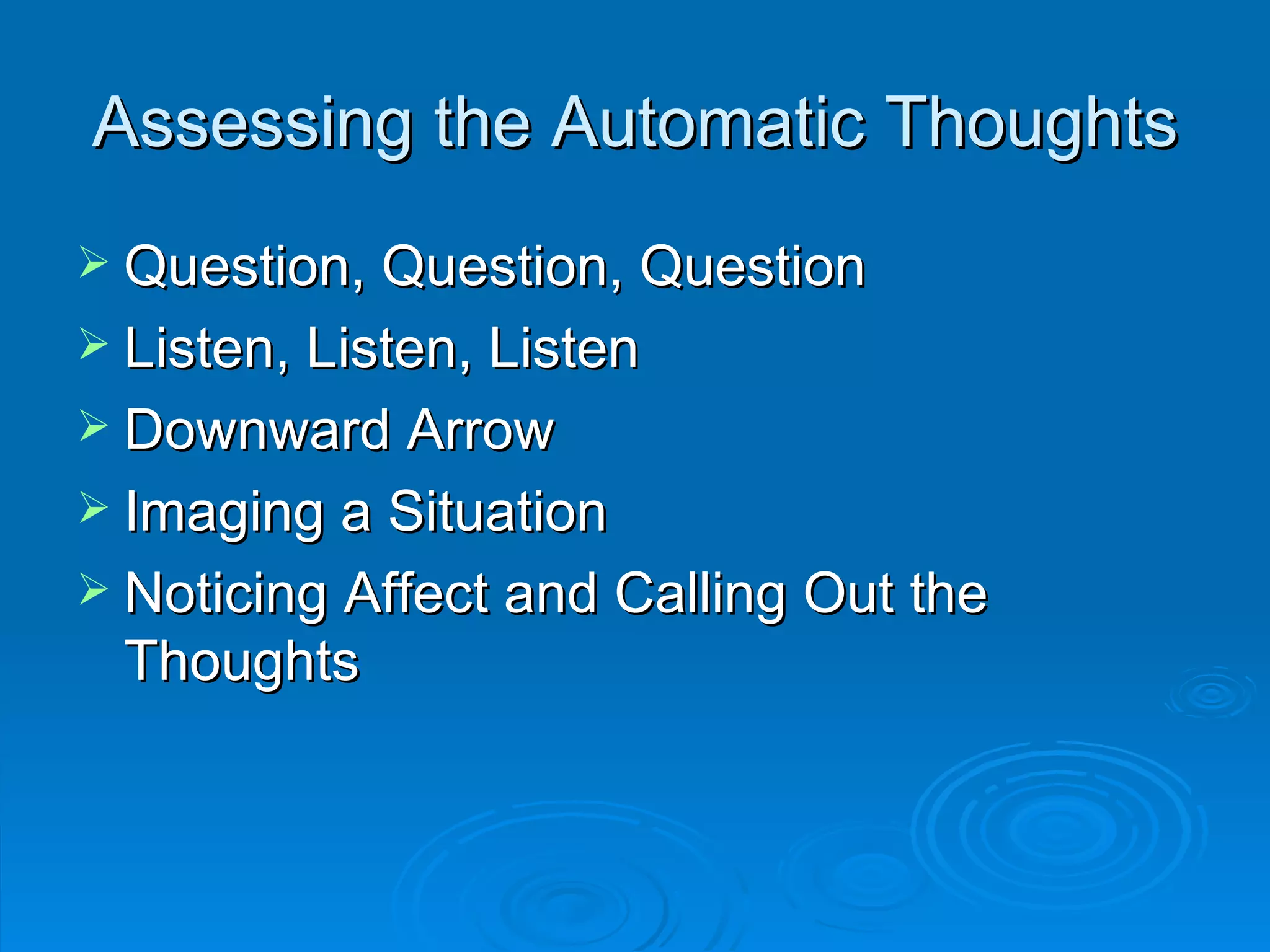
Assessing the Automatic Thoughts Question, Question, Question Listen, Listen, Listen Downward Arrow Imaging a Situation Noticing Affect and Calling Out the Thoughts
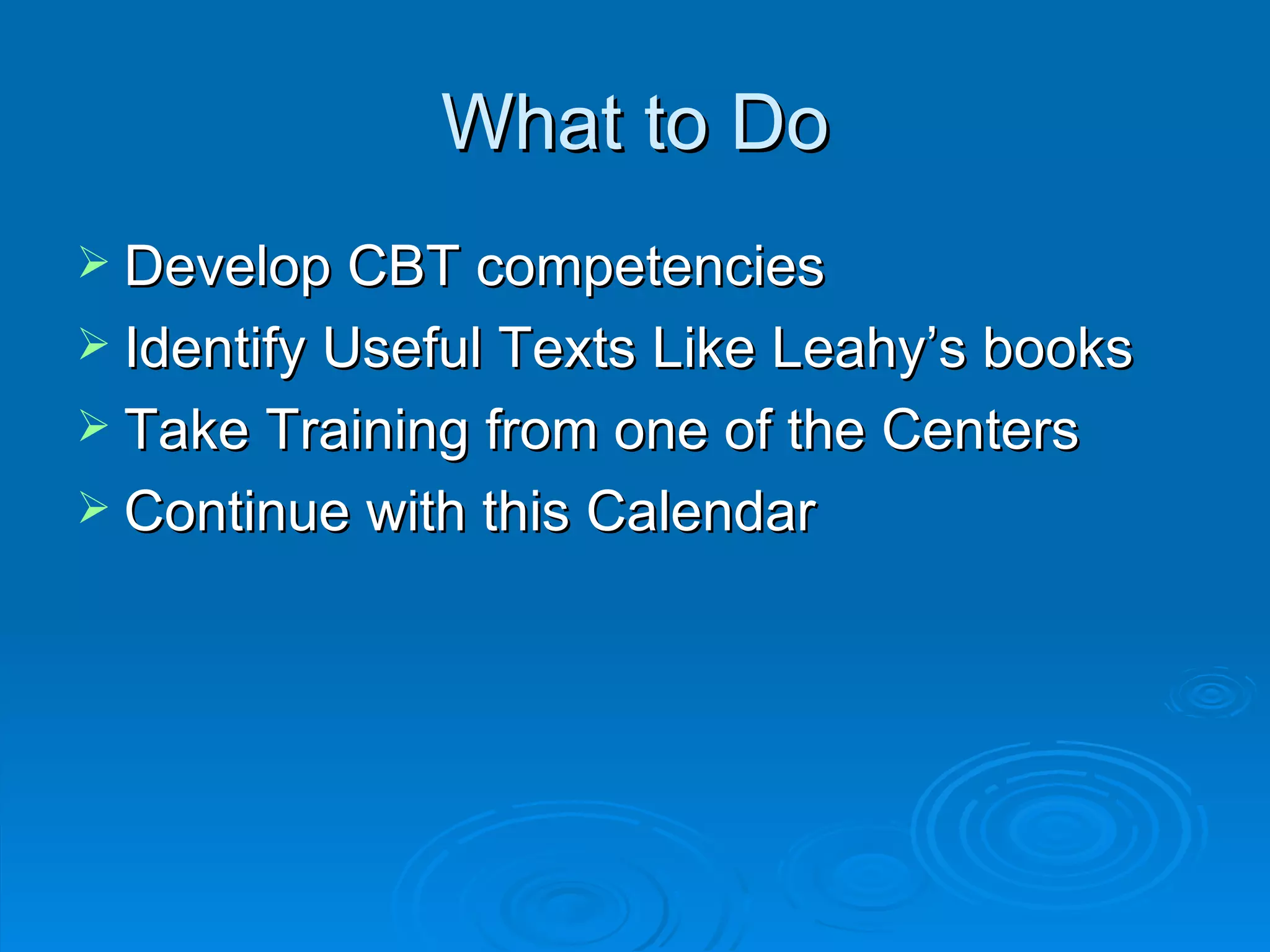
What to Do Develop CBT competencies Identify Useful Texts Like Leahy’s books Take Training from one of the Centers Continue with this Calendar

Basics of cognitive behavioral therapy

  • 1.
    Basics of Cognitive-BehavioralTherapy: The Model and The Techniques Kevin D. Arnold, Ph.D., ABPP Director, The Center for Cognitive and Behavioral Therapy of Greater Columbus
  • 2.
    The Basic CBTModel Psychopathology is bio-psycho-social Feelings can be managed through addressing cognitions and behaviors Psychopathology has deficits in behaviors and maladaptive or distorted cognitions Underlying assumptions have been learned in an “if-then” format Schemas create a construction that is maladaptive now, but not when first developed
  • 3.
    Cognitive Triad DistortedThoughts are those that are mood congruent but not reflective of the evidence in life These are sometimes referred to as Automatic Thoughts The thoughts fit basically into three categories: Self, Others/World, or Future
  • 4.
    Cognitive Blockade Moodor other pathologic processes create a filtering of information that is state-dependent Information, both internal and external, is filtered so that only mood congruent information is a) perceived, or b) valued. Overcoming the impact of the blockade is a major goal of CBT
  • 5.
    Treatment Method: GeneralCognitive Therapy is collaborative so that the patient and therapist are a team working on problems together Cognitive Therapy is active and engages the patient through a treatment relationship that encourages but respects the patient through empathy Cognitive Therapy uses the Socratic Method, using questions whenever possible
  • 6.
    Socratic Method Questionsare used in CBT to Help the patient become aware of thoughts Examine thoughts to identify distortions Replace distortions with health and evidenced based ideas Plan to develop new thinking patterns
  • 7.
    Collaborative Therapy isguided by a team approach to problems The treatment conceptualization is created collaboratively as a basis for the treatment methods The structure of the sessions is agreed upon as a way of keeping the collaborative work moving Both agree on structure and direction
  • 8.
    Structure and DirectionAll sessions use the following template Setting an agenda Bridging back to the previous session Setting a target for the session Application of the CBT techniques to the target Summarization of the session Setting homework Feedback on the session
  • 9.
    Problem Orientation Conceptualization: Patients problems within a present, learning context Selection of strategies and techniques Assess the effectiveness of the CBT on the problem within its context.
  • 10.
    Common Strategies inCBT Simplify Do it now You can’t know unless you experiment If you are off track, do the opposite Persistence will produce change Break it down and take one thing at a time Do that which you don’t expect yourself to do Pull, don’t push/Flow
  • 11.
    Educate CBT educatespatients to be their own therapists Help the patient to learn how to learn It’s not resistance, it’s reluctance It’s not resistance, it’s slowness Patients learn inductively Beliefs are hypothesis Testing them can provide insight or new ways of thinking
  • 12.
    The Key ElementsBehavioral Experimentation Daily Activity Records Activity Scheduling Pleasure Scheduling Identify Distortions through Self-Monitoring (3 Column) and Labeling Automatic Thoughts Test the Evidence Challenge and Create New Thoughts (5 Column)
  • 13.
    Cognitive Distortions Relatedto Mood Don’t represent evidence or have gone unchallenged Have not been evaluated, instead assumed to be true Learned based on history See Handout
  • 14.
    Assessing the AutomaticThoughts Question, Question, Question Listen, Listen, Listen Downward Arrow Imaging a Situation Noticing Affect and Calling Out the Thoughts
  • 15.
    What to DoDevelop CBT competencies Identify Useful Texts Like Leahy’s books Take Training from one of the Centers Continue with this Calendar