
Coastal Hazards
Md Asif Hasan
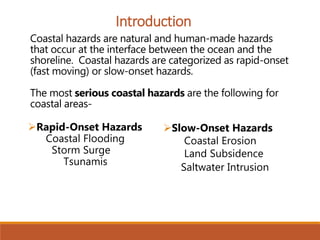
Coastal hazards are natural and human-made hazards
that occur at the interface between the ocean and the
shoreline. Coastal hazards are categorized as rapid-onset
(fast moving) or slow-onset hazards.
The most serious coastal hazards are the following for
coastal areas-
Introduction
Rapid-Onset Hazards
Coastal Flooding
Storm Surge
Tsunamis
Slow-Onset Hazards
Coastal Erosion
Land Subsidence
Saltwater Intrusion
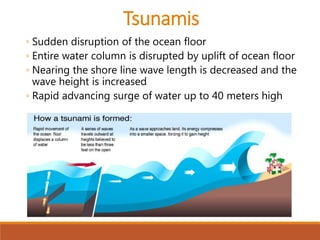
◦ Sudden disruption of the ocean floor
◦ Entire water column is disrupted by uplift of ocean floor
◦ Nearing the shore line wave length is decreased and the
wave height is increased
◦ Rapid advancing surge of water up to 40 meters high
Tsunamis
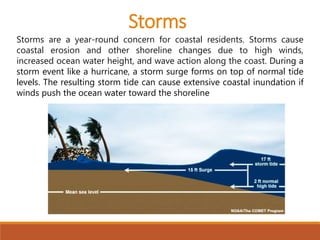
Storms are a year-round concern for coastal residents. Storms cause
coastal erosion and other shoreline changes due to high winds,
increased ocean water height, and wave action along the coast. During a
storm event like a hurricane, a storm surge forms on top of normal tide
levels. The resulting storm tide can cause extensive coastal inundation if
winds push the ocean water toward the shoreline
Storms
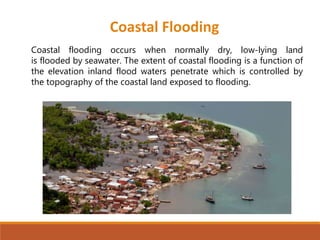
Coastal flooding occurs when normally dry, low-lying land
is flooded by seawater. The extent of coastal flooding is a function of
the elevation inland flood waters penetrate which is controlled by
the topography of the coastal land exposed to flooding.
Coastal Flooding
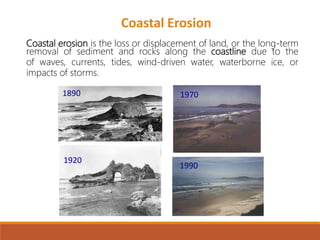
1890
1920
1970
1990
Coastal Erosion
Coastal erosion is the loss or displacement of land, or the long-term
removal of sediment and rocks along the coastline due to the
of waves, currents, tides, wind-driven water, waterborne ice, or
impacts of storms.
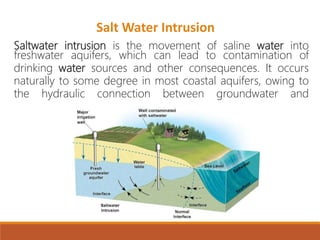
Saltwater intrusion is the movement of saline water into
freshwater aquifers, which can lead to contamination of
drinking water sources and other consequences. It occurs
naturally to some degree in most coastal aquifers, owing to
the hydraulic connection between groundwater and
Salt Water Intrusion
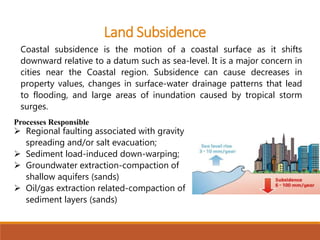
Coastal subsidence is the motion of a coastal surface as it shifts
downward relative to a datum such as sea-level. It is a major concern in
cities near the Coastal region. Subsidence can cause decreases in
property values, changes in surface-water drainage patterns that lead
to flooding, and large areas of inundation caused by tropical storm
surges.
Processes Responsible
 Regional faulting associated with gravity
spreading and/or salt evacuation;
 Sediment load-induced down-warping;
 Groundwater extraction-compaction of
shallow aquifers (sands)
 Oil/gas extraction related-compaction of
sediment layers (sands)
Land Subsidence
Dams - built so less sediment reaches the mouth of rivers
◦ Changes beaches
Artificial structures - built to stabilize beaches
◦ Reduces sediment transport down shore
◦ Dumping tons of sand up-current from beach, doesn’t work
Groin – short wall or dam built from a beach to impede longshore
currents and force sand deposition
◦ Problem erosion breaks down the groin
◦ A field of groins are built
Jetties – Built in pairs on either side of a river or harbor entrance
◦ Confines the flow of water into a narrow zone
◦ Keeping the sand in motion and inhibiting its deposition in the
navigation channel
Human Alterations on Coastal Areas
 Mitigating some of the large impacts from cyclones and flooding
 Improving emergency response in the coastal region
 Rehabilitation and upgrading of protection polders to protect the
areas from tidal flooding and frequent storm surges
 Well improvements of agricultural production by reducing saline
water intrusion in selected polders
 Building mitigation infrastructure to strengthen emergency
Preparedness and reducing the vulnerability of the coastal
population
 Responding to emergency events and to strengthen systems to
reduce the vulnerability
 Delivering reliable weather, water, and climate information services
and improve access to such services
Mitigation Measures
Coastal hazard

Coastal hazard

  • 1.
  • 2.
    Coastal hazards arenatural and human-made hazards that occur at the interface between the ocean and the shoreline. Coastal hazards are categorized as rapid-onset (fast moving) or slow-onset hazards. The most serious coastal hazards are the following for coastal areas- Introduction Rapid-Onset Hazards Coastal Flooding Storm Surge Tsunamis Slow-Onset Hazards Coastal Erosion Land Subsidence Saltwater Intrusion
  • 3.
    ◦ Sudden disruptionof the ocean floor ◦ Entire water column is disrupted by uplift of ocean floor ◦ Nearing the shore line wave length is decreased and the wave height is increased ◦ Rapid advancing surge of water up to 40 meters high Tsunamis
  • 4.
    Storms are ayear-round concern for coastal residents. Storms cause coastal erosion and other shoreline changes due to high winds, increased ocean water height, and wave action along the coast. During a storm event like a hurricane, a storm surge forms on top of normal tide levels. The resulting storm tide can cause extensive coastal inundation if winds push the ocean water toward the shoreline Storms
  • 5.
    Coastal flooding occurswhen normally dry, low-lying land is flooded by seawater. The extent of coastal flooding is a function of the elevation inland flood waters penetrate which is controlled by the topography of the coastal land exposed to flooding. Coastal Flooding
  • 6.
    1890 1920 1970 1990 Coastal Erosion Coastal erosionis the loss or displacement of land, or the long-term removal of sediment and rocks along the coastline due to the of waves, currents, tides, wind-driven water, waterborne ice, or impacts of storms.
  • 7.
    Saltwater intrusion isthe movement of saline water into freshwater aquifers, which can lead to contamination of drinking water sources and other consequences. It occurs naturally to some degree in most coastal aquifers, owing to the hydraulic connection between groundwater and Salt Water Intrusion
  • 8.
    Coastal subsidence isthe motion of a coastal surface as it shifts downward relative to a datum such as sea-level. It is a major concern in cities near the Coastal region. Subsidence can cause decreases in property values, changes in surface-water drainage patterns that lead to flooding, and large areas of inundation caused by tropical storm surges. Processes Responsible  Regional faulting associated with gravity spreading and/or salt evacuation;  Sediment load-induced down-warping;  Groundwater extraction-compaction of shallow aquifers (sands)  Oil/gas extraction related-compaction of sediment layers (sands) Land Subsidence
  • 9.
    Dams - builtso less sediment reaches the mouth of rivers ◦ Changes beaches Artificial structures - built to stabilize beaches ◦ Reduces sediment transport down shore ◦ Dumping tons of sand up-current from beach, doesn’t work Groin – short wall or dam built from a beach to impede longshore currents and force sand deposition ◦ Problem erosion breaks down the groin ◦ A field of groins are built Jetties – Built in pairs on either side of a river or harbor entrance ◦ Confines the flow of water into a narrow zone ◦ Keeping the sand in motion and inhibiting its deposition in the navigation channel Human Alterations on Coastal Areas
  • 10.
     Mitigating someof the large impacts from cyclones and flooding  Improving emergency response in the coastal region  Rehabilitation and upgrading of protection polders to protect the areas from tidal flooding and frequent storm surges  Well improvements of agricultural production by reducing saline water intrusion in selected polders  Building mitigation infrastructure to strengthen emergency Preparedness and reducing the vulnerability of the coastal population  Responding to emergency events and to strengthen systems to reduce the vulnerability  Delivering reliable weather, water, and climate information services and improve access to such services Mitigation Measures