Introduction
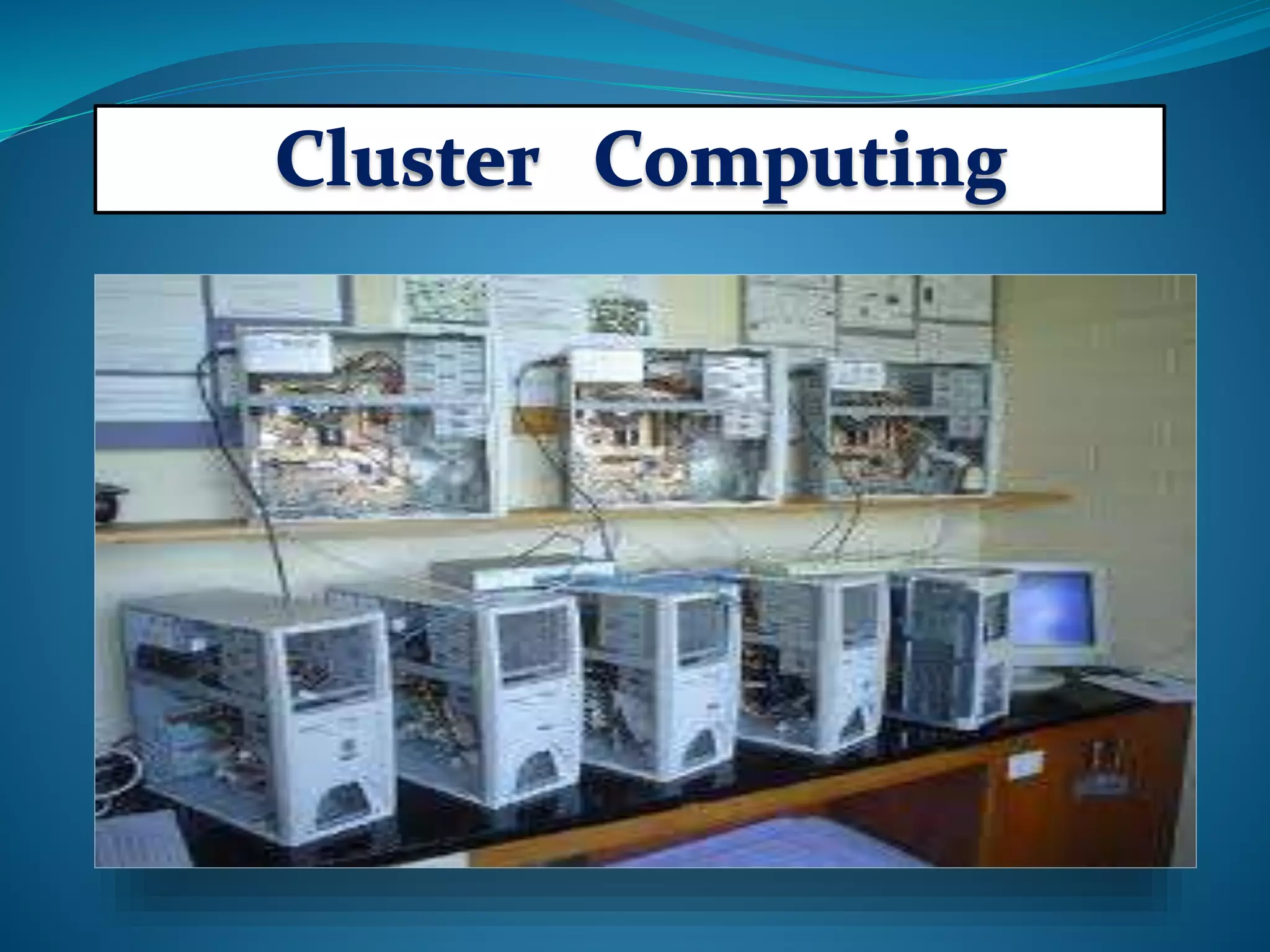
Clustering is the use of multiple computers, storage
devices , and redundant interconnections , to form what
appears to users as a singly highly available system .
Computer cluster technology puts clusters of systems
together to provide better system reliability and
performance .
Definition
A cluster is a type of parallel or distributed processing system ,
which consists of a collection of interconnected stand alone
computers cooperatively working together as a single integrated
computing resource .
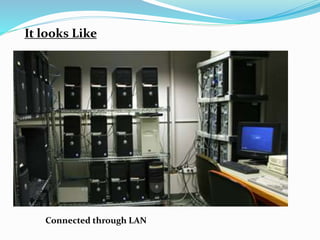
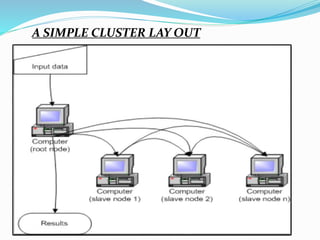
It looks Like
Connected through LAN
A SIMPLE CLUSTER LAY OUT
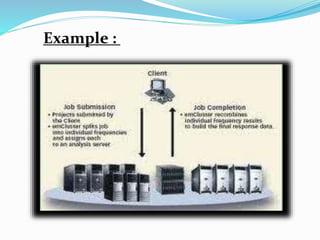
Example : -
Clusters Classification 1
This type of Cluster classification based on
application Target ,
High Availability (HA) Clusters
Mission Critical applications
Clusters Classification 2
This type Clusters classification based on Node
Ownership are again classified into two
subcategories : -
Dedicated clusters
Non-dedicated clusters
Clusters Classification 3
This type of classification based on Node Architecture..
Clusters of PCs ( Cops)
Clusters of Workstations ( COWs)
Clusters Classification 4
This type of classification based on node OS Type..
Linux Clusters (Beowulf)
Solaris Clusters (Berkeley NOW)
NT Clusters (HPVM)
AIX Clusters (IBM SP2)
SCO/Compaq Clusters (UnixWare)
Digital VMS Clusters, HP clusters
Clusters Classification 5
This type of classification based on node components
architecture & configuration (Processor Arch, Node
Type PC/Workstation.. & OS: Linux/NT..):-
Homogeneous Clusters
Heterogeneous Clusters
1) Workload Consolidation/Common Management
Domain Cluster
2) High Availability or Failover Clusters
3) Load Balancing Clusters
4) Parallel / Distributed Processing Clusters
Types
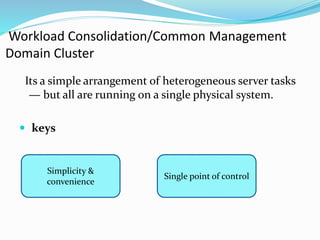
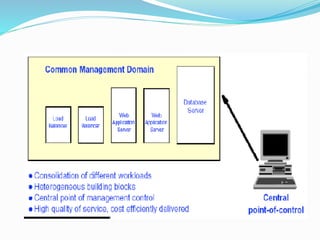
Workload Consolidation/Common Management
Domain Cluster
Its a simple arrangement of heterogeneous server tasks
— but all are running on a single physical system.
 keys
Simplicity &
convenience
Single point of control
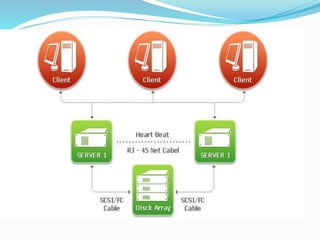
These clusters are designed to provide
 uninterrupted availability of data / services .
 service restoring .
 Improving performance .
 single instance of an application is running .
High Availability/ Failover Cluster
USES -
High-availability clusters implementations are best
for mission-critical applications or databases, mail,
file and print, web, or application servers.
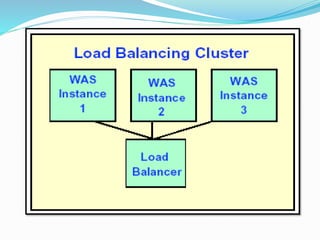
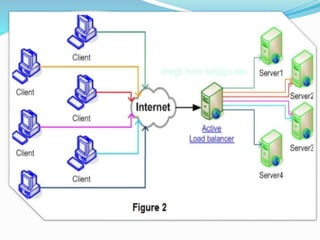
This type of cluster distributes incoming
requests for resources or content among
multiple nodes running the same programs or
having the same content.
Every node in the cluster is able to handle requests
for the same content or application.
parallel processing was performed by multiple
processors in a specially designed parallel computer.
These are systems in which multiple processors
share a single memory and bus interface within a
single computer.
1) Hierarchical method.
2) Partition method ..
) Hierarchical method
 smaller clusters into larger ones
 splitting larger clusters.
 The end result of the algorithm is a tree of clusters called a
dendrogram.
Partition method
 This method attempts to directly decompose the
dataset into a set of disjoint clusters. The criterion
function that the clustering algorithm tries to
minimize may emphasize the local structure of the
data, as by assigning clusters ..
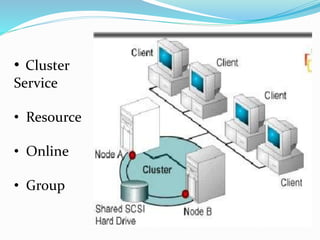
• Cluster
Service
• Resource
• Online
• Group
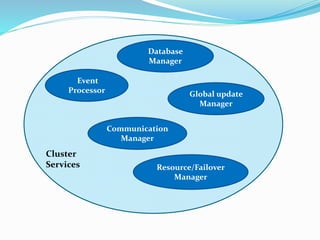
Database
Manager
Communication
Manager
Resource/Failover
Manager
Event
Processor Global update
Manager
Cluster
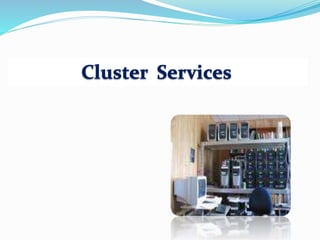
Services
Application Of Cluster
• Scientific computing
• Making movies
• Commercial server (web/Database server)
 Cluster Networking
 Cluster Software
 Programming
 Timing
 Speed Selection
Advantages Of Cluster Computing
Size Scalability
 Availability
 Open
 High Processing Capacity
Easy to Deploy
 Single System Image
Disadvantages
Cost
Hard to manage
Power Consumption
Deadlock
Cluster computing

Cluster computing

  • 2.
    Introduction Clustering is theuse of multiple computers, storage devices , and redundant interconnections , to form what appears to users as a singly highly available system . Computer cluster technology puts clusters of systems together to provide better system reliability and performance . Definition A cluster is a type of parallel or distributed processing system , which consists of a collection of interconnected stand alone computers cooperatively working together as a single integrated computing resource .
  • 3.
  • 4.
  • 5.
  • 7.
    Clusters Classification 1 Thistype of Cluster classification based on application Target , High Availability (HA) Clusters Mission Critical applications
  • 8.
    Clusters Classification 2 Thistype Clusters classification based on Node Ownership are again classified into two subcategories : - Dedicated clusters Non-dedicated clusters
  • 9.
    Clusters Classification 3 Thistype of classification based on Node Architecture.. Clusters of PCs ( Cops) Clusters of Workstations ( COWs)
  • 10.
    Clusters Classification 4 Thistype of classification based on node OS Type.. Linux Clusters (Beowulf) Solaris Clusters (Berkeley NOW) NT Clusters (HPVM) AIX Clusters (IBM SP2) SCO/Compaq Clusters (UnixWare) Digital VMS Clusters, HP clusters
  • 11.
    Clusters Classification 5 Thistype of classification based on node components architecture & configuration (Processor Arch, Node Type PC/Workstation.. & OS: Linux/NT..):- Homogeneous Clusters Heterogeneous Clusters
  • 13.
    1) Workload Consolidation/CommonManagement Domain Cluster 2) High Availability or Failover Clusters 3) Load Balancing Clusters 4) Parallel / Distributed Processing Clusters Types
  • 14.
    Workload Consolidation/Common Management DomainCluster Its a simple arrangement of heterogeneous server tasks — but all are running on a single physical system.  keys Simplicity & convenience Single point of control
  • 16.
    These clusters aredesigned to provide  uninterrupted availability of data / services .  service restoring .  Improving performance .  single instance of an application is running . High Availability/ Failover Cluster
  • 18.
    USES - High-availability clustersimplementations are best for mission-critical applications or databases, mail, file and print, web, or application servers.
  • 20.
    This type ofcluster distributes incoming requests for resources or content among multiple nodes running the same programs or having the same content. Every node in the cluster is able to handle requests for the same content or application.
  • 23.
    parallel processing wasperformed by multiple processors in a specially designed parallel computer. These are systems in which multiple processors share a single memory and bus interface within a single computer.
  • 24.
    1) Hierarchical method. 2)Partition method ..
  • 25.
    ) Hierarchical method smaller clusters into larger ones  splitting larger clusters.  The end result of the algorithm is a tree of clusters called a dendrogram.
  • 26.
    Partition method  Thismethod attempts to directly decompose the dataset into a set of disjoint clusters. The criterion function that the clustering algorithm tries to minimize may emphasize the local structure of the data, as by assigning clusters ..
  • 28.
  • 30.
  • 31.
    Application Of Cluster •Scientific computing • Making movies • Commercial server (web/Database server)
  • 33.
     Cluster Networking Cluster Software  Programming  Timing  Speed Selection
  • 34.
    Advantages Of ClusterComputing Size Scalability  Availability  Open  High Processing Capacity Easy to Deploy  Single System Image
  • 35.