CLINICAL CASE PRESENTATION
MICROBIOLOGYASSIGNMENT
ARPITA CHANDRA
PATIENT ID
ADMISSION DATE- 07/11/22
AGE/GENDER - 11/M
WARD- SURG-I
REG NO- 1677980
PATHO NO.- 88
SAMPLE- URINE
HISTORY OF PATIENT
Chief complaints- Urinary hesitation, Fever, Burning
micturation, Incomplete voiding of urine
Diagnosis- Phimosis
Treatment- Not on any antibiotics
General condition- Not well,
Going for surgery (OT)- Circumcision
Microbiological Diagnosis- Proteus mirabilis organism
isolated (09/11/22)
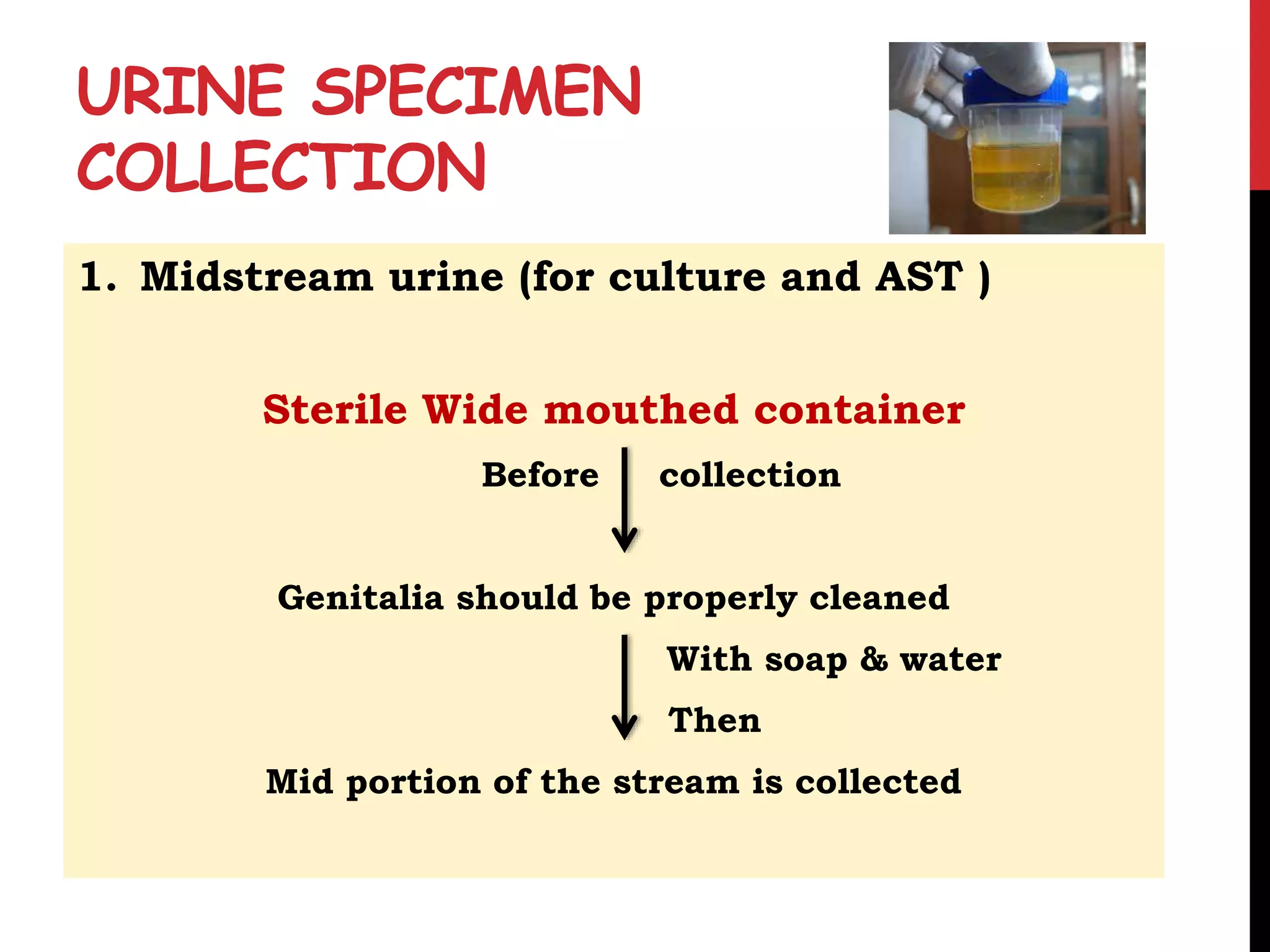
URINE SPECIMEN
COLLECTION
1. Midstream urine (for culture and AST )
Sterile Wide mouthed container
Before collection
Genitalia should be properly cleaned
With soap & water
Then
Mid portion of the stream is collected
2. CATHETER SPECIMEN
Collect directly from catheter tube not from catheter bag.
3. From infants
Suprapubic Aspiration
TRANSPORT
Process with minimum delay
If not possible – Refrigerated at 40°C or stored by adding
boric Acid.
PHYSICAL EXAMINATION
- COLOUR
- VOLUME
- ODOR
- SPECIFIC GRAVITY
- PRESENCE OF BLOOD
After Centrifugation of urine sample
Supernatant Sediment
Chemical analysis
1. pH
2. Glucose
3. Protein
4. Ketone bodies
5. Urobilinogen
6. Bilirubin
7. Nitrite
8. Bile salts, Bile pigments
9. Blood
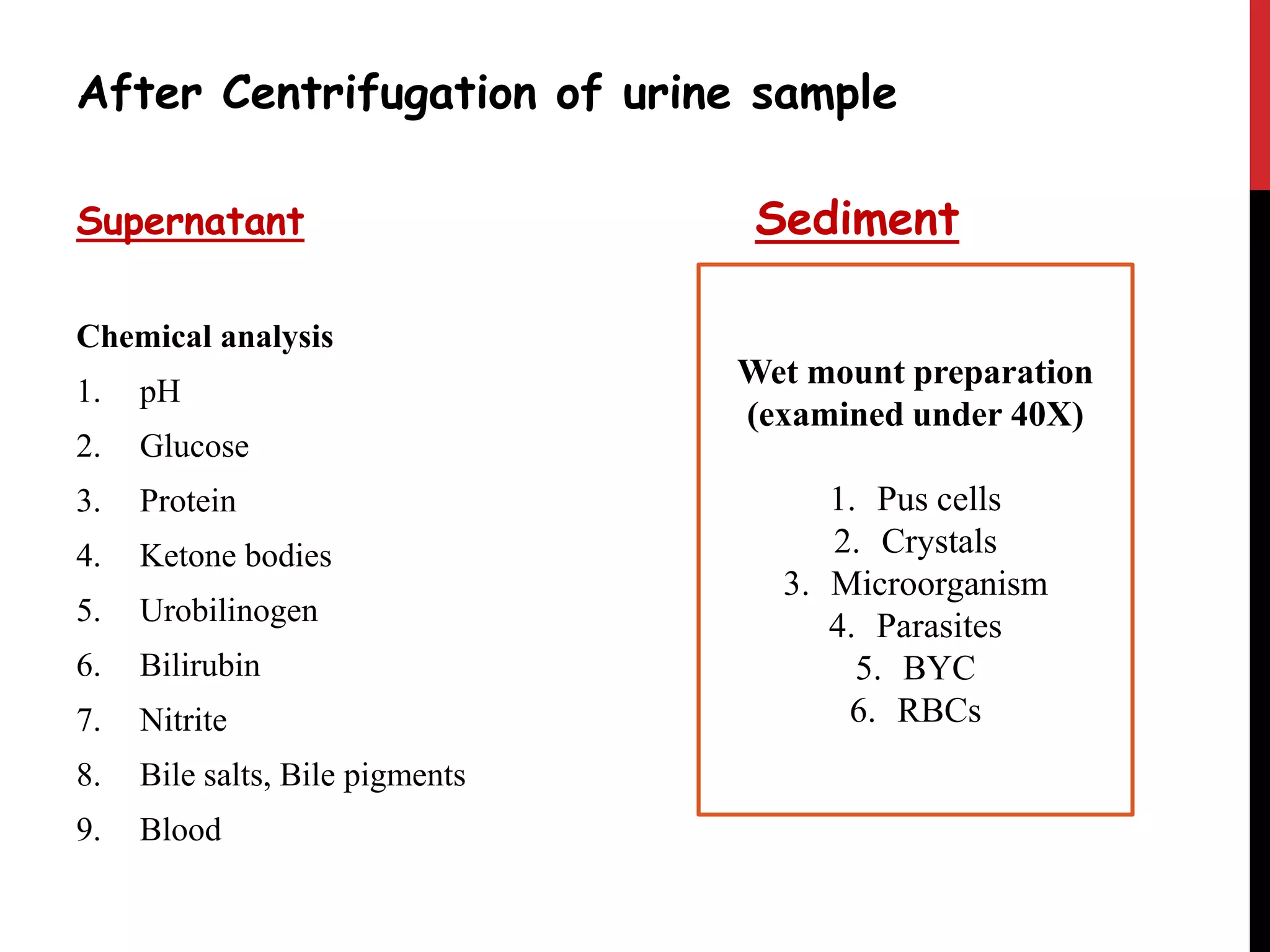
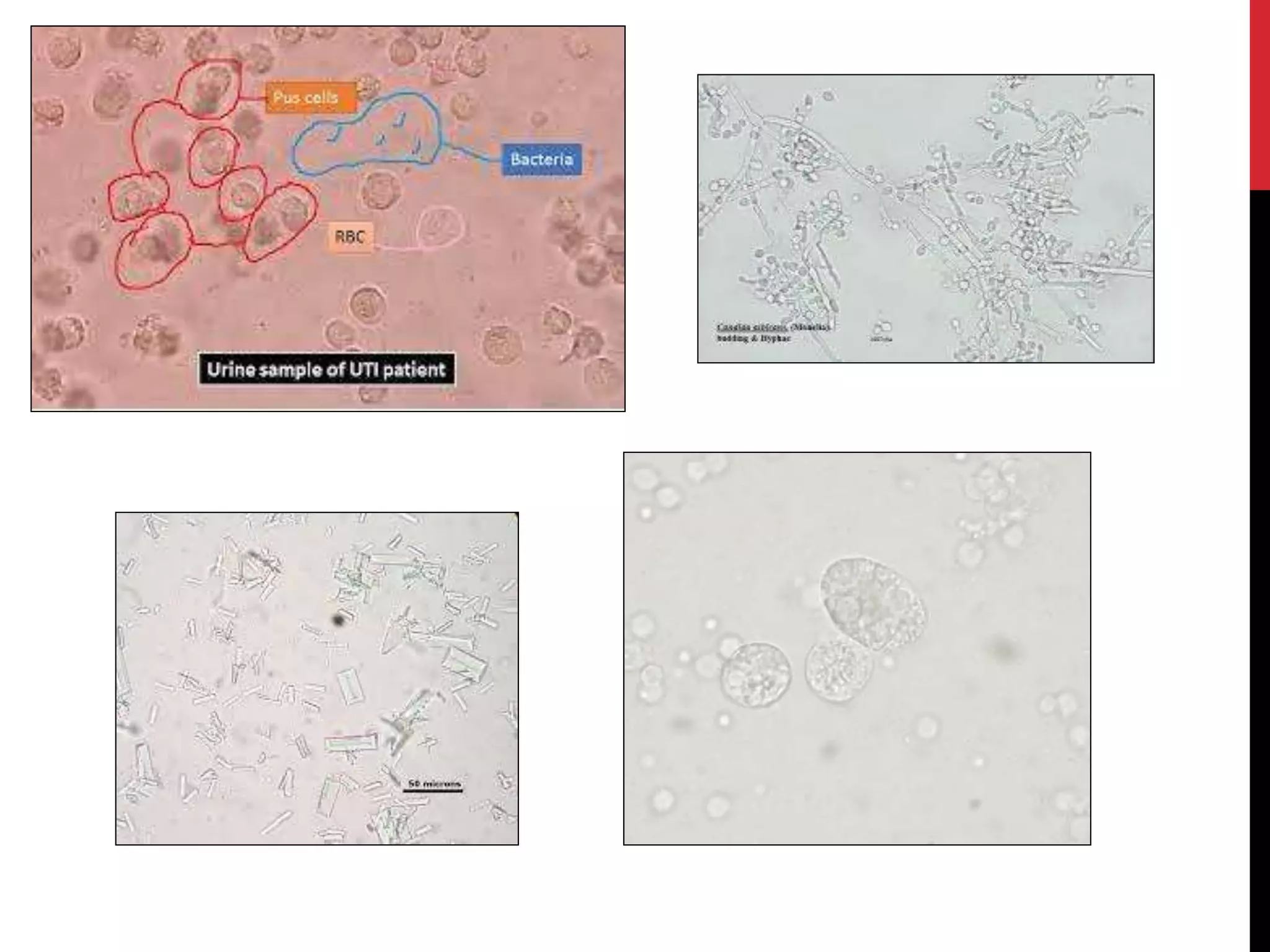
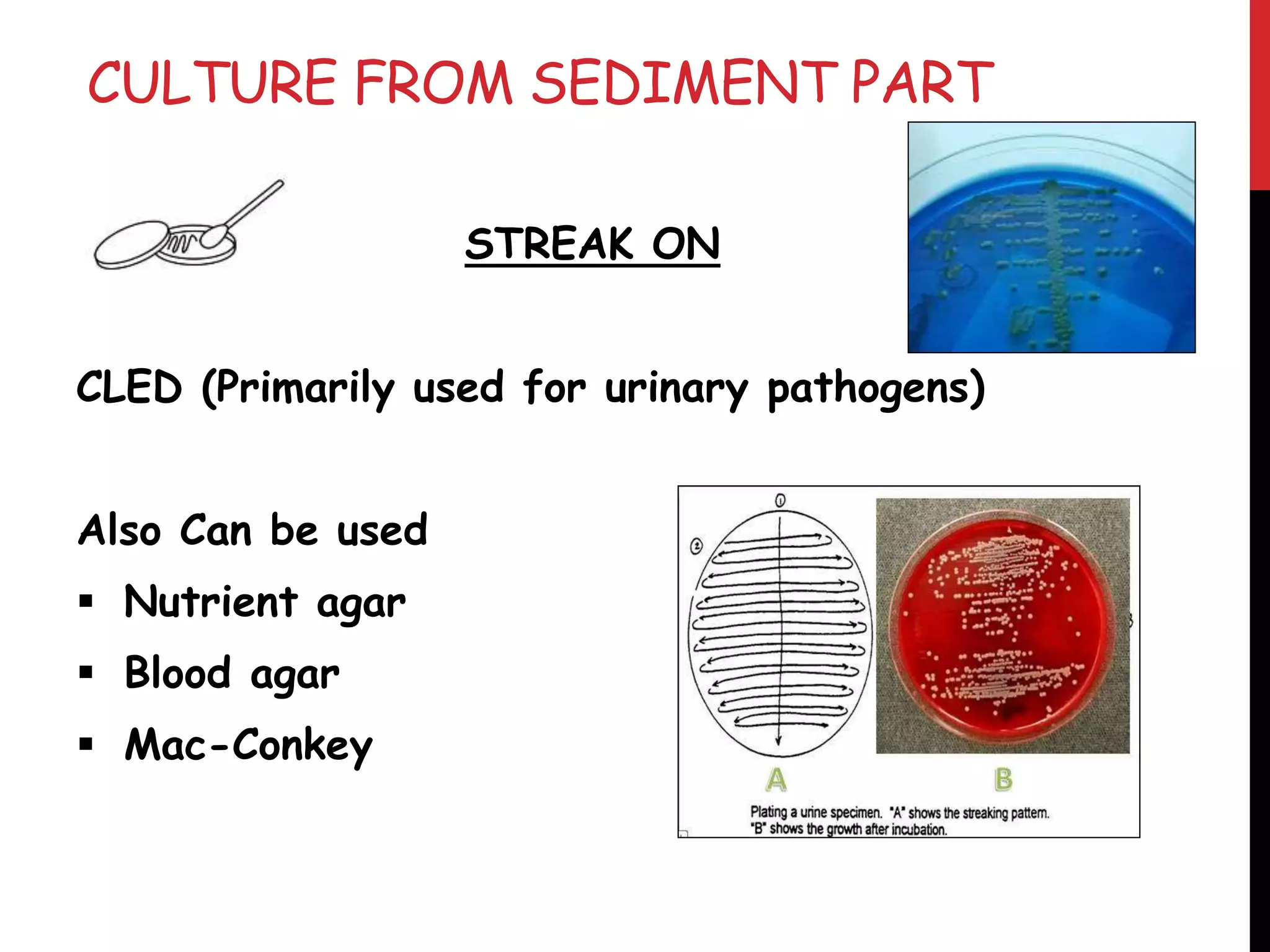
Wet mount preparation
(examined under 40X)
1. Pus cells
2. Crystals
3. Microorganism
4. Parasites
5. BYC
6. RBCs
CULTURE FROM SEDIMENT PART
STREAK ON
CLED (Primarily used for urinary pathogens)
Also Can be used
 Nutrient agar
 Blood agar
 Mac-Conkey
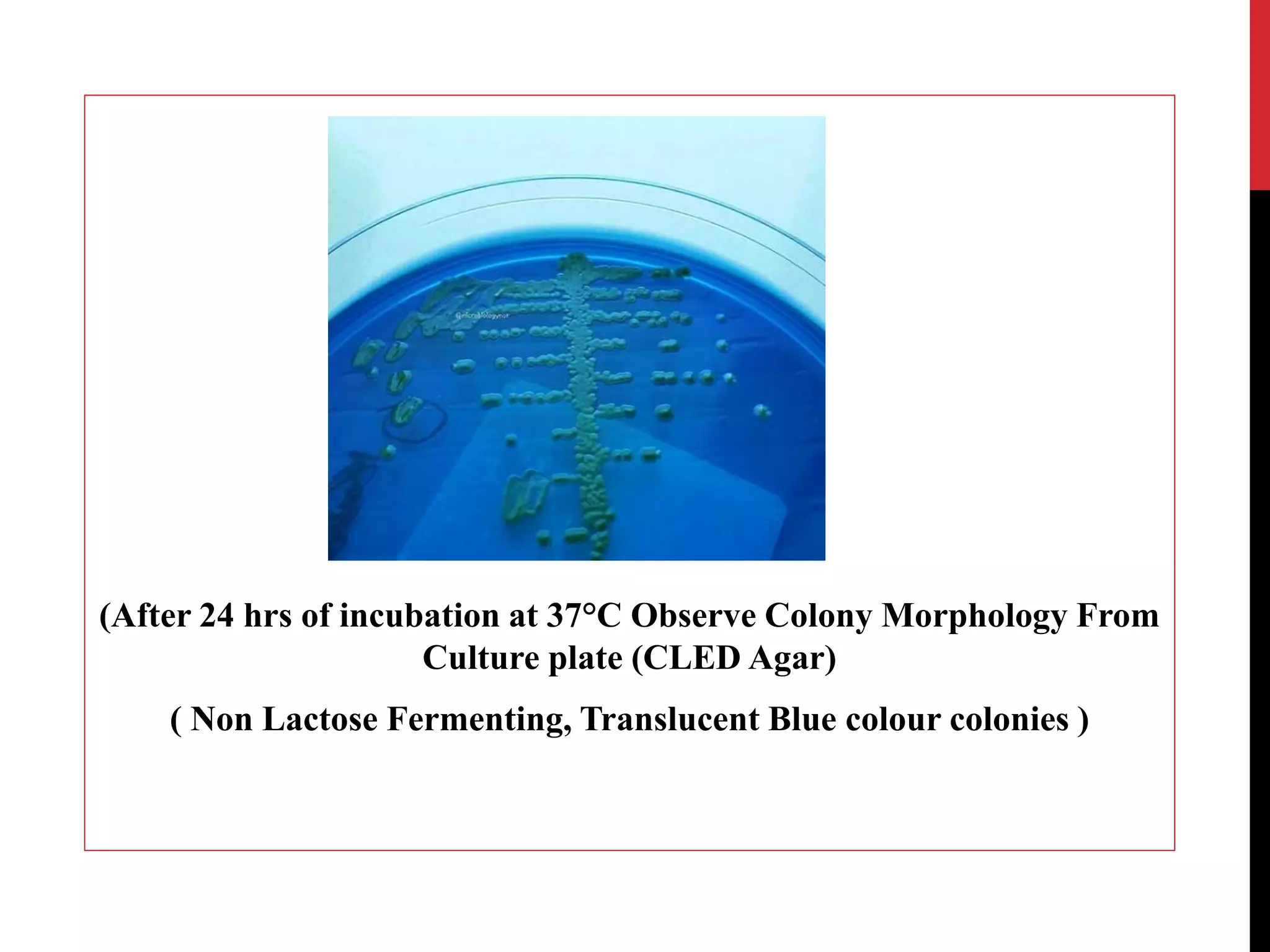
(After 24 hrs of incubation at 37°C Observe Colony Morphology From
Culture plate (CLED Agar)
( Non Lactose Fermenting, Translucent Blue colour colonies )
COLONY COUNT BY KASS TECHNIQUE (1956)
Total Bacterial count per ml = Number of colonies x 200
Number of colonies = No. of Bacteria present
INTERPRETATION OF RESULT
1. >105 Bacteria/ml = Significant Bacteriuria (Active UTI)
2. Between 104 to 105 Bacteria/ml = doubtful Significance
(Repeated culture)
3. <104 Bacteria/ml = No significance growth
(more than 3 type= regarded as contamination)
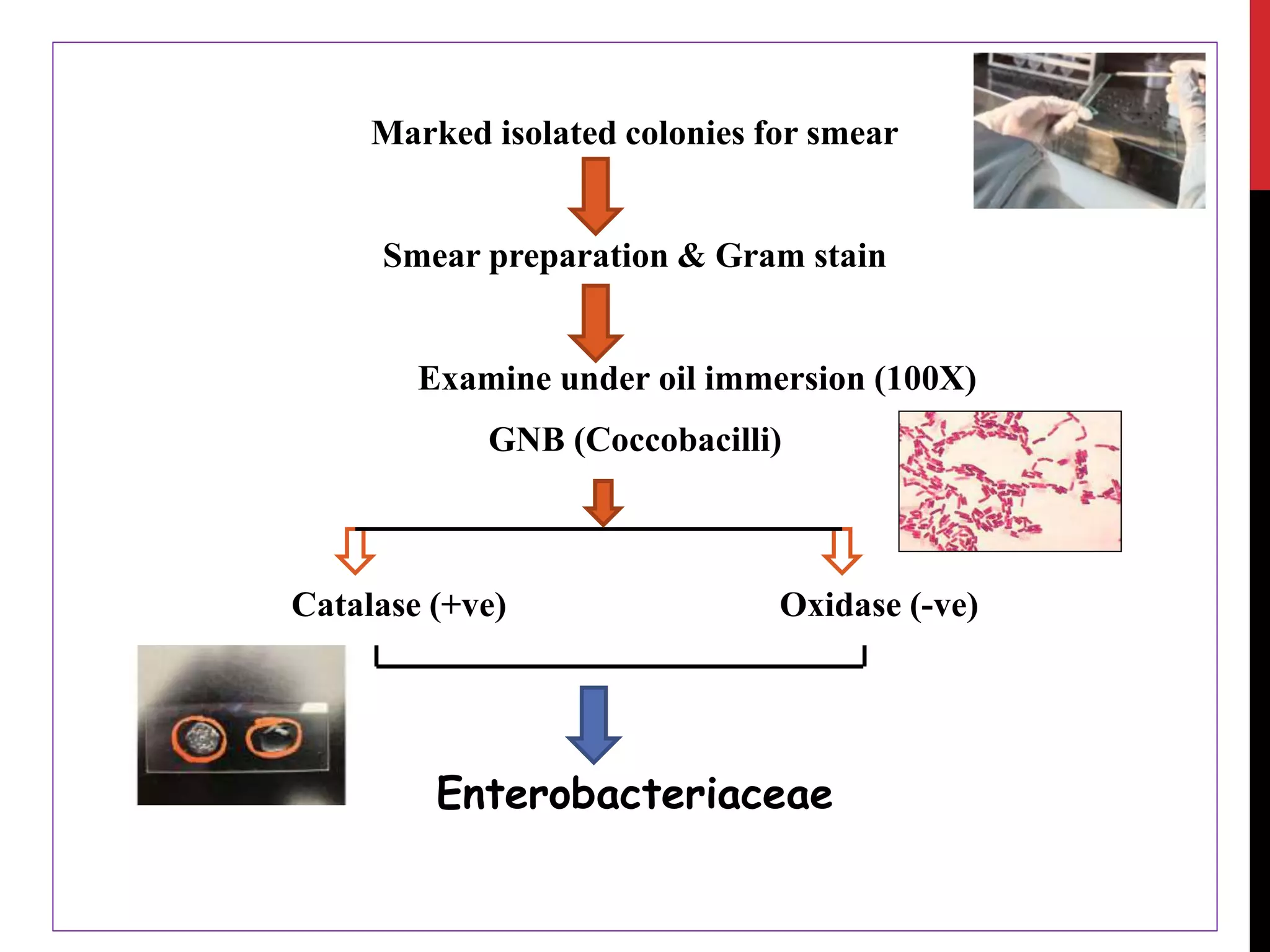
Marked isolated colonies for smear
Smear preparation & Gram stain
Examine under oil immersion (100X)
GNB (Coccobacilli)
Catalase (+ve) Oxidase (-ve)
Enterobacteriaceae
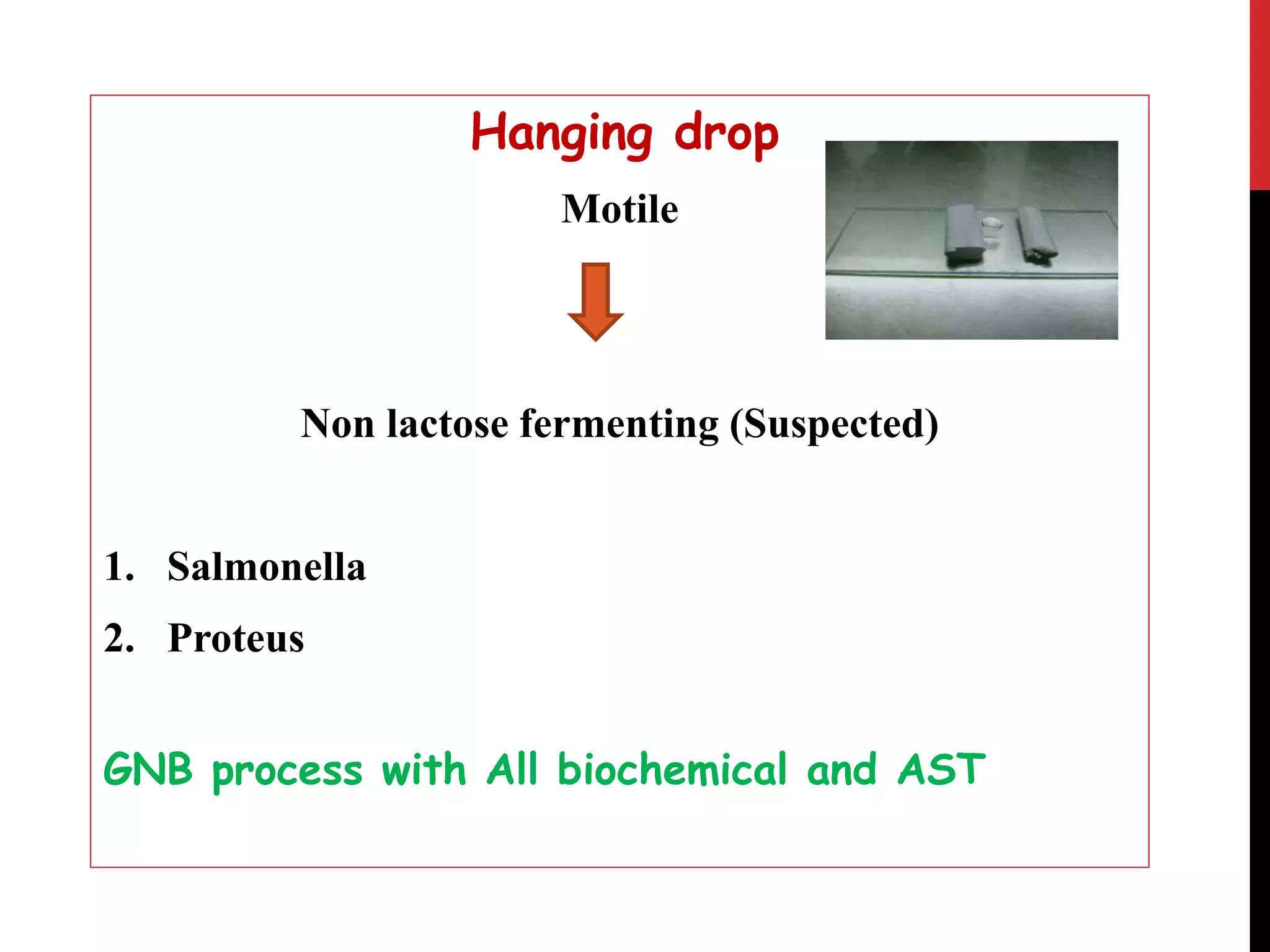
Hanging drop
Motile
Non lactose fermenting (Suspected)
1. Salmonella
2. Proteus
GNB process with All biochemical and AST
AFTER 24 HRS OF INCUBATION ( OBSERVE ALL
BIOCHEMICALS AND AST)
PUS CELLS- 8-10/hpf
Indole- Negative COLONY COUNT > 105 CFU/ML
Citrate- Positive
Urease- Positive
TSI- K/A with H2S gas
Manitol- Non motile Non ferment
Urease (+) TSI(K/A with H2S) Citrate(+) Indole (-)
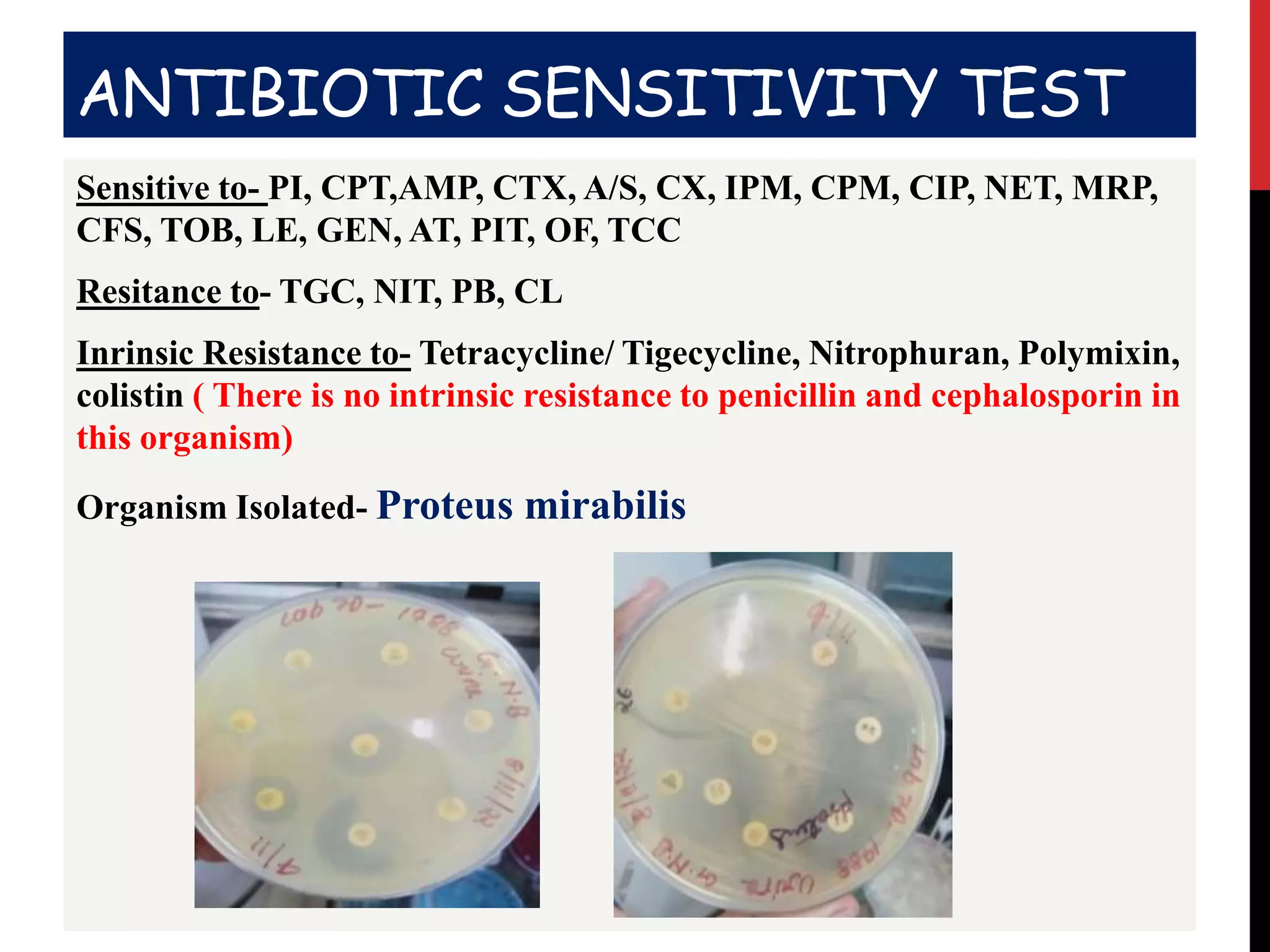
ANTIBIOTIC SENSITIVITY TEST
Sensitive to- PI, CPT,AMP, CTX, A/S, CX, IPM, CPM, CIP, NET, MRP,
CFS, TOB, LE, GEN, AT, PIT, OF, TCC
Resitance to- TGC, NIT, PB, CL
Inrinsic Resistance to- Tetracycline/ Tigecycline, Nitrophuran, Polymixin,
colistin ( There is no intrinsic resistance to penicillin and cephalosporin in
this organism)
Organism Isolated- Proteus mirabilis
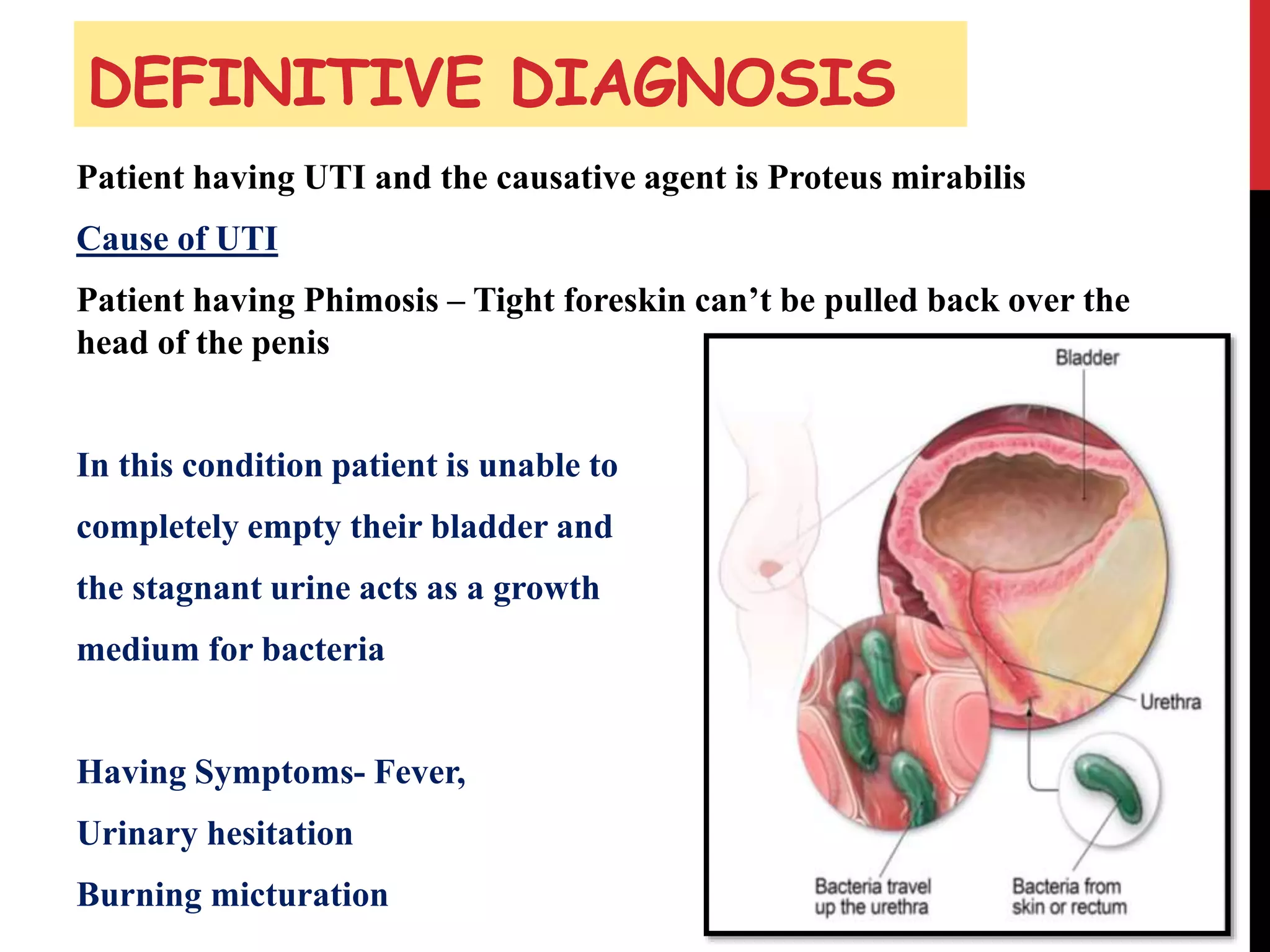
DEFINITIVE DIAGNOSIS
Patient having UTI and the causative agent is Proteus mirabilis
Cause of UTI
Patient having Phimosis – Tight foreskin can’t be pulled back over the
head of the penis
In this condition patient is unable to
completely empty their bladder and
the stagnant urine acts as a growth
medium for bacteria
Having Symptoms- Fever,
Urinary hesitation
Burning micturation
PROTEUS MIRABILIS
Family- Enterobacteriaceae
Genus- Proteus
Species- Mirabilis
Morphology-
Pleomorphism
Gram negative coccobacilli
Non capsulated
Non sporing
Peritrichous flagella
Fimbriae present
Antigenic property-
‘H’Ag (Flagellar Ag)
‘O’Ag (Somatic Ag)
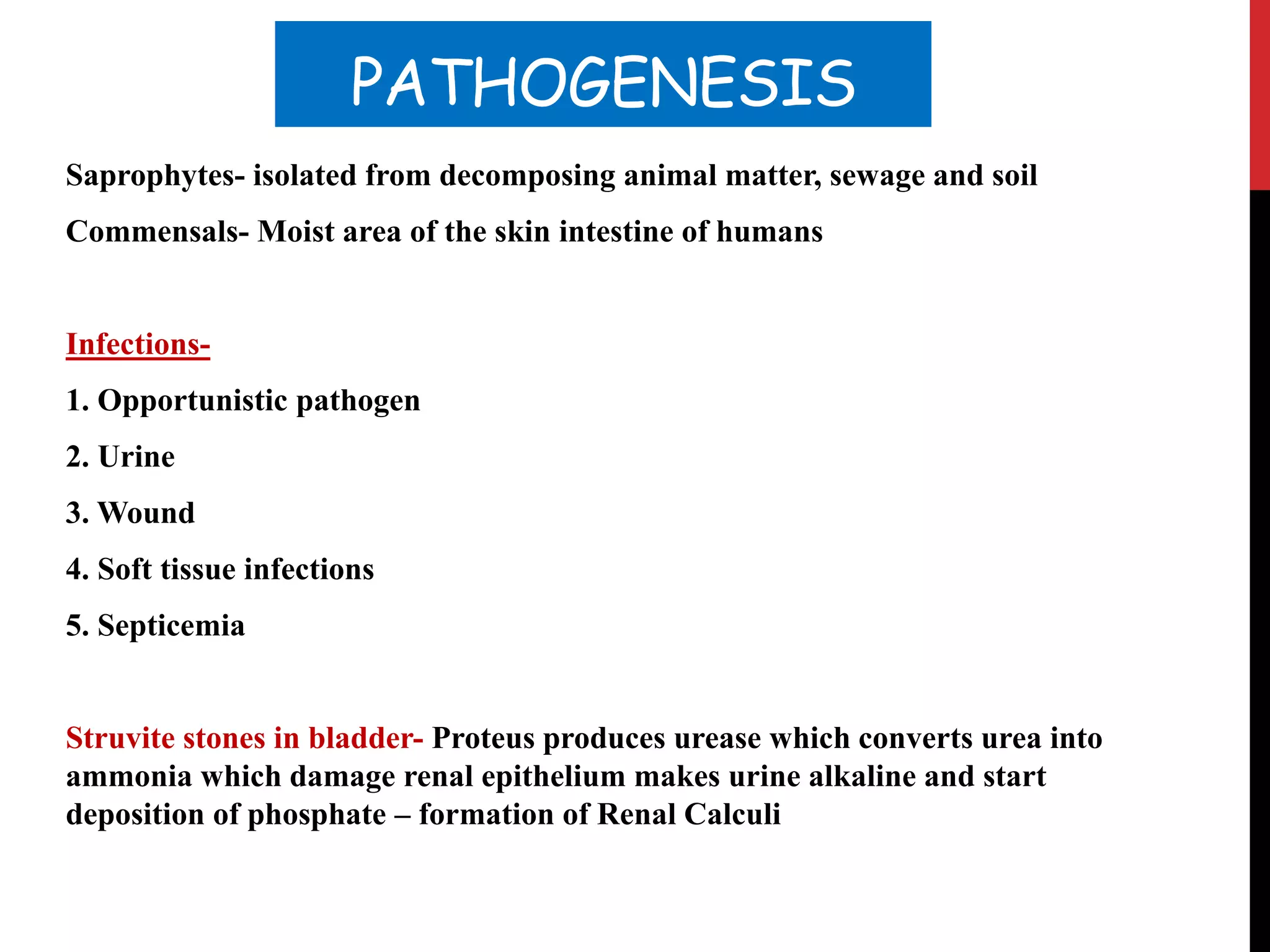
PATHOGENESIS
Saprophytes- isolated from decomposing animal matter, sewage and soil
Commensals- Moist area of the skin intestine of humans
Infections-
1. Opportunistic pathogen
2. Urine
3. Wound
4. Soft tissue infections
5. Septicemia
Struvite stones in bladder- Proteus produces urease which converts urea into
ammonia which damage renal epithelium makes urine alkaline and start
deposition of phosphate – formation of Renal Calculi
LAB DIAGNOSIS
Pleomorphism- Gram negative coccobacilli
Odor- putrid fishy or seminal odor in culture
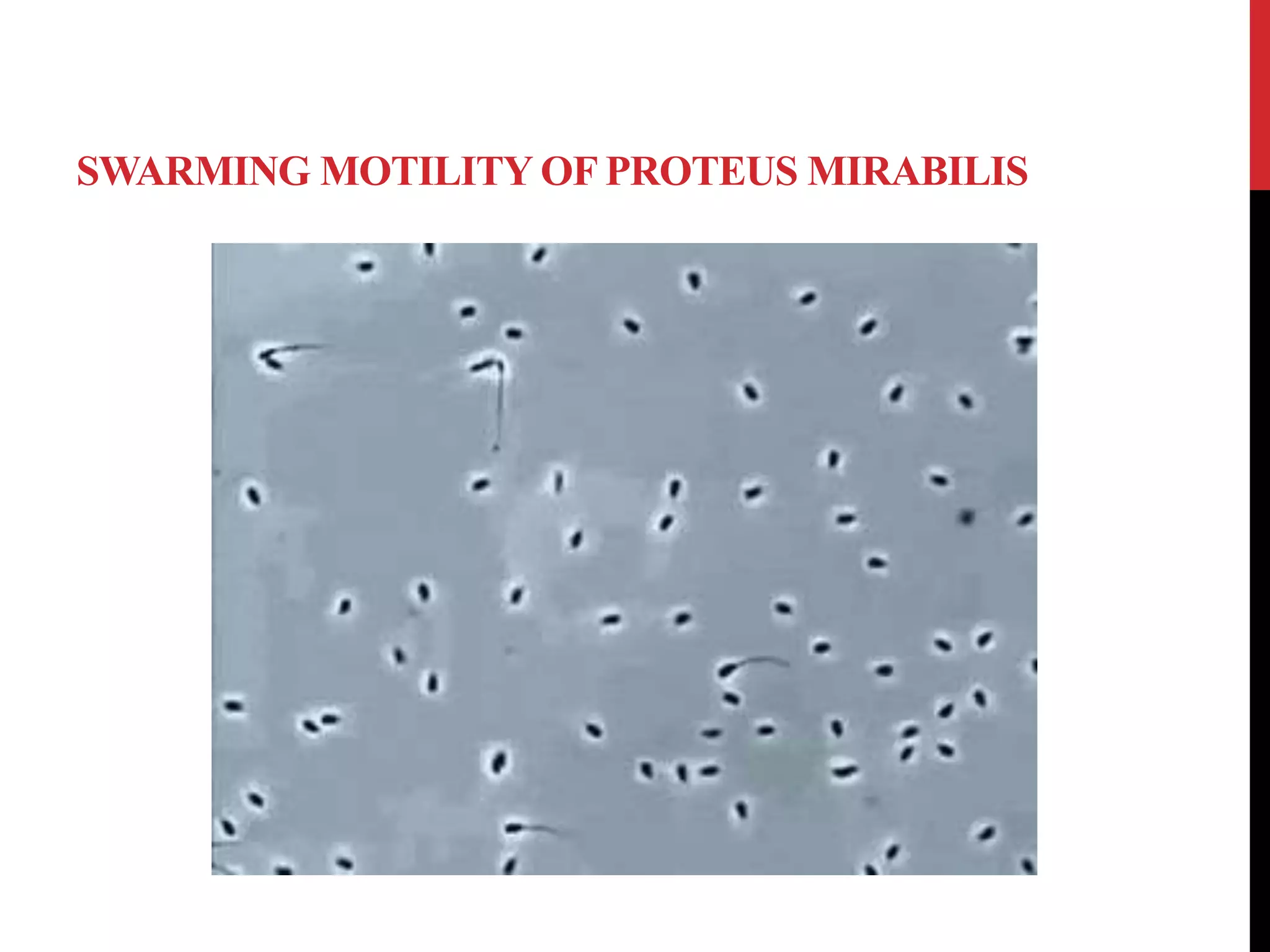
Swarming- Ability to swarm
Biochemical reactions
Indole- negative
Urease- positive
Citrate- positive
TSI- K/A with gas H2S Gas
Ornithine ddecarboxylase test- positive
SWARMING MOTILITY OF PROTEUS MIRABILIS
CULTURE
Aerobic and faculatative anaerobic
Motility seen on Blood agar and Nutrient agar
Motility not seen in Mac conkey agar and cled agar
On Mac conkey Agar- Non lactose fermenter
On Blood agar showing swarming motility
TYPING OF PROTEUS
1. Bacteriocin typing
2. Bacteriophage typing
3. Ribotyping
4. Dienes phenomenon- When 2 strains of Proteus inoculated at different
area on a culture plate
- If swarming of 2 strain merge incompletely = separated by narrow line
= indicates 2 strans are different
- If swarming of 2 strains merge completely without any line of
demarcation = indicate 2 strains are identical
TREATMENT
Slow intrinsic resistance to
- Nitofuratoin tetracycline and polymixin colistin
-They produces ESBL and AMP Beta lacatamase
-Effective Treatment- Aminoglycosides and Qinolones
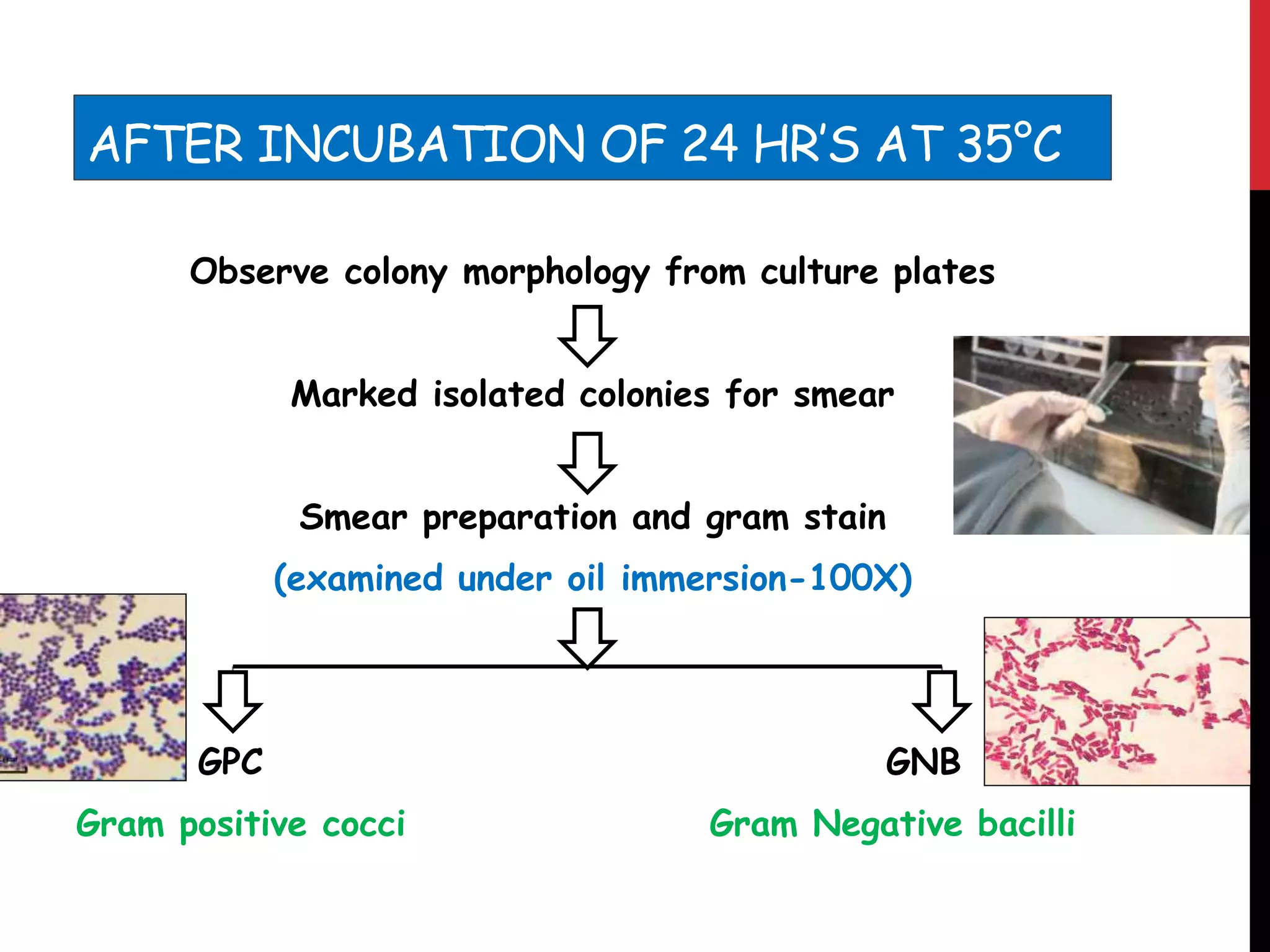
AFTER INCUBATION OF 24 HR’S AT 35°C
Observe colony morphology from culture plates
Marked isolated colonies for smear
Smear preparation and gram stain
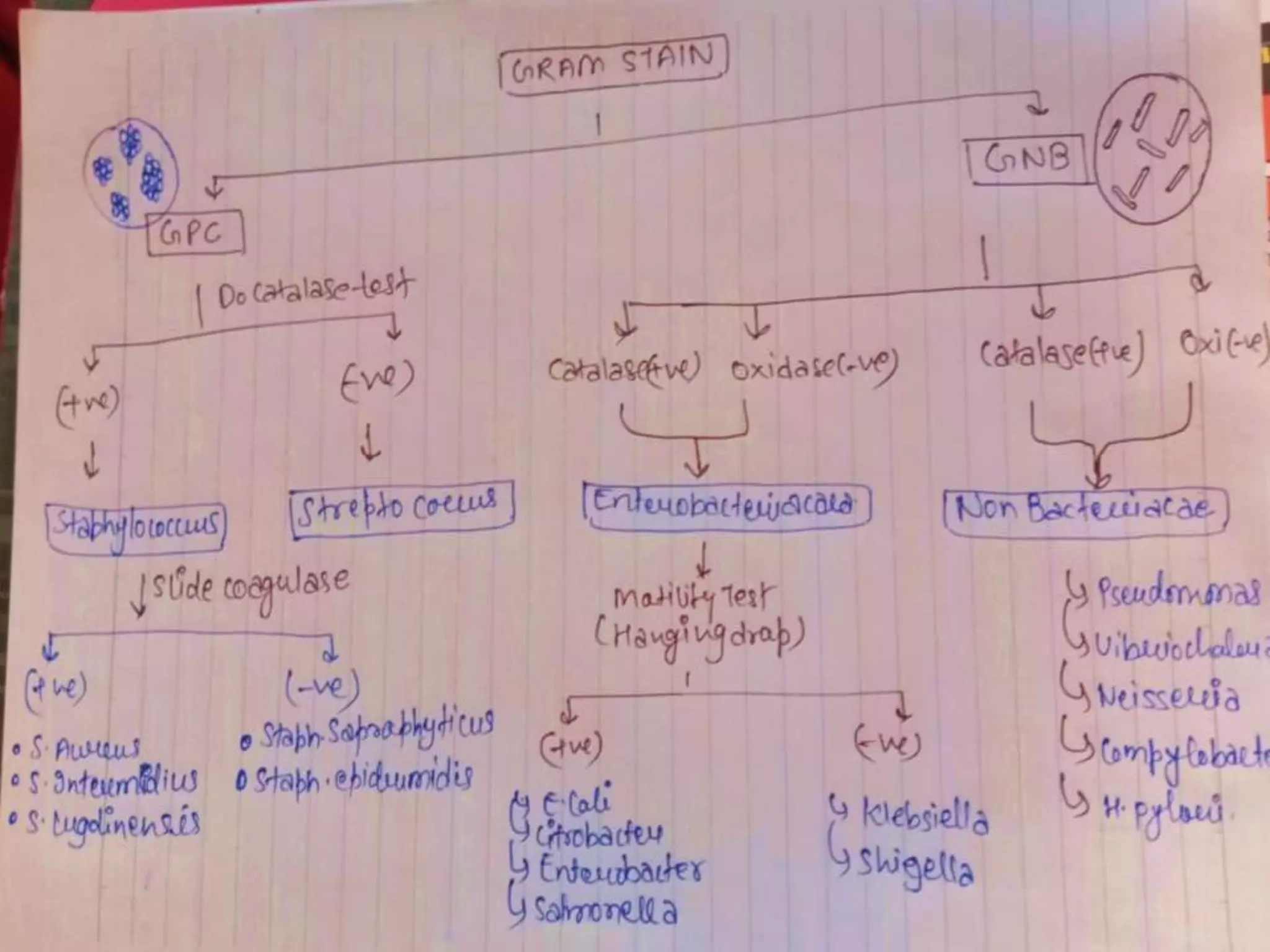
(examined under oil immersion-100X)
GPC GNB
Gram positive cocci Gram Negative bacilli
Clinical case presentation, Proteus mirabilis.pptx

Clinical case presentation, Proteus mirabilis.pptx

  • 1.
  • 2.
    PATIENT ID ADMISSION DATE-07/11/22 AGE/GENDER - 11/M WARD- SURG-I REG NO- 1677980 PATHO NO.- 88 SAMPLE- URINE
  • 3.
    HISTORY OF PATIENT Chiefcomplaints- Urinary hesitation, Fever, Burning micturation, Incomplete voiding of urine Diagnosis- Phimosis Treatment- Not on any antibiotics General condition- Not well, Going for surgery (OT)- Circumcision Microbiological Diagnosis- Proteus mirabilis organism isolated (09/11/22)
  • 4.
    URINE SPECIMEN COLLECTION 1. Midstreamurine (for culture and AST ) Sterile Wide mouthed container Before collection Genitalia should be properly cleaned With soap & water Then Mid portion of the stream is collected
  • 5.
    2. CATHETER SPECIMEN Collectdirectly from catheter tube not from catheter bag. 3. From infants Suprapubic Aspiration TRANSPORT Process with minimum delay If not possible – Refrigerated at 40°C or stored by adding boric Acid.
  • 6.
    PHYSICAL EXAMINATION - COLOUR -VOLUME - ODOR - SPECIFIC GRAVITY - PRESENCE OF BLOOD
  • 7.
    After Centrifugation ofurine sample Supernatant Sediment Chemical analysis 1. pH 2. Glucose 3. Protein 4. Ketone bodies 5. Urobilinogen 6. Bilirubin 7. Nitrite 8. Bile salts, Bile pigments 9. Blood Wet mount preparation (examined under 40X) 1. Pus cells 2. Crystals 3. Microorganism 4. Parasites 5. BYC 6. RBCs
  • 9.
    CULTURE FROM SEDIMENTPART STREAK ON CLED (Primarily used for urinary pathogens) Also Can be used  Nutrient agar  Blood agar  Mac-Conkey
  • 10.
    (After 24 hrsof incubation at 37°C Observe Colony Morphology From Culture plate (CLED Agar) ( Non Lactose Fermenting, Translucent Blue colour colonies )
  • 11.
    COLONY COUNT BYKASS TECHNIQUE (1956) Total Bacterial count per ml = Number of colonies x 200 Number of colonies = No. of Bacteria present INTERPRETATION OF RESULT 1. >105 Bacteria/ml = Significant Bacteriuria (Active UTI) 2. Between 104 to 105 Bacteria/ml = doubtful Significance (Repeated culture) 3. <104 Bacteria/ml = No significance growth (more than 3 type= regarded as contamination)
  • 12.
    Marked isolated coloniesfor smear Smear preparation & Gram stain Examine under oil immersion (100X) GNB (Coccobacilli) Catalase (+ve) Oxidase (-ve) Enterobacteriaceae
  • 13.
    Hanging drop Motile Non lactosefermenting (Suspected) 1. Salmonella 2. Proteus GNB process with All biochemical and AST
  • 14.
    AFTER 24 HRSOF INCUBATION ( OBSERVE ALL BIOCHEMICALS AND AST) PUS CELLS- 8-10/hpf Indole- Negative COLONY COUNT > 105 CFU/ML Citrate- Positive Urease- Positive TSI- K/A with H2S gas Manitol- Non motile Non ferment Urease (+) TSI(K/A with H2S) Citrate(+) Indole (-)
  • 15.
    ANTIBIOTIC SENSITIVITY TEST Sensitiveto- PI, CPT,AMP, CTX, A/S, CX, IPM, CPM, CIP, NET, MRP, CFS, TOB, LE, GEN, AT, PIT, OF, TCC Resitance to- TGC, NIT, PB, CL Inrinsic Resistance to- Tetracycline/ Tigecycline, Nitrophuran, Polymixin, colistin ( There is no intrinsic resistance to penicillin and cephalosporin in this organism) Organism Isolated- Proteus mirabilis
  • 16.
    DEFINITIVE DIAGNOSIS Patient havingUTI and the causative agent is Proteus mirabilis Cause of UTI Patient having Phimosis – Tight foreskin can’t be pulled back over the head of the penis In this condition patient is unable to completely empty their bladder and the stagnant urine acts as a growth medium for bacteria Having Symptoms- Fever, Urinary hesitation Burning micturation
  • 17.
    PROTEUS MIRABILIS Family- Enterobacteriaceae Genus-Proteus Species- Mirabilis Morphology- Pleomorphism Gram negative coccobacilli Non capsulated Non sporing Peritrichous flagella Fimbriae present Antigenic property- ‘H’Ag (Flagellar Ag) ‘O’Ag (Somatic Ag)
  • 18.
    PATHOGENESIS Saprophytes- isolated fromdecomposing animal matter, sewage and soil Commensals- Moist area of the skin intestine of humans Infections- 1. Opportunistic pathogen 2. Urine 3. Wound 4. Soft tissue infections 5. Septicemia Struvite stones in bladder- Proteus produces urease which converts urea into ammonia which damage renal epithelium makes urine alkaline and start deposition of phosphate – formation of Renal Calculi
  • 19.
    LAB DIAGNOSIS Pleomorphism- Gramnegative coccobacilli Odor- putrid fishy or seminal odor in culture Swarming- Ability to swarm Biochemical reactions Indole- negative Urease- positive Citrate- positive TSI- K/A with gas H2S Gas Ornithine ddecarboxylase test- positive
  • 20.
    SWARMING MOTILITY OFPROTEUS MIRABILIS
  • 21.
    CULTURE Aerobic and faculatativeanaerobic Motility seen on Blood agar and Nutrient agar Motility not seen in Mac conkey agar and cled agar
  • 22.
    On Mac conkeyAgar- Non lactose fermenter On Blood agar showing swarming motility
  • 23.
    TYPING OF PROTEUS 1.Bacteriocin typing 2. Bacteriophage typing 3. Ribotyping 4. Dienes phenomenon- When 2 strains of Proteus inoculated at different area on a culture plate - If swarming of 2 strain merge incompletely = separated by narrow line = indicates 2 strans are different - If swarming of 2 strains merge completely without any line of demarcation = indicate 2 strains are identical
  • 24.
    TREATMENT Slow intrinsic resistanceto - Nitofuratoin tetracycline and polymixin colistin -They produces ESBL and AMP Beta lacatamase -Effective Treatment- Aminoglycosides and Qinolones
  • 26.
    AFTER INCUBATION OF24 HR’S AT 35°C Observe colony morphology from culture plates Marked isolated colonies for smear Smear preparation and gram stain (examined under oil immersion-100X) GPC GNB Gram positive cocci Gram Negative bacilli