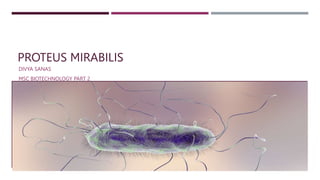
PROTEUS MIRABILIS
DIVYA SANAS
MSC BIOTECHNOLOGY PART 2
GENERAL CHARACTER
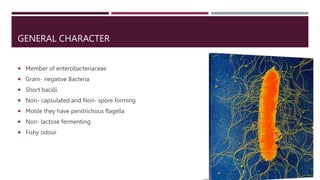
 Member of enterobacteriaceae
 Gram- negative Bacteria
 Short bacilli
 Non- capsulated and Non- spore forming
 Motile they have penitrichous flagella
 Non- lactose fermenting
 Fishy odour
PROTEUS MIRABILIS
 Proteus species are most commonly found in the human intestinal tract as a part of normal human
intestinal flora but it becomes pathogenic when it leaves the intestinal tract especially When it becomes
Contact with urea in the urinary tract..
 Produces urease resulting in rapid hydrolysis of urea with liberation of ammonium. This, in UTIs in
proteus, the urine becomes alkaline promoting stone formation.
P.MIRABILIS – CLINICAL FEATURES
 Causes 90%of all proteus infections in human
 Urinary tract infection
 Septicemia
 Abdominal and wound infection
 Secondary Invader of ulcer, burn and Chronic discharging Ear
LABORATORY DIAGNOSIS
–
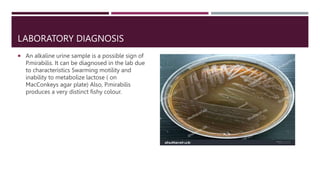
 An alkaline urine sample is a possible sign of
P.mirabilis. It can be diagnosed in the lab due
to characteristics Swarming motility and
inability to metabolize lactose ( on
MacConkeys agar plate) Also, P.mirabilis
produces a very distinct fishy colour.
GRAM STAIN
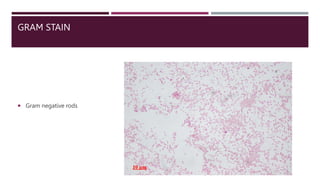
 Gram negative rods
CULTURE CHARACTERISTICS
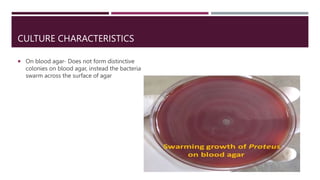
 On blood agar- Does not form distinctive
colonies on blood agar, instead the bacteria
swarm across the surface of agar
MACCONKEYS AGAR
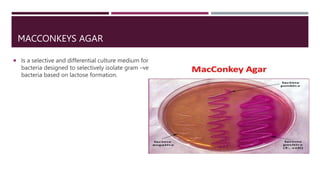
 Is a selective and differential culture medium for
bacteria designed to selectively isolate gram –ve
bacteria based on lactose formation.
EPIDEMIOLOGY
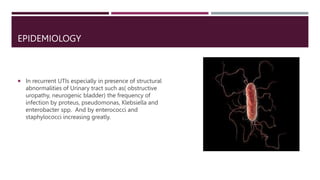
 In recurrent UTIs especially in presence of structural
abnormalities of Urinary tract such as( obstructive
uropathy, neurogenic bladder) the frequency of
infection by proteus, pseudomonas, Klebsiella and
enterobacter spp. And by enterococci and
staphylococci increasing greatly.
PATHOPHYSIOLOGY
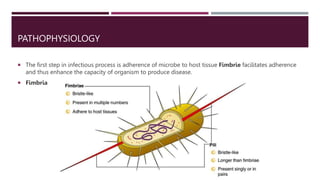
 The first step in infectious process is adherence of microbe to host tissue Fimbrie facilitates adherence
and thus enhance the capacity of organism to produce disease.
 Fimbria
SEPSIS
 The presence of the sepsis syndrome is associated
with a UTI should raise the possibility of Urinary
tract obstruction.
 Struvite stone formation
MOLECULAR DIAGNOSTICS
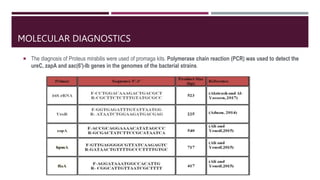
 The diagnosis of Proteus mirabilis were used of promaga kits. Polymerase chain reaction (PCR) was used to detect the
ureC, zapA and aac(6')-Ib genes in the genomes of the bacterial strains.
TOXIN
 Toxins. P. Mirabilis produces the haemolysin HmpA, encoded by the gene hmpA, which is a major
contributor to the in vitro cytotoxicity of human renal proximal tubular epithelial cells (HRPTEC).
 This haemolysin requires the outer-membrane protein HmpB, encoded by the hmpB gene, for secretion
and activity.
SYMPTOMS
 Urethritis
 cystisis
 Xanthogranulomatous Pyelonephritis- Rare, chronic and inflammatory and Granulomatous formation
within kidney.
 Abdominal pain, back pain, Nausea and vomiting, fever, hematuria and pyuria.
DISEASE CAUSED
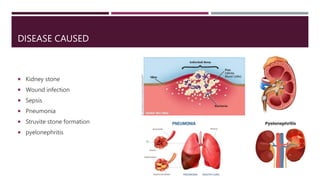
 Kidney stone
 Wound infection
 Sepsis
 Pneumonia
 Struvite stone formation
 pyelonephritis
TREATMENT
 Bacteria is sensitive to these antibiotics –
beta- lactame except pen G and Oxacillin,
aminoglycosides, Ceftriaxone
fluoroquinolone and Trimethoprim,
sulfamethaxazole that can be used as a
treatment for most proteus infection.
REFERENCES
 https://en.m.wikipedia.org/wiki/Proteus_mirabilis#cite_ref-1
 https://doi.org/10.1016%2Fj.jmii.2011.11.007
 Jaber, A. H., & Almiyah, S. A. F. (2022). Molecular detection of some virulence genes for Proteus mirabilis
bacteria isolated from diabetic foot ulcers. Eurasian Medical Research Periodical, 8, 59-67.

Proteus Mirabilis.pptx

  • 1.
  • 2.
    GENERAL CHARACTER  Memberof enterobacteriaceae  Gram- negative Bacteria  Short bacilli  Non- capsulated and Non- spore forming  Motile they have penitrichous flagella  Non- lactose fermenting  Fishy odour
  • 3.
    PROTEUS MIRABILIS  Proteusspecies are most commonly found in the human intestinal tract as a part of normal human intestinal flora but it becomes pathogenic when it leaves the intestinal tract especially When it becomes Contact with urea in the urinary tract..  Produces urease resulting in rapid hydrolysis of urea with liberation of ammonium. This, in UTIs in proteus, the urine becomes alkaline promoting stone formation.
  • 4.
    P.MIRABILIS – CLINICALFEATURES  Causes 90%of all proteus infections in human  Urinary tract infection  Septicemia  Abdominal and wound infection  Secondary Invader of ulcer, burn and Chronic discharging Ear
  • 5.
    LABORATORY DIAGNOSIS –  Analkaline urine sample is a possible sign of P.mirabilis. It can be diagnosed in the lab due to characteristics Swarming motility and inability to metabolize lactose ( on MacConkeys agar plate) Also, P.mirabilis produces a very distinct fishy colour.
  • 6.
    GRAM STAIN  Gramnegative rods
  • 7.
    CULTURE CHARACTERISTICS  Onblood agar- Does not form distinctive colonies on blood agar, instead the bacteria swarm across the surface of agar
  • 8.
    MACCONKEYS AGAR  Isa selective and differential culture medium for bacteria designed to selectively isolate gram –ve bacteria based on lactose formation.
  • 9.
    EPIDEMIOLOGY  In recurrentUTIs especially in presence of structural abnormalities of Urinary tract such as( obstructive uropathy, neurogenic bladder) the frequency of infection by proteus, pseudomonas, Klebsiella and enterobacter spp. And by enterococci and staphylococci increasing greatly.
  • 10.
    PATHOPHYSIOLOGY  The firststep in infectious process is adherence of microbe to host tissue Fimbrie facilitates adherence and thus enhance the capacity of organism to produce disease.  Fimbria
  • 11.
    SEPSIS  The presenceof the sepsis syndrome is associated with a UTI should raise the possibility of Urinary tract obstruction.  Struvite stone formation
  • 12.
    MOLECULAR DIAGNOSTICS  Thediagnosis of Proteus mirabilis were used of promaga kits. Polymerase chain reaction (PCR) was used to detect the ureC, zapA and aac(6')-Ib genes in the genomes of the bacterial strains.
  • 13.
    TOXIN  Toxins. P.Mirabilis produces the haemolysin HmpA, encoded by the gene hmpA, which is a major contributor to the in vitro cytotoxicity of human renal proximal tubular epithelial cells (HRPTEC).  This haemolysin requires the outer-membrane protein HmpB, encoded by the hmpB gene, for secretion and activity.
  • 14.
    SYMPTOMS  Urethritis  cystisis Xanthogranulomatous Pyelonephritis- Rare, chronic and inflammatory and Granulomatous formation within kidney.  Abdominal pain, back pain, Nausea and vomiting, fever, hematuria and pyuria.
  • 15.
    DISEASE CAUSED  Kidneystone  Wound infection  Sepsis  Pneumonia  Struvite stone formation  pyelonephritis
  • 16.
    TREATMENT  Bacteria issensitive to these antibiotics – beta- lactame except pen G and Oxacillin, aminoglycosides, Ceftriaxone fluoroquinolone and Trimethoprim, sulfamethaxazole that can be used as a treatment for most proteus infection.
  • 17.
    REFERENCES  https://en.m.wikipedia.org/wiki/Proteus_mirabilis#cite_ref-1  https://doi.org/10.1016%2Fj.jmii.2011.11.007 Jaber, A. H., & Almiyah, S. A. F. (2022). Molecular detection of some virulence genes for Proteus mirabilis bacteria isolated from diabetic foot ulcers. Eurasian Medical Research Periodical, 8, 59-67.