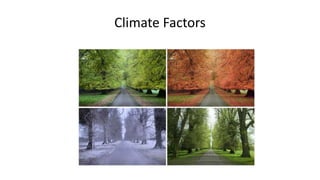
Climate Factors
Climate Factors 
• Distance from the sea 
• Ocean currents 
• Prevailing winds 
• Relief (the lay of the land, including altitude) 
• Proximity to the equator (how near or far) 
• El Niño 
• Human activity
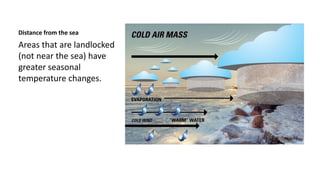
Distance from the sea 
Areas that are landlocked 
(not near the sea) have 
greater seasonal 
temperature changes.
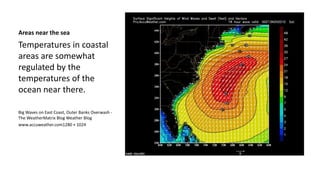
Areas near the sea 
Temperatures in coastal 
areas are somewhat 
regulated by the 
temperatures of the 
ocean near there. 
Big Waves on East Coast, Outer Banks Overwash - 
The WeatherMatrix Blog Weather Blog 
www.accuweather.com1280 × 1024
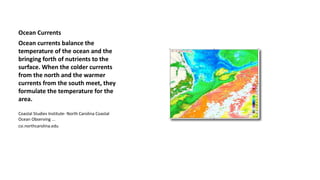
Ocean Currents 
Ocean currents balance the 
temperature of the ocean and the 
bringing forth of nutrients to the 
surface. When the colder currents 
from the north and the warmer 
currents from the south meet, they 
formulate the temperature for the 
area. 
Coastal Studies Institute- North Carolina Coastal 
Ocean Observing ... 
csi.northcarolina.edu
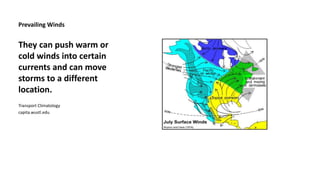
Prevailing Winds 
They can push warm or 
cold winds into certain 
currents and can move 
storms to a different 
location. 
Transport Climatology 
capita.wustl.edu
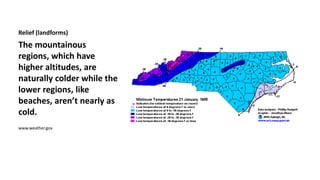
Relief (landforms) 
The mountainous 
regions, which have 
higher altitudes, are 
naturally colder while the 
lower regions, like 
beaches, aren’t nearly as 
cold. 
www.weather.gov
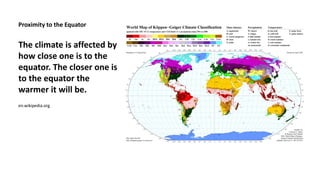
Proximity to the Equator 
The climate is affected by 
how close one is to the 
equator. The closer one is 
to the equator the 
warmer it will be. 
en.wikipedia.org
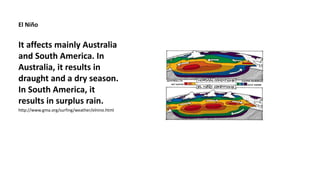
El Niño 
It affects mainly Australia 
and South America. In 
Australia, it results in 
draught and a dry season. 
In South America, it 
results in surplus rain. 
http://www.gma.org/surfing/weather/elnino.html
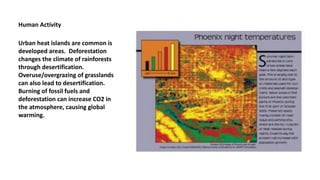
Human Activity 
Urban heat islands are common is 
developed areas. Deforestation 
changes the climate of rainforests 
through desertification. 
Overuse/overgrazing of grasslands 
can also lead to desertification. 
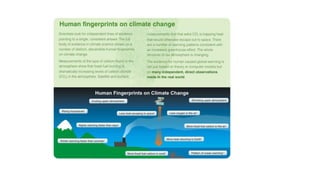
Burning of fossil fuels and 
deforestation can increase CO2 in 
the atmosphere, causing global 
warming.
Mexico’s seven climate regions 
• Climatologists have developed several scientific systems to classify 
climates. The system developed by Wladimir Köppen in the early 20th 
century is one of the earliest and best known.. 
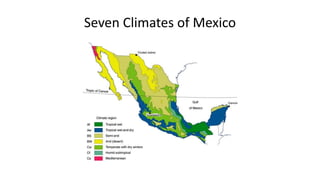
• Given that Mexico has many mountains with rapid changes in elevation, 
temperature and rainfall, applying the Köppen system, even as modified by 
García, to Mexico can become extremely complicated. A relatively small 
area of Mexico may include several Köppen climate categories. Aggregating 
these areas provides a less complicated, more understandable, picture of 
Mexico’s climates (see map). In this scheme, Mexico has seven main 
climate regions, as shown on the map: 
• Excerpts from Geo-Mexico Add comments 
• Aug 15, 2013
Seven Climates of Mexico
Reference 
• http://www.ecn.ac.uk/Education/factors_affecting_climate.htm 
• http://www.gma.org/surfing/weather/elnino.html 
• en.wikipedia.org 
• www.accuweather.com1280 × 1024 
• csi.northcarolina.edu

Climate factors

  • 1.
  • 3.
    Climate Factors •Distance from the sea • Ocean currents • Prevailing winds • Relief (the lay of the land, including altitude) • Proximity to the equator (how near or far) • El Niño • Human activity
  • 4.
    Distance from thesea Areas that are landlocked (not near the sea) have greater seasonal temperature changes.
  • 5.
    Areas near thesea Temperatures in coastal areas are somewhat regulated by the temperatures of the ocean near there. Big Waves on East Coast, Outer Banks Overwash - The WeatherMatrix Blog Weather Blog www.accuweather.com1280 × 1024
  • 6.
    Ocean Currents Oceancurrents balance the temperature of the ocean and the bringing forth of nutrients to the surface. When the colder currents from the north and the warmer currents from the south meet, they formulate the temperature for the area. Coastal Studies Institute- North Carolina Coastal Ocean Observing ... csi.northcarolina.edu
  • 7.
    Prevailing Winds Theycan push warm or cold winds into certain currents and can move storms to a different location. Transport Climatology capita.wustl.edu
  • 8.
    Relief (landforms) Themountainous regions, which have higher altitudes, are naturally colder while the lower regions, like beaches, aren’t nearly as cold. www.weather.gov
  • 9.
    Proximity to theEquator The climate is affected by how close one is to the equator. The closer one is to the equator the warmer it will be. en.wikipedia.org
  • 10.
    El Niño Itaffects mainly Australia and South America. In Australia, it results in draught and a dry season. In South America, it results in surplus rain. http://www.gma.org/surfing/weather/elnino.html
  • 11.
    Human Activity Urbanheat islands are common is developed areas. Deforestation changes the climate of rainforests through desertification. Overuse/overgrazing of grasslands can also lead to desertification. Burning of fossil fuels and deforestation can increase CO2 in the atmosphere, causing global warming.
  • 13.
    Mexico’s seven climateregions • Climatologists have developed several scientific systems to classify climates. The system developed by Wladimir Köppen in the early 20th century is one of the earliest and best known.. • Given that Mexico has many mountains with rapid changes in elevation, temperature and rainfall, applying the Köppen system, even as modified by García, to Mexico can become extremely complicated. A relatively small area of Mexico may include several Köppen climate categories. Aggregating these areas provides a less complicated, more understandable, picture of Mexico’s climates (see map). In this scheme, Mexico has seven main climate regions, as shown on the map: • Excerpts from Geo-Mexico Add comments • Aug 15, 2013
  • 14.
  • 15.
    Reference • http://www.ecn.ac.uk/Education/factors_affecting_climate.htm • http://www.gma.org/surfing/weather/elnino.html • en.wikipedia.org • www.accuweather.com1280 × 1024 • csi.northcarolina.edu