Reach for the Stars Windy Ridge Science Olympiad Team!!!
CONSTELLATIONS
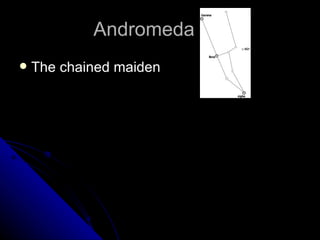
Andromeda The chained maiden
Aquarius (new) the water-bearer
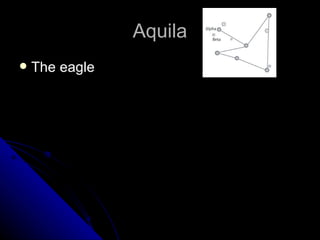
Aquila The eagle
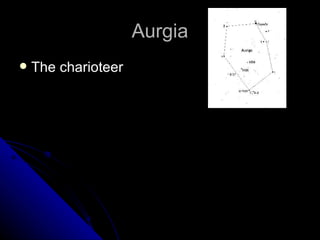
Aurgia The charioteer
Bootes The bear watcher
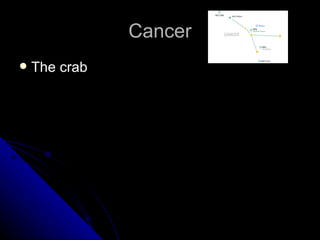
Cancer The crab
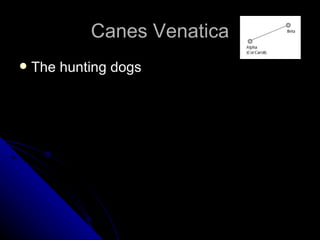
Canes Venatica The hunting dogs
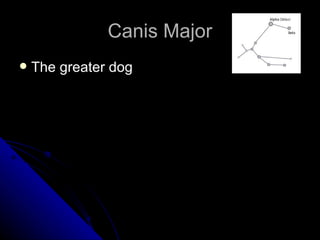
Canis Major The greater dog
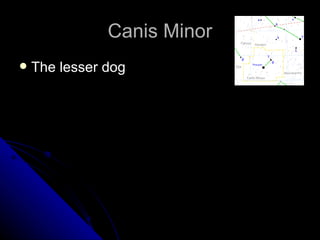
Canis Minor The lesser dog
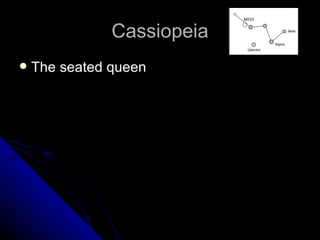
Cassiopeia The seated queen
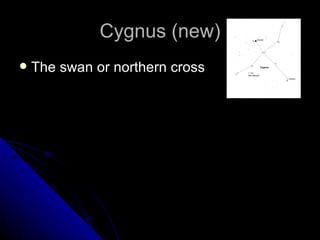
Cygnus (new) The swan or northern cross
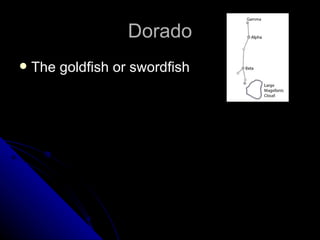
Dorado The goldfish or swordfish
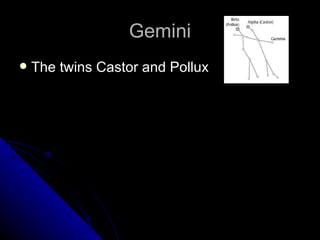
Gemini The twins Castor and Pollux
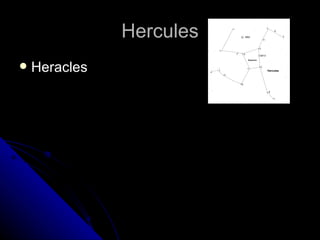
Hercules Heracles
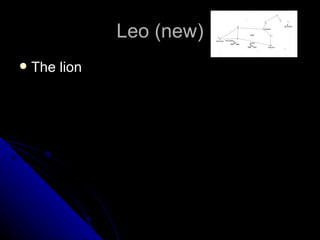
Leo (new) The lion
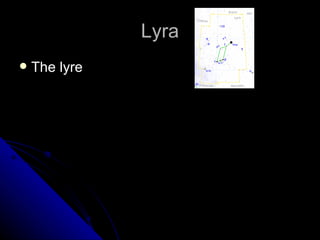
Lyra The lyre
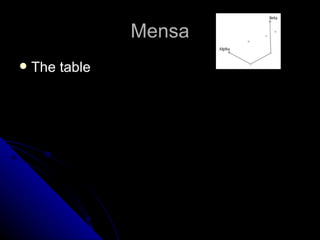
Mensa The table
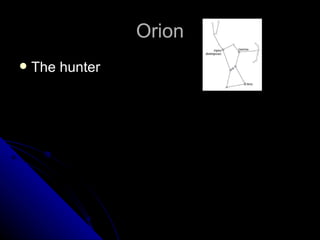
Orion The hunter
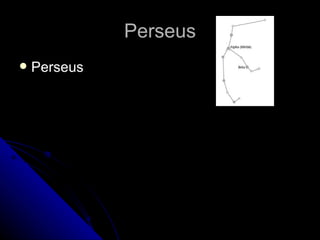
Perseus Perseus
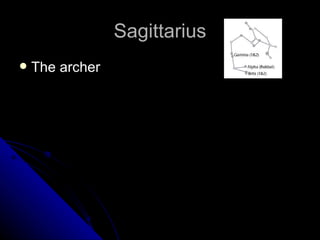
Sagittarius The archer
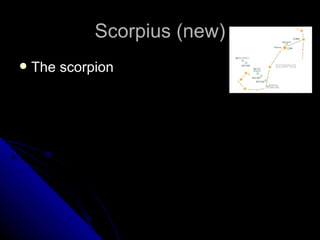
Scorpius (new) The scorpion
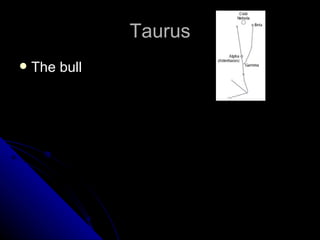
Taurus The bull
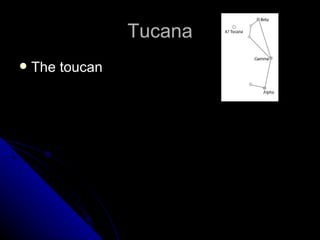
Tucana The toucan
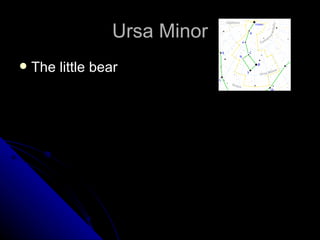
Ursa Minor The little bear
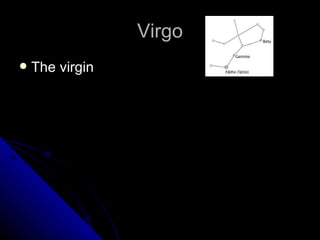
Virgo The virgin
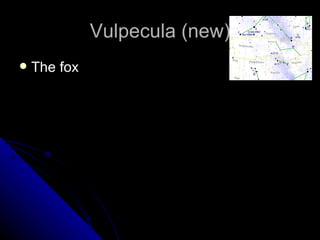
Vulpecula (new) The fox
STARS
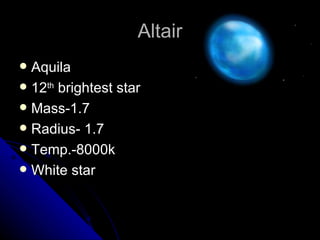
Altair Aquila 12 th  brightest star Mass-1.7 Radius- 1.7 Temp.-8000k White star
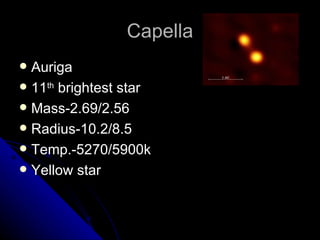
Capella Auriga 11 th  brightest star Mass-2.69/2.56 Radius-10.2/8.5 Temp.-5270/5900k Yellow star
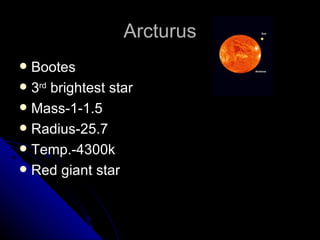
Arcturus Bootes 3 rd  brightest star Mass-1-1.5 Radius-25.7 Temp.-4300k Red giant star
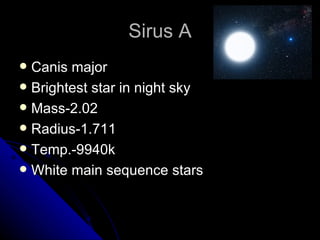
Sirus A Canis major Brightest star in night sky Mass-2.02 Radius-1.711 Temp.-9940k White main sequence stars
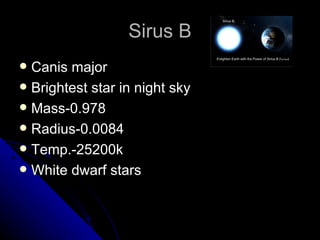
Sirus B Canis major Brightest star in night sky Mass-0.978 Radius-0.0084 Temp.-25200k White dwarf stars
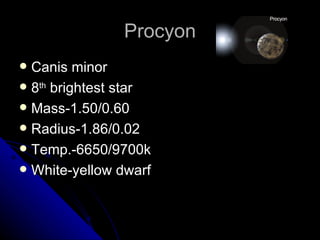
Procyon Canis minor 8 th  brightest star Mass-1.50/0.60 Radius-1.86/0.02 Temp.-6650/9700k White-yellow dwarf
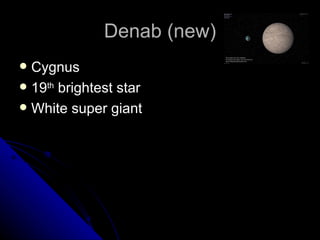
Denab (new) Cygnus 19 th  brightest star White super giant
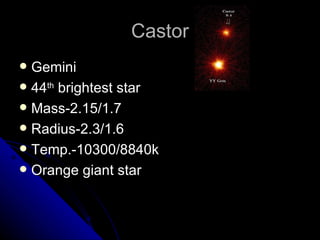
Castor Gemini 44 th  brightest star Mass-2.15/1.7 Radius-2.3/1.6 Temp.-10300/8840k Orange giant star
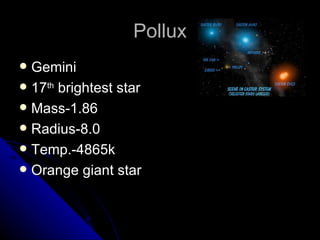
Pollux Gemini 17 th  brightest star Mass-1.86 Radius-8.0 Temp.-4865k Orange giant star
Regulus (new) Leo 22 nd  brightest star Mass-3.5/0.8/0.2 Radius-3.15-4.15/0.5 Temp.-10300-16400k Bluish-white star
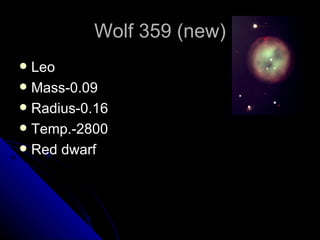
Wolf 359 (new) Leo Mass-0.09 Radius-0.16 Temp.-2800 Red dwarf
Vega Lyra 5 th  brightest star Mass-2.11 Radius-2.26*2.78 9602+-180 Northern pole star
Betelgeuse Orion 9 th  brightest star Mass-14 Radius-630 Temp.-3500k Red supergiant
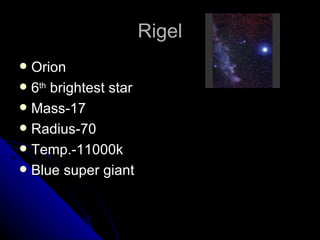
Rigel Orion 6 th  brightest star Mass-17 Radius-70 Temp.-11000k Blue super giant
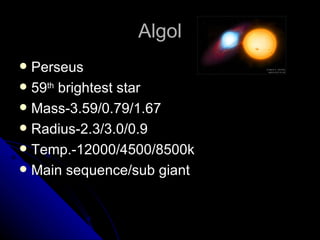
Algol Perseus 59 th  brightest star Mass-3.59/0.79/1.67 Radius-2.3/3.0/0.9 Temp.-12000/4500/8500k Main sequence/sub giant
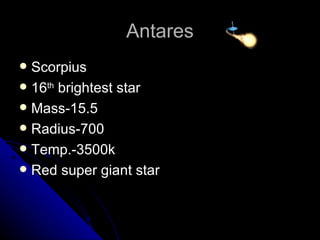
Antares Scorpius 16 th  brightest star Mass-15.5 Radius-700 Temp.-3500k Red super giant star
Sun (new) Center of the solar system
Aldebaran Taurus 13 th  brightest star Mass-2.5/0.15 Radius-25/0.04 Temp.-4100/3050k
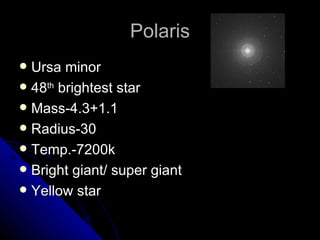
Polaris Ursa minor 48 th  brightest star Mass-4.3+1.1 Radius-30 Temp.-7200k Bright giant/ super giant  Yellow star
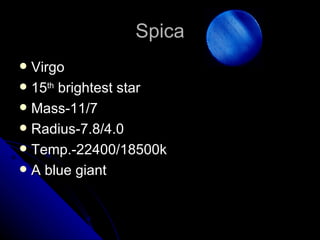
Spica Virgo 15 th  brightest star Mass-11/7 Radius-7.8/4.0 Temp.-22400/18500k A blue giant
DEEP SKY OBJECTS
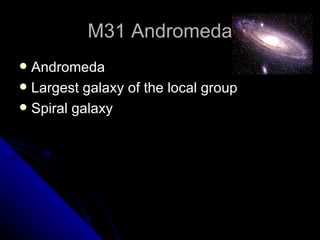
M31 Andromeda Andromeda Largest galaxy of the local group Spiral galaxy
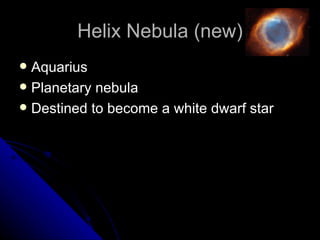
Helix Nebula (new) Aquarius Planetary nebula Destined to become a white dwarf star
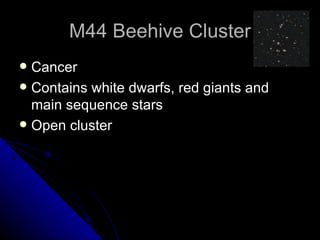
M44 Beehive Cluster Cancer Contains white dwarfs, red giants and main sequence stars Open cluster
M51 Whirlpool Galaxy Canes Venatica Spiral galaxy
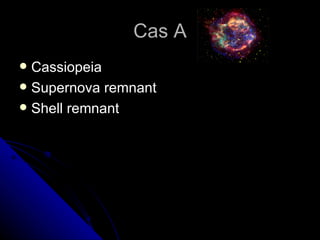
Cas A Cassiopeia Supernova remnant Shell remnant
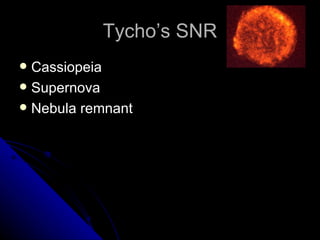
Tycho’s SNR Cassiopeia Supernova Nebula remnant
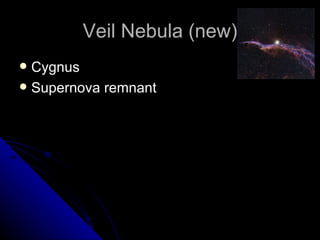
Veil Nebula (new) Cygnus Supernova remnant
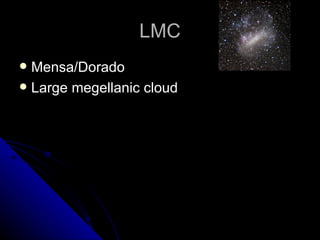
LMC Mensa/Dorado Large megellanic cloud
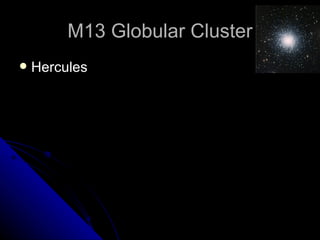
M13 Globular Cluster Hercules
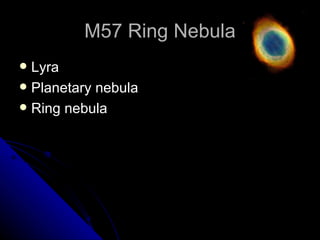
M57 Ring Nebula Lyra Planetary nebula Ring nebula
Milky Way Galaxy Barred spiral galaxy
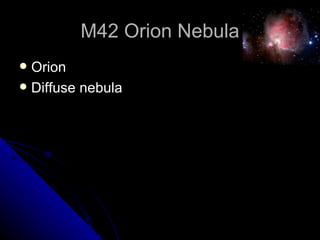
M42 Orion Nebula Orion Diffuse nebula
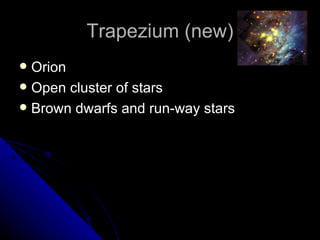
Trapezium (new) Orion Open cluster of stars Brown dwarfs and run-way stars
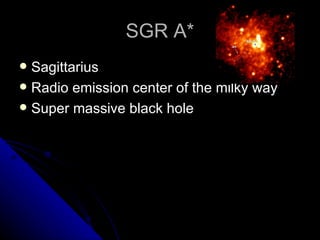
SGR A* Sagittarius Radio emission center of the milky way Super massive black hole
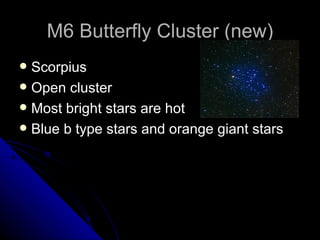
M6 Butterfly Cluster (new) Scorpius Open cluster Most bright stars are hot Blue b type stars and orange giant stars
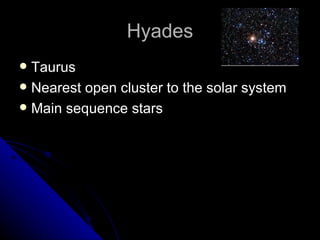
Hyades Taurus Nearest open cluster to the solar system Main sequence stars
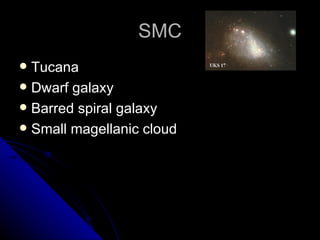
SMC Tucana Dwarf galaxy Barred spiral galaxy Small magellanic cloud
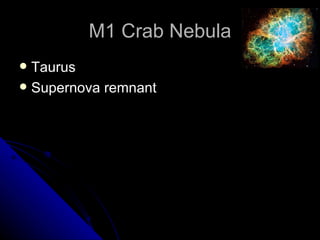
M1 Crab Nebula Taurus Supernova remnant
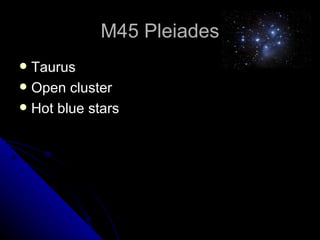
M45 Pleiades Taurus Open cluster Hot blue stars
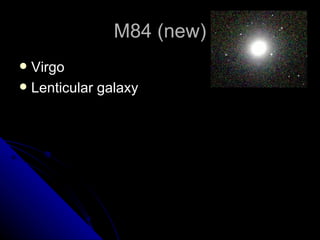
M84 (new) Virgo Lenticular galaxy
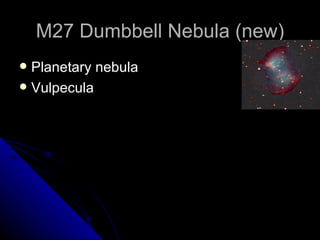
M27 Dumbbell Nebula (new) Planetary nebula Vulpecula

Reach For The Stars Ppt