By: FaizaParveen
Date: July 22, 2013
Classroom Management at primary level in
Public School
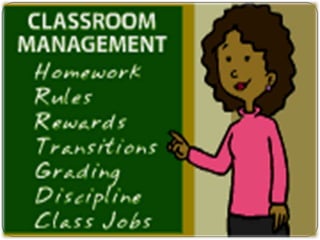
Classroom Management
 Classroom management refers to all the things a teacher does to organize
students, space, time and materials so that learning can take place with ease.
 Classroom management allows for a comfortable working environment for
students.
 Classroom management is closely linked to issues of motivation, discipline,
and respect.
The Problem
 Classroom management is directly linked to student
academic achievement, teacher efficacy, and student
behavior.
Importance of Effective Classroom
Management
 Will increase instructional and learning time
 Will increase student achievement
 Will foster an environment of productivity and community
 Will allow students to become active participants in their
educational outcome
 Will engage student in indoor and outdoor activities.
 Will create discipline in classroom
Ineffective Classroom Management
 No child left behind
makes all student scores
in regards to state
testing accountable.
 Discipline students need
to be monitored and
discipline needs to be
maintained in the
classroom.
 This makes it hard for
some teachers and
requires good planning.
Key Concepts in Effective Classroom
Management
 Lesson planning and organization
 Structured class time
 Clear Expectations
 Student engagement
 Student motivation
 Student interest
Approaches of Management Problem
 interventionist approach:
 Base on behaviorist approach
 Suggests that children develop as result of external
environmental conditions, such as reinforcement and
punishment.
 The major goal of the interventionist approach is to maintain an
orderly and productive classroom.
 Noninterventionist approach:
 Based on humanistic and psychoanalytic theories of
development.
 Suggests that the child develops from an inner unfolding of
potential.
Approaches of Management Problem
 Goal of the noninterventionist approach is to enhance the personal growth and
freedom of the individual
 Interactionist approach:
 Based on social, Gestalt and developmental psychological theories.
 views child's development as the interaction of inner and outer forces.
 Goal of interactionist approach is, while concerning with the establishment of
rules, to place an emphasis on how these rules are established and on each
individual student's responsibility to follow these rules.
Strategies to Minimize Problem
 Start with planning
 Classroom arrangement
 Make Rules Understandable
 Manage the time
 Use variety of teaching methods
 Equal Class participation
 Avoid Confrontations in Front of Student
 Rewards and consequences
 Avoid favoritism
 Once students are in the classroom, you'll continue with some of the
strategies for maintaining control.
 Establish eye contact.
 Move around the room and increase proximity to restless students.
 Send a silent signal.
 Give a quiet reminder.
 Re-direct a student's attention.
 Begin a new activity.
 Offer a choice.
 Use humor.
 Provide positive reinforcement.
 Wait quietly until everyone is on task.
Minute-by-minute monitoring
Classroom management

Classroom management

  • 1.
    By: FaizaParveen Date: July22, 2013 Classroom Management at primary level in Public School
  • 2.
    Classroom Management  Classroommanagement refers to all the things a teacher does to organize students, space, time and materials so that learning can take place with ease.  Classroom management allows for a comfortable working environment for students.  Classroom management is closely linked to issues of motivation, discipline, and respect.
  • 3.
    The Problem  Classroommanagement is directly linked to student academic achievement, teacher efficacy, and student behavior.
  • 4.
    Importance of EffectiveClassroom Management  Will increase instructional and learning time  Will increase student achievement  Will foster an environment of productivity and community  Will allow students to become active participants in their educational outcome  Will engage student in indoor and outdoor activities.  Will create discipline in classroom
  • 5.
    Ineffective Classroom Management No child left behind makes all student scores in regards to state testing accountable.  Discipline students need to be monitored and discipline needs to be maintained in the classroom.  This makes it hard for some teachers and requires good planning.
  • 6.
    Key Concepts inEffective Classroom Management  Lesson planning and organization  Structured class time  Clear Expectations  Student engagement  Student motivation  Student interest
  • 8.
    Approaches of ManagementProblem  interventionist approach:  Base on behaviorist approach  Suggests that children develop as result of external environmental conditions, such as reinforcement and punishment.  The major goal of the interventionist approach is to maintain an orderly and productive classroom.  Noninterventionist approach:  Based on humanistic and psychoanalytic theories of development.  Suggests that the child develops from an inner unfolding of potential.
  • 9.
    Approaches of ManagementProblem  Goal of the noninterventionist approach is to enhance the personal growth and freedom of the individual  Interactionist approach:  Based on social, Gestalt and developmental psychological theories.  views child's development as the interaction of inner and outer forces.  Goal of interactionist approach is, while concerning with the establishment of rules, to place an emphasis on how these rules are established and on each individual student's responsibility to follow these rules.
  • 11.
    Strategies to MinimizeProblem  Start with planning  Classroom arrangement  Make Rules Understandable  Manage the time  Use variety of teaching methods  Equal Class participation  Avoid Confrontations in Front of Student  Rewards and consequences  Avoid favoritism
  • 12.
     Once studentsare in the classroom, you'll continue with some of the strategies for maintaining control.  Establish eye contact.  Move around the room and increase proximity to restless students.  Send a silent signal.  Give a quiet reminder.  Re-direct a student's attention.  Begin a new activity.  Offer a choice.  Use humor.  Provide positive reinforcement.  Wait quietly until everyone is on task. Minute-by-minute monitoring