TOPIC : CLASSIFICATION OF PHYLUM
CNIDARIA UPTO CLASS
CLASSIFICATION OF PHYLUM CNIDARIA
Class Hydrozoa
• Fresh water as well as marine.
• polyyp and medusa often show polymorphism and
metagenesis.
• Mesogloea is acellular.
• Gastrovascular cavity is undivided.Gonads are
ectodermal and shed.
• Gametetesgametes directly surrounding water into the surrounding water.
• Cnidoblast is present only in epidermis.
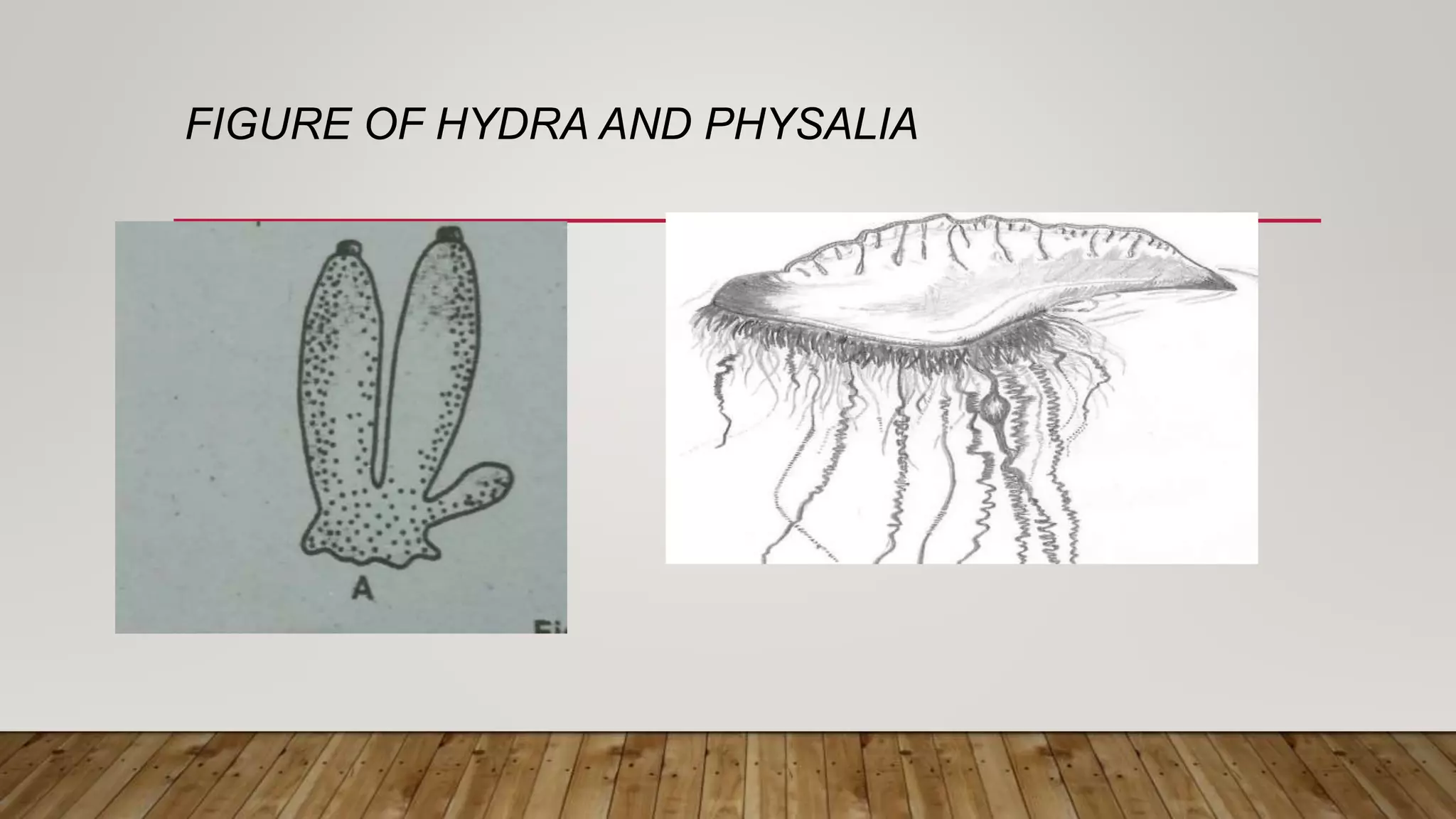
• Examples, Hydra (fresh water polyp), Physalia (Portuguese man of war;
neurotoxic, gas gland .
FIGURE OF HYDRA AND PHYSALIA
CLASSIFICATION OF PHYLUM CNIDARIA UPTO
CLASS
• It include over 9,000 species
• These are mostly marine.
• Important in coral reef.
• These also called“the stingers” because their tentacles
• are present near the mouth bearing stinging cells called
Cnidoblast or cnidocytes composed of nematocysts.
CHARACTERISTICS OF PHYLUM CNIDARIA
• Radial or Biradial symmetry
• Tissue level organization and Diploblastic.
• Mesoglia is present.
• Gastrovascular cavity.
• Nervous system in the form of nerve net.
• Cnidocytes for defense , feeding and attachment.
• Oral and Aboral end.
• Respond to stimuli from all directions
• Examfishples: Hydra , Obelia, jell fish etc
•
• Class Scyphozoa:
• Extensively marin
• Medusa form is most common.
• Mesoglia is thick, gelatinous and contain cells.
• Gastrovacular cavity is undivided.
• Gonades are endodermal and shed the gametes into digestive track when
escape through mouth.
• Cnidoblast is present in epidermis and
gastroderm.
• Example:AureIia( jelly fish,moon
fish),larva
• : Ephyra etc.
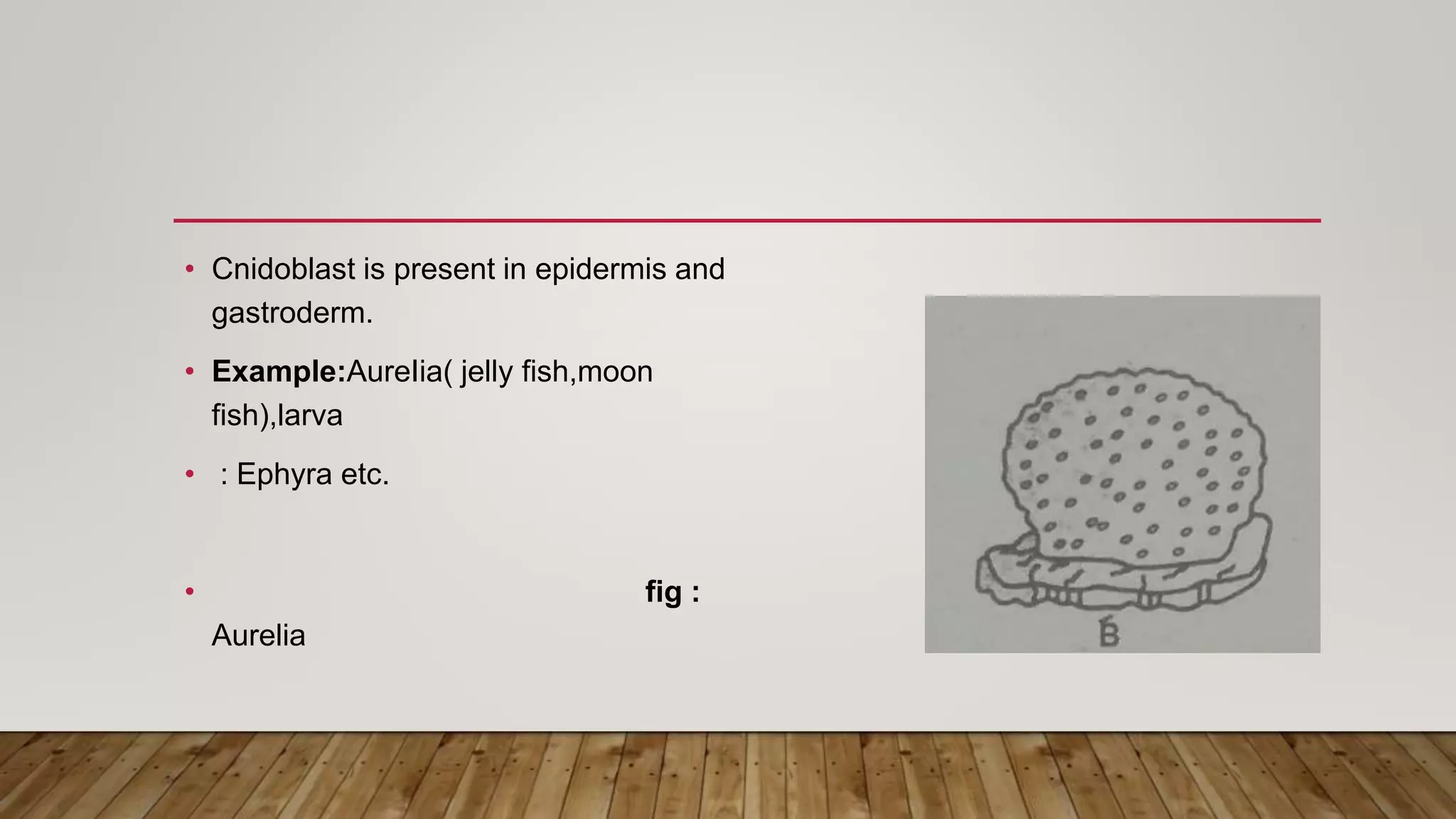
• fig :
Aurelia
• (3) Anthozoa (Actinozoa)
• Exclusively Marine.
• Only polyp form
• .Mesogloea contains cells and fibers.
• Gastrovascular cavity has compartments, i.e., mesenteries.
• Gonads are endodermal and shed gamete into digestive tract escape via mouth.
•
•
• .Cnidoblast is present in epidermis and gastrodermis.
• This class has two types of animals: Anemones (Skeleton absent) Adamisa (Sea
anemone) and Corals (CaCO3 skeleton) – Pennautula (Sea pen), Gorgonia (Sea
fan).Gastrodermal in origin; medusa cuboidal in arine, Chirones, Fleckeri,
charybdea.
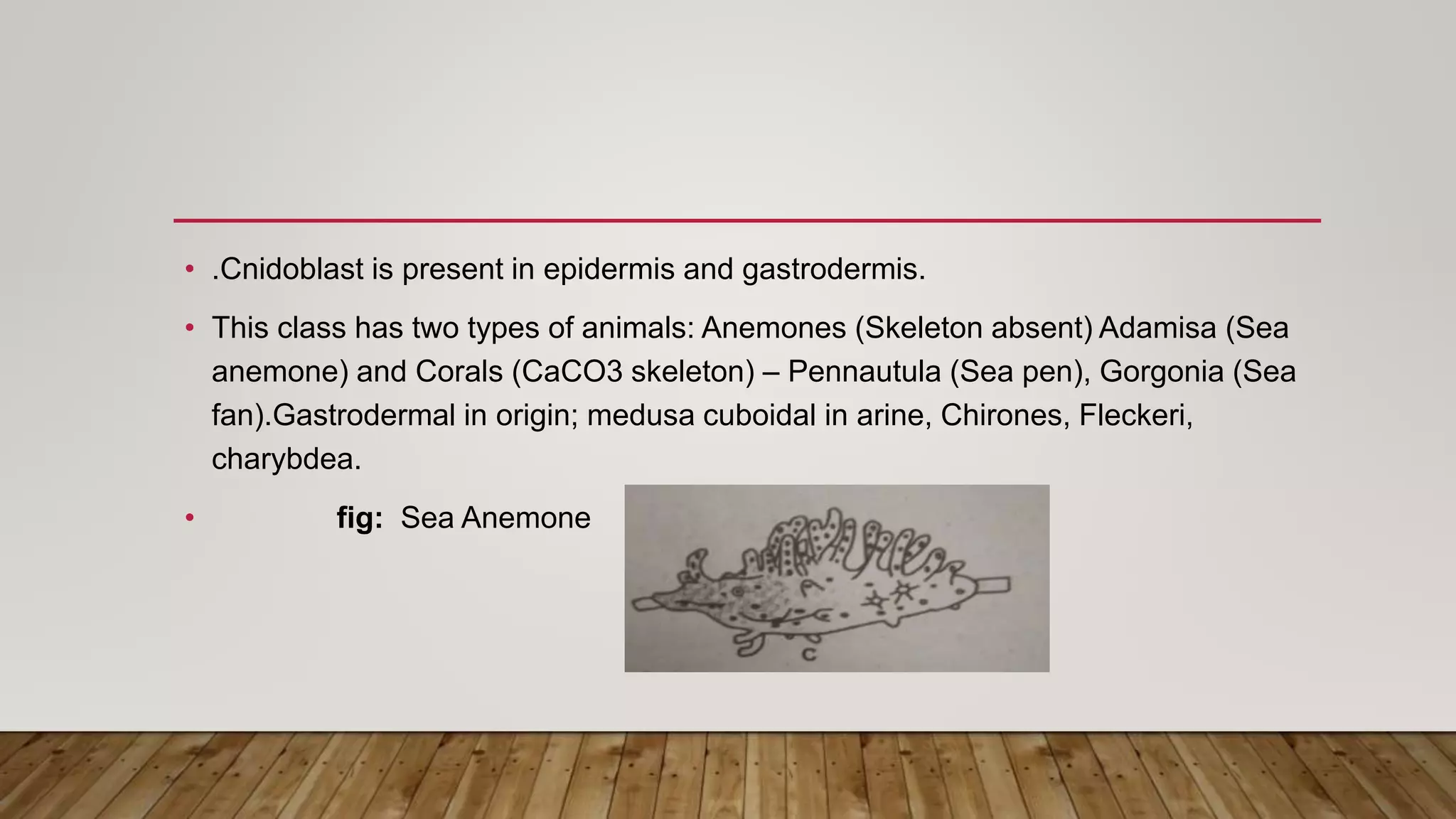
• fig: Sea Anemone
• 4) Class Cubozoa (ku”bo-zo’ah)
• Medusa prominent in the life history, polyp small: gametes gastrodermal in origin,
medusa cuboidal in shape with tentacles that hang from each corner of the bell:
marine, Chirones, Fleckeri, charybdea.
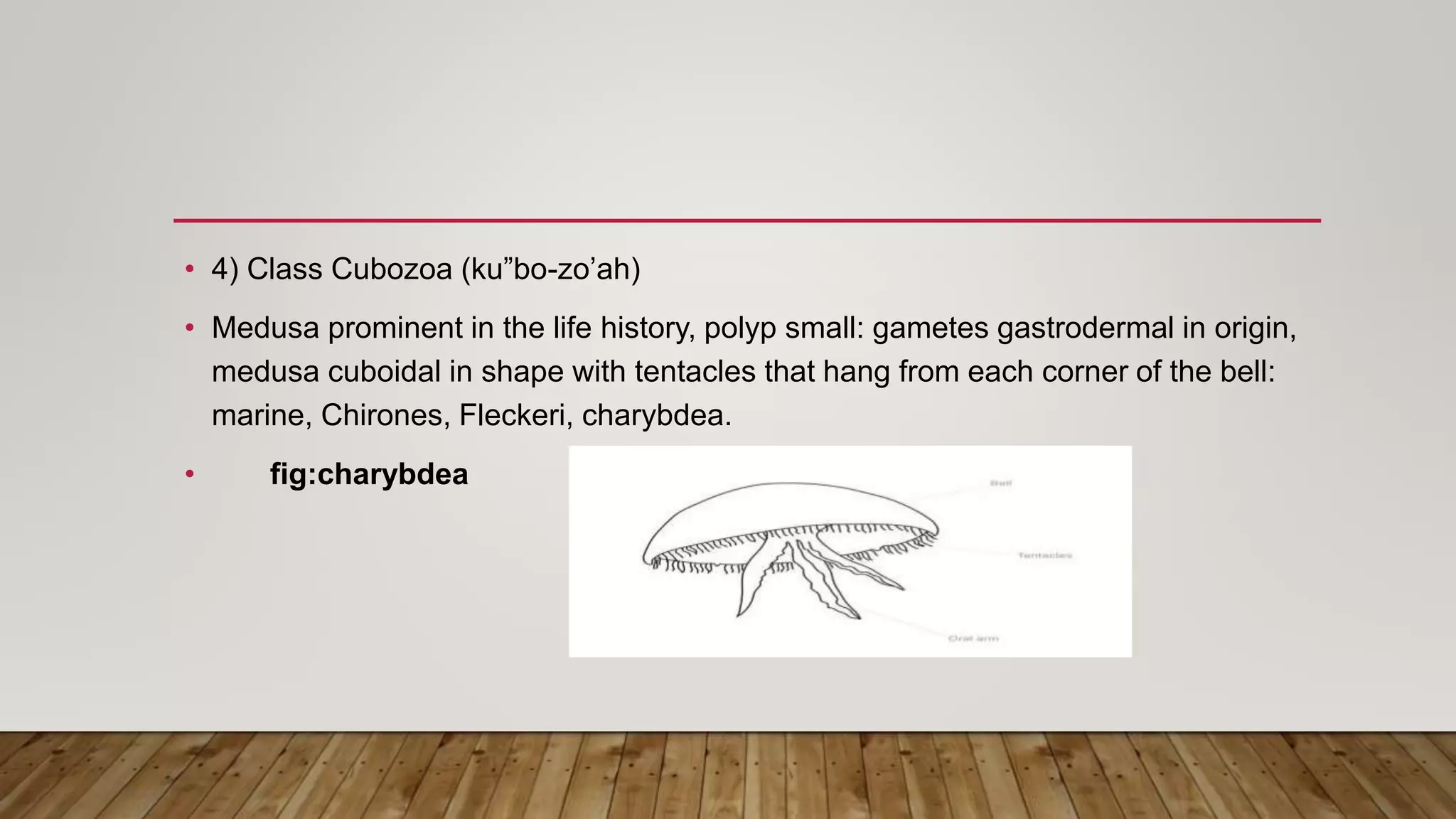
• fig:charybdea

Classification of phylum Cnidaria upto class

  • 1.
    TOPIC : CLASSIFICATIONOF PHYLUM CNIDARIA UPTO CLASS
  • 2.
    CLASSIFICATION OF PHYLUMCNIDARIA Class Hydrozoa • Fresh water as well as marine. • polyyp and medusa often show polymorphism and metagenesis. • Mesogloea is acellular. • Gastrovascular cavity is undivided.Gonads are ectodermal and shed.
  • 3.
    • Gametetesgametes directlysurrounding water into the surrounding water. • Cnidoblast is present only in epidermis. • Examples, Hydra (fresh water polyp), Physalia (Portuguese man of war; neurotoxic, gas gland .
  • 4.
    FIGURE OF HYDRAAND PHYSALIA
  • 5.
    CLASSIFICATION OF PHYLUMCNIDARIA UPTO CLASS • It include over 9,000 species • These are mostly marine. • Important in coral reef. • These also called“the stingers” because their tentacles • are present near the mouth bearing stinging cells called Cnidoblast or cnidocytes composed of nematocysts.
  • 6.
    CHARACTERISTICS OF PHYLUMCNIDARIA • Radial or Biradial symmetry • Tissue level organization and Diploblastic. • Mesoglia is present. • Gastrovascular cavity. • Nervous system in the form of nerve net. • Cnidocytes for defense , feeding and attachment. • Oral and Aboral end.
  • 7.
    • Respond tostimuli from all directions • Examfishples: Hydra , Obelia, jell fish etc •
  • 8.
    • Class Scyphozoa: •Extensively marin • Medusa form is most common. • Mesoglia is thick, gelatinous and contain cells. • Gastrovacular cavity is undivided. • Gonades are endodermal and shed the gametes into digestive track when escape through mouth.
  • 9.
    • Cnidoblast ispresent in epidermis and gastroderm. • Example:AureIia( jelly fish,moon fish),larva • : Ephyra etc. • fig : Aurelia
  • 10.
    • (3) Anthozoa(Actinozoa) • Exclusively Marine. • Only polyp form • .Mesogloea contains cells and fibers. • Gastrovascular cavity has compartments, i.e., mesenteries. • Gonads are endodermal and shed gamete into digestive tract escape via mouth. • •
  • 11.
    • .Cnidoblast ispresent in epidermis and gastrodermis. • This class has two types of animals: Anemones (Skeleton absent) Adamisa (Sea anemone) and Corals (CaCO3 skeleton) – Pennautula (Sea pen), Gorgonia (Sea fan).Gastrodermal in origin; medusa cuboidal in arine, Chirones, Fleckeri, charybdea. • fig: Sea Anemone
  • 12.
    • 4) ClassCubozoa (ku”bo-zo’ah) • Medusa prominent in the life history, polyp small: gametes gastrodermal in origin, medusa cuboidal in shape with tentacles that hang from each corner of the bell: marine, Chirones, Fleckeri, charybdea. • fig:charybdea