Classification of Matter
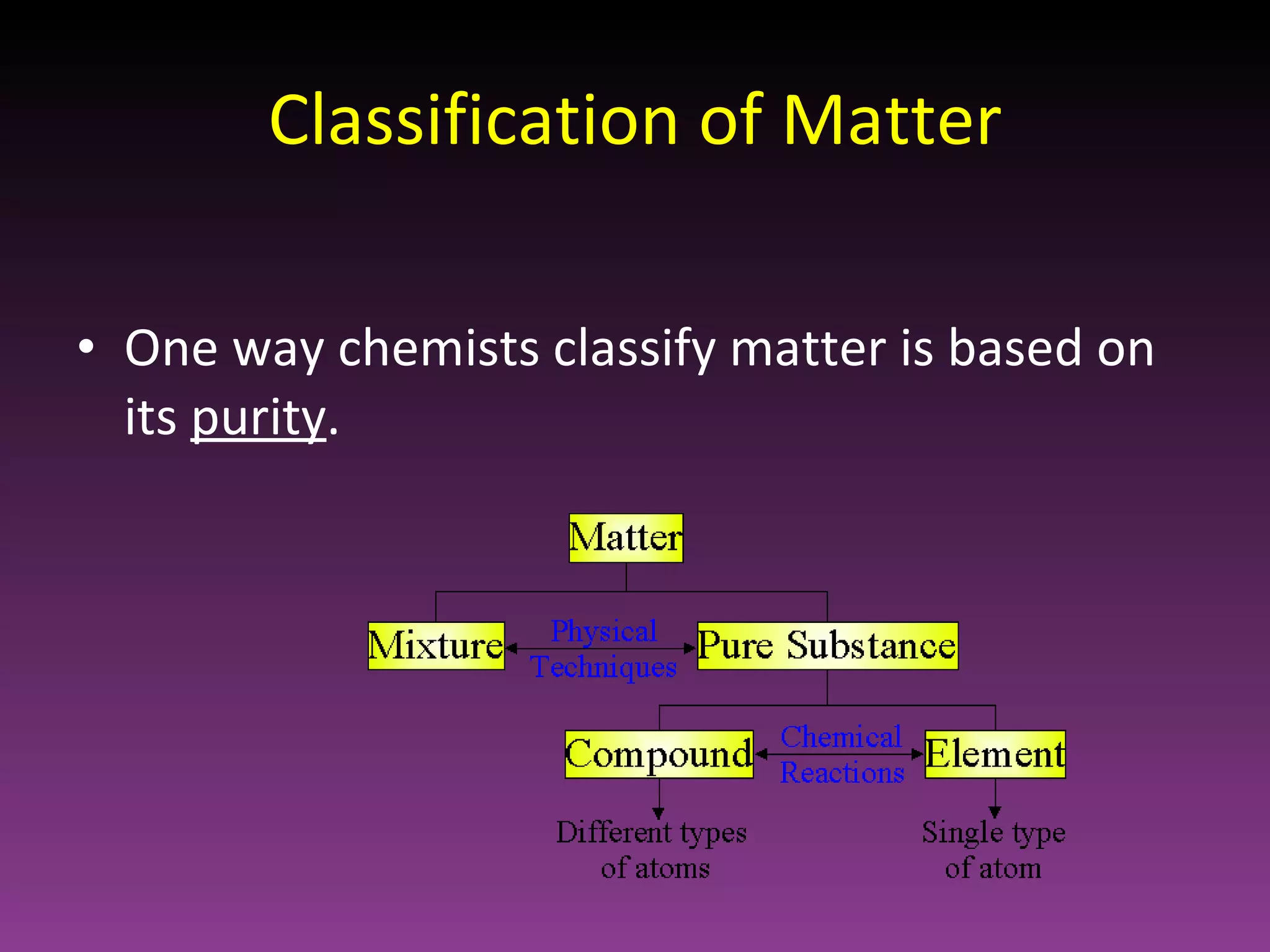
Classification of Matter One way chemists classify matter is based on its  purity .
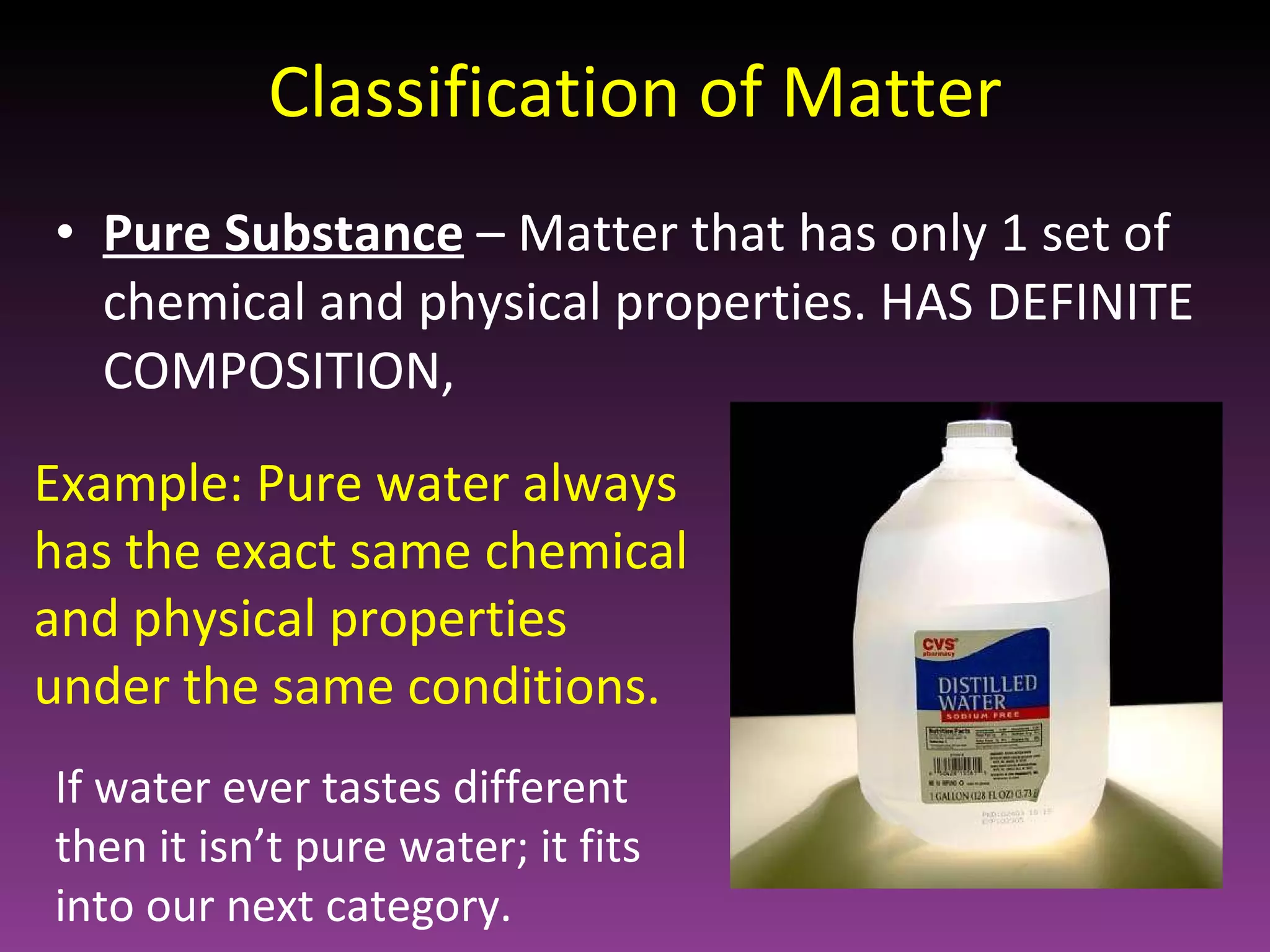
Classification of Matter Pure Substance   – Matter that has only 1 set of chemical and physical properties. HAS DEFINITE COMPOSITION,  Example: Pure water always has the exact same chemical and physical properties under the same conditions. If water ever tastes different then it isn’t pure water; it fits into our next category.
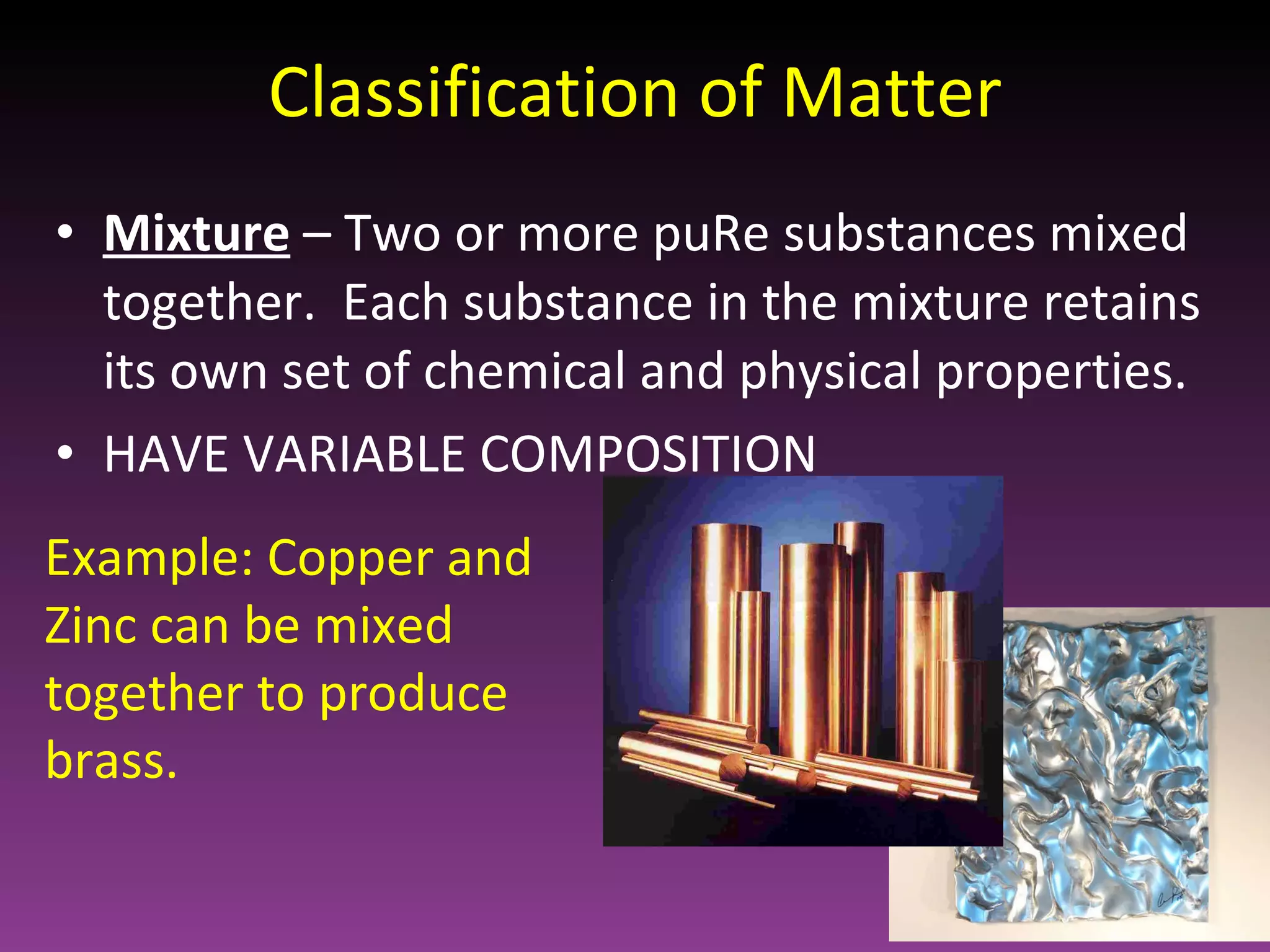
Classification of Matter Mixture   – Two or more puRe substances mixed together.  Each substance in the mixture retains its own set of chemical and physical properties. HAVE VARIABLE COMPOSITION Example: Copper and Zinc can be mixed together to produce brass.
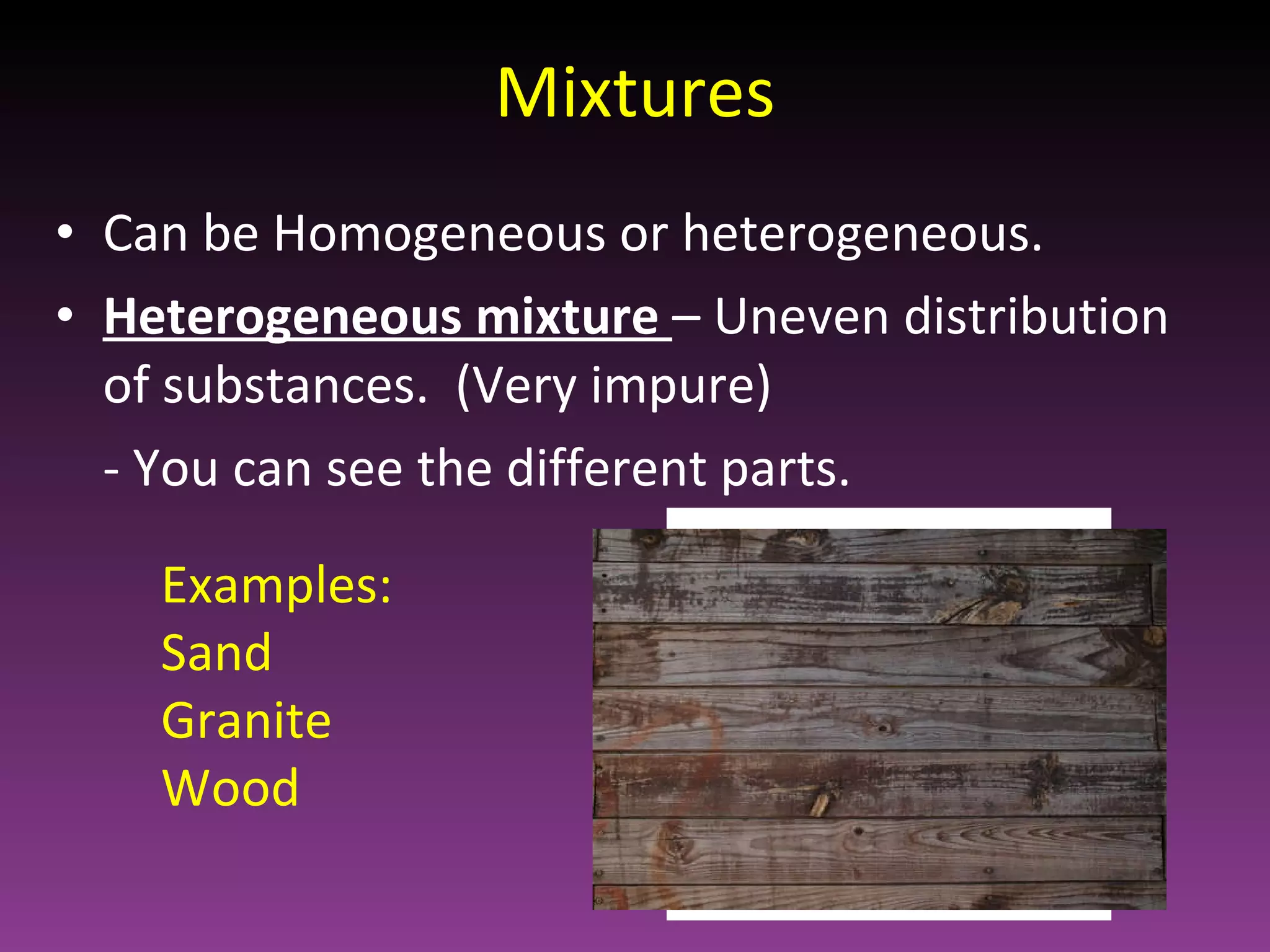
Mixtures Can be Homogeneous or heterogeneous. Heterogeneous mixture  – Uneven distribution of substances.  (Very impure) - You can see the different parts. Examples:  Sand Granite Wood
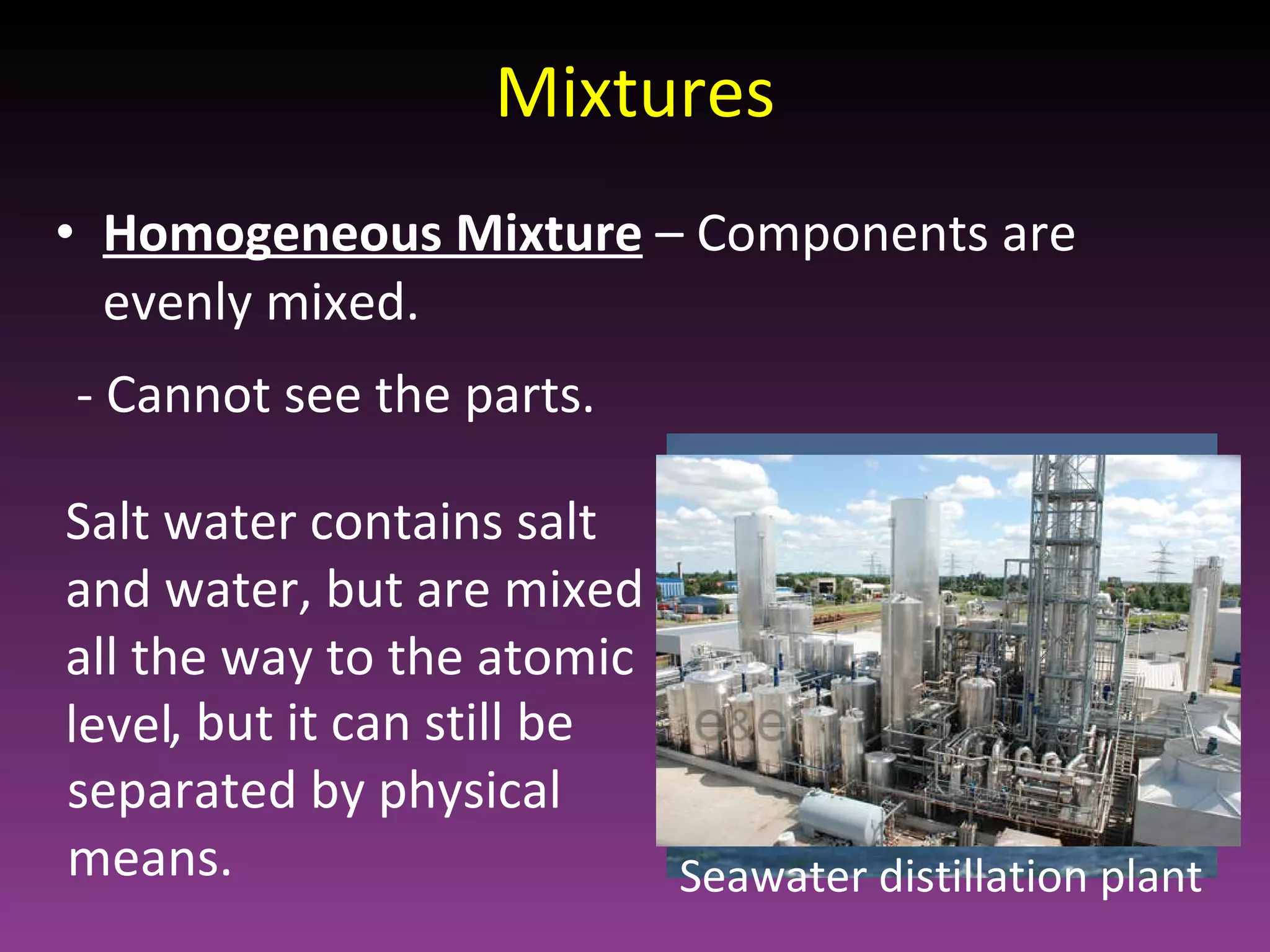
Mixtures Homogeneous Mixture   – Components are evenly mixed. Salt water contains salt and water, but are mixed all the way to the atomic level - Cannot see the parts. , but it can still be separated by physical means. Seawater distillation plant
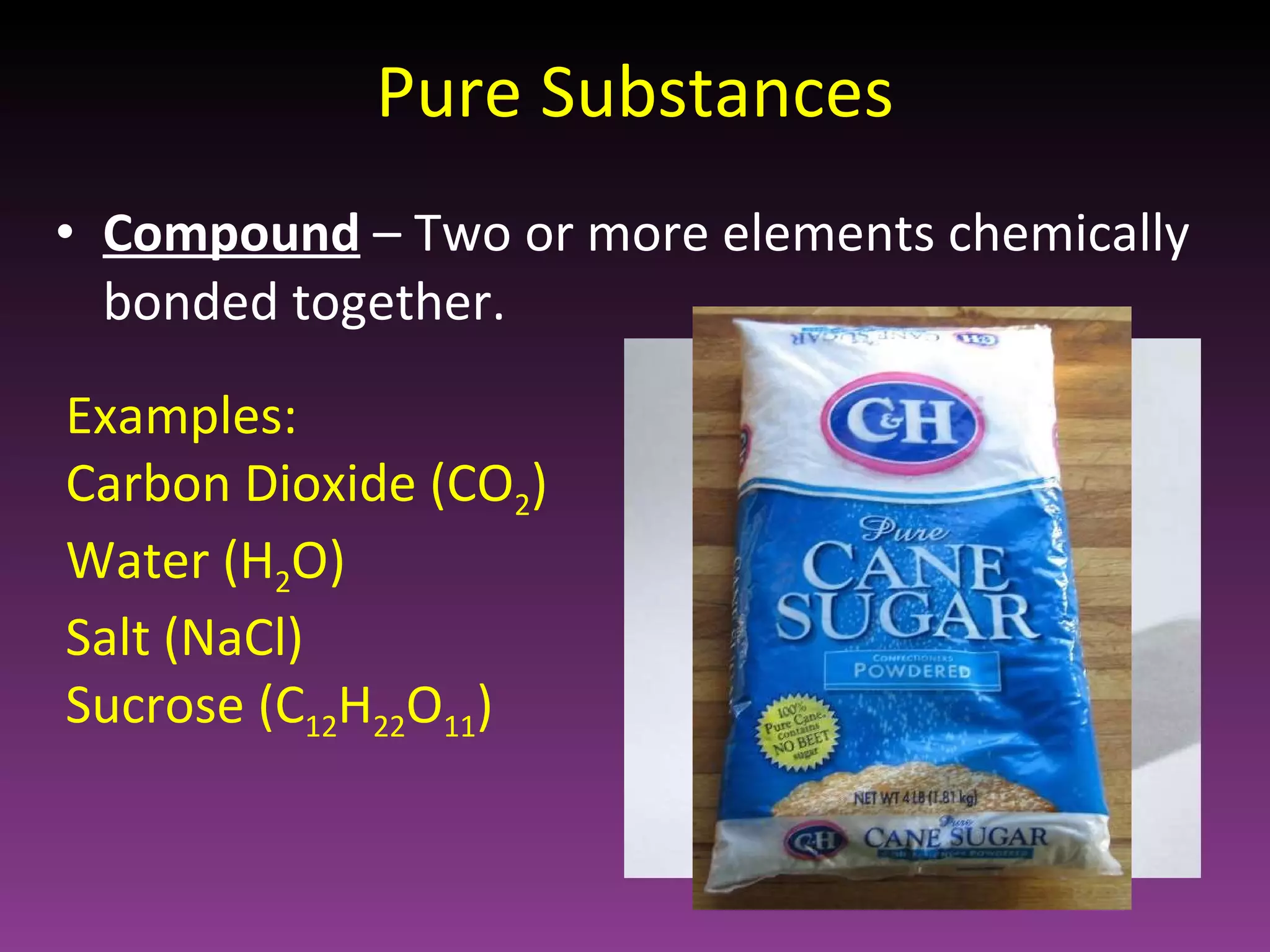
Pure Substances Compound  – Two or more elements chemically bonded together. Examples: Carbon Dioxide (CO 2 ) Water (H 2 O) Salt (NaCl) Sucrose (C 12 H 22 O 11 )
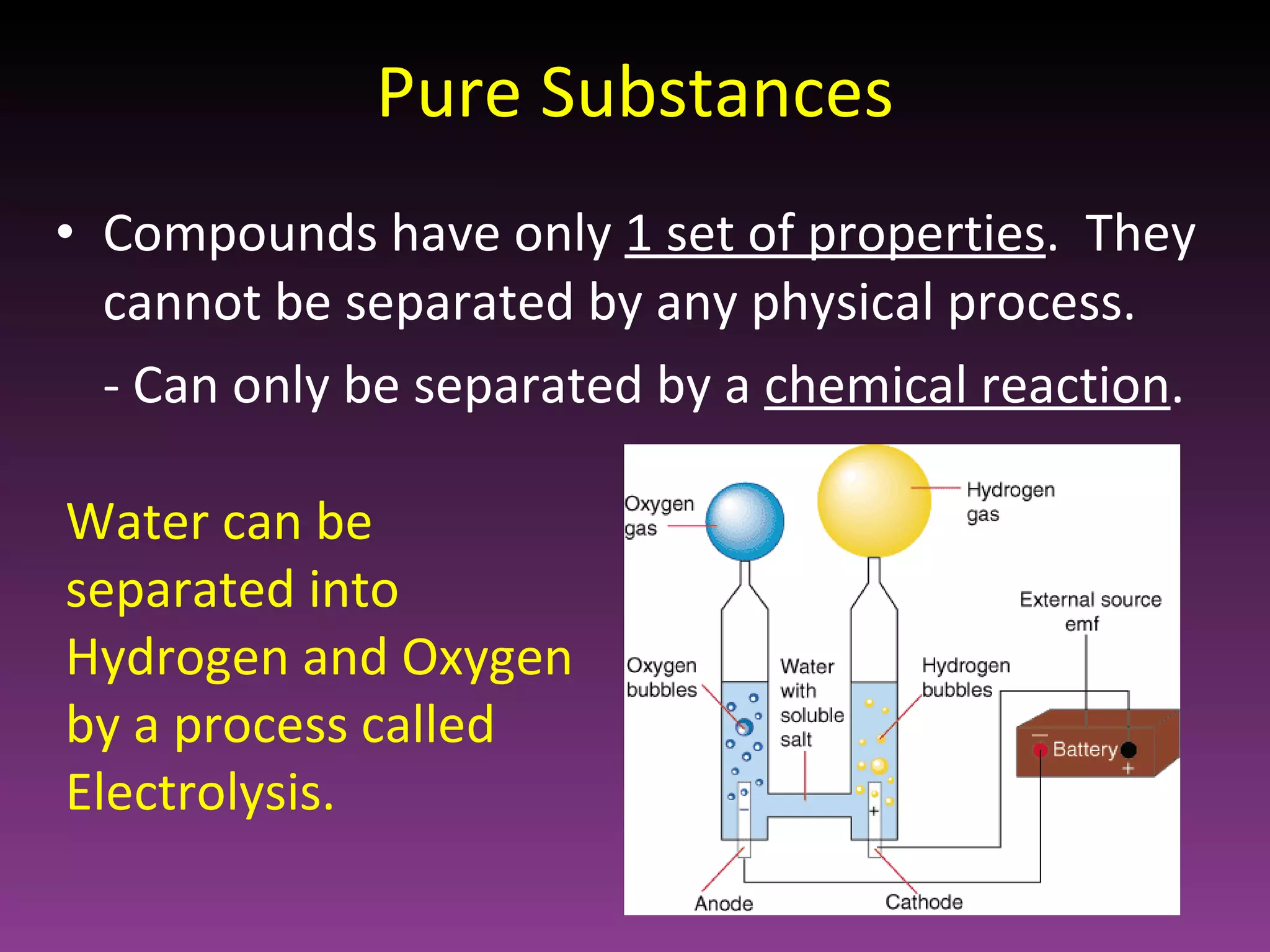
Pure Substances Compounds have only  1 set of properties .  They cannot be separated by any physical process. - Can only be separated by a  chemical reaction . Water can be separated into Hydrogen and Oxygen by a process called Electrolysis.
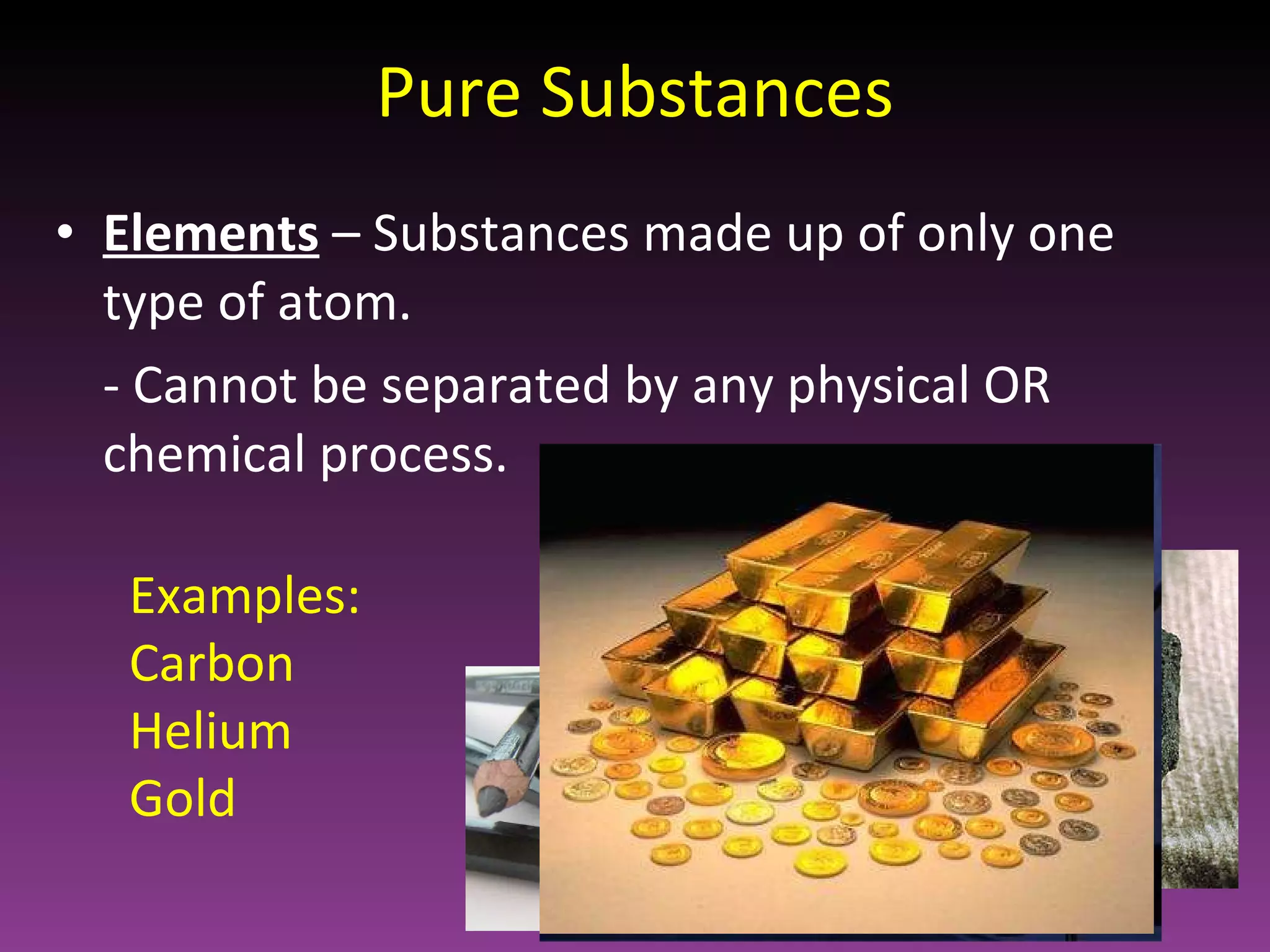
Pure Substances Elements  – Substances made up of only one type of atom.  - Cannot be separated by any physical OR chemical process. Examples: Carbon Helium Gold
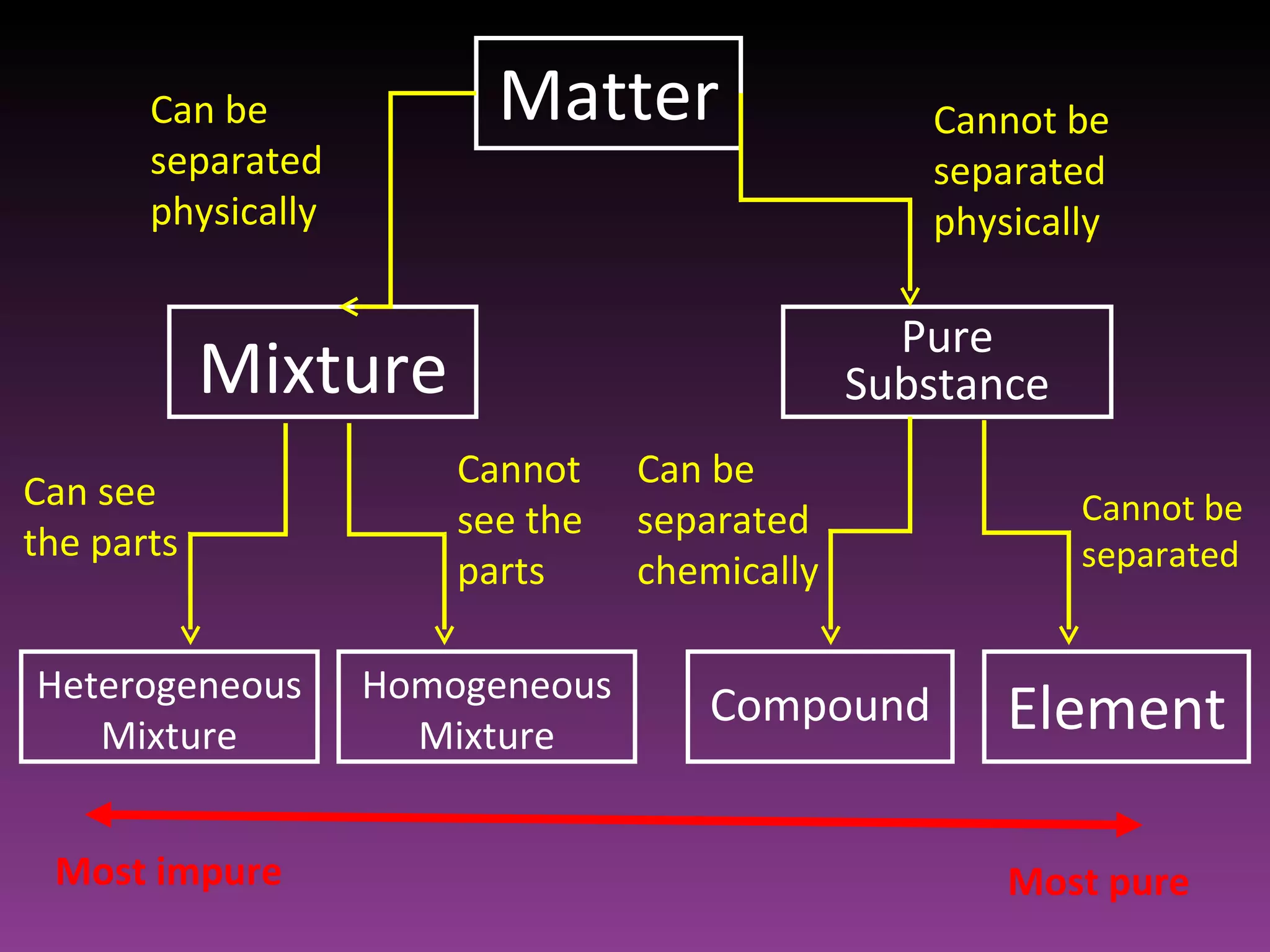
Matter Mixture Pure Substance Element Compound Heterogeneous Mixture Homogeneous Mixture Can be separated physically Cannot be separated physically Can see the parts Cannot see the parts Can be separated chemically Cannot be separated Most impure Most pure

Classification of matter

  • 1.
  • 2.
    Classification of MatterOne way chemists classify matter is based on its purity .
  • 3.
    Classification of MatterPure Substance – Matter that has only 1 set of chemical and physical properties. HAS DEFINITE COMPOSITION, Example: Pure water always has the exact same chemical and physical properties under the same conditions. If water ever tastes different then it isn’t pure water; it fits into our next category.
  • 4.
    Classification of MatterMixture – Two or more puRe substances mixed together. Each substance in the mixture retains its own set of chemical and physical properties. HAVE VARIABLE COMPOSITION Example: Copper and Zinc can be mixed together to produce brass.
  • 5.
    Mixtures Can beHomogeneous or heterogeneous. Heterogeneous mixture – Uneven distribution of substances. (Very impure) - You can see the different parts. Examples: Sand Granite Wood
  • 6.
    Mixtures Homogeneous Mixture – Components are evenly mixed. Salt water contains salt and water, but are mixed all the way to the atomic level - Cannot see the parts. , but it can still be separated by physical means. Seawater distillation plant
  • 7.
    Pure Substances Compound – Two or more elements chemically bonded together. Examples: Carbon Dioxide (CO 2 ) Water (H 2 O) Salt (NaCl) Sucrose (C 12 H 22 O 11 )
  • 8.
    Pure Substances Compoundshave only 1 set of properties . They cannot be separated by any physical process. - Can only be separated by a chemical reaction . Water can be separated into Hydrogen and Oxygen by a process called Electrolysis.
  • 9.
    Pure Substances Elements – Substances made up of only one type of atom. - Cannot be separated by any physical OR chemical process. Examples: Carbon Helium Gold
  • 10.
    Matter Mixture PureSubstance Element Compound Heterogeneous Mixture Homogeneous Mixture Can be separated physically Cannot be separated physically Can see the parts Cannot see the parts Can be separated chemically Cannot be separated Most impure Most pure