CHAPTER 17
CLASSIFICATION OF MATTER
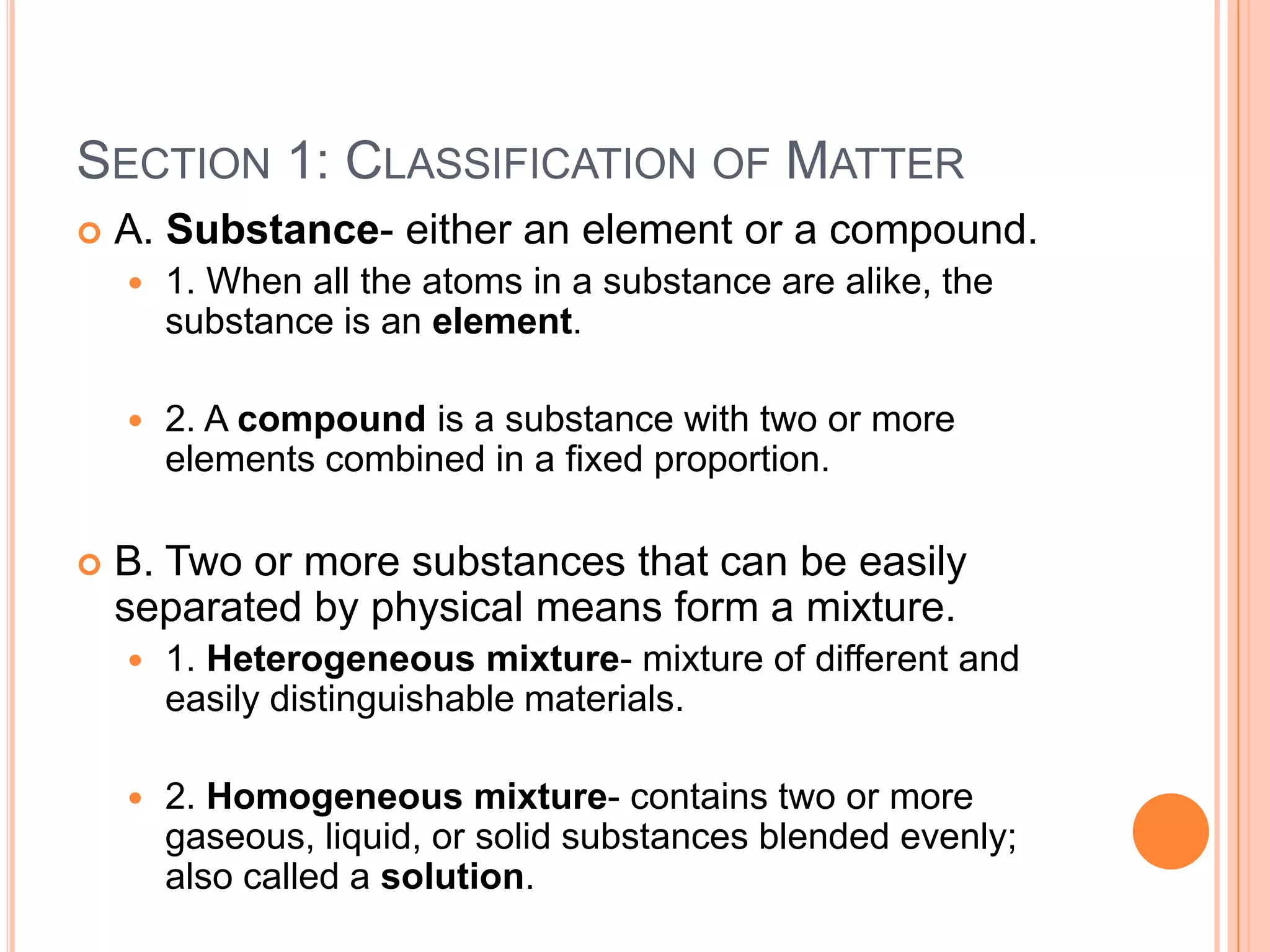
SECTION 1: CLASSIFICATION OF MATTER
   A. Substance- either an element or a compound.
       1. When all the atoms in a substance are alike, the
        substance is an element.

       2. A compound is a substance with two or more
        elements combined in a fixed proportion.

   B. Two or more substances that can be easily
    separated by physical means form a mixture.
       1. Heterogeneous mixture- mixture of different and
        easily distinguishable materials.

       2. Homogeneous mixture- contains two or more
        gaseous, liquid, or solid substances blended evenly;
        also called a solution.
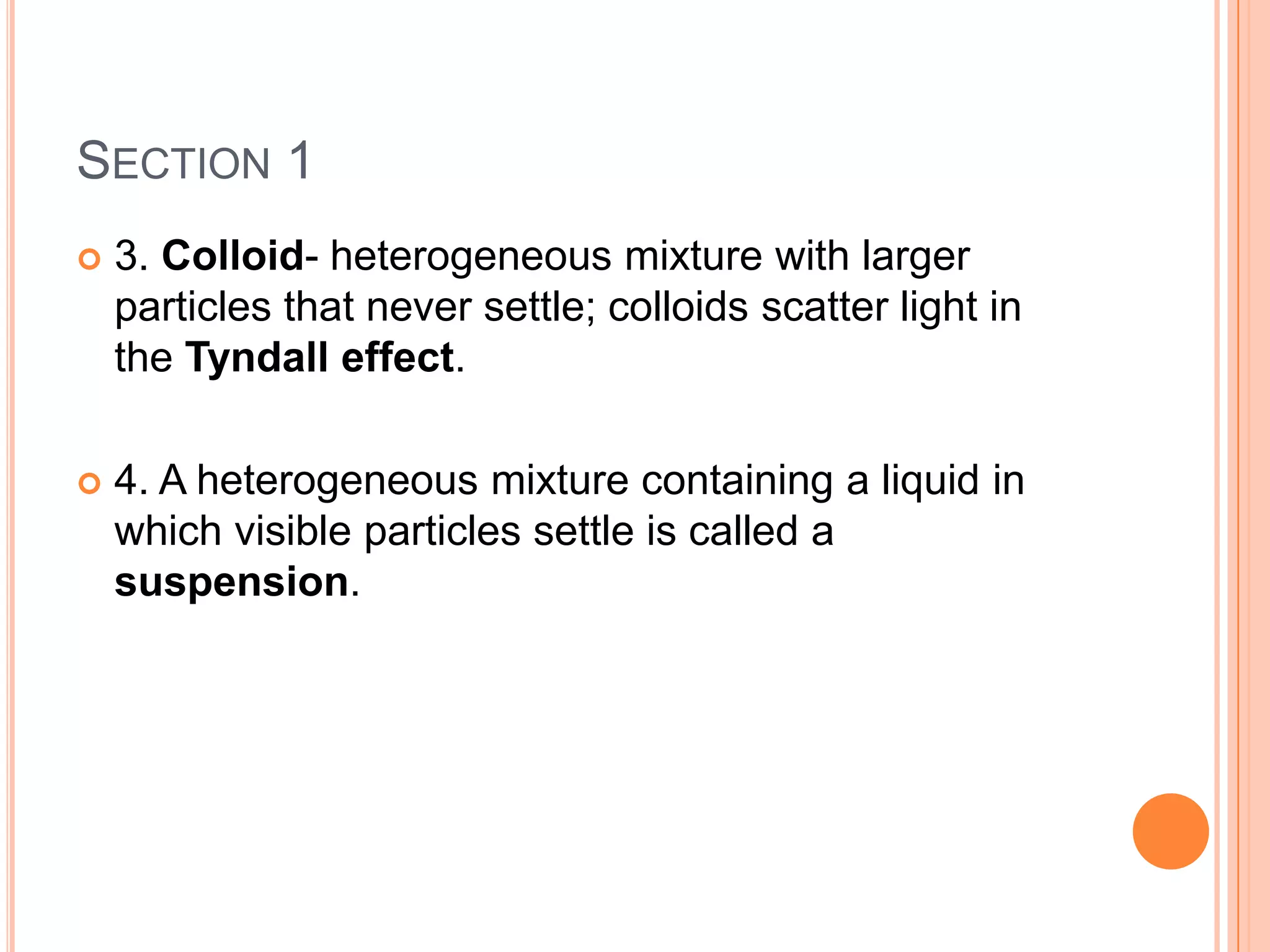
SECTION 1
   3. Colloid- heterogeneous mixture with larger
    particles that never settle; colloids scatter light in
    the Tyndall effect.

   4. A heterogeneous mixture containing a liquid in
    which visible particles settle is called a
    suspension.
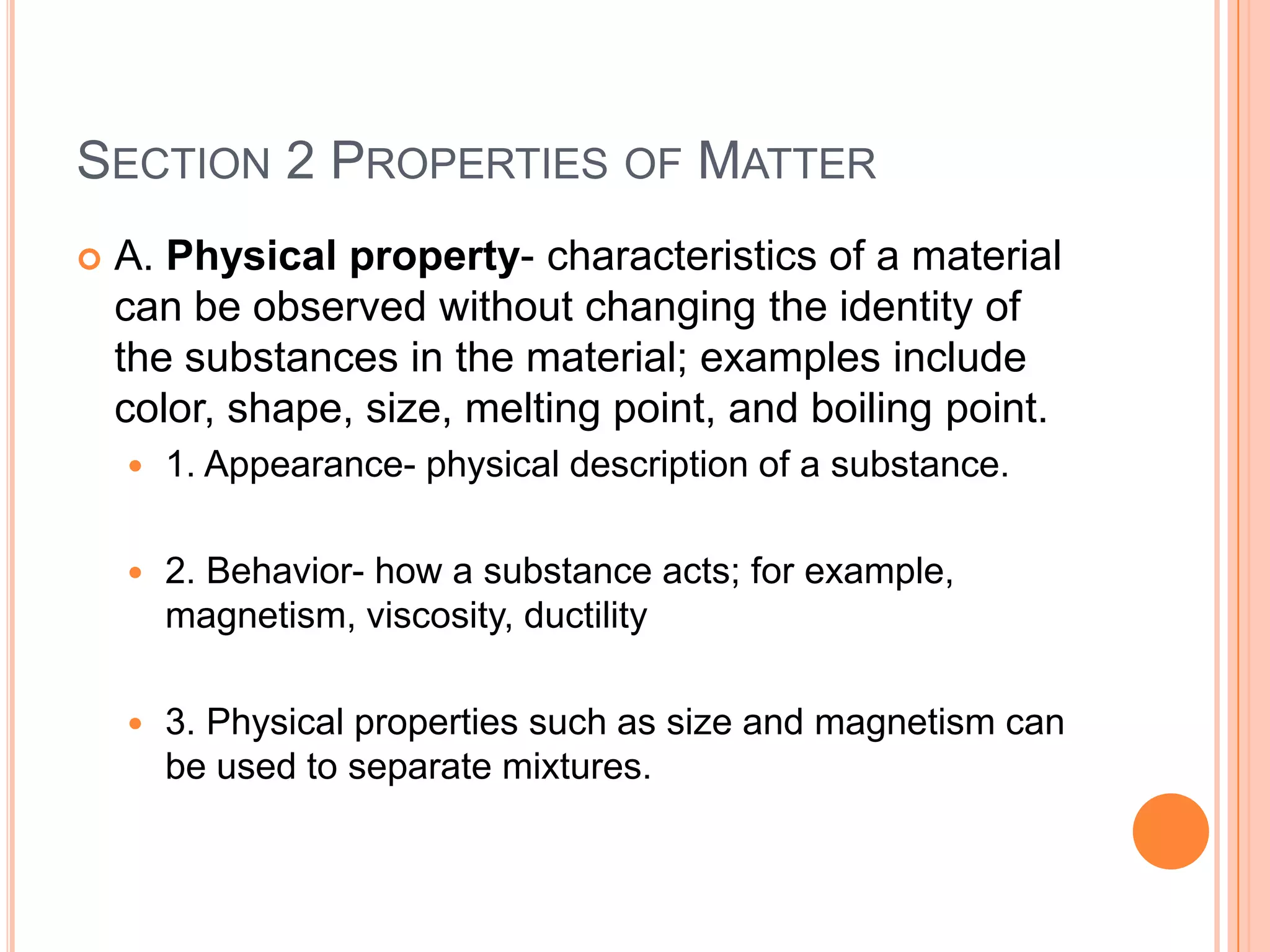
SECTION 2 PROPERTIES OF MATTER
   A. Physical property- characteristics of a material
    can be observed without changing the identity of
    the substances in the material; examples include
    color, shape, size, melting point, and boiling point.
       1. Appearance- physical description of a substance.

       2. Behavior- how a substance acts; for example,
        magnetism, viscosity, ductility

       3. Physical properties such as size and magnetism can
        be used to separate mixtures.
SECTION 2
   B. Physical change- change in a substance’s size,
    shape, or state of matter.
       1. Substance does not change identity when it
        undergoes a physical change.

       2. Distillation is a process for separating a mixture by
        evaporating a liquid and condensing its vapor.


   Chemical property- characteristics of a
    substances indicating that it can change chemically;
    for example, flammability or light sensitivity of a
    substance.
SECTION 2
   D. When one substance changes to another
    substance, a chemical change has occurred.
       1. Some chemical changes are indicated by
        temperature change, smell, or bubble formation.

       2. Other chemical changes occur very slowly such as
        the formation of rust.

       3. Chemical changes can be used to separate
        substances such as metals from their ores.


   E. Weathering of Earth’s surface involves both
    physical and chemical changes.
SECTION 2
       1. Physical- big rocks split into smaller ones; streams
        carry rock particles from one location to another.

       2. Chemical- Chemical changes can occur in rocks
        when calcium carbonate in limestone changes to
        calcium hydrogen carbonate due to acid rain.


   F. Law of Conservation of Mass- Mass of all
    substances present before a chemical change
    equals the mass of all substances after the change.

Chapter 17

  • 1.
  • 2.
    SECTION 1: CLASSIFICATIONOF MATTER  A. Substance- either an element or a compound.  1. When all the atoms in a substance are alike, the substance is an element.  2. A compound is a substance with two or more elements combined in a fixed proportion.  B. Two or more substances that can be easily separated by physical means form a mixture.  1. Heterogeneous mixture- mixture of different and easily distinguishable materials.  2. Homogeneous mixture- contains two or more gaseous, liquid, or solid substances blended evenly; also called a solution.
  • 3.
    SECTION 1  3. Colloid- heterogeneous mixture with larger particles that never settle; colloids scatter light in the Tyndall effect.  4. A heterogeneous mixture containing a liquid in which visible particles settle is called a suspension.
  • 4.
    SECTION 2 PROPERTIESOF MATTER  A. Physical property- characteristics of a material can be observed without changing the identity of the substances in the material; examples include color, shape, size, melting point, and boiling point.  1. Appearance- physical description of a substance.  2. Behavior- how a substance acts; for example, magnetism, viscosity, ductility  3. Physical properties such as size and magnetism can be used to separate mixtures.
  • 5.
    SECTION 2  B. Physical change- change in a substance’s size, shape, or state of matter.  1. Substance does not change identity when it undergoes a physical change.  2. Distillation is a process for separating a mixture by evaporating a liquid and condensing its vapor.  Chemical property- characteristics of a substances indicating that it can change chemically; for example, flammability or light sensitivity of a substance.
  • 6.
    SECTION 2  D. When one substance changes to another substance, a chemical change has occurred.  1. Some chemical changes are indicated by temperature change, smell, or bubble formation.  2. Other chemical changes occur very slowly such as the formation of rust.  3. Chemical changes can be used to separate substances such as metals from their ores.  E. Weathering of Earth’s surface involves both physical and chemical changes.
  • 7.
    SECTION 2  1. Physical- big rocks split into smaller ones; streams carry rock particles from one location to another.  2. Chemical- Chemical changes can occur in rocks when calcium carbonate in limestone changes to calcium hydrogen carbonate due to acid rain.  F. Law of Conservation of Mass- Mass of all substances present before a chemical change equals the mass of all substances after the change.