ACID RAIN

        Natural rain is slightly acidic, with a pH of 5.6. Acid rain is rain with a pH less
than 5.6. In some parts of the world, pH values have been reported as low as 2.6,
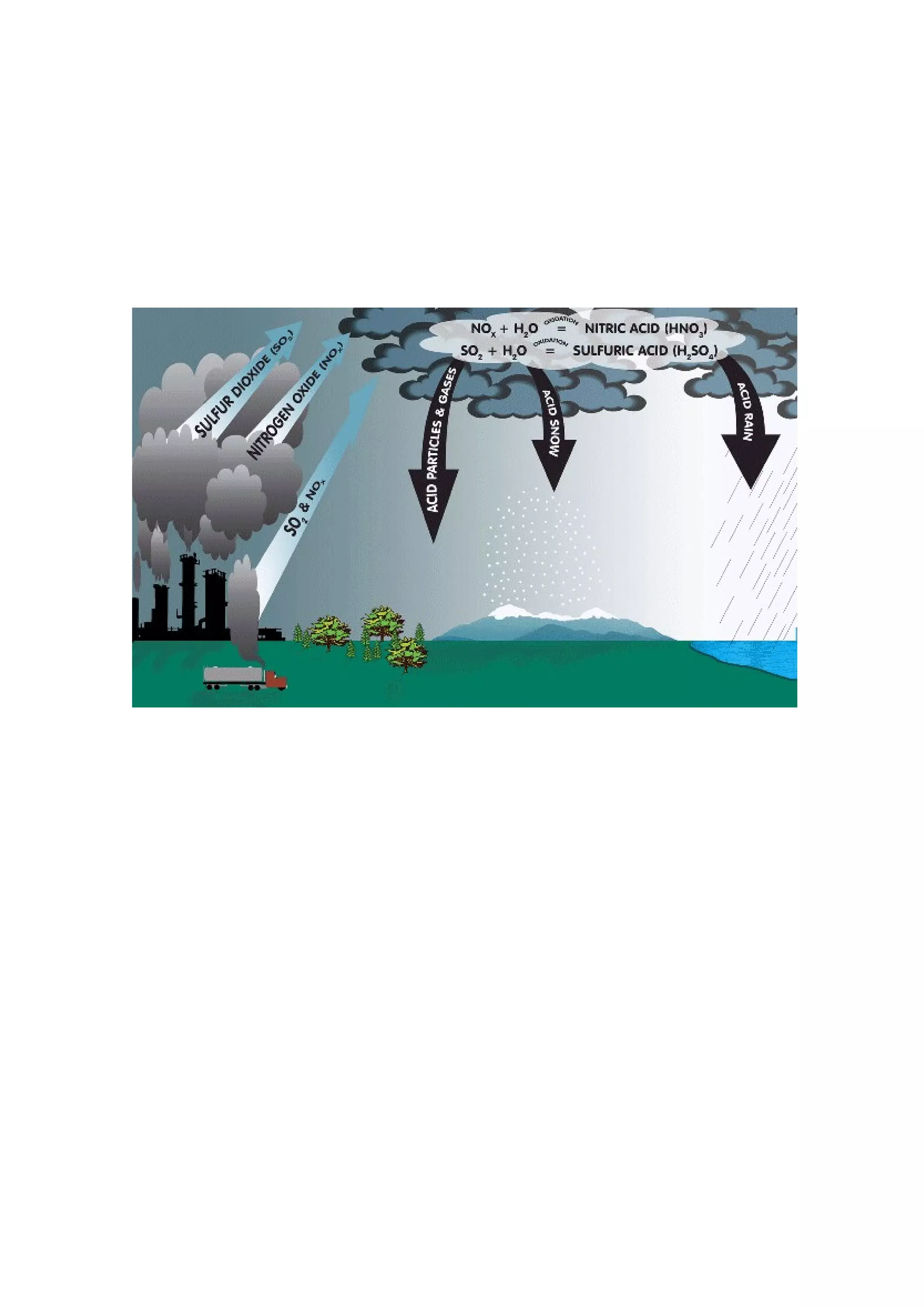
which is about as acidic as lemon juice or vinegar. It forms when airborne pollutants,
sulfur dioxide and nitrogen oxides, combine with water vapor in the atmosphere to
produce acids.

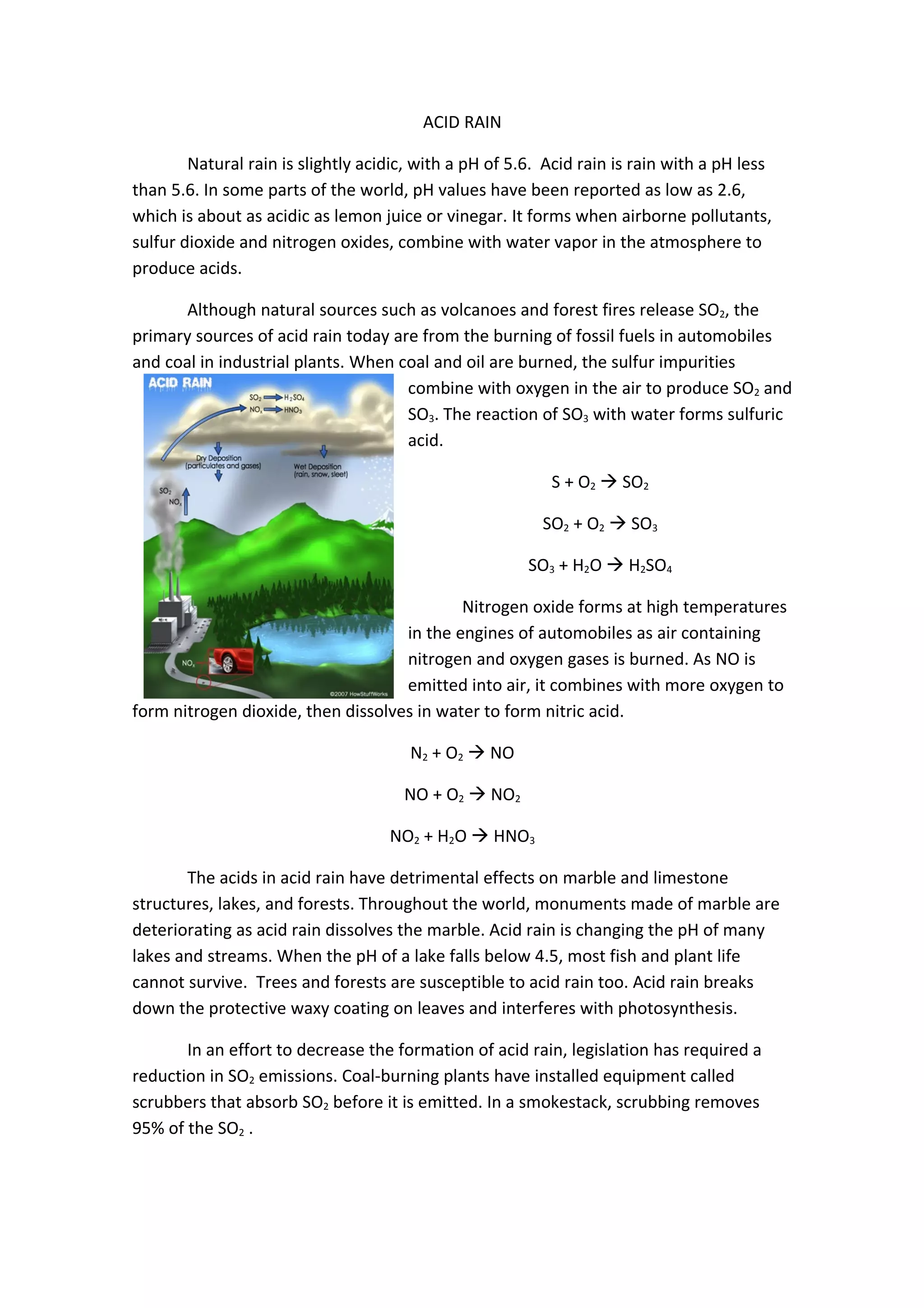
       Although natural sources such as volcanoes and forest fires release SO2, the
primary sources of acid rain today are from the burning of fossil fuels in automobiles
and coal in industrial plants. When coal and oil are burned, the sulfur impurities
                                     combine with oxygen in the air to produce SO2 and
                                     SO3. The reaction of SO3 with water forms sulfuric
                                     acid.

                                                           S + O2  SO2

                                                          SO2 + O2  SO3

                                                        SO3 + H2O  H2SO4

                                            Nitrogen oxide forms at high temperatures
                                    in the engines of automobiles as air containing
                                    nitrogen and oxygen gases is burned. As NO is
                                    emitted into air, it combines with more oxygen to
form nitrogen dioxide, then dissolves in water to form nitric acid.

                                       N2 + O2  NO

                                      NO + O2  NO2

                                    NO2 + H2O  HNO3

       The acids in acid rain have detrimental effects on marble and limestone
structures, lakes, and forests. Throughout the world, monuments made of marble are
deteriorating as acid rain dissolves the marble. Acid rain is changing the pH of many
lakes and streams. When the pH of a lake falls below 4.5, most fish and plant life
cannot survive. Trees and forests are susceptible to acid rain too. Acid rain breaks
down the protective waxy coating on leaves and interferes with photosynthesis.

       In an effort to decrease the formation of acid rain, legislation has required a
reduction in SO2 emissions. Coal-burning plants have installed equipment called
scrubbers that absorb SO2 before it is emitted. In a smokestack, scrubbing removes
95% of the SO2 .
Acid rain

Acid rain

  • 1.
    ACID RAIN Natural rain is slightly acidic, with a pH of 5.6. Acid rain is rain with a pH less than 5.6. In some parts of the world, pH values have been reported as low as 2.6, which is about as acidic as lemon juice or vinegar. It forms when airborne pollutants, sulfur dioxide and nitrogen oxides, combine with water vapor in the atmosphere to produce acids. Although natural sources such as volcanoes and forest fires release SO2, the primary sources of acid rain today are from the burning of fossil fuels in automobiles and coal in industrial plants. When coal and oil are burned, the sulfur impurities combine with oxygen in the air to produce SO2 and SO3. The reaction of SO3 with water forms sulfuric acid. S + O2  SO2 SO2 + O2  SO3 SO3 + H2O  H2SO4 Nitrogen oxide forms at high temperatures in the engines of automobiles as air containing nitrogen and oxygen gases is burned. As NO is emitted into air, it combines with more oxygen to form nitrogen dioxide, then dissolves in water to form nitric acid. N2 + O2  NO NO + O2  NO2 NO2 + H2O  HNO3 The acids in acid rain have detrimental effects on marble and limestone structures, lakes, and forests. Throughout the world, monuments made of marble are deteriorating as acid rain dissolves the marble. Acid rain is changing the pH of many lakes and streams. When the pH of a lake falls below 4.5, most fish and plant life cannot survive. Trees and forests are susceptible to acid rain too. Acid rain breaks down the protective waxy coating on leaves and interferes with photosynthesis. In an effort to decrease the formation of acid rain, legislation has required a reduction in SO2 emissions. Coal-burning plants have installed equipment called scrubbers that absorb SO2 before it is emitted. In a smokestack, scrubbing removes 95% of the SO2 .