FIBER AND YARN SCIENCE
UNIT – 1, TOPIC - 2
DATE : 13/10/2020
R.MALATHY
HEAD OF THE DEPARTMENT
DEPARTMENT OF FASHION DESIGNING
SRM INSTITUTE OF TECHNOLOGY AND SCIENCE
LECTURE
ON
CLASSIFICATION OF TEXTILE FIBERS
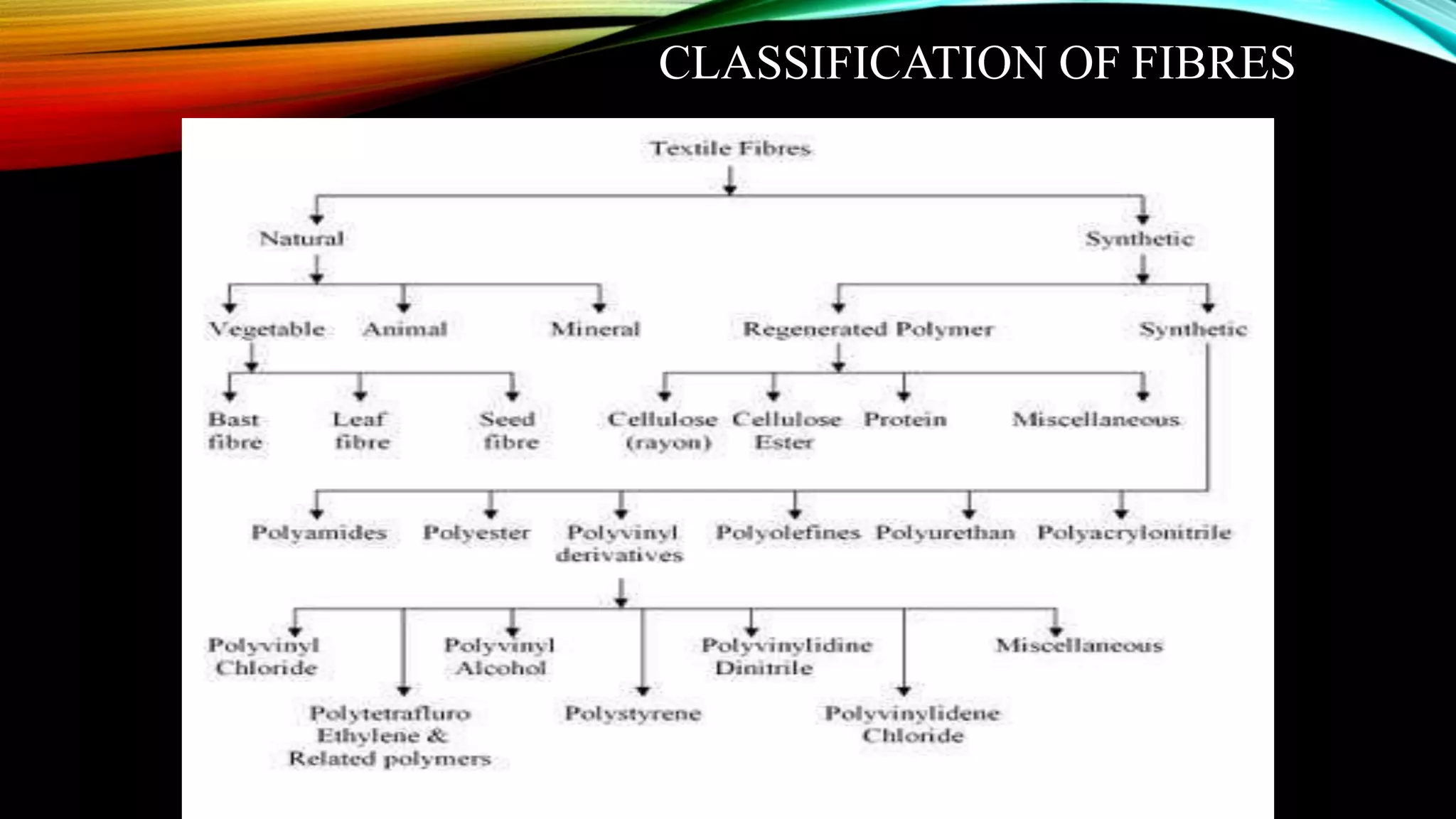
CLASSIFICATION OF FIBRES
 The history of
Traces of natural fibers have been located to ancient
civilizations all over the globe.
 For many thousand years, the usage of fiber was limited by
natural fibers such as flax, cotton, silk, wool and plant fibres
for different applications.
 Fibers can be divided into natural fibres and man-made or
chemical fibres.
 Flax is considered to be the oldest and the most used natural
fibre since ancient times.
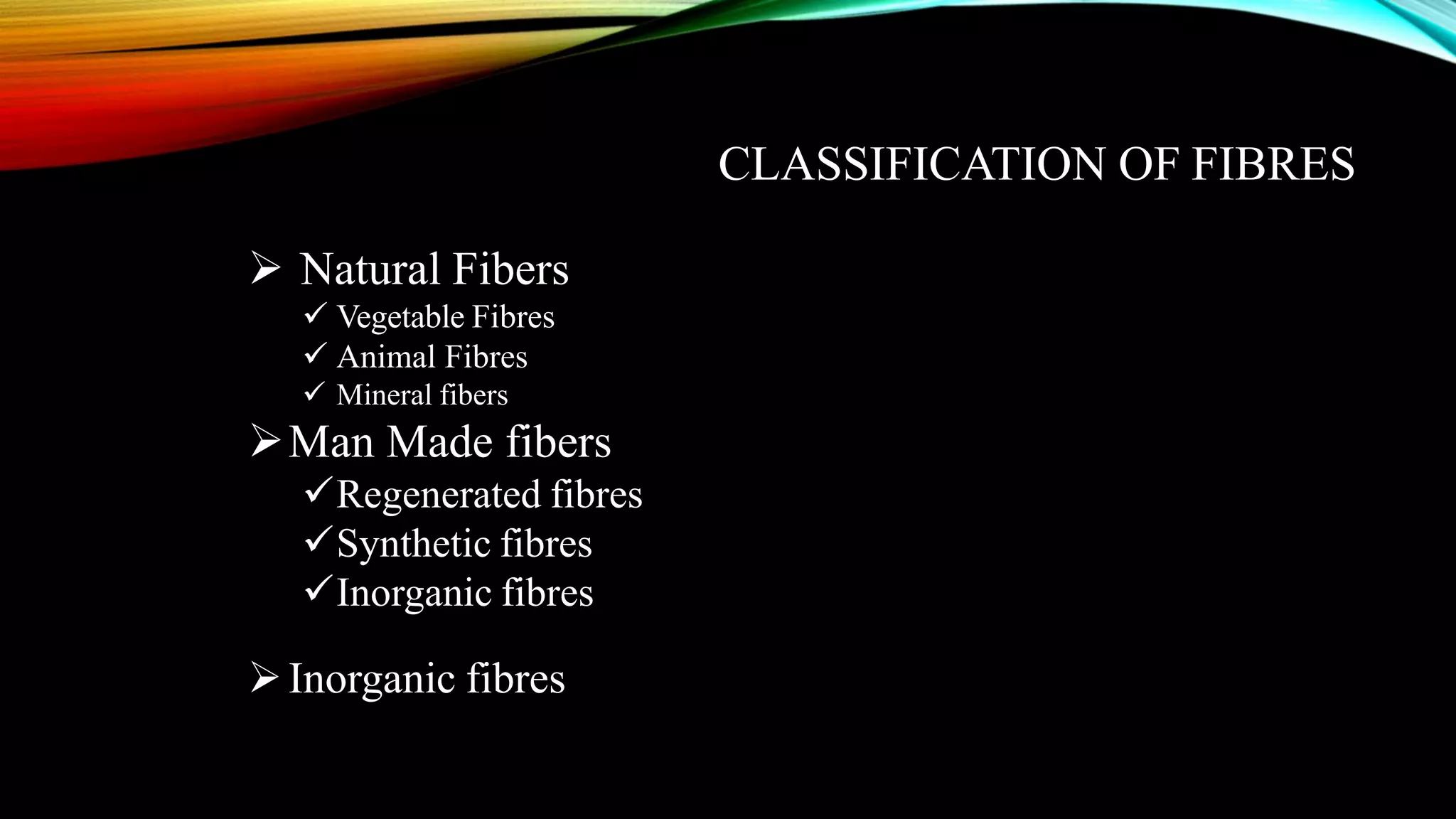
CLASSIFICATION OF FIBRES
 Natural Fibers
 Vegetable Fibres
 Animal Fibres
 Mineral fibers
Man Made fibers
Regenerated fibres
Synthetic fibres
Inorganic fibres
Inorganic fibres
CON
 Classification of fibers can be done by:
 Type(Natural and manufactured)
 Length(Short staple, long staple, continuous filament)
 Size(Ultra fine, fine, regular, course)
CLASSIFICATION OF FIBRES
NATURAL FIBRE
 Any hair like raw material directly obtainable from an
animal, vegetable or mineral source that can be
convertible after spinning into yarns and then into
fabric.
 Under them there are various categories:
Plant
Animal
minerals
VEGETABLE FIBERS
They can be further on classified as:
 fibre occurring on the seed(raw cotton, java cotton)
 phloem fiber (flax, ramie ,hemp, jute)
 tendon fibre from stem or leaves (manila hemp, sisal hemp etc)
 fibre occurring around the trunk (hemp palm)
 fibre of fruit/ nut shells(coconut fibre – Coir) cotton and linen
are the most important among them.
CONT…..
 Bast fibres
 Low Lignin content – Linen or Flax (raw and bleached)
and Ramie
 High Lignin content – Jute, Hemp

classification of fiber

  • 1.
    FIBER AND YARNSCIENCE UNIT – 1, TOPIC - 2 DATE : 13/10/2020 R.MALATHY HEAD OF THE DEPARTMENT DEPARTMENT OF FASHION DESIGNING SRM INSTITUTE OF TECHNOLOGY AND SCIENCE
  • 2.
  • 3.
    CLASSIFICATION OF FIBRES The history of Traces of natural fibers have been located to ancient civilizations all over the globe.  For many thousand years, the usage of fiber was limited by natural fibers such as flax, cotton, silk, wool and plant fibres for different applications.  Fibers can be divided into natural fibres and man-made or chemical fibres.  Flax is considered to be the oldest and the most used natural fibre since ancient times.
  • 4.
    CLASSIFICATION OF FIBRES Natural Fibers  Vegetable Fibres  Animal Fibres  Mineral fibers Man Made fibers Regenerated fibres Synthetic fibres Inorganic fibres Inorganic fibres
  • 5.
    CON  Classification offibers can be done by:  Type(Natural and manufactured)  Length(Short staple, long staple, continuous filament)  Size(Ultra fine, fine, regular, course)
  • 6.
  • 7.
    NATURAL FIBRE  Anyhair like raw material directly obtainable from an animal, vegetable or mineral source that can be convertible after spinning into yarns and then into fabric.  Under them there are various categories: Plant Animal minerals
  • 8.
    VEGETABLE FIBERS They canbe further on classified as:  fibre occurring on the seed(raw cotton, java cotton)  phloem fiber (flax, ramie ,hemp, jute)  tendon fibre from stem or leaves (manila hemp, sisal hemp etc)  fibre occurring around the trunk (hemp palm)  fibre of fruit/ nut shells(coconut fibre – Coir) cotton and linen are the most important among them.
  • 9.
    CONT…..  Bast fibres Low Lignin content – Linen or Flax (raw and bleached) and Ramie  High Lignin content – Jute, Hemp