Fibre and Yarn Science
Manufacturing Process of cellulose fibre
Ms.L.Devimuthumari,M.Sc.,
Assistant Professor
Department of Costume Design and Fashion
V.V.Vanniaperumal College for Women
Virudhunagar
Cellulose fibres manufacturing process
 Cotton
 Hemp
 Ramie
 Bamboo
 Lyocell
 Banana
 Linen
 Jute
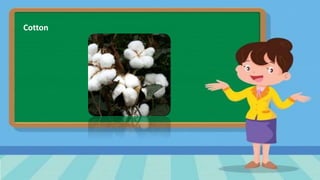
Cotton
Introduction
Cotton is obtained plant source and its classified as
a naturel material as it is obtained from the seeds of cellulose Seed
fibre stable fibre measuring 10-65 mm in length and white to
begin in color in its natural state. It is composed basically of a
substance called cellulose. As cotton occupies 50% of the
consumption of fibres by weight in the world it is called as the king
of all fibre.
Cotton is the fabric for every home and is the most widely produced
of textile fabrics today. It has now been proved that India was the
first country to manufacture cotton.
The cotton fibre is the shortest of all the textile fibres. Its
length varies from 8/10 of an inch to 2 inches. Cotton with
short length fibres is technically known as “short staple “.
The one with the long fibres is called “long stable”
Cultivation of Cotton
The principal cotton producing regions are Egypt, southern
United states, India, Brazil the western and southern cost of America
And east Indies. It requires 200 days to continue warm
weather with adequate moisture and sunlight, Frost is harmful
to the plant. March and April months are suitable for plantation.
America produce more then 40% of the world’s cotton.
India ranks second to the United States as a producer and exporter of cotton.
https://youtu.be/QHgNoSYlhYs
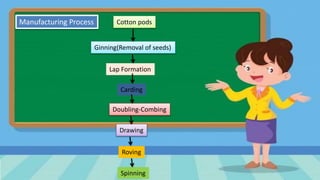
Manufacturing Process
Spinning
Cotton pods
Ginning(Removal of seeds)
Lap Formation
Carding
Doubling-Combing
Drawing
Roving
By Products of Cotton
Cotton linters: Linters are short, fuzzy fibres that remain on the seeds
after they have been separated from the fibre in the cotton gin. They
are used in the manufacturing of rayon and acetates , plastics and
photographic film.
Halls: These are outside portion of the cotton seeds rich in nitrogen
and used as fertilizers paper cattle feed.
Inner Seed: It yields cotton seed oil which is used as cooking oils and
in the manufacturing of soap
Properties of Cellulose fibre - Cotton
1.Physical Properties
2. Thermal Properties
3. Chemical Properies
4. Biological Properties
1.Physical Properties
• Structure
• Strength
• Elasticity
• Hygroscopic moisture
• Electrical Properties
Thermal Properties
 Drapability
 Resilience
 Cleanliness and wash ability
 Lustre
 Shrinkage
 Heat Conductivity
3.Chmical Properties
 Action of acids and alkalis
 Effect of Bleaching
 Effect of Sunlight and weather
 Affinity to dyes
 Effect of Perspiration
4.Biological Properties
 Resistance to micro organisms
 Resistance to insects
Major End uses
Cotton is used for home furnishing: Towels are most common as it is high in
absorbency, wide range of colors, wash ability and durability.
Bed sheets and pillow cases are mostly blends of cotton with polyester or made
of pure cotton and its blends.
Since cotton can be autoclaved at high temperatures, absorbency,
wash ability and low static build up are important factors for use of cotton in
hospitals.
Industrial uses include book bindings, luggage's and hand
bags, shoes and slippers. tobacco cloth woven wiping cloths as and wall
covering fabrics.
Wide range of weaving apparels: Blouses, shirts children's
wear active wear, swim wear, suits, jackets, skirts, pants, sweaters,
Hosiery, bedspreads, comforters, throws , bed sheets, towels, table
cloth, table mats and napkins.
Cotton manufacturing process

Cotton manufacturing process

  • 1.
    Fibre and YarnScience Manufacturing Process of cellulose fibre Ms.L.Devimuthumari,M.Sc., Assistant Professor Department of Costume Design and Fashion V.V.Vanniaperumal College for Women Virudhunagar
  • 2.
    Cellulose fibres manufacturingprocess  Cotton  Hemp  Ramie  Bamboo  Lyocell  Banana  Linen  Jute
  • 3.
  • 4.
    Introduction Cotton is obtainedplant source and its classified as a naturel material as it is obtained from the seeds of cellulose Seed fibre stable fibre measuring 10-65 mm in length and white to begin in color in its natural state. It is composed basically of a substance called cellulose. As cotton occupies 50% of the consumption of fibres by weight in the world it is called as the king of all fibre.
  • 5.
    Cotton is thefabric for every home and is the most widely produced of textile fabrics today. It has now been proved that India was the first country to manufacture cotton. The cotton fibre is the shortest of all the textile fibres. Its length varies from 8/10 of an inch to 2 inches. Cotton with short length fibres is technically known as “short staple “. The one with the long fibres is called “long stable”
  • 6.
    Cultivation of Cotton Theprincipal cotton producing regions are Egypt, southern United states, India, Brazil the western and southern cost of America And east Indies. It requires 200 days to continue warm weather with adequate moisture and sunlight, Frost is harmful to the plant. March and April months are suitable for plantation. America produce more then 40% of the world’s cotton. India ranks second to the United States as a producer and exporter of cotton. https://youtu.be/QHgNoSYlhYs
  • 7.
    Manufacturing Process Spinning Cotton pods Ginning(Removalof seeds) Lap Formation Carding Doubling-Combing Drawing Roving
  • 8.
    By Products ofCotton Cotton linters: Linters are short, fuzzy fibres that remain on the seeds after they have been separated from the fibre in the cotton gin. They are used in the manufacturing of rayon and acetates , plastics and photographic film. Halls: These are outside portion of the cotton seeds rich in nitrogen and used as fertilizers paper cattle feed. Inner Seed: It yields cotton seed oil which is used as cooking oils and in the manufacturing of soap
  • 9.
    Properties of Cellulosefibre - Cotton 1.Physical Properties 2. Thermal Properties 3. Chemical Properies 4. Biological Properties
  • 10.
    1.Physical Properties • Structure •Strength • Elasticity • Hygroscopic moisture • Electrical Properties
  • 11.
    Thermal Properties  Drapability Resilience  Cleanliness and wash ability  Lustre  Shrinkage  Heat Conductivity
  • 12.
    3.Chmical Properties  Actionof acids and alkalis  Effect of Bleaching  Effect of Sunlight and weather  Affinity to dyes  Effect of Perspiration
  • 13.
    4.Biological Properties  Resistanceto micro organisms  Resistance to insects
  • 14.
    Major End uses Cottonis used for home furnishing: Towels are most common as it is high in absorbency, wide range of colors, wash ability and durability. Bed sheets and pillow cases are mostly blends of cotton with polyester or made of pure cotton and its blends. Since cotton can be autoclaved at high temperatures, absorbency, wash ability and low static build up are important factors for use of cotton in hospitals.
  • 15.
    Industrial uses includebook bindings, luggage's and hand bags, shoes and slippers. tobacco cloth woven wiping cloths as and wall covering fabrics. Wide range of weaving apparels: Blouses, shirts children's wear active wear, swim wear, suits, jackets, skirts, pants, sweaters, Hosiery, bedspreads, comforters, throws , bed sheets, towels, table cloth, table mats and napkins.