1
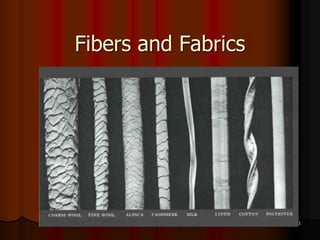
Fibers and Fabrics
2
http://video.pbs.org/video/1767367995/
Textile Short Clip
3
 Basic component of fabric is fibers
 Fibers
Tiny strands that, when twisted together
make up yarns
Natural Fibers
 Natural fibers come from plants or the hair of
animals.
 Cotton, linen, wool,and silk are the most
common natural fibers.
 Quality varies on the type of plant or animal
and the growing conditions.
 They have unique characteristics that cannot
be copied by science.
5
Common Characteristics
 Natural fibers
 Absorb moisture
 Allow air to reach your skin
 Comfortable all year round
 Warm in winter, cool in summer
 Require more care than other fabrics
Cellulose
Fibers Cotton
Linen Ramie
7
 Cotton
 Most common plant fiber
 Comes from seedpod of
cotton plant
 Linen
 Another common plant fiber
 Comes from stalk of flax
plant
8
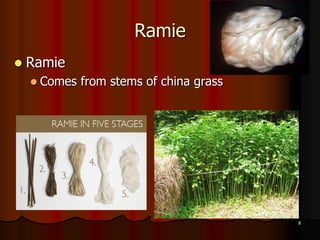
Ramie
 Ramie
 Comes from stems of china grass
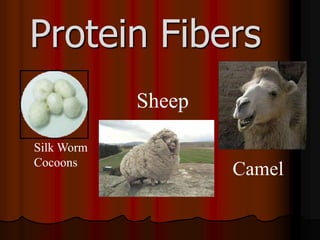
Protein Fibers
Camel
Sheep
Silk Worm
Cocoons
10
 Wool
 Comes from fleece of sheep, yak, alpaca,
camel, goat and some rabbits
11
Silk
• Made by the silkworm, fibers come
from cocoon that the silkworm spins
Characteristics of Natural Fibers
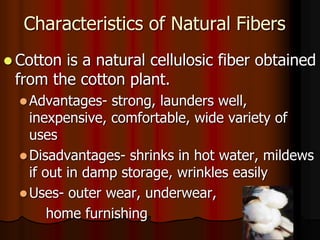
 Cotton is a natural cellulosic fiber obtained
from the cotton plant.
Advantages- strong, launders well,
inexpensive, comfortable, wide variety of
uses
Disadvantages- shrinks in hot water, mildews
if out in damp storage, wrinkles easily
Uses- outer wear, underwear,
home furnishing
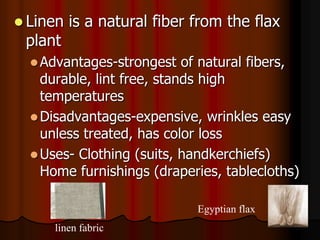
 Linen is a natural fiber from the flax
plant
Advantages-strongest of natural fibers,
durable, lint free, stands high
temperatures
Disadvantages-expensive, wrinkles easy
unless treated, has color loss
Uses- Clothing (suits, handkerchiefs)
Home furnishings (draperies, tablecloths)
Egyptian flax
linen fabric
 Ramie comes from a plant often grown in
China and India. Often called “China
Grass.”
 Advantages-strong, durable, dries quickly, absorbs
moisture
 Disadvantages-wrinkles easily, stiff and wire like,
and coarse
 Uses- cords, can be combined with other fabrics to
make home furnishings, and combined with other
natural and manufactured fibers in wearing apparel
 Wool is made from the fleece of sheep,
camels, alpaca and other animal hair
Advantages-warmest of all fibers, wrinkle
resistant, durable, combines with other fibers
successfully
Disadvantages-expensive, shrink and mat
when moisture applied, absorbs odors
Uses-clothing (outerwear, sweaters) home
furnishings(blankets, rugs, upholstery)
 Silk is obtained by the unwinding of a
silkworm’s cocoon.
Advantages- strong but lightweight, soil
resistant
Disadvantages- dry-cleaning, yellows with
age, can be expensive
Uses-Clothing (wedding dresses, blouses)
home furnishings (lampshades, wall
hangings)
 Jute is used to make rope and burlap.
 Hemp is used to make rope, cording for
jewelry making, clothing and accessories.
Other uses of Natural Fibers
18
Activity
 Develop a new super-fabric;
 It is made by blending any combination of
existing fibers, retaining only the best
characteristics of each one, into the most
versatile clothing material known
 List 5 qualities you find most valuable
 List fiber combinations that will result in
such a product

Fibers and Fabrics

  • 1.
  • 2.
  • 3.
    3  Basic componentof fabric is fibers  Fibers Tiny strands that, when twisted together make up yarns
  • 4.
    Natural Fibers  Naturalfibers come from plants or the hair of animals.  Cotton, linen, wool,and silk are the most common natural fibers.  Quality varies on the type of plant or animal and the growing conditions.  They have unique characteristics that cannot be copied by science.
  • 5.
    5 Common Characteristics  Naturalfibers  Absorb moisture  Allow air to reach your skin  Comfortable all year round  Warm in winter, cool in summer  Require more care than other fabrics
  • 6.
  • 7.
    7  Cotton  Mostcommon plant fiber  Comes from seedpod of cotton plant  Linen  Another common plant fiber  Comes from stalk of flax plant
  • 8.
    8 Ramie  Ramie  Comesfrom stems of china grass
  • 9.
  • 10.
    10  Wool  Comesfrom fleece of sheep, yak, alpaca, camel, goat and some rabbits
  • 11.
    11 Silk • Made bythe silkworm, fibers come from cocoon that the silkworm spins
  • 12.
    Characteristics of NaturalFibers  Cotton is a natural cellulosic fiber obtained from the cotton plant. Advantages- strong, launders well, inexpensive, comfortable, wide variety of uses Disadvantages- shrinks in hot water, mildews if out in damp storage, wrinkles easily Uses- outer wear, underwear, home furnishing
  • 13.
     Linen isa natural fiber from the flax plant Advantages-strongest of natural fibers, durable, lint free, stands high temperatures Disadvantages-expensive, wrinkles easy unless treated, has color loss Uses- Clothing (suits, handkerchiefs) Home furnishings (draperies, tablecloths) Egyptian flax linen fabric
  • 14.
     Ramie comesfrom a plant often grown in China and India. Often called “China Grass.”  Advantages-strong, durable, dries quickly, absorbs moisture  Disadvantages-wrinkles easily, stiff and wire like, and coarse  Uses- cords, can be combined with other fabrics to make home furnishings, and combined with other natural and manufactured fibers in wearing apparel
  • 15.
     Wool ismade from the fleece of sheep, camels, alpaca and other animal hair Advantages-warmest of all fibers, wrinkle resistant, durable, combines with other fibers successfully Disadvantages-expensive, shrink and mat when moisture applied, absorbs odors Uses-clothing (outerwear, sweaters) home furnishings(blankets, rugs, upholstery)
  • 16.
     Silk isobtained by the unwinding of a silkworm’s cocoon. Advantages- strong but lightweight, soil resistant Disadvantages- dry-cleaning, yellows with age, can be expensive Uses-Clothing (wedding dresses, blouses) home furnishings (lampshades, wall hangings)
  • 17.
     Jute isused to make rope and burlap.  Hemp is used to make rope, cording for jewelry making, clothing and accessories. Other uses of Natural Fibers
  • 18.
    18 Activity  Develop anew super-fabric;  It is made by blending any combination of existing fibers, retaining only the best characteristics of each one, into the most versatile clothing material known  List 5 qualities you find most valuable  List fiber combinations that will result in such a product