Balancing Students and
Curriculum:  The Art and Science
of Teaching
The	
  Class	
  Review	
  Process,	
  Session	
  2	
  
Kamloops	
  
April	
  20,	
  2015	
  
Faye	
  Brownlie	
  
www.slideshare.net/fayebrownlie/classreview2	
  
Learning Intentions
•  I	
  beFer	
  understand	
  how	
  to	
  conduct	
  a	
  
strengths-­‐based	
  class	
  review.	
  
•  I	
  can	
  use	
  the	
  informaJon	
  from	
  the	
  class	
  
review	
  to	
  plan	
  ‘what’s	
  next?’	


•  I	
  can	
  use	
  the	
  ‘Checklist	
  quesJons	
  for	
  inclusive	
  
classrooms’	
  in	
  my	
  planning	
  
•  I	
  have	
  a	
  plan	
  to	
  integrate	
  a	
  new	
  reading/
wriJng	
  strategy	
  into	
  my	
  classroom	
  
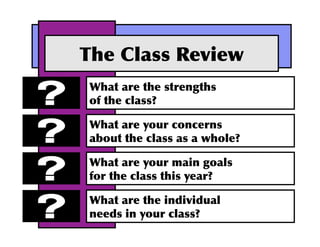
The	
 Class	
 Review	
  
What	
 are	
 the	
 strengths	
 	
 
of	
 the	
 class?	
 
What	
 are	
 your	
 concerns	
 	
 
about	
 the	
 class	
 as	
 a	
 whole?	
 
What	
 are	
 your	
 main	
 goals	
 	
 
for	
 the	
 class	
 this	
 year?	
 
What	
 are	
 the	
 individual	
 	
 
needs	
 in	
 your	
 class?
Reviewing our reviews☺
•  What	
  worked?	
  
•  What	
  didn’t	
  work	
  as	
  well?	
  	
  How	
  did	
  you	
  make	
  
it	
  beFer?	
  
•  What’s	
  next?	
  	
  What	
  do	
  you	
  wonder?	
  
Checklist for the Teacher Who
Values an Inclusive Classroom
•  Read	
  over	
  the	
  checklist	
  
•  Which	
  of	
  these	
  aspects	
  are	
  most	
  easily	
  
integrated	
  into	
  your	
  planning?	
  
•  Which	
  of	
  these	
  are	
  most	
  challenging	
  to	
  you?	
  
•  Which	
  one	
  can	
  you	
  aim	
  to	
  integrate	
  into	
  your	
  
planning	
  between	
  now	
  and	
  June’s	
  end?	
  
Inclusion Triangle (RTI revisited)
(Thanks to Shelley Moore, Richmond)
•  ALL	
  students	
  can	
  access	
  supports	
  regardless	
  of	
  
ability	
  in	
  the	
  teaching	
  and	
  learning	
  phase	
  	
  
•  The	
  job	
  is	
  to	
  decide	
  which	
  supports	
  will	
  work	
  
for	
  your	
  group	
  of	
  students,	
  and	
  how	
  you	
  will	
  
scaffold	
  them	
  using	
  the	
  Class	
  Profile	
  	
  
•  Supports	
  are	
  designed	
  for	
  specific	
  students,	
  
but	
  during	
  teaching,	
  are	
  accessible	
  to	
  
whomever	
  needs	
  them	
  	
  
RTI and Universal Supports
•  Blogsomemore	
  
•  Shelley	
  Moore	
  –	
  The	
  Sweeper	
  Van	
  -­‐	
  youtube	
  
Planning for What’s Next?
A Primary Writing Prompt: 
the grab bag
•  4	
  items	
  in	
  a	
  bag,	
  kids	
  with	
  a	
  paper	
  with	
  4	
  
boxes	
  
•  Pull	
  out	
  1	
  item	
  at	
  a	
  Jme,	
  explore	
  how	
  it	
  might	
  
be	
  used	
  in	
  a	
  story	
  
•  Kids	
  draw	
  how	
  the	
  item	
  might	
  be	
  used	
  
•  Repeat	
  with	
  each	
  item	
  with	
  kids	
  drawing	
  both	
  
items	
  in	
  2nd	
  box,	
  …	
  
•  In	
  4th	
  box,	
  either	
  draw	
  all	
  4	
  items	
  or	
  begin	
  to	
  
write	
  their	
  story	
  
Both	
  lessons:	
  	
  75	
  minutes,	
  a_er	
  
lunch☺	
  
•  Mundy	
  Road	
  with	
  KrisJne	
  Wong	
  
– Focus	
  on	
  beginning,	
  middle,	
  end	
  
•  9	
  EAL	
  students	
  
•  1	
  very	
  young	
  student	
  
•  Blakeburn	
  with	
  Lori	
  Clerkson	
  
– Focus	
  on	
  story	
  starters,	
  moving	
  beyond	
  ‘I	
  did,	
  I	
  
did,	
  I	
  did…”	
  	
  
The Life Cycle of a Salmon
Jennifer Forbes  Cathy Van der Mark,
Gr. 3, Smithers
Learning	
  IntenJon:	
  
-­‐idenJfy	
  powerful	
  words	
  to	
  increase	
  our	
  
vocabulary	
  when	
  describing	
  the	
  life	
  cycle	
  of	
  a	
  
salmon	
  
2	
  hours	
  
•  Partner	
  talk	
  –	
  review	
  life	
  cycle	
  
•  Introduce	
  new	
  vocabulary	
  
•  Predict	
  from	
  book	
  cover	
  
•  Thinking	
  page	
  to	
  collect	
  words,	
  3	
  chunks	
  
1)	
  Sumi	
  feels,	
  sees	
  and	
  hears	
  
2)	
  Sumi’s	
  environment	
  
3)	
  choose:	
  	
  either	
  or	
  1	
  or	
  2	
  or	
  Sumi’s	
  changes	
  
•  A_er	
  each	
  chunk,	
  students	
  share	
  their	
  words	
  
with	
  their	
  partner,	
  then	
  teacher	
  collects	
  as	
  a	
  
class	
  
•  Write,	
  using	
  powerful	
  words	
  to	
  show	
  how	
  
Sumi:	
  
– Feels,	
  sees,	
  hears	
  
– Changes	
  physically	
  
– Her	
  environment	
  
••Circle	
  your	
  powerful	
  words	
  	
  
•  haunches	
  
•  cedar	
  
•  secreted	
  
•  lingered	
  
•  mucous	
  
•  fragrance	
  
•  algae	
  
•  larvae	
  
Interview Writing
with Sara Howard, Gr 4/5 Burnaby
•  Have	
  been	
  working	
  on	
  story	
  wriJng	
  
•  Goal:	
  	
  increase	
  quality	
  of	
  wriJng	
  
•  Modeled	
  1	
  minute	
  interview,	
  30	
  second	
  response	
  
•  Model	
  wriJng	
  and	
  ediJng	
  criteria	
  
•  Pairs:	
  	
  1	
  minute,	
  30	
  seconds	
  
•  Walk	
  around	
  to	
  find	
  your	
  beginning	
  
•  8	
  minute	
  write	
  	
  12	
  minutes	
  
•  Circle	
  your	
  criteria	
  
•  Share	
  
McKinsey Report, 2007
•  The	
  top-­‐performing	
  school	
  systems	
  recognize	
  
that	
  the	
  only	
  way	
  to	
  improve	
  outcomes	
  is	
  to	
  
improve	
  instrucJon:	
  	
  learning	
  occurs	
  when	
  
students	
  and	
  teachers	
  interact,	
  and	
  thus	
  to	
  
improve	
  learning	
  implies	
  improving	
  the	
  quality	
  
of	
  that	
  interacJon.	
  
How the world’s most improved
school systems keep getting better
–McKinsey, 2010
Three	
  changes	
  collaboraJve	
  pracJce	
  brought	
  about:	
  
1.  Teachers	
  moved	
  from	
  being	
  private	
  emperors	
  to	
  
making	
  their	
  pracJce	
  public	
  and	
  the	
  enJre	
  teaching	
  
populaJon	
  sharing	
  responsibility	
  for	
  student	
  learning.	
  
2.  Focus	
  shi_ed	
  from	
  what	
  teachers	
  teach	
  to	
  what	
  
students	
  learn.	
  
3.  Systems	
  developed	
  a	
  model	
  of	
  ‘good	
  instrucJon’	
  and	
  
teachers	
  became	
  custodians	
  of	
  the	
  model.	
  (p.	
  79-­‐81)	
  

Class review #2.kamloops

  • 1.
    Balancing Students and Curriculum: The Art and Science of Teaching The  Class  Review  Process,  Session  2   Kamloops   April  20,  2015   Faye  Brownlie   www.slideshare.net/fayebrownlie/classreview2  
  • 2.
    Learning Intentions •  I  beFer  understand  how  to  conduct  a   strengths-­‐based  class  review.   •  I  can  use  the  informaJon  from  the  class   review  to  plan  ‘what’s  next?’       •  I  can  use  the  ‘Checklist  quesJons  for  inclusive   classrooms’  in  my  planning   •  I  have  a  plan  to  integrate  a  new  reading/ wriJng  strategy  into  my  classroom  
  • 3.
    The Class Review   What are the strengths of the class? What are your concerns about the class as a whole? What are your main goals for the class this year? What are the individual needs in your class?
  • 4.
    Reviewing our reviews☺ • What  worked?   •  What  didn’t  work  as  well?    How  did  you  make   it  beFer?   •  What’s  next?    What  do  you  wonder?  
  • 5.
    Checklist for theTeacher Who Values an Inclusive Classroom •  Read  over  the  checklist   •  Which  of  these  aspects  are  most  easily   integrated  into  your  planning?   •  Which  of  these  are  most  challenging  to  you?   •  Which  one  can  you  aim  to  integrate  into  your   planning  between  now  and  June’s  end?  
  • 6.
    Inclusion Triangle (RTIrevisited) (Thanks to Shelley Moore, Richmond) •  ALL  students  can  access  supports  regardless  of   ability  in  the  teaching  and  learning  phase     •  The  job  is  to  decide  which  supports  will  work   for  your  group  of  students,  and  how  you  will   scaffold  them  using  the  Class  Profile     •  Supports  are  designed  for  specific  students,   but  during  teaching,  are  accessible  to   whomever  needs  them    
  • 9.
    RTI and UniversalSupports •  Blogsomemore   •  Shelley  Moore  –  The  Sweeper  Van  -­‐  youtube  
  • 10.
  • 11.
    A Primary WritingPrompt: the grab bag •  4  items  in  a  bag,  kids  with  a  paper  with  4   boxes   •  Pull  out  1  item  at  a  Jme,  explore  how  it  might   be  used  in  a  story   •  Kids  draw  how  the  item  might  be  used   •  Repeat  with  each  item  with  kids  drawing  both   items  in  2nd  box,  …   •  In  4th  box,  either  draw  all  4  items  or  begin  to   write  their  story  
  • 12.
    Both  lessons:    75  minutes,  a_er   lunch☺   •  Mundy  Road  with  KrisJne  Wong   – Focus  on  beginning,  middle,  end   •  9  EAL  students   •  1  very  young  student   •  Blakeburn  with  Lori  Clerkson   – Focus  on  story  starters,  moving  beyond  ‘I  did,  I   did,  I  did…”    
  • 24.
    The Life Cycleof a Salmon Jennifer Forbes Cathy Van der Mark, Gr. 3, Smithers Learning  IntenJon:   -­‐idenJfy  powerful  words  to  increase  our   vocabulary  when  describing  the  life  cycle  of  a   salmon   2  hours  
  • 26.
    •  Partner  talk  –  review  life  cycle   •  Introduce  new  vocabulary   •  Predict  from  book  cover   •  Thinking  page  to  collect  words,  3  chunks   1)  Sumi  feels,  sees  and  hears   2)  Sumi’s  environment   3)  choose:    either  or  1  or  2  or  Sumi’s  changes  
  • 27.
    •  A_er  each  chunk,  students  share  their  words   with  their  partner,  then  teacher  collects  as  a   class   •  Write,  using  powerful  words  to  show  how   Sumi:   – Feels,  sees,  hears   – Changes  physically   – Her  environment   ••Circle  your  powerful  words    
  • 28.
    •  haunches   • cedar   •  secreted   •  lingered   •  mucous   •  fragrance   •  algae   •  larvae  
  • 33.
    Interview Writing with SaraHoward, Gr 4/5 Burnaby •  Have  been  working  on  story  wriJng   •  Goal:    increase  quality  of  wriJng   •  Modeled  1  minute  interview,  30  second  response   •  Model  wriJng  and  ediJng  criteria   •  Pairs:    1  minute,  30  seconds   •  Walk  around  to  find  your  beginning   •  8  minute  write    12  minutes   •  Circle  your  criteria   •  Share  
  • 37.
    McKinsey Report, 2007 • The  top-­‐performing  school  systems  recognize   that  the  only  way  to  improve  outcomes  is  to   improve  instrucJon:    learning  occurs  when   students  and  teachers  interact,  and  thus  to   improve  learning  implies  improving  the  quality   of  that  interacJon.  
  • 38.
    How the world’smost improved school systems keep getting better –McKinsey, 2010 Three  changes  collaboraJve  pracJce  brought  about:   1.  Teachers  moved  from  being  private  emperors  to   making  their  pracJce  public  and  the  enJre  teaching   populaJon  sharing  responsibility  for  student  learning.   2.  Focus  shi_ed  from  what  teachers  teach  to  what   students  learn.   3.  Systems  developed  a  model  of  ‘good  instrucJon’  and   teachers  became  custodians  of  the  model.  (p.  79-­‐81)