Fountas and Pinnell
Nicole Lehr
CESA 6 Literacy Center Coordinator
nlehr@cesa6.org
LLI Red System
Grade 3
Session 1
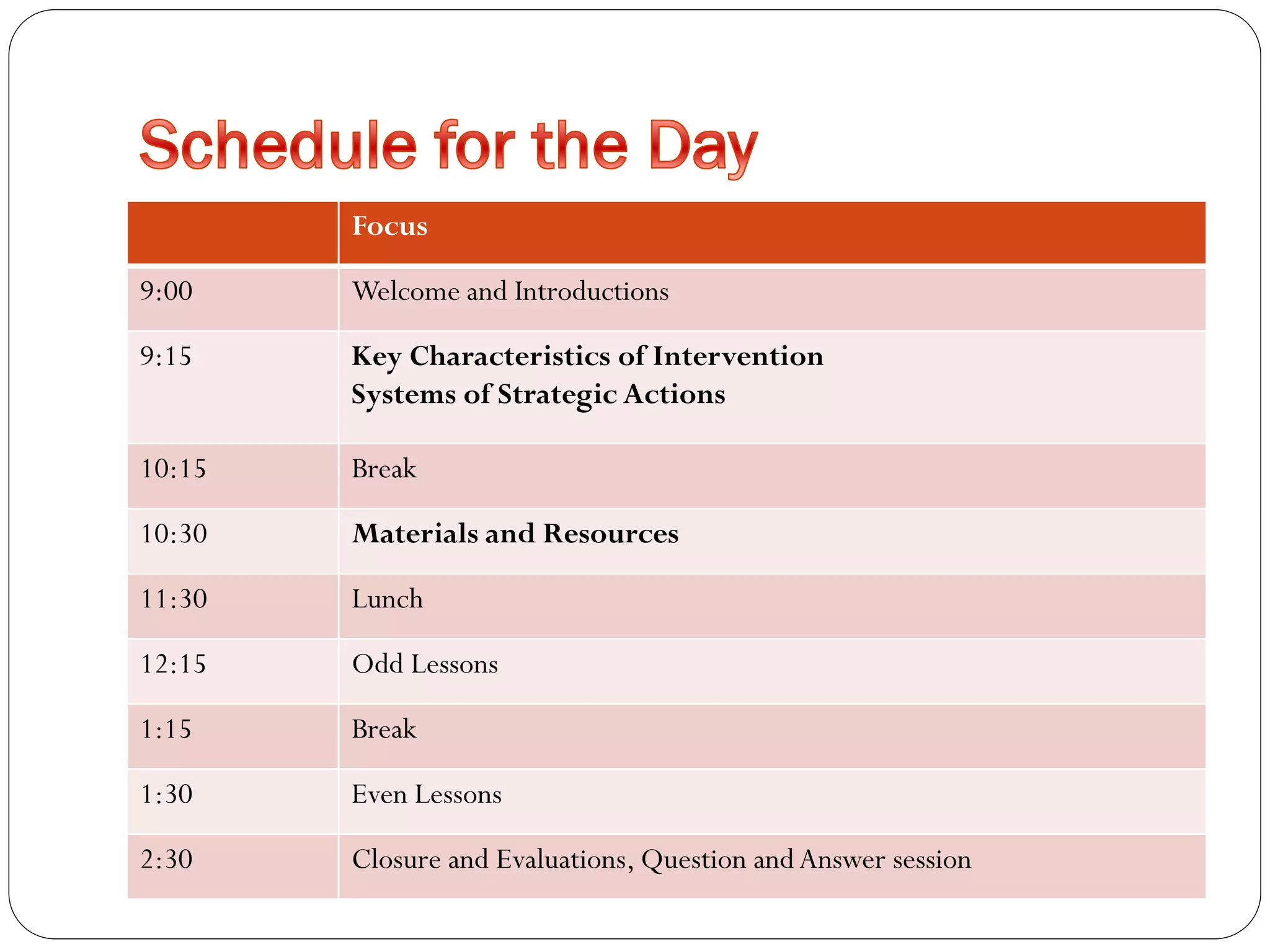
Focus
9:00 Welcome and Introductions
9:15 Key Characteristics of Intervention
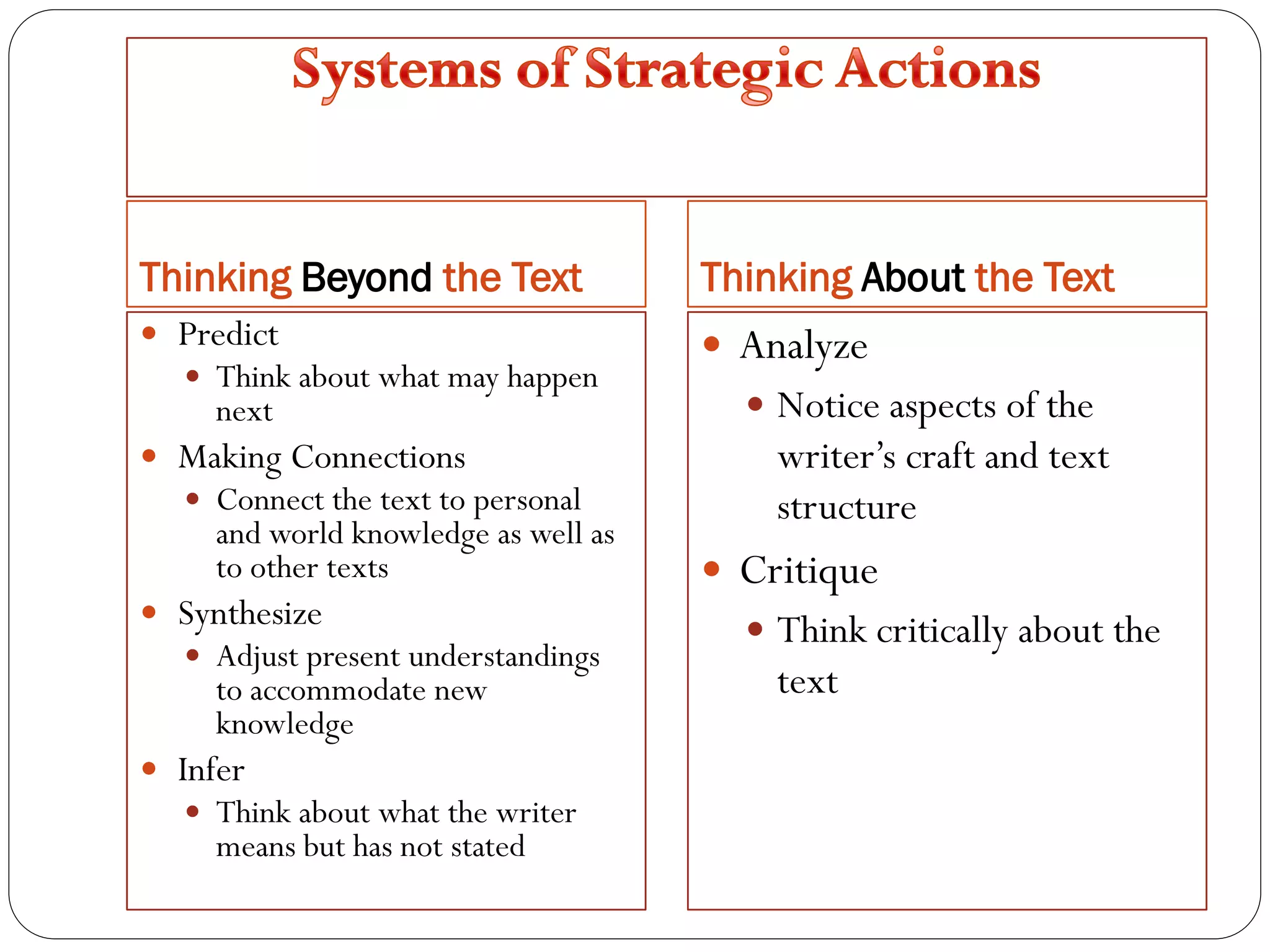
Systems of Strategic Actions
10:15 Break
10:30 Materials and Resources
11:30 Lunch
12:15 Odd Lessons
1:15 Break
1:30 Even Lessons
2:30 Closure and Evaluations, Question andAnswer session
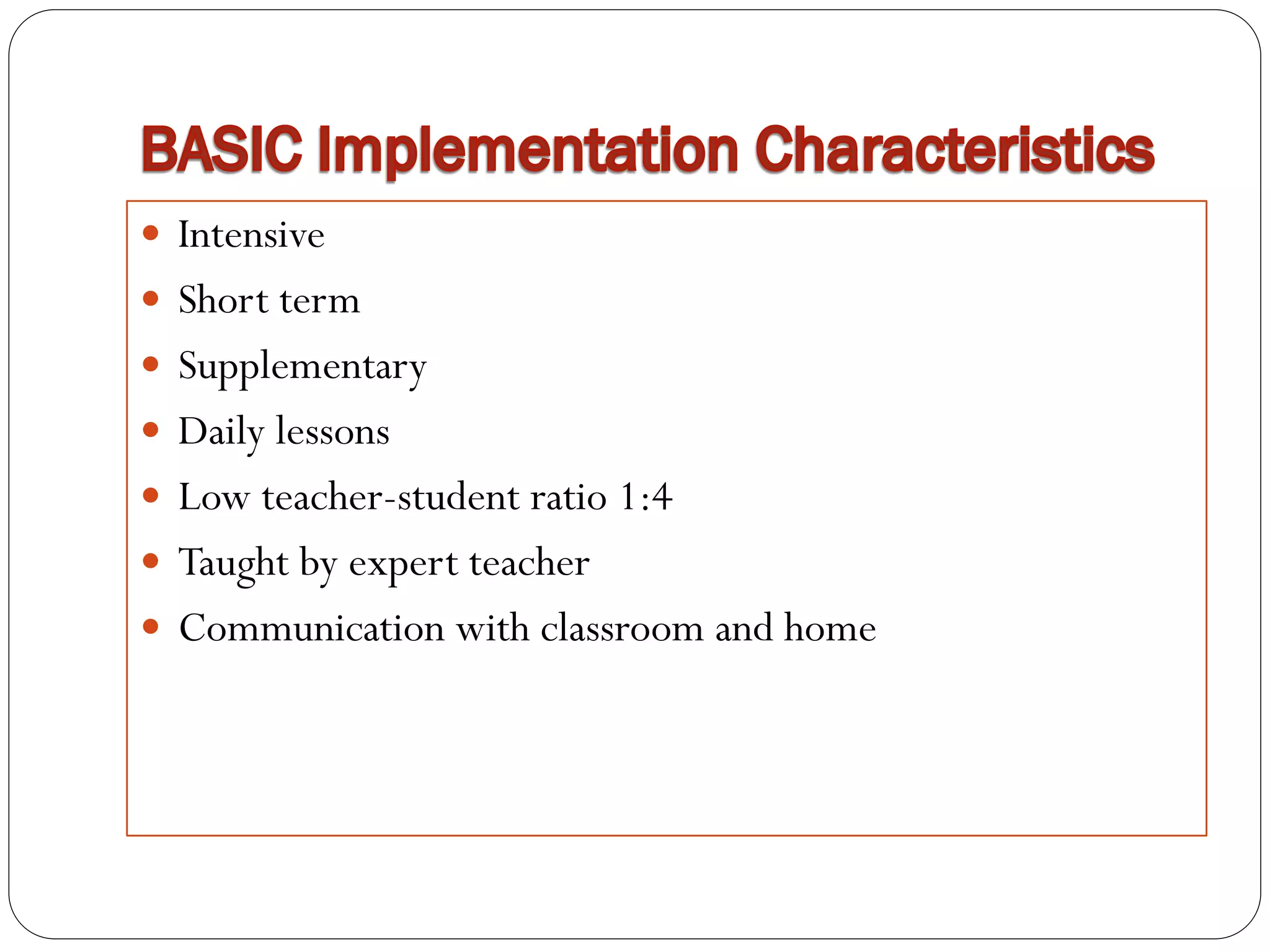
 Intensive
 Short term
 Supplementary
 Daily lessons
 Low teacher-student ratio 1:4
 Taught by expert teacher
 Communication with classroom and home
LLI: Fifteen Characteristics of
Effective Literacy Intervention
 Engage students with high
interest, well-written texts
in a variety of genres
 Quantity counts
 Real reading
 Authentic, high-success
reading
 Increase reading volume by
engaging students in a large
amount of successful
reading daily
 Choice is important and
sometimes difficult in a
structured sequence
intervention
 We do want them to read
grade level and we want to
stretch, but we have to
start with something they
can do
 Hard to transfer back to
the classroom
 Self-initiating
 Self-regulatory
 Expository
 Narrative
 Procedural
 Persuasive
 60% of the texts are
nonfiction
 Thinking within, beyond,
and about the text
 Strategic action will be
named
 “Big Ideas”
 “close reading”
 Explicit instruction in
recognizing and using
genre characteristics and
text structure
 Mental model for genres
 Topic
 Principle
 Examples
 Build simple to work on all
the building blocks of word
study, ways to solve words
 Reading
 Writing
 Everyday speaking
 Formal
 The words you know
 Build vocabulary by making
connections between
words
 Momentum
 Option with every lesson
 Pausing
 Phrasing
 Word Stress
 Intonation
 Rate
 Integration
 Helps to development
academic language
 Become a collaborative
learning team
 Use writing to support and
extend comprehension
 Every other day
 Preplanned to coordinate
with instructional level
text
 Express and extend the
meaning
 Use some new vocabulary
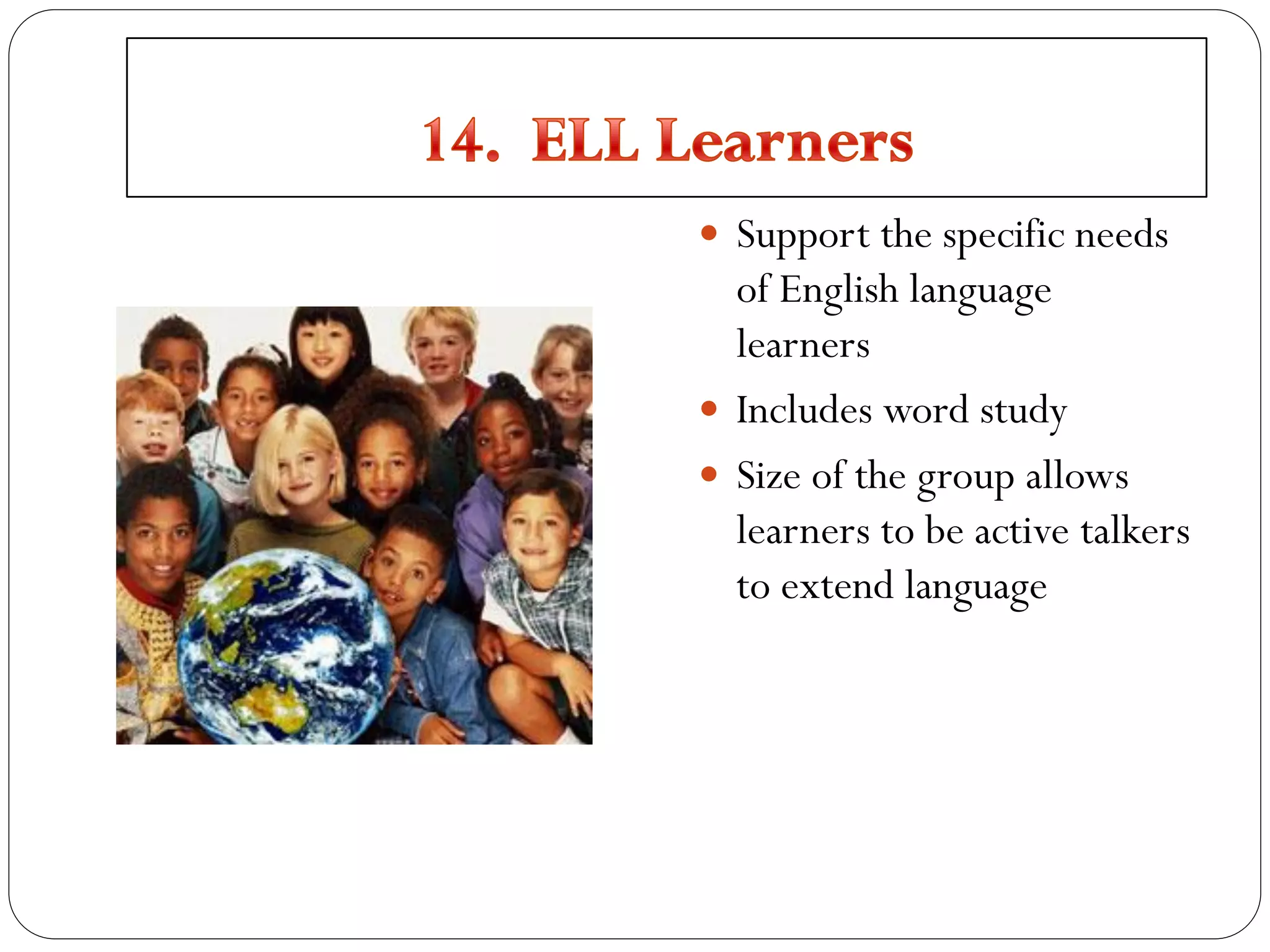
 Support the specific needs
of English language
learners
 Includes word study
 Size of the group allows
learners to be active talkers
to extend language
 Provide explicit, direct
instruction by an expert
teacher, with a
recommended teacher-
student ration
 SolvingWords
 Developing a range of
flexibility strategies
 Monitor and Correct
 Child knows when he right
and when he’s wrong and
knows what to do with it
 Search for and Use
Information
 Notice and use information
sources (meaning, language
structure, visual information)
 Summarize
 Remember important
information and carry it
forward
 Think in a different way, tell
what’s important
 Maintain Fluency
 Not just speed
 Don’t allow them to read 1
page disfluently (use
prompting guide)
 Adjust
 Flexible ways to solve
problems
Thinking Beyond the Text Thinking About the Text
 Predict
 Think about what may happen
next
 Making Connections
 Connect the text to personal
and world knowledge as well as
to other texts
 Synthesize
 Adjust present understandings
to accommodate new
knowledge
 Infer
 Think about what the writer
means but has not stated
 Analyze
 Notice aspects of the
writer’s craft and text
structure
 Critique
 Think critically about the
text
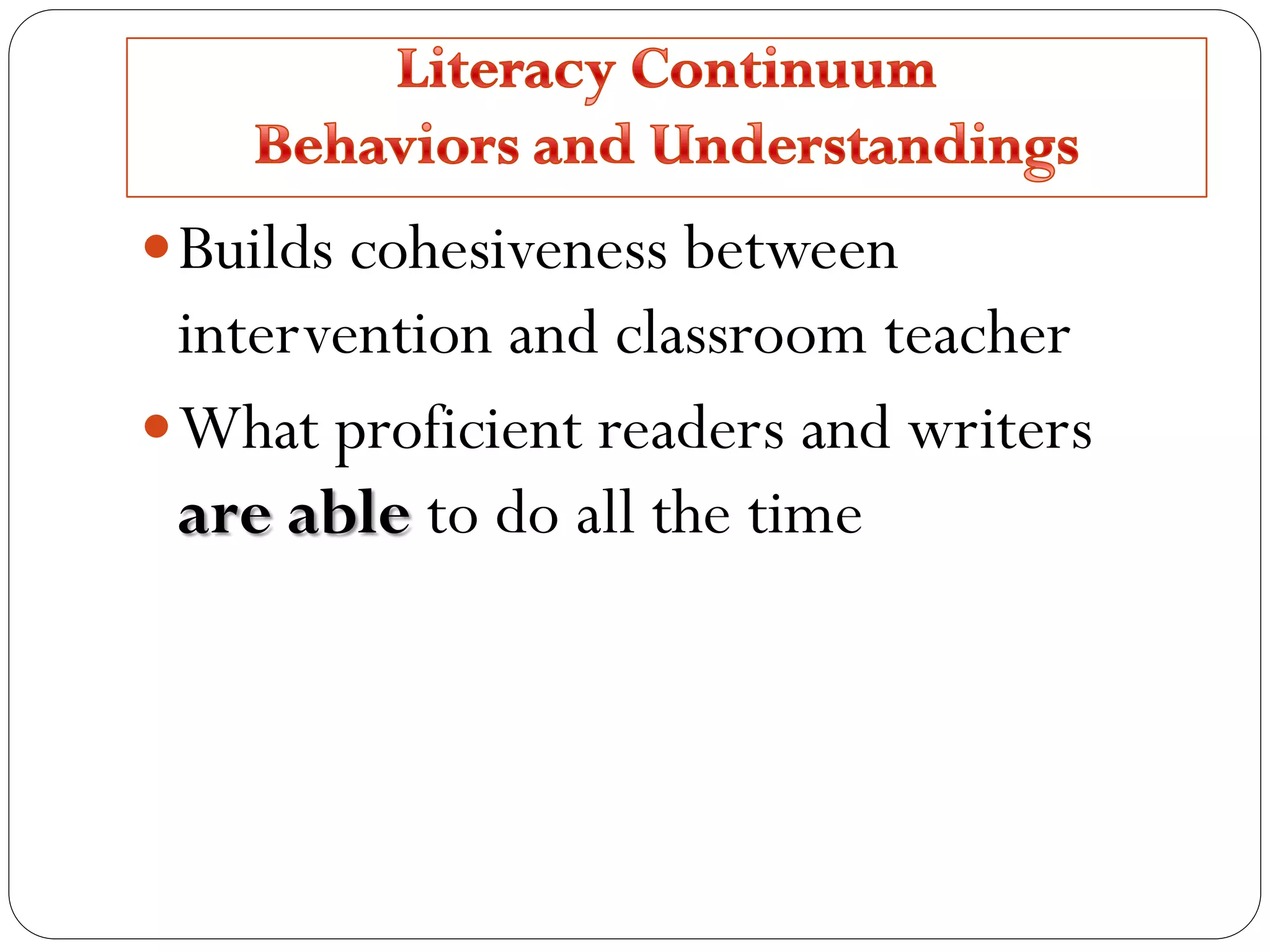
Builds cohesiveness between
intervention and classroom teacher
What proficient readers and writers
are able to do all the time
 Systematic design
 People thought a solution came in a box, it was created as a
resource and tool
 Making teaching moves, thinking behind the design
 Get them moving fast, walking, drawing, they need to pick it
up, not to make them nervous, keep them moving, need to
be faster responders
 The program moves better when the teacher understands the
books better each year
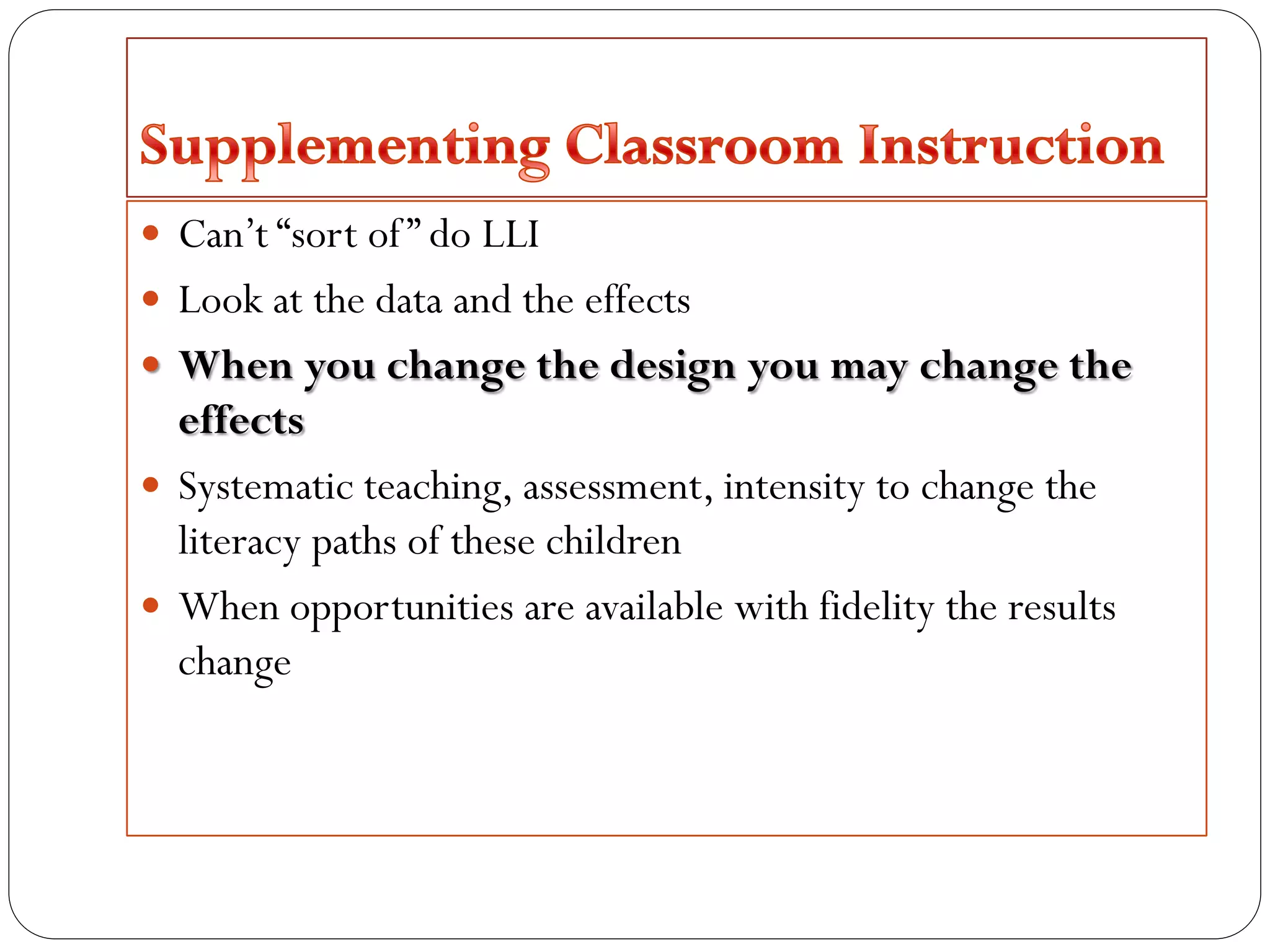
 Can’t “sort of” do LLI
 Look at the data and the effects
 When you change the design you may change the
effects
 Systematic teaching, assessment, intensity to change the
literacy paths of these children
 When opportunities are available with fidelity the results
change
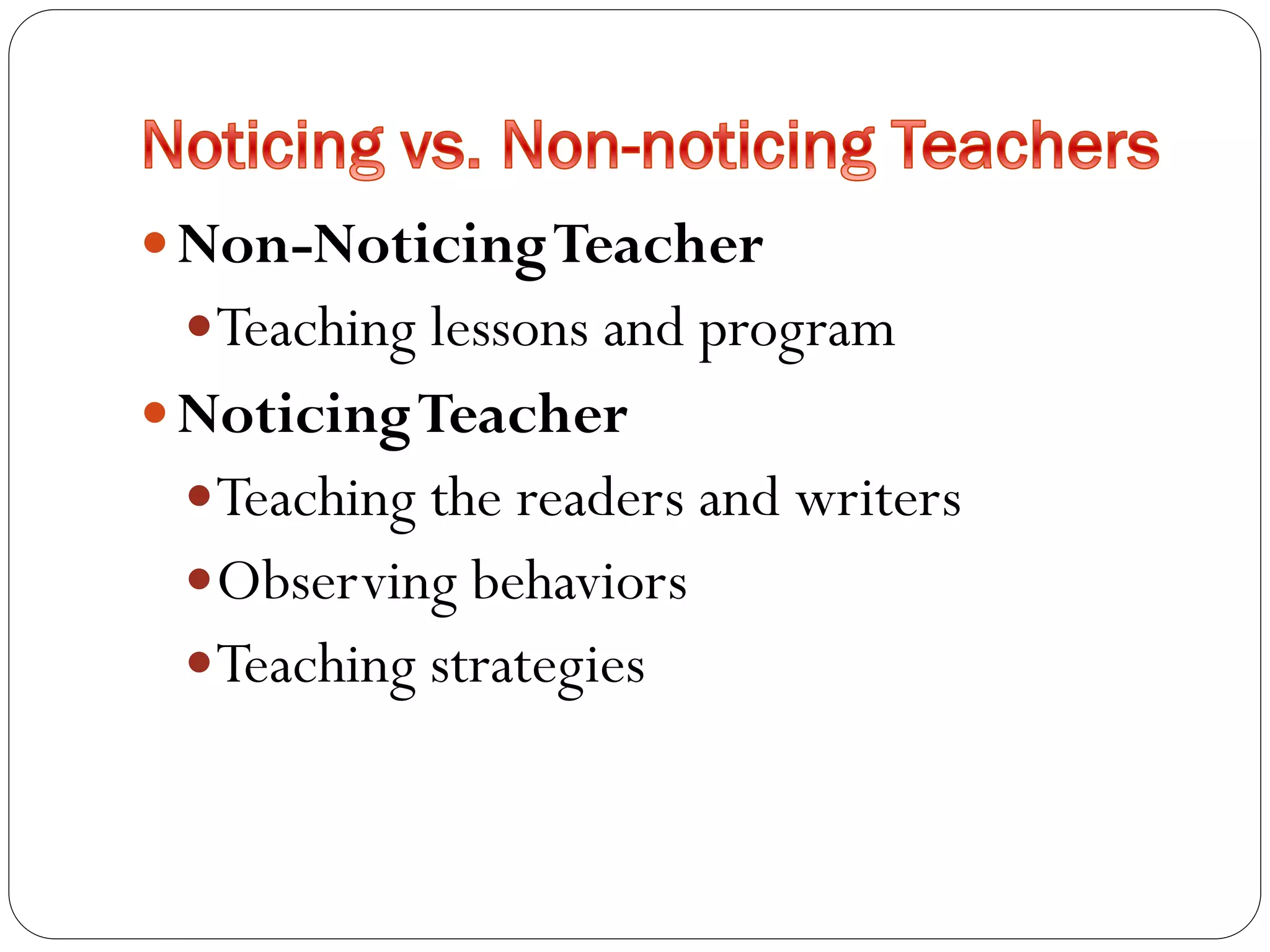
 Non-NoticingTeacher
Teaching lessons and program
 NoticingTeacher
Teaching the readers and writers
Observing behaviors
Teaching strategies
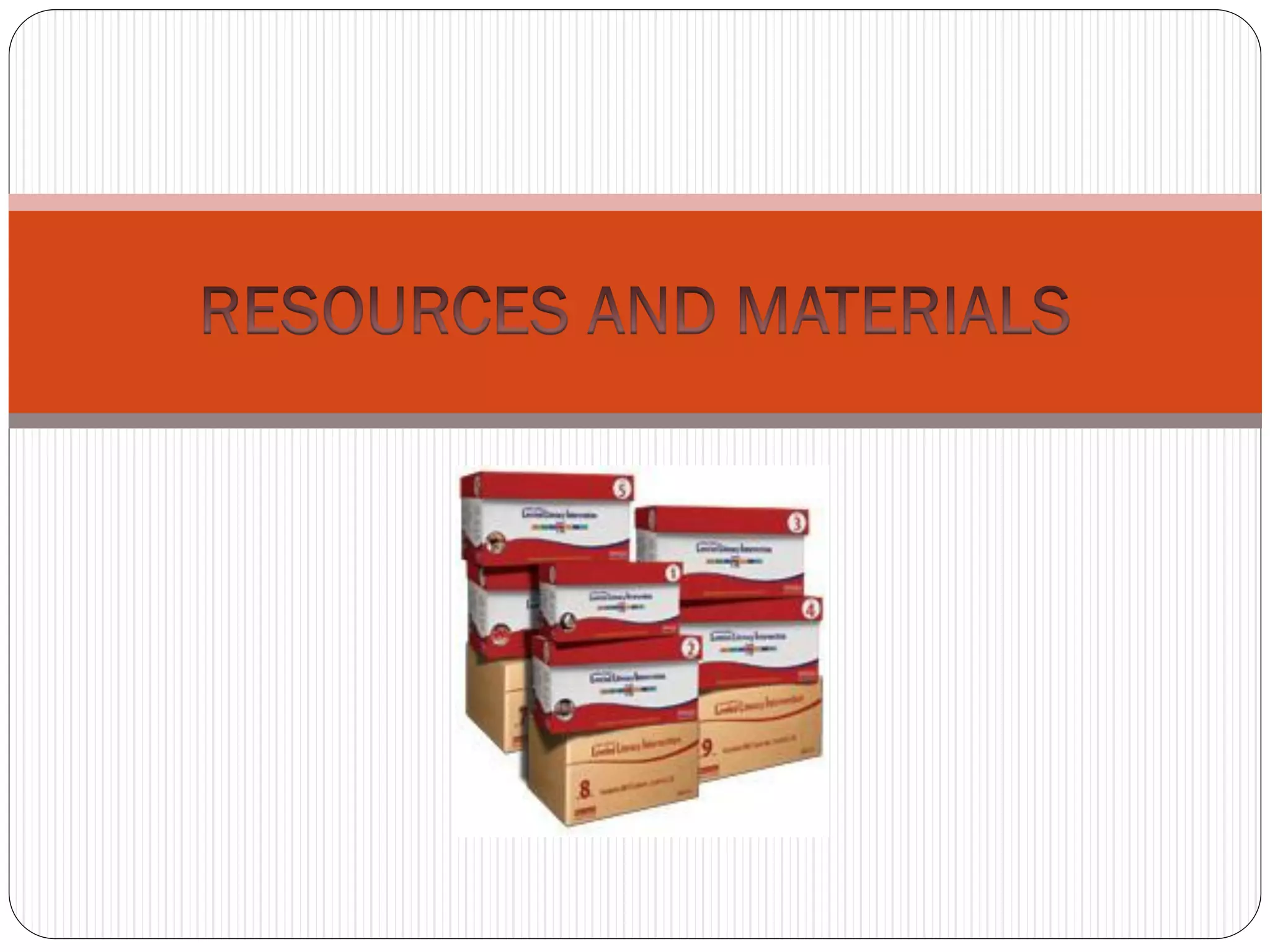
 Orange System: levelsA through E*
 Green System: levels A through K*
 Blue System: levels C through N
 Red System: levels L through Q
In Production:
 Gold System: levels O throughT
 Purple System: levels R throughW
 Teal System: levels U through Z
*A booster package will be available for those who have already purchased
the Orange and Green Systems.
Each system overlaps.
 Prompting Guide 1
 Prompting Guide 2
 System Guide
 Three-Volume Lesson
Guide
 Literacy Notebooks
 StudentTest Preparation
Booklets
 Word Magnets
 Student Folders
 Highlighter Strips
 Permanent andWipe-Off
Markers, Eraser
 F&P Calculator/Stopwatch
 Whiteboards
 Student Portfolio
 Professional Development
andTutorial DVD’s
 Whiteboard and dry-erase markers
 Teacher demonstrations during phonics and writing
 Chart paper
 Phonics and writing
 2 sets small lowercase magnet letters
 Teacher demonstrations during word work
 Magnetic letters sorted for use with students
 Paper or card stock for printing games and some charts
 One-inch-wide correction tape
 Cover errors in students’ Literacy Notebooks
 Stick-on notes for marking places in books
 One new resource
 Portfolio
 Right side – book
 Middle – literacy notebook
 Left side – homework, no take-home paper books
 Real books
 Need color
 Teach responsibility
 Help with study skills
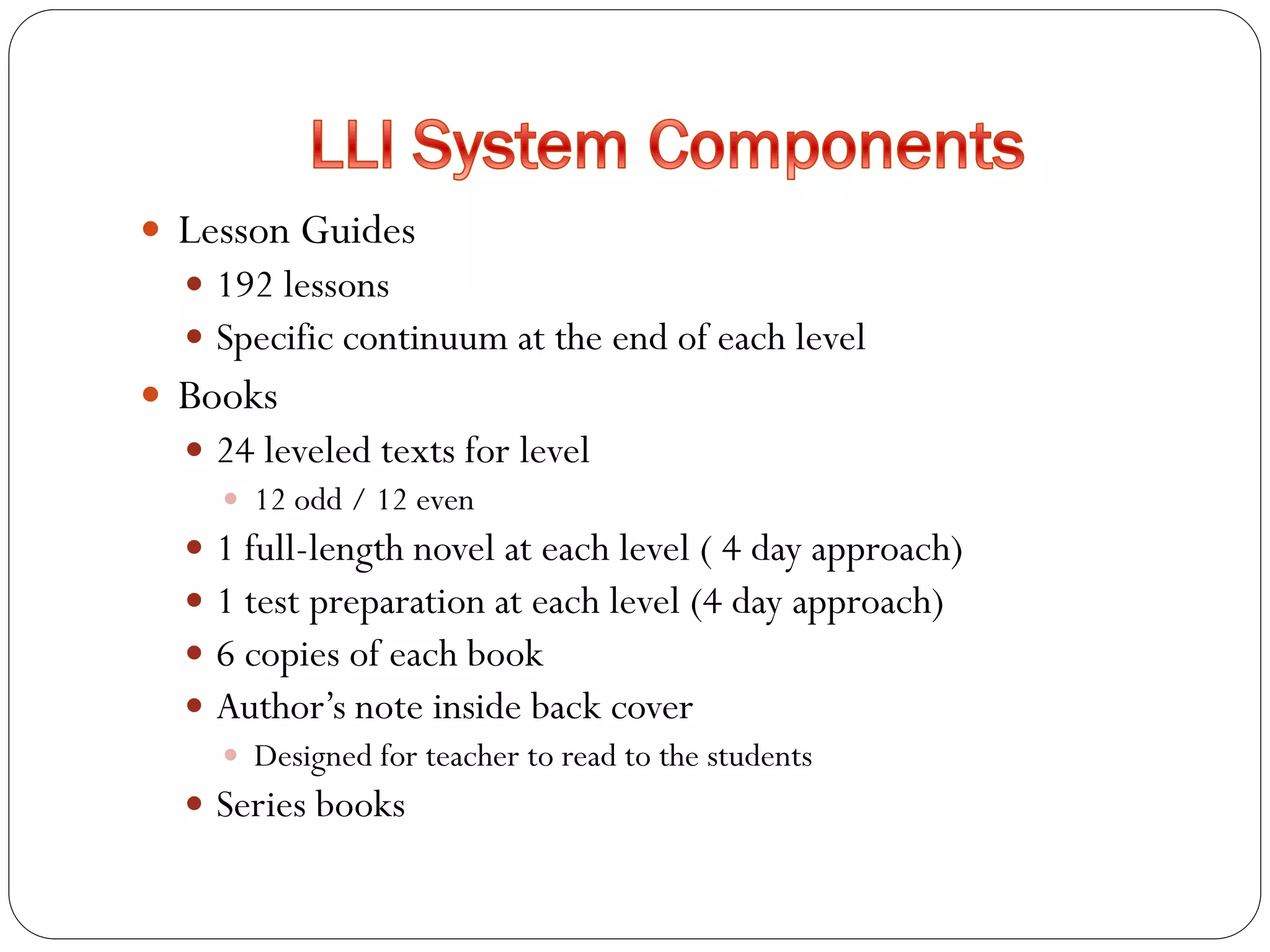
 Lesson Guides
 192 lessons
 Specific continuum at the end of each level
 Books
 24 leveled texts for level
 12 odd / 12 even
 1 full-length novel at each level ( 4 day approach)
 1 test preparation at each level (4 day approach)
 6 copies of each book
 Author’s note inside back cover
 Designed for teacher to read to the students
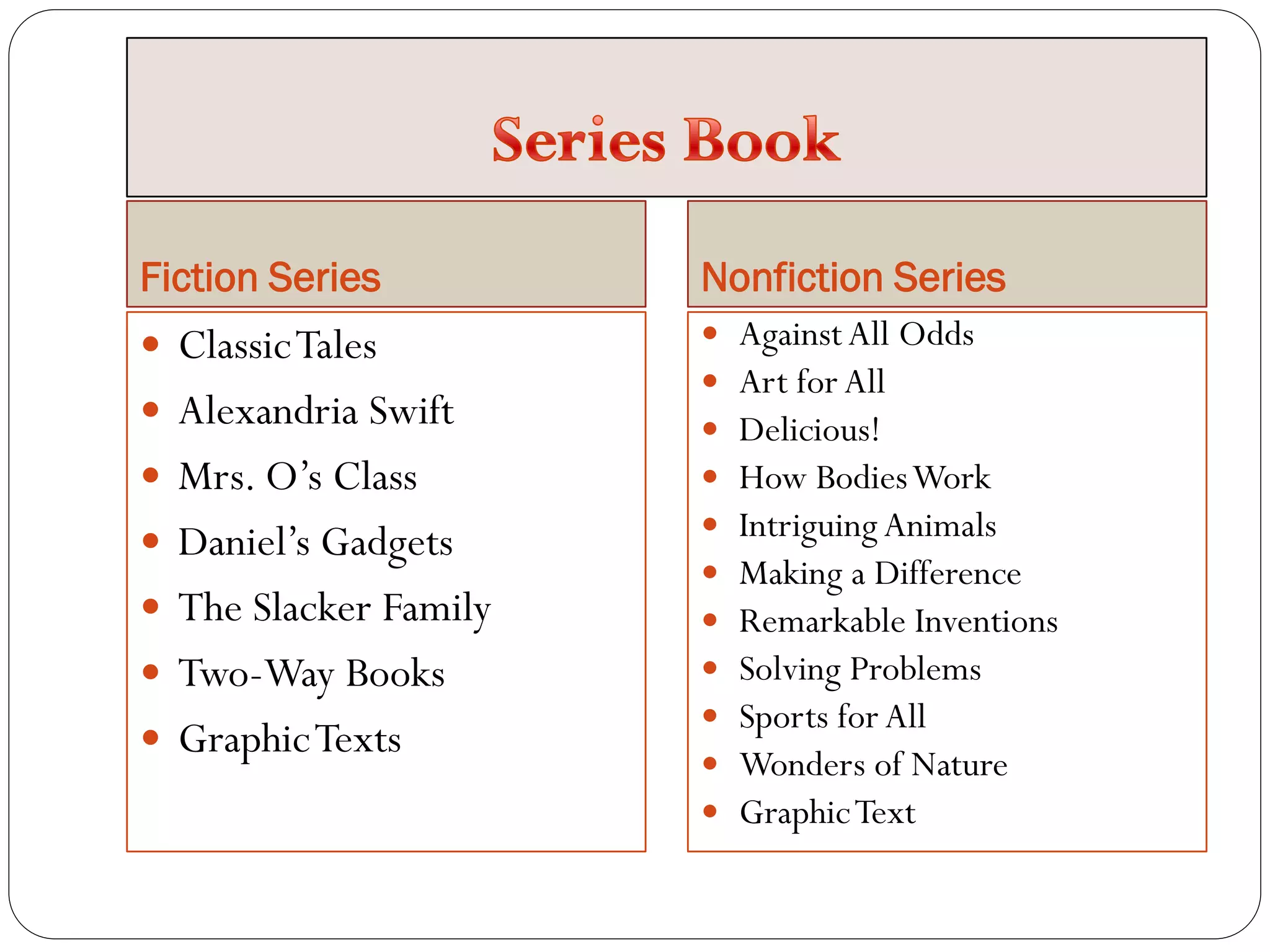
 Series books
Fiction Series Nonfiction Series
 ClassicTales
 Alexandria Swift
 Mrs. O’s Class
 Daniel’s Gadgets
 The Slacker Family
 Two-Way Books
 GraphicTexts
 AgainstAll Odds
 Art for All
 Delicious!
 How BodiesWork
 Intriguing Animals
 Making a Difference
 Remarkable Inventions
 Solving Problems
 Sports for All
 Wonders of Nature
 GraphicText
General Resources Lesson Resources
 Consonant cluster and digraph chart
 Intervention record
 Lesson records for standard, novel study, and
test preparation lessons
 Guide for observing and noting reading
behaviors
 Coding and scoring errors at a glance
 Reflection guide
 Communication sheets for group and
individuals
 Reading graph
 Students achievement log
 Phonics/word study game directions and
game boards
 Words cards
 Translations of parent letters ( French,
Spanish, Hmong, Haitian-Creole)
 Recording forms for taking
reading records
 Readers’ theater activities
 Phrased reading activities
 Practice sorts
 Word cards
 Graphic organizers
 Word lists
 Phonics/word study games
 Parent letters (English)
 At the beginning of each level
 When Readers Struggle, L-Z: TeachingThat
Works (in press)
 Fountas and Pinnell Choice Library (in press)
 Fountas and Pinnell LLI Reading RecordApp for
iPads (in press)
Syncs data to the Online Data Management
System (ODMS)
Greater Effectiveness in
Teaching LLI Lessons
Thank you for your thinking and sharing this
morning! Enjoy your lunch!
LUNCH TIME
On the first day of
Intervention Focus:
“How am I going to get the child out of this
program.”
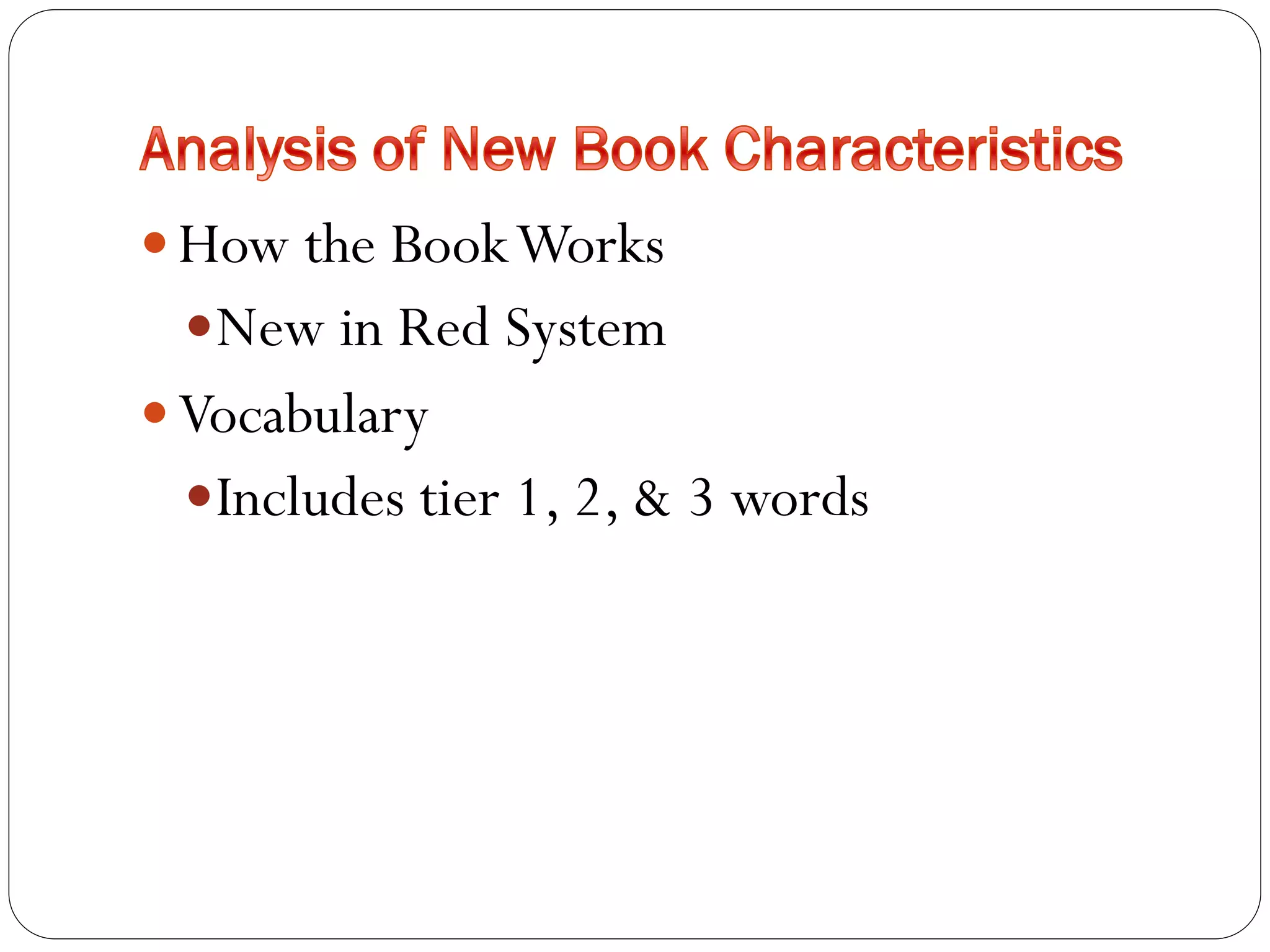
 How the BookWorks
New in Red System
 Vocabulary
Includes tier 1, 2, & 3 words
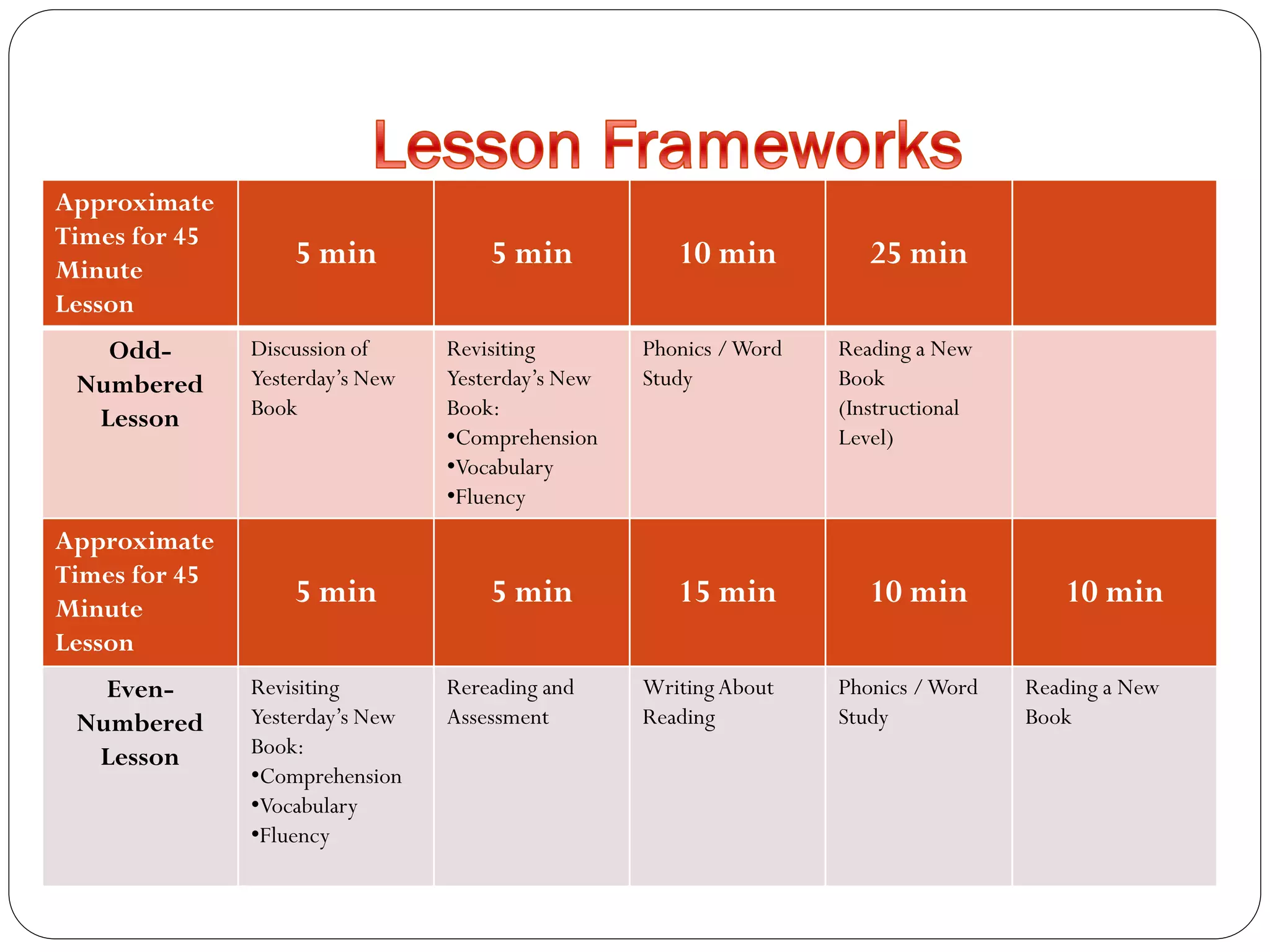
Approximate
Times for 45
Minute
Lesson
5 min 5 min 10 min 25 min
Odd-
Numbered
Lesson
Discussion of
Yesterday’s New
Book
Revisiting
Yesterday’s New
Book:
•Comprehension
•Vocabulary
•Fluency
Phonics /Word
Study
Reading a New
Book
(Instructional
Level)
Approximate
Times for 45
Minute
Lesson
5 min 5 min 15 min 10 min 10 min
Even-
Numbered
Lesson
Revisiting
Yesterday’s New
Book:
•Comprehension
•Vocabulary
•Fluency
Rereading and
Assessment
WritingAbout
Reading
Phonics /Word
Study
Reading a New
Book
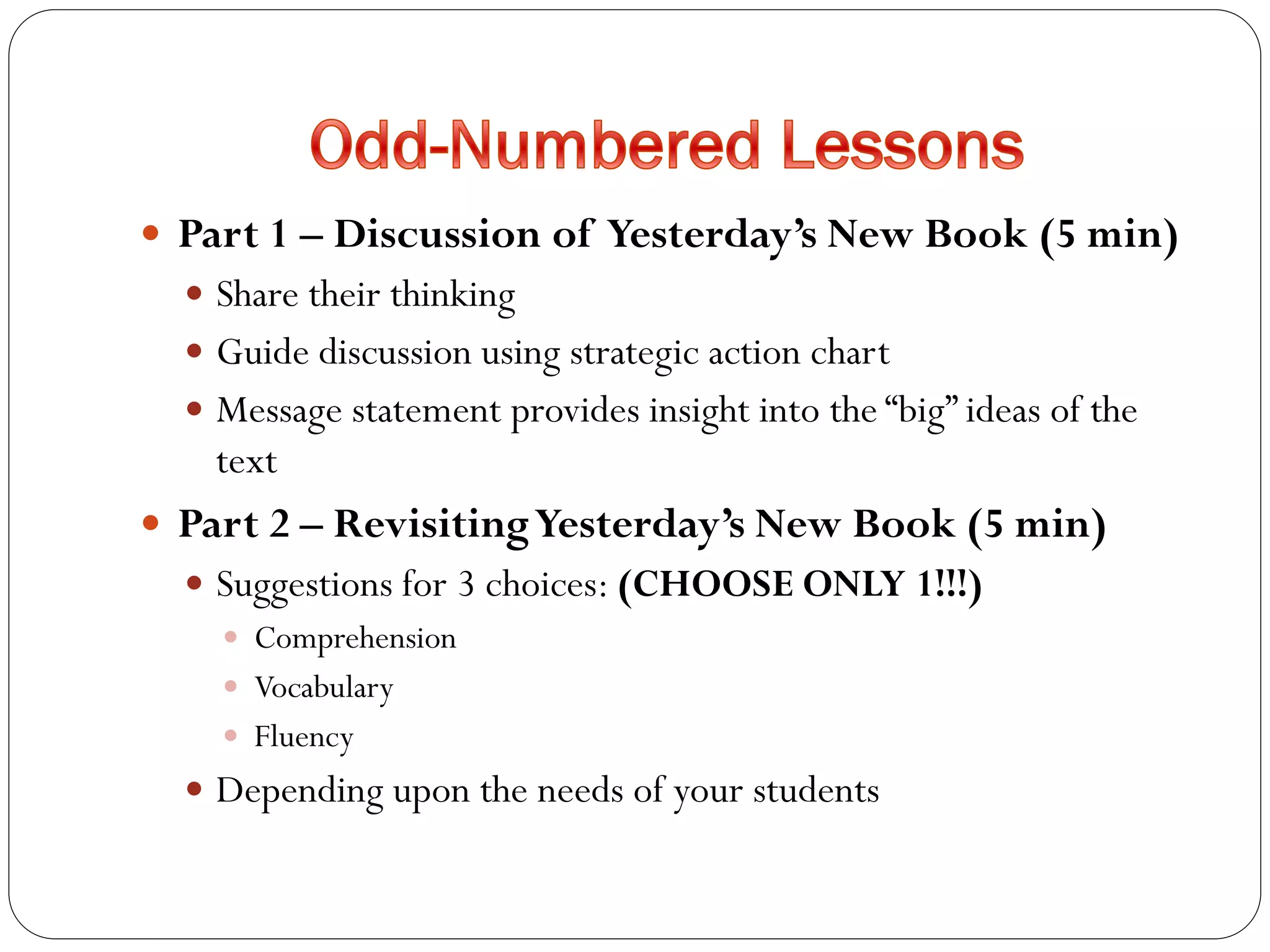
 Part 1 – Discussion of Yesterday’s New Book (5 min)
 Share their thinking
 Guide discussion using strategic action chart
 Message statement provides insight into the “big” ideas of the
text
 Part 2 – RevisitingYesterday’s New Book (5 min)
 Suggestions for 3 choices: (CHOOSE ONLY 1!!!)
 Comprehension
 Vocabulary
 Fluency
 Depending upon the needs of your students
 Part 3 – Phonics/Word Study (10 min.)
The major concept for the teaching
Principle – a concise statement of the phonics
principle students need to understand and learn
to use
Example Chart – will create for students, or
the work they do related to the principle
 Part 4 – Reading a New Book (instructional level) (25 min.)
 Genre Focus – a statement indicating the key genre characteristics of the
new book
 Introducing theText
 Suggested language for introducing the new instructional level text
 Reading theText
 Suggestions for sampling oral reading and selecting prompts (prompting guides 1 &
2)
 Discussing and Revisiting theText
 Suggestions for inviting students to share their thinking about the text they read
 Key Understandings
 Statements of key understandings from the text. Use these to help you guide the
discussion and to observe for evidence of comprehension.
 Message
 A statement conveying the main or “big” ideas of the text
 Teaching Points
 Suggested teaching points
 Use prompting guides
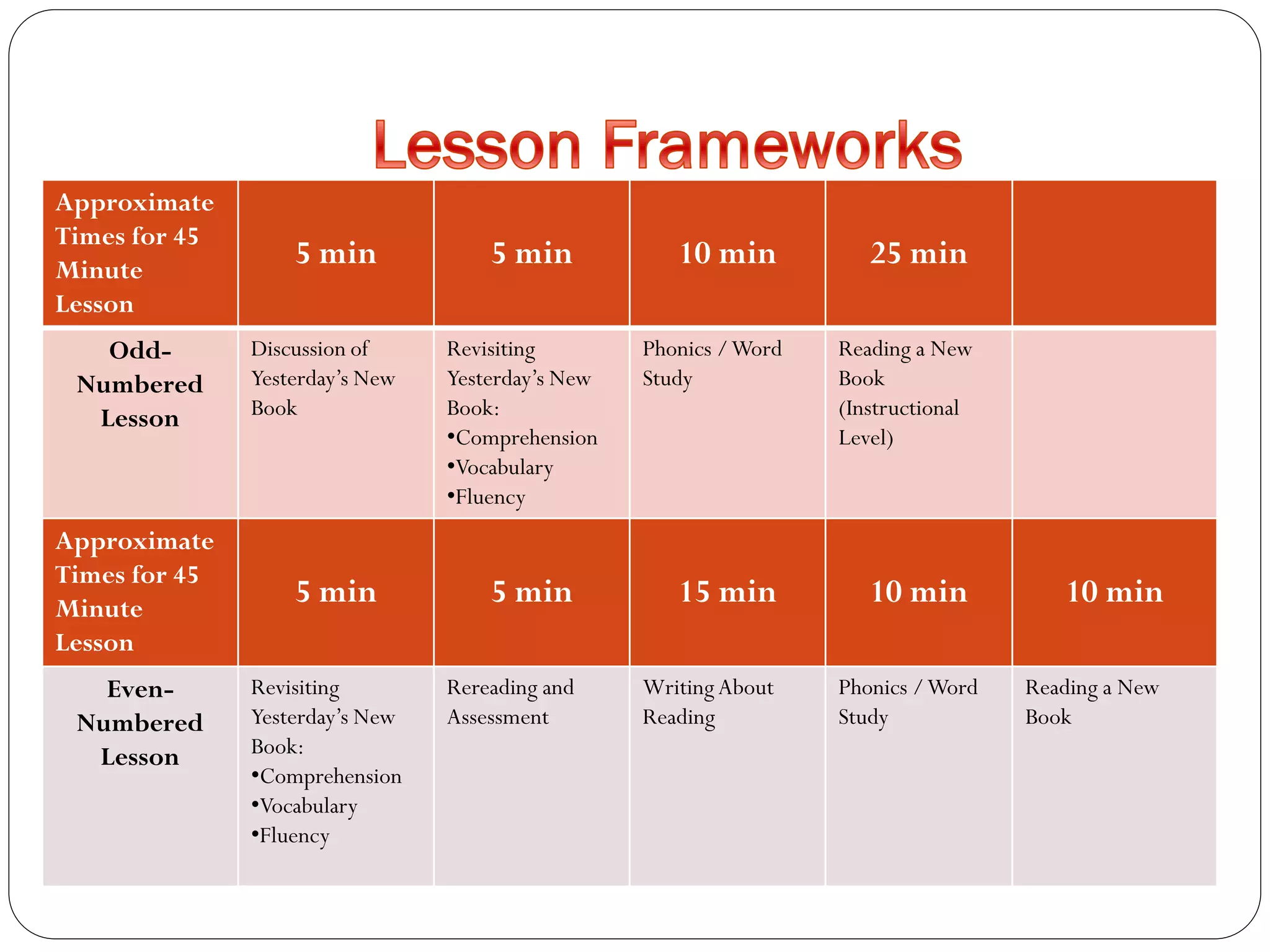
Approximate
Times for 45
Minute
Lesson
5 min 5 min 10 min 25 min
Odd-
Numbered
Lesson
Discussion of
Yesterday’s New
Book
Revisiting
Yesterday’s New
Book:
•Comprehension
•Vocabulary
•Fluency
Phonics /Word
Study
Reading a New
Book
(Instructional
Level)
Approximate
Times for 45
Minute
Lesson
5 min 5 min 15 min 10 min 10 min
Even-
Numbered
Lesson
Revisiting
Yesterday’s New
Book:
•Comprehension
•Vocabulary
•Fluency
Rereading and
Assessment
WritingAbout
Reading
Phonics /Word
Study
Reading a New
Book
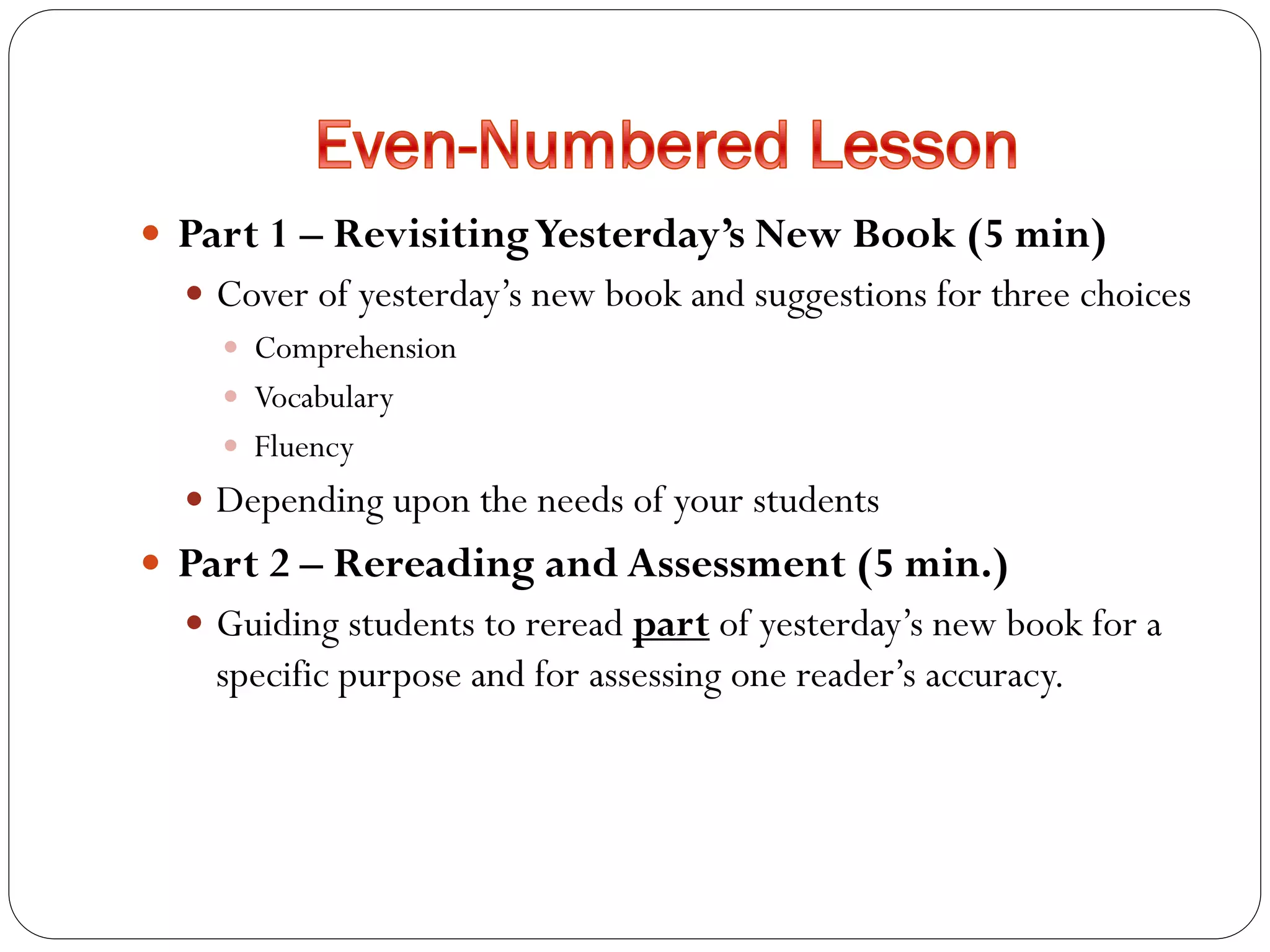
 Part 1 – RevisitingYesterday’s New Book (5 min)
 Cover of yesterday’s new book and suggestions for three choices
 Comprehension
 Vocabulary
 Fluency
 Depending upon the needs of your students
 Part 2 – Rereading and Assessment (5 min.)
 Guiding students to reread part of yesterday’s new book for a
specific purpose and for assessing one reader’s accuracy.
 Part 3 –Writing about Reading (15 min.)
 Using one of three forms of writing
 Shared
 Independent
 Dictated
 Also the type of writing that was used to write about
yesterday’s new book
 Student sample - given
 Part 4 – Phonics /Word Study (10 min.)
 The major concept for teaching
 Principle
 Concise statement of the phonics principle students need to understand
and learn to use
 Example
 An example of a chart you create with students or the work they do
related to the principle
 Part 5 – Reading a New Book (10 min.) (Independent Level)
 Genre Focus
 Statement indicating the key genre characteristics of the new book
 Introducing theText
 Suggestions to orient readers to new ideas, language, and text features for
the independent level book
 Reading theText
 Suggestions for sampling oral reading and selecting prompts
 Prompting Guide 1 & 2
Classroom and Homework
Assessing Reading andWriting
Behaviors
Supporting English Language Learners
Professional Development Links
Reflection and EvaluationTime
Focus:
Novel Study /Test Preparation
Supporting Effective Reading
Using Ongoing Assessment to InformYourTeaching
Fluency,Vocabulary, andWordWork Strategies
FINAL THOUGHTS…

Lli red day 1 long

  • 1.
    Fountas and Pinnell NicoleLehr CESA 6 Literacy Center Coordinator nlehr@cesa6.org LLI Red System Grade 3 Session 1
  • 2.
    Focus 9:00 Welcome andIntroductions 9:15 Key Characteristics of Intervention Systems of Strategic Actions 10:15 Break 10:30 Materials and Resources 11:30 Lunch 12:15 Odd Lessons 1:15 Break 1:30 Even Lessons 2:30 Closure and Evaluations, Question andAnswer session
  • 3.
     Intensive  Shortterm  Supplementary  Daily lessons  Low teacher-student ratio 1:4  Taught by expert teacher  Communication with classroom and home
  • 4.
    LLI: Fifteen Characteristicsof Effective Literacy Intervention
  • 5.
     Engage studentswith high interest, well-written texts in a variety of genres
  • 6.
     Quantity counts Real reading  Authentic, high-success reading  Increase reading volume by engaging students in a large amount of successful reading daily
  • 7.
     Choice isimportant and sometimes difficult in a structured sequence intervention
  • 8.
     We dowant them to read grade level and we want to stretch, but we have to start with something they can do
  • 9.
     Hard totransfer back to the classroom  Self-initiating  Self-regulatory
  • 10.
     Expository  Narrative Procedural  Persuasive  60% of the texts are nonfiction
  • 11.
     Thinking within,beyond, and about the text  Strategic action will be named  “Big Ideas”
  • 12.
     “close reading” Explicit instruction in recognizing and using genre characteristics and text structure  Mental model for genres
  • 13.
     Topic  Principle Examples  Build simple to work on all the building blocks of word study, ways to solve words
  • 14.
     Reading  Writing Everyday speaking  Formal  The words you know  Build vocabulary by making connections between words
  • 15.
     Momentum  Optionwith every lesson  Pausing  Phrasing  Word Stress  Intonation  Rate  Integration
  • 16.
     Helps todevelopment academic language  Become a collaborative learning team
  • 17.
     Use writingto support and extend comprehension  Every other day  Preplanned to coordinate with instructional level text  Express and extend the meaning  Use some new vocabulary
  • 18.
     Support thespecific needs of English language learners  Includes word study  Size of the group allows learners to be active talkers to extend language
  • 19.
     Provide explicit,direct instruction by an expert teacher, with a recommended teacher- student ration
  • 20.
     SolvingWords  Developinga range of flexibility strategies  Monitor and Correct  Child knows when he right and when he’s wrong and knows what to do with it  Search for and Use Information  Notice and use information sources (meaning, language structure, visual information)  Summarize  Remember important information and carry it forward  Think in a different way, tell what’s important  Maintain Fluency  Not just speed  Don’t allow them to read 1 page disfluently (use prompting guide)  Adjust  Flexible ways to solve problems
  • 21.
    Thinking Beyond theText Thinking About the Text  Predict  Think about what may happen next  Making Connections  Connect the text to personal and world knowledge as well as to other texts  Synthesize  Adjust present understandings to accommodate new knowledge  Infer  Think about what the writer means but has not stated  Analyze  Notice aspects of the writer’s craft and text structure  Critique  Think critically about the text
  • 22.
    Builds cohesiveness between interventionand classroom teacher What proficient readers and writers are able to do all the time
  • 23.
     Systematic design People thought a solution came in a box, it was created as a resource and tool  Making teaching moves, thinking behind the design  Get them moving fast, walking, drawing, they need to pick it up, not to make them nervous, keep them moving, need to be faster responders  The program moves better when the teacher understands the books better each year
  • 24.
     Can’t “sortof” do LLI  Look at the data and the effects  When you change the design you may change the effects  Systematic teaching, assessment, intensity to change the literacy paths of these children  When opportunities are available with fidelity the results change
  • 25.
     Non-NoticingTeacher Teaching lessonsand program  NoticingTeacher Teaching the readers and writers Observing behaviors Teaching strategies
  • 28.
     Orange System:levelsA through E*  Green System: levels A through K*  Blue System: levels C through N  Red System: levels L through Q In Production:  Gold System: levels O throughT  Purple System: levels R throughW  Teal System: levels U through Z *A booster package will be available for those who have already purchased the Orange and Green Systems. Each system overlaps.
  • 29.
     Prompting Guide1  Prompting Guide 2  System Guide  Three-Volume Lesson Guide  Literacy Notebooks  StudentTest Preparation Booklets  Word Magnets  Student Folders  Highlighter Strips  Permanent andWipe-Off Markers, Eraser  F&P Calculator/Stopwatch  Whiteboards  Student Portfolio  Professional Development andTutorial DVD’s
  • 30.
     Whiteboard anddry-erase markers  Teacher demonstrations during phonics and writing  Chart paper  Phonics and writing  2 sets small lowercase magnet letters  Teacher demonstrations during word work  Magnetic letters sorted for use with students  Paper or card stock for printing games and some charts  One-inch-wide correction tape  Cover errors in students’ Literacy Notebooks  Stick-on notes for marking places in books
  • 31.
     One newresource  Portfolio  Right side – book  Middle – literacy notebook  Left side – homework, no take-home paper books  Real books  Need color  Teach responsibility  Help with study skills
  • 32.
     Lesson Guides 192 lessons  Specific continuum at the end of each level  Books  24 leveled texts for level  12 odd / 12 even  1 full-length novel at each level ( 4 day approach)  1 test preparation at each level (4 day approach)  6 copies of each book  Author’s note inside back cover  Designed for teacher to read to the students  Series books
  • 33.
    Fiction Series NonfictionSeries  ClassicTales  Alexandria Swift  Mrs. O’s Class  Daniel’s Gadgets  The Slacker Family  Two-Way Books  GraphicTexts  AgainstAll Odds  Art for All  Delicious!  How BodiesWork  Intriguing Animals  Making a Difference  Remarkable Inventions  Solving Problems  Sports for All  Wonders of Nature  GraphicText
  • 34.
    General Resources LessonResources  Consonant cluster and digraph chart  Intervention record  Lesson records for standard, novel study, and test preparation lessons  Guide for observing and noting reading behaviors  Coding and scoring errors at a glance  Reflection guide  Communication sheets for group and individuals  Reading graph  Students achievement log  Phonics/word study game directions and game boards  Words cards  Translations of parent letters ( French, Spanish, Hmong, Haitian-Creole)  Recording forms for taking reading records  Readers’ theater activities  Phrased reading activities  Practice sorts  Word cards  Graphic organizers  Word lists  Phonics/word study games  Parent letters (English)  At the beginning of each level
  • 35.
     When ReadersStruggle, L-Z: TeachingThat Works (in press)  Fountas and Pinnell Choice Library (in press)  Fountas and Pinnell LLI Reading RecordApp for iPads (in press) Syncs data to the Online Data Management System (ODMS)
  • 36.
  • 38.
    Thank you foryour thinking and sharing this morning! Enjoy your lunch! LUNCH TIME
  • 39.
    On the firstday of Intervention Focus: “How am I going to get the child out of this program.”
  • 40.
     How theBookWorks New in Red System  Vocabulary Includes tier 1, 2, & 3 words
  • 41.
    Approximate Times for 45 Minute Lesson 5min 5 min 10 min 25 min Odd- Numbered Lesson Discussion of Yesterday’s New Book Revisiting Yesterday’s New Book: •Comprehension •Vocabulary •Fluency Phonics /Word Study Reading a New Book (Instructional Level) Approximate Times for 45 Minute Lesson 5 min 5 min 15 min 10 min 10 min Even- Numbered Lesson Revisiting Yesterday’s New Book: •Comprehension •Vocabulary •Fluency Rereading and Assessment WritingAbout Reading Phonics /Word Study Reading a New Book
  • 42.
     Part 1– Discussion of Yesterday’s New Book (5 min)  Share their thinking  Guide discussion using strategic action chart  Message statement provides insight into the “big” ideas of the text  Part 2 – RevisitingYesterday’s New Book (5 min)  Suggestions for 3 choices: (CHOOSE ONLY 1!!!)  Comprehension  Vocabulary  Fluency  Depending upon the needs of your students
  • 43.
     Part 3– Phonics/Word Study (10 min.) The major concept for the teaching Principle – a concise statement of the phonics principle students need to understand and learn to use Example Chart – will create for students, or the work they do related to the principle
  • 44.
     Part 4– Reading a New Book (instructional level) (25 min.)  Genre Focus – a statement indicating the key genre characteristics of the new book  Introducing theText  Suggested language for introducing the new instructional level text  Reading theText  Suggestions for sampling oral reading and selecting prompts (prompting guides 1 & 2)  Discussing and Revisiting theText  Suggestions for inviting students to share their thinking about the text they read  Key Understandings  Statements of key understandings from the text. Use these to help you guide the discussion and to observe for evidence of comprehension.  Message  A statement conveying the main or “big” ideas of the text  Teaching Points  Suggested teaching points  Use prompting guides
  • 46.
    Approximate Times for 45 Minute Lesson 5min 5 min 10 min 25 min Odd- Numbered Lesson Discussion of Yesterday’s New Book Revisiting Yesterday’s New Book: •Comprehension •Vocabulary •Fluency Phonics /Word Study Reading a New Book (Instructional Level) Approximate Times for 45 Minute Lesson 5 min 5 min 15 min 10 min 10 min Even- Numbered Lesson Revisiting Yesterday’s New Book: •Comprehension •Vocabulary •Fluency Rereading and Assessment WritingAbout Reading Phonics /Word Study Reading a New Book
  • 47.
     Part 1– RevisitingYesterday’s New Book (5 min)  Cover of yesterday’s new book and suggestions for three choices  Comprehension  Vocabulary  Fluency  Depending upon the needs of your students  Part 2 – Rereading and Assessment (5 min.)  Guiding students to reread part of yesterday’s new book for a specific purpose and for assessing one reader’s accuracy.
  • 48.
     Part 3–Writing about Reading (15 min.)  Using one of three forms of writing  Shared  Independent  Dictated  Also the type of writing that was used to write about yesterday’s new book  Student sample - given
  • 49.
     Part 4– Phonics /Word Study (10 min.)  The major concept for teaching  Principle  Concise statement of the phonics principle students need to understand and learn to use  Example  An example of a chart you create with students or the work they do related to the principle
  • 50.
     Part 5– Reading a New Book (10 min.) (Independent Level)  Genre Focus  Statement indicating the key genre characteristics of the new book  Introducing theText  Suggestions to orient readers to new ideas, language, and text features for the independent level book  Reading theText  Suggestions for sampling oral reading and selecting prompts  Prompting Guide 1 & 2
  • 51.
    Classroom and Homework AssessingReading andWriting Behaviors Supporting English Language Learners Professional Development Links
  • 52.
    Reflection and EvaluationTime Focus: NovelStudy /Test Preparation Supporting Effective Reading Using Ongoing Assessment to InformYourTeaching Fluency,Vocabulary, andWordWork Strategies FINAL THOUGHTS…