BIOINSECTICIDES
HEMA T
MSc BIOCHEMISTRY
BHARATHIAR UNIVERSITY
2018-2020
BIO-INSECTICIDES
Bio-insecticides are organic formulations recommended
for the management of insects that feed on crops.
Certain micro organism or toxins produced by them,
which can control insect are called microbial insecticide
or bio-insecticide.
Bio-insecticides are the best remedies where the growers
were not able to control the insects in spite of using heavy
doses of chemical pesticides.
They cure the plant and soil from disease causing
pathogens.
High specificity
Virulence
Persistence
Viability
Economic
Quality control
Safety
Stability
Characteristics of bio-
insecticides
TYPES OF BIO-INSECTICIDES
Bacterial insecticide
Viral insecticide
Fungal insecticide
Protozoa insecticide
Nematode insecticide
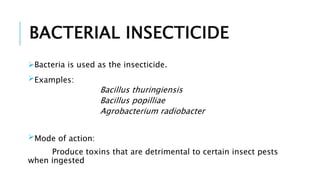
BACTERIAL INSECTICIDE
Bacteria is used as the insecticide.
Examples:
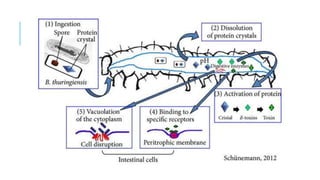
Bacillus thuringiensis
Bacillus popilliae
Agrobacterium radiobacter
Mode of action:
Produce toxins that are detrimental to certain insect pests
when ingested
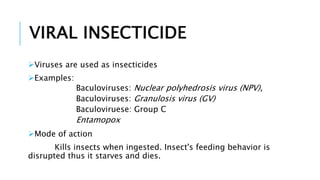
VIRAL INSECTICIDE
Viruses are used as insecticides
Examples:
Baculoviruses: Nuclear polyhedrosis virus (NPV),
Baculoviruses: Granulosis virus (GV)
Baculoviruese: Group C
Entamopox
Mode of action
Kills insects when ingested. Insect's feeding behavior is
disrupted thus it starves and dies.
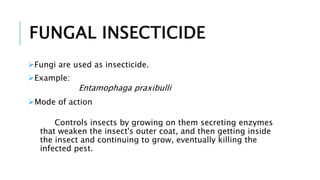
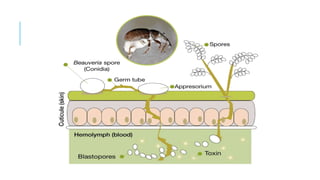
FUNGAL INSECTICIDE
Fungi are used as insecticide.
Example:
Entamophaga praxibulli
Mode of action
Controls insects by growing on them secreting enzymes
that weaken the insect's outer coat, and then getting inside
the insect and continuing to grow, eventually killing the
infected pest.
PROTOZOA INSECTICIDE
Protozoa is used as insecticide.
Example:
Nosema
Vairimorpha
Malamoeba
Mode of action
Kills insects when ingested. Insect's feeding behavior is
disrupted thus it starves and dies.
NEMATODE INSECTICIDE
Nematodes are used as insecticide.
Example:
Heterorhabditis bacteriophora
Phasmarhabditis hermaphrodita
Steinernema carpocapsae
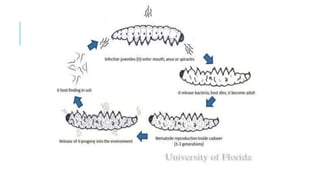
Mode of action
They kill their target organisms by entering natural body
openings or by penetrating the insect cuticle directly.
ADVANTAGES OF BIO-
INSECTICIDES
They do not persist long in the environment
They are effective in small quantities
Safer to humans and animals compared to synthetic
insecticides
They are very specific, often affecting only a single species of
insect
Have a very specific mode of action
DISADVANTAGES OF BIO-
INSECTICIDES
Most of these bio-insecticide agents are living organisms, their
success is affected by several factors like temperature, pH,
moisture, UV, soil conditions, and other microbial competitors
present in the environment.
Slow in action means much longer time for it to eradicate
pathogens compared to synthetic pesticides.
THANK YOU

Bio-insecticides

  • 1.
  • 2.
    BIO-INSECTICIDES Bio-insecticides are organicformulations recommended for the management of insects that feed on crops. Certain micro organism or toxins produced by them, which can control insect are called microbial insecticide or bio-insecticide. Bio-insecticides are the best remedies where the growers were not able to control the insects in spite of using heavy doses of chemical pesticides. They cure the plant and soil from disease causing pathogens.
  • 3.
  • 4.
    TYPES OF BIO-INSECTICIDES Bacterialinsecticide Viral insecticide Fungal insecticide Protozoa insecticide Nematode insecticide
  • 5.
    BACTERIAL INSECTICIDE Bacteria isused as the insecticide. Examples: Bacillus thuringiensis Bacillus popilliae Agrobacterium radiobacter Mode of action: Produce toxins that are detrimental to certain insect pests when ingested
  • 7.
    VIRAL INSECTICIDE Viruses areused as insecticides Examples: Baculoviruses: Nuclear polyhedrosis virus (NPV), Baculoviruses: Granulosis virus (GV) Baculoviruese: Group C Entamopox Mode of action Kills insects when ingested. Insect's feeding behavior is disrupted thus it starves and dies.
  • 9.
    FUNGAL INSECTICIDE Fungi areused as insecticide. Example: Entamophaga praxibulli Mode of action Controls insects by growing on them secreting enzymes that weaken the insect's outer coat, and then getting inside the insect and continuing to grow, eventually killing the infected pest.
  • 11.
    PROTOZOA INSECTICIDE Protozoa isused as insecticide. Example: Nosema Vairimorpha Malamoeba Mode of action Kills insects when ingested. Insect's feeding behavior is disrupted thus it starves and dies.
  • 12.
    NEMATODE INSECTICIDE Nematodes areused as insecticide. Example: Heterorhabditis bacteriophora Phasmarhabditis hermaphrodita Steinernema carpocapsae Mode of action They kill their target organisms by entering natural body openings or by penetrating the insect cuticle directly.
  • 14.
    ADVANTAGES OF BIO- INSECTICIDES Theydo not persist long in the environment They are effective in small quantities Safer to humans and animals compared to synthetic insecticides They are very specific, often affecting only a single species of insect Have a very specific mode of action
  • 15.
    DISADVANTAGES OF BIO- INSECTICIDES Mostof these bio-insecticide agents are living organisms, their success is affected by several factors like temperature, pH, moisture, UV, soil conditions, and other microbial competitors present in the environment. Slow in action means much longer time for it to eradicate pathogens compared to synthetic pesticides.
  • 16.