Circular Motion
Circular Motion
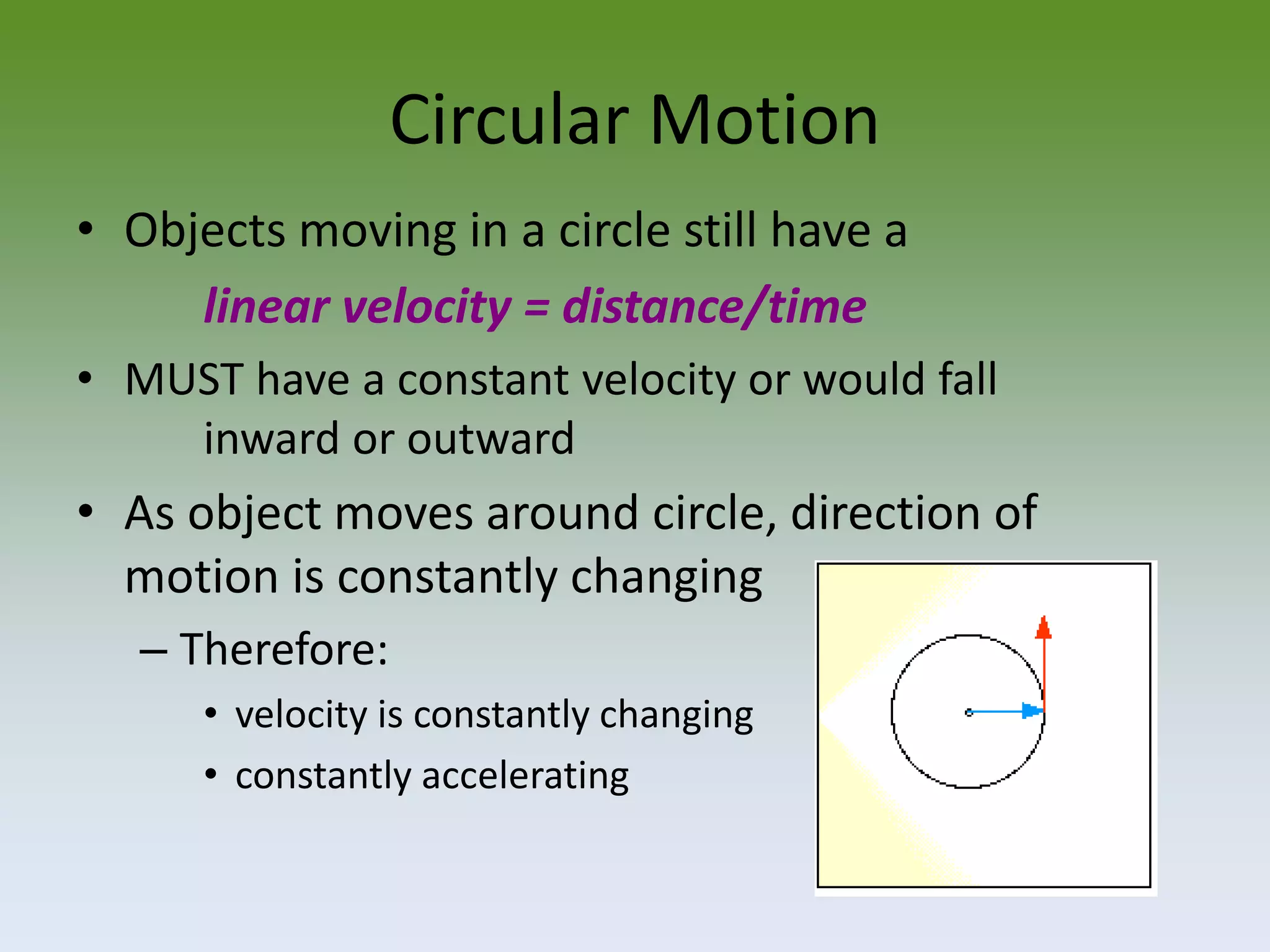
• Objects moving in a circle still have a
linear velocity = distance/time
• MUST have a constant velocity or would fall
inward or outward

• As object moves around circle, direction of
motion is constantly changing
– Therefore:
• velocity is constantly changing
• constantly accelerating
Centripetal Acceleration
• Acceleration of an object moving in a circle points
toward the center of the circle
• This is called a centripetal (center pointing)
acceleration
• The centripetal acceleration depends on:
– speed of the object
– radius of the circle

Fcent
v
Centripetal Force
• Newton’s Second Law says that if an object is
accelerating, there must be a net force on it
– this is called the centripetal force

• The centripetal force points toward the center of
the circle
• Centripetal Force
Objects Move
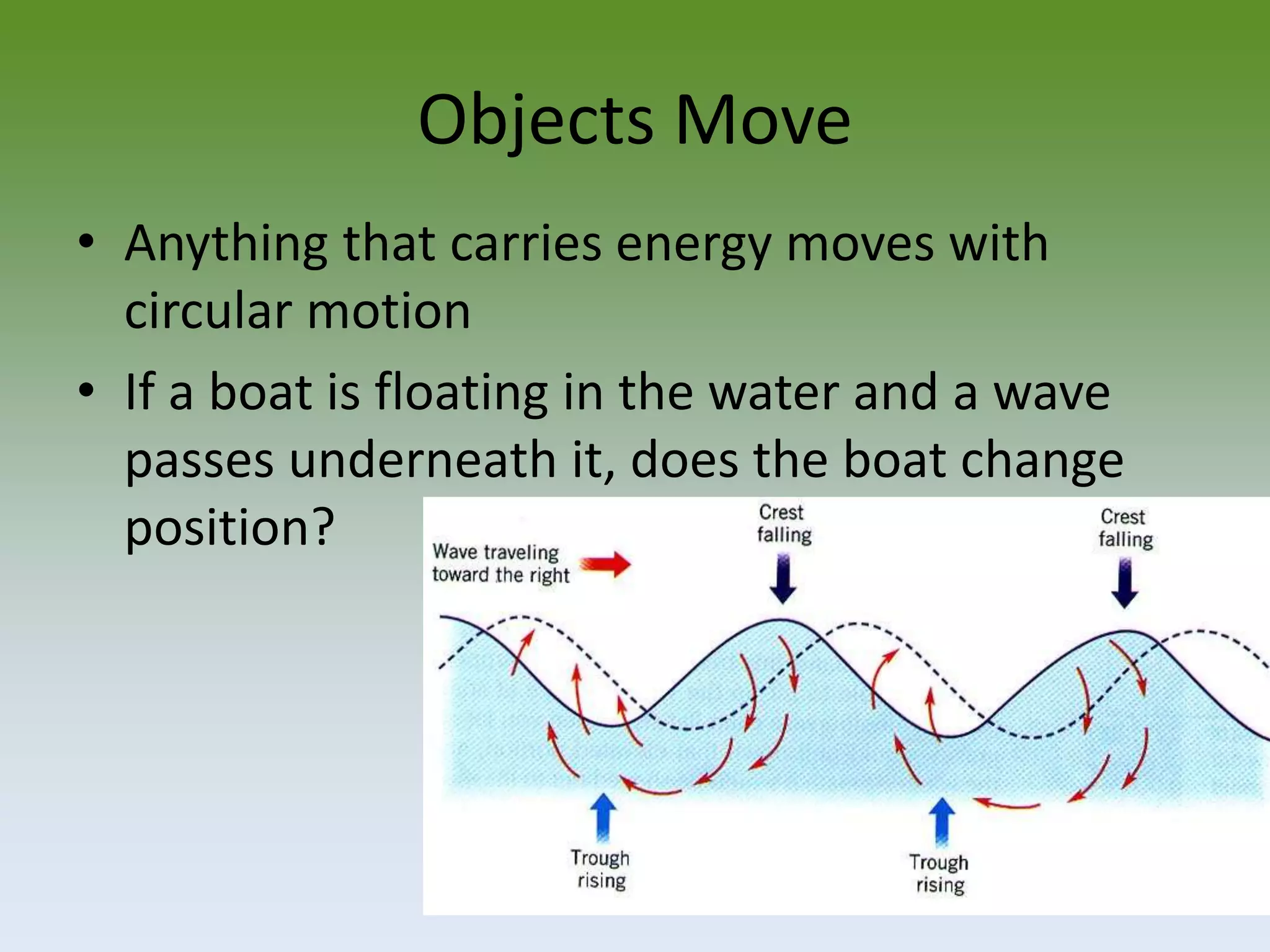
• Anything that carries energy moves with
circular motion
• If a boat is floating in the water and a wave
passes underneath it, does the boat change
position?
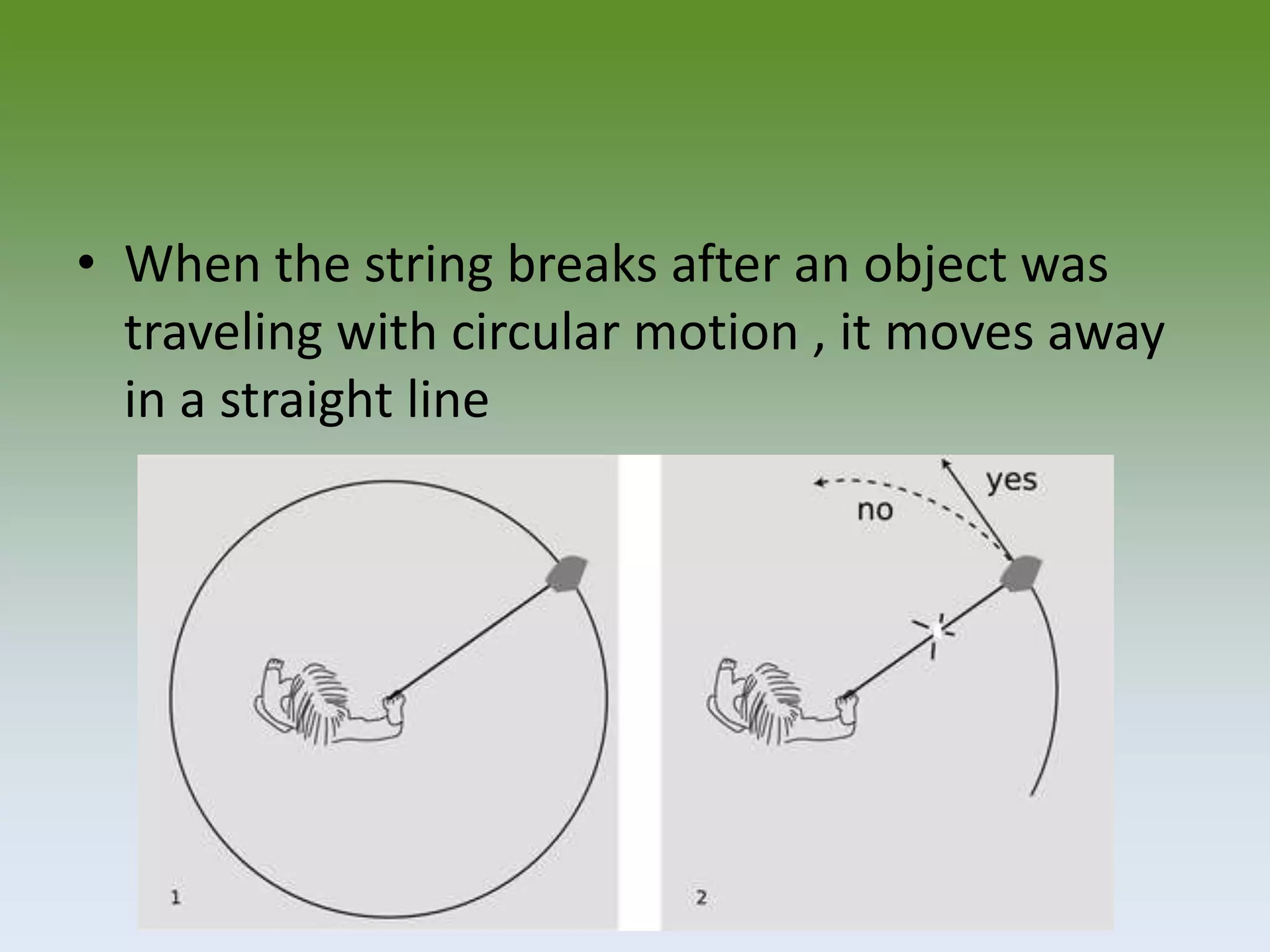
• When the string breaks after an object was
traveling with circular motion , it moves away
in a straight line
Orbital Motion
• If the axis of rotation is inside the object, the
object is rotating (spinning)
– Earth rotates on it’s axis

• If the axis of rotation is outside the object, the
object is revolving
– Earth revolves around the Sun

• Which is faster?
– Depends on speed of object & distance traveling
Circular Motion Examples
• Which way is the Force?.
• Earth around Sun

Circular Motion Notes

  • 1.
  • 2.
    Circular Motion • Objectsmoving in a circle still have a linear velocity = distance/time • MUST have a constant velocity or would fall inward or outward • As object moves around circle, direction of motion is constantly changing – Therefore: • velocity is constantly changing • constantly accelerating
  • 3.
    Centripetal Acceleration • Accelerationof an object moving in a circle points toward the center of the circle • This is called a centripetal (center pointing) acceleration • The centripetal acceleration depends on: – speed of the object – radius of the circle Fcent v
  • 4.
    Centripetal Force • Newton’sSecond Law says that if an object is accelerating, there must be a net force on it – this is called the centripetal force • The centripetal force points toward the center of the circle • Centripetal Force
  • 5.
    Objects Move • Anythingthat carries energy moves with circular motion • If a boat is floating in the water and a wave passes underneath it, does the boat change position?
  • 6.
    • When thestring breaks after an object was traveling with circular motion , it moves away in a straight line
  • 7.
    Orbital Motion • Ifthe axis of rotation is inside the object, the object is rotating (spinning) – Earth rotates on it’s axis • If the axis of rotation is outside the object, the object is revolving – Earth revolves around the Sun • Which is faster? – Depends on speed of object & distance traveling
  • 8.
    Circular Motion Examples •Which way is the Force?. • Earth around Sun