Chapter 5.2
Energy
 The ability to do work
 Any object that has energy has the ability to create

force to do work
 Energy is measured in the same units as work
 Unit – joule(J)
Forms of Mechanical Energy
1. Kinetic Energy
 Energy in the form
of motion
Ex) A spinning
bicycle wheel
Ex) Sprinting runners

2. Potential Energy
 Stored Energy –
not moving
Ex) A drawn bow
Ex) A book on the top
shelf
Ex) A stretched
rubber band
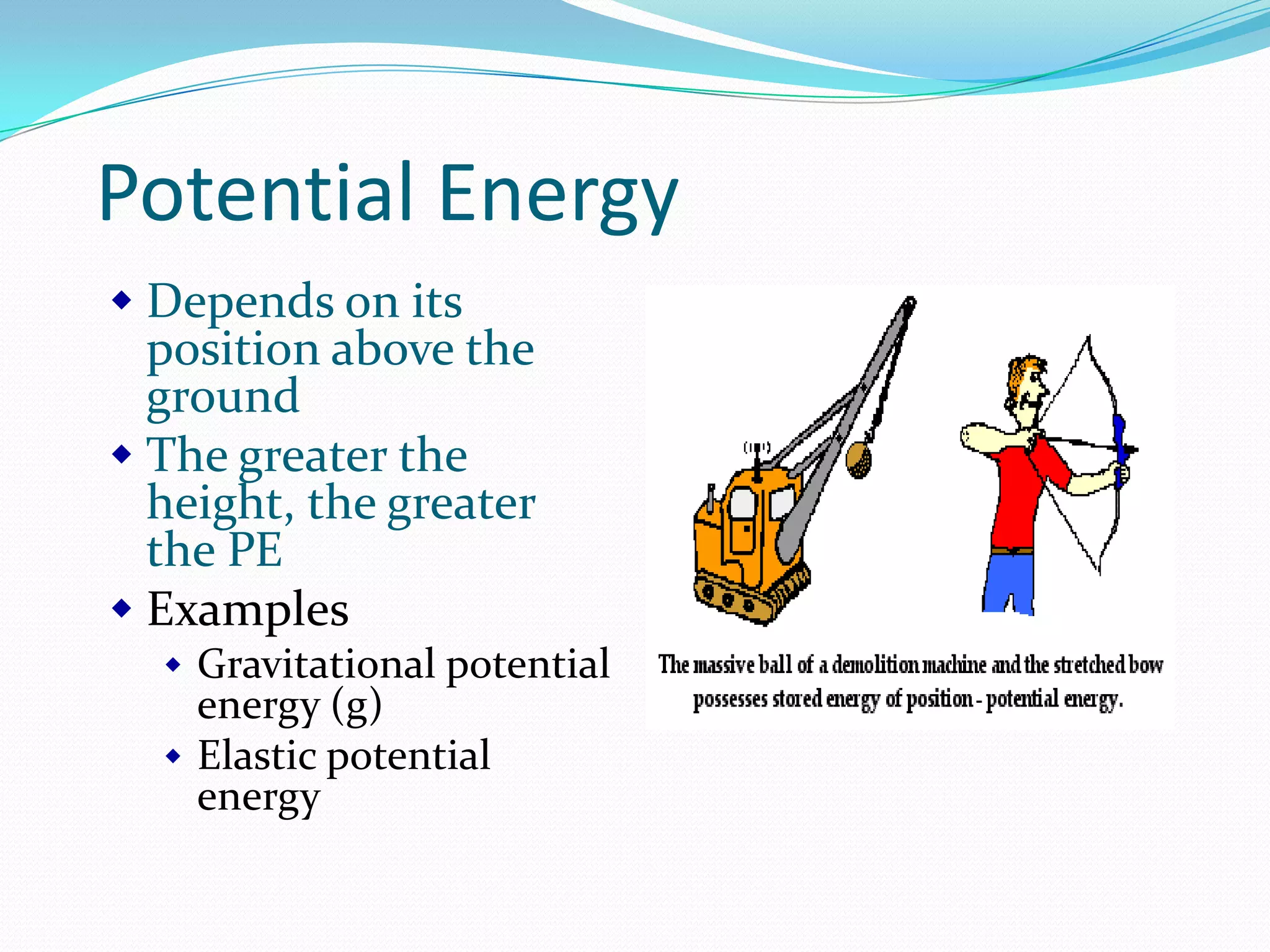
Potential Energy
 Depends on its
position above the
ground
 The greater the
height, the greater
the PE
 Examples
 Gravitational potential

energy (g)
 Elastic potential
energy
Potential Energy
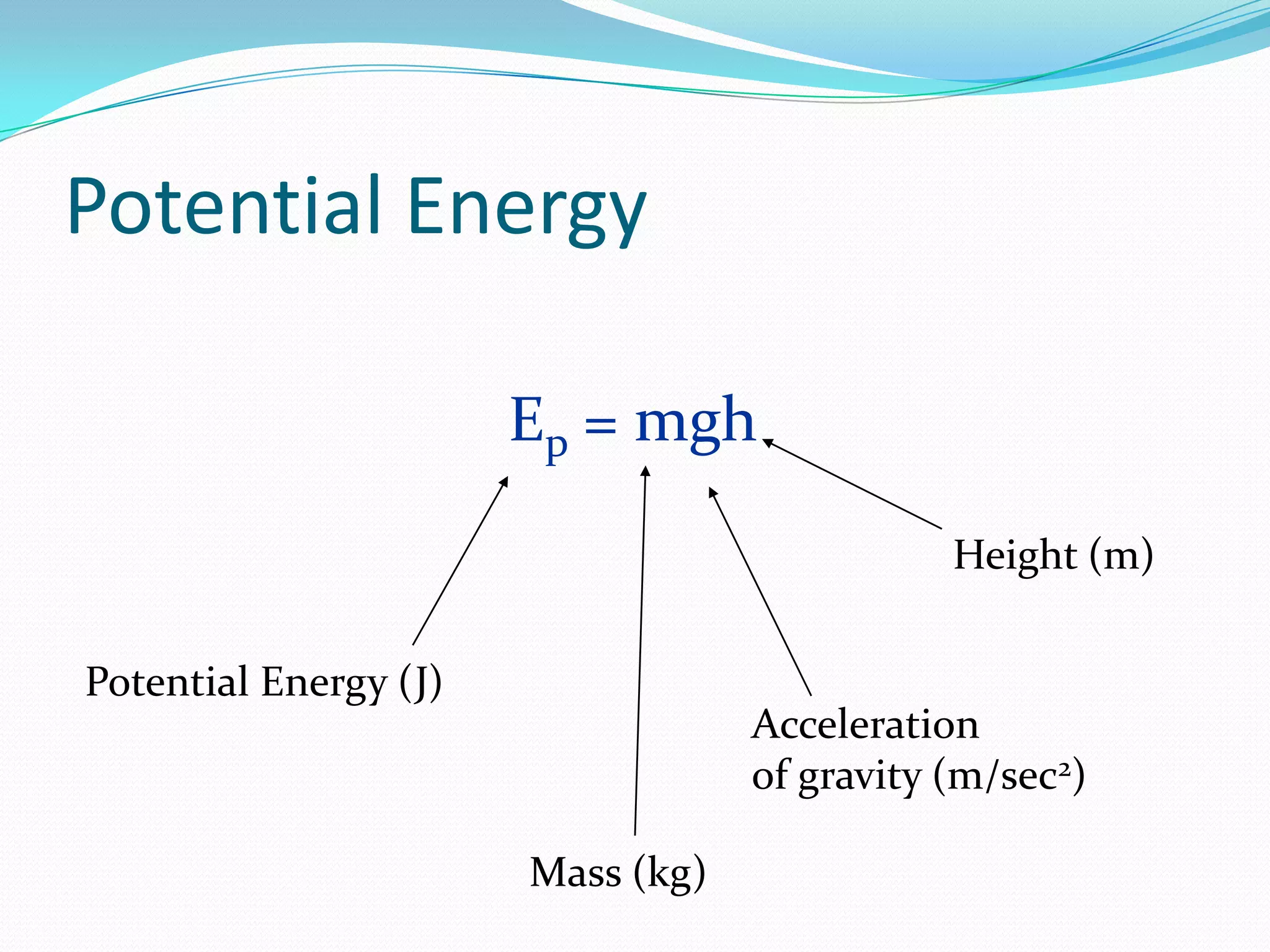
Ep = mgh
Height (m)
Potential Energy (J)
Acceleration
of gravity (m/sec2)
Mass (kg)
Kinetic Energy
 The greater the mass

the more KE
 The greater the velocity
the greater the KE
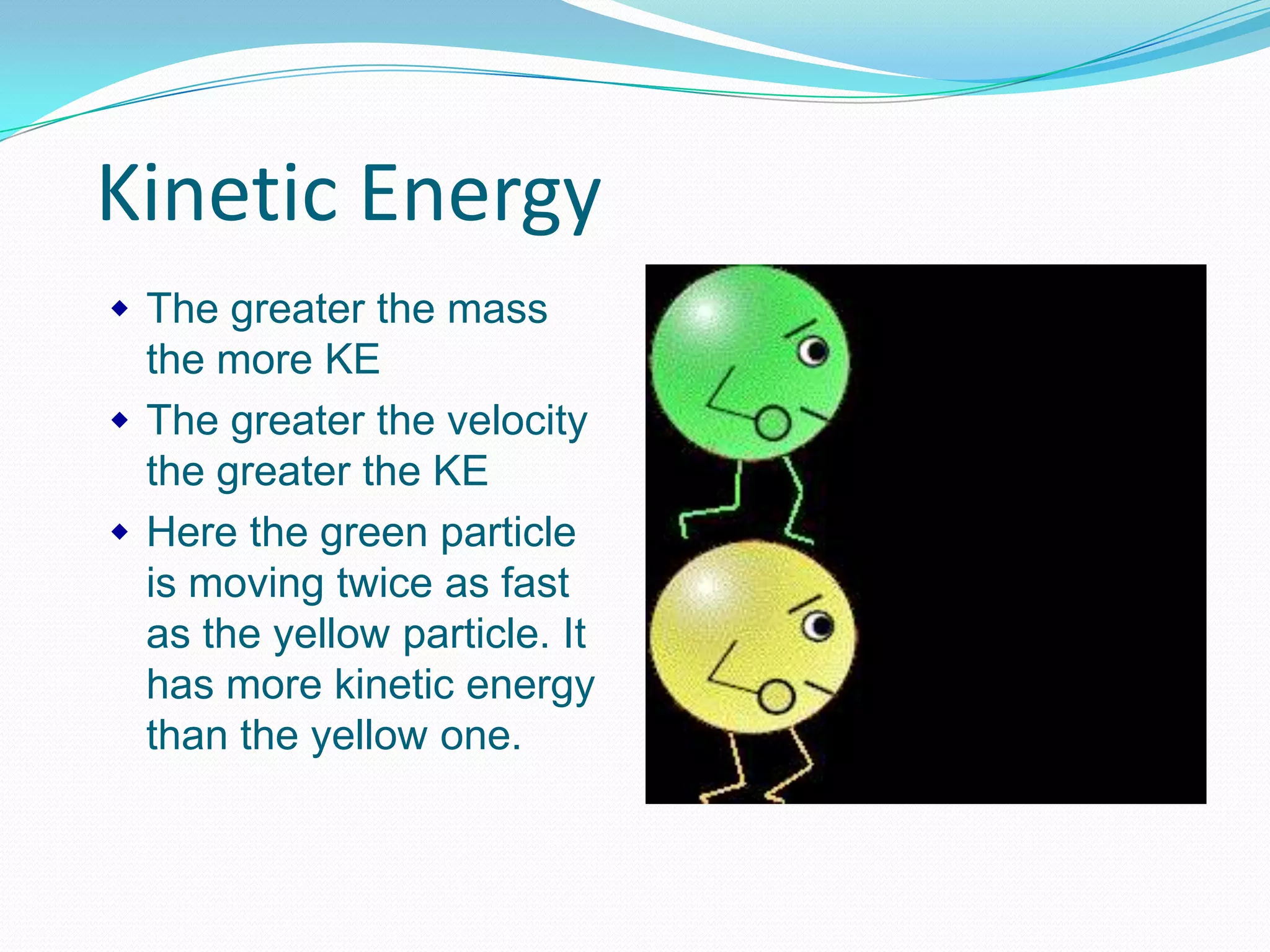
 Here the green particle
is moving twice as fast
as the yellow particle. It
has more kinetic energy
than the yellow one.
Kinetic Energy

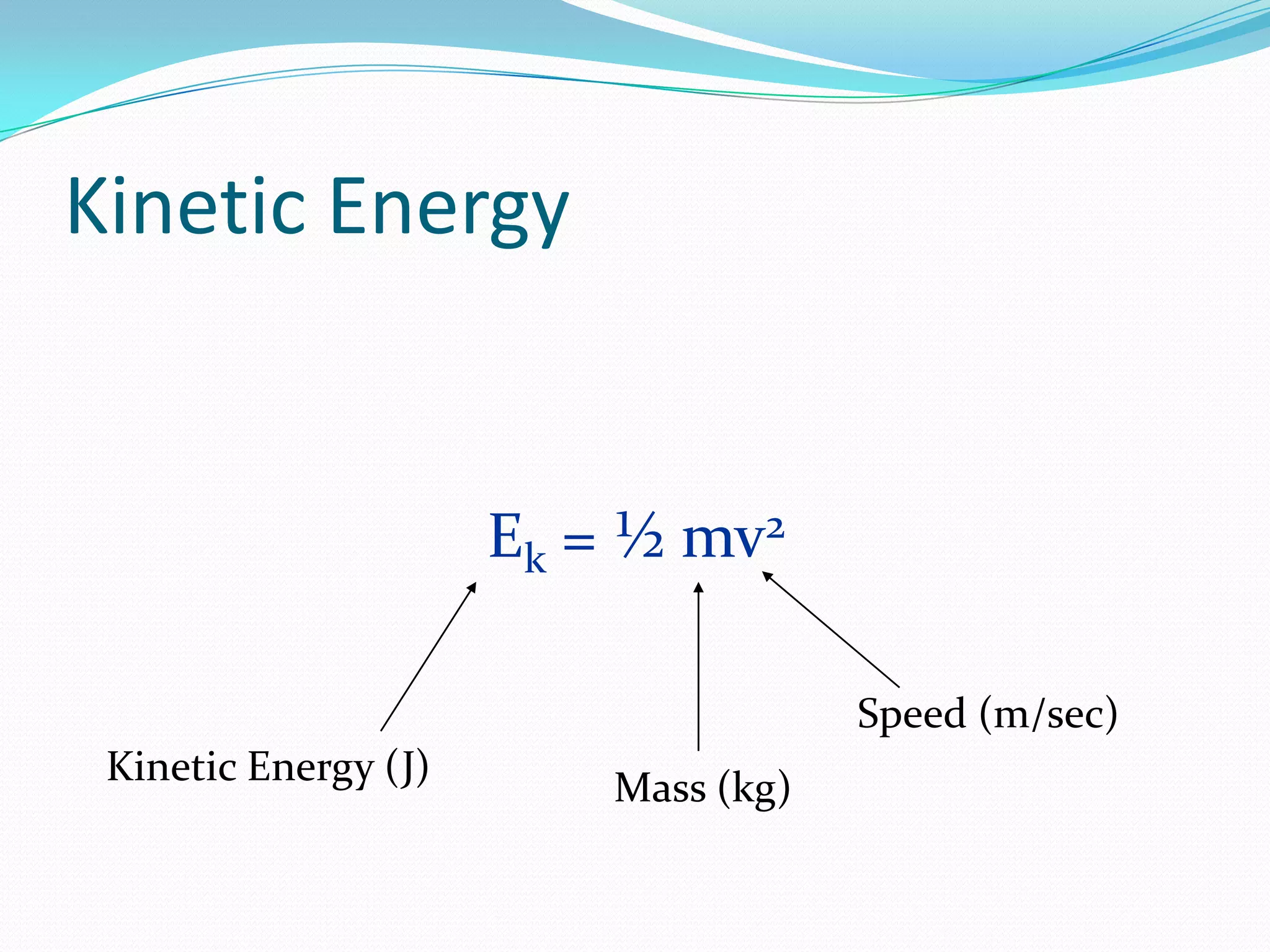
Ek = ½ mv2
Speed (m/sec)

Kinetic Energy (J)

Mass (kg)
Mechanical Energy
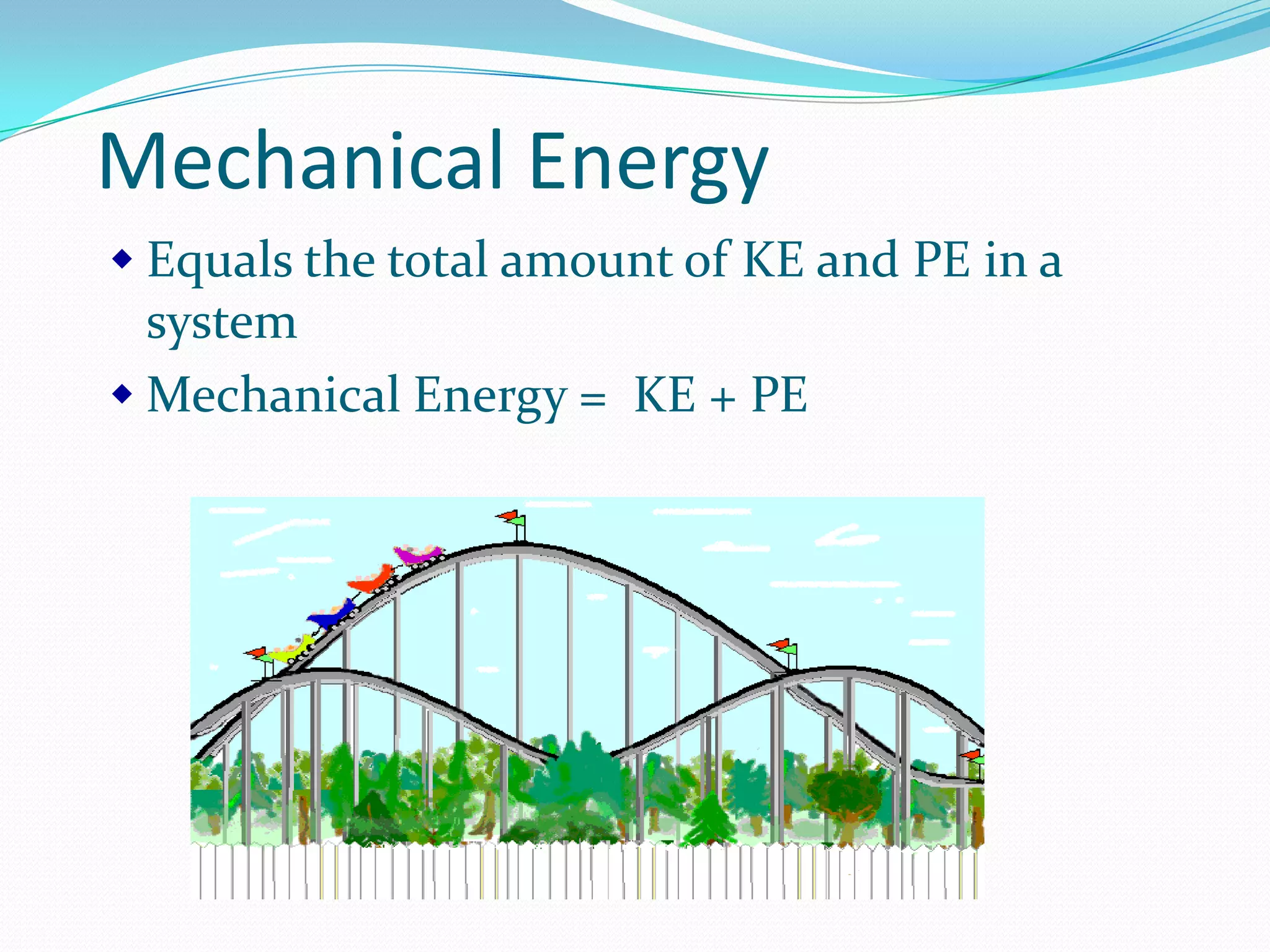
 Equals the total amount of KE and PE in a

system
 Mechanical Energy = KE + PE
Law of Conservation of Energy
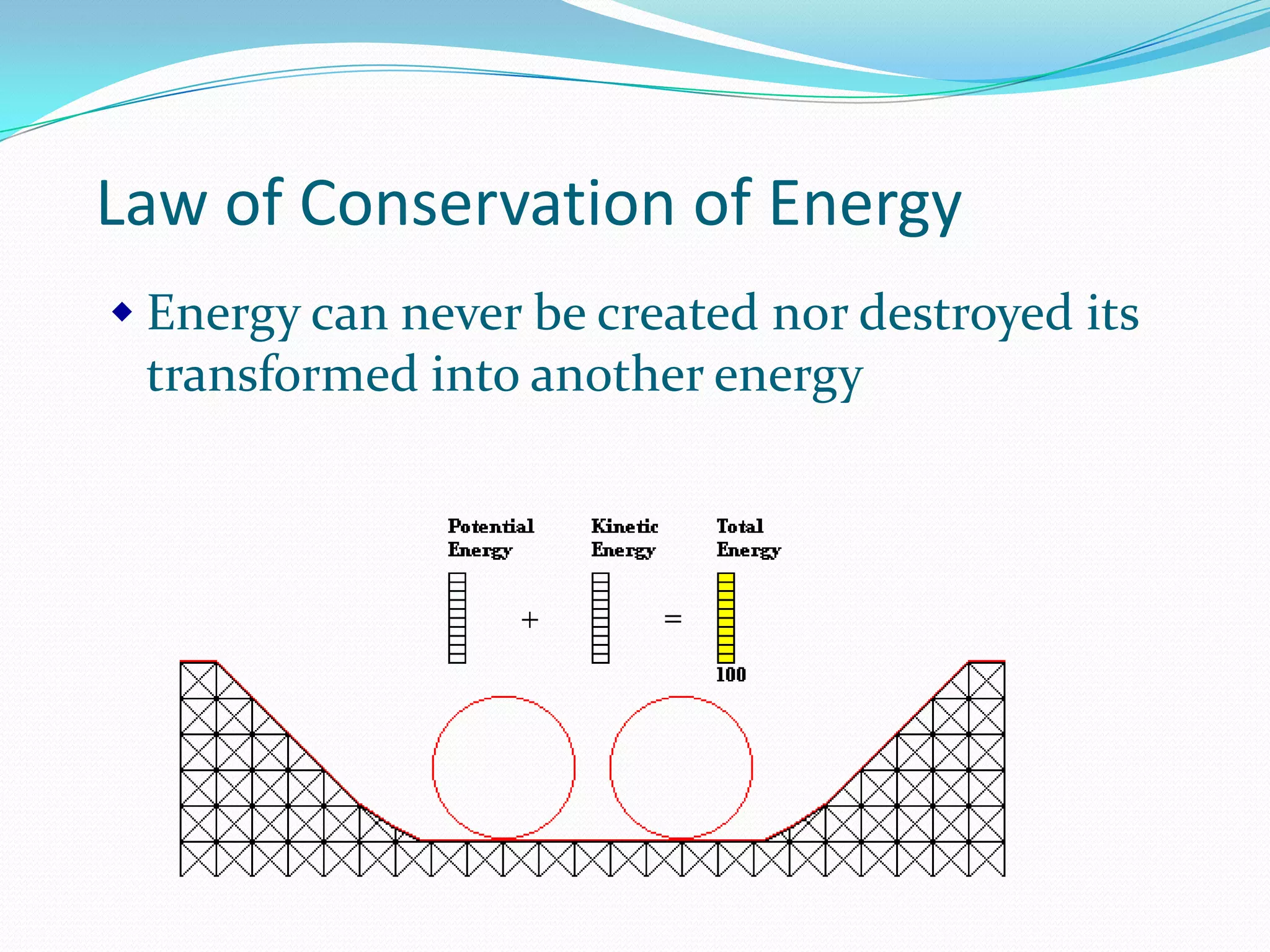
 Energy can never be created nor destroyed its

transformed into another energy
 Total energy can never exceed starting energy

(it should always be equal)
 KE converted to PE and back
 Friction slows objects down

5.2 Notes

  • 1.
  • 2.
    Energy  The abilityto do work  Any object that has energy has the ability to create force to do work  Energy is measured in the same units as work  Unit – joule(J)
  • 3.
    Forms of MechanicalEnergy 1. Kinetic Energy  Energy in the form of motion Ex) A spinning bicycle wheel Ex) Sprinting runners 2. Potential Energy  Stored Energy – not moving Ex) A drawn bow Ex) A book on the top shelf Ex) A stretched rubber band
  • 4.
    Potential Energy  Dependson its position above the ground  The greater the height, the greater the PE  Examples  Gravitational potential energy (g)  Elastic potential energy
  • 5.
    Potential Energy Ep =mgh Height (m) Potential Energy (J) Acceleration of gravity (m/sec2) Mass (kg)
  • 6.
    Kinetic Energy  Thegreater the mass the more KE  The greater the velocity the greater the KE  Here the green particle is moving twice as fast as the yellow particle. It has more kinetic energy than the yellow one.
  • 7.
    Kinetic Energy Ek =½ mv2 Speed (m/sec) Kinetic Energy (J) Mass (kg)
  • 8.
    Mechanical Energy  Equalsthe total amount of KE and PE in a system  Mechanical Energy = KE + PE
  • 9.
    Law of Conservationof Energy  Energy can never be created nor destroyed its transformed into another energy
  • 10.
     Total energycan never exceed starting energy (it should always be equal)  KE converted to PE and back  Friction slows objects down