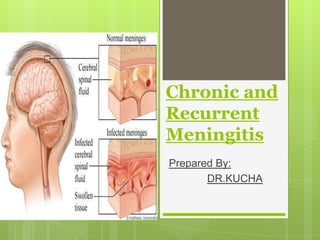
Chronic and
Recurrent
Meningitis
Prepared By:
       DR.KUCHA
outline
 Introduction
 Fivecategories of disease account for most
  cases chronic meningitis
 Two clinical forms of chronic meningitis
 Symptoms & signs Of chronic meningitis
 APPROACH TO THE PATIENT WITH CHRONIC
  MENINGITIS
 CAUSES OF CHRONIC MENINGITIS

         Infectious
         Non infectious
Introduction
 The
    condition is most commonly diagnosed
 when :

    1) a characteristic neurologic syndrome exists
     for > 4 weeks

    2) and is associated with a persistent
     inflammatory response in the cerebrospinal
     fluid (CSF) (white blood cell count
     >5/microLitres).
Five categories of disease
account for most cases o
chronic meningitis
 (1) meningeal infections
 (2) malignancy
 (3) noninfectious inflammatory disorders
 (4) chemical meningitis, and
 (5) parameningeal infections.
Two clinical forms of chronic
  meningitis
 1) symptoms are chronic and persistent
 2) there are recurrent, discrete episodes
   with complete resolution of meningeal
  inflammation between episodes without specific
  therapy.
Symptoms & signs Of chronic
               meningitis
              SYMPTOMS                    SIGNS
Chronic headache           +/– Papilledema
Neck or back pain          Brudzinski's sign

Facial weakness            Peripheral seventh CN palsy
Double vision              Palsy of CNs III, IV, VI
Visual loss                Papilledema, optic atrophy
Hearing loss               Eighth CN palsy
Arm or leg weakness        Myelopathy or radiculopathy
Numbness in arms or legs   Myelopathy or radiculopathy
Clumsiness                 Ataxia
APPROACH TO THE PATIENT
WITH CHRONIC MENINGITIS

Once  chronic meningitis is confirmed
 by CSF examination, effort is focused
 on identifying the cause by:
  (1) further analysis of the CSF
  (2) diagnosis of an underlying systemic
   infection or noninfectious inflammatory
   condition, or
  (3) examination of meningeal biopsy
APPROACH TO THE PATIENT WITH CHRONIC MENINGITIS

 Proper analysis of the CSF is essential; if the
 possibility of raised intracranial
pressure (ICP) exists, a brain imaging study
 should be performed before LP.

 Inpts with communicating hydrocephalus
 caused by impaired resorption of CSF, LP is
 safe and may lead to temporary improvement.

 However,  if ICP is elevated because of a mass
 lesion, brain swelling, or a block in ventricular
INFECTIOUS CAUSES OF CHRONIC MENINGITIS
   Common Bacterial Causes                 Helminthic Causes
       Partially   treated suppurative meningitis
        Cysticercosis
       Parameningeal      infection
        Gnathostoma
       Mycobacterium      tuberculosis
        Angiostrongylus
       Lyme   disease (Bannwarth’s syndrome): Borrelia
        burgdorferi
       Syphilis    (secondary, tertiary): Treponema pallidum

   Fungal Causes                           Protozoal Causes
       Cryptococcus   neoformans
        Toxoplasma gondii
INFECTIOUS CAUSES OF CHRONIC MENINGITIS

 Viral   Causes

  Mumps
  HIV (acute retroviral syndrome)
  Lymphocytic choriomeningitis
  Herpes simplex (HSV)
  Echovirus
 Obstructive      hydrocephalus usually requires
  direct ventricular drainage of CSF.
Noninfectious causes of meningitis
   Malignancy

   Chemical compounds(may cause recurrent meningitis)

   Primary inflammation
     CNS  sarcoidosis
     Systemic lupus erythematosus
     Behcet’s syndrome (recurrent meningitis)
     Chronic benign lymphocytic meningitis
     Drug hypersensitivity
     Wegener’s granulomatosis

Chronic and recurrent meningitis

  • 1.
  • 2.
    outline  Introduction  Fivecategoriesof disease account for most cases chronic meningitis  Two clinical forms of chronic meningitis  Symptoms & signs Of chronic meningitis  APPROACH TO THE PATIENT WITH CHRONIC MENINGITIS  CAUSES OF CHRONIC MENINGITIS Infectious Non infectious
  • 3.
    Introduction  The condition is most commonly diagnosed when :  1) a characteristic neurologic syndrome exists for > 4 weeks  2) and is associated with a persistent inflammatory response in the cerebrospinal fluid (CSF) (white blood cell count >5/microLitres).
  • 4.
    Five categories ofdisease account for most cases o chronic meningitis (1) meningeal infections (2) malignancy (3) noninfectious inflammatory disorders (4) chemical meningitis, and (5) parameningeal infections.
  • 5.
    Two clinical formsof chronic meningitis  1) symptoms are chronic and persistent  2) there are recurrent, discrete episodes with complete resolution of meningeal inflammation between episodes without specific therapy.
  • 6.
    Symptoms & signsOf chronic meningitis SYMPTOMS SIGNS Chronic headache +/– Papilledema Neck or back pain Brudzinski's sign Facial weakness Peripheral seventh CN palsy Double vision Palsy of CNs III, IV, VI Visual loss Papilledema, optic atrophy Hearing loss Eighth CN palsy Arm or leg weakness Myelopathy or radiculopathy Numbness in arms or legs Myelopathy or radiculopathy Clumsiness Ataxia
  • 7.
    APPROACH TO THEPATIENT WITH CHRONIC MENINGITIS Once chronic meningitis is confirmed by CSF examination, effort is focused on identifying the cause by:  (1) further analysis of the CSF  (2) diagnosis of an underlying systemic infection or noninfectious inflammatory condition, or  (3) examination of meningeal biopsy
  • 8.
    APPROACH TO THEPATIENT WITH CHRONIC MENINGITIS  Proper analysis of the CSF is essential; if the possibility of raised intracranial pressure (ICP) exists, a brain imaging study should be performed before LP.  Inpts with communicating hydrocephalus caused by impaired resorption of CSF, LP is safe and may lead to temporary improvement.  However, if ICP is elevated because of a mass lesion, brain swelling, or a block in ventricular
  • 9.
    INFECTIOUS CAUSES OFCHRONIC MENINGITIS  Common Bacterial Causes Helminthic Causes  Partially treated suppurative meningitis Cysticercosis  Parameningeal infection Gnathostoma  Mycobacterium tuberculosis Angiostrongylus  Lyme disease (Bannwarth’s syndrome): Borrelia burgdorferi  Syphilis (secondary, tertiary): Treponema pallidum  Fungal Causes Protozoal Causes  Cryptococcus neoformans Toxoplasma gondii
  • 10.
    INFECTIOUS CAUSES OFCHRONIC MENINGITIS  Viral Causes Mumps HIV (acute retroviral syndrome) Lymphocytic choriomeningitis Herpes simplex (HSV) Echovirus  Obstructive hydrocephalus usually requires direct ventricular drainage of CSF.
  • 11.
    Noninfectious causes ofmeningitis  Malignancy  Chemical compounds(may cause recurrent meningitis)  Primary inflammation  CNS sarcoidosis  Systemic lupus erythematosus  Behcet’s syndrome (recurrent meningitis)  Chronic benign lymphocytic meningitis  Drug hypersensitivity  Wegener’s granulomatosis