

HAFIZ M WASEEM UNIVERSITY OF
EDUCATION LAHORE
CHORIONIC VILLUS
SAMPLING:
CONTENT:
 HISTORY
 STATEMENT
 PROCEDURE
 RISK
 RELIABILITY
 POSSIBLE REASON FOR CVS
 LIMITATIONS
 REFRENCES
HISTORY:
 In 1968 Mohr in Scandinavia introduced the idea of antenatal genetic diagnosis using sample
from chorionic villi. He performed transcervical biopsy of the chorionic villi, under direct
endoscopic vision, with the help of endoscope. He reported a 96% success rate in obtaining
chorionic material but with a high incidence of bleeding, infection and failed culture.
 The first successful prenatal diagnostic use of chorionic villi biopsy was apparently reported
in 1975 from the Department of Obstetrics and Gynaecology at the Tietung Hospital in
Anshan, China, where fetal sex was diagnosed for the purpose of sex pre-selection. They
performed test on 100 patients and placental material was obtained with the help of syringe
suction. They claimed to have 6 wrong diagnosis out of 99 successful diagnosis and only 4 prenatal
losses. Investigators in the United States were, however unable to duplicate the results
 In 1983, Ward in London performed transcervical chorionic sampling under ultrasonic guidance .
His group reported 67% sampling success rate, including 7 patients for the diagnosis of
haemoglobinopathies.
 The Brambati group in Milan demonstrated in 1983 that with ultrasonic guidance, success rate of
obtaining chorionic material rose from 75% to 96%.
EXPLANATION:
 Chorionic villus sampling (CVS) is a prenatal test in which a sample of chorionic villi is
removed from the placenta for testing.
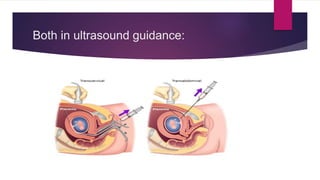
 THE SAMPLE CAN BE TAKEN THROUGH:
a. the cervix (transcervical)
b. the abdominal wall (transabdominal).
 During this test,small portion from placenta called chorionic villi is taken .Chorionic villi are
tiny parts of placenta ,that are formed from fertilized egg so,they have the same genes as the
fetus.
Placenta:
That’s how its look…….
Placenta:
Little detail……..
Both in ultrasound guidance:
Risk:
 the possibility of miscarriage….1/100
 an amniotic fluid leak may develope
 Infection
 Vaginal bleeding
 Cramping
 Pain in inserted site
Possible reason for having cvs:
 Abnormal first trimester screen results
 Increased abnormal ultrasound findings
 Family history of a chromosomal abnormalities or other genetic disorder.
 Parents are known carriers for a genetic disorder.
 Advanced maternal age (maternal age above 35). AMA is associated with increase risk of Down's
syndrome and at age 35, risk is 1:400.
 Couples who already have had a child with a birth defect or have a family history of certain birth defects.
 Couples with a parent known to carry a chromosomal abnormality or genetic disease
 Pregnant women with other abnormal genetic results.
Time of gestation should be:
 Chorionic Villus Sampling (CVS) is usually performed between 10 and 12 weeks after
your last menstrual period.
Reliability:
 Chorionic villus sampling is considered to be a very reliable test, but there is
approximately a 1% chance of false positive results. One reason is that certain genetic
conditions may exist in the placenta but not in the fetus itself, such as mosaicism of the DNA.
This might require an amniocentesis at week 16–17 for confirmation.
Refrences:
 Alter, B.P., Modell, C.B., Fairweather, D., Hobbins, J.C., Mahoney, M.J., Frigoletto, F.D.,
Sherman, A.S. & Nathan, D.G. (1976) Prenatal diagnosis of hemoglobinopathies: a review
of 15 cases. New England Journal of Medicine, 295,1437
 Niazi, M., Coleman, D.V. and Loeffler, F.E. (1981). Trophoblast sampling in early
pregnancy. Culture of rapidly dividing cells from immature placental villi. Br. J. Obstet.
Gynaecol., 88,1081-5
 Westin, B. (1954). Hysteroscopy in early pregnancy. Lancet, 11,872
THANK YOU!
FOR GIVING ME YOUR PRECIOUS TIME

Chorionic villus sampling

  • 2.
    HAFIZ M WASEEMUNIVERSITY OF EDUCATION LAHORE
  • 3.
  • 4.
    CONTENT:  HISTORY  STATEMENT PROCEDURE  RISK  RELIABILITY  POSSIBLE REASON FOR CVS  LIMITATIONS  REFRENCES
  • 5.
    HISTORY:  In 1968Mohr in Scandinavia introduced the idea of antenatal genetic diagnosis using sample from chorionic villi. He performed transcervical biopsy of the chorionic villi, under direct endoscopic vision, with the help of endoscope. He reported a 96% success rate in obtaining chorionic material but with a high incidence of bleeding, infection and failed culture.  The first successful prenatal diagnostic use of chorionic villi biopsy was apparently reported in 1975 from the Department of Obstetrics and Gynaecology at the Tietung Hospital in Anshan, China, where fetal sex was diagnosed for the purpose of sex pre-selection. They performed test on 100 patients and placental material was obtained with the help of syringe suction. They claimed to have 6 wrong diagnosis out of 99 successful diagnosis and only 4 prenatal losses. Investigators in the United States were, however unable to duplicate the results  In 1983, Ward in London performed transcervical chorionic sampling under ultrasonic guidance . His group reported 67% sampling success rate, including 7 patients for the diagnosis of haemoglobinopathies.  The Brambati group in Milan demonstrated in 1983 that with ultrasonic guidance, success rate of obtaining chorionic material rose from 75% to 96%.
  • 6.
    EXPLANATION:  Chorionic villussampling (CVS) is a prenatal test in which a sample of chorionic villi is removed from the placenta for testing.  THE SAMPLE CAN BE TAKEN THROUGH: a. the cervix (transcervical) b. the abdominal wall (transabdominal).  During this test,small portion from placenta called chorionic villi is taken .Chorionic villi are tiny parts of placenta ,that are formed from fertilized egg so,they have the same genes as the fetus.
  • 7.
  • 8.
  • 9.
  • 10.
    Risk:  the possibilityof miscarriage….1/100  an amniotic fluid leak may develope  Infection  Vaginal bleeding  Cramping  Pain in inserted site
  • 11.
    Possible reason forhaving cvs:  Abnormal first trimester screen results  Increased abnormal ultrasound findings  Family history of a chromosomal abnormalities or other genetic disorder.  Parents are known carriers for a genetic disorder.  Advanced maternal age (maternal age above 35). AMA is associated with increase risk of Down's syndrome and at age 35, risk is 1:400.  Couples who already have had a child with a birth defect or have a family history of certain birth defects.  Couples with a parent known to carry a chromosomal abnormality or genetic disease  Pregnant women with other abnormal genetic results.
  • 12.
    Time of gestationshould be:  Chorionic Villus Sampling (CVS) is usually performed between 10 and 12 weeks after your last menstrual period.
  • 13.
    Reliability:  Chorionic villussampling is considered to be a very reliable test, but there is approximately a 1% chance of false positive results. One reason is that certain genetic conditions may exist in the placenta but not in the fetus itself, such as mosaicism of the DNA. This might require an amniocentesis at week 16–17 for confirmation.
  • 14.
    Refrences:  Alter, B.P.,Modell, C.B., Fairweather, D., Hobbins, J.C., Mahoney, M.J., Frigoletto, F.D., Sherman, A.S. & Nathan, D.G. (1976) Prenatal diagnosis of hemoglobinopathies: a review of 15 cases. New England Journal of Medicine, 295,1437  Niazi, M., Coleman, D.V. and Loeffler, F.E. (1981). Trophoblast sampling in early pregnancy. Culture of rapidly dividing cells from immature placental villi. Br. J. Obstet. Gynaecol., 88,1081-5  Westin, B. (1954). Hysteroscopy in early pregnancy. Lancet, 11,872
  • 15.
    THANK YOU! FOR GIVINGME YOUR PRECIOUS TIME