FARKHANDAANDRABI
MSc NURSING 1ST
YEAR
DEPT. Of OBG
Fetal measures
Introduction :-
Majority of fetal deaths occurs in the ante
partum period. The main causes of deaths are
Fetal hypoxia
Maternal complication.
Congenital malformation
Aims of Fetal Monitoring:-
To ensure satisfactory growth and well being
of the fetus throughout pregnancy.
To screen out the high risk factors that
affects the growth of the fetus.
COMPONENTS OF FETALASSESSMENT
HANDOUTS
Biochemical
Methods
Biophysical
Methods
Clinical
Parameters
 COMPONENTS OF FETALASSESSMENT
Biochemical Methods:-
PHAMPLET
Biochemical Methods:-
• Maternal serum alpha feto protein
• Triple test
• Amniocentesis
• Cordocentesis
• Chorionic villus sampling.
• Fetal tissue sampling
Biochemical Methods
1.Maternal alpha-fetoprotein screening
(MAFP) :-
AFP is a oncofetal protein(Molecular weight 70,000)
normally produced by the fetal liver and is present in the fluid
surrounding the fetus (amniotic fluid), and crosses the
placenta into the mother's blood.
MSAFP level high indicates:-
a) Open Neural Tube Defects(NTDs)
b) Multiple Pregnancy,
c) IUFD
MSAFP level Low indicates:-
• Down’s syndrome
• Gestational trophoblastic disease
2.Triple test/Triple Screen:-
This test includes the combination of 3 tests:
AFP
Unconjugated Estriol (UE3)
Human Chorionic Gonadotrophin (HCG)
Estriol and HCG are two hormones that are
present in the mother's blood during
pregnancy.
Performing Time:- 15-18 weeks.
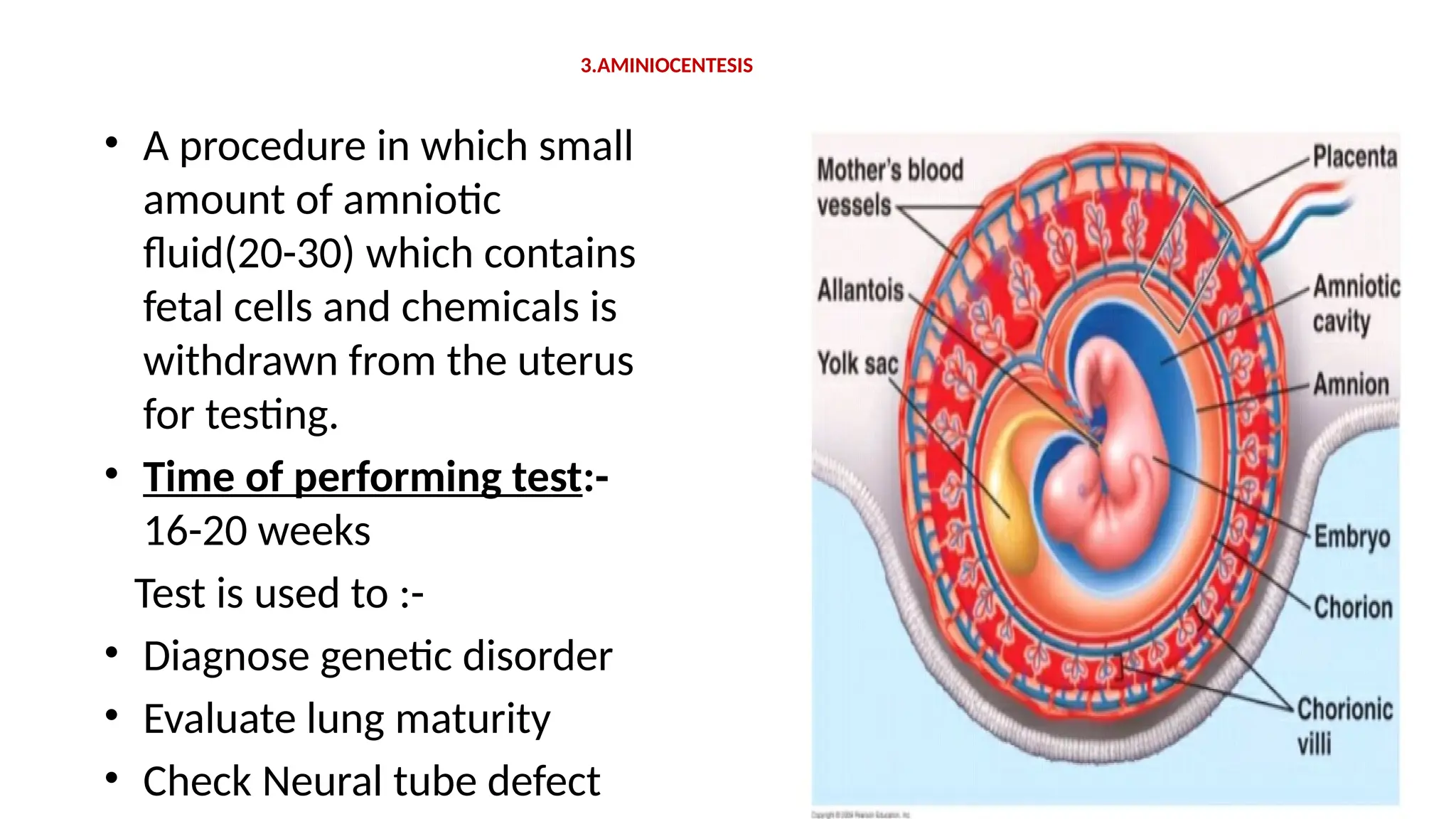
3.AMINIOCENTESIS
• A procedure in which small
amount of amniotic
fluid(20-30) which contains
fetal cells and chemicals is
withdrawn from the uterus
for testing.
• Time of performing test:-
16-20 weeks
Test is used to :-
• Diagnose genetic disorder
• Evaluate lung maturity
• Check Neural tube defect
4.Cordocentesis OR Percutaneous
umbilical cord blood sampling (PUBS)
• It is an invasive procedure in which blood sample is taken from the
umbilical cord usually from a vein to analyze fetal blood .
• Time of performance:- 18 weeks of gestation.
• It is used to detect fetal blood disorders
• Genetic or chromosomal disorder
5.Chorionic villus sampling
• It is a prenatal test that involves taking a sample of tissue from the
placenta (chorionic villi) to test for certain genetic conditions in the
foetus and is done under usg guidance
• Time of performance:-10-12 weeks of gestation
• Cvs can detect conditions like down syndrome
• Cystic fibrosis
6.Foetal tissue sampling:-
• Fetal tissue sampling is a procedure to obtain a sample of fetal tissue
for genetic or other medical analysis during pregnancy.sample can be
taken from fetal skin,liver or muscle tissue .
• Time of performance:-16-22 weeks of gestation
• It is done to detect skin problems, congenital problems
 Summary
Aims Of Fetal Monitoring
Introduction
Components Of Fetal Assessment
1. Clinical Parameters
2. Biochemical Methods
3.Biophysical measures
Biochemical measures
CONCLUSION
• Biochemical tests play a crucial role in fetal monitoring ,providing
valuable information about fetal health and well being.These tests
measure various biochemical markers in maternal blood or amniotic
fluid to assess fetal development detect complications and guide
clinical decision making.
RECAPTULIZATION:
1.Ideal time for performing cvs is -----------------.
2. Time of performance of PUBS-----------------.
3. MSAFP level high indicates-----------------,----------------
&-------------------------.
4. Clinical parameters includes----------------------,-----------
&---------------------.
5. MSAFP level Low indicates------------------,----------------------
&-----------------------
BIBLIOGRAPHY
• Annamma Jacob, “A Comprehensive Textbook of Midwifery and Gynecological Nursing”Jaypee Brothers
Medical Publishers (P) LTD, Third Edition,2012;Page No:125-127
• Boback M Irene & Jenson Margaret “ Maternity & Gynaecologic Care, mosby company (5th
edition) page no;964-
• DC Dutta (2004) “text book of obstetrics” (6 th edition) India:; new central book agency page no: 433-444.
• Myles (2003) “ text book for midwives” (14th
edition), Philadelphia; Churchill livingstone publishers, page no:625-
REFRENCES:-
• http://www.journal-obgyn-india.com
• www.wikipedia.com
• www.pubmed.com
• www.scribd.com
• www.healthline.com
foetalmeasuresppt-copy-171125134533_081041.pptx

foetalmeasuresppt-copy-171125134533_081041.pptx

  • 1.
  • 2.
  • 3.
    Introduction :- Majority offetal deaths occurs in the ante partum period. The main causes of deaths are Fetal hypoxia Maternal complication. Congenital malformation
  • 4.
    Aims of FetalMonitoring:- To ensure satisfactory growth and well being of the fetus throughout pregnancy. To screen out the high risk factors that affects the growth of the fetus.
  • 5.
  • 6.
  • 7.
  • 8.
    Biochemical Methods:- • Maternalserum alpha feto protein • Triple test • Amniocentesis • Cordocentesis • Chorionic villus sampling. • Fetal tissue sampling
  • 9.
  • 10.
    1.Maternal alpha-fetoprotein screening (MAFP):- AFP is a oncofetal protein(Molecular weight 70,000) normally produced by the fetal liver and is present in the fluid surrounding the fetus (amniotic fluid), and crosses the placenta into the mother's blood.
  • 11.
    MSAFP level highindicates:- a) Open Neural Tube Defects(NTDs) b) Multiple Pregnancy, c) IUFD MSAFP level Low indicates:- • Down’s syndrome • Gestational trophoblastic disease
  • 12.
    2.Triple test/Triple Screen:- Thistest includes the combination of 3 tests: AFP Unconjugated Estriol (UE3) Human Chorionic Gonadotrophin (HCG) Estriol and HCG are two hormones that are present in the mother's blood during pregnancy. Performing Time:- 15-18 weeks.
  • 13.
    3.AMINIOCENTESIS • A procedurein which small amount of amniotic fluid(20-30) which contains fetal cells and chemicals is withdrawn from the uterus for testing. • Time of performing test:- 16-20 weeks Test is used to :- • Diagnose genetic disorder • Evaluate lung maturity • Check Neural tube defect
  • 14.
    4.Cordocentesis OR Percutaneous umbilicalcord blood sampling (PUBS) • It is an invasive procedure in which blood sample is taken from the umbilical cord usually from a vein to analyze fetal blood . • Time of performance:- 18 weeks of gestation. • It is used to detect fetal blood disorders • Genetic or chromosomal disorder
  • 15.
    5.Chorionic villus sampling •It is a prenatal test that involves taking a sample of tissue from the placenta (chorionic villi) to test for certain genetic conditions in the foetus and is done under usg guidance • Time of performance:-10-12 weeks of gestation • Cvs can detect conditions like down syndrome • Cystic fibrosis
  • 16.
    6.Foetal tissue sampling:- •Fetal tissue sampling is a procedure to obtain a sample of fetal tissue for genetic or other medical analysis during pregnancy.sample can be taken from fetal skin,liver or muscle tissue . • Time of performance:-16-22 weeks of gestation • It is done to detect skin problems, congenital problems
  • 17.
     Summary Aims OfFetal Monitoring Introduction Components Of Fetal Assessment 1. Clinical Parameters 2. Biochemical Methods 3.Biophysical measures Biochemical measures
  • 18.
    CONCLUSION • Biochemical testsplay a crucial role in fetal monitoring ,providing valuable information about fetal health and well being.These tests measure various biochemical markers in maternal blood or amniotic fluid to assess fetal development detect complications and guide clinical decision making.
  • 19.
    RECAPTULIZATION: 1.Ideal time forperforming cvs is -----------------. 2. Time of performance of PUBS-----------------. 3. MSAFP level high indicates-----------------,---------------- &-------------------------. 4. Clinical parameters includes----------------------,----------- &---------------------. 5. MSAFP level Low indicates------------------,---------------------- &-----------------------
  • 20.
    BIBLIOGRAPHY • Annamma Jacob,“A Comprehensive Textbook of Midwifery and Gynecological Nursing”Jaypee Brothers Medical Publishers (P) LTD, Third Edition,2012;Page No:125-127 • Boback M Irene & Jenson Margaret “ Maternity & Gynaecologic Care, mosby company (5th edition) page no;964- • DC Dutta (2004) “text book of obstetrics” (6 th edition) India:; new central book agency page no: 433-444. • Myles (2003) “ text book for midwives” (14th edition), Philadelphia; Churchill livingstone publishers, page no:625- REFRENCES:- • http://www.journal-obgyn-india.com • www.wikipedia.com • www.pubmed.com • www.scribd.com • www.healthline.com