HAFIZ
MUHAM
MAD
WASEEM
LAHORE
PAKIST
AN
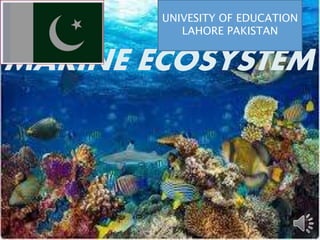
MARINE ECOSYSTEM
UNIVESITY OF EDUCATION
LAHORE PAKISTAN
DEFINITION
• SEA/OCEAN WATER ECOSYSTEM
• MARINE WATER ECOSYSTEM
• WATER WITH HIGH SALT CONCENTRATION
• NaCl (SODIUM CHLORIDE)
MARINE ECOSYSTEMS
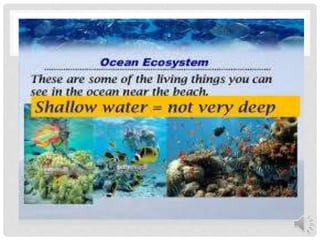
• oceans, coral reefs and estuaries
• oceans are the world's largest
ecosystems
• are considered to cover the shore as
far as tidal waters come in
MARINE ECOSYTEMS
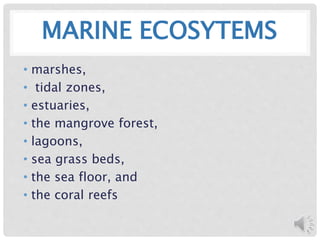
• marshes,
• tidal zones,
• estuaries,
• the mangrove forest,
• lagoons,
• sea grass beds,
• the sea floor, and
• the coral reefs
BIOTIC FACTORS
• Biotic factors include plants, animals,
fungi, algae, and bacteria
ABIOTIC FACTORS
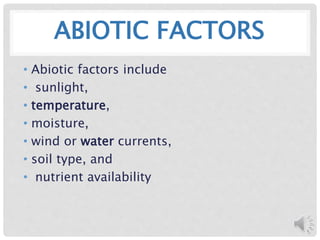
• Abiotic factors include
• sunlight,
• temperature,
• moisture,
• wind or water currents,
• soil type, and
• nutrient availability
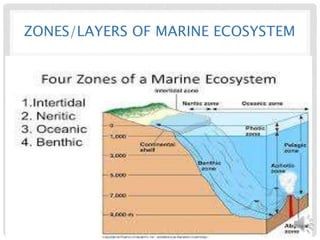
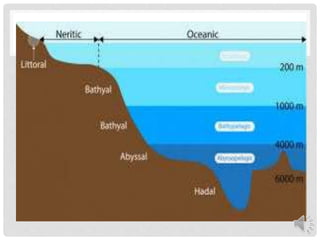
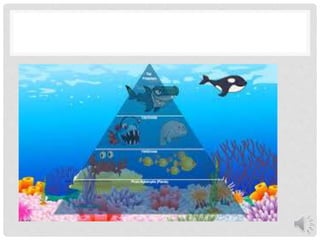
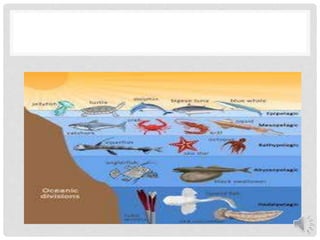
ZONES/LAYERS OF MARINE ECOSYSTEM
IMPORTANCE
• Healthy marine ecosystems important for
society since
• they provide services including food
security, feed for livestock ,
• raw materials for medicines,
• building materials from coral rock and
• sand, and natural defenses against hazards
such as coastal erosion and inundation.
• Marine ecosystems are an important part of
the world, because the marine
ecosystems give
• marine life such as: tiny plankton, fish,
crustaceans,invertebrates,reptiles, marine M
ammals, sharks, and rays a place to live and
survive. It also gives those marine animals a
place to hunt.
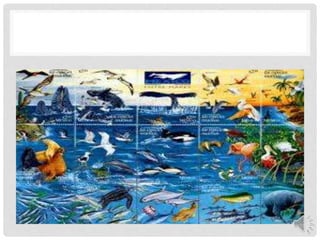
BIODIVERSITY
• Fish - Sharks, swordfish, tuna, clown
fish, grouper, stingray, flatfish, eels,
rockfish, seahorse, sunfish mola, and
gars.
• Marine mammals - Blue whales, seals,
walruses, dolphins, manatees, and
otters.
REFERENCES
• Barange M, Field JG, Harris RP, Eileen E, Hofmann
EE, Perry RI and Werner F (2010) Marine Ecosystems
and Global Change Oxford University
Press. ISBN 978-0-19-955802-5
• Boyd IL, Wanless S and Camphuysen CJ (2006) Top
predators in marine ecosystems: their role in
monitoring and management Volume 12 of
Conservation biology series. Cambridge University
Press. ISBN 978-0-521-84773-5

Marine ecosystem

  • 1.
  • 2.
    MARINE ECOSYSTEM UNIVESITY OFEDUCATION LAHORE PAKISTAN
  • 3.
    DEFINITION • SEA/OCEAN WATERECOSYSTEM • MARINE WATER ECOSYSTEM • WATER WITH HIGH SALT CONCENTRATION • NaCl (SODIUM CHLORIDE)
  • 4.
    MARINE ECOSYSTEMS • oceans,coral reefs and estuaries • oceans are the world's largest ecosystems • are considered to cover the shore as far as tidal waters come in
  • 6.
    MARINE ECOSYTEMS • marshes, •tidal zones, • estuaries, • the mangrove forest, • lagoons, • sea grass beds, • the sea floor, and • the coral reefs
  • 7.
    BIOTIC FACTORS • Bioticfactors include plants, animals, fungi, algae, and bacteria
  • 8.
    ABIOTIC FACTORS • Abioticfactors include • sunlight, • temperature, • moisture, • wind or water currents, • soil type, and • nutrient availability
  • 9.
  • 12.
    IMPORTANCE • Healthy marineecosystems important for society since • they provide services including food security, feed for livestock , • raw materials for medicines, • building materials from coral rock and • sand, and natural defenses against hazards such as coastal erosion and inundation.
  • 14.
    • Marine ecosystemsare an important part of the world, because the marine ecosystems give • marine life such as: tiny plankton, fish, crustaceans,invertebrates,reptiles, marine M ammals, sharks, and rays a place to live and survive. It also gives those marine animals a place to hunt.
  • 16.
    BIODIVERSITY • Fish -Sharks, swordfish, tuna, clown fish, grouper, stingray, flatfish, eels, rockfish, seahorse, sunfish mola, and gars. • Marine mammals - Blue whales, seals, walruses, dolphins, manatees, and otters.
  • 18.
    REFERENCES • Barange M,Field JG, Harris RP, Eileen E, Hofmann EE, Perry RI and Werner F (2010) Marine Ecosystems and Global Change Oxford University Press. ISBN 978-0-19-955802-5 • Boyd IL, Wanless S and Camphuysen CJ (2006) Top predators in marine ecosystems: their role in monitoring and management Volume 12 of Conservation biology series. Cambridge University Press. ISBN 978-0-521-84773-5