PEDIATRIC OBESITY
Dr. Sayed Ismail
Professor Of Pediatrics ,
Alazhar university
Introduction
• Obesity is common nutritional disorder among children
and adolescents.
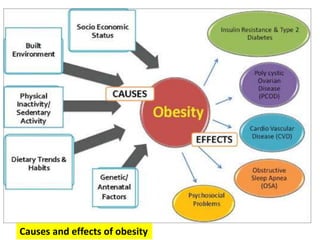
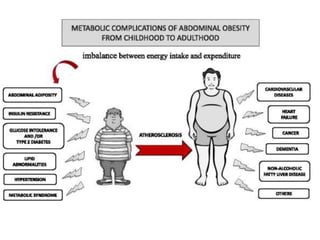
• Childhood obesity predisposes to insulin resistance
and type 2 diabetes, hypertension, hyperlipidemia, liver
and renal disease, Cardiovascular disease and
reproductive dysfunction.
• More than 90% of cases are idiopathic; less than 10%
are associated with hormonal or genetic causes.
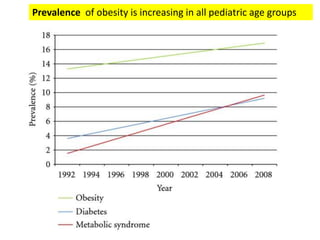
Prevalence of obesity is increasing in all pediatric age groups
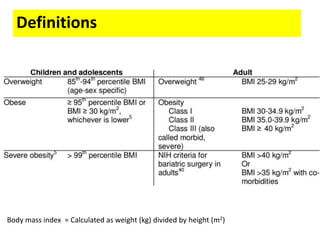
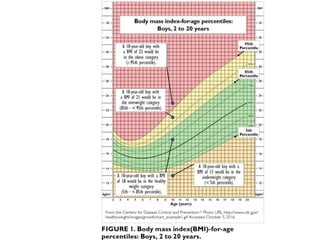
Definitions
Body mass index = Calculated as weight (kg) divided by height (m2)
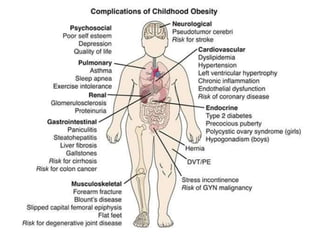
Causes and effects of obesity
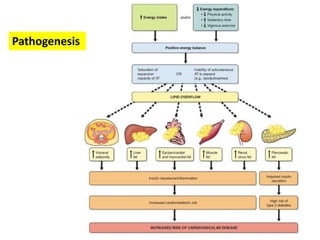
Pathogenesis
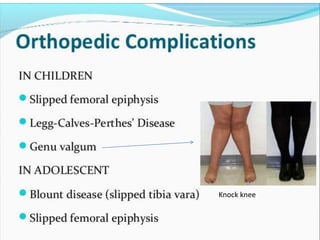
Knock knee
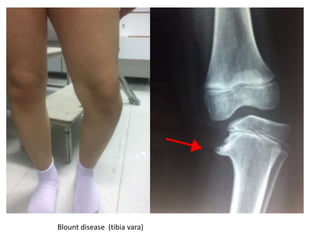
Blount disease (tibia vara)
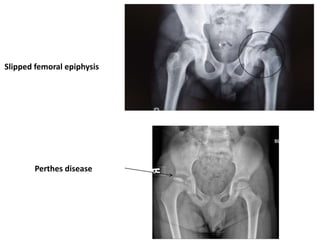
Slipped femoral epiphysis
Perthes disease
Liver and gallbladder dysfunction
• Non-alcoholic liver disease, NAFLD), with elevated plasma
concentrations of transaminases, the liver dysfunction most
commonly reflects hepatic steatosis. Increasingly, hepatic
steatosis may progress to steatohepatitis, hepatic fibrosis and
cirrhosis
• Vitamin E supplements may be effective in reversing
steatohepatitis in some patients
• Although gallstones are unusual in childhood, nearly one half
of all cases of cholecystitis in adolescents are associated with
obesity.
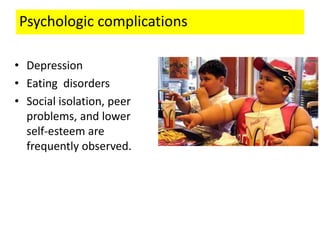
Psychologic complications
• Depression
• Eating disorders
• Social isolation, peer
problems, and lower
self-esteem are
frequently observed.
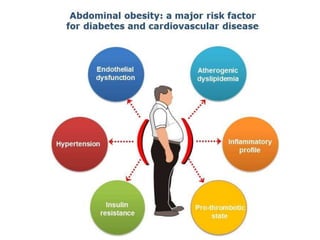
Endocrine and Cardiovascular complications
• Hyperinsulinism and insulin resistance
• Hypercholesterolemia , hypertriglyceridemia, low - high-density
lipoprotein (HDL),
• Adolescent girls with obesity also demonstrate a hyperandrogenic
profile . The clinical picture resembles that of polycystic ovary syndrome (PCOS).
• Adolescents with central obesity (abdominal fat pattern) are more
likely to manifest these cardiovascular risk factors than individuals
with peripheral obesity (gluteal pattern).
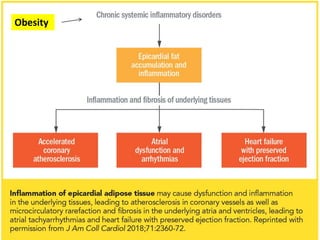
– Hypertension
– Arthrosclerosis
Obesity
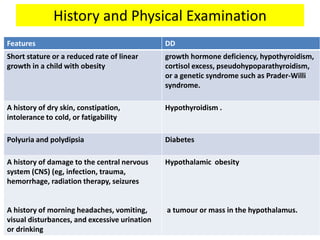
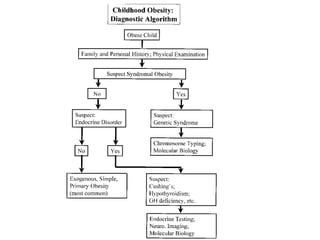
History and Physical Examination
Features DD
Short stature or a reduced rate of linear
growth in a child with obesity
growth hormone deficiency, hypothyroidism,
cortisol excess, pseudohypoparathyroidism,
or a genetic syndrome such as Prader-Willi
syndrome.
A history of dry skin, constipation,
intolerance to cold, or fatigability
Hypothyroidism .
Polyuria and polydipsia Diabetes
A history of damage to the central nervous
system (CNS) (eg, infection, trauma,
hemorrhage, radiation therapy, seizures
A history of morning headaches, vomiting,
visual disturbances, and excessive urination
or drinking
Hypothalamic obesity
a tumour or mass in the hypothalamus.
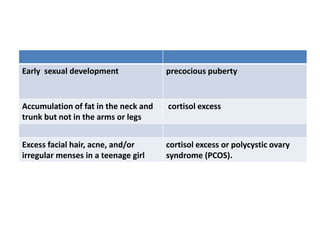
Early sexual development precocious puberty
Accumulation of fat in the neck and
trunk but not in the arms or legs
cortisol excess
Excess facial hair, acne, and/or
irregular menses in a teenage girl
cortisol excess or polycystic ovary
syndrome (PCOS).
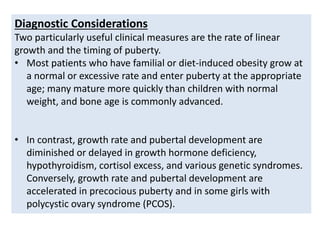
Diagnostic Considerations
Two particularly useful clinical measures are the rate of linear
growth and the timing of puberty.
• Most patients who have familial or diet-induced obesity grow at
a normal or excessive rate and enter puberty at the appropriate
age; many mature more quickly than children with normal
weight, and bone age is commonly advanced.
• In contrast, growth rate and pubertal development are
diminished or delayed in growth hormone deficiency,
hypothyroidism, cortisol excess, and various genetic syndromes.
Conversely, growth rate and pubertal development are
accelerated in precocious puberty and in some girls with
polycystic ovary syndrome (PCOS).
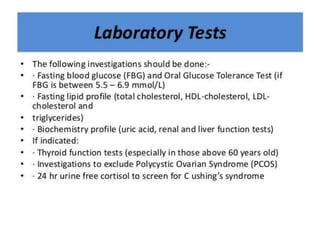
Other tests when indicated
• Adrenal function tests, when indicated, to assess the possibility of
Cushing syndrome
• Karyotype for Prader-Willi [15q-]), as indicated by clinical history and
physical examination
• Growth hormone secretion and function tests, when indicated
• Assessment of reproductive hormones (including prolactin), when
indicated
• Serum calcium, phosphorus, and parathyroid hormone levels to
evaluate for suspected pseudohypoparathyroidism
• Serum leptin
• When clinically indicated, obtain magnetic resonance imaging (MRI)
of the brain with focus on the hypothalamus and pituitary.
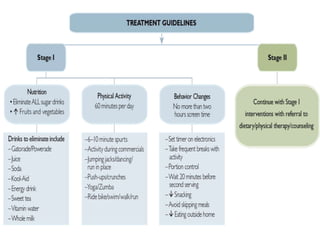
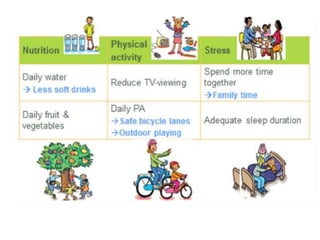
• Even regular walking for 20-30 minutes per day can facilitate weight
control.
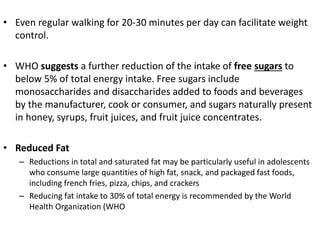
• WHO suggests a further reduction of the intake of free sugars to
below 5% of total energy intake. Free sugars include
monosaccharides and disaccharides added to foods and beverages
by the manufacturer, cook or consumer, and sugars naturally present
in honey, syrups, fruit juices, and fruit juice concentrates.
• Reduced Fat
– Reductions in total and saturated fat may be particularly useful in adolescents
who consume large quantities of high fat, snack, and packaged fast foods,
including french fries, pizza, chips, and crackers
– Reducing fat intake to 30% of total energy is recommended by the World
Health Organization (WHO
Surgical Intervention
• Various bariatric surgical procedures have
been used in adults and some adolescents (in
most centers, patients ≥ 15 y) with a body
mass index (BMI) of more than 40 kg/m2 or
weight exceeding 100% of ideal body weight
(IBW).
Long-Term Monitoring
• Reinforcement of nutritional goals and exercise objectives
• Identification of social and emotional barriers to therapy
• Family support and counseling (if indicated)
• Assessment of growth, pubertal development, and reproductive
function
• Assessment of glucose tolerance and fasting lipid levels
• Identification and management of obesity-related acute and chronic
complications
Guidelines Summary
• Children with (BMI) ≥85th percentile should be evaluated for
related conditions such as metabolic syndrome, diabetes,
prediabetes, or hypertension.
• Children or teens affected by obesity do not need routine
laboratory evaluations for endocrine disorders that can cause
obesity unless their height or growth rate is less than
expected based on age and pubertal stage.
• Specific genetic testing is suggested when there is early-onset
obesity (before 5 yr of age), an increased drive to consume
food known as extreme hyperphagia, other clinical findings of
genetic obesity syndromes, or a family history of extreme
obesity.
References
• D'Adamo E, Cali AM, Weiss R, Santoro N, Pierpont B, Northrup V. Central role of fatty liver in the pathogenesis of insulin resistance in
obese adolescents. Diabetes Care. 2010 Aug. 33(8):1817-22. [Medline].
• Ruiz-Extremera A, Carazo A, Salmerón A, et al. Factors associated with hepatic steatosis in obese children and adolescents. J Pediatr
Gastroenterol Nutr. 2011 Aug. 53(2):196-201. [Medline].
• Ogden CL, Carroll MD, Kit BK, Flegal KM. Prevalence of obesity and trends in body mass index among US children and adolescents,
1999-2010. JAMA. 2012 Feb 1. 307(5):483-90. [Medline].
• Eneli I, Dele Davis H. Epidemiology of childhood obesity. Dele Davis H, ed. Obesity in Childhood & Adolescence. Westport, Conn: Praeger
Perspectives; 2008. Vol 1.: 3-19.
• Ortega FB, Labayen I, Ruiz JR, et al. Improvements in fitness reduce the risk of becoming overweight across puberty. Med Sci Sports
Exerc. 2011 Oct. 43(10):1891-7. [Medline].
• Rosen CL. Clinical features of obstructive sleep apnea hypoventilation syndrome in otherwise healthy children. Pediatr Pulmonol. 1999
Jun. 27(6):403-9. [Medline].
• Juonala M, Magnussen CG, Berenson GS, et al. Childhood adiposity, adult adiposity, and cardiovascular risk factors. N Engl J Med. 2011
Nov 17. 365(20):1876-85. [Medline].
• Neumark-Sztainer D, Wall M, Story M, Standish AR. Dieting and unhealthy weight control behaviors during adolescence: associations
with 10-year changes in body mass index. J Adolesc Health. 2012 Jan. 50(1):80-6. [Medline]. [Full Text].
• Parker ED, Sinaiko AR, Kharbanda EO, Margolis KL, Daley MF, Trower NK, et al. Change in Weight Status and Development of
Hypertension. Pediatrics. 2016 Mar. 137 (3):1-9. [Medline].
• Brown T. Obesity, High BMI Raise Hypertension Risk in Kids, Teenagers. Medscape Medical News. Available
at http://www.medscape.com/viewarticle/859416. February 25, 2016; Accessed: March 30, 2016.
• Perry DC, Metcalfe D, Lane S, Turner S. Childhood Obesity and Slipped Capital Femoral Epiphysis. Pediatrics. 2018 Nov. 142
(5):[Medline].
• Di Sario A, Candelaresi C, Omenetti A, Benedetti A. Vitamin E in chronic liver diseases and liver fibrosis. Vitam Horm. 2007. 76:551-
73. [Medline].
• Akin L, Kurtoglu S, Yikilmaz A, Kendirci M, Elmali F, Mazicioglu M. Fatty liver is a good indicator of subclinical atherosclerosis risk in
obese children and adolescents regardless of liver enzyme elevation. Acta Paediatr. 2012 Nov 28. [Medline].
• Inge TH, King WC, Jenkins TM, et al. The effect of obesity in adolescence on adult health status. Pediatrics. 2013 Dec. 132(6):1098-
104. [Medline].
• Ogden CL, Yanovski SZ, Carroll MD, Flegal KM. The epidemiology of obesity. Gastroenterology. May 2007.
132:2087-2102. [Medline]. [Full Text].
• Fiore H, Travis S, Whalen A, Auinger P, Ryan S. Potentially protective factors associated with healthful body
mass index in adolescents with obese and nonobese parents: a secondary data analysis of the third national
health and nutrition examination survey, 1988-1994. J Am Diet Assoc. 2006 Jan. 106(1):55-64; quiz 76-
9. [Medline].
• Flegal KM, Ogden CL, Wei R, et al. Prevalence of overweight in US children: comparison of US growth charts
from the Centers for Disease Control and Prevention with other reference values for body mass index. Am J
Clin Nutr. 2001 Jun. 73(6):1086-93. [Medline].
• McGavock JM, Torrance BD, McGuire KA, Wozny PD, Lewanczuk RZ. Cardiorespiratory fitness and the risk of
overweight in youth: the Healthy Hearts Longitudinal Study of Cardiometabolic Health. Obesity (Silver
Spring). 2009 Sep. 17(9):1802-7. [Medline].
• Shomaker LB, Tanofsky-Kraff M, Zocca JM, Field SE, Drinkard B, Yanovski JA. Depressive symptoms and
cardiorespiratory fitness in obese adolescents. J Adolesc Health. 2012 Jan. 50(1):87-92. [Medline]. [Full
Text].
• Carter PJ, Taylor BJ, Williams SM, Taylor RW. Longitudinal analysis of sleep in relation to BMI and body fat in
children: the FLAME study. BMJ. 2011 May 26. 342:d2712. [Medline]. [Full Text].
• Archbold KH, Vasquez MM, Goodwin JL, Quan SF. Effects of Sleep Patterns and Obesity on Increases in Blood
Pressure in a 5-Year Period: Report from the Tucson Children's Assessment of Sleep Apnea Study. J Pediatr.
2012 Jan 25. [Medline]. [Full Text].
• Mosli RH, Kaciroti N, Corwyn RF, Bradley RH, Lumeng JC. Effect of Sibling Birth on BMI Trajectory in the First
6 Years of Life. Pediatrics. 2016 Mar 11. [Medline].
• Garcia J. Birth of a Sibling May Decrease Obesity Ris. Medscape Medical News. Available
at http://www.medscape.com/viewarticle/860298. March 14, 2016; Accessed: March 30, 2016.
• Huh S, Rifas-Shiman S, Taveras E, Oken E, Gillman M. Timing of solid food introduction and risk of obesity in
preschool-aged children. Pediatrics. 2011 Mar. 127(3):e544-51. [Medline]. [Full Text].
Thanks you

Pediatric obesity.,

  • 1.
    PEDIATRIC OBESITY Dr. SayedIsmail Professor Of Pediatrics , Alazhar university
  • 2.
    Introduction • Obesity iscommon nutritional disorder among children and adolescents. • Childhood obesity predisposes to insulin resistance and type 2 diabetes, hypertension, hyperlipidemia, liver and renal disease, Cardiovascular disease and reproductive dysfunction. • More than 90% of cases are idiopathic; less than 10% are associated with hormonal or genetic causes.
  • 3.
    Prevalence of obesityis increasing in all pediatric age groups
  • 4.
    Definitions Body mass index= Calculated as weight (kg) divided by height (m2)
  • 6.
  • 7.
  • 9.
  • 10.
  • 11.
  • 12.
    Liver and gallbladderdysfunction • Non-alcoholic liver disease, NAFLD), with elevated plasma concentrations of transaminases, the liver dysfunction most commonly reflects hepatic steatosis. Increasingly, hepatic steatosis may progress to steatohepatitis, hepatic fibrosis and cirrhosis • Vitamin E supplements may be effective in reversing steatohepatitis in some patients • Although gallstones are unusual in childhood, nearly one half of all cases of cholecystitis in adolescents are associated with obesity.
  • 13.
    Psychologic complications • Depression •Eating disorders • Social isolation, peer problems, and lower self-esteem are frequently observed.
  • 14.
    Endocrine and Cardiovascularcomplications • Hyperinsulinism and insulin resistance • Hypercholesterolemia , hypertriglyceridemia, low - high-density lipoprotein (HDL), • Adolescent girls with obesity also demonstrate a hyperandrogenic profile . The clinical picture resembles that of polycystic ovary syndrome (PCOS). • Adolescents with central obesity (abdominal fat pattern) are more likely to manifest these cardiovascular risk factors than individuals with peripheral obesity (gluteal pattern). – Hypertension – Arthrosclerosis
  • 17.
  • 18.
    History and PhysicalExamination Features DD Short stature or a reduced rate of linear growth in a child with obesity growth hormone deficiency, hypothyroidism, cortisol excess, pseudohypoparathyroidism, or a genetic syndrome such as Prader-Willi syndrome. A history of dry skin, constipation, intolerance to cold, or fatigability Hypothyroidism . Polyuria and polydipsia Diabetes A history of damage to the central nervous system (CNS) (eg, infection, trauma, hemorrhage, radiation therapy, seizures A history of morning headaches, vomiting, visual disturbances, and excessive urination or drinking Hypothalamic obesity a tumour or mass in the hypothalamus.
  • 19.
    Early sexual developmentprecocious puberty Accumulation of fat in the neck and trunk but not in the arms or legs cortisol excess Excess facial hair, acne, and/or irregular menses in a teenage girl cortisol excess or polycystic ovary syndrome (PCOS).
  • 20.
    Diagnostic Considerations Two particularlyuseful clinical measures are the rate of linear growth and the timing of puberty. • Most patients who have familial or diet-induced obesity grow at a normal or excessive rate and enter puberty at the appropriate age; many mature more quickly than children with normal weight, and bone age is commonly advanced. • In contrast, growth rate and pubertal development are diminished or delayed in growth hormone deficiency, hypothyroidism, cortisol excess, and various genetic syndromes. Conversely, growth rate and pubertal development are accelerated in precocious puberty and in some girls with polycystic ovary syndrome (PCOS).
  • 23.
    Other tests whenindicated • Adrenal function tests, when indicated, to assess the possibility of Cushing syndrome • Karyotype for Prader-Willi [15q-]), as indicated by clinical history and physical examination • Growth hormone secretion and function tests, when indicated • Assessment of reproductive hormones (including prolactin), when indicated • Serum calcium, phosphorus, and parathyroid hormone levels to evaluate for suspected pseudohypoparathyroidism • Serum leptin • When clinically indicated, obtain magnetic resonance imaging (MRI) of the brain with focus on the hypothalamus and pituitary.
  • 26.
    • Even regularwalking for 20-30 minutes per day can facilitate weight control. • WHO suggests a further reduction of the intake of free sugars to below 5% of total energy intake. Free sugars include monosaccharides and disaccharides added to foods and beverages by the manufacturer, cook or consumer, and sugars naturally present in honey, syrups, fruit juices, and fruit juice concentrates. • Reduced Fat – Reductions in total and saturated fat may be particularly useful in adolescents who consume large quantities of high fat, snack, and packaged fast foods, including french fries, pizza, chips, and crackers – Reducing fat intake to 30% of total energy is recommended by the World Health Organization (WHO
  • 28.
    Surgical Intervention • Variousbariatric surgical procedures have been used in adults and some adolescents (in most centers, patients ≥ 15 y) with a body mass index (BMI) of more than 40 kg/m2 or weight exceeding 100% of ideal body weight (IBW).
  • 29.
    Long-Term Monitoring • Reinforcementof nutritional goals and exercise objectives • Identification of social and emotional barriers to therapy • Family support and counseling (if indicated) • Assessment of growth, pubertal development, and reproductive function • Assessment of glucose tolerance and fasting lipid levels • Identification and management of obesity-related acute and chronic complications
  • 31.
    Guidelines Summary • Childrenwith (BMI) ≥85th percentile should be evaluated for related conditions such as metabolic syndrome, diabetes, prediabetes, or hypertension. • Children or teens affected by obesity do not need routine laboratory evaluations for endocrine disorders that can cause obesity unless their height or growth rate is less than expected based on age and pubertal stage. • Specific genetic testing is suggested when there is early-onset obesity (before 5 yr of age), an increased drive to consume food known as extreme hyperphagia, other clinical findings of genetic obesity syndromes, or a family history of extreme obesity.
  • 32.
    References • D'Adamo E,Cali AM, Weiss R, Santoro N, Pierpont B, Northrup V. Central role of fatty liver in the pathogenesis of insulin resistance in obese adolescents. Diabetes Care. 2010 Aug. 33(8):1817-22. [Medline]. • Ruiz-Extremera A, Carazo A, Salmerón A, et al. Factors associated with hepatic steatosis in obese children and adolescents. J Pediatr Gastroenterol Nutr. 2011 Aug. 53(2):196-201. [Medline]. • Ogden CL, Carroll MD, Kit BK, Flegal KM. Prevalence of obesity and trends in body mass index among US children and adolescents, 1999-2010. JAMA. 2012 Feb 1. 307(5):483-90. [Medline]. • Eneli I, Dele Davis H. Epidemiology of childhood obesity. Dele Davis H, ed. Obesity in Childhood & Adolescence. Westport, Conn: Praeger Perspectives; 2008. Vol 1.: 3-19. • Ortega FB, Labayen I, Ruiz JR, et al. Improvements in fitness reduce the risk of becoming overweight across puberty. Med Sci Sports Exerc. 2011 Oct. 43(10):1891-7. [Medline]. • Rosen CL. Clinical features of obstructive sleep apnea hypoventilation syndrome in otherwise healthy children. Pediatr Pulmonol. 1999 Jun. 27(6):403-9. [Medline]. • Juonala M, Magnussen CG, Berenson GS, et al. Childhood adiposity, adult adiposity, and cardiovascular risk factors. N Engl J Med. 2011 Nov 17. 365(20):1876-85. [Medline]. • Neumark-Sztainer D, Wall M, Story M, Standish AR. Dieting and unhealthy weight control behaviors during adolescence: associations with 10-year changes in body mass index. J Adolesc Health. 2012 Jan. 50(1):80-6. [Medline]. [Full Text]. • Parker ED, Sinaiko AR, Kharbanda EO, Margolis KL, Daley MF, Trower NK, et al. Change in Weight Status and Development of Hypertension. Pediatrics. 2016 Mar. 137 (3):1-9. [Medline]. • Brown T. Obesity, High BMI Raise Hypertension Risk in Kids, Teenagers. Medscape Medical News. Available at http://www.medscape.com/viewarticle/859416. February 25, 2016; Accessed: March 30, 2016. • Perry DC, Metcalfe D, Lane S, Turner S. Childhood Obesity and Slipped Capital Femoral Epiphysis. Pediatrics. 2018 Nov. 142 (5):[Medline]. • Di Sario A, Candelaresi C, Omenetti A, Benedetti A. Vitamin E in chronic liver diseases and liver fibrosis. Vitam Horm. 2007. 76:551- 73. [Medline]. • Akin L, Kurtoglu S, Yikilmaz A, Kendirci M, Elmali F, Mazicioglu M. Fatty liver is a good indicator of subclinical atherosclerosis risk in obese children and adolescents regardless of liver enzyme elevation. Acta Paediatr. 2012 Nov 28. [Medline]. • Inge TH, King WC, Jenkins TM, et al. The effect of obesity in adolescence on adult health status. Pediatrics. 2013 Dec. 132(6):1098- 104. [Medline].
  • 33.
    • Ogden CL,Yanovski SZ, Carroll MD, Flegal KM. The epidemiology of obesity. Gastroenterology. May 2007. 132:2087-2102. [Medline]. [Full Text]. • Fiore H, Travis S, Whalen A, Auinger P, Ryan S. Potentially protective factors associated with healthful body mass index in adolescents with obese and nonobese parents: a secondary data analysis of the third national health and nutrition examination survey, 1988-1994. J Am Diet Assoc. 2006 Jan. 106(1):55-64; quiz 76- 9. [Medline]. • Flegal KM, Ogden CL, Wei R, et al. Prevalence of overweight in US children: comparison of US growth charts from the Centers for Disease Control and Prevention with other reference values for body mass index. Am J Clin Nutr. 2001 Jun. 73(6):1086-93. [Medline]. • McGavock JM, Torrance BD, McGuire KA, Wozny PD, Lewanczuk RZ. Cardiorespiratory fitness and the risk of overweight in youth: the Healthy Hearts Longitudinal Study of Cardiometabolic Health. Obesity (Silver Spring). 2009 Sep. 17(9):1802-7. [Medline]. • Shomaker LB, Tanofsky-Kraff M, Zocca JM, Field SE, Drinkard B, Yanovski JA. Depressive symptoms and cardiorespiratory fitness in obese adolescents. J Adolesc Health. 2012 Jan. 50(1):87-92. [Medline]. [Full Text]. • Carter PJ, Taylor BJ, Williams SM, Taylor RW. Longitudinal analysis of sleep in relation to BMI and body fat in children: the FLAME study. BMJ. 2011 May 26. 342:d2712. [Medline]. [Full Text]. • Archbold KH, Vasquez MM, Goodwin JL, Quan SF. Effects of Sleep Patterns and Obesity on Increases in Blood Pressure in a 5-Year Period: Report from the Tucson Children's Assessment of Sleep Apnea Study. J Pediatr. 2012 Jan 25. [Medline]. [Full Text]. • Mosli RH, Kaciroti N, Corwyn RF, Bradley RH, Lumeng JC. Effect of Sibling Birth on BMI Trajectory in the First 6 Years of Life. Pediatrics. 2016 Mar 11. [Medline]. • Garcia J. Birth of a Sibling May Decrease Obesity Ris. Medscape Medical News. Available at http://www.medscape.com/viewarticle/860298. March 14, 2016; Accessed: March 30, 2016. • Huh S, Rifas-Shiman S, Taveras E, Oken E, Gillman M. Timing of solid food introduction and risk of obesity in preschool-aged children. Pediatrics. 2011 Mar. 127(3):e544-51. [Medline]. [Full Text].
  • 34.