+
     Childhood
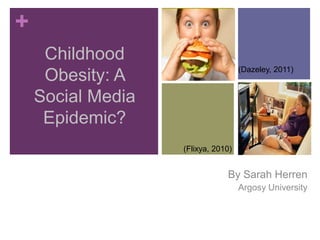
                                           (Dazeley, 2011)
     Obesity: A
    Social Media
     Epidemic?
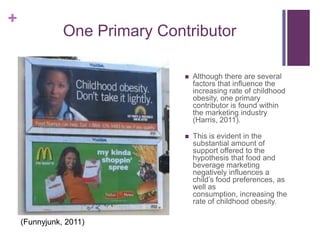
                          (Flixya, 2010)

Childhood Obesity: A Social By Sarah Herren
                            Media
Epidemic?                     Argosy University
+
    What is Childhood Obesity and Why
              is it Important?
       Childhood obesity is an increasing health epidemic that
        affects children and adolescents worldwide
        (Moore, 2007).

       It is a serious, often-preventable, medical condition that
        occurs when a child is far above the normal weight for his
        or her age and height (Mayo Clinic, 2011).

       As obese children have an increased risk of developing
        severe health problems, both physically and mentally, it is
        important for society, as a whole, to learn the ways in
        which this epidemic may be resolved.
+
               One Primary Contributor

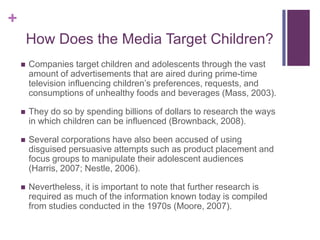
                                  Although there are several
                                   factors that influence the
                                   increasing rate of childhood
                                   obesity, one primary
                                   contributor is found within
                                   the marketing industry
                                   (Harris, 2011).

                                  This is evident in the
                                   substantial amount of
                                   support offered to the
                                   hypothesis that food and
                                   beverage marketing
                                   negatively influences a
                                   child’s food preferences, as
                                   well as
                                   consumption, increasing the
                                   rate of childhood obesity.

    (Funnyjunk, 2011)
+
        How Does the Media Target Children?
       Companies target children and adolescents through the vast
        amount of advertisements that are aired during prime-time
        television influencing children’s preferences, requests, and
        consumptions of unhealthy foods and beverages (Mass, 2003).

       They do so by spending billions of dollars to research the ways
        in which children can be influenced (Brownback, 2008).

       Several corporations have also been accused of using
        disguised persuasive attempts such as product placement and
        focus groups to manipulate their adolescent audiences
        (Harris, 2007; Nestle, 2006).

       Nevertheless, it is important to note that further research is
        required as much of the information known today is compiled
        from studies conducted in the 1970s (Moore, 2007).
+
              Strategies for Society
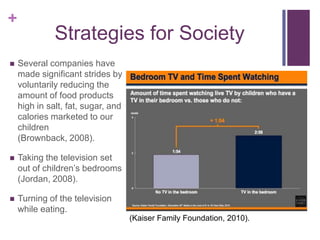
   Several companies have
    made significant strides by
    voluntarily reducing the
    amount of food products
    high in salt, fat, sugar, and
    calories marketed to our
    children
    (Brownback, 2008).

   Taking the television set
    out of children’s bedrooms
    (Jordan, 2008).

   Turning of the television
    while eating.
                                    (Kaiser Family Foundation, 2010).
+
        Further Research is Necessary
       The questions of how one of the previously listed strategies would
        be implemented or delivered, in a way that would protect the
        public’s health, is one that requires further attention and is
        important in researching childhood obesity (Jordan, 2008).

       Additional research also needs to address the different methods
        companies implement when targeting their marketing towards
        children.

       As Vicky Rideout, the Vice President and Director of the Kaiser
        Family’s Foundation Program for the Study of Entertainment
        Media and Healthy, once said, “While media is only one of the
        many factors that appear to be affecting childhood obesity, it’s an
        important piece of the puzzle,” (Rollin, 2004, p.165).
+
                                     References
Anderson, D.R., Blass, E. M., Kirkorian, H.L., Koleini, M.F, Pempek, T. A., & Price, I. (2006). On the road
  to obesity: Television viewing increases intake of high-density foods. Physiology & Behavior, 88, 597-
  604. doi: 10.1016/j.physbeh.2006.05.035

Brownback, S. (2008). Confronting Childhood Obesity. The ANNALS of the American Academy of
   Political and Social Science, 615, 219-221. doi:10.1177/0002716207308894

Dazeley, P. [Photograph]. (2011). Retrieved December 11, 2011 from
  http://www.gettyimages.com/detail/photo/girl-eating-hamburger-portrait-close-up-royalty-free-
  image/75354616

Flixya. [Photograph]. (2010). Retrieved December 11, 2011 from
    http://www.flixya.com/photo/2305200/Obese-Child-Sitting-Watching-TV-and-Eating-Chips

Funnyjunk. [Photograph]. (2011). Retrieved December 11, 2011 from
  http://www.funnyjunk.com/funny_pictures/1715592/Friends+of+irony/

Harris, J. L., PhD, Schwartz, M. B., PhD, & Speers, S.E. (2011). Child and Adolescent Exposure to Food
  and Beverage Brand Appearances During Prime-Time Television Programming. American Journal of
  Preventive Medicine, 41, 291-296. doi: 10.1016/j.amepre.2011.04.018

Jordan, A. B., & Robinson, T. N. (2008). Children, Television Viewing, and Weight Status: Summary and
   Recommendations from an Expert Panel Meeting. The ANNALS of the American of Political and
   Social Science, 615, 119-132. doi: 10.1177/0002716207308681
+
                                     References
Kaiser Family Foundation. (2010). Kids TV Consumption If TV In Bedroom. Retrieved December
   11, 2011 from http://wallstcheatsheet.com/economy/the-amazing-media-habits-of-8-18-year-
   olds.html/

Mass media and childhood obesity. (2003). International Journal of Obesity, 27, S8-S8-S8.
  doi:10.1038/sj.ijo.0802447

Mayo Clinic. (2011). Childhood Obesity. Retrieved October 31, 2011 from http://
  www.mayoclinic.com/health/childhood-obesity/DS00698

Moore, E. (2007). Perspectives on Food Marketing and Childhood Obesity: Introduction to the Special
  Section. Journal of Public Policy & Marketing, 26(2), 157-161. doi:10.1509/jppm.26.2.157

Nestle, Marion (2006, June 15). Food Marketing and Childhood Obesity - A Matter of Policy. New
  England Journal of Medicine, (24), 2527, Retrieved from
  http://elibrary.bigchalk.com.libproxy.edmc.edu

Rollins, J. A. (2004). Kaiser family foundation releases report on role of media in childhood obesity.
  Pediatric Nursing, 30(2), 165-165. Retrieved from
  http://search.proquest.com/docview/199431430?accountid=34899

Au psy492 m7_a2_pp_present_herren_s

  • 1.
    + Childhood (Dazeley, 2011) Obesity: A Social Media Epidemic? (Flixya, 2010) Childhood Obesity: A Social By Sarah Herren Media Epidemic? Argosy University
  • 2.
    + What is Childhood Obesity and Why is it Important?  Childhood obesity is an increasing health epidemic that affects children and adolescents worldwide (Moore, 2007).  It is a serious, often-preventable, medical condition that occurs when a child is far above the normal weight for his or her age and height (Mayo Clinic, 2011).  As obese children have an increased risk of developing severe health problems, both physically and mentally, it is important for society, as a whole, to learn the ways in which this epidemic may be resolved.
  • 3.
    + One Primary Contributor  Although there are several factors that influence the increasing rate of childhood obesity, one primary contributor is found within the marketing industry (Harris, 2011).  This is evident in the substantial amount of support offered to the hypothesis that food and beverage marketing negatively influences a child’s food preferences, as well as consumption, increasing the rate of childhood obesity. (Funnyjunk, 2011)
  • 4.
    + How Does the Media Target Children?  Companies target children and adolescents through the vast amount of advertisements that are aired during prime-time television influencing children’s preferences, requests, and consumptions of unhealthy foods and beverages (Mass, 2003).  They do so by spending billions of dollars to research the ways in which children can be influenced (Brownback, 2008).  Several corporations have also been accused of using disguised persuasive attempts such as product placement and focus groups to manipulate their adolescent audiences (Harris, 2007; Nestle, 2006).  Nevertheless, it is important to note that further research is required as much of the information known today is compiled from studies conducted in the 1970s (Moore, 2007).
  • 5.
    + Strategies for Society  Several companies have made significant strides by voluntarily reducing the amount of food products high in salt, fat, sugar, and calories marketed to our children (Brownback, 2008).  Taking the television set out of children’s bedrooms (Jordan, 2008).  Turning of the television while eating. (Kaiser Family Foundation, 2010).
  • 6.
    + Further Research is Necessary  The questions of how one of the previously listed strategies would be implemented or delivered, in a way that would protect the public’s health, is one that requires further attention and is important in researching childhood obesity (Jordan, 2008).  Additional research also needs to address the different methods companies implement when targeting their marketing towards children.  As Vicky Rideout, the Vice President and Director of the Kaiser Family’s Foundation Program for the Study of Entertainment Media and Healthy, once said, “While media is only one of the many factors that appear to be affecting childhood obesity, it’s an important piece of the puzzle,” (Rollin, 2004, p.165).
  • 7.
    + References Anderson, D.R., Blass, E. M., Kirkorian, H.L., Koleini, M.F, Pempek, T. A., & Price, I. (2006). On the road to obesity: Television viewing increases intake of high-density foods. Physiology & Behavior, 88, 597- 604. doi: 10.1016/j.physbeh.2006.05.035 Brownback, S. (2008). Confronting Childhood Obesity. The ANNALS of the American Academy of Political and Social Science, 615, 219-221. doi:10.1177/0002716207308894 Dazeley, P. [Photograph]. (2011). Retrieved December 11, 2011 from http://www.gettyimages.com/detail/photo/girl-eating-hamburger-portrait-close-up-royalty-free- image/75354616 Flixya. [Photograph]. (2010). Retrieved December 11, 2011 from http://www.flixya.com/photo/2305200/Obese-Child-Sitting-Watching-TV-and-Eating-Chips Funnyjunk. [Photograph]. (2011). Retrieved December 11, 2011 from http://www.funnyjunk.com/funny_pictures/1715592/Friends+of+irony/ Harris, J. L., PhD, Schwartz, M. B., PhD, & Speers, S.E. (2011). Child and Adolescent Exposure to Food and Beverage Brand Appearances During Prime-Time Television Programming. American Journal of Preventive Medicine, 41, 291-296. doi: 10.1016/j.amepre.2011.04.018 Jordan, A. B., & Robinson, T. N. (2008). Children, Television Viewing, and Weight Status: Summary and Recommendations from an Expert Panel Meeting. The ANNALS of the American of Political and Social Science, 615, 119-132. doi: 10.1177/0002716207308681
  • 8.
    + References Kaiser Family Foundation. (2010). Kids TV Consumption If TV In Bedroom. Retrieved December 11, 2011 from http://wallstcheatsheet.com/economy/the-amazing-media-habits-of-8-18-year- olds.html/ Mass media and childhood obesity. (2003). International Journal of Obesity, 27, S8-S8-S8. doi:10.1038/sj.ijo.0802447 Mayo Clinic. (2011). Childhood Obesity. Retrieved October 31, 2011 from http:// www.mayoclinic.com/health/childhood-obesity/DS00698 Moore, E. (2007). Perspectives on Food Marketing and Childhood Obesity: Introduction to the Special Section. Journal of Public Policy & Marketing, 26(2), 157-161. doi:10.1509/jppm.26.2.157 Nestle, Marion (2006, June 15). Food Marketing and Childhood Obesity - A Matter of Policy. New England Journal of Medicine, (24), 2527, Retrieved from http://elibrary.bigchalk.com.libproxy.edmc.edu Rollins, J. A. (2004). Kaiser family foundation releases report on role of media in childhood obesity. Pediatric Nursing, 30(2), 165-165. Retrieved from http://search.proquest.com/docview/199431430?accountid=34899

Editor's Notes

  • #3 Since the late 1970s, a dramatic increase of 14 percent of preschool aged children (2-5 years) and 19 percent of school aged children (6-11 years) were characterized as obese (Moore, 2007). While this is a disease that can be prevented, it is important for society to address it appropriately so that we may begin to take the necessary steps in decreasing and preventing this rising epidemic. As childhood obesity has been correlated with various health effects, including increased risk of hypertension, atherosclerosis, obstructive sleep apnea, chronic inflammation, diabetes, poor body image, and lower self-esteem, it becomes a very important issue to acknowledge and resolve (Moore, 2007).
  • #4 The average child views 40,000 advertisements annually on television and the majority of these ads promote unhealthy diets through the marketing of candy, cereal, soda, and fast food (Brownback, 2008; Rollins, 2004). One study found that 35, 000 food, beverage, and restaurant brands were shown on prime-time television programming in 2008 (Harris, 2007). Furthermore, several of these campaigns were found to market unhealthy foods in a manner that persuaded children to eat foods that were made “just for them” (Nestle, 2006). Today, the increasing amount of exposure to these types of food and beverage advertisements continue to influence children’s food preferences, requests, and consumption of the food children eat (Rollins, 2004).
  • #5 Research indicates that 70 percent of food and beverage advertisements are aired worldwide during children’s television programs. Even so, a current study found that companies spend $15 billion on marketing and advertising to children under the age of 12 (Brownback, 2008). The Institute Of Medicine (IOM) supports this acquisition as they discovered that numerous companies conduct market research intentionally focused on targeting children through specific methods such as focus groups (Nestle, 2006). Furthermore, many of the corporations behind these advertisements have been recognized for the act of implementing the product placement method by including branded products of identifiers through audio or visual means with mass-media programming (Harris, 2007). One study provides evidence as children who were shown a movie, and within that movie were exposed to a Pepsi bottle, choose Pepsi over Coke when compared to children that weren’t exposed to the Pepsi bottle but viewed the same movie (Harris, 2007). Even when the children couldn’t recall viewing a Pepsi bottle, they still choose Pepsi over Coke, indicating the ability product placement has when influencing a child’s subconscious thought process (Harris, 2007). Nevertheless, while the emphasis of addressing the marketing of sugared products, dental caries, and nutrition are relevant in today’s concerns about obesity, as much of the information is compiled from studies in the 1970s, updated research remains necessary (Moore, 2007).
  • #6 Over the years many fast food restaurants have placed healthy choices upon their menus such as apple sticks, yogurt parfaits, and salads. Companies acting as members of the Council of better Business Bureaus (CBBB) Food and Beverage Advertising Initiative are are also making strides by voluntarily restricting their promotions for products that do not meet the expectations of specific nutritional guidelines to children less than 12 years of age (Brownback, 2008). Nonetheless, as two-thirds of children, eight years and older, have television sets in their bedrooms, studies indicate that these children watch a higher amount of television than those that don’t (Jordan, 2008). Even so, four out of ten families have a television set in the dining room/kitchen and a number of studies have shown that the TV is on when eating family meals and consuming snacks (Jordan, 2008). While this inevitably increases the amount of television a child is exposed to, it also undermines healthy eating habits (Jordan, 2008). Separating food from television viewing may increase one’s awareness of food consumption and assist parents in developing healthy food habits within their children (Jordan, 2008).This is important as studies have shown that an increase in energy-dense food was eaten while watching television, having the potential to further increase childhood obesity rates (Anderson, 2006).
  • #7 As more research is necessary, results may provide evidence in the ways society can prevent this preventable disease from spreading and ways in which companies can regulate the methods they use to market their product to the adolescent audience. While childhood obesity can be prevented, it is up to society as a whole to integrate successful methods of prevention. Although several factors contribute to this spreading disease, it is clear that the media children view today has the ability to greatly influence their food preferences, as well as consumption, increasing the rate of childhood obesity.