Khwairakpam Bembem, Th. Bidyalakshmi Devi
Nutrition in Emergencies
Introduction
• Most deaths in emergencies, 33% to 50% associated with
malnutrition.
• Food and nutrition programmes cost up to 50% of the budget for
humanitarian aid.
• Food and nutrition issues in Emergencies
▫ The right to food is more critical than any other human right
▫ Food security is usually an issue in emergencies and if prolonged ends in
nutritional emergency
Major
emergencies
food shortage
impair
nutritional
status
excessive
mortality
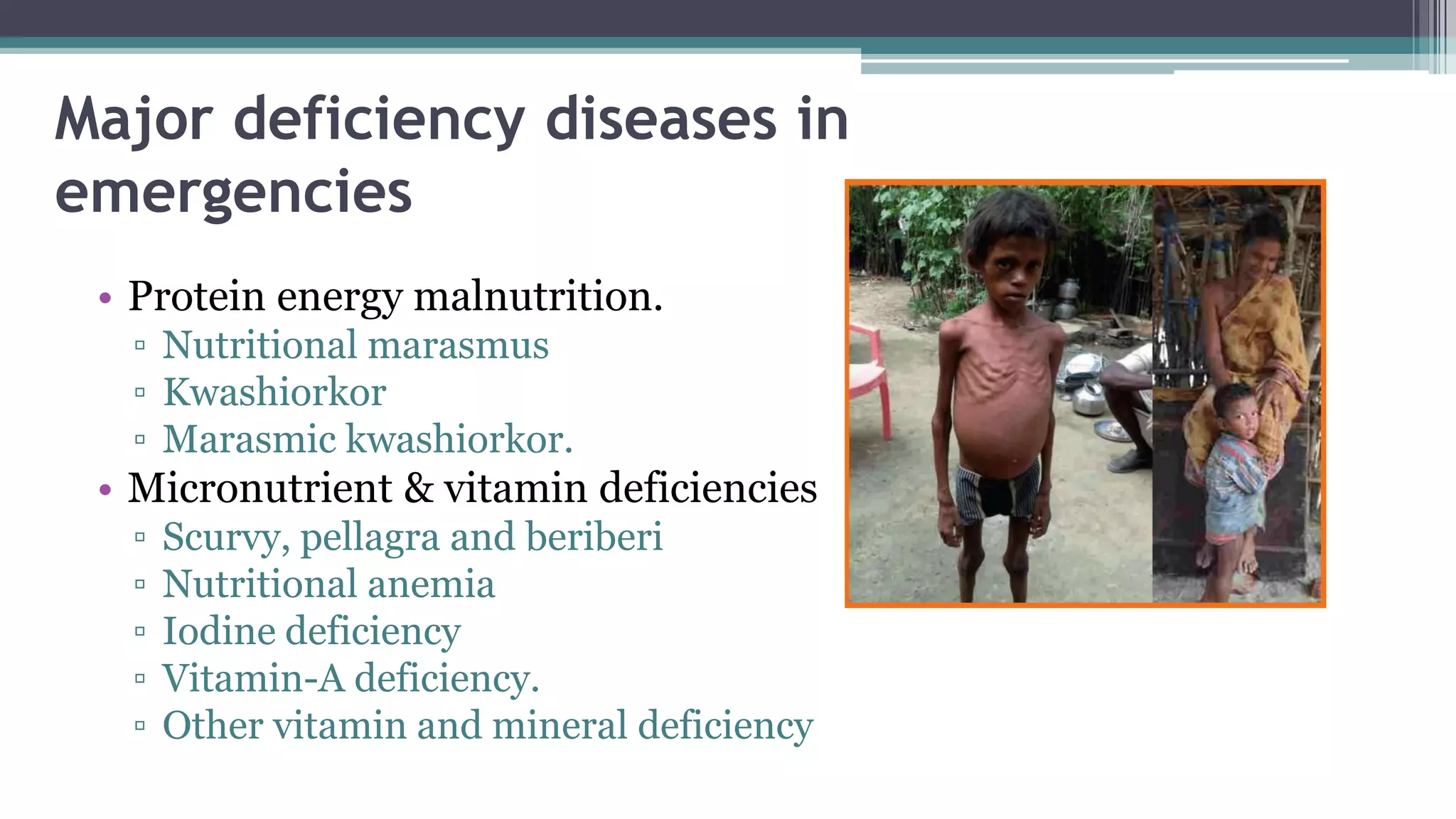
Major deficiency diseases in
emergencies
• Protein energy malnutrition.
▫ Nutritional marasmus
▫ Kwashiorkor
▫ Marasmic kwashiorkor.
• Micronutrient & vitamin deficiencies
▫ Scurvy, pellagra and beriberi
▫ Nutritional anemia
▫ Iodine deficiency
▫ Vitamin-A deficiency.
▫ Other vitamin and mineral deficiency
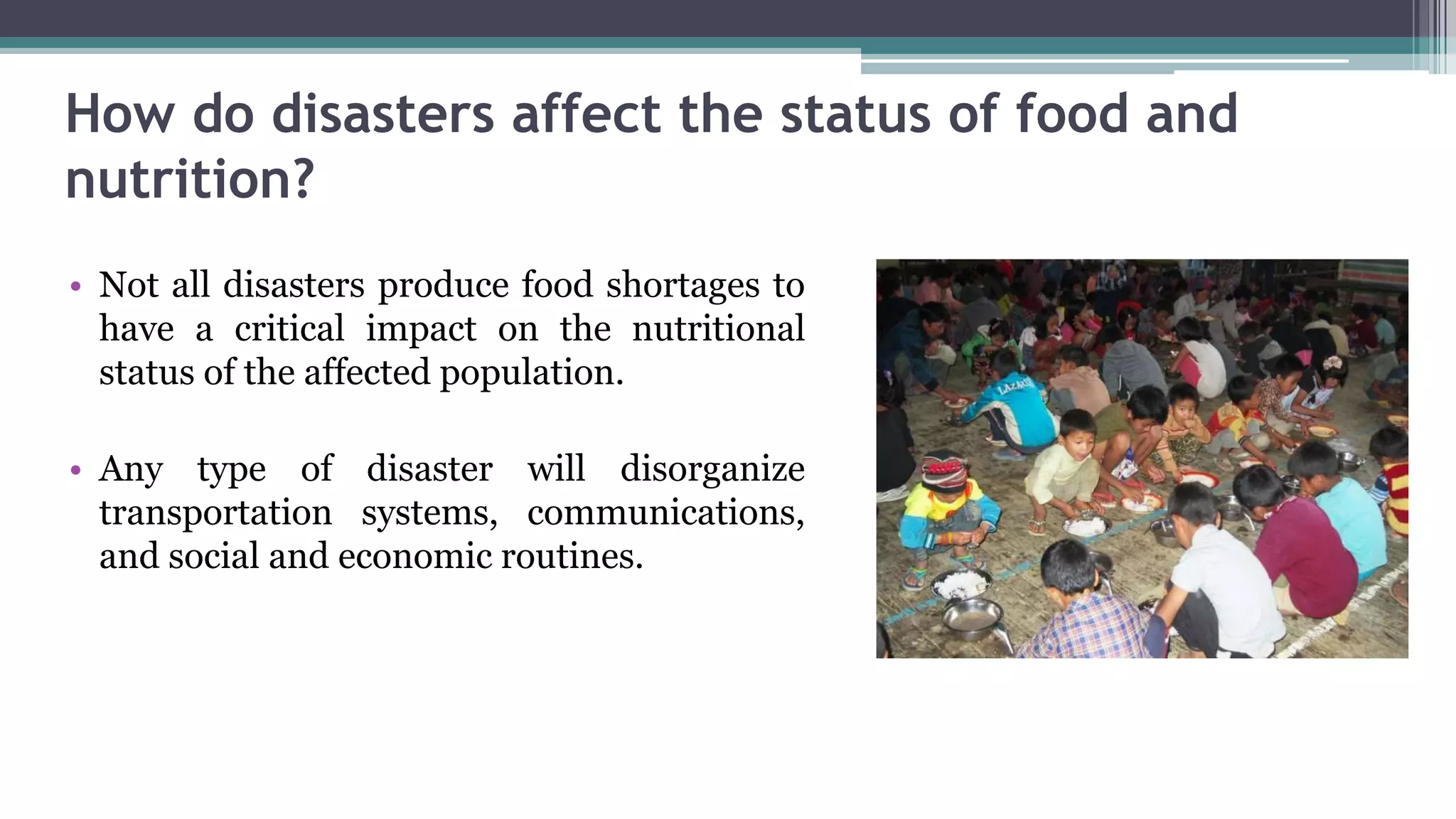
How do disasters affect the status of food and
nutrition?
• Not all disasters produce food shortages to
have a critical impact on the nutritional
status of the affected population.
• Any type of disaster will disorganize
transportation systems, communications,
and social and economic routines.
contd….
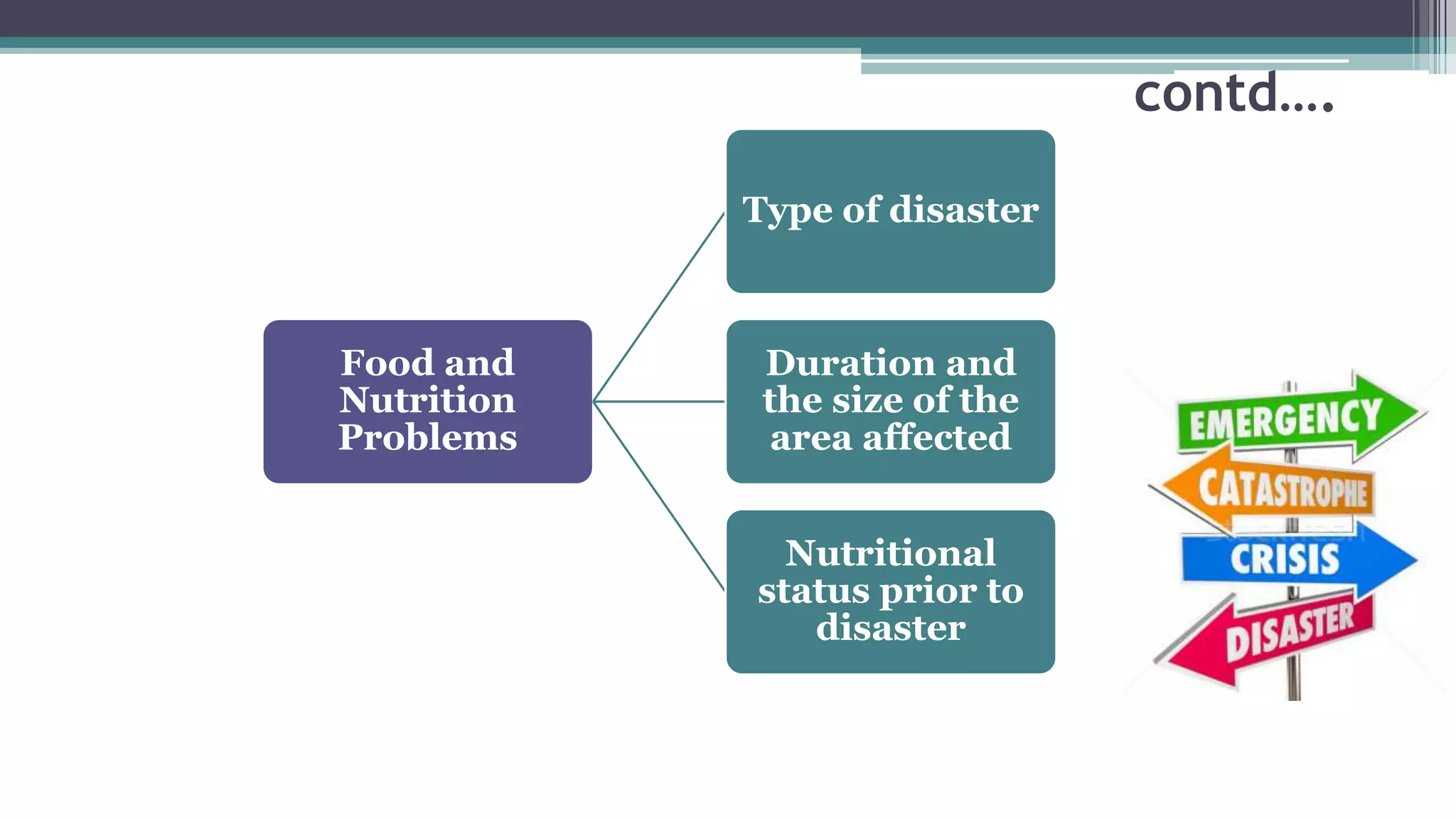
Food and
Nutrition
Problems
Type of disaster
Duration and
the size of the
area affected
Nutritional
status prior to
disaster
Global Hunger Situation, 2020
• Nearly 690 million people are undernourished
• 144 m children stunted(21.3%)
• 47 m childrenwasted (6.9%)
• 8.9 percent of the world’s population undernourished
27.2
Fig: Composition of the Global Hunger Index
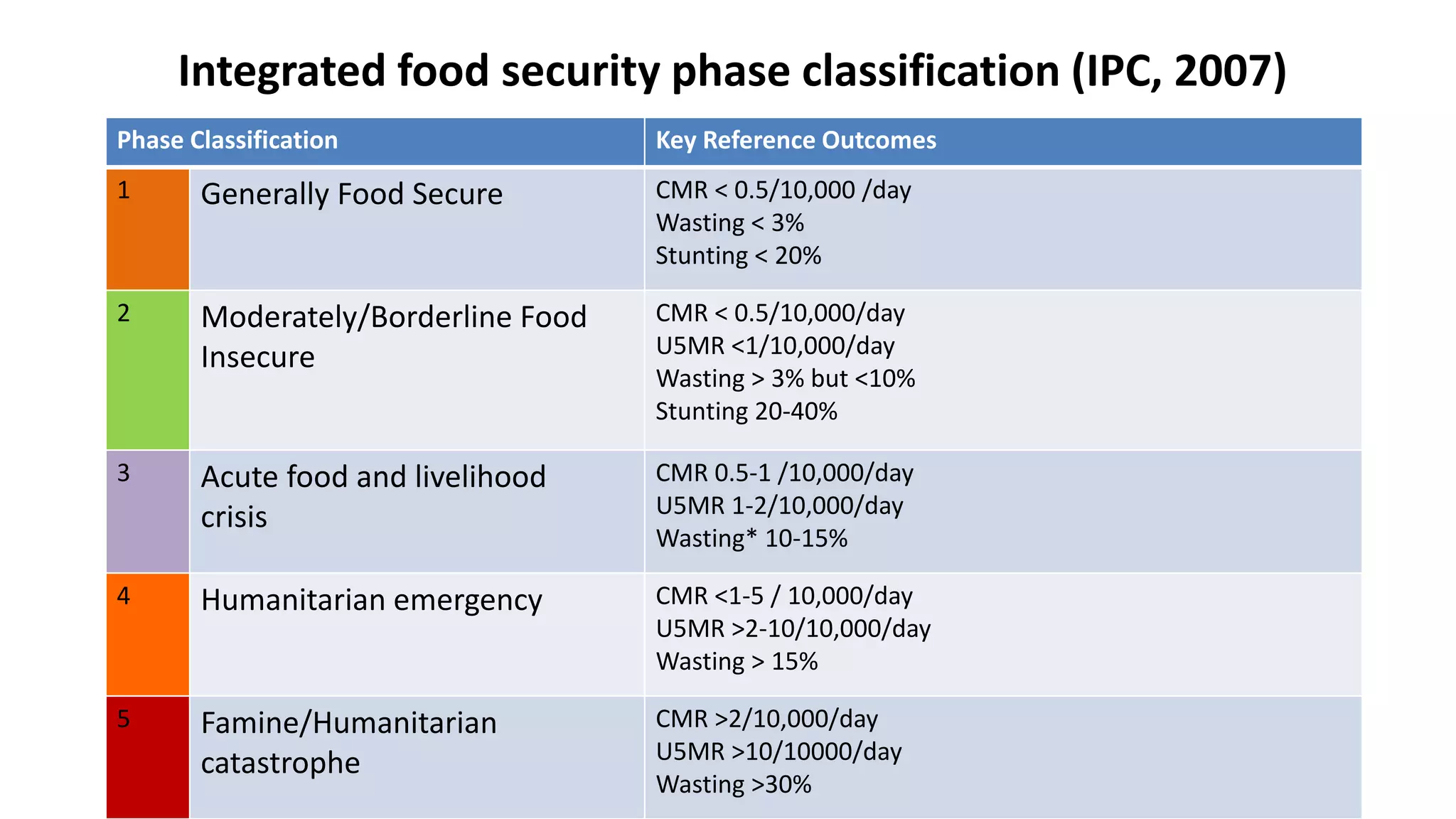
Integrated food security phase classification (IPC, 2007)
Phase Classification Key Reference Outcomes
1 Generally Food Secure CMR < 0.5/10,000 /day
Wasting < 3%
Stunting < 20%
2 Moderately/Borderline Food
Insecure
CMR < 0.5/10,000/day
U5MR <1/10,000/day
Wasting > 3% but <10%
Stunting 20-40%
3 Acute food and livelihood
crisis
CMR 0.5-1 /10,000/day
U5MR 1-2/10,000/day
Wasting* 10-15%
4 Humanitarian emergency CMR <1-5 / 10,000/day
U5MR >2-10/10,000/day
Wasting > 15%
5 Famine/Humanitarian
catastrophe
CMR >2/10,000/day
U5MR >10/10000/day
Wasting >30%
Who are vulnerable?
• Physiological vulnerability
• Geographical vulnerability
• Political vulnerability
• Internally displaced and refugees
Management of nutrition in major emergencies
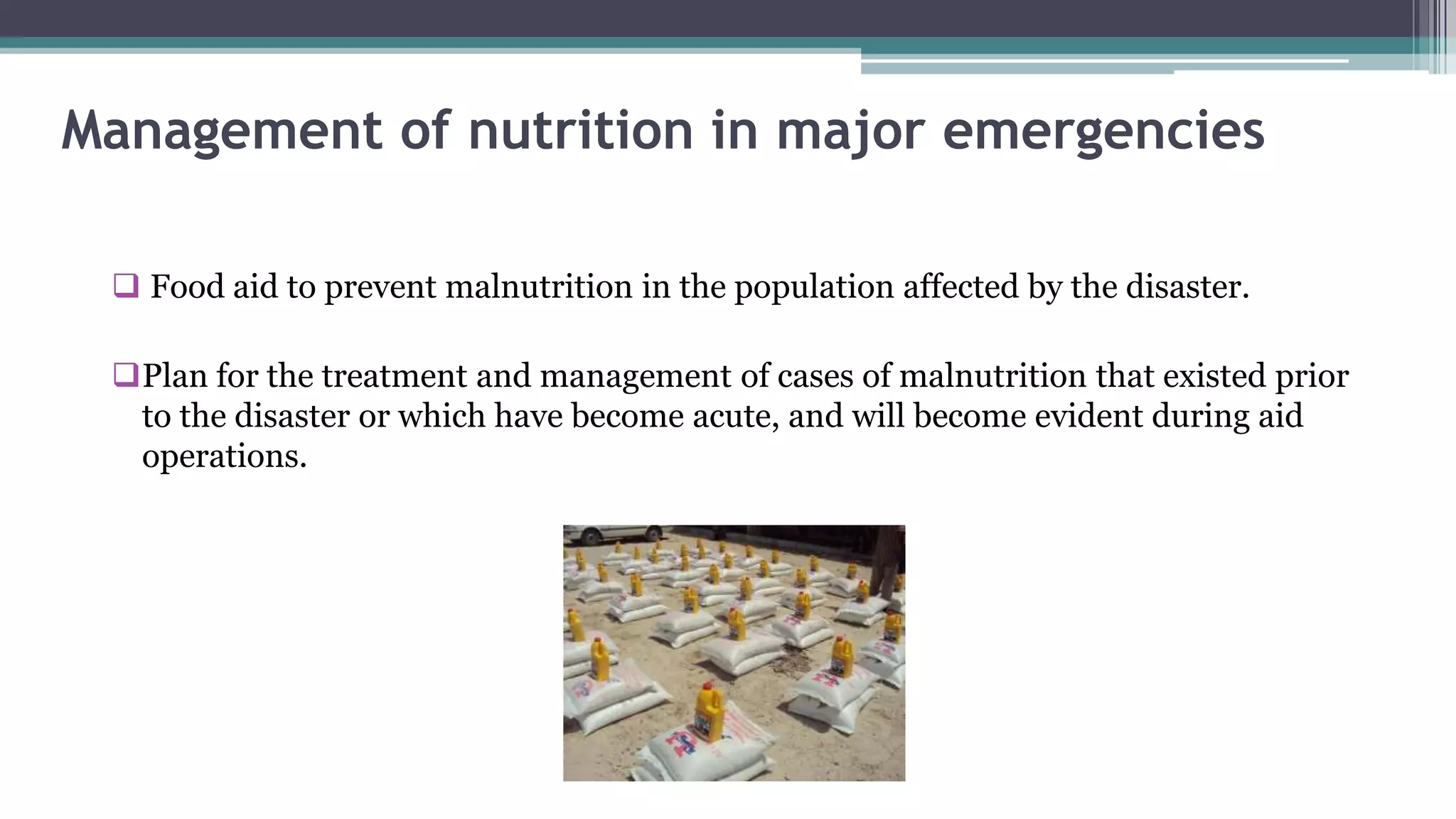
 Food aid to prevent malnutrition in the population affected by the disaster.
Plan for the treatment and management of cases of malnutrition that existed prior
to the disaster or which have become acute, and will become evident during aid
operations.
Management of nutrition in major emergencies
Principles
• Knowledge of nutritional requirement
• Essential to identify most vulnerable group
• Meeting energy & protein requirements
• Meeting micronutrient & other specific nutrient requirement
• Monitoring the adequacy of food access & intake
Management of nutrition in major
emergencies
• Energy requirement - 2100
kcal/day
• Protein requirement – 46gm/day
FAO/WHO/UNN Expert Consultation, 1985
Food aid during emergencies
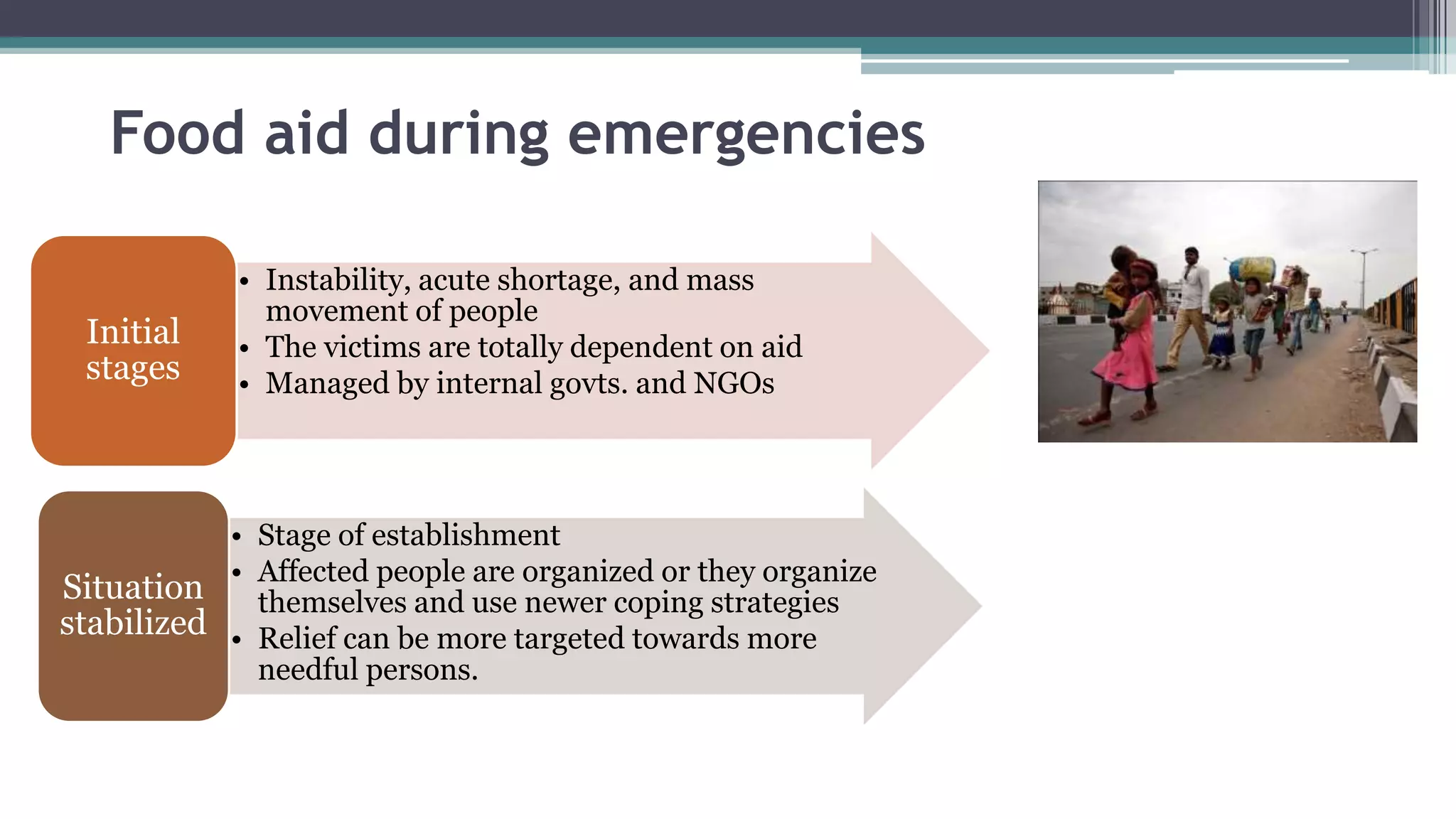
• Instability, acute shortage, and mass
movement of people
• The victims are totally dependent on aid
• Managed by internal govts. and NGOs
Initial
stages
• Stage of establishment
• Affected people are organized or they organize
themselves and use newer coping strategies
• Relief can be more targeted towards more
needful persons.
Situation
stabilized
Characteristic features of emergency food
Formulas and
special foods
Food health
and safety
Nutritional
needs of
different
groups
Food diversity
Nutritional considerations
Emergency food/ ready to eat food
Packaging Cultural norms Final price
Functional features
Fulfill
nutritional
needs in
emergency
situation
What is the proper management of food supplies?
• The objective is to ensure safety and prevent the transmission of
disease through food.
▫ Inspect the food received
▫ Verify that transportation units
▫ Good ventilation and light in warehouses
▫ Distribution on a First In/First Out basis
Food and Nutrition in times of Covid-19
• Huge impact on food availability and accessibility
• Significant proportion of population involved in
informal sectors, migrant workers are facing
maximum hardship
• Insufficient quantity and quality, irregularity in
distribution, lack in variety.
• Aggravate the problem of malnutrition particularly
among vulnerable groups
• Integrated Child Development Services
• Mid-Day Meal Scheme
Government and institution measures in
response to COVID-19.
Conclusion
• In major emergencies, most urgently needed action is to prevent
death and illness caused by malnutrition
• Basic energy and protein requirements are primary concern
• When we talk about Food and Nutrition security, as a nation we
can say that we are food secure with our surplus food production,
providing additional grains at the time of crisis, but we are far
away from becoming nutritionally secure

Nutrition in emergencies

  • 1.
    Khwairakpam Bembem, Th.Bidyalakshmi Devi Nutrition in Emergencies
  • 2.
    Introduction • Most deathsin emergencies, 33% to 50% associated with malnutrition. • Food and nutrition programmes cost up to 50% of the budget for humanitarian aid. • Food and nutrition issues in Emergencies ▫ The right to food is more critical than any other human right ▫ Food security is usually an issue in emergencies and if prolonged ends in nutritional emergency
  • 3.
  • 4.
    Major deficiency diseasesin emergencies • Protein energy malnutrition. ▫ Nutritional marasmus ▫ Kwashiorkor ▫ Marasmic kwashiorkor. • Micronutrient & vitamin deficiencies ▫ Scurvy, pellagra and beriberi ▫ Nutritional anemia ▫ Iodine deficiency ▫ Vitamin-A deficiency. ▫ Other vitamin and mineral deficiency
  • 5.
    How do disastersaffect the status of food and nutrition? • Not all disasters produce food shortages to have a critical impact on the nutritional status of the affected population. • Any type of disaster will disorganize transportation systems, communications, and social and economic routines.
  • 6.
    contd…. Food and Nutrition Problems Type ofdisaster Duration and the size of the area affected Nutritional status prior to disaster
  • 7.
    Global Hunger Situation,2020 • Nearly 690 million people are undernourished • 144 m children stunted(21.3%) • 47 m childrenwasted (6.9%) • 8.9 percent of the world’s population undernourished
  • 8.
    27.2 Fig: Composition ofthe Global Hunger Index
  • 9.
    Integrated food securityphase classification (IPC, 2007) Phase Classification Key Reference Outcomes 1 Generally Food Secure CMR < 0.5/10,000 /day Wasting < 3% Stunting < 20% 2 Moderately/Borderline Food Insecure CMR < 0.5/10,000/day U5MR <1/10,000/day Wasting > 3% but <10% Stunting 20-40% 3 Acute food and livelihood crisis CMR 0.5-1 /10,000/day U5MR 1-2/10,000/day Wasting* 10-15% 4 Humanitarian emergency CMR <1-5 / 10,000/day U5MR >2-10/10,000/day Wasting > 15% 5 Famine/Humanitarian catastrophe CMR >2/10,000/day U5MR >10/10000/day Wasting >30%
  • 10.
    Who are vulnerable? •Physiological vulnerability • Geographical vulnerability • Political vulnerability • Internally displaced and refugees
  • 11.
    Management of nutritionin major emergencies  Food aid to prevent malnutrition in the population affected by the disaster. Plan for the treatment and management of cases of malnutrition that existed prior to the disaster or which have become acute, and will become evident during aid operations.
  • 12.
    Management of nutritionin major emergencies Principles • Knowledge of nutritional requirement • Essential to identify most vulnerable group • Meeting energy & protein requirements • Meeting micronutrient & other specific nutrient requirement • Monitoring the adequacy of food access & intake
  • 13.
    Management of nutritionin major emergencies • Energy requirement - 2100 kcal/day • Protein requirement – 46gm/day FAO/WHO/UNN Expert Consultation, 1985
  • 14.
    Food aid duringemergencies • Instability, acute shortage, and mass movement of people • The victims are totally dependent on aid • Managed by internal govts. and NGOs Initial stages • Stage of establishment • Affected people are organized or they organize themselves and use newer coping strategies • Relief can be more targeted towards more needful persons. Situation stabilized
  • 15.
    Characteristic features ofemergency food Formulas and special foods Food health and safety Nutritional needs of different groups Food diversity Nutritional considerations Emergency food/ ready to eat food Packaging Cultural norms Final price Functional features Fulfill nutritional needs in emergency situation
  • 16.
    What is theproper management of food supplies? • The objective is to ensure safety and prevent the transmission of disease through food. ▫ Inspect the food received ▫ Verify that transportation units ▫ Good ventilation and light in warehouses ▫ Distribution on a First In/First Out basis
  • 17.
    Food and Nutritionin times of Covid-19 • Huge impact on food availability and accessibility • Significant proportion of population involved in informal sectors, migrant workers are facing maximum hardship • Insufficient quantity and quality, irregularity in distribution, lack in variety. • Aggravate the problem of malnutrition particularly among vulnerable groups
  • 18.
    • Integrated ChildDevelopment Services • Mid-Day Meal Scheme
  • 19.
    Government and institutionmeasures in response to COVID-19.
  • 20.
    Conclusion • In majoremergencies, most urgently needed action is to prevent death and illness caused by malnutrition • Basic energy and protein requirements are primary concern • When we talk about Food and Nutrition security, as a nation we can say that we are food secure with our surplus food production, providing additional grains at the time of crisis, but we are far away from becoming nutritionally secure

Editor's Notes

  • #6 Earthquakes usually have little effect on long-term food supplies. By contrast, hurricanes, floods, and tsunamis directly affect the availability of food, by ravaging crops, killing livestock and domestic animals, and destroying stored food. Thus, even though food stores may exist, the population may not have access to them.
  • #7 The nature of food and nutrition problems depends on the type of disaster, its duration and the size of the area affected, and the nutritional status of the population prior to the disaster.
  • #9 In the 2020 Global Hunger Index, India ranks 94th out of the 107 countries with a score of 27.2, India has a level of hunger that is serious.
  • #14 Daily energy requirement and safe protein intake for developing countries- FAO/WHO/UNN Expert Consultation, 1985 Assuming BMI- 20-22, light physical activity