The Child with  Special Needs Part 1
Dominick M. Maino, O.D., M.Ed., F.A.A.O .,  F.C.O.V.D-A. Professor,  Pediatrics/Binocular Vision Service Illinois College of Optometry Illinois Eye Institute 3241 S. Michigan Ave.  Chicago, Il. 60616 312-949-7280 (Voice) 312-949-7358 (fax) [email_address]   MainosMemos.blogspot.com  www.ico.edu  nw.optometry.net
Children with Special Needs Learning Disability ADHD Cerebral Palsy Down Syndrome Fragile X Syndrome
Children with Special Needs Autism Mental Retardation/Intellectual Disability Acquired/Traumatic Brain Injury Mental Illness/Psychiatric Illness
Learning Disabilities Reading/Dyslexia Dyscalculia Dysgraphia
Learning Disabilities Reading/Dyslexia Reading disabilities common Dyslexia rare
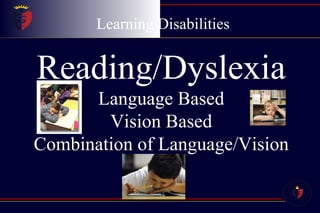
Learning Disabilities Reading/Dyslexia Language Based Vision Based Combination of Language/Vision
Learning Disabilities Dyscalculia  (Math Disability) 3 and 6% of the population Neurological Dyscalculia   Deficits in working & short term memory Congenital/hereditary  (Gerstmann syndrome: Dyscalculia + Dysgraphia)
Learning Disabilities Dysgraphia Working memory  (orthographic coding) Motor planning Attentional issues
Learning Disabilities ADHD/ADD Etiology Brain Functioning  Heredity  Exposure to Toxic Substances  Brain Trauma, Tumors, Strokes or Disease Functional Vision Problems
Learning Disabilities ADHD/ADD Not Caused By: Diet Hormones Vestibular dysfunction Poor parenting Television
Learning Disabilities ADHD/ADD Treatment Medication Psychotherapy Education or Training A combination of treatments Oculomotor therapy/Vision Therapy
 
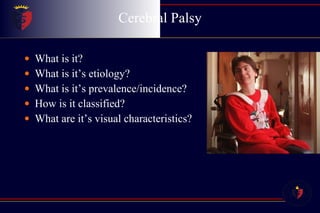
Cerebral Palsy What is it? What is it’s etiology? What is it’s prevalence/incidence? How is it classified? What are it’s visual characteristics?
Cerebral Palsy  Cerebral Palsy is a persistent, but not unchanging, disorder of movement and posture appearing in the early years of life due to traumatic or inflammatory brain damage.  Affects virtually all motor systems Can be acquired
Cerebral Palsy  Etiology Something goes awry just before, during or just after birth: Prenatal Neonatal Postnatal
Cerebral Palsy  Incidence/Prevalence Incidence  2-4/1000 live births Prevalence 1.5-2/1000 live  births 10% of cases are acquired (trauma) Normal life spans, 40% live to age 40, many living into their senior years > 1/2 million individual with CP living in USA
Cerebral Palsy  Incidence/Prevalence 75% of CP occurs during  pregnancy  , 5% during  childbirth   and/or 15%  after birth  up to age 3 80% the etiology is unknown There are 550,000-764,000 persons in the USA with cerebral palsy The number of new cases have increased 25% during the past decade (1990’s) There are now 10,000 new cases/year. Average lifetime cost per person of $921,000 (in 2003 dollars)
Cerebral Palsy  Classifications Spastic - 70-80% Dyskinetic/Athetoid - 10-15% Ataxic - <5% Mixed
Cerebral Palsy  Visual Characteristics Wesson M, Maino D. Oculovisual findings in children with Down syndrome, Cerebral Palsy, and mental retardation without specific etiology. In Maino, D. (ed) Diagnosis and management of special populations. 1995. St. Louis, Mo. , Mosby-Yearbook Inc.:17-54. Binocular acuity could be evaluated in 45% of individuals below age 13 For CP patients VAs are generally decreased when compared to those measured for individuals with Down Syndrome Much higher incidence of ocular disease and neurological dysfunction
Cerebral Palsy  Refractive Characteristics Scheiman MM. Optometric findings in children with cerebral palsy. Am J Optom Physiol Opt 1984;61:321-333 60% significant refractive error Hyperopia (>+1.50) 3X more common among CP children than in non-affected individuals Other studies (Black, Breakey et al, Duckman, LoCasio) support increased refractive error being present
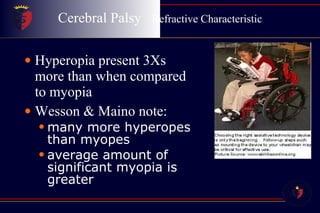
Cerebral Palsy  Refractive Characteristic Hyperopia present 3Xs more than when compared to myopia Wesson & Maino note: many more hyperopes than myopes average amount of significant myopia is greater
Cerebral Palsy  Binocular Characteristics Prevalence of strabismus exceeds that of general population by a factor of 10! Slightly more esotropia than exotropia Dyskinetic Strabismus slow tonic deviation similar to vergence change from ET to XT usually associated with athetoid classification
Cerebral Palsy  InteractionTips Positioning Right tools (objective) No sudden movement No loud, unexpected noises Speak smoothly, soothingly, softly….if appropriate, sing to the patient! Smile, smile SMILE!!!
Cerebral Palsy  Barca L, Cappelli FR, Di Giulio P, Staccioli S, Castelli E.  Outpatient assessment of neurovisual functions in children with Cerebral Palsy.  Res Dev Disabil. 2010 Mar-Apr;31(2):488-95. Epub 2009 Dec 5. … .Overall, 73% patients had impairments …..the majority of which presenting difficulties on both  visuoperceptual  and  visuospatial tasks  (79%)..  …
Cerebral Palsy  Saunders KJ, Little JA, McClelland JF, Jackson AJ.  Profile of refractive errors in cerebral palsy: impact of severity of motor impairment (GMFCS) and CP subtype on refractive outcome.  Invest Ophthalmol Vis Sci. 2010 Jun;51(6):2885-90. Epub 2010 Jan 27. . … A  significantly higher prevalence and magnitude of refractive error  was found in the CP group …..  Higher spherical refractive errors were significantly associated with the nonspastic CP  …. The  presence and magnitude of astigmatism were greater when intellectual impairment was more severe , ….  High refractive errors are common in CP, pointing to impairment of the emmetropization process. ….
Cerebral Palsy  McClelland JF ,  Parkes J ,  Hill N ,  Jackson AJ ,  Saunders KJ . Accommodative dysfunction in children with cerebral palsy: a population-based study.  Invest Ophthalmol Vis Sci. 2006 May;47(5):1824-30.   Brain injury such as that present in CP has a  significant impact on accommodative function . These findings have implications for the optometric care of children with CP and inform our understanding of the impact of early brain injury on visual development.
Cerebral Palsy  Ross LM ,  Heron G ,  Mackie R ,  McWilliam R ,  Dutton GN . Reduced accommodative function in dyskinetic cerebral palsy: a novel management strategy.  Dev Med Child Neurol. 2000 Oct;42(10):701-3.     Links … . The  near-vision symptoms were completely removed and reading dramatically improved with the provision of varifocal spectacles.  Varifocal lenses provide an optimal correction for far, intermediate (i.e. for computer screens), and near distances (i.e. for reading).  Managing this type of patient with varifocal spectacles has not been previously reported .  It is clearly very important to prescribe an optimal spectacle correction to provide clear vision to  optimize learning.
 
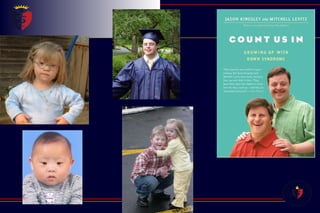
Down Syndrome Children with  Down syndrome  have been included in regular academic  classrooms in schools across the country. In some instances they are  integrated into specific courses, while in other situations students are  fully included in the regular classroom for all subjects. The degree of  mainstreaming is based in the abilities of the individual; but the trend is  for full inclusion in the social and educational life of the community.  From:  http://www.ndss.org/aboutds/aboutds.html#Down
Down Syndrome What is it? What is it’s etiology? What is it’s prevalence/incidence? What are it’s physical/visual characteristics?
Down Syndrome Langdon Down  1866 “ Mongolism” no longer used Most common genetic anomaly Variable levels of ability & disability
Down Syndrome Down syndrome is the  most commonly occurring genetic condition .  One in every 800 to 1,000 live births  is a child with Down syndrome, representing approximately  5,000+ births per year in the United States  alone. Today, Down syndrome  affects more than 350,000 people  in the United States.
Down Syndrome  Prevalence/Incidence 1 in 800-1000 live births 1 in 12 for older mothers (>=49yrs of age) Most babies with Down syndrome born to younger mothers  (80% born to moms younger than 35) Most frequently encounter “viable” genetic anomaly Most frequently encounter “special” patient Prevalence increasing  (improved survival rates) http://www.nichd.nih.gov/publications/pubs/downsyndrome.cfm
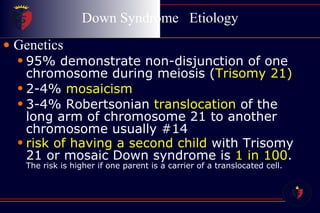
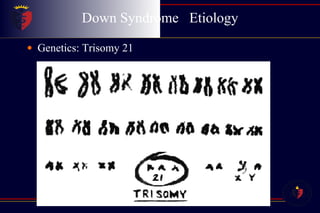
Down Syndrome  Etiology Genetics 95% demonstrate non-disjunction of one chromosome during meiosis ( Trisomy 21) 2-4%  mosaicism 3-4% Robertsonian  translocation  of the long arm of chromosome 21 to another chromosome usually #14 risk of having a second child  with Trisomy 21 or mosaic Down syndrome is  1 in 100 .  The risk is higher if one parent is a carrier of a translocated cell.
Down Syndrome  Etiology Genetics: Trisomy 21
Down Syndrome  Refractive Error Many  more hyperopes  than myopes, but those with myopia tended to have higher magnitudes Up to 49% may exhibit some astigmatism
Down Syndrome  Binocular Characteristics 23-44% have strabismus (Wesson & Maino)  Down syndrome and strabismus shows a constant unilateral esotropia of less than 20 PD at near.  (Greatly reduced number show ET at distance) It’s  suggested  that the  etiology  is a  high ACA ratio  rather that of a basic ET
What’s New in Down Syndrome Al-Bagdady M ,  Stewart RE ,  Watts P ,  Murphy PJ ,  Woodhouse JM .  Bifocals and Down's syndrome: correction or treatment?  Ophthalmic Physiol Opt. 2009 Jul;29(4):416-21. Epub 2009 May 11.   Accommodation is reduced in approximately 75%  of children with Down's syndrome (DS ). Bifocals have been shown to be beneficial and they are currently prescribed regularly .. … Bifocals are an  effective correction for the reduced accommodation  in children with DS and  also act to improve accommodation with a success rate of 65% . ….
What’s New in Down Syndrome Haugen OH, Hovding G, Eide GE. Biometric measurements of the eyes in teenagers and young adults with Down syndrome.Acta Ophthalmol Scand. 2001 Dec;79(6):616-25.  CONCLUSIONS:  Thinning of the corneal stroma  may account for the  steeper cornea  and the  high  frequency of  astigmatism  in Down syndrome due to lower corneal rigidity. It may also be of  etiological  importance to the increased incidence of  keratoconus  in Down syndrome.
Haugen OH, Hovding G, Lundstrom I.Refractive development in children  with Down's syndrome: a population based, longitudinal study. Br J Ophthalmol. 2001 Jun;85(6):714-9.    … . Accommodation weakness may be of aetiological importance to the high frequency of refractive errors encountered in patients with Down's   syndrome.
Stewart RE ,  Woodhouse JM ,  Cregg M ,  Pakeman VH .   Association between accommodative accuracy, hypermetropia, and strabismus in children with Down's syndrome   Optom Vis Sci. 2007 Feb;84(2):149-55. … .This study demonstrates the marked association between under-accommodation, hypermetropia, and strabismus in children with Down's syndrome . ….
Haugen OH, Hovding G.Strabismus and binocular function in children with Down syndrome. A population-based, longitudinal study.Acta Ophthalmol Scand. 2001 Apr;79(2):133-9.     … The majority of the  Down syndrome children with strabismus have an acquired esotropia and hence a potential for binocularity.  Hypermetropia and accommodation weakness are probably important factors in esotropia …….
Stewart RE ,  Margaret Woodhouse J ,  Trojanowska LD .   In focus: the use of bifocal spectacles with children with Down's syndrome.Ophthalmic Physiol Opt. 2005 Nov;25(6):514-22 …… .Based on the results of this study,  eye examinations of children with Down's syndrome should routinely include a measure of accommodation at near, and bifocal spectacles should be considered  for those who show under-accommodation.
 
Fragile X Syndrome What is it? What is it’s etiology? What is it’s prevalence/incidence? What are it’s physical/visual characteristics?
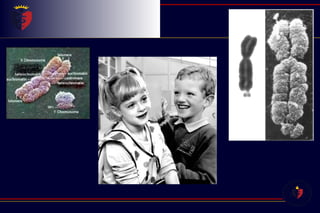
Fragile X Syndrome Most  frequently encountered  inherited form of mental retardation (X-linked MR) Often  misdiagnosed  in the past “ New” syndrome that has caught the imagination of researchers around the world 1st human disease  shown to be caused by a  repeated nucleotide sequence
Fragile X Syndrome X-linked MR  1:600 in affected males 1:400 female carriers Prevalence 2.6 cases per 1,000 in the general population, over 10% of all cases of mental retardation
Fragile X Syndrome Fra X 1 in 4000 males with full mutation 1 in 4000 to 6000 females with full mutation 1 in 800 men are carriers  1 in 260 women are carriers
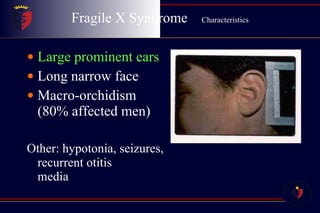
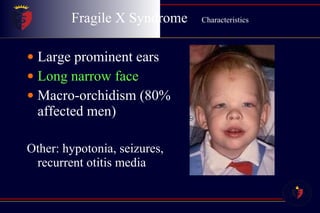
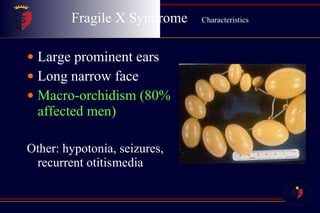
Fragile X Syndrome  Characteristics Large prominent ears Long narrow face Macro-orchidism (80% affected men) Other: hypotonia, seizures, recurrent otitis  media
Fragile X Syndrome  Characteristics Large prominent ears Long narrow face Macro-orchidism (80% affected men) Other: hypotonia, seizures, recurrent otitis media
Fragile X Syndrome  Characteristics First demonstrated genetic etiology of learning disability Variable mental retardation Math, language delay Sensory integration problems Attentional deficits Psychiatric illnesses (shy)
Fragile X Syndrome  Characteristics Gaze Avoidance How do you conduct an examination on an individual that won’t look at you?
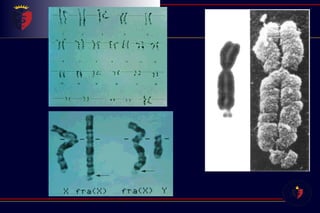
Fragile X Syndrome  Diagnosis Genetics Triplet nucleotide repeated sequence cytosine, guanine, guanine (CGG) 0-50 CGG repeats normal, 50-200  premutation, > 200 full syndrome Fragile site on X chromosome (band q27.3)
 
Fragile X Syndrome  Ocular Findings Strabismus  (33-50%) Nystagmus  Refractive error Accommodative dysfunctions? Oculomotor anomalies Ocular Health? Perceptual dysfunction
What’s New in Fragile X Syndrome Hatton DD, Buckley E, Lachiewicz A, Roberts J.  Ocular status of boys with fragile X syndrome: a prospective study.  J AAPOS. 1998 Oct;2(5):298-302. … observe a higher prevalence of strabismus than that found in the general population (8% vs 0.5% to 1…. ,  17% of the sample did have significant refractive errors.  In addition to evaluating the ocular motility of children with fragile X syndrome, cycloplegic refraction should also be performed to determine whether refractive problems are present .
What’s New in Fragile X Syndrome Block SS, Brusca-Vega R, Pizzi WJ, Berry-Kravis E, Maino DM, Treitman TM.Cognitive and visual processing skills and their relationship to mutation size in full and premutation female fragile X carriers.Optom Vis Sci. 2000 Nov;77(11):592-9.  … . full mutation female carriers  performed more poorly in visual-motor processing and analysis-synthesis  on the Woodcock-Johnson Psycho-Educational Battery-Revised, The  Developmental Test of Visual Motor Integration , and on  five of the seven subtests of the Test of Visual-Perceptual Skills.  Regression analyses revealed  significant negative correlations  between  mutation size and cognitive ability .  …
What’s New in Fragile X Syndrome Effect of CX516, an AMPA-modulating compound, on cognition and behavior in fragile X syndrome: a controlled trial.  Berry-Kravis E, Krause SE, Block SS, Guter S, Wuu J, Leurgans S, Decle P, Potanos K, Cook E, Salt J, Maino D, Weinberg D, Lara R, Jardini T, Cogswell J, Johnson SA, Hagerman R. J Child Adolesc Psychopharmacol. 2006 Oct;16(5):525-40.PMID: 17069542 Cognitive and visual processing skills and their relationship to mutation size in full and premutation female fragile X carriers.  Block SS, Brusca-Vega R, Pizzi WJ, Berry-Kravis E, Maino DM, Treitman TM. Optom Vis Sci. 2000 Nov;77(11):592-9.PMID: 11138833
What’s New in Fragile X Syndrome The fragile X female: a case report of the visual, visual perceptual, and ocular health findings.  Amin VR, Maino DM. J Am Optom Assoc. 1995 May;66(5): Optometric findings in the fragile X syndrome.  Maino DM, Wesson M, Schlange D, Cibis G, Maino JH. Optom Vis Sci. 1991 Aug;68(8): Mental retardation syndromes with associated ocular defects.  Maino DM, Maino JH, Maino SA. J Am Optom Assoc. 1990 Sep;61(9):707-16.  Ocular anomalies in fragile X syndrome.  Maino DM, Schlange D, Maino JH, Caden B. J Am Optom Assoc. 1990 Apr;61(4):316-23
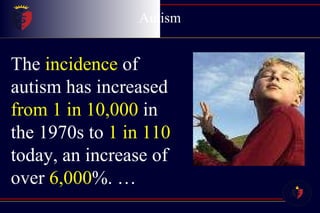
Autism The  incidence  of autism has increased  from 1 in 10,000  in the 1970s to  1 in 110  today, an increase of over  6,000 %. …
Autism Do Parents cause their children to be autistic ? There are autistic children born to parents who do not fit the autistic parent personality pattern.  Parents who do fit the description of the supposedly pathogenic parent have normal, non-autistic children.  Frequently siblings of autistic children are normal.  Autistic children are behaviorally unusual &quot;from the moment of birth.&quot;  *** There is a consistent ratio of three or four boys to one girl.  Virtually all cases of twins reported in the literature have been identical, with both twins afflicted. *** Autism can occur or be closely simulated in children with known organic brain damage.  *** The symptomatology is highly unique and specific.  There is an absence of gradations of infantile autism which would  create &quot;blends&quot; from normal to severely afflicted.
Autism Etiology Yeast  infections  Intolerance  to specific  food  substances ( Gluten  intolerance (&quot; Leaky Gut Syndrome &quot;/ Casein  intolerance causing intestinal permeability and allowing improperly digested peptides to enter the bloodstream and cross the blood-brain barrier which may mimic neurotransmitters and result in the scrambling of sensory input. I've also heard &quot;Leaky Gut Syndrome&quot; described as lack of the beneficial bacteria that aids digestion, and that the resulting matter in the bloodstream invokes an unnecessary immune reaction) Phenolsulphertransferase  (PST) deficiency--theory that some with autism are low on sulphate or an enzyme that uses this, called phenol-sulphotransferase-P. This means that they will be  unable to get rid of amines and phenolic compounds  once they no longer have any use for them. These then stay in their body and may cause adverse effects, even in the brain.
Autism Etiology Brain injury,  Constitutional vulnerability  Developmental aphasia , Deficits in the reticular activating system, An unfortunate interplay between psychogenic and neurodevelopmental factors, Structural cerebellar changes, Genetic causes, Viral causes, Immunological ties, Vaccines, Seizures
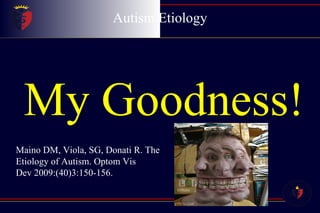
Autism Etiology My Goodness! Maino DM, Viola, SG, Donati R. The Etiology of Autism. Optom Vis Dev 2009:(40)3:150-156.
Autism Etiology What the research shows…
Autism  Impairment in social interactions Impairment in communication Restricted repertoire of activities
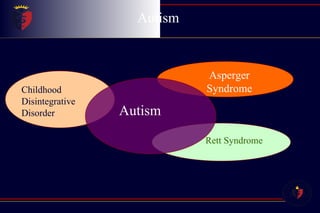
Autism  Autism Asperger Syndrome Rett Syndrome Childhood Disintegrative Disorder
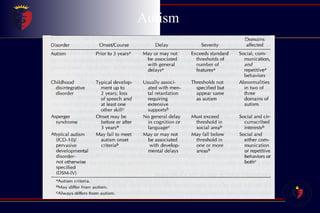
Autism  Childhood Disintegrative Disorder
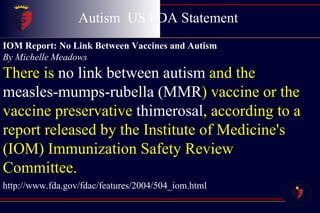
Autism  US FDA Statement  Childhood Disintegrative Disorder IOM Report: No Link Between Vaccines and Autism  By Michelle Meadows There is  no link between autism  and the  measles-mumps-rubella (MMR ) vaccine or the vaccine preservative  thimerosal , according to a report released by the Institute of Medicine's (IOM) Immunization Safety Review Committee.  http://www.fda.gov/fdac/features/2004/504_iom.html
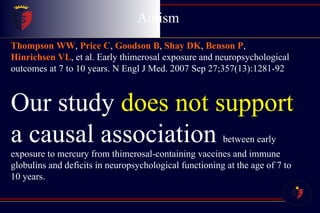
Autism  Childhood Disintegrative Disorder Thompson WW ,  Price C ,  Goodson B ,  Shay DK ,  Benson P ,  Hinrichsen VL , et al. Early thimerosal exposure and neuropsychological outcomes at 7 to 10 years. N Engl J Med. 2007 Sep 27;357(13):1281-92  Our study  does not support  a causal association  between early exposure to mercury from thimerosal-containing vaccines and immune globulins and deficits in neuropsychological functioning at the age of 7 to 10 years.
Autism  Childhood Disintegrative Disorder Andrew Wakefield   (born 1956) is a British  former surgeon and researcher  best known for his  discredited   work  regarding the  MMR vaccine  and  its claimed connection with  autism   and inflammatory bowel disease. Wakefield was the lead author of a 1998 study, published in  The Lancet , which reported bowel symptoms in twelve children diagnosed with autism spectrum disorders, to which the authors suggested a possible link with the MMR vaccine. Though stating &quot;We did not prove an association between measles, mumps, and rubella vaccine and the syndrome described,&quot; the paper tabulated parental allegations, and adopted these allegations as fact for the purpose of calculating a temporal link between receipt of the vaccine and the first onset of what were described as &quot;behavioural symptoms “ .
Summary Autism?
Mental Retardation without Specific Etiology Most frequently encountered form of Intellectual Disability 4000  known Online Mendelian Inheritance in Man     http://www.ncbi.nlm.nih.gov/omim   10 times  that are  unknown !
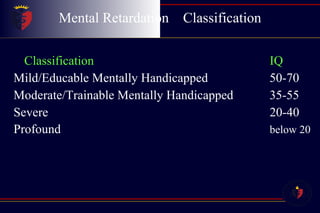
Mental Retardation  Classification Classification   IQ Mild/Educable Mentally Handicapped 50-70 Moderate/Trainable Mentally Handicapped 35-55 Severe   20-40 Profound   below 20
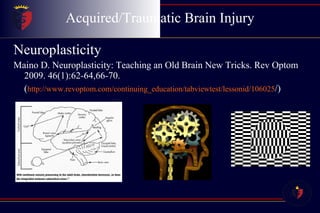
Acquired/Traumatic Brain Injury Neuroplasticity Maino D. Neuroplasticity: Teaching an Old Brain New Tricks. Rev Optom 2009. 46(1):62-64,66-70.  ( http://www.revoptom.com/continuing_education/tabviewtest/lessonid/106025 /)
Acquired/Traumatic Brain Injury Neuroplasticity & Rehabilitation Use it or lose it .  If you do not drive specific brain functions, functional loss will occur. Use it and improve it .  Therapy that drives cortical function enhances that particular function. Specificity . The therapy you choose determines the resultant plasticity and function. Repetition matters . Plasticity that results in functional change requires repetition. Intensity matters . Induction of plasticity requires the appropriate amount of intensity.
Acquired/Traumatic Brain Injury Neuroplasticity & Rehabilitation Time matters .  Different forms of plasticity take place at different times during therapy. Salience matters . It has to be important to the individual. Age matters . Plasticity is easier in a younger brain, but is also possible in an adult brain. Transference . Neuroplasticity, and the change in function that results from one therapy, can augment the attainment of similar behaviors. Interference .  Plasticity in response to one experience can interfere with the acquisition of other behaviors. Kleim JA, Jones TA. Principles of experience-dependent neural plasticity: implications for  rehabilitation after brain damage. J Speech Lang Hear Res 2008 Feb;51(1):S225-39.
Acquired/Traumatic Brain Injury Post Trauma Vision Syndrome   Symptoms/Signs Double vision  Headaches  Blurred vision  Dizziness or nausea  Light sensitivity  Attention or concentration difficulties
Acquired/Traumatic Brain Injury Staring behavior (low blink rate)  Spatial disorientation  Losing place when reading  Can’t find beginning of next line when reading  Comprehension problems when reading  Visual memory problems
Acquired/Traumatic Brain Injury Pulls away from objects when they are brought close to them  Exotropia  or high  exophoria   Accommodative insufficiency  Convergence insufficiency  Poor fixations and pursuits  Unstable peripheral vision
Acquired/Traumatic Brain Injury Associated neuromotor difficulties with balance, coordination and posture  Perceived movement of stationary objects
Acquired/Traumatic Brain Injury Visual Midline Shift Syndrome   Dizziness or nausea  Spatial disorientation  Consistently stays to one side of hallway or room  Bumps into objects when walking
Acquired/Traumatic Brain Injury Visual Midline Shift Syndrome   Poor walking or posture: leans back on heels, forward, or to one side when walking, standing or seated in a chair  Perception of the floor being tilted  Associated neuromotor difficulties with balance, coordination and posture
Acquired/Traumatic Brain Injury References TBI a Major Cause of Disability by Marc B. Taub, OD, FAAO, FCOVD Clinical Oculomotor Training in Traumatic Brain Injury  by Kenneth J. Ciuffreda, OD, PhD, FAAO, FCOVD-A, Diana P. Ludlam, BS, COVT, Neera Kapoor, OD, MS, FAAO
Acquired/Traumatic Brain Injury References Myopia and Accommodative Insufficiency Associated with Moderate Head Trauma by Steve Leslie, B Optom, FACBO, FCOVD Neuro-Optometry and the United States Legal System by Theodore S. Kadet, OD, FCOVD, R. E. Bodkin, JD, MBA, Attorney-at-Law
Acquired/Traumatic Brain Injury References Oculo-Visual Evaluation of the Patient with Traumatic Brain Injury by Maria Mandese, OD Traumatic Brain Injury and Binasal Occlusion by Alissa Proctor, OD http://www.covd.org/Home/OVDJournal/OVD401/tabid/263/Default.aspx
Questions? Contact: Dominick M. Maino, OD, MEd, FAAO,FCOVD-A Professor, Pediatric/Binocular Vision Service Illinois Eye Institute Illinois College of Optometry 3241 S. Michigan Ave.  Chicago, Il. 60616 312-949-7280 (phone) 312-949-7660 (fax) [email_address] www.ico.edu  www.nw.optometry.net   MainosMemos.blogspot.com

Child with Special Needs Part 1

  • 1.
    The Child with Special Needs Part 1
  • 2.
    Dominick M. Maino,O.D., M.Ed., F.A.A.O ., F.C.O.V.D-A. Professor, Pediatrics/Binocular Vision Service Illinois College of Optometry Illinois Eye Institute 3241 S. Michigan Ave. Chicago, Il. 60616 312-949-7280 (Voice) 312-949-7358 (fax) [email_address] MainosMemos.blogspot.com www.ico.edu nw.optometry.net
  • 3.
    Children with SpecialNeeds Learning Disability ADHD Cerebral Palsy Down Syndrome Fragile X Syndrome
  • 4.
    Children with SpecialNeeds Autism Mental Retardation/Intellectual Disability Acquired/Traumatic Brain Injury Mental Illness/Psychiatric Illness
  • 5.
  • 6.
    Learning Disabilities Reading/DyslexiaReading disabilities common Dyslexia rare
  • 7.
    Learning Disabilities Reading/DyslexiaLanguage Based Vision Based Combination of Language/Vision
  • 8.
    Learning Disabilities Dyscalculia (Math Disability) 3 and 6% of the population Neurological Dyscalculia Deficits in working & short term memory Congenital/hereditary (Gerstmann syndrome: Dyscalculia + Dysgraphia)
  • 9.
    Learning Disabilities DysgraphiaWorking memory (orthographic coding) Motor planning Attentional issues
  • 10.
    Learning Disabilities ADHD/ADDEtiology Brain Functioning Heredity Exposure to Toxic Substances Brain Trauma, Tumors, Strokes or Disease Functional Vision Problems
  • 11.
    Learning Disabilities ADHD/ADDNot Caused By: Diet Hormones Vestibular dysfunction Poor parenting Television
  • 12.
    Learning Disabilities ADHD/ADDTreatment Medication Psychotherapy Education or Training A combination of treatments Oculomotor therapy/Vision Therapy
  • 13.
  • 14.
    Cerebral Palsy Whatis it? What is it’s etiology? What is it’s prevalence/incidence? How is it classified? What are it’s visual characteristics?
  • 15.
    Cerebral Palsy Cerebral Palsy is a persistent, but not unchanging, disorder of movement and posture appearing in the early years of life due to traumatic or inflammatory brain damage. Affects virtually all motor systems Can be acquired
  • 16.
    Cerebral Palsy Etiology Something goes awry just before, during or just after birth: Prenatal Neonatal Postnatal
  • 17.
    Cerebral Palsy Incidence/Prevalence Incidence 2-4/1000 live births Prevalence 1.5-2/1000 live births 10% of cases are acquired (trauma) Normal life spans, 40% live to age 40, many living into their senior years > 1/2 million individual with CP living in USA
  • 18.
    Cerebral Palsy Incidence/Prevalence 75% of CP occurs during pregnancy , 5% during childbirth and/or 15% after birth up to age 3 80% the etiology is unknown There are 550,000-764,000 persons in the USA with cerebral palsy The number of new cases have increased 25% during the past decade (1990’s) There are now 10,000 new cases/year. Average lifetime cost per person of $921,000 (in 2003 dollars)
  • 19.
    Cerebral Palsy Classifications Spastic - 70-80% Dyskinetic/Athetoid - 10-15% Ataxic - <5% Mixed
  • 20.
    Cerebral Palsy Visual Characteristics Wesson M, Maino D. Oculovisual findings in children with Down syndrome, Cerebral Palsy, and mental retardation without specific etiology. In Maino, D. (ed) Diagnosis and management of special populations. 1995. St. Louis, Mo. , Mosby-Yearbook Inc.:17-54. Binocular acuity could be evaluated in 45% of individuals below age 13 For CP patients VAs are generally decreased when compared to those measured for individuals with Down Syndrome Much higher incidence of ocular disease and neurological dysfunction
  • 21.
    Cerebral Palsy Refractive Characteristics Scheiman MM. Optometric findings in children with cerebral palsy. Am J Optom Physiol Opt 1984;61:321-333 60% significant refractive error Hyperopia (>+1.50) 3X more common among CP children than in non-affected individuals Other studies (Black, Breakey et al, Duckman, LoCasio) support increased refractive error being present
  • 22.
    Cerebral Palsy Refractive Characteristic Hyperopia present 3Xs more than when compared to myopia Wesson & Maino note: many more hyperopes than myopes average amount of significant myopia is greater
  • 23.
    Cerebral Palsy Binocular Characteristics Prevalence of strabismus exceeds that of general population by a factor of 10! Slightly more esotropia than exotropia Dyskinetic Strabismus slow tonic deviation similar to vergence change from ET to XT usually associated with athetoid classification
  • 24.
    Cerebral Palsy InteractionTips Positioning Right tools (objective) No sudden movement No loud, unexpected noises Speak smoothly, soothingly, softly….if appropriate, sing to the patient! Smile, smile SMILE!!!
  • 25.
    Cerebral Palsy Barca L, Cappelli FR, Di Giulio P, Staccioli S, Castelli E. Outpatient assessment of neurovisual functions in children with Cerebral Palsy. Res Dev Disabil. 2010 Mar-Apr;31(2):488-95. Epub 2009 Dec 5. … .Overall, 73% patients had impairments …..the majority of which presenting difficulties on both visuoperceptual and visuospatial tasks (79%).. …
  • 26.
    Cerebral Palsy Saunders KJ, Little JA, McClelland JF, Jackson AJ. Profile of refractive errors in cerebral palsy: impact of severity of motor impairment (GMFCS) and CP subtype on refractive outcome. Invest Ophthalmol Vis Sci. 2010 Jun;51(6):2885-90. Epub 2010 Jan 27. . … A significantly higher prevalence and magnitude of refractive error was found in the CP group ….. Higher spherical refractive errors were significantly associated with the nonspastic CP …. The presence and magnitude of astigmatism were greater when intellectual impairment was more severe , …. High refractive errors are common in CP, pointing to impairment of the emmetropization process. ….
  • 27.
    Cerebral Palsy McClelland JF , Parkes J , Hill N , Jackson AJ , Saunders KJ . Accommodative dysfunction in children with cerebral palsy: a population-based study. Invest Ophthalmol Vis Sci. 2006 May;47(5):1824-30. Brain injury such as that present in CP has a significant impact on accommodative function . These findings have implications for the optometric care of children with CP and inform our understanding of the impact of early brain injury on visual development.
  • 28.
    Cerebral Palsy Ross LM , Heron G , Mackie R , McWilliam R , Dutton GN . Reduced accommodative function in dyskinetic cerebral palsy: a novel management strategy. Dev Med Child Neurol. 2000 Oct;42(10):701-3. Links … . The near-vision symptoms were completely removed and reading dramatically improved with the provision of varifocal spectacles. Varifocal lenses provide an optimal correction for far, intermediate (i.e. for computer screens), and near distances (i.e. for reading). Managing this type of patient with varifocal spectacles has not been previously reported . It is clearly very important to prescribe an optimal spectacle correction to provide clear vision to optimize learning.
  • 29.
  • 30.
    Down Syndrome Childrenwith Down syndrome have been included in regular academic classrooms in schools across the country. In some instances they are integrated into specific courses, while in other situations students are fully included in the regular classroom for all subjects. The degree of mainstreaming is based in the abilities of the individual; but the trend is for full inclusion in the social and educational life of the community. From: http://www.ndss.org/aboutds/aboutds.html#Down
  • 31.
    Down Syndrome Whatis it? What is it’s etiology? What is it’s prevalence/incidence? What are it’s physical/visual characteristics?
  • 32.
    Down Syndrome LangdonDown 1866 “ Mongolism” no longer used Most common genetic anomaly Variable levels of ability & disability
  • 33.
    Down Syndrome Downsyndrome is the most commonly occurring genetic condition . One in every 800 to 1,000 live births is a child with Down syndrome, representing approximately 5,000+ births per year in the United States alone. Today, Down syndrome affects more than 350,000 people in the United States.
  • 34.
    Down Syndrome Prevalence/Incidence 1 in 800-1000 live births 1 in 12 for older mothers (>=49yrs of age) Most babies with Down syndrome born to younger mothers (80% born to moms younger than 35) Most frequently encounter “viable” genetic anomaly Most frequently encounter “special” patient Prevalence increasing (improved survival rates) http://www.nichd.nih.gov/publications/pubs/downsyndrome.cfm
  • 35.
    Down Syndrome Etiology Genetics 95% demonstrate non-disjunction of one chromosome during meiosis ( Trisomy 21) 2-4% mosaicism 3-4% Robertsonian translocation of the long arm of chromosome 21 to another chromosome usually #14 risk of having a second child with Trisomy 21 or mosaic Down syndrome is 1 in 100 . The risk is higher if one parent is a carrier of a translocated cell.
  • 36.
    Down Syndrome Etiology Genetics: Trisomy 21
  • 37.
    Down Syndrome Refractive Error Many more hyperopes than myopes, but those with myopia tended to have higher magnitudes Up to 49% may exhibit some astigmatism
  • 38.
    Down Syndrome Binocular Characteristics 23-44% have strabismus (Wesson & Maino) Down syndrome and strabismus shows a constant unilateral esotropia of less than 20 PD at near. (Greatly reduced number show ET at distance) It’s suggested that the etiology is a high ACA ratio rather that of a basic ET
  • 39.
    What’s New inDown Syndrome Al-Bagdady M , Stewart RE , Watts P , Murphy PJ , Woodhouse JM . Bifocals and Down's syndrome: correction or treatment? Ophthalmic Physiol Opt. 2009 Jul;29(4):416-21. Epub 2009 May 11. Accommodation is reduced in approximately 75% of children with Down's syndrome (DS ). Bifocals have been shown to be beneficial and they are currently prescribed regularly .. … Bifocals are an effective correction for the reduced accommodation in children with DS and also act to improve accommodation with a success rate of 65% . ….
  • 40.
    What’s New inDown Syndrome Haugen OH, Hovding G, Eide GE. Biometric measurements of the eyes in teenagers and young adults with Down syndrome.Acta Ophthalmol Scand. 2001 Dec;79(6):616-25. CONCLUSIONS: Thinning of the corneal stroma may account for the steeper cornea and the high frequency of astigmatism in Down syndrome due to lower corneal rigidity. It may also be of etiological importance to the increased incidence of keratoconus in Down syndrome.
  • 41.
    Haugen OH, HovdingG, Lundstrom I.Refractive development in children with Down's syndrome: a population based, longitudinal study. Br J Ophthalmol. 2001 Jun;85(6):714-9. … . Accommodation weakness may be of aetiological importance to the high frequency of refractive errors encountered in patients with Down's syndrome.
  • 42.
    Stewart RE , Woodhouse JM , Cregg M , Pakeman VH . Association between accommodative accuracy, hypermetropia, and strabismus in children with Down's syndrome Optom Vis Sci. 2007 Feb;84(2):149-55. … .This study demonstrates the marked association between under-accommodation, hypermetropia, and strabismus in children with Down's syndrome . ….
  • 43.
    Haugen OH, HovdingG.Strabismus and binocular function in children with Down syndrome. A population-based, longitudinal study.Acta Ophthalmol Scand. 2001 Apr;79(2):133-9.   … The majority of the Down syndrome children with strabismus have an acquired esotropia and hence a potential for binocularity. Hypermetropia and accommodation weakness are probably important factors in esotropia …….
  • 44.
    Stewart RE , Margaret Woodhouse J , Trojanowska LD . In focus: the use of bifocal spectacles with children with Down's syndrome.Ophthalmic Physiol Opt. 2005 Nov;25(6):514-22 …… .Based on the results of this study, eye examinations of children with Down's syndrome should routinely include a measure of accommodation at near, and bifocal spectacles should be considered for those who show under-accommodation.
  • 45.
  • 46.
    Fragile X SyndromeWhat is it? What is it’s etiology? What is it’s prevalence/incidence? What are it’s physical/visual characteristics?
  • 47.
    Fragile X SyndromeMost frequently encountered inherited form of mental retardation (X-linked MR) Often misdiagnosed in the past “ New” syndrome that has caught the imagination of researchers around the world 1st human disease shown to be caused by a repeated nucleotide sequence
  • 48.
    Fragile X SyndromeX-linked MR 1:600 in affected males 1:400 female carriers Prevalence 2.6 cases per 1,000 in the general population, over 10% of all cases of mental retardation
  • 49.
    Fragile X SyndromeFra X 1 in 4000 males with full mutation 1 in 4000 to 6000 females with full mutation 1 in 800 men are carriers 1 in 260 women are carriers
  • 50.
    Fragile X Syndrome Characteristics Large prominent ears Long narrow face Macro-orchidism (80% affected men) Other: hypotonia, seizures, recurrent otitis media
  • 51.
    Fragile X Syndrome Characteristics Large prominent ears Long narrow face Macro-orchidism (80% affected men) Other: hypotonia, seizures, recurrent otitis media
  • 52.
    Fragile X Syndrome Characteristics Large prominent ears Long narrow face Macro-orchidism (80% affected men) Other: hypotonia, seizures, recurrent otitis media
  • 53.
    Fragile X Syndrome Characteristics First demonstrated genetic etiology of learning disability Variable mental retardation Math, language delay Sensory integration problems Attentional deficits Psychiatric illnesses (shy)
  • 54.
    Fragile X Syndrome Characteristics Gaze Avoidance How do you conduct an examination on an individual that won’t look at you?
  • 55.
    Fragile X Syndrome Diagnosis Genetics Triplet nucleotide repeated sequence cytosine, guanine, guanine (CGG) 0-50 CGG repeats normal, 50-200 premutation, > 200 full syndrome Fragile site on X chromosome (band q27.3)
  • 56.
  • 57.
    Fragile X Syndrome Ocular Findings Strabismus (33-50%) Nystagmus Refractive error Accommodative dysfunctions? Oculomotor anomalies Ocular Health? Perceptual dysfunction
  • 58.
    What’s New inFragile X Syndrome Hatton DD, Buckley E, Lachiewicz A, Roberts J. Ocular status of boys with fragile X syndrome: a prospective study. J AAPOS. 1998 Oct;2(5):298-302. … observe a higher prevalence of strabismus than that found in the general population (8% vs 0.5% to 1…. , 17% of the sample did have significant refractive errors. In addition to evaluating the ocular motility of children with fragile X syndrome, cycloplegic refraction should also be performed to determine whether refractive problems are present .
  • 59.
    What’s New inFragile X Syndrome Block SS, Brusca-Vega R, Pizzi WJ, Berry-Kravis E, Maino DM, Treitman TM.Cognitive and visual processing skills and their relationship to mutation size in full and premutation female fragile X carriers.Optom Vis Sci. 2000 Nov;77(11):592-9. … . full mutation female carriers performed more poorly in visual-motor processing and analysis-synthesis on the Woodcock-Johnson Psycho-Educational Battery-Revised, The Developmental Test of Visual Motor Integration , and on five of the seven subtests of the Test of Visual-Perceptual Skills. Regression analyses revealed significant negative correlations between mutation size and cognitive ability . …
  • 60.
    What’s New inFragile X Syndrome Effect of CX516, an AMPA-modulating compound, on cognition and behavior in fragile X syndrome: a controlled trial. Berry-Kravis E, Krause SE, Block SS, Guter S, Wuu J, Leurgans S, Decle P, Potanos K, Cook E, Salt J, Maino D, Weinberg D, Lara R, Jardini T, Cogswell J, Johnson SA, Hagerman R. J Child Adolesc Psychopharmacol. 2006 Oct;16(5):525-40.PMID: 17069542 Cognitive and visual processing skills and their relationship to mutation size in full and premutation female fragile X carriers. Block SS, Brusca-Vega R, Pizzi WJ, Berry-Kravis E, Maino DM, Treitman TM. Optom Vis Sci. 2000 Nov;77(11):592-9.PMID: 11138833
  • 61.
    What’s New inFragile X Syndrome The fragile X female: a case report of the visual, visual perceptual, and ocular health findings. Amin VR, Maino DM. J Am Optom Assoc. 1995 May;66(5): Optometric findings in the fragile X syndrome. Maino DM, Wesson M, Schlange D, Cibis G, Maino JH. Optom Vis Sci. 1991 Aug;68(8): Mental retardation syndromes with associated ocular defects. Maino DM, Maino JH, Maino SA. J Am Optom Assoc. 1990 Sep;61(9):707-16. Ocular anomalies in fragile X syndrome. Maino DM, Schlange D, Maino JH, Caden B. J Am Optom Assoc. 1990 Apr;61(4):316-23
  • 62.
    Autism The incidence of autism has increased from 1 in 10,000 in the 1970s to 1 in 110 today, an increase of over 6,000 %. …
  • 63.
    Autism Do Parentscause their children to be autistic ? There are autistic children born to parents who do not fit the autistic parent personality pattern. Parents who do fit the description of the supposedly pathogenic parent have normal, non-autistic children. Frequently siblings of autistic children are normal. Autistic children are behaviorally unusual &quot;from the moment of birth.&quot; *** There is a consistent ratio of three or four boys to one girl. Virtually all cases of twins reported in the literature have been identical, with both twins afflicted. *** Autism can occur or be closely simulated in children with known organic brain damage. *** The symptomatology is highly unique and specific. There is an absence of gradations of infantile autism which would create &quot;blends&quot; from normal to severely afflicted.
  • 64.
    Autism Etiology Yeast infections Intolerance to specific food substances ( Gluten intolerance (&quot; Leaky Gut Syndrome &quot;/ Casein intolerance causing intestinal permeability and allowing improperly digested peptides to enter the bloodstream and cross the blood-brain barrier which may mimic neurotransmitters and result in the scrambling of sensory input. I've also heard &quot;Leaky Gut Syndrome&quot; described as lack of the beneficial bacteria that aids digestion, and that the resulting matter in the bloodstream invokes an unnecessary immune reaction) Phenolsulphertransferase (PST) deficiency--theory that some with autism are low on sulphate or an enzyme that uses this, called phenol-sulphotransferase-P. This means that they will be unable to get rid of amines and phenolic compounds once they no longer have any use for them. These then stay in their body and may cause adverse effects, even in the brain.
  • 65.
    Autism Etiology Braininjury, Constitutional vulnerability Developmental aphasia , Deficits in the reticular activating system, An unfortunate interplay between psychogenic and neurodevelopmental factors, Structural cerebellar changes, Genetic causes, Viral causes, Immunological ties, Vaccines, Seizures
  • 66.
    Autism Etiology MyGoodness! Maino DM, Viola, SG, Donati R. The Etiology of Autism. Optom Vis Dev 2009:(40)3:150-156.
  • 67.
    Autism Etiology Whatthe research shows…
  • 68.
    Autism Impairmentin social interactions Impairment in communication Restricted repertoire of activities
  • 69.
    Autism AutismAsperger Syndrome Rett Syndrome Childhood Disintegrative Disorder
  • 70.
    Autism ChildhoodDisintegrative Disorder
  • 71.
    Autism USFDA Statement Childhood Disintegrative Disorder IOM Report: No Link Between Vaccines and Autism By Michelle Meadows There is no link between autism and the measles-mumps-rubella (MMR ) vaccine or the vaccine preservative thimerosal , according to a report released by the Institute of Medicine's (IOM) Immunization Safety Review Committee. http://www.fda.gov/fdac/features/2004/504_iom.html
  • 72.
    Autism ChildhoodDisintegrative Disorder Thompson WW , Price C , Goodson B , Shay DK , Benson P , Hinrichsen VL , et al. Early thimerosal exposure and neuropsychological outcomes at 7 to 10 years. N Engl J Med. 2007 Sep 27;357(13):1281-92 Our study does not support a causal association between early exposure to mercury from thimerosal-containing vaccines and immune globulins and deficits in neuropsychological functioning at the age of 7 to 10 years.
  • 73.
    Autism ChildhoodDisintegrative Disorder Andrew Wakefield (born 1956) is a British former surgeon and researcher best known for his discredited work regarding the MMR vaccine and its claimed connection with autism and inflammatory bowel disease. Wakefield was the lead author of a 1998 study, published in The Lancet , which reported bowel symptoms in twelve children diagnosed with autism spectrum disorders, to which the authors suggested a possible link with the MMR vaccine. Though stating &quot;We did not prove an association between measles, mumps, and rubella vaccine and the syndrome described,&quot; the paper tabulated parental allegations, and adopted these allegations as fact for the purpose of calculating a temporal link between receipt of the vaccine and the first onset of what were described as &quot;behavioural symptoms “ .
  • 74.
  • 75.
    Mental Retardation withoutSpecific Etiology Most frequently encountered form of Intellectual Disability 4000 known Online Mendelian Inheritance in Man http://www.ncbi.nlm.nih.gov/omim 10 times that are unknown !
  • 76.
    Mental Retardation Classification Classification IQ Mild/Educable Mentally Handicapped 50-70 Moderate/Trainable Mentally Handicapped 35-55 Severe 20-40 Profound below 20
  • 77.
    Acquired/Traumatic Brain InjuryNeuroplasticity Maino D. Neuroplasticity: Teaching an Old Brain New Tricks. Rev Optom 2009. 46(1):62-64,66-70. ( http://www.revoptom.com/continuing_education/tabviewtest/lessonid/106025 /)
  • 78.
    Acquired/Traumatic Brain InjuryNeuroplasticity & Rehabilitation Use it or lose it . If you do not drive specific brain functions, functional loss will occur. Use it and improve it . Therapy that drives cortical function enhances that particular function. Specificity . The therapy you choose determines the resultant plasticity and function. Repetition matters . Plasticity that results in functional change requires repetition. Intensity matters . Induction of plasticity requires the appropriate amount of intensity.
  • 79.
    Acquired/Traumatic Brain InjuryNeuroplasticity & Rehabilitation Time matters . Different forms of plasticity take place at different times during therapy. Salience matters . It has to be important to the individual. Age matters . Plasticity is easier in a younger brain, but is also possible in an adult brain. Transference . Neuroplasticity, and the change in function that results from one therapy, can augment the attainment of similar behaviors. Interference . Plasticity in response to one experience can interfere with the acquisition of other behaviors. Kleim JA, Jones TA. Principles of experience-dependent neural plasticity: implications for rehabilitation after brain damage. J Speech Lang Hear Res 2008 Feb;51(1):S225-39.
  • 80.
    Acquired/Traumatic Brain InjuryPost Trauma Vision Syndrome   Symptoms/Signs Double vision Headaches Blurred vision Dizziness or nausea Light sensitivity Attention or concentration difficulties
  • 81.
    Acquired/Traumatic Brain InjuryStaring behavior (low blink rate) Spatial disorientation Losing place when reading Can’t find beginning of next line when reading Comprehension problems when reading Visual memory problems
  • 82.
    Acquired/Traumatic Brain InjuryPulls away from objects when they are brought close to them Exotropia or high exophoria Accommodative insufficiency Convergence insufficiency Poor fixations and pursuits Unstable peripheral vision
  • 83.
    Acquired/Traumatic Brain InjuryAssociated neuromotor difficulties with balance, coordination and posture Perceived movement of stationary objects
  • 84.
    Acquired/Traumatic Brain InjuryVisual Midline Shift Syndrome   Dizziness or nausea Spatial disorientation Consistently stays to one side of hallway or room Bumps into objects when walking
  • 85.
    Acquired/Traumatic Brain InjuryVisual Midline Shift Syndrome   Poor walking or posture: leans back on heels, forward, or to one side when walking, standing or seated in a chair Perception of the floor being tilted Associated neuromotor difficulties with balance, coordination and posture
  • 86.
    Acquired/Traumatic Brain InjuryReferences TBI a Major Cause of Disability by Marc B. Taub, OD, FAAO, FCOVD Clinical Oculomotor Training in Traumatic Brain Injury by Kenneth J. Ciuffreda, OD, PhD, FAAO, FCOVD-A, Diana P. Ludlam, BS, COVT, Neera Kapoor, OD, MS, FAAO
  • 87.
    Acquired/Traumatic Brain InjuryReferences Myopia and Accommodative Insufficiency Associated with Moderate Head Trauma by Steve Leslie, B Optom, FACBO, FCOVD Neuro-Optometry and the United States Legal System by Theodore S. Kadet, OD, FCOVD, R. E. Bodkin, JD, MBA, Attorney-at-Law
  • 88.
    Acquired/Traumatic Brain InjuryReferences Oculo-Visual Evaluation of the Patient with Traumatic Brain Injury by Maria Mandese, OD Traumatic Brain Injury and Binasal Occlusion by Alissa Proctor, OD http://www.covd.org/Home/OVDJournal/OVD401/tabid/263/Default.aspx
  • 89.
    Questions? Contact: DominickM. Maino, OD, MEd, FAAO,FCOVD-A Professor, Pediatric/Binocular Vision Service Illinois Eye Institute Illinois College of Optometry 3241 S. Michigan Ave. Chicago, Il. 60616 312-949-7280 (phone) 312-949-7660 (fax) [email_address] www.ico.edu www.nw.optometry.net MainosMemos.blogspot.com