PAIN
 Pain is an unpleasant feeling often caused by
intense or damaging stimuli
 Pain is an unpleasant sensory and emotional
experience
associated with
actual or potential tissue damage, or
described in terms of such damage
CHEST
PAIN
O – X Format
 ABCs-- CAB
 Age
 Vital signs
 Oxygen therapy
 Cardiac monitoring
 History of previous heart
conditions
 Diabetes
 Hypertension
 Stroke
 Medications
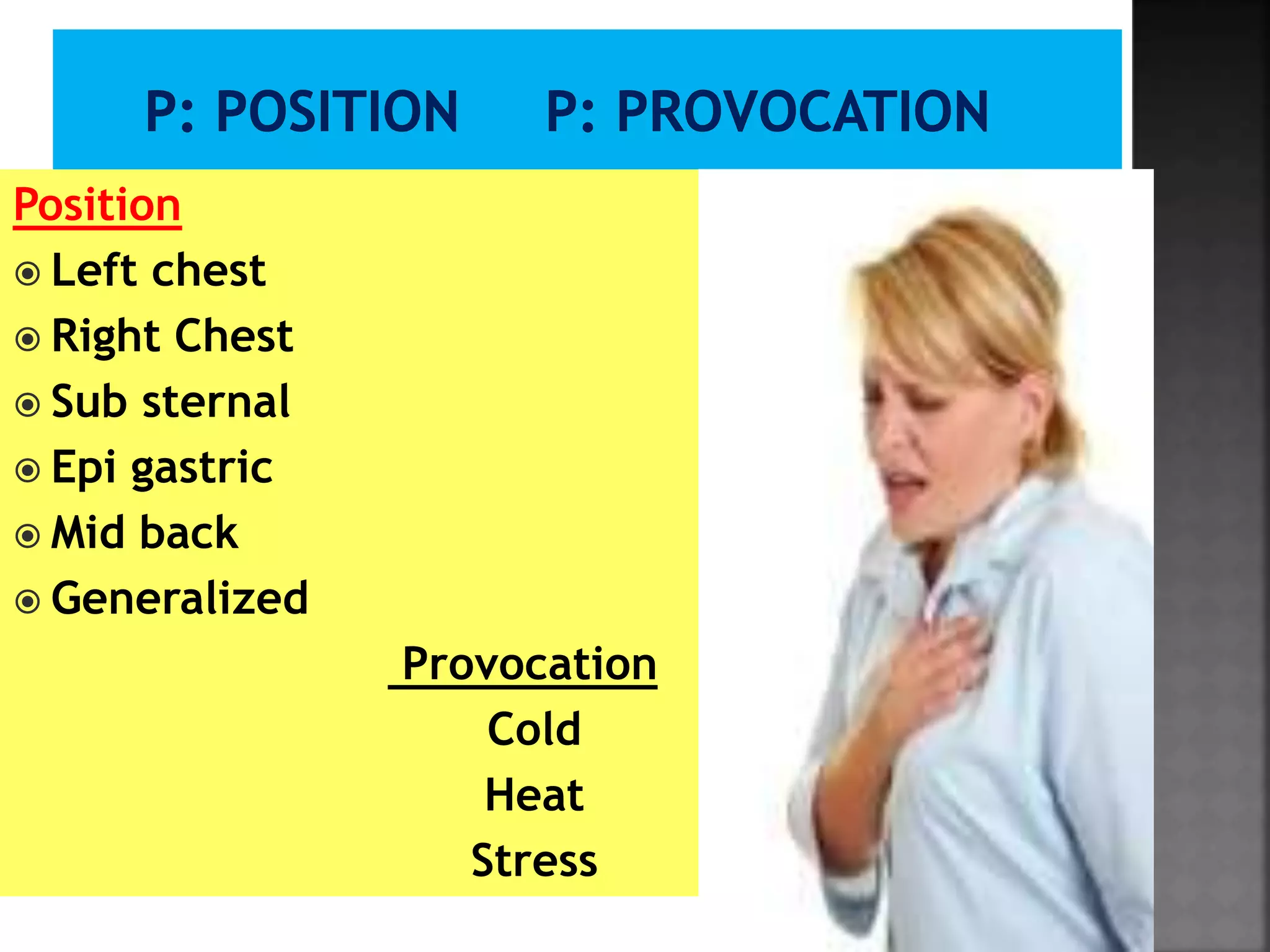
Position
 Left chest
 Right Chest
 Sub sternal
 Epi gastric
 Mid back
 Generalized
Provocation
Cold
Heat
Stress
Pressure/squeezing
Discomfort
Burning
Sharp
Aching
Left/right arm
Neck, Jaw
Anywhere at all
 Nausea vomiting
 Diaphoresis
 Anxiety
 Shortness of breath
 Dizziness
 When did the pain begin?
 When did the pain end?
 Does it come and go?
 Pain scale 0-10 (0 - NO pain to 10 worst
pain or discomfort)
Signs of non cardiac pain
V: Variation
 Variation with deep inspiration
 Pain increased or changed with position
W: Worse
 With palpation
X: eXisting
 Pain lasts a few fleeting seconds
 Costochondritis : painful inflammation of the
cartilage that attaches the ribs to the sternum
Common cause of chest pain in kids and teen.
 Girls more –
 sharp stabbing pain ( like Heart Attack)
 It goes off in 2- 3 days – or last bit longer
 Cause ?? …. related to injury .. physical strain –
heavy lift – exercise --- repeated coughing
 Pain go worse when child take deep breathing –
coughing ..
Other Assessments….
 Why does pain during a heart attack
tend to radiate toward the left side
of the body
 Many organs in the body have very few
specific pain receptors (nociceptors).
 the heart has very few or no nociceptors, the
brain has a difficult time interpreting
irritation as pain.
 The nerves from your heart join with other
organs from the general area and follows the
same nerve pathways to your spinal cord
then to your brain.
 This creates a sensation of generalized
discomfort commonly interpreted as pressure
or a dull ache to the generalized area,
typically the left arm and neck
 Assessments………………
Putting together ……………
What we will do ??????
 Initial Assessment: CAB ……….ABC
 Determine whether the pain may be cardiac ---
the other origin
 Consider -----History
 Presence of CV risk factors
 H/O IHD –
 Previous treatments
 Previous investigations – for chest pain
Determine the cause of Chest Pain
 Brief targeted History – physical assessment
 Admitted before – pneumonia, GB, COPD,
U. Angina,-- DM
 Describe chest pain --- character–
scale –PQRST
 Initiate appropriate intervention
Vital signs: Baseline ----------
• B Cardia----- poor function of heart
• Tachy Cardia – Inadequate perfusion
• ^BP – result of pain --
• ^workload of heart /myocardial O2
requirement
Head to toe assessment : use senses –
--- Look ---Listen ---- Feel—
 Neurological assessment ( brief) ..ask
personal questions , Squeeze your hand, Press feet
against hard surface ( all can be done while checking
VS/monitoring
 Heart …monitoring ---
Rhythm– rate – Auscultation---
 Lungs –Resp effort – dyspnea, /tachypnea
Breath sounds– clear– crackly– wheezing
Pain on inspiration ---
 O2 sat--- >94%
 Abdomen– distended, Bowel movement,
nauzea, vomiting. Pain begin -…
 after eating(GERD)
 relieved by eating
If no definite diagnosis –
treat as of cardiac origin
 Investigations –
 Medications

Chest Pain--- PQRST - Assessment

  • 1.
  • 2.
     Pain isan unpleasant feeling often caused by intense or damaging stimuli  Pain is an unpleasant sensory and emotional experience associated with actual or potential tissue damage, or described in terms of such damage
  • 3.
  • 4.
    O – XFormat
  • 5.
     ABCs-- CAB Age  Vital signs  Oxygen therapy  Cardiac monitoring  History of previous heart conditions  Diabetes  Hypertension  Stroke  Medications
  • 6.
    Position  Left chest Right Chest  Sub sternal  Epi gastric  Mid back  Generalized Provocation Cold Heat Stress
  • 7.
  • 8.
  • 9.
     Nausea vomiting Diaphoresis  Anxiety  Shortness of breath  Dizziness
  • 10.
     When didthe pain begin?  When did the pain end?  Does it come and go?
  • 11.
     Pain scale0-10 (0 - NO pain to 10 worst pain or discomfort) Signs of non cardiac pain
  • 12.
    V: Variation  Variationwith deep inspiration  Pain increased or changed with position W: Worse  With palpation X: eXisting  Pain lasts a few fleeting seconds
  • 13.
     Costochondritis :painful inflammation of the cartilage that attaches the ribs to the sternum Common cause of chest pain in kids and teen.  Girls more –  sharp stabbing pain ( like Heart Attack)  It goes off in 2- 3 days – or last bit longer  Cause ?? …. related to injury .. physical strain – heavy lift – exercise --- repeated coughing  Pain go worse when child take deep breathing – coughing ..
  • 14.
  • 16.
     Why doespain during a heart attack tend to radiate toward the left side of the body
  • 18.
     Many organsin the body have very few specific pain receptors (nociceptors).  the heart has very few or no nociceptors, the brain has a difficult time interpreting irritation as pain.  The nerves from your heart join with other organs from the general area and follows the same nerve pathways to your spinal cord then to your brain.  This creates a sensation of generalized discomfort commonly interpreted as pressure or a dull ache to the generalized area, typically the left arm and neck
  • 19.
     Assessments……………… Putting together…………… What we will do ??????
  • 20.
     Initial Assessment:CAB ……….ABC  Determine whether the pain may be cardiac --- the other origin  Consider -----History  Presence of CV risk factors  H/O IHD –  Previous treatments  Previous investigations – for chest pain
  • 21.
    Determine the causeof Chest Pain  Brief targeted History – physical assessment  Admitted before – pneumonia, GB, COPD, U. Angina,-- DM  Describe chest pain --- character– scale –PQRST  Initiate appropriate intervention
  • 22.
    Vital signs: Baseline---------- • B Cardia----- poor function of heart • Tachy Cardia – Inadequate perfusion • ^BP – result of pain -- • ^workload of heart /myocardial O2 requirement Head to toe assessment : use senses – --- Look ---Listen ---- Feel—
  • 23.
     Neurological assessment( brief) ..ask personal questions , Squeeze your hand, Press feet against hard surface ( all can be done while checking VS/monitoring  Heart …monitoring --- Rhythm– rate – Auscultation---  Lungs –Resp effort – dyspnea, /tachypnea Breath sounds– clear– crackly– wheezing Pain on inspiration ---  O2 sat--- >94%  Abdomen– distended, Bowel movement, nauzea, vomiting. Pain begin -…  after eating(GERD)  relieved by eating
  • 24.
    If no definitediagnosis – treat as of cardiac origin  Investigations –  Medications