NURSING CARE PLAN
ASSESSMENT DIAGNOSIS INFERENCE PLANNING INTERVENTION RATIONALE EVALUATION
SUBJECTIVE:
“Bakit kaya
madalas ako
mahilo?” (Why do I
always feel dizzy?) as
verbalized by the
patient.
OBJECTIVE:
♦ Request for
information.
♦ Agitated
behavior
♦ Inaccurate
follow through
of instructions.
♦ V/S taken as
follows:
T: 37.2
P: 84
R: 18
BP: 180/110
♦ Risk for
prone
behavior
related to
lack of
knowledge
about the
disease
♦ High blood
pressure (HBP)
or hypertension
means high
pressure
(tension) in the
arteries. Arteries
are vessels that
carry blood from
the pumping
heart to all the
tissues and
organs of the
body. High
blood pressure
does not mean
excessive
emotional
tension,
although
emotional
tension and
stress can
temporarily
increase blood
pressure.
Normal blood
pressure is
below 120/80;
blood pressure
between 120/80
and 139/89 is
called "pre-
hypertension",
♦ After 8 hours
of nursing
interventions,
the patient
will verbalize
understanding
of the disease
process and
treatment
regimen.
INDEPENDENT:
♦ Define and state the
limits of desired BP.
Explain
hypertension and its
effect on the heart,
blood vessels,
kidney, and brain.
♦ Assist the patient in
identifying
modifiable risk
factors like diet high
in sodium, saturated
fats and cholesterol.
♦ Reinforce the
importance of
adhering to
treatment regimen
and keeping follow
up appointments.
♦ Suggest frequent
position changes,
leg exercises when
lying down.
♦ Provides basis
for
understanding
elevations of BP,
and clarifies
misconceptions
and also
understanding
that high BP can
exist without
symptom or even
when feeling
well.
♦ These risk
factors have
been shown to
contribute to
hypertension.
♦ Lack of
cooperation is
common reason
for failure of
antihypertensive
therapy.
♦ Decreases
peripheral
venous pooling
that may be
potentiated by
vasodilators and
♦ After 8 hours of
nursing
interventions,
the patient was
able to
verbalize
understanding
of the disease
process and
treatment
regimen.
and a blood
pressure of
140/90 or above
is considered
high. An
elevation of the
systolic and/or
diastolic blood
pressure
increases the
risk of
developing
heart (cardiac)
disease, kidney
(renal) disease,
hardening of the
arteries
(atherosclerosis
or
arteriosclerosis),
eye damage,
and stroke
(brain damage).
These
complications of
hypertension
are often
referred to as
end-organ
damage
because
damage to
these organs is
the end result of
chronic (long
duration) high
blood pressure.
♦ Help patient identify
sources of sodium
intake.
♦ Encourage patient
to decrease or
eliminate caffeine
like in tea, coffee,
cola and chocolates.
♦ Stress importance of
accomplishing daily
rest periods.
COLLABORATIVE:
♦ Provide information
regarding
community
resources, and
support patients in
making lifestyle
changes.
prolonged sitting
or standing.
♦ Two years on
moderate low
salt diet may be
sufficient to
control mild
hypertension.
♦ Caffeine is a
cardiac stimulant
and may
adversely affect
cardiac function.
♦ Alternating rest
and activity
increases
tolerance to
activity
progression.
♦ Community
resources like
health centers
programs and
check ups are
helpful in
controlling
hypertension.

Nursing care plan (hypertension)

  • 1.
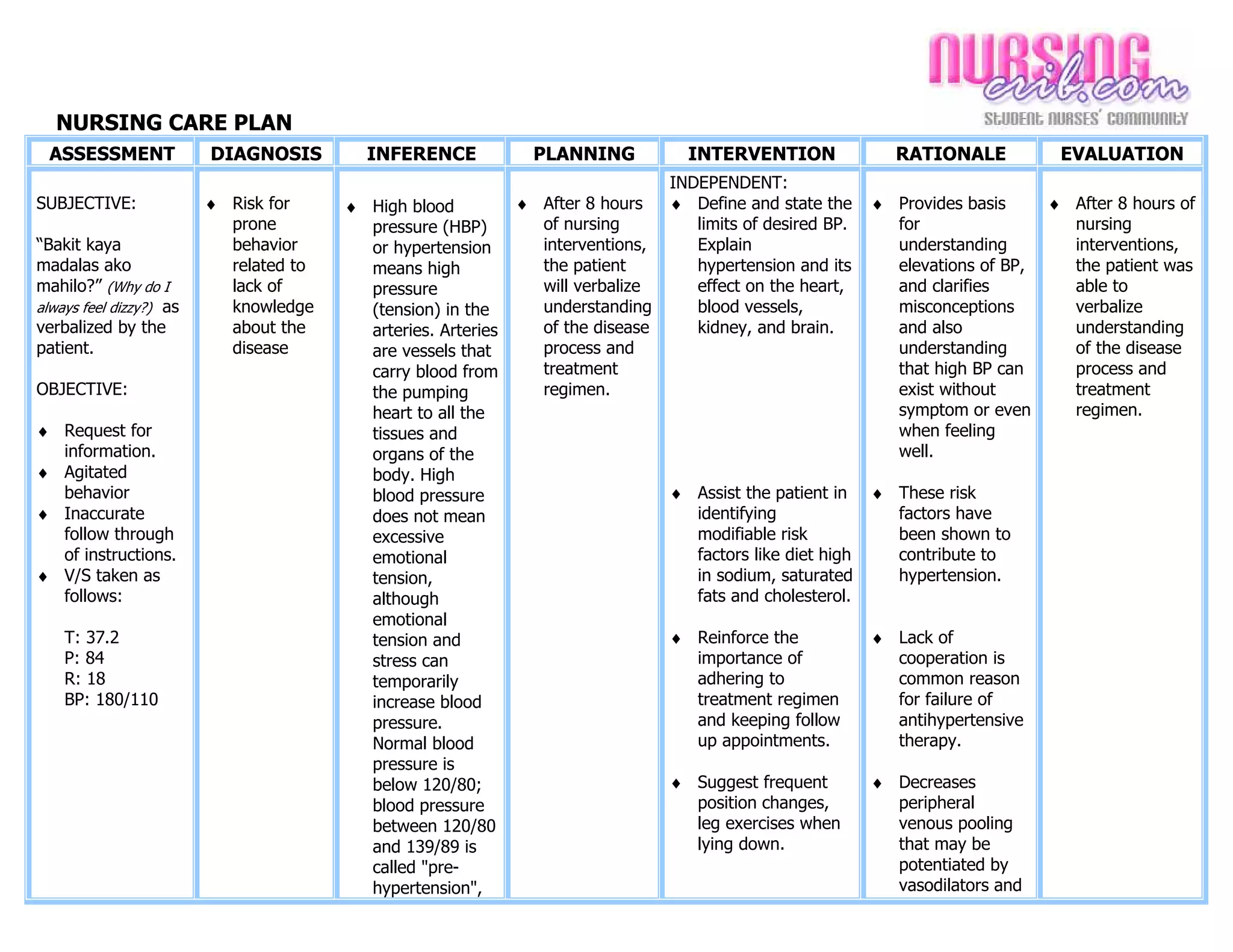
    NURSING CARE PLAN ASSESSMENTDIAGNOSIS INFERENCE PLANNING INTERVENTION RATIONALE EVALUATION SUBJECTIVE: “Bakit kaya madalas ako mahilo?” (Why do I always feel dizzy?) as verbalized by the patient. OBJECTIVE: ♦ Request for information. ♦ Agitated behavior ♦ Inaccurate follow through of instructions. ♦ V/S taken as follows: T: 37.2 P: 84 R: 18 BP: 180/110 ♦ Risk for prone behavior related to lack of knowledge about the disease ♦ High blood pressure (HBP) or hypertension means high pressure (tension) in the arteries. Arteries are vessels that carry blood from the pumping heart to all the tissues and organs of the body. High blood pressure does not mean excessive emotional tension, although emotional tension and stress can temporarily increase blood pressure. Normal blood pressure is below 120/80; blood pressure between 120/80 and 139/89 is called "pre- hypertension", ♦ After 8 hours of nursing interventions, the patient will verbalize understanding of the disease process and treatment regimen. INDEPENDENT: ♦ Define and state the limits of desired BP. Explain hypertension and its effect on the heart, blood vessels, kidney, and brain. ♦ Assist the patient in identifying modifiable risk factors like diet high in sodium, saturated fats and cholesterol. ♦ Reinforce the importance of adhering to treatment regimen and keeping follow up appointments. ♦ Suggest frequent position changes, leg exercises when lying down. ♦ Provides basis for understanding elevations of BP, and clarifies misconceptions and also understanding that high BP can exist without symptom or even when feeling well. ♦ These risk factors have been shown to contribute to hypertension. ♦ Lack of cooperation is common reason for failure of antihypertensive therapy. ♦ Decreases peripheral venous pooling that may be potentiated by vasodilators and ♦ After 8 hours of nursing interventions, the patient was able to verbalize understanding of the disease process and treatment regimen.
  • 2.
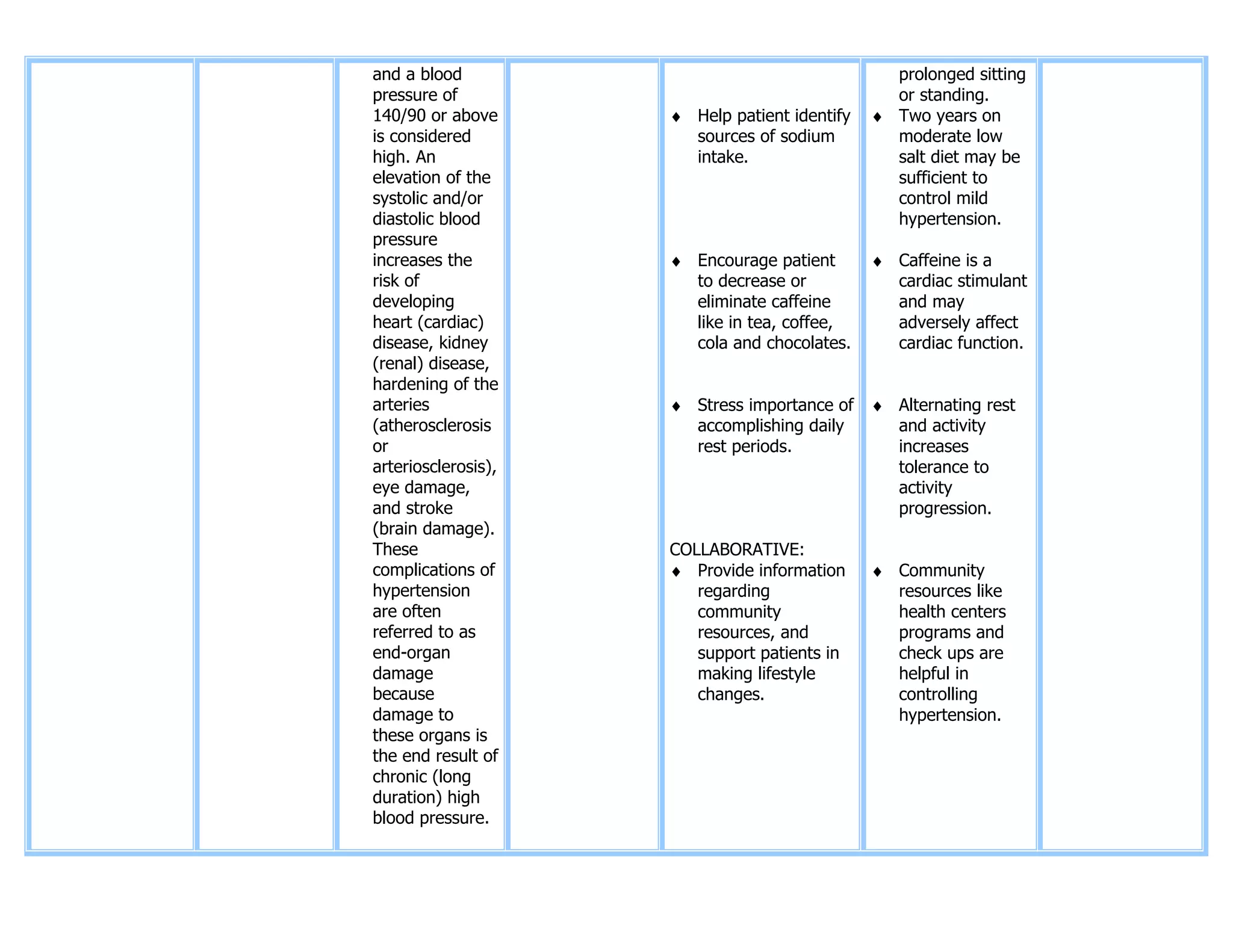
    and a blood pressureof 140/90 or above is considered high. An elevation of the systolic and/or diastolic blood pressure increases the risk of developing heart (cardiac) disease, kidney (renal) disease, hardening of the arteries (atherosclerosis or arteriosclerosis), eye damage, and stroke (brain damage). These complications of hypertension are often referred to as end-organ damage because damage to these organs is the end result of chronic (long duration) high blood pressure. ♦ Help patient identify sources of sodium intake. ♦ Encourage patient to decrease or eliminate caffeine like in tea, coffee, cola and chocolates. ♦ Stress importance of accomplishing daily rest periods. COLLABORATIVE: ♦ Provide information regarding community resources, and support patients in making lifestyle changes. prolonged sitting or standing. ♦ Two years on moderate low salt diet may be sufficient to control mild hypertension. ♦ Caffeine is a cardiac stimulant and may adversely affect cardiac function. ♦ Alternating rest and activity increases tolerance to activity progression. ♦ Community resources like health centers programs and check ups are helpful in controlling hypertension.