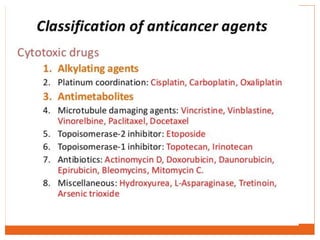
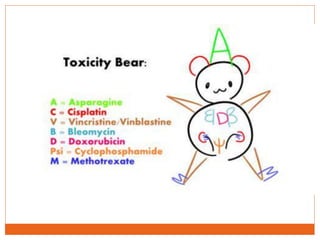
-DR.AKIF A.B
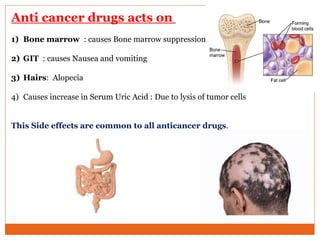
Anti cancer drugs acts on
1) Bone marrow : causes Bone marrow suppression
2) GIT : causes Nausea and vomiting
3) Hairs: Alopecia
4) Causes increase in Serum Uric Acid : Due to lysis of tumor cells
This Side effects are common to all anticancer drugs.
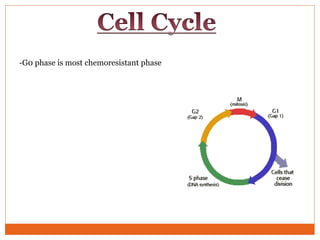
-G0 phase is most chemoresistant phase
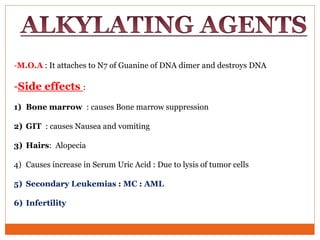
-M.O.A : It attaches to N7 of Guanine of DNA dimer and destroys DNA
-Side effects :
1) Bone marrow : causes Bone marrow suppression
2) GIT : causes Nausea and vomiting
3) Hairs: Alopecia
4) Causes increase in Serum Uric Acid : Due to lysis of tumor cells
5) Secondary Leukemias : MC : AML
6) Infertility
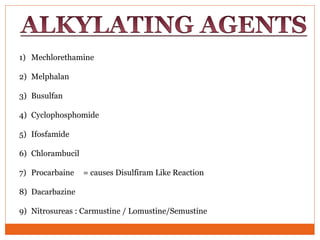
1) Mechlorethamine
2) Melphalan
3) Busulfan
4) Cyclophosphomide
5) Ifosfamide
6) Chlorambucil
7) Procarbaine = causes Disulfiram Like Reaction
8) Dacarbazine
9) Nitrosureas : Carmustine / Lomustine/Semustine
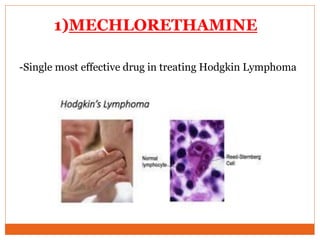
1)MECHLORETHAMINE
-Single most effective drug in treating Hodgkin Lymphoma
-Treatment of choice : ABVD Regimen
A –Adriamycin (Doxorubocin)
B – Bleomycin
V - Vinblastine
D - Dacarbazine
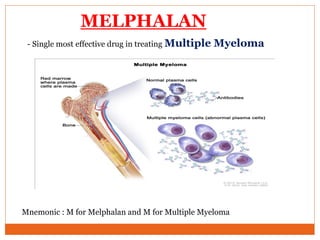
MELPHALAN
- Single most effective drug in treating Multiple Myeloma
Mnemonic : M for Melphalan and M for Multiple Myeloma
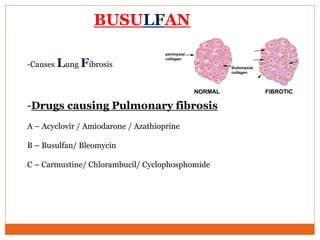
BUSULFAN
-Causes Lung Fibrosis
-Drugs causing Pulmonary fibrosis
A – Acyclovir / Amiodarone / Azathioprine
B – Busulfan/ Bleomycin
C – Carmustine/ Chlorambucil/ Cyclophosphomide
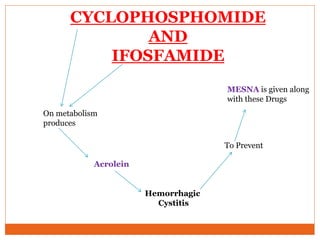
CYCLOPHOSPHOMIDE
AND
IFOSFAMIDE
On metabolism
produces
Acrolein
Hemorrhagic
Cystitis
MESNA is given along
with these Drugs
To Prevent
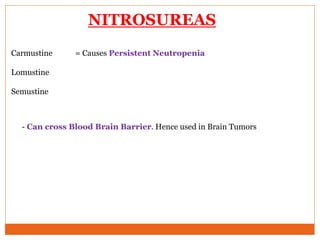
NITROSUREAS
Carmustine = Causes Persistent Neutropenia
Lomustine
Semustine
- Can cross Blood Brain Barrier. Hence used in Brain Tumors
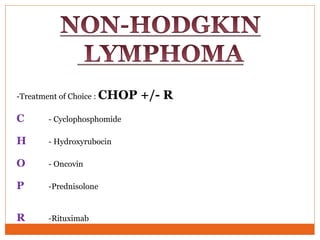
-Treatment of Choice : CHOP +/- R
C - Cyclophosphomide
H - Hydroxyrubocin
O - Oncovin
P -Prednisolone
R -Rituximab
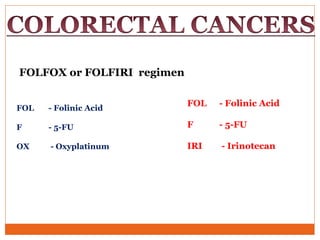
FOLFOX or FOLFIRI regimen
FOL - Folinic Acid
F - 5-FU
OX - Oxyplatinum
FOL - Folinic Acid
F - 5-FU
IRI - Irinotecan
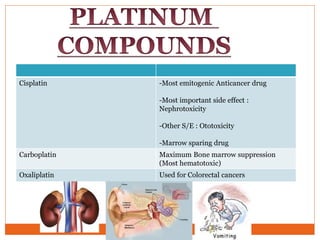
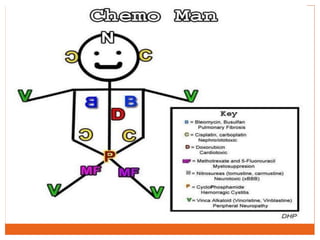
Cisplatin -Most emitogenic Anticancer drug
-Most important side effect :
Nephrotoxicity
-Other S/E : Ototoxicity
-Marrow sparing drug
Carboplatin Maximum Bone marrow suppression
(Most hematotoxic)
Oxaliplatin Used for Colorectal cancers
1) Nephrotoxicity is seen with: (DNB Dec 2010)
A Azathioprine
B Leflunomide
C Mycophenolate mofetil
D Tacrolimus
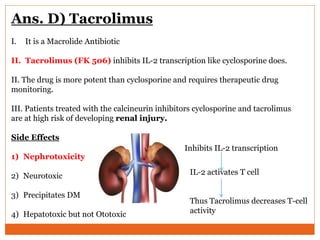
Ans. D) Tacrolimus
I. It is a Macrolide Antibiotic
II. Tacrolimus (FK 506) inhibits IL-2 transcription like cyclosporine does.
II. The drug is more potent than cyclosporine and requires therapeutic drug
monitoring.
III. Patients treated with the calcineurin inhibitors cyclosporine and tacrolimus
are at high risk of developing renal injury.
Side Effects
1) Nephrotoxicity
2) Neurotoxic
3) Precipitates DM
4) Hepatotoxic but not Ototoxic
Inhibits IL-2 transcription
IL-2 activates T cell
Thus Tacrolimus decreases T-cell
activity
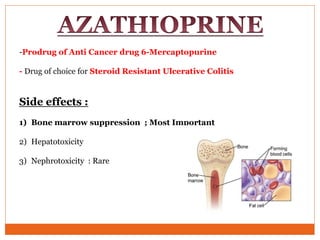
-Prodrug of Anti Cancer drug 6-Mercaptopurine
- Drug of choice for Steroid Resistant Ulcerative Colitis
Side effects :
1) Bone marrow suppression ; Most Important
2) Hepatotoxicity
3) Nephrotoxicity : Rare
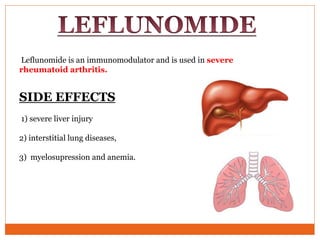
Leflunomide is an immunomodulator and is used in severe
rheumatoid arthritis.
SIDE EFFECTS
1) severe liver injury
2) interstitial lung diseases,
3) myelosupression and anemia.
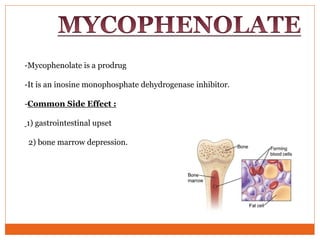
-Mycophenolate is a prodrug
-It is an inosine monophosphate dehydrogenase inhibitor.
-Common Side Effect :
1) gastrointestinal upset
2) bone marrow depression.
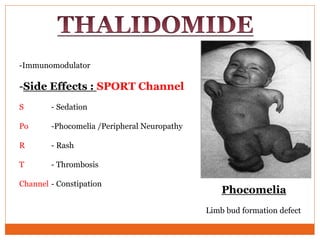
-Immunomodulator
-Side Effects : SPORT Channel
S - Sedation
Po -Phocomelia /Peripheral Neuropathy
R - Rash
T - Thrombosis
Channel - Constipation
Phocomelia
Limb bud formation defect
2. Cerebellar ataxia is caused by (DNB June 2012)
A Arabinofuranosyl cytidine
B Bleomycin
C Cisplatin
D Busulfan
Ans. A Arabinofuranosyl cytidine
Cytarabine (Arabinofuranosyl cytidine) is used intrathecally for meningeal
leukemia.
This can cause cerebellar toxicity – ataxia & slurred speech as well as cerebral
toxicity – seizures, dementia, coma etc.
The other side effects are potent myelosuppression, GIT & mucosal side effects,
dermatitis, reversible rise in LFT & pulmonary side effects.
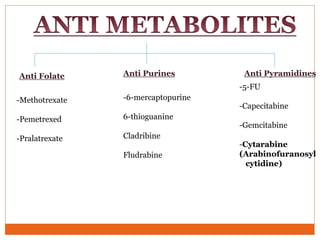
Anti Folate Anti PyramidinesAnti Purines
-Methotrexate
-Pemetrexed
-Pralatrexate
-6-mercaptopurine
6-thioguanine
Cladribine
Fludrabine
-5-FU
-Capecitabine
-Gemcitabine
-Cytarabine
(Arabinofuranosyl
cytidine)
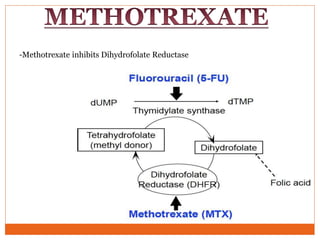
-Methotrexate inhibits Dihydrofolate Reductase
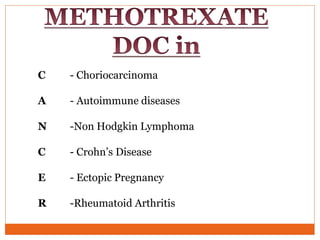
C - Choriocarcinoma
A - Autoimmune diseases
N -Non Hodgkin Lymphoma
C - Crohn’s Disease
E - Ectopic Pregnancy
R -Rheumatoid Arthritis
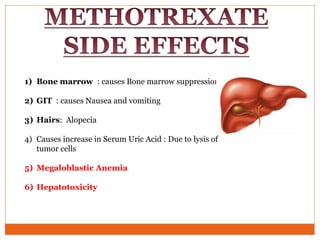
1) Bone marrow : causes Bone marrow suppression
2) GIT : causes Nausea and vomiting
3) Hairs: Alopecia
4) Causes increase in Serum Uric Acid : Due to lysis of
tumor cells
5) Megaloblastic Anemia
6) Hepatotoxicity
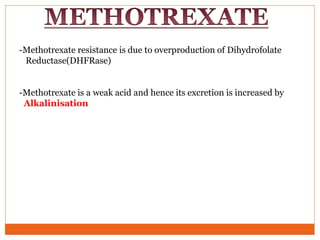
-Methotrexate resistance is due to overproduction of Dihydrofolate
Reductase(DHFRase)
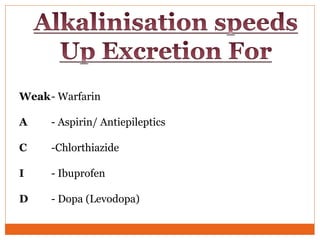
-Methotrexate is a weak acid and hence its excretion is increased by
Alkalinisation
Weak- Warfarin
A - Aspirin/ Antiepileptics
C -Chlorthiazide
I - Ibuprofen
D - Dopa (Levodopa)
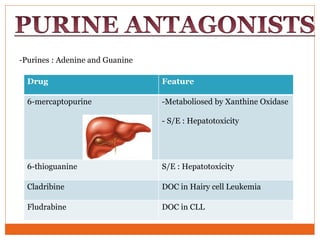
Drug Feature
6-mercaptopurine -Metaboliosed by Xanthine Oxidase
- S/E : Hepatotoxicity
6-thioguanine S/E : Hepatotoxicity
Cladribine DOC in Hairy cell Leukemia
Fludrabine DOC in CLL
-Purines : Adenine and Guanine
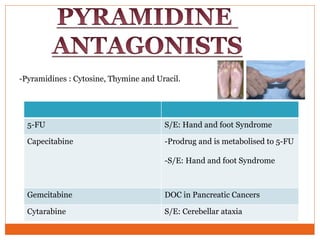
5-FU S/E: Hand and foot Syndrome
Capecitabine -Prodrug and is metabolised to 5-FU
-S/E: Hand and foot Syndrome
Gemcitabine DOC in Pancreatic Cancers
Cytarabine S/E: Cerebellar ataxia
-Pyramidines : Cytosine, Thymine and Uracil.
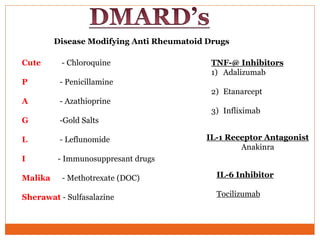
Cute - Chloroquine
P - Penicillamine
A - Azathioprine
G -Gold Salts
L - Leflunomide
I - Immunosuppresant drugs
Malika - Methotrexate (DOC)
Sherawat - Sulfasalazine
TNF-@ Inhibitors
1) Adalizumab
2) Etanarcept
3) Infliximab
IL-1 Receptor Antagonist
Anakinra
IL-6 Inhibitor
Tocilizumab
Disease Modifying Anti Rheumatoid Drugs
3. Which of the following is highly emetogenic:
A Cisplatin
B High dose methotrexate
C High dose cyclophosphamide
D Carboplatin
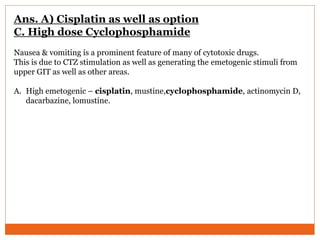
Ans. A) Cisplatin as well as option
C. High dose Cyclophosphamide
Nausea & vomiting is a prominent feature of many of cytotoxic drugs.
This is due to CTZ stimulation as well as generating the emetogenic stimuli from
upper GIT as well as other areas.
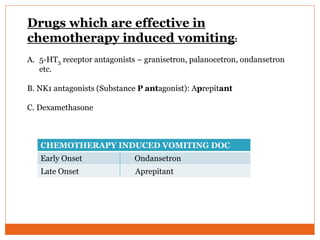
A. High emetogenic – cisplatin, mustine,cyclophosphamide, actinomycin D,
dacarbazine, lomustine.
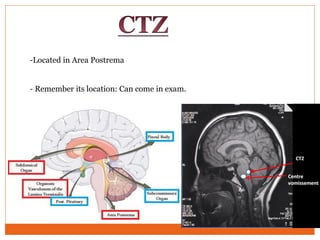
-Located in Area Postrema
- Remember its location: Can come in exam.
Drugs which are effective in
chemotherapy induced vomiting:
A. 5-HT3 receptor antagonists – granisetron, palanocetron, ondansetron
etc.
B. NK1 antagonists (Substance P antagonist): Aprepitant
C. Dexamethasone
CHEMOTHERAPY INDUCED VOMITING DOC
Early Onset Ondansetron
Late Onset Aprepitant
4. Which is not a alkylating agent
A Cyclophosphamide
B Chlorambucil
C 5-FU
D Melphalan
Ans. C 5-FU
5-FU( 5 Fluro Uracil) is a antimetabolite – classified as anti-pyrimidine
compound.
Rest all are alkylating agents – act by formation of active carbonium ion which
damages DNA.
The alkylating agents are further classified as
Nitrogen mustards – mechlorethanamine, cyclophosphamide’s, ifosfamide,
melphalan &chlorambucil
Ethyleneimine & methylmelamines – altretamine & thiotepa
Methyl hydrazine derivatives – procarbazine.
Alkyl sulfonates – busulfan
Nitrosoureas – carmustine, lomustine.
Triazenes – Dacarbazine, temozolomide
Platinum co-ordination complexes – cisplatin, carboplatin and oxiliplatin.
5. Ifosfamide is a (DNB Dec 2012)
A Alkylating agents
B Antimetabolite
C Folate antagonists
D Plant Alkaloids
Ans. A alkylating agent
Ifosfamide is a synthetic isomer of cyclophosphamide.
Importantly, it is not a metabolite of cyclophosphamide.
It causes greater neurotoxicity and cystitis than cyclophosphamide
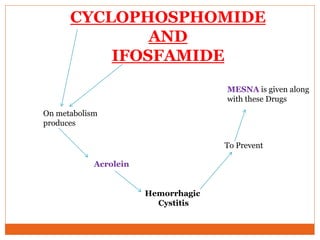
CYCLOPHOSPHOMIDE
AND
IFOSFAMIDE
On metabolism
produces
Acrolein
Hemorrhagic
Cystitis
MESNA is given along
with these Drugs
To Prevent
6. All of the following are side effects of thalidomide except (AIIMS Nov 2009)
A Hypothyroidism
B Diarrhea
C Teratogenicity
D Deep Vein Thrombosis
Ans. B Diarrhea
Thalidomide causes constipation and not diarrhea
The most common adverse effects are sedation and constipation
the most serious one is treatment-emergent peripheral sensory
neuropathy.
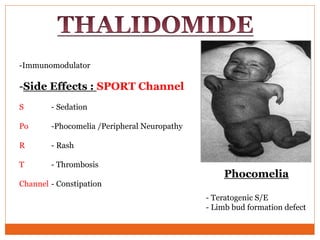
-Immunomodulator
-Side Effects : SPORT Channel
S - Sedation
Po -Phocomelia /Peripheral Neuropathy
R - Rash
T - Thrombosis
Channel - Constipation
Phocomelia
- Teratogenic S/E
- Limb bud formation defect
7.
Which of the following is cell cycle specific
A Ifosfamide
B Bleomycin
C Vinblastine
D Cyclophosphamide
Ans. C Vinblastine
Vinblastine is a M phase specific vinca alkaloid.
It blocks the mitotic spindles and produces metaphase arrest.
Since it produces an interference with chromosomal segregation it is useful in
tumors that are rapidly dividing.
The drug is used in blood and reproductive cancers.
Side effects
nausea, vomiting, myelosupression and bone marrow depression.
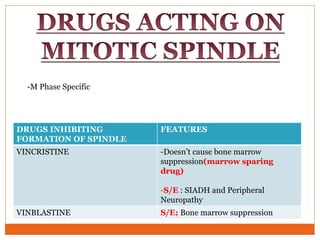
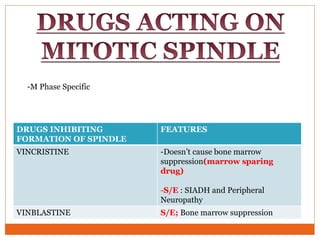
DRUGS INHIBITING
FORMATION OF SPINDLE
FEATURES
VINCRISTINE -Doesn’t cause bone marrow
suppression(marrow sparing
drug)
-S/E : SIADH and Peripheral
Neuropathy
VINBLASTINE S/E; Bone marrow suppression
-M Phase Specific
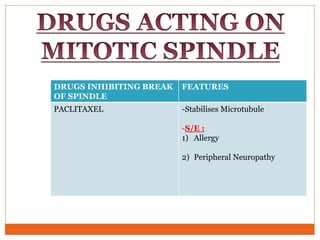
DRUGS INHIBITING BREAK
OF SPINDLE
FEATURES
PACLITAXEL -Stabilises Microtubule
-S/E :
1) Allergy
2) Peripheral Neuropathy
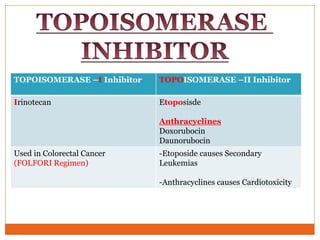
TOPOISOMERASE –I Inhibitor TOPOISOMERASE –II Inhibitor
Irinotecan Etoposisde
Anthracyclines
Doxorubocin
Daunorubocin
Used in Colorectal Cancer
(FOLFORI Regimen)
-Etoposide causes Secondary
Leukemias
-Anthracyclines causes Cardiotoxicity
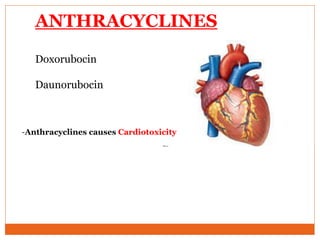
ANTHRACYCLINES
Doxorubocin
Daunorubocin
-Anthracyclines causes Cardiotoxicity
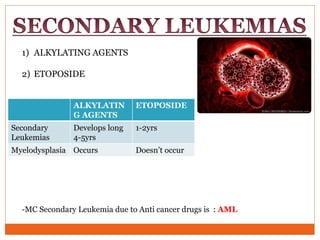
1) ALKYLATING AGENTS
2) ETOPOSIDE
-MC Secondary Leukemia due to Anti cancer drugs is : AML
ALKYLATIN
G AGENTS
ETOPOSIDE
Secondary
Leukemias
Develops long
4-5yrs
1-2yrs
Myelodysplasia Occurs Doesn’t occur
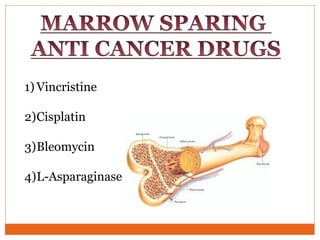
1) Vincristine
2)Cisplatin
3)Bleomycin
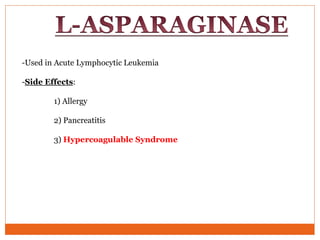
4)L-Asparaginase
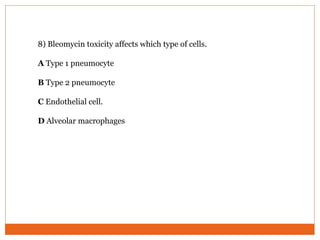
8) Bleomycin toxicity affects which type of cells.
A Type 1 pneumocyte
B Type 2 pneumocyte
C Endothelial cell.
D Alveolar macrophages
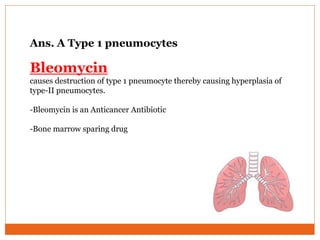
Ans. A Type 1 pneumocytes
Bleomycin
causes destruction of type 1 pneumocyte thereby causing hyperplasia of
type-II pneumocytes.
-Bleomycin is an Anticancer Antibiotic
-Bone marrow sparing drug
-Used in Acute Lymphocytic Leukemia
-Side Effects:
1) Allergy
2) Pancreatitis
3) Hypercoagulable Syndrome
9) ‘Hand Foot’ syndrome can be caused by?
A 5FU
B Vincristine
C Capecitabine
D Mitomycin-C
Ans. A 5FU as well as C. Capecitabine
5-FU can cause hand foot mouth disease. It is given I.V.
Generally, this disease affects infants and children.
Adults with immunodeficiency can also be affected.
Capecitabine is a oral 5FU analog, that obviate the need for I.V.
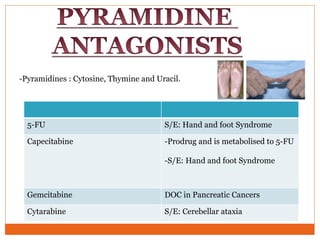
5-FU S/E: Hand and foot Syndrome
Capecitabine -Prodrug and is metabolised to 5-FU
-S/E: Hand and foot Syndrome
Gemcitabine DOC in Pancreatic Cancers
Cytarabine S/E: Cerebellar ataxia
-Pyramidines : Cytosine, Thymine and Uracil.
10) Topical MITOMYCIN-C is used in: (DNB Dec 2009)
A Sturge weber syndrome
B Urinary bladder cancer
C Endoscopic angiofibroma
D Skull base osteomyelitis
Ans. B Urinary bladder cancer
I. Mitomycin is an anti-tumor antibiotic with alkylating agent like property. It is
used in superficial cancer of urinary bladder.
II. The drug has radiomimetic effects, and also sensitizes hypoxic tumor cells to
the effects of hypoxia. Hemolytic uraemic syndrome is a known
complication of mitomycin.
III. The drug also produces bone marrow depression.
The drug of choice for superficial cancer of urinary bladder is BCG
given intravesically.
11) Which of the following statement is false regarding vincristine? (AIIMS May 2012)
A It is an alkaloid
B Its use is associated with neurotoxicity
C It does not cause alopecia
D It is useful drug for induction of remission in acute lymphoblastic leukemia
Ans. C It does not cause alopecia
(Mnemonics :
Vincristine: CNS side effect;
Vinblastine: Blood/Bone marrow side effect)
a. Vincristine is a vinca alkaloid.
Vincristine is very useful for inducing remission in childhood acute leukemia.
b. It is also used for treatment of chronic lymphocytic leukemia and chronic
myelocytic leukemia.
Prominent adverse effects are peripheral neuropathy and alopecia.
DRUGS INHIBITING
FORMATION OF SPINDLE
FEATURES
VINCRISTINE -Doesn’t cause bone marrow
suppression(marrow sparing
drug)
-S/E : SIADH and Peripheral
Neuropathy
VINBLASTINE S/E; Bone marrow suppression
-M Phase Specific
12. Allopurinol should be avoided, or reduced doses should be used if given
with which of the chemotherapeutic agent ?
A Bleomycin
B Cisplatin
C Cyclophosphamide
D Mercaptopurine
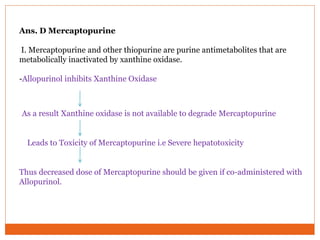
Ans. D Mercaptopurine
I. Mercaptopurine and other thiopurine are purine antimetabolites that are
metabolically inactivated by xanthine oxidase.
-Allopurinol inhibits Xanthine Oxidase
As a result Xanthine oxidase is not available to degrade Mercaptopurine
Leads to Toxicity of Mercaptopurine i.e Severe hepatotoxicity
Thus decreased dose of Mercaptopurine should be given if co-administered with
Allopurinol.
13. AMIFOSTINE is protective to to all except:
A Salivary gland
B Skin
C CNS
D GIT
Ans. C) CNS
-Amifostine is a cytoprotective drug .
-It doesn’t cross Blood Brain Barrier. Hence is not protective to CNS.
-Amifostine is protective to salivary glands (reduces xerostomia) and GIT
(prevents esophagitis).
-Its xerostomia preventing action can also be considered to be protective to
skin.
14. Which of the following causes persistent leucopenia? (AIIMS Nov 2011)
A Cisplatin
B Vinblastin
C Doxorubicin
D Carmustine
D Carmustine
NITROSUREAS
Carmustine = Causes Persistent Neutropenia
Lomustine
Semustine
- Can cross Blood Brain Barrier. Hence used in Brain Tumors
15. Temozolomide is a (DNB June 2011)
A Carbonic anhydrase inhibitor
B Alkylating agent
C Anti metabolite
D Tyrosine kinase inhibitor
Ans. B Alkylating agents
- Temozolomide is a Newer alkyalting agent
- It can cross BBB , hence used for brain cancer (anaplastic astrocytoma
and glioblastoma multiforme)
- commonly used oral and intravenous
S/E: Nausea, vomiting, headache, constipation , myelosuppression
16. SIADH is caused by the following drugs except?
A Vincristine
B Vinblastine
C Actinomycin D
D Cyclophosphamide
Ans. C Actinomycin D
Drugs Causing SIADH
1. Intravenous cyclophosphamide
2. Carbamazepine
3. Vincristine or vinblastine
4. Phenothiazines
5. Haloperidol
6. Tricyclic antidepressants or serotonin-reuptake inhibitors
7. Monoamine oxidase inhibitors
8. Bromocriptine
9. Clofibrate
10. Narcotics, opiate derivatives
17. Alkalinisation of urine ameliorates the toxicity of which of the
following drugs? (AIIMS May 2009)
A Arabinoside-cytosine
B Ifosfamide
C Cisplatin
D Methotrexate
-Methotrexate resistance is due to overproduction of Dihydrofolate
Reductase(DHFRase)
-Methotrexate is a weak acid and hence its excretion is increased by
Alkalinisation
Weak- Warfarin
A - Aspirin/ Antiepileptics
C -Chlorthiazide
I - Ibuprofen
D - Dopa (Levodopa)
18) Which anticancer drug causes hypercoagulable syndrome?
A 5-FU
B L-asparaginase
C Melphalan
D Carmustine
-Used in Acute Lymphocytic Leukemia
-Side Effects:
1) Allergy
2) Pancreatitis
3) Hypercoagulable Syndrome
19. Methotrexate resistance is due to:
A Depletion of Folate
B Overproduction of DHFRase
C Overproduction of Thymidylate kinase
D Decreased DHFRase
Ans. B Overproduction of DHFRase
Mechanisms of methotrexate resistance
I. Impaired transport of methotrexate into cells
II. Production of altered forms of DHFR that have decreased affinity for the
inhibitor
III. Increased concentrations of intracellular DHFR through gene amplification or
altered gene regulation
IV. Decreased ability to synthesize methotrexate polyglutamates
V. Increased expression of a drug efflux transporter, of the MRP (multidrug
resistance protein) class.
21. High dose methotrexate is given in:
A Osteosarcoma
B Colon Cancer
C Retinoblastoma
D Ewing's sarcoma
Ans. A Osteosarcoma
Drugs effective in osteosarcoma are: .
doxorubicin,
ifosfamide,
cisplatin, and
high-dose methotrexate with leucovorin.
Osteosarcoma is radioresistant; radiation therapy has no role in the routine
management.
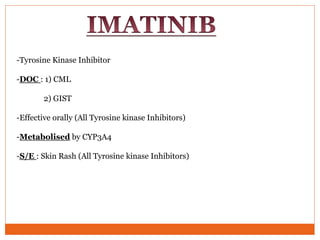
-Tyrosine Kinase Inhibitor
-DOC : 1) CML
2) GIST
-Effective orally (All Tyrosine kinase Inhibitors)
-Metabolised by CYP3A4
-S/E : Skin Rash (All Tyrosine kinase Inhibitors)
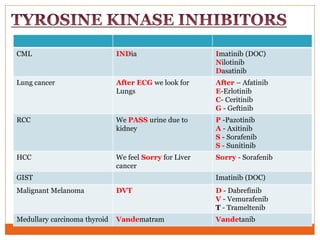
CML INDia Imatinib (DOC)
Nilotinib
Dasatinib
Lung cancer After ECG we look for
Lungs
After – Afatinib
E-Erlotinib
C- Ceritinib
G - Geftinib
RCC We PASS urine due to
kidney
P -Pazotinib
A - Axitinib
S - Sorafenib
S - Sunitinib
HCC We feel Sorry for Liver
cancer
Sorry - Sorafenib
GIST Imatinib (DOC)
Malignant Melanoma DVT D - Dabrefinib
V - Vemurafenib
T - Trameltenib
Medullary carcinoma thyroid Vandematram Vandetanib
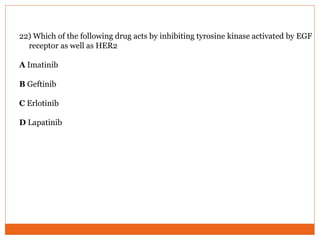
22) Which of the following drug acts by inhibiting tyrosine kinase activated by EGF
receptor as well as HER2
A Imatinib
B Geftinib
C Erlotinib
D Lapatinib
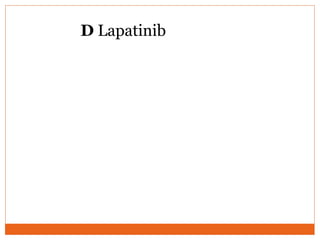
D Lapatinib
23) Paclitaxel acts by (DNB June 2011)
A Topoisomerase inhibitor
B Inhibition of Microtubule formation
C Mitotic cell inhibitor
D Exaggerates polymerization and causes the stabilization of the microtubules
Ans. D Exaggerates polymerization and causes the stabilization of the
microtubules
II. It enhances polymerization of tubulin: a mechanism opposite to that of vinca
alkaloids.
III. The microtubules are stabilized and their depolymerization is prevented.
IV. This stability results in inhibition of normal dynamic reorganization of the
microtubule network that is essential for vital interphase and mitotic functions.
V. Abnormal arrays or ‘bundles’ of microtubules are produced throughout the
cell cycle.
24. ATRA is useful in the treatment of which of the following type of AML?
(AIIMS Nov 2012)
A Monocytic leukemia
B Myelomonocytic leukemia
C Promyelocytic leukemia
D Erythro leukemic leukemia
Ans. C Acute Promyelocytic leukemia {APL}
Treatment of promyelocytic leukemia is by tretinoin.
It is an oral drug that induces the differentiation of leukemia cells bearing the t
(15,17)
It is not effective in other forms of AML.
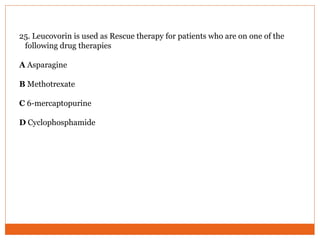
25. Leucovorin is used as Rescue therapy for patients who are on one of the
following drug therapies
A Asparagine
B Methotrexate
C 6-mercaptopurine
D Cyclophosphamide
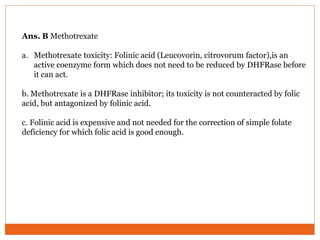
Ans. B Methotrexate
a. Methotrexate toxicity: Folinic acid (Leucovorin, citrovorum factor),is an
active coenzyme form which does not need to be reduced by DHFRase before
it can act.
b. Methotrexate is a DHFRase inhibitor; its toxicity is not counteracted by folic
acid, but antagonized by folinic acid.
c. Folinic acid is expensive and not needed for the correction of simple folate
deficiency for which folic acid is good enough.
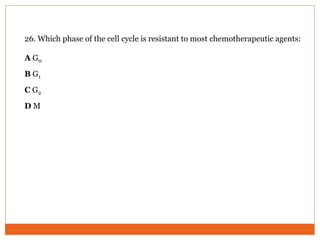
26. Which phase of the cell cycle is resistant to most chemotherapeutic agents:
A G0
B G1
C G2
D M
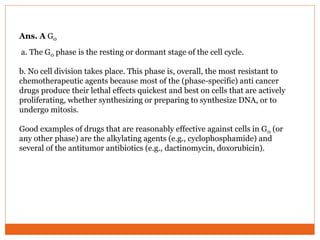
Ans. A G0
a. The G0 phase is the resting or dormant stage of the cell cycle.
b. No cell division takes place. This phase is, overall, the most resistant to
chemotherapeutic agents because most of the (phase-specific) anti cancer
drugs produce their lethal effects quickest and best on cells that are actively
proliferating, whether synthesizing or preparing to synthesize DNA, or to
undergo mitosis.
Good examples of drugs that are reasonably effective against cells in G0 (or
any other phase) are the alkylating agents (e.g., cyclophosphamide) and
several of the antitumor antibiotics (e.g., dactinomycin, doxorubicin).
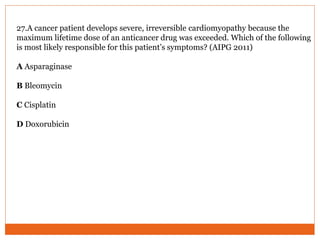
27.A cancer patient develops severe, irreversible cardiomyopathy because the
maximum lifetime dose of an anticancer drug was exceeded. Which of the following
is most likely responsible for this patient’s symptoms? (AIPG 2011)
A Asparaginase
B Bleomycin
C Cisplatin
D Doxorubicin
Ans. D Doxorubicin
I. Doxorubicin, an antitumor antibiotic, is cardiotoxic, and the risk for and
severity of cardiomyopathy is dose-related.
II. [There is a maximum recommended lifetime (cumulative) dose for this
drug, and if it exceed the risk of cardiac damage rises significantly]
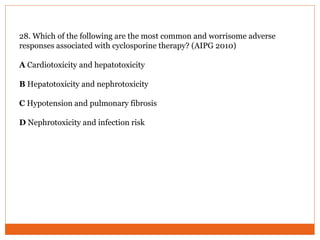
28. Which of the following are the most common and worrisome adverse
responses associated with cyclosporine therapy? (AIPG 2010)
A Cardiotoxicity and hepatotoxicity
B Hepatotoxicity and nephrotoxicity
C Hypotension and pulmonary fibrosis
D Nephrotoxicity and infection risk
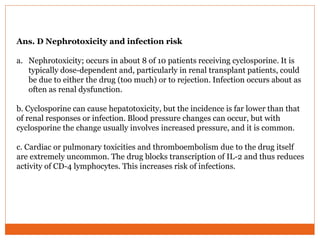
Ans. D Nephrotoxicity and infection risk
a. Nephrotoxicity; occurs in about 8 of 10 patients receiving cyclosporine. It is
typically dose-dependent and, particularly in renal transplant patients, could
be due to either the drug (too much) or to rejection. Infection occurs about as
often as renal dysfunction.
b. Cyclosporine can cause hepatotoxicity, but the incidence is far lower than that
of renal responses or infection. Blood pressure changes can occur, but with
cyclosporine the change usually involves increased pressure, and it is common.
c. Cardiac or pulmonary toxicities and thromboembolism due to the drug itself
are extremely uncommon. The drug blocks transcription of IL-2 and thus reduces
activity of CD-4 lymphocytes. This increases risk of infections.
Chemotherapy
Chemotherapy
Chemotherapy

Chemotherapy

  • 1.
  • 2.
    Anti cancer drugsacts on 1) Bone marrow : causes Bone marrow suppression 2) GIT : causes Nausea and vomiting 3) Hairs: Alopecia 4) Causes increase in Serum Uric Acid : Due to lysis of tumor cells This Side effects are common to all anticancer drugs.
  • 3.
    -G0 phase ismost chemoresistant phase
  • 5.
    -M.O.A : Itattaches to N7 of Guanine of DNA dimer and destroys DNA -Side effects : 1) Bone marrow : causes Bone marrow suppression 2) GIT : causes Nausea and vomiting 3) Hairs: Alopecia 4) Causes increase in Serum Uric Acid : Due to lysis of tumor cells 5) Secondary Leukemias : MC : AML 6) Infertility
  • 6.
    1) Mechlorethamine 2) Melphalan 3)Busulfan 4) Cyclophosphomide 5) Ifosfamide 6) Chlorambucil 7) Procarbaine = causes Disulfiram Like Reaction 8) Dacarbazine 9) Nitrosureas : Carmustine / Lomustine/Semustine
  • 7.
    1)MECHLORETHAMINE -Single most effectivedrug in treating Hodgkin Lymphoma
  • 8.
    -Treatment of choice: ABVD Regimen A –Adriamycin (Doxorubocin) B – Bleomycin V - Vinblastine D - Dacarbazine
  • 9.
    MELPHALAN - Single mosteffective drug in treating Multiple Myeloma Mnemonic : M for Melphalan and M for Multiple Myeloma
  • 10.
    BUSULFAN -Causes Lung Fibrosis -Drugscausing Pulmonary fibrosis A – Acyclovir / Amiodarone / Azathioprine B – Busulfan/ Bleomycin C – Carmustine/ Chlorambucil/ Cyclophosphomide
  • 11.
  • 12.
    NITROSUREAS Carmustine = CausesPersistent Neutropenia Lomustine Semustine - Can cross Blood Brain Barrier. Hence used in Brain Tumors
  • 13.
    -Treatment of Choice: CHOP +/- R C - Cyclophosphomide H - Hydroxyrubocin O - Oncovin P -Prednisolone R -Rituximab
  • 14.
    FOLFOX or FOLFIRIregimen FOL - Folinic Acid F - 5-FU OX - Oxyplatinum FOL - Folinic Acid F - 5-FU IRI - Irinotecan
  • 15.
    Cisplatin -Most emitogenicAnticancer drug -Most important side effect : Nephrotoxicity -Other S/E : Ototoxicity -Marrow sparing drug Carboplatin Maximum Bone marrow suppression (Most hematotoxic) Oxaliplatin Used for Colorectal cancers
  • 16.
    1) Nephrotoxicity isseen with: (DNB Dec 2010) A Azathioprine B Leflunomide C Mycophenolate mofetil D Tacrolimus
  • 17.
    Ans. D) Tacrolimus I.It is a Macrolide Antibiotic II. Tacrolimus (FK 506) inhibits IL-2 transcription like cyclosporine does. II. The drug is more potent than cyclosporine and requires therapeutic drug monitoring. III. Patients treated with the calcineurin inhibitors cyclosporine and tacrolimus are at high risk of developing renal injury. Side Effects 1) Nephrotoxicity 2) Neurotoxic 3) Precipitates DM 4) Hepatotoxic but not Ototoxic Inhibits IL-2 transcription IL-2 activates T cell Thus Tacrolimus decreases T-cell activity
  • 18.
    -Prodrug of AntiCancer drug 6-Mercaptopurine - Drug of choice for Steroid Resistant Ulcerative Colitis Side effects : 1) Bone marrow suppression ; Most Important 2) Hepatotoxicity 3) Nephrotoxicity : Rare
  • 19.
    Leflunomide is animmunomodulator and is used in severe rheumatoid arthritis. SIDE EFFECTS 1) severe liver injury 2) interstitial lung diseases, 3) myelosupression and anemia.
  • 20.
    -Mycophenolate is aprodrug -It is an inosine monophosphate dehydrogenase inhibitor. -Common Side Effect : 1) gastrointestinal upset 2) bone marrow depression.
  • 21.
    -Immunomodulator -Side Effects :SPORT Channel S - Sedation Po -Phocomelia /Peripheral Neuropathy R - Rash T - Thrombosis Channel - Constipation Phocomelia Limb bud formation defect
  • 22.
    2. Cerebellar ataxiais caused by (DNB June 2012) A Arabinofuranosyl cytidine B Bleomycin C Cisplatin D Busulfan
  • 23.
    Ans. A Arabinofuranosylcytidine Cytarabine (Arabinofuranosyl cytidine) is used intrathecally for meningeal leukemia. This can cause cerebellar toxicity – ataxia & slurred speech as well as cerebral toxicity – seizures, dementia, coma etc. The other side effects are potent myelosuppression, GIT & mucosal side effects, dermatitis, reversible rise in LFT & pulmonary side effects.
  • 24.
    Anti Folate AntiPyramidinesAnti Purines -Methotrexate -Pemetrexed -Pralatrexate -6-mercaptopurine 6-thioguanine Cladribine Fludrabine -5-FU -Capecitabine -Gemcitabine -Cytarabine (Arabinofuranosyl cytidine)
  • 25.
  • 26.
    C - Choriocarcinoma A- Autoimmune diseases N -Non Hodgkin Lymphoma C - Crohn’s Disease E - Ectopic Pregnancy R -Rheumatoid Arthritis
  • 27.
    1) Bone marrow: causes Bone marrow suppression 2) GIT : causes Nausea and vomiting 3) Hairs: Alopecia 4) Causes increase in Serum Uric Acid : Due to lysis of tumor cells 5) Megaloblastic Anemia 6) Hepatotoxicity
  • 28.
    -Methotrexate resistance isdue to overproduction of Dihydrofolate Reductase(DHFRase) -Methotrexate is a weak acid and hence its excretion is increased by Alkalinisation
  • 29.
    Weak- Warfarin A -Aspirin/ Antiepileptics C -Chlorthiazide I - Ibuprofen D - Dopa (Levodopa)
  • 30.
    Drug Feature 6-mercaptopurine -Metaboliosedby Xanthine Oxidase - S/E : Hepatotoxicity 6-thioguanine S/E : Hepatotoxicity Cladribine DOC in Hairy cell Leukemia Fludrabine DOC in CLL -Purines : Adenine and Guanine
  • 31.
    5-FU S/E: Handand foot Syndrome Capecitabine -Prodrug and is metabolised to 5-FU -S/E: Hand and foot Syndrome Gemcitabine DOC in Pancreatic Cancers Cytarabine S/E: Cerebellar ataxia -Pyramidines : Cytosine, Thymine and Uracil.
  • 32.
    Cute - Chloroquine P- Penicillamine A - Azathioprine G -Gold Salts L - Leflunomide I - Immunosuppresant drugs Malika - Methotrexate (DOC) Sherawat - Sulfasalazine TNF-@ Inhibitors 1) Adalizumab 2) Etanarcept 3) Infliximab IL-1 Receptor Antagonist Anakinra IL-6 Inhibitor Tocilizumab Disease Modifying Anti Rheumatoid Drugs
  • 33.
    3. Which ofthe following is highly emetogenic: A Cisplatin B High dose methotrexate C High dose cyclophosphamide D Carboplatin
  • 34.
    Ans. A) Cisplatinas well as option C. High dose Cyclophosphamide Nausea & vomiting is a prominent feature of many of cytotoxic drugs. This is due to CTZ stimulation as well as generating the emetogenic stimuli from upper GIT as well as other areas. A. High emetogenic – cisplatin, mustine,cyclophosphamide, actinomycin D, dacarbazine, lomustine.
  • 35.
    -Located in AreaPostrema - Remember its location: Can come in exam.
  • 36.
    Drugs which areeffective in chemotherapy induced vomiting: A. 5-HT3 receptor antagonists – granisetron, palanocetron, ondansetron etc. B. NK1 antagonists (Substance P antagonist): Aprepitant C. Dexamethasone CHEMOTHERAPY INDUCED VOMITING DOC Early Onset Ondansetron Late Onset Aprepitant
  • 37.
    4. Which isnot a alkylating agent A Cyclophosphamide B Chlorambucil C 5-FU D Melphalan
  • 38.
    Ans. C 5-FU 5-FU(5 Fluro Uracil) is a antimetabolite – classified as anti-pyrimidine compound. Rest all are alkylating agents – act by formation of active carbonium ion which damages DNA. The alkylating agents are further classified as Nitrogen mustards – mechlorethanamine, cyclophosphamide’s, ifosfamide, melphalan &chlorambucil Ethyleneimine & methylmelamines – altretamine & thiotepa Methyl hydrazine derivatives – procarbazine. Alkyl sulfonates – busulfan Nitrosoureas – carmustine, lomustine. Triazenes – Dacarbazine, temozolomide Platinum co-ordination complexes – cisplatin, carboplatin and oxiliplatin.
  • 39.
    5. Ifosfamide isa (DNB Dec 2012) A Alkylating agents B Antimetabolite C Folate antagonists D Plant Alkaloids
  • 40.
    Ans. A alkylatingagent Ifosfamide is a synthetic isomer of cyclophosphamide. Importantly, it is not a metabolite of cyclophosphamide. It causes greater neurotoxicity and cystitis than cyclophosphamide
  • 41.
  • 42.
    6. All ofthe following are side effects of thalidomide except (AIIMS Nov 2009) A Hypothyroidism B Diarrhea C Teratogenicity D Deep Vein Thrombosis
  • 43.
    Ans. B Diarrhea Thalidomidecauses constipation and not diarrhea The most common adverse effects are sedation and constipation the most serious one is treatment-emergent peripheral sensory neuropathy.
  • 44.
    -Immunomodulator -Side Effects :SPORT Channel S - Sedation Po -Phocomelia /Peripheral Neuropathy R - Rash T - Thrombosis Channel - Constipation Phocomelia - Teratogenic S/E - Limb bud formation defect
  • 45.
    7. Which of thefollowing is cell cycle specific A Ifosfamide B Bleomycin C Vinblastine D Cyclophosphamide
  • 46.
    Ans. C Vinblastine Vinblastineis a M phase specific vinca alkaloid. It blocks the mitotic spindles and produces metaphase arrest. Since it produces an interference with chromosomal segregation it is useful in tumors that are rapidly dividing. The drug is used in blood and reproductive cancers. Side effects nausea, vomiting, myelosupression and bone marrow depression.
  • 47.
    DRUGS INHIBITING FORMATION OFSPINDLE FEATURES VINCRISTINE -Doesn’t cause bone marrow suppression(marrow sparing drug) -S/E : SIADH and Peripheral Neuropathy VINBLASTINE S/E; Bone marrow suppression -M Phase Specific
  • 48.
    DRUGS INHIBITING BREAK OFSPINDLE FEATURES PACLITAXEL -Stabilises Microtubule -S/E : 1) Allergy 2) Peripheral Neuropathy
  • 49.
    TOPOISOMERASE –I InhibitorTOPOISOMERASE –II Inhibitor Irinotecan Etoposisde Anthracyclines Doxorubocin Daunorubocin Used in Colorectal Cancer (FOLFORI Regimen) -Etoposide causes Secondary Leukemias -Anthracyclines causes Cardiotoxicity
  • 50.
  • 51.
    1) ALKYLATING AGENTS 2)ETOPOSIDE -MC Secondary Leukemia due to Anti cancer drugs is : AML ALKYLATIN G AGENTS ETOPOSIDE Secondary Leukemias Develops long 4-5yrs 1-2yrs Myelodysplasia Occurs Doesn’t occur
  • 52.
  • 53.
    8) Bleomycin toxicityaffects which type of cells. A Type 1 pneumocyte B Type 2 pneumocyte C Endothelial cell. D Alveolar macrophages
  • 54.
    Ans. A Type1 pneumocytes Bleomycin causes destruction of type 1 pneumocyte thereby causing hyperplasia of type-II pneumocytes. -Bleomycin is an Anticancer Antibiotic -Bone marrow sparing drug
  • 55.
    -Used in AcuteLymphocytic Leukemia -Side Effects: 1) Allergy 2) Pancreatitis 3) Hypercoagulable Syndrome
  • 56.
    9) ‘Hand Foot’syndrome can be caused by? A 5FU B Vincristine C Capecitabine D Mitomycin-C
  • 57.
    Ans. A 5FUas well as C. Capecitabine 5-FU can cause hand foot mouth disease. It is given I.V. Generally, this disease affects infants and children. Adults with immunodeficiency can also be affected. Capecitabine is a oral 5FU analog, that obviate the need for I.V.
  • 58.
    5-FU S/E: Handand foot Syndrome Capecitabine -Prodrug and is metabolised to 5-FU -S/E: Hand and foot Syndrome Gemcitabine DOC in Pancreatic Cancers Cytarabine S/E: Cerebellar ataxia -Pyramidines : Cytosine, Thymine and Uracil.
  • 59.
    10) Topical MITOMYCIN-Cis used in: (DNB Dec 2009) A Sturge weber syndrome B Urinary bladder cancer C Endoscopic angiofibroma D Skull base osteomyelitis
  • 60.
    Ans. B Urinarybladder cancer I. Mitomycin is an anti-tumor antibiotic with alkylating agent like property. It is used in superficial cancer of urinary bladder. II. The drug has radiomimetic effects, and also sensitizes hypoxic tumor cells to the effects of hypoxia. Hemolytic uraemic syndrome is a known complication of mitomycin. III. The drug also produces bone marrow depression. The drug of choice for superficial cancer of urinary bladder is BCG given intravesically.
  • 61.
    11) Which ofthe following statement is false regarding vincristine? (AIIMS May 2012) A It is an alkaloid B Its use is associated with neurotoxicity C It does not cause alopecia D It is useful drug for induction of remission in acute lymphoblastic leukemia
  • 62.
    Ans. C Itdoes not cause alopecia (Mnemonics : Vincristine: CNS side effect; Vinblastine: Blood/Bone marrow side effect) a. Vincristine is a vinca alkaloid. Vincristine is very useful for inducing remission in childhood acute leukemia. b. It is also used for treatment of chronic lymphocytic leukemia and chronic myelocytic leukemia. Prominent adverse effects are peripheral neuropathy and alopecia.
  • 63.
    DRUGS INHIBITING FORMATION OFSPINDLE FEATURES VINCRISTINE -Doesn’t cause bone marrow suppression(marrow sparing drug) -S/E : SIADH and Peripheral Neuropathy VINBLASTINE S/E; Bone marrow suppression -M Phase Specific
  • 64.
    12. Allopurinol shouldbe avoided, or reduced doses should be used if given with which of the chemotherapeutic agent ? A Bleomycin B Cisplatin C Cyclophosphamide D Mercaptopurine
  • 65.
    Ans. D Mercaptopurine I.Mercaptopurine and other thiopurine are purine antimetabolites that are metabolically inactivated by xanthine oxidase. -Allopurinol inhibits Xanthine Oxidase As a result Xanthine oxidase is not available to degrade Mercaptopurine Leads to Toxicity of Mercaptopurine i.e Severe hepatotoxicity Thus decreased dose of Mercaptopurine should be given if co-administered with Allopurinol.
  • 66.
    13. AMIFOSTINE isprotective to to all except: A Salivary gland B Skin C CNS D GIT
  • 67.
    Ans. C) CNS -Amifostineis a cytoprotective drug . -It doesn’t cross Blood Brain Barrier. Hence is not protective to CNS. -Amifostine is protective to salivary glands (reduces xerostomia) and GIT (prevents esophagitis). -Its xerostomia preventing action can also be considered to be protective to skin.
  • 68.
    14. Which ofthe following causes persistent leucopenia? (AIIMS Nov 2011) A Cisplatin B Vinblastin C Doxorubicin D Carmustine
  • 69.
    D Carmustine NITROSUREAS Carmustine =Causes Persistent Neutropenia Lomustine Semustine - Can cross Blood Brain Barrier. Hence used in Brain Tumors
  • 70.
    15. Temozolomide isa (DNB June 2011) A Carbonic anhydrase inhibitor B Alkylating agent C Anti metabolite D Tyrosine kinase inhibitor
  • 71.
    Ans. B Alkylatingagents - Temozolomide is a Newer alkyalting agent - It can cross BBB , hence used for brain cancer (anaplastic astrocytoma and glioblastoma multiforme) - commonly used oral and intravenous S/E: Nausea, vomiting, headache, constipation , myelosuppression
  • 72.
    16. SIADH iscaused by the following drugs except? A Vincristine B Vinblastine C Actinomycin D D Cyclophosphamide
  • 73.
    Ans. C ActinomycinD Drugs Causing SIADH 1. Intravenous cyclophosphamide 2. Carbamazepine 3. Vincristine or vinblastine 4. Phenothiazines 5. Haloperidol 6. Tricyclic antidepressants or serotonin-reuptake inhibitors 7. Monoamine oxidase inhibitors 8. Bromocriptine 9. Clofibrate 10. Narcotics, opiate derivatives
  • 74.
    17. Alkalinisation ofurine ameliorates the toxicity of which of the following drugs? (AIIMS May 2009) A Arabinoside-cytosine B Ifosfamide C Cisplatin D Methotrexate
  • 75.
    -Methotrexate resistance isdue to overproduction of Dihydrofolate Reductase(DHFRase) -Methotrexate is a weak acid and hence its excretion is increased by Alkalinisation
  • 76.
    Weak- Warfarin A -Aspirin/ Antiepileptics C -Chlorthiazide I - Ibuprofen D - Dopa (Levodopa)
  • 77.
    18) Which anticancerdrug causes hypercoagulable syndrome? A 5-FU B L-asparaginase C Melphalan D Carmustine
  • 78.
    -Used in AcuteLymphocytic Leukemia -Side Effects: 1) Allergy 2) Pancreatitis 3) Hypercoagulable Syndrome
  • 79.
    19. Methotrexate resistanceis due to: A Depletion of Folate B Overproduction of DHFRase C Overproduction of Thymidylate kinase D Decreased DHFRase
  • 80.
    Ans. B Overproductionof DHFRase Mechanisms of methotrexate resistance I. Impaired transport of methotrexate into cells II. Production of altered forms of DHFR that have decreased affinity for the inhibitor III. Increased concentrations of intracellular DHFR through gene amplification or altered gene regulation IV. Decreased ability to synthesize methotrexate polyglutamates V. Increased expression of a drug efflux transporter, of the MRP (multidrug resistance protein) class.
  • 81.
    21. High dosemethotrexate is given in: A Osteosarcoma B Colon Cancer C Retinoblastoma D Ewing's sarcoma
  • 82.
    Ans. A Osteosarcoma Drugseffective in osteosarcoma are: . doxorubicin, ifosfamide, cisplatin, and high-dose methotrexate with leucovorin. Osteosarcoma is radioresistant; radiation therapy has no role in the routine management.
  • 83.
    -Tyrosine Kinase Inhibitor -DOC: 1) CML 2) GIST -Effective orally (All Tyrosine kinase Inhibitors) -Metabolised by CYP3A4 -S/E : Skin Rash (All Tyrosine kinase Inhibitors)
  • 84.
    CML INDia Imatinib(DOC) Nilotinib Dasatinib Lung cancer After ECG we look for Lungs After – Afatinib E-Erlotinib C- Ceritinib G - Geftinib RCC We PASS urine due to kidney P -Pazotinib A - Axitinib S - Sorafenib S - Sunitinib HCC We feel Sorry for Liver cancer Sorry - Sorafenib GIST Imatinib (DOC) Malignant Melanoma DVT D - Dabrefinib V - Vemurafenib T - Trameltenib Medullary carcinoma thyroid Vandematram Vandetanib
  • 85.
    22) Which ofthe following drug acts by inhibiting tyrosine kinase activated by EGF receptor as well as HER2 A Imatinib B Geftinib C Erlotinib D Lapatinib
  • 86.
  • 87.
    23) Paclitaxel actsby (DNB June 2011) A Topoisomerase inhibitor B Inhibition of Microtubule formation C Mitotic cell inhibitor D Exaggerates polymerization and causes the stabilization of the microtubules
  • 88.
    Ans. D Exaggeratespolymerization and causes the stabilization of the microtubules II. It enhances polymerization of tubulin: a mechanism opposite to that of vinca alkaloids. III. The microtubules are stabilized and their depolymerization is prevented. IV. This stability results in inhibition of normal dynamic reorganization of the microtubule network that is essential for vital interphase and mitotic functions. V. Abnormal arrays or ‘bundles’ of microtubules are produced throughout the cell cycle.
  • 89.
    24. ATRA isuseful in the treatment of which of the following type of AML? (AIIMS Nov 2012) A Monocytic leukemia B Myelomonocytic leukemia C Promyelocytic leukemia D Erythro leukemic leukemia
  • 90.
    Ans. C AcutePromyelocytic leukemia {APL} Treatment of promyelocytic leukemia is by tretinoin. It is an oral drug that induces the differentiation of leukemia cells bearing the t (15,17) It is not effective in other forms of AML.
  • 91.
    25. Leucovorin isused as Rescue therapy for patients who are on one of the following drug therapies A Asparagine B Methotrexate C 6-mercaptopurine D Cyclophosphamide
  • 92.
    Ans. B Methotrexate a.Methotrexate toxicity: Folinic acid (Leucovorin, citrovorum factor),is an active coenzyme form which does not need to be reduced by DHFRase before it can act. b. Methotrexate is a DHFRase inhibitor; its toxicity is not counteracted by folic acid, but antagonized by folinic acid. c. Folinic acid is expensive and not needed for the correction of simple folate deficiency for which folic acid is good enough.
  • 93.
    26. Which phaseof the cell cycle is resistant to most chemotherapeutic agents: A G0 B G1 C G2 D M
  • 94.
    Ans. A G0 a.The G0 phase is the resting or dormant stage of the cell cycle. b. No cell division takes place. This phase is, overall, the most resistant to chemotherapeutic agents because most of the (phase-specific) anti cancer drugs produce their lethal effects quickest and best on cells that are actively proliferating, whether synthesizing or preparing to synthesize DNA, or to undergo mitosis. Good examples of drugs that are reasonably effective against cells in G0 (or any other phase) are the alkylating agents (e.g., cyclophosphamide) and several of the antitumor antibiotics (e.g., dactinomycin, doxorubicin).
  • 95.
    27.A cancer patientdevelops severe, irreversible cardiomyopathy because the maximum lifetime dose of an anticancer drug was exceeded. Which of the following is most likely responsible for this patient’s symptoms? (AIPG 2011) A Asparaginase B Bleomycin C Cisplatin D Doxorubicin
  • 96.
    Ans. D Doxorubicin I.Doxorubicin, an antitumor antibiotic, is cardiotoxic, and the risk for and severity of cardiomyopathy is dose-related. II. [There is a maximum recommended lifetime (cumulative) dose for this drug, and if it exceed the risk of cardiac damage rises significantly]
  • 97.
    28. Which ofthe following are the most common and worrisome adverse responses associated with cyclosporine therapy? (AIPG 2010) A Cardiotoxicity and hepatotoxicity B Hepatotoxicity and nephrotoxicity C Hypotension and pulmonary fibrosis D Nephrotoxicity and infection risk
  • 98.
    Ans. D Nephrotoxicityand infection risk a. Nephrotoxicity; occurs in about 8 of 10 patients receiving cyclosporine. It is typically dose-dependent and, particularly in renal transplant patients, could be due to either the drug (too much) or to rejection. Infection occurs about as often as renal dysfunction. b. Cyclosporine can cause hepatotoxicity, but the incidence is far lower than that of renal responses or infection. Blood pressure changes can occur, but with cyclosporine the change usually involves increased pressure, and it is common. c. Cardiac or pulmonary toxicities and thromboembolism due to the drug itself are extremely uncommon. The drug blocks transcription of IL-2 and thus reduces activity of CD-4 lymphocytes. This increases risk of infections.