DR. VIKAS J. DONGRE
HOD ELECTRONICS & TELECOM
GOVERNMENT POLYTECHNIC WASHIM (MS)
EMAIL: DONGREVJ1@GMAIL.COM
Characteristics of Embedded systems
• Embedded system must be designed in such a way that it should fulfill
various characteristics so that user will get delightful, reliable, safe
operation at lower cost in less space, low power consumption, low
weight and decent look
• Characteristics
1. Processor power
2. Memory
3. operating system
4. Reliability
5. NRE Cost
6. Unit Cost
7. Size
8. Power
9. Performance
10.Flexibility
11.Time to prototype
12.Time to market
13.Correctness
14.Safety
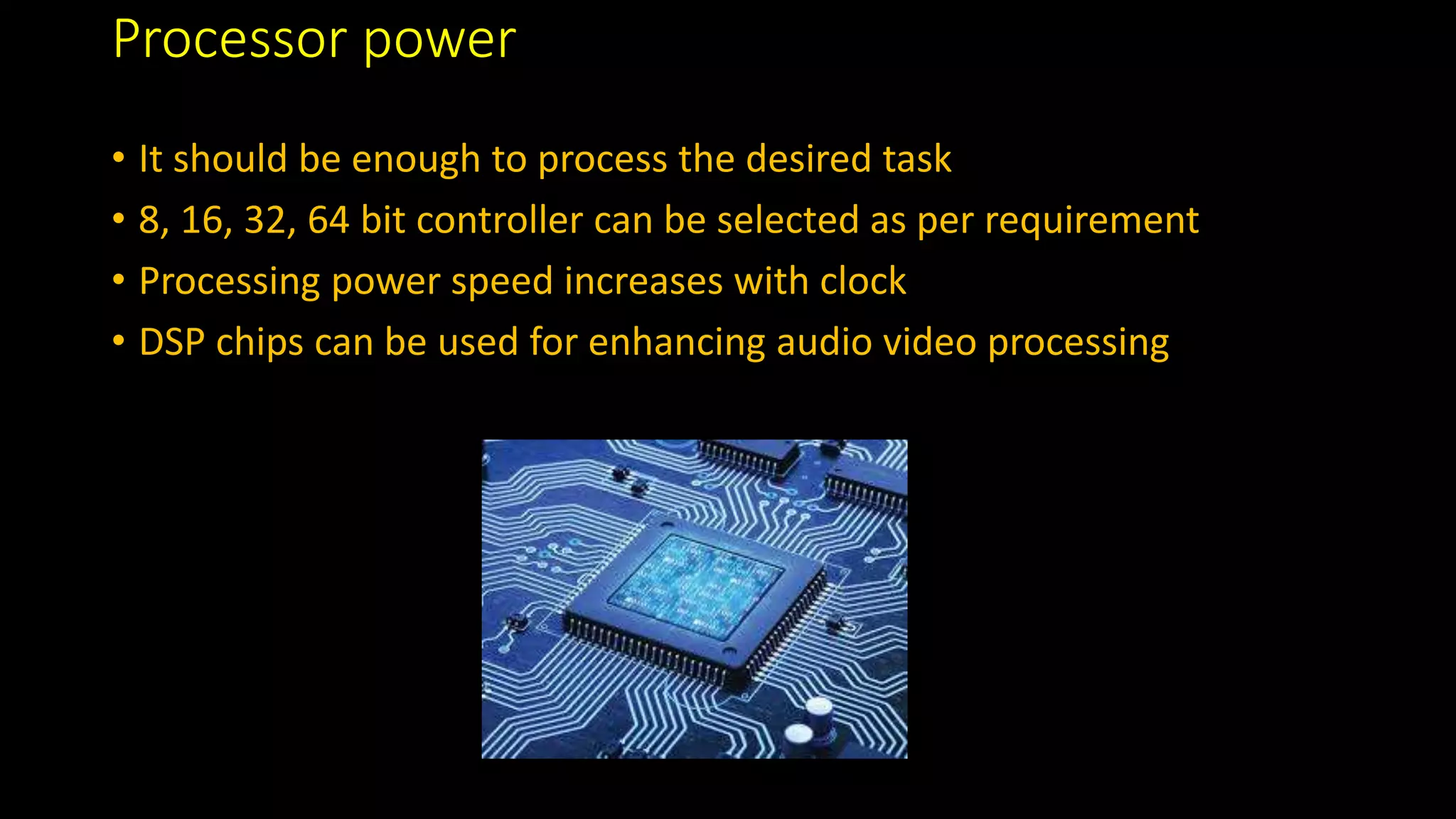
Processor power
• It should be enough to process the desired task
• 8, 16, 32, 64 bit controller can be selected as per requirement
• Processing power speed increases with clock
• DSP chips can be used for enhancing audio video processing
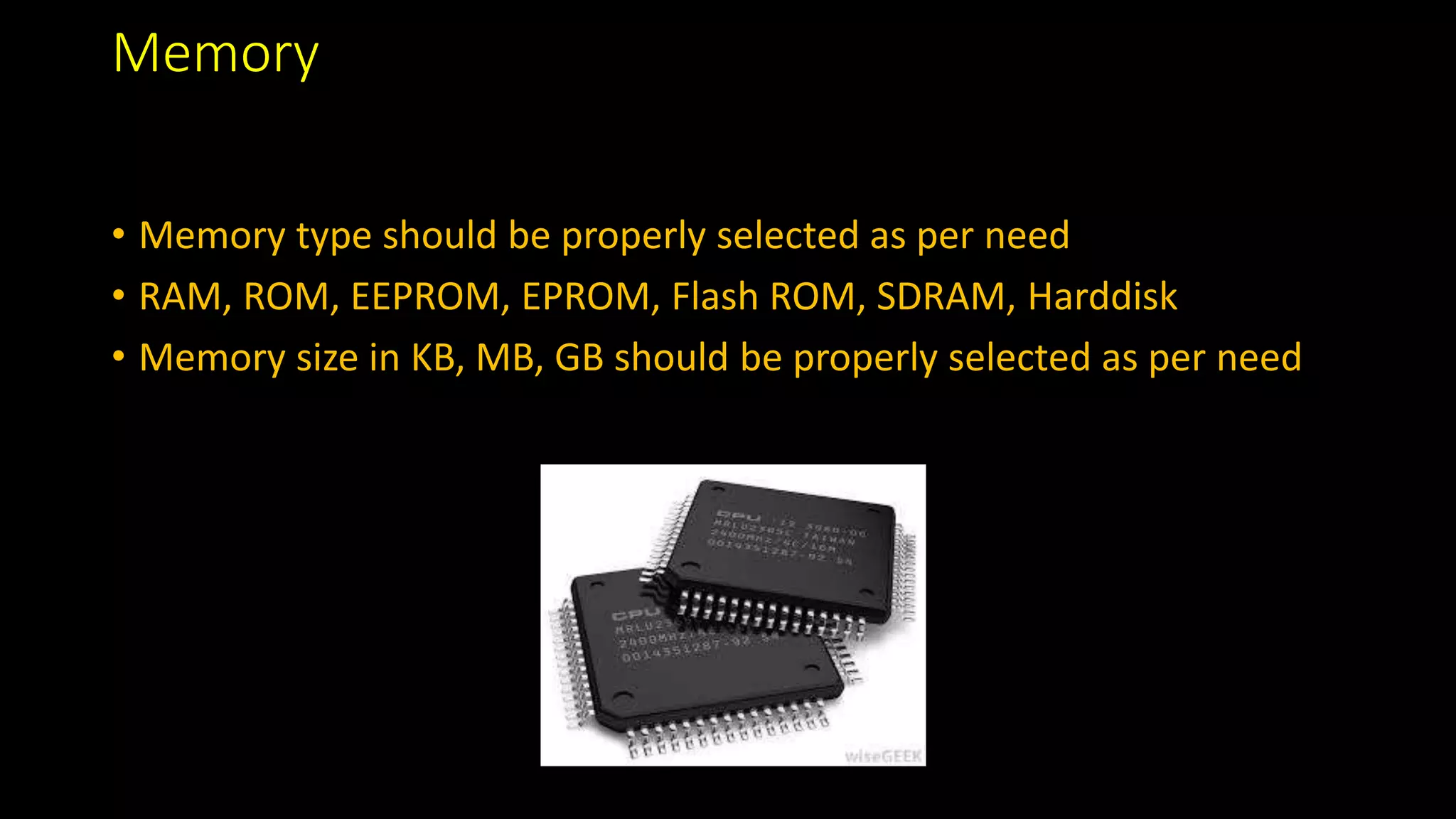
Memory
• Memory type should be properly selected as per need
• RAM, ROM, EEPROM, EPROM, Flash ROM, SDRAM, Harddisk
• Memory size in KB, MB, GB should be properly selected as per need
Operating system
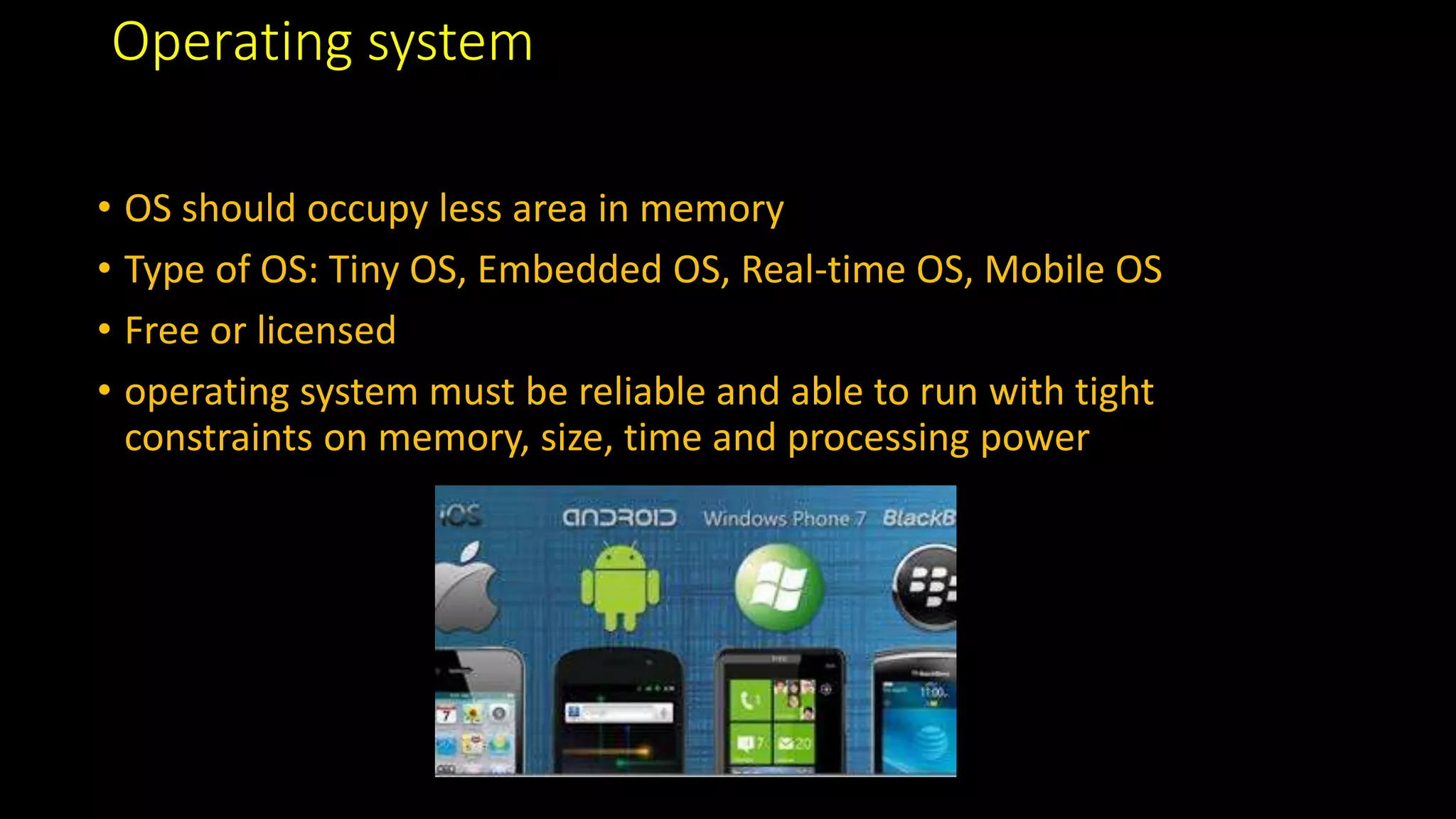
• OS should occupy less area in memory
• Type of OS: Tiny OS, Embedded OS, Real-time OS, Mobile OS
• Free or licensed
• operating system must be reliable and able to run with tight
constraints on memory, size, time and processing power
Reliability
• System must perform as per expectation all the time without errors
• It should have capability to recover in case if error occurs
• Software and hardware should be tested thoroughly with care to
ensure reliability
NRE Cost (Non- Recurring Engineering cost)
• It is the cost involving design and development of first fully working
prototype
• It includes research and development
Unit Cost
• It is the cost of an item when manufactured on large scale
• It excludes NRE Cost
Size
• It should be as small as possible so that it will occupy less space
Flexibility
• Though embedded system is a dedicated system, it should have
flexibility to modify the functionality without investing more in NRE
cost
• Software should be flexible to update the functionality in newer
version
Time to prototype
• Time required to involving design and development of first fully
working prototype
• It includes research and development
• It should be minimum as technology is rapidly changing and various
similar products are launched daily
Time to market
• Time required for designing, manufacturing the system till the
product is sold to market.
• It should be minimum
• If it is too long, other competitors may launch product in the mean
time and profit margin may reduce. As technology is rapidly changing,
various similar products are launched daily
Maintainability
• Provision should be made for Maintainability of the system in case of
malfunction of device hardware. Disassembly and assembly options
should be easily available
• In compact systems this feature is not available or difficult to maintain
• Sometime the systems are use and throw
Correctness
• System should work with specified accuracy all the time
• System should be thoroughly checked through various quality control
tests under all surroundings for all parameters
Safety
• System should not cause harm to the user or other during operation
or during failure
• System should not radiate any electromagnetic waves which will
cause harm to the user or interfere with other electronic instruments
Dr. Vikas Dongre
HOD Electronics &Telecommunication
Government Polytechnic Washim (MS)
Email: dongrevj1@gmail.com
M: 9370668979

Characteristics of embedded systems

  • 1.
    DR. VIKAS J.DONGRE HOD ELECTRONICS & TELECOM GOVERNMENT POLYTECHNIC WASHIM (MS) EMAIL: DONGREVJ1@GMAIL.COM
  • 2.
    Characteristics of Embeddedsystems • Embedded system must be designed in such a way that it should fulfill various characteristics so that user will get delightful, reliable, safe operation at lower cost in less space, low power consumption, low weight and decent look • Characteristics 1. Processor power 2. Memory 3. operating system 4. Reliability 5. NRE Cost 6. Unit Cost 7. Size 8. Power 9. Performance 10.Flexibility 11.Time to prototype 12.Time to market 13.Correctness 14.Safety
  • 3.
    Processor power • Itshould be enough to process the desired task • 8, 16, 32, 64 bit controller can be selected as per requirement • Processing power speed increases with clock • DSP chips can be used for enhancing audio video processing
  • 4.
    Memory • Memory typeshould be properly selected as per need • RAM, ROM, EEPROM, EPROM, Flash ROM, SDRAM, Harddisk • Memory size in KB, MB, GB should be properly selected as per need
  • 5.
    Operating system • OSshould occupy less area in memory • Type of OS: Tiny OS, Embedded OS, Real-time OS, Mobile OS • Free or licensed • operating system must be reliable and able to run with tight constraints on memory, size, time and processing power
  • 6.
    Reliability • System mustperform as per expectation all the time without errors • It should have capability to recover in case if error occurs • Software and hardware should be tested thoroughly with care to ensure reliability
  • 7.
    NRE Cost (Non-Recurring Engineering cost) • It is the cost involving design and development of first fully working prototype • It includes research and development
  • 8.
    Unit Cost • Itis the cost of an item when manufactured on large scale • It excludes NRE Cost
  • 9.
    Size • It shouldbe as small as possible so that it will occupy less space
  • 10.
    Flexibility • Though embeddedsystem is a dedicated system, it should have flexibility to modify the functionality without investing more in NRE cost • Software should be flexible to update the functionality in newer version
  • 11.
    Time to prototype •Time required to involving design and development of first fully working prototype • It includes research and development • It should be minimum as technology is rapidly changing and various similar products are launched daily
  • 12.
    Time to market •Time required for designing, manufacturing the system till the product is sold to market. • It should be minimum • If it is too long, other competitors may launch product in the mean time and profit margin may reduce. As technology is rapidly changing, various similar products are launched daily
  • 13.
    Maintainability • Provision shouldbe made for Maintainability of the system in case of malfunction of device hardware. Disassembly and assembly options should be easily available • In compact systems this feature is not available or difficult to maintain • Sometime the systems are use and throw
  • 14.
    Correctness • System shouldwork with specified accuracy all the time • System should be thoroughly checked through various quality control tests under all surroundings for all parameters
  • 15.
    Safety • System shouldnot cause harm to the user or other during operation or during failure • System should not radiate any electromagnetic waves which will cause harm to the user or interfere with other electronic instruments
  • 16.
    Dr. Vikas Dongre HODElectronics &Telecommunication Government Polytechnic Washim (MS) Email: dongrevj1@gmail.com M: 9370668979