Types of
Databases
What is database?
• A database is an
  organized collection
  of data, today typically in
  digital form.
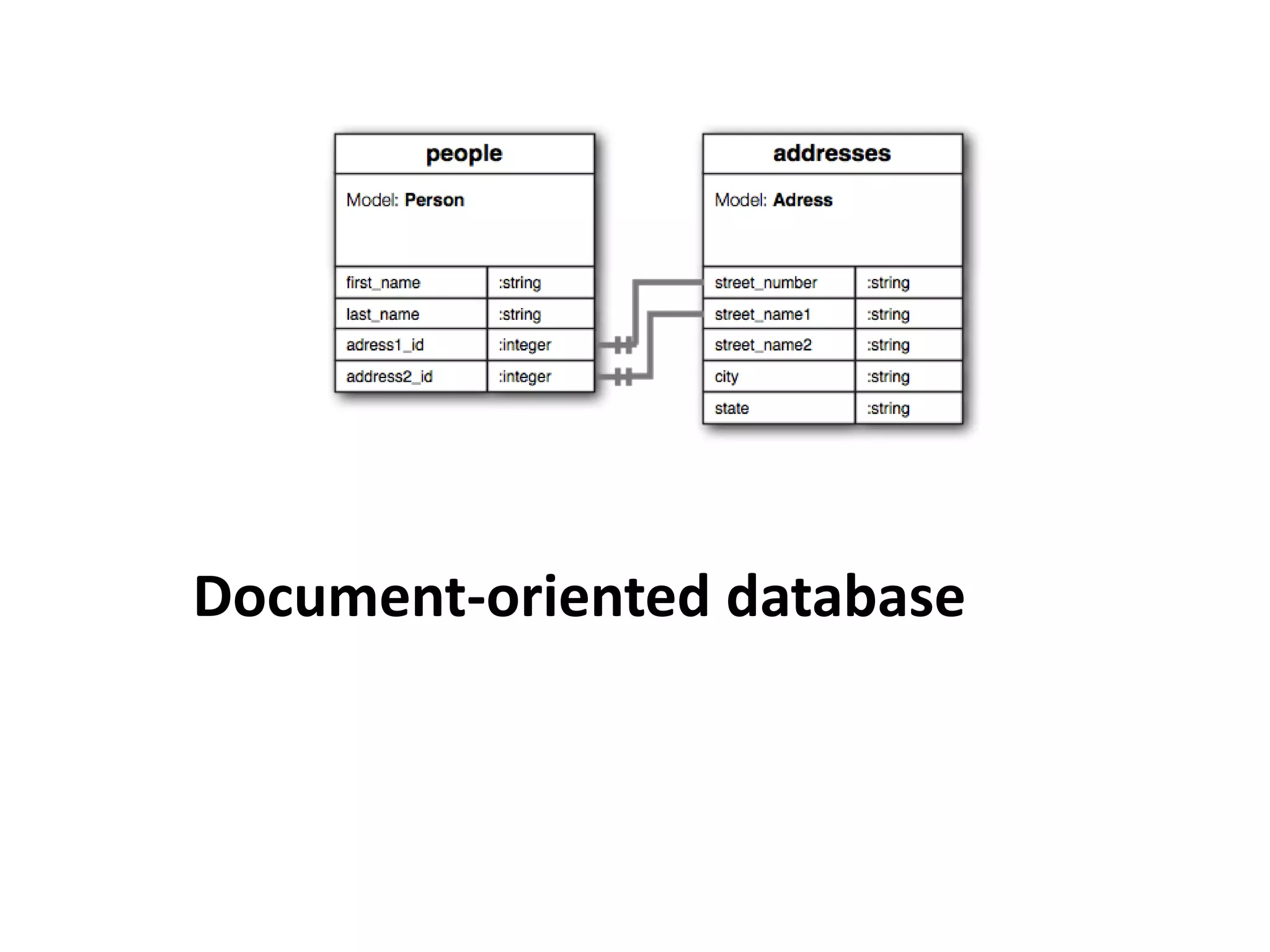
Document-oriented database
    • A document-oriented database
      is a computer program designed
      for storing, retrieving, and
      managing document-oriented,
      or semi structured data,
      information
Document-oriented database
Embedded database
• These databases consist of data
  developed by individual end-
  users. Examples of these are
  collections of documents,
  spreadsheets, presentations,
  multimedia, and other files.
Embedded database
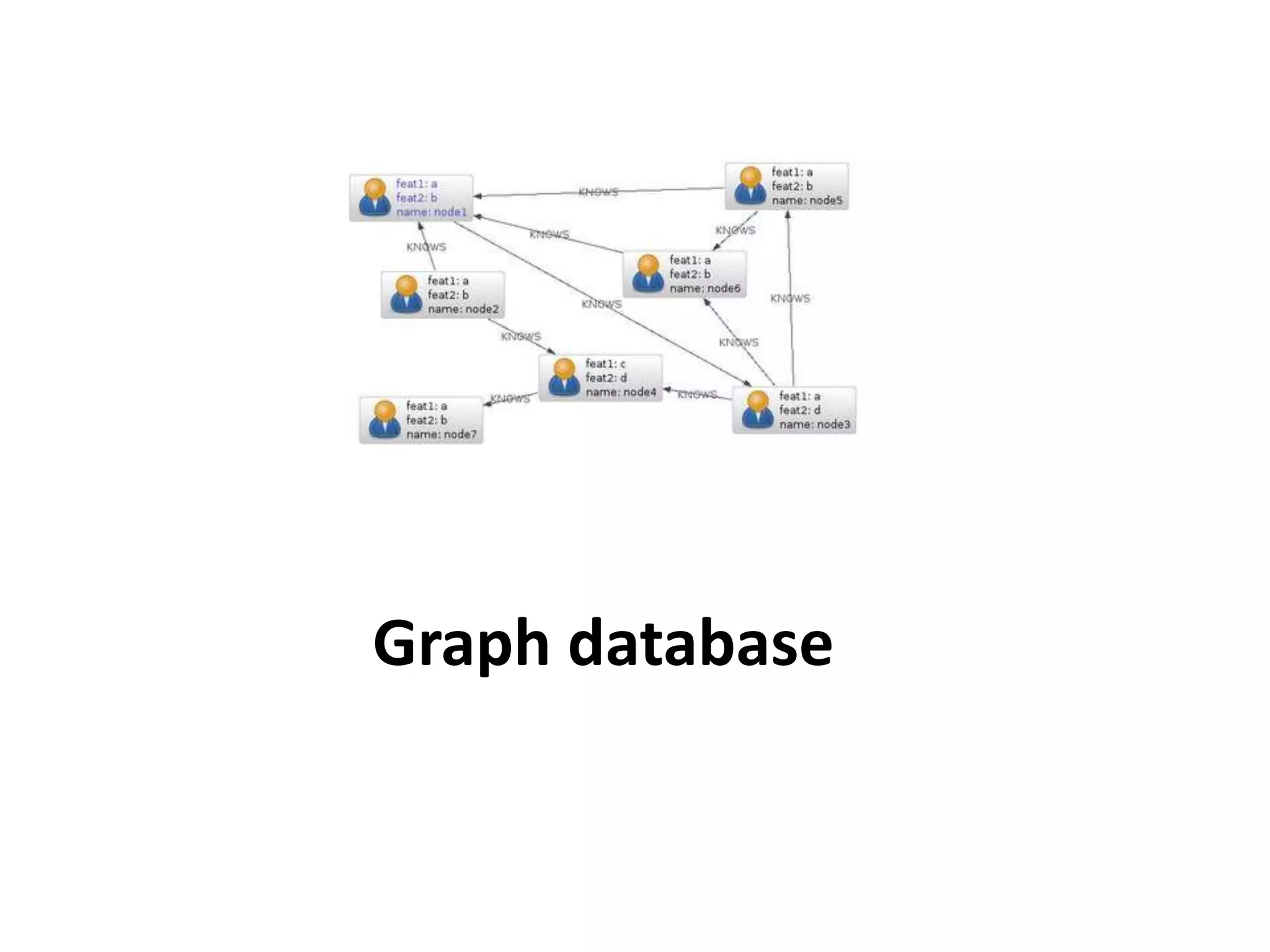
Graph database
• Graph database is a kind of No
 SQL database that uses graph
 structures with nodes, edges, and
 properties to represent and store
 information.
Graph database
Hypertext database
• Hypertext databases are
  particularly useful for organizing
  large amounts of disparate
  information. For example they
  are useful for maintaining
  online encyclopedias.
Hypertext database
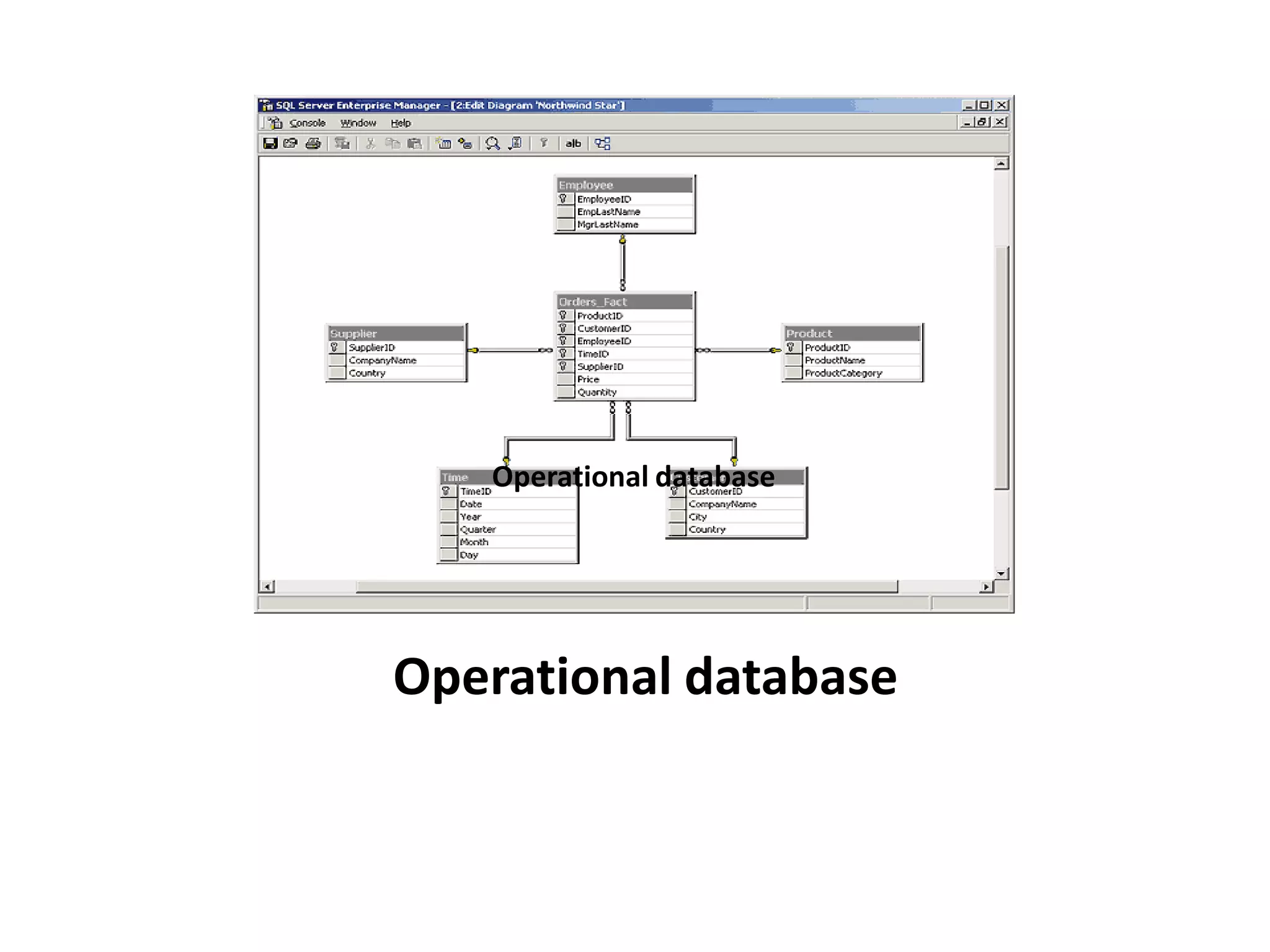
Operational database
• These database store detailed
  data about the operations of an
  organization.
Operational database


Operational database
Distributed database
• A distributed database is a database in
  which storage devices are not all
  attached to a common processing unit
  such as the C.P.U. It may be stored in
  multiple computers located in the same
  physical location, or may be dispersed
  over a network of interconnected
  computers.
Distributed database
Flat-File

• The flat-file style of database
  are ideal for small amounts of
  data that needs to be human
  readable or edited by hand
Flat-File


Flat-File
            Flat-File
Thank you!!

Types of databases