Chapter 8 Section 2Fungi
Section 2:  FungiA.  Characteristics of Fungi:Fungi can be food sources or ingredients; they can also grow on spoiling food or in damp places like shower curtains. Can break down dead organisms.Scientists are not sure how fungi are related to other organisms. Threadlike  tubes called hyphae produce enzymes for digestion.
Section 2:  FungiClassification of FungiMost fungi are saprohphytes.Feeding on dead or decaying material. Some fungi are parasitesobtaining their food directly from living things. Saprophytes and parasites do not make their own food!!!They do not have roots or chlorophyll.
Section 2:  FungiHow do Fungi Eat?Fungi eat by secreting enzymes to digest the food outside itself; then the fungus cells absorb the digested food. Most fungi are saprophytes, except:Ringworm and Athletes foot (parasites)Fungi grow best in warm, dark, humid areas.
Section 2:  FungiFungi can reproduce both sexually and asexually. In asexual reproduction, cell division produces spores. (without fertilization)In sexual reproduction, the hyphae of two genetically different fungi of the same species produce spores that differ genetically from both parents.
Section 2:  FungiClassification of FungiFungi are classified into four groups(our book uses three major classifications) based on the type of structure formed by the joining of hyphae. Club FungiSac FungiZygote FungiImperfect Fungi
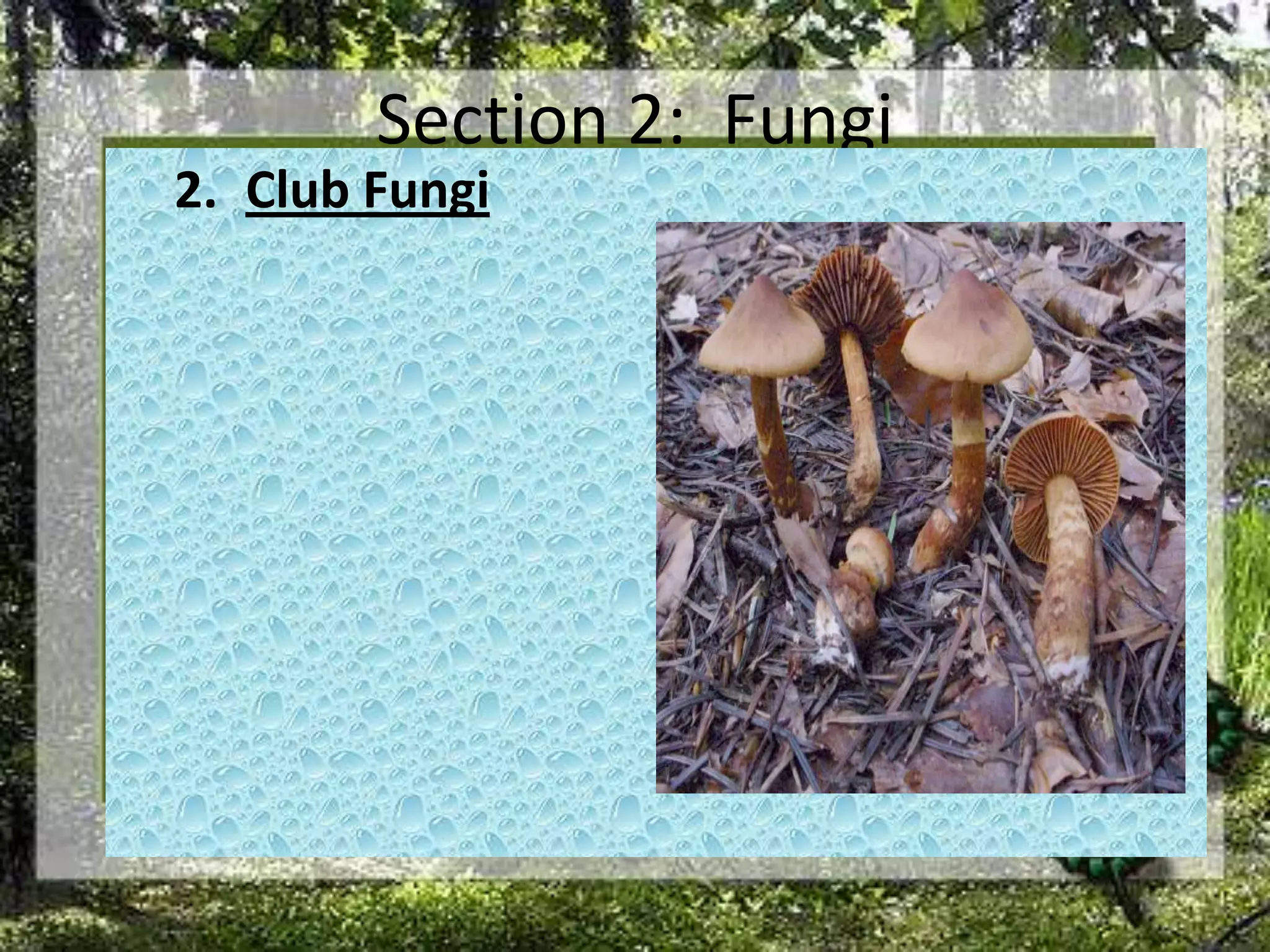
Section 2:  FungiClub Fungi: Phylum BasidiomycotaMushrooms (example)Produce spores in a club shaped structure called a basidium; located on gills of mushroom. (slits under the cap of the mushroom).Important food source for animals. NEVER EAT WILD MUSHROOMS. 1.  They can be DEADLY!!!
Section 2:  FungiClub Fungi
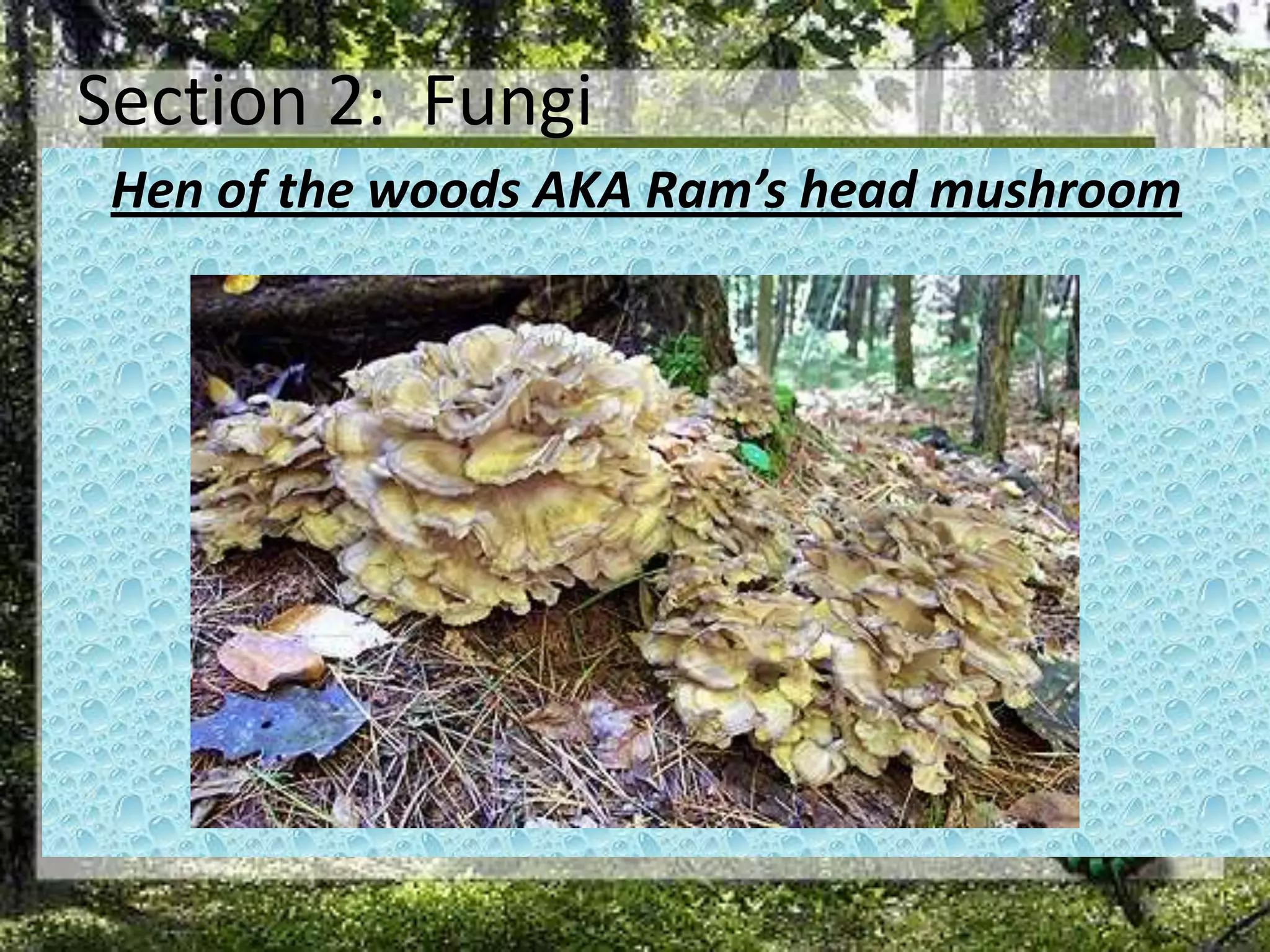
Section 2:  FungiHen of the woods AKA Ram’s head mushroom
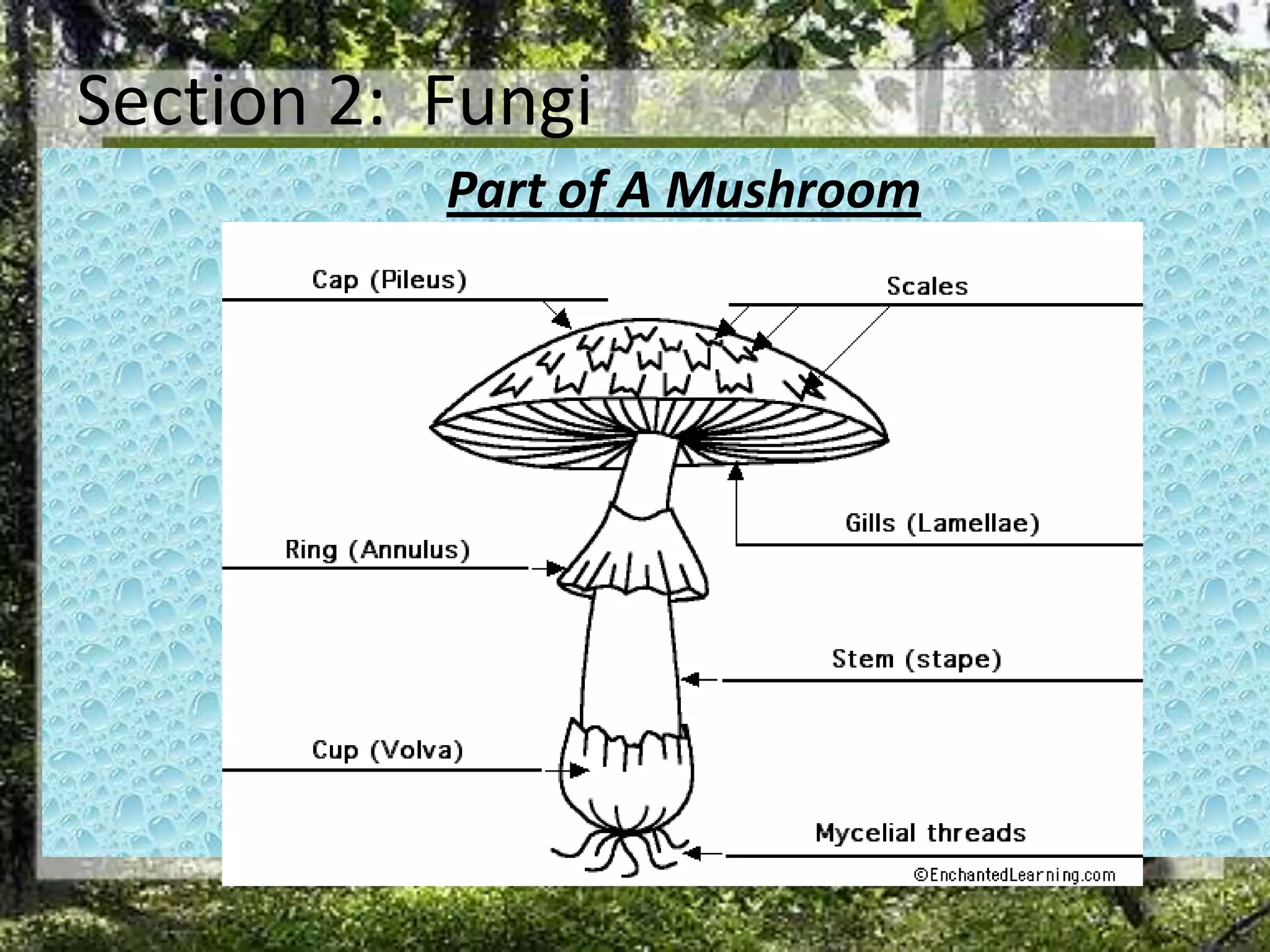
Section 2:  FungiPart of A Mushroom
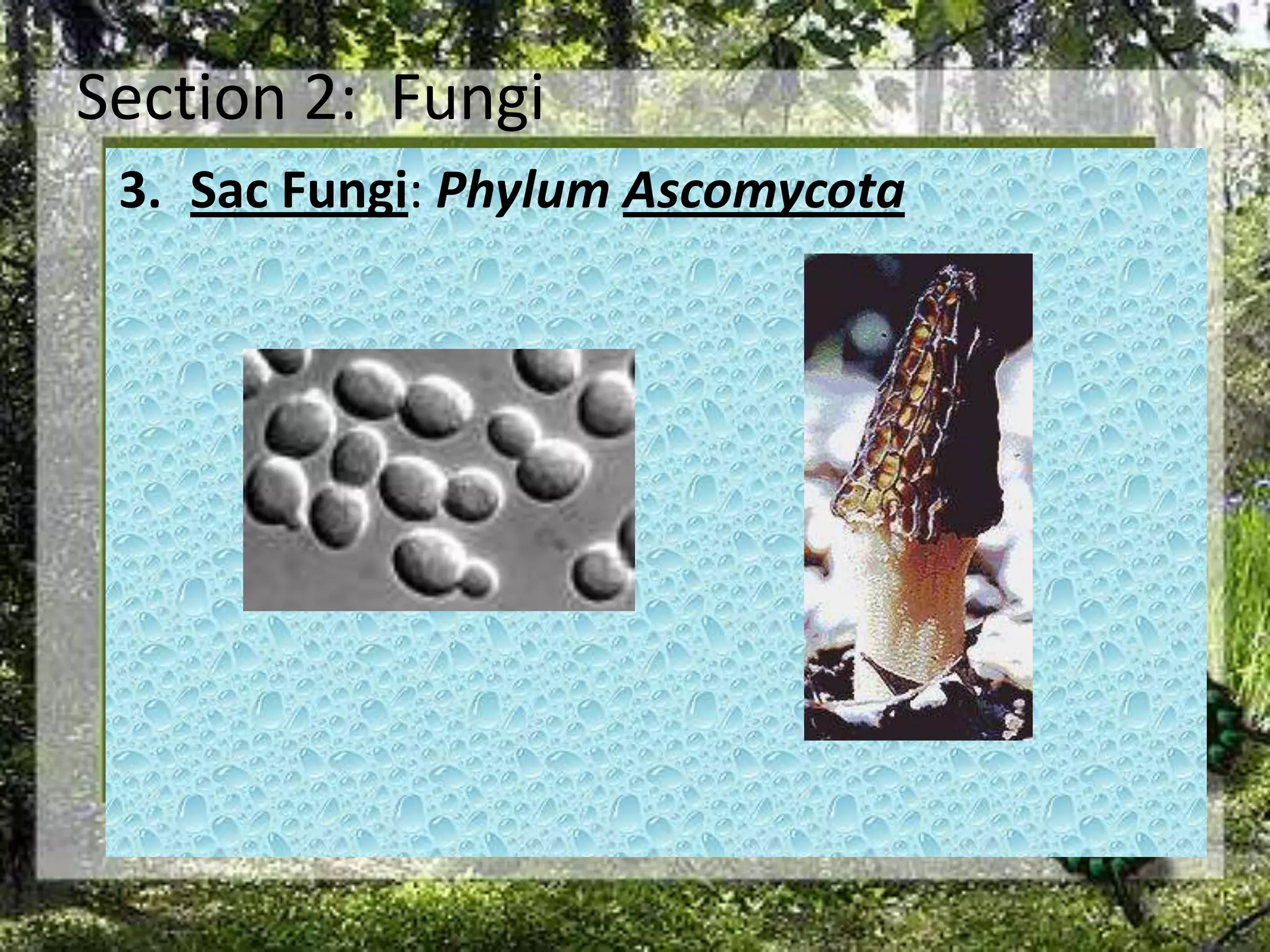
Section 2:  FungiSac Fungi:  Phylum AscomycotaYeasts, morels, and truffles (examples)Sac Fungi produce spores in a small, saclike structure called an ascus; yeasts can also reproduce by budding. Sac fungi cause diseases such as Dutch Elm Disease. Yeast can reproduce 2 waysSporesBuddingYeasts are used in baking.
Section 2:  FungiSac Fungi: Phylum Ascomycota
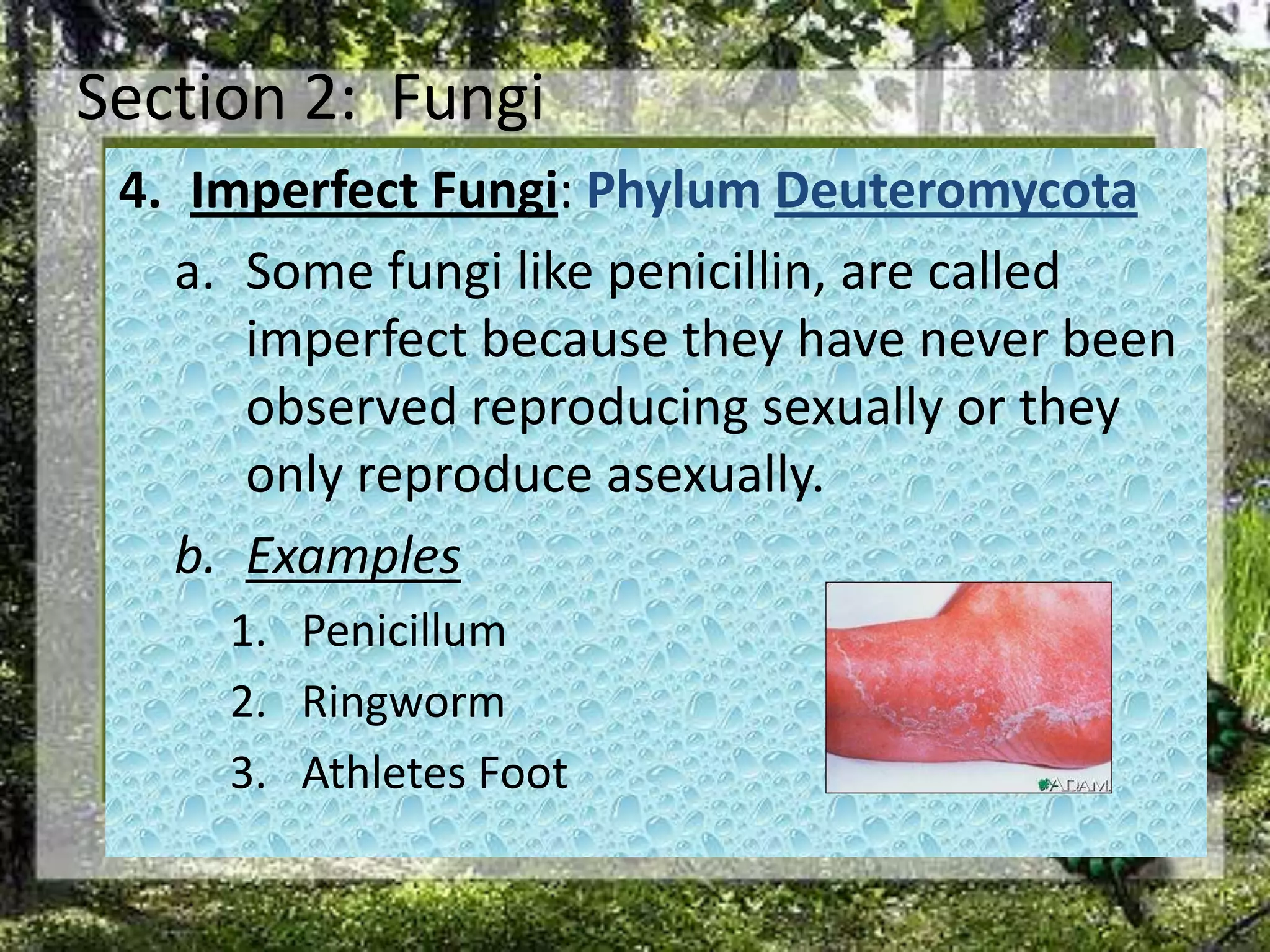
Section 2:  FungiImperfect Fungi: Phylum DeuteromycotaSome fungi like penicillin, are called imperfect because they have never been observed reproducing sexually or they only reproduce asexually. ExamplesPenicillumRingwormAthletes Foot
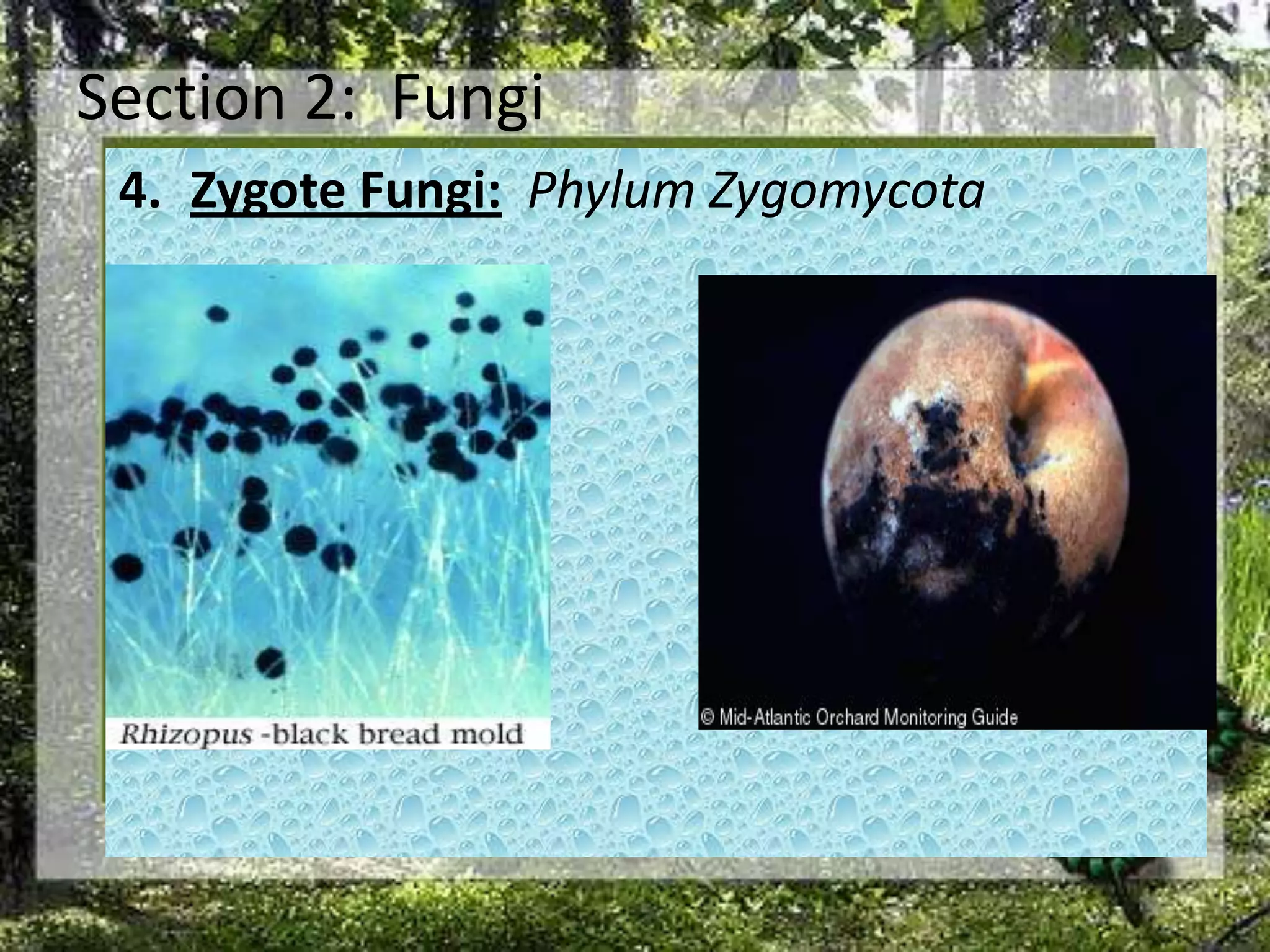
Section 2:  FungiZygote Fungi:Phylum ZygomycotaA zygospore fungus produces spores in a round case called a sporangium found on the tip of the hyphae. When sporangia splits open 100s of spores are released into the air.  If it lands in an OK environment it forms more mold.Examples:  1.  Bread Molds, fruit molds, and all molds.
Section 2:  FungiZygote Fungi:Phylum Zygomycota
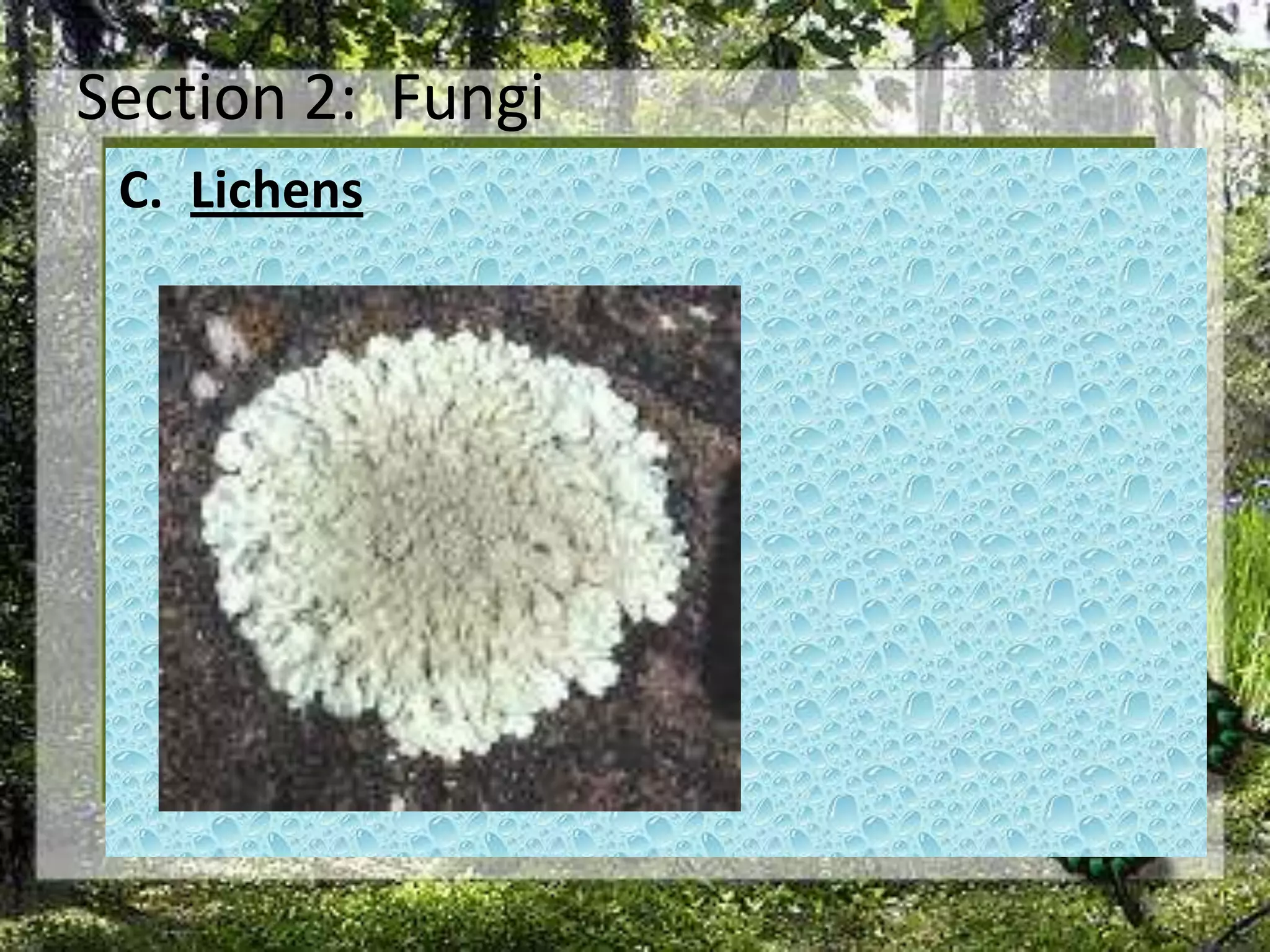
Section 2:  FungiLichensLichens are organisms composed of a fungus and either a green alga or a cyanobacterium, they can appear crusty, leafy, or grow upright. The fungus and cyanobacteria live together and both benefit. Lichens can be an important food source for animals. Lichens help rocks weather, or break down. Since lichens are sensitive, they help scientists monitor pollution levels.
Section 2:  FungiLichens
Section 2:  FungiFungi and PlantsSome fungi form a hyphae network with plant roots called mycorrhizae, this may have allowed plants to move from water to land about 500 million years ago. The fungus helps the plant absorb more of certain nutrients from the soil better than the roots can on their own. Certain plants cannot grow without the development of mycorrhizae.
Section 2:  FungiImportance of FungiSome fungi, such as cultivated mushrooms, are food sources. Many fungi, cause animal and plant diseases, but they also produce antibiotics, such as penicillin, which can fight disease. Fungi are important decomposers, recycling organic matter.
Section 2:  FungiRed TidesA population explosion of dinoflagellatesIn 1987 there was a red tide from Florida to MassachusettsEach dinoflagellate releases a different toxin – fish & shellfish eat them – people eat them causing illness & deathOccurs when surface becomes heated & underlying water is cold
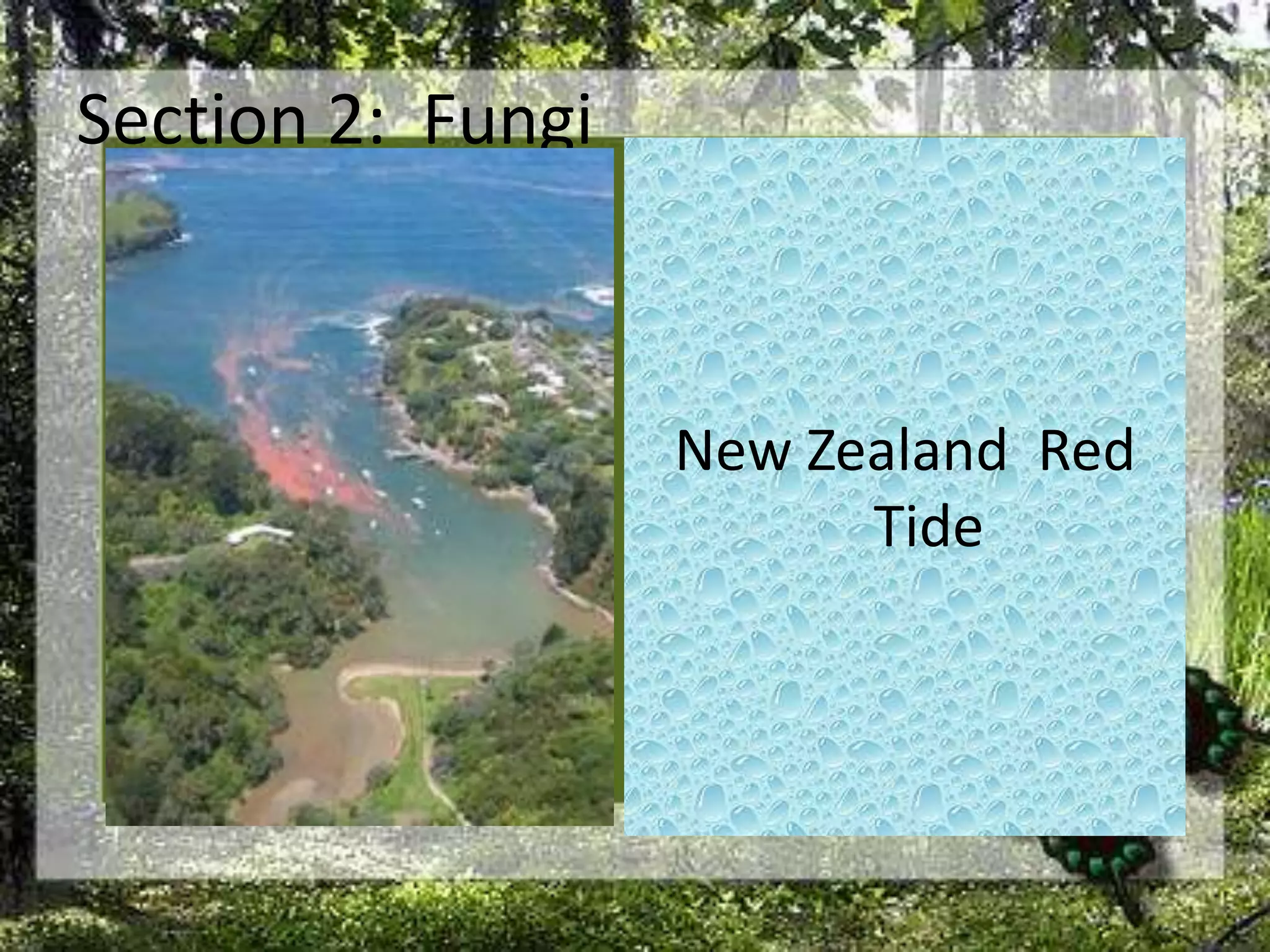
Section 2:  FungiNew Zealand  Red Tide

Chapter 8 section 2 (2011)

  • 1.
  • 2.
    Section 2: FungiA. Characteristics of Fungi:Fungi can be food sources or ingredients; they can also grow on spoiling food or in damp places like shower curtains. Can break down dead organisms.Scientists are not sure how fungi are related to other organisms. Threadlike tubes called hyphae produce enzymes for digestion.
  • 3.
    Section 2: FungiClassification of FungiMost fungi are saprohphytes.Feeding on dead or decaying material. Some fungi are parasitesobtaining their food directly from living things. Saprophytes and parasites do not make their own food!!!They do not have roots or chlorophyll.
  • 4.
    Section 2: FungiHow do Fungi Eat?Fungi eat by secreting enzymes to digest the food outside itself; then the fungus cells absorb the digested food. Most fungi are saprophytes, except:Ringworm and Athletes foot (parasites)Fungi grow best in warm, dark, humid areas.
  • 5.
    Section 2: FungiFungi can reproduce both sexually and asexually. In asexual reproduction, cell division produces spores. (without fertilization)In sexual reproduction, the hyphae of two genetically different fungi of the same species produce spores that differ genetically from both parents.
  • 6.
    Section 2: FungiClassification of FungiFungi are classified into four groups(our book uses three major classifications) based on the type of structure formed by the joining of hyphae. Club FungiSac FungiZygote FungiImperfect Fungi
  • 7.
    Section 2: FungiClub Fungi: Phylum BasidiomycotaMushrooms (example)Produce spores in a club shaped structure called a basidium; located on gills of mushroom. (slits under the cap of the mushroom).Important food source for animals. NEVER EAT WILD MUSHROOMS. 1. They can be DEADLY!!!
  • 8.
    Section 2: FungiClub Fungi
  • 9.
    Section 2: FungiHen of the woods AKA Ram’s head mushroom
  • 10.
    Section 2: FungiPart of A Mushroom
  • 11.
    Section 2: FungiSac Fungi: Phylum AscomycotaYeasts, morels, and truffles (examples)Sac Fungi produce spores in a small, saclike structure called an ascus; yeasts can also reproduce by budding. Sac fungi cause diseases such as Dutch Elm Disease. Yeast can reproduce 2 waysSporesBuddingYeasts are used in baking.
  • 12.
    Section 2: FungiSac Fungi: Phylum Ascomycota
  • 13.
    Section 2: FungiImperfect Fungi: Phylum DeuteromycotaSome fungi like penicillin, are called imperfect because they have never been observed reproducing sexually or they only reproduce asexually. ExamplesPenicillumRingwormAthletes Foot
  • 14.
    Section 2: FungiZygote Fungi:Phylum ZygomycotaA zygospore fungus produces spores in a round case called a sporangium found on the tip of the hyphae. When sporangia splits open 100s of spores are released into the air. If it lands in an OK environment it forms more mold.Examples: 1. Bread Molds, fruit molds, and all molds.
  • 15.
    Section 2: FungiZygote Fungi:Phylum Zygomycota
  • 16.
    Section 2: FungiLichensLichens are organisms composed of a fungus and either a green alga or a cyanobacterium, they can appear crusty, leafy, or grow upright. The fungus and cyanobacteria live together and both benefit. Lichens can be an important food source for animals. Lichens help rocks weather, or break down. Since lichens are sensitive, they help scientists monitor pollution levels.
  • 17.
    Section 2: FungiLichens
  • 18.
    Section 2: FungiFungi and PlantsSome fungi form a hyphae network with plant roots called mycorrhizae, this may have allowed plants to move from water to land about 500 million years ago. The fungus helps the plant absorb more of certain nutrients from the soil better than the roots can on their own. Certain plants cannot grow without the development of mycorrhizae.
  • 19.
    Section 2: FungiImportance of FungiSome fungi, such as cultivated mushrooms, are food sources. Many fungi, cause animal and plant diseases, but they also produce antibiotics, such as penicillin, which can fight disease. Fungi are important decomposers, recycling organic matter.
  • 20.
    Section 2: FungiRed TidesA population explosion of dinoflagellatesIn 1987 there was a red tide from Florida to MassachusettsEach dinoflagellate releases a different toxin – fish & shellfish eat them – people eat them causing illness & deathOccurs when surface becomes heated & underlying water is cold
  • 21.
    Section 2: FungiNew Zealand Red Tide

Editor's Notes

  • #17Ā Read page 226 and pg 227 in your textbook
  • #18Ā Read page 226 and pg 227 in your textbook
  • #19Ā Read page 226 and pg 227 in your textbook
  • #20Ā Read page 226 and pg 227 in your textbook
  • #21Ā Read page 226 and pg 227 in your textbook
  • #22Ā Read page 226 and pg 227 in your textbook