CHARACTERISTICS OF FUNGI
1.Yeasts
Unicellular fungi, nonfilamentous, typically oval or
spherical cells. Reproduce by mitosis:
Fission yeasts: Divide evenly to produce two new cells
(Schizosaccharomyces).
Budding yeasts: Divide unevenly by budding (Saccharomyces).
Budding yeasts can form pseudohypha, a short chain of
undetached cells.
Candida albicans invade tissues through pseudohyphae.
Yeasts are facultative anaerobes, which allows them to
grow in a variety of environments.
When oxygen is available, they carry out aerobic respiration.
When oxygen is not available, they ferment carbohydrates to produce
ethanol and carbon dioxide.
CHARACTERISTICS OF FUNGI (Continued)
2. Molds and Fleshy Fungi
Multicellular, filamentous fungi.
Identified by physical appearance, colony
characteristics, and reproductive spores.
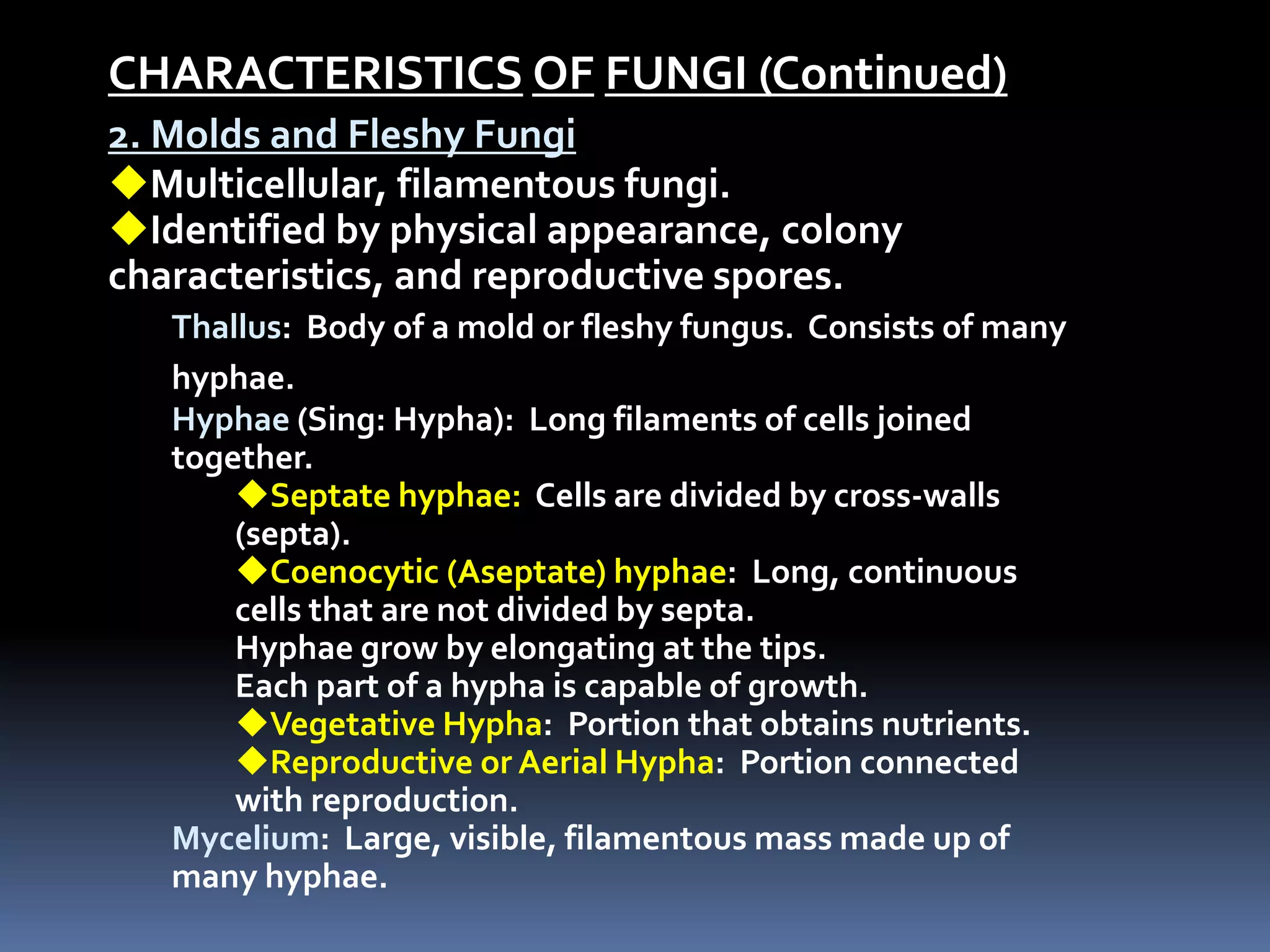
Thallus: Body of a mold or fleshy fungus. Consists of many
hyphae.
Hyphae (Sing: Hypha): Long filaments of cells joined
together.
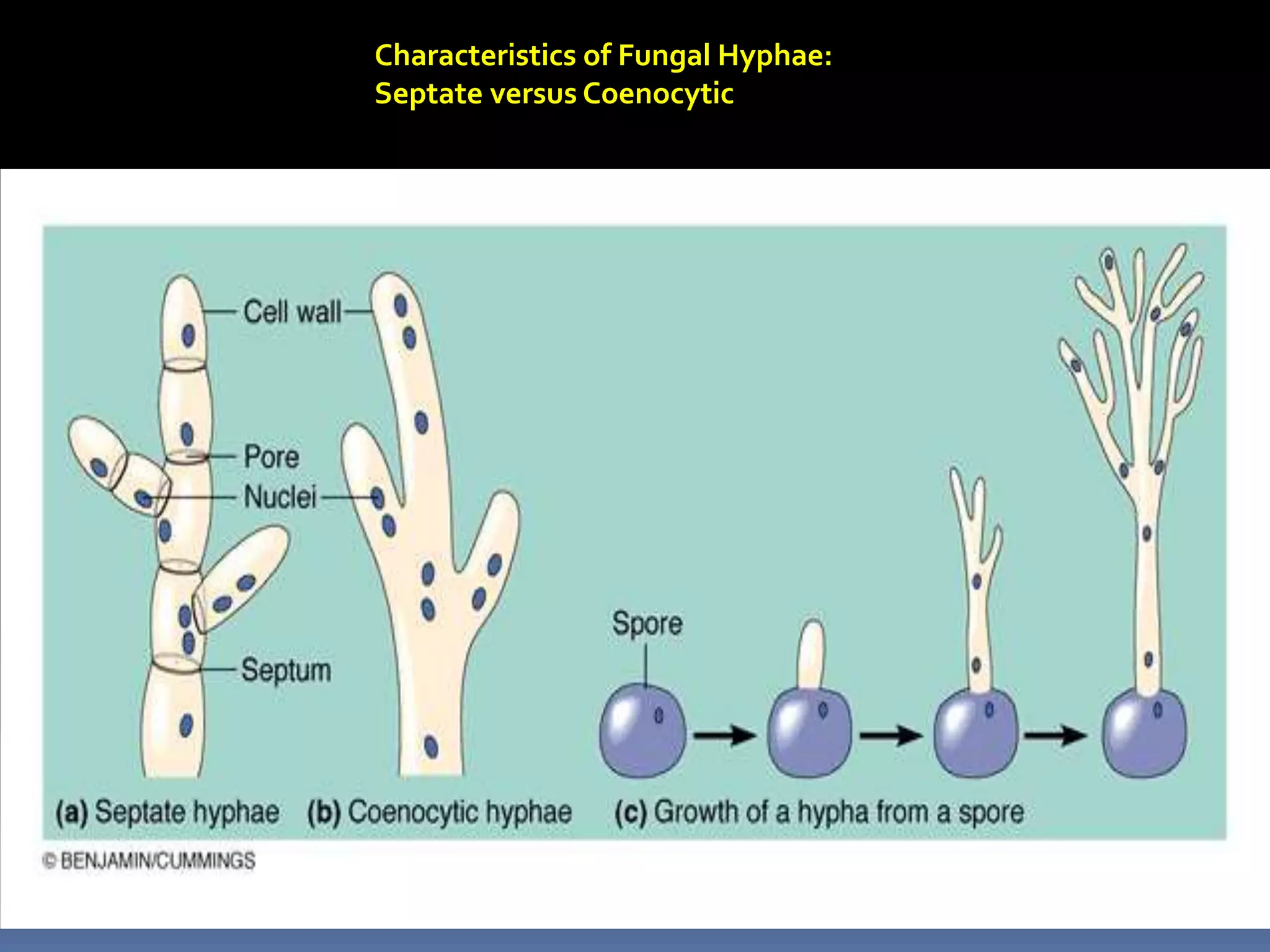
Septate hyphae: Cells are divided by cross-walls
(septa).
Coenocytic (Aseptate) hyphae: Long, continuous
cells that are not divided by septa.
Hyphae grow by elongating at the tips.
Each part of a hypha is capable of growth.
Vegetative Hypha: Portion that obtains nutrients.
Reproductive or Aerial Hypha: Portion connected
with reproduction.
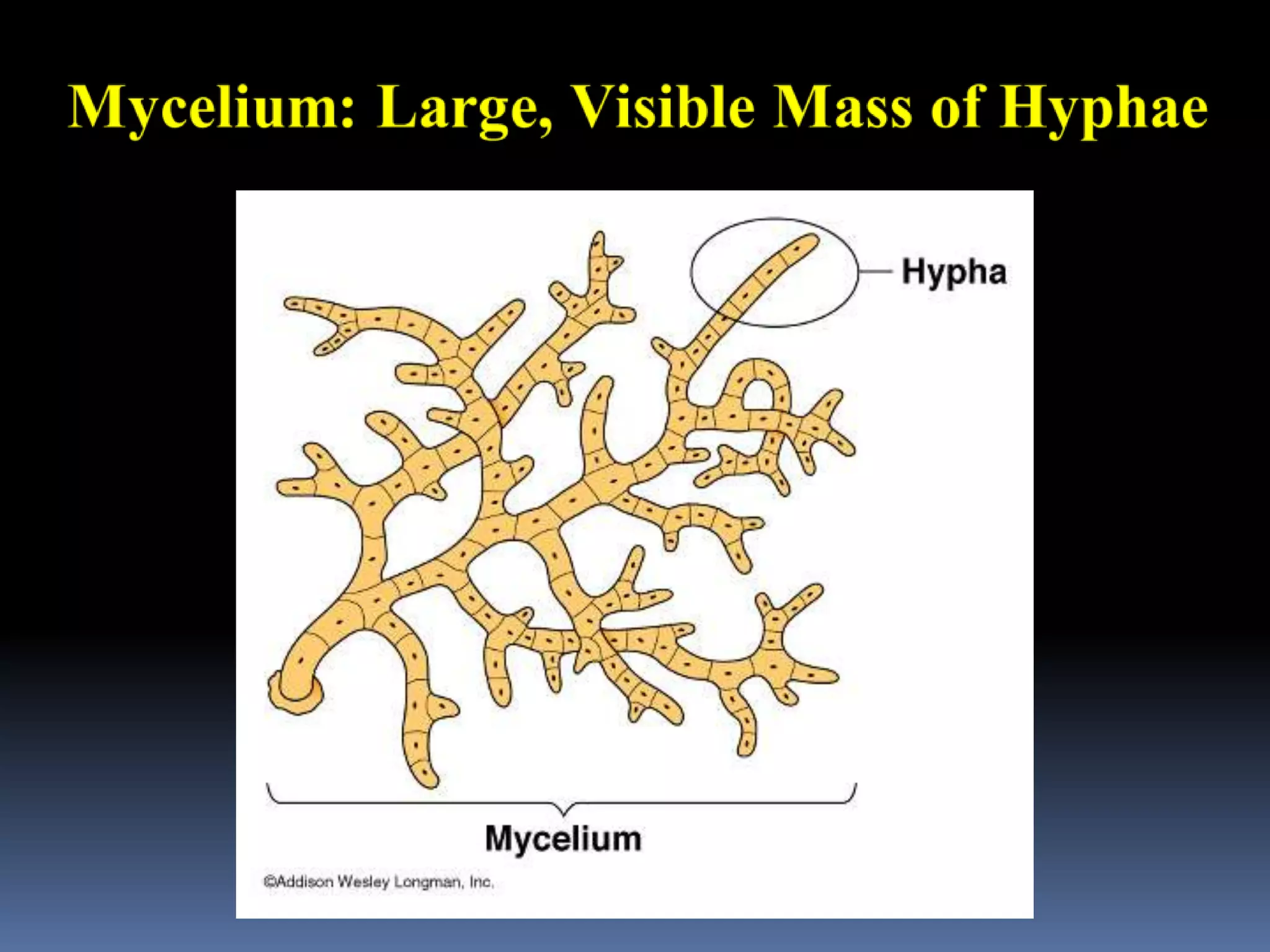
Mycelium: Large, visible, filamentous mass made up of
many hyphae.
Characteristics of Fungal Hyphae:
Septate versus Coenocytic
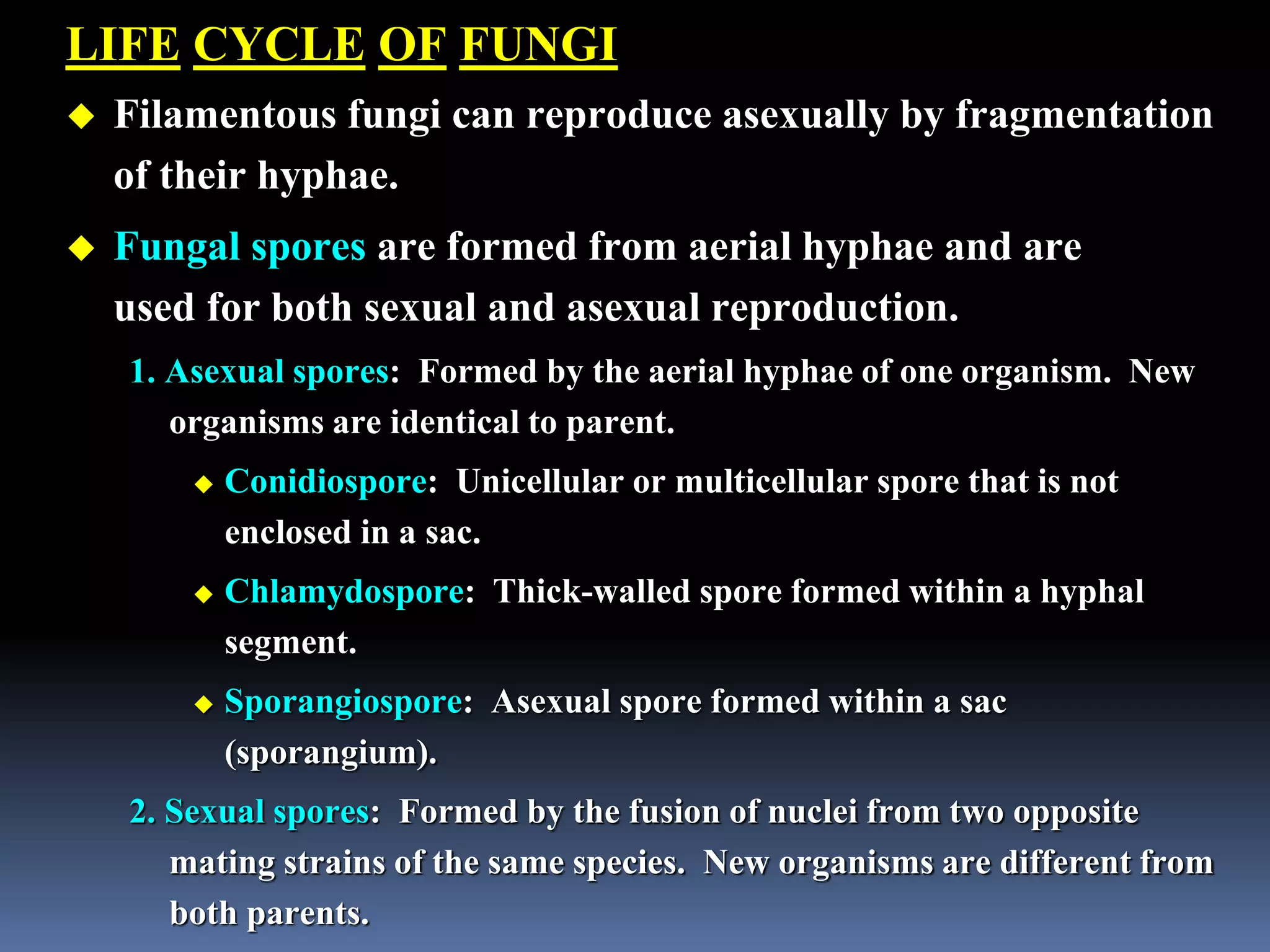
LIFE CYCLE OF FUNGI
 Filamentous fungi can reproduce asexually by fragmentation
of their hyphae.
 Fungal spores are formed from aerial hyphae and are
used for both sexual and asexual reproduction.
1. Asexual spores: Formed by the aerial hyphae of one organism. New
organisms are identical to parent.
 Conidiospore: Unicellular or multicellular spore that is not
enclosed in a sac.
 Chlamydospore: Thick-walled spore formed within a hyphal
segment.
 Sporangiospore: Asexual spore formed within a sac
(sporangium).
2. Sexual spores: Formed by the fusion of nuclei from two opposite
mating strains of the same species. New organisms are different from
both parents.
Zygomycota (Conjugation Fungi)
 Also known as bread molds as most of the zygomycetes
are molds
 Saprophytic molds with coenocytic hyphae (lacking
septa).
 Their main source of reproduction is by asexual
reproduction sexual reproduction may occur by the
process of conjugation.
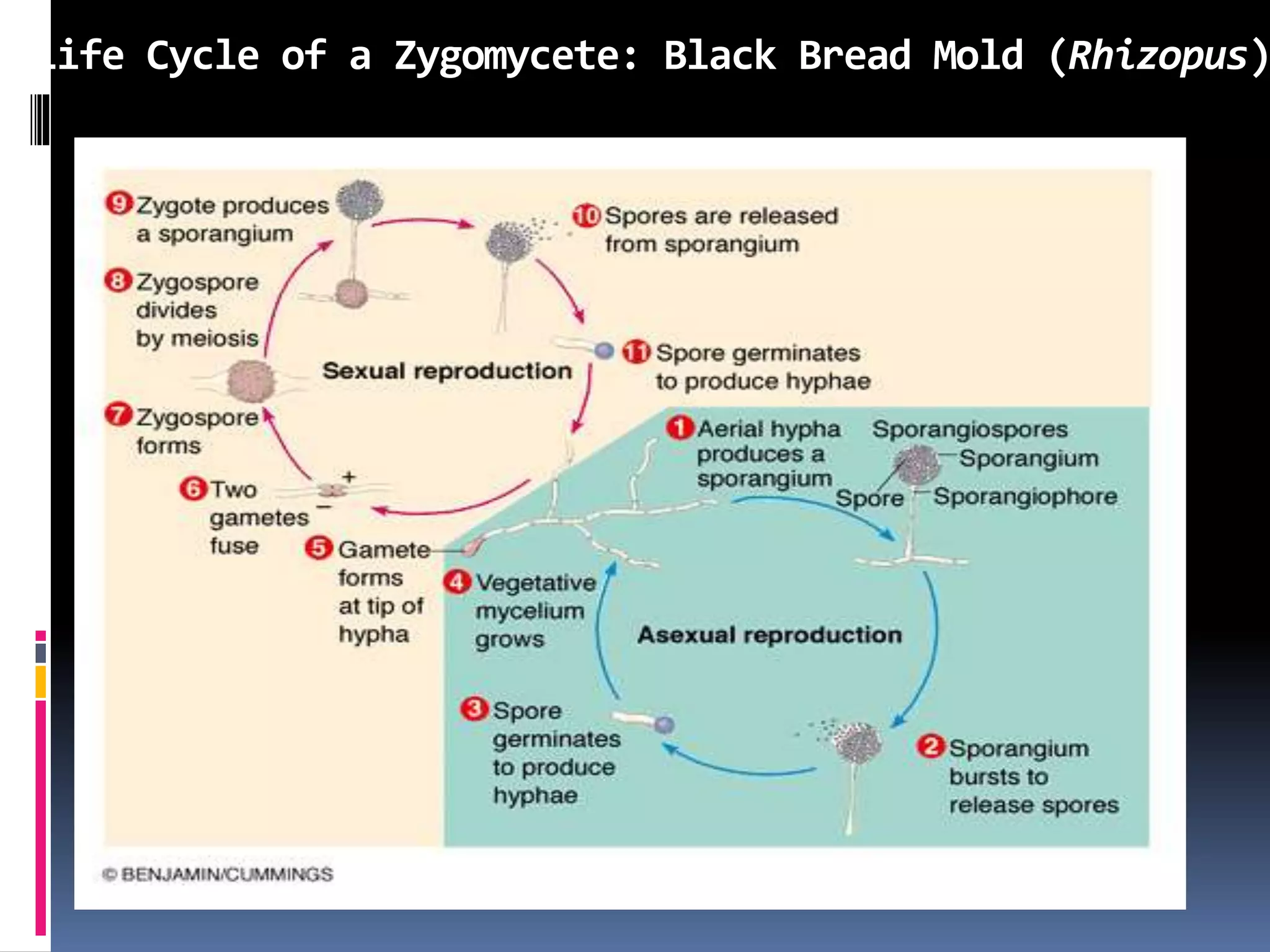
 It has the sporangiospore which is an asexual spore
enclosed within a sporangium
 Sexual Reproduction: Occurs through conjugation, the
joining of hypha of two different strains (plus and minus).
 Zygospores: Sexual spores which are enclosed in a thick,
resistant wall.
The zygomycetes are generally not pathogens though
Rhizopus nigricans: (Common black bread mold.) May cause opportunistic
infections in diabetes patients
Life Cycle of a Zygomycete: Black Bread Mold (Rhizopus)
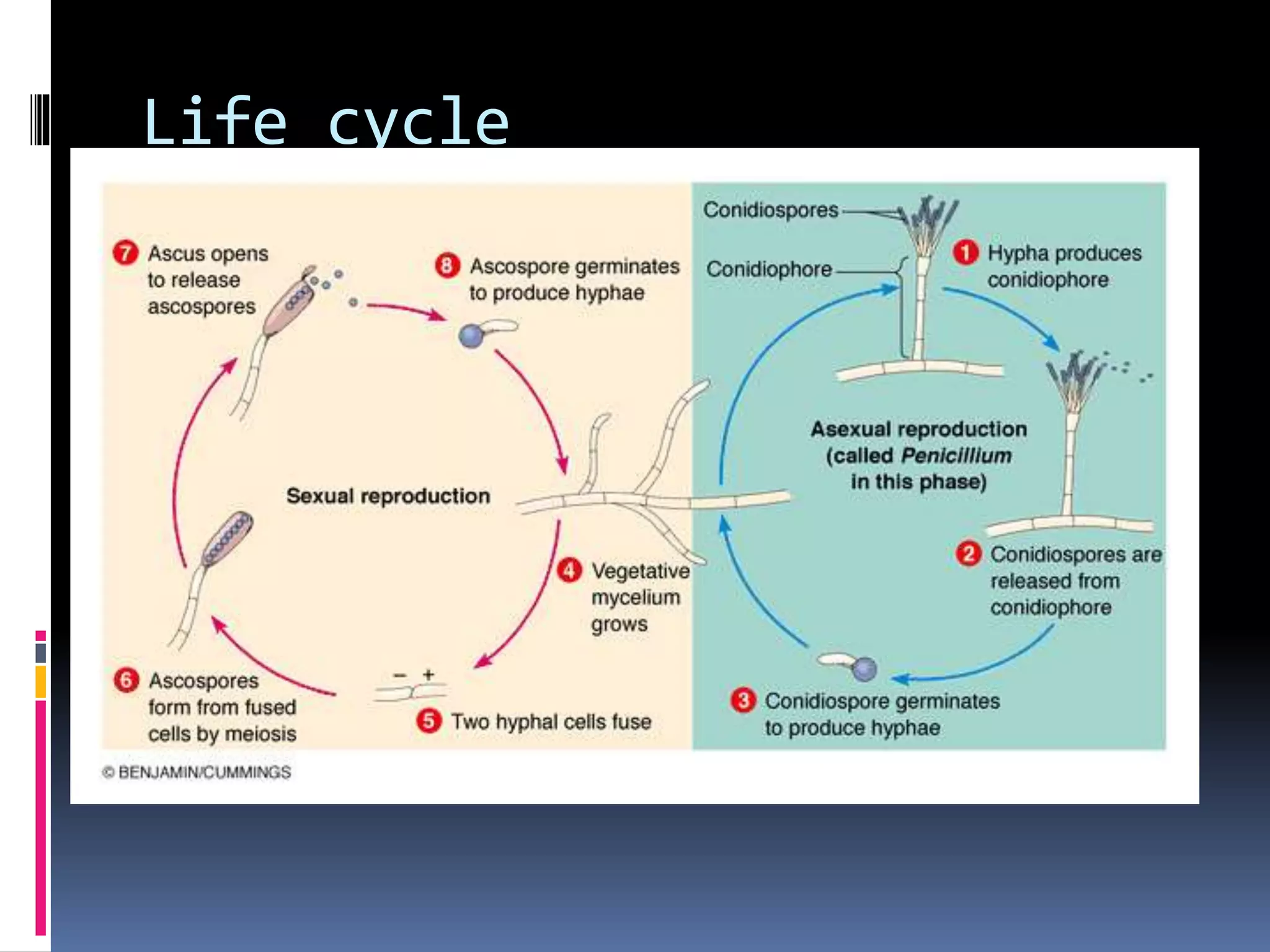
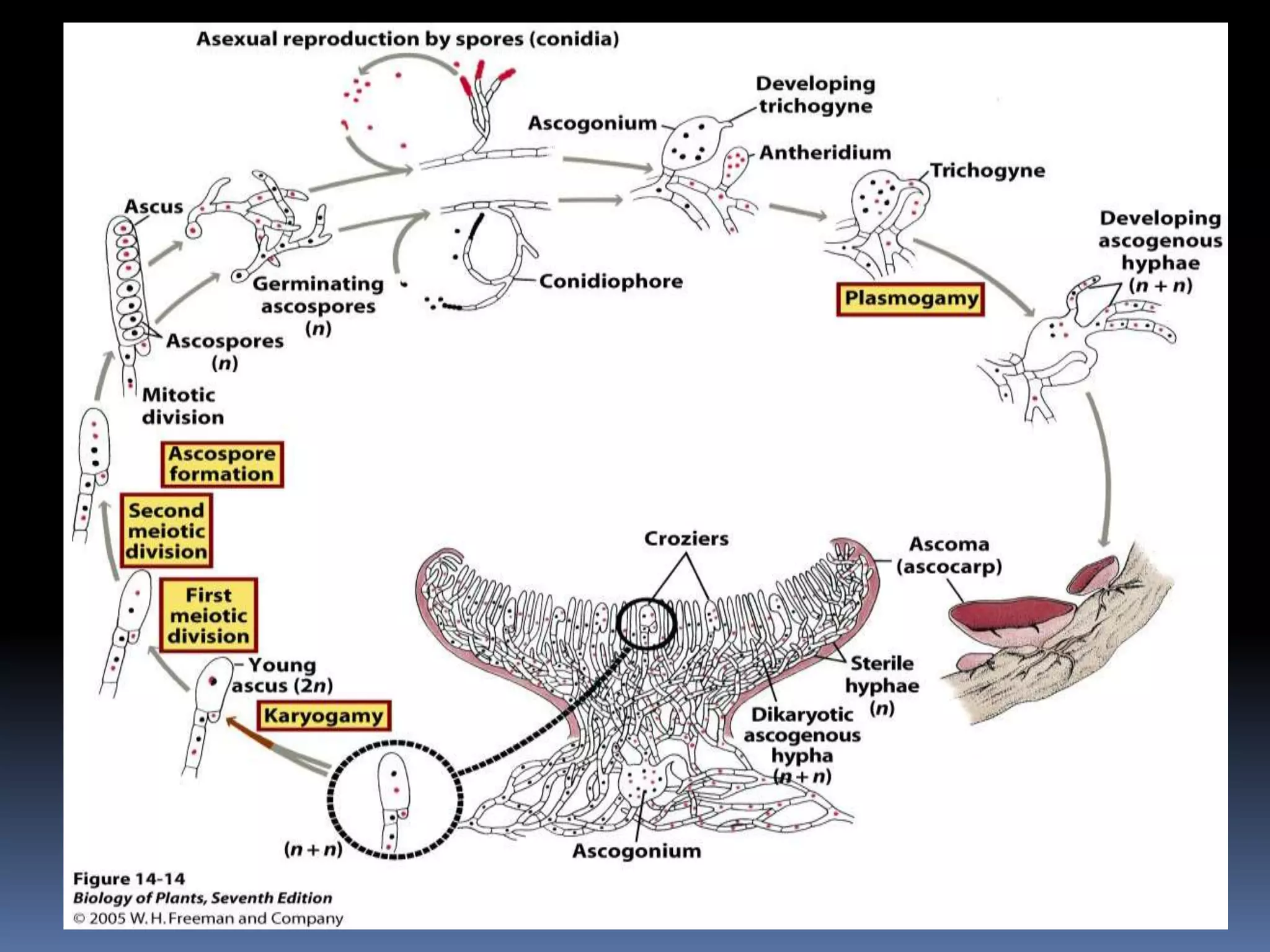
Ascomycota (Sac Fungi)
Include common antibiotic producing fungi and yeasts,
and several human pathogens.
They are lichens, decomposers and pathogens and also
molds with septate hyphae
Characterised by an extensive heterokaryotic stage
during the formation of ascocarps which are the sexual
spores and also the fruiting body
Asexual Reproduction: Conidiospores not enclosed in
a sac. Become airborne easily. Form chains (broom-like
structures).
 Sexual Reproduction: Ascospores enclosed in a sac-
like structure (ascus).
Examples of ascomycetesPenicillium notatum (Produces penicillin)
Saccharomyces (Brewer’s yeast)
Trychophyton (Athlete’s foot)
Aspergillus (Carcinogenic aflatoxin in peanuts),
Blastomyces (Respiratory infections)
Histoplasma capsulatum (Respiratory and systemic
infections)
Life cycle
basidiomycota
• Mainly the mushrooms
• Club shaped reproductive structure
• Mainly food and also associated with plant diseases
• Life cycle includes a long lived diakaryotic mycelium
• Mycelium is septate, septa are performed, sometimes
with a dolipore which is doughnut shaped
• Mycelium passes through 2 phases; monokaryotic and
diakaryotic.
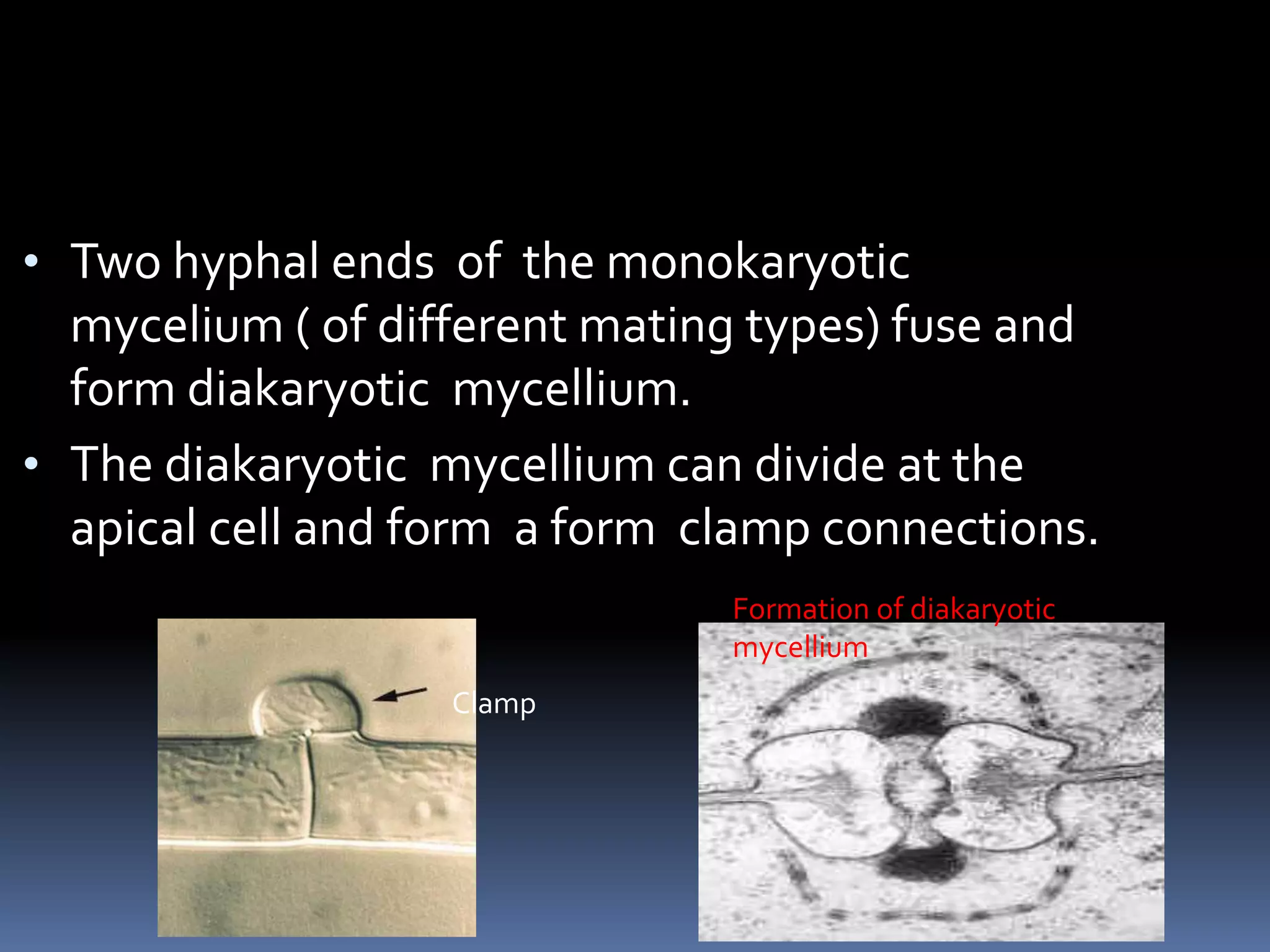
• Two hyphal ends of the monokaryotic
mycelium ( of different mating types) fuse and
form diakaryotic mycellium.
• The diakaryotic mycellium can divide at the
apical cell and form a form clamp connections.
Clamp
Formation of diakaryotic
mycellium
Life cycle of basidiomycota
deutromycota
• No longer exist
• Saprophytic, parasitic and predatory
• Many produce conidia
• Most classified as ascomycetes eg pennicilin
is now a ascomycete
• 2200 known species
• No known sexual stage
• Causes ringworm, atheletes, furasim wilt of
tomatoes
Reproduce asexually.
Catch-all category for unclassified fungi:
Pneumocystis carinii: Causes pneumonia in AIDS
patients. Leading cause of death in AIDS patients.
Originally classified as a protozoan.
Candida albicans: Causes yeast infections of vagina
in women. Opportunistic infections of mucous
membranes in AIDS patients

Taflaw presentation: Classification of Fungi

  • 2.
    CHARACTERISTICS OF FUNGI 1.Yeasts Unicellularfungi, nonfilamentous, typically oval or spherical cells. Reproduce by mitosis: Fission yeasts: Divide evenly to produce two new cells (Schizosaccharomyces). Budding yeasts: Divide unevenly by budding (Saccharomyces). Budding yeasts can form pseudohypha, a short chain of undetached cells. Candida albicans invade tissues through pseudohyphae. Yeasts are facultative anaerobes, which allows them to grow in a variety of environments. When oxygen is available, they carry out aerobic respiration. When oxygen is not available, they ferment carbohydrates to produce ethanol and carbon dioxide.
  • 3.
    CHARACTERISTICS OF FUNGI(Continued) 2. Molds and Fleshy Fungi Multicellular, filamentous fungi. Identified by physical appearance, colony characteristics, and reproductive spores. Thallus: Body of a mold or fleshy fungus. Consists of many hyphae. Hyphae (Sing: Hypha): Long filaments of cells joined together. Septate hyphae: Cells are divided by cross-walls (septa). Coenocytic (Aseptate) hyphae: Long, continuous cells that are not divided by septa. Hyphae grow by elongating at the tips. Each part of a hypha is capable of growth. Vegetative Hypha: Portion that obtains nutrients. Reproductive or Aerial Hypha: Portion connected with reproduction. Mycelium: Large, visible, filamentous mass made up of many hyphae.
  • 4.
    Characteristics of FungalHyphae: Septate versus Coenocytic
  • 6.
    LIFE CYCLE OFFUNGI  Filamentous fungi can reproduce asexually by fragmentation of their hyphae.  Fungal spores are formed from aerial hyphae and are used for both sexual and asexual reproduction. 1. Asexual spores: Formed by the aerial hyphae of one organism. New organisms are identical to parent.  Conidiospore: Unicellular or multicellular spore that is not enclosed in a sac.  Chlamydospore: Thick-walled spore formed within a hyphal segment.  Sporangiospore: Asexual spore formed within a sac (sporangium). 2. Sexual spores: Formed by the fusion of nuclei from two opposite mating strains of the same species. New organisms are different from both parents.
  • 8.
    Zygomycota (Conjugation Fungi) Also known as bread molds as most of the zygomycetes are molds  Saprophytic molds with coenocytic hyphae (lacking septa).  Their main source of reproduction is by asexual reproduction sexual reproduction may occur by the process of conjugation.  It has the sporangiospore which is an asexual spore enclosed within a sporangium
  • 9.
     Sexual Reproduction:Occurs through conjugation, the joining of hypha of two different strains (plus and minus).  Zygospores: Sexual spores which are enclosed in a thick, resistant wall. The zygomycetes are generally not pathogens though Rhizopus nigricans: (Common black bread mold.) May cause opportunistic infections in diabetes patients
  • 10.
    Life Cycle ofa Zygomycete: Black Bread Mold (Rhizopus)
  • 11.
    Ascomycota (Sac Fungi) Includecommon antibiotic producing fungi and yeasts, and several human pathogens. They are lichens, decomposers and pathogens and also molds with septate hyphae Characterised by an extensive heterokaryotic stage during the formation of ascocarps which are the sexual spores and also the fruiting body Asexual Reproduction: Conidiospores not enclosed in a sac. Become airborne easily. Form chains (broom-like structures).  Sexual Reproduction: Ascospores enclosed in a sac- like structure (ascus).
  • 12.
    Examples of ascomycetesPenicilliumnotatum (Produces penicillin) Saccharomyces (Brewer’s yeast) Trychophyton (Athlete’s foot) Aspergillus (Carcinogenic aflatoxin in peanuts), Blastomyces (Respiratory infections) Histoplasma capsulatum (Respiratory and systemic infections)
  • 13.
  • 15.
    basidiomycota • Mainly themushrooms • Club shaped reproductive structure • Mainly food and also associated with plant diseases • Life cycle includes a long lived diakaryotic mycelium • Mycelium is septate, septa are performed, sometimes with a dolipore which is doughnut shaped • Mycelium passes through 2 phases; monokaryotic and diakaryotic.
  • 16.
    • Two hyphalends of the monokaryotic mycelium ( of different mating types) fuse and form diakaryotic mycellium. • The diakaryotic mycellium can divide at the apical cell and form a form clamp connections. Clamp Formation of diakaryotic mycellium
  • 17.
    Life cycle ofbasidiomycota
  • 18.
    deutromycota • No longerexist • Saprophytic, parasitic and predatory • Many produce conidia • Most classified as ascomycetes eg pennicilin is now a ascomycete • 2200 known species • No known sexual stage • Causes ringworm, atheletes, furasim wilt of tomatoes
  • 19.
    Reproduce asexually. Catch-all categoryfor unclassified fungi: Pneumocystis carinii: Causes pneumonia in AIDS patients. Leading cause of death in AIDS patients. Originally classified as a protozoan. Candida albicans: Causes yeast infections of vagina in women. Opportunistic infections of mucous membranes in AIDS patients