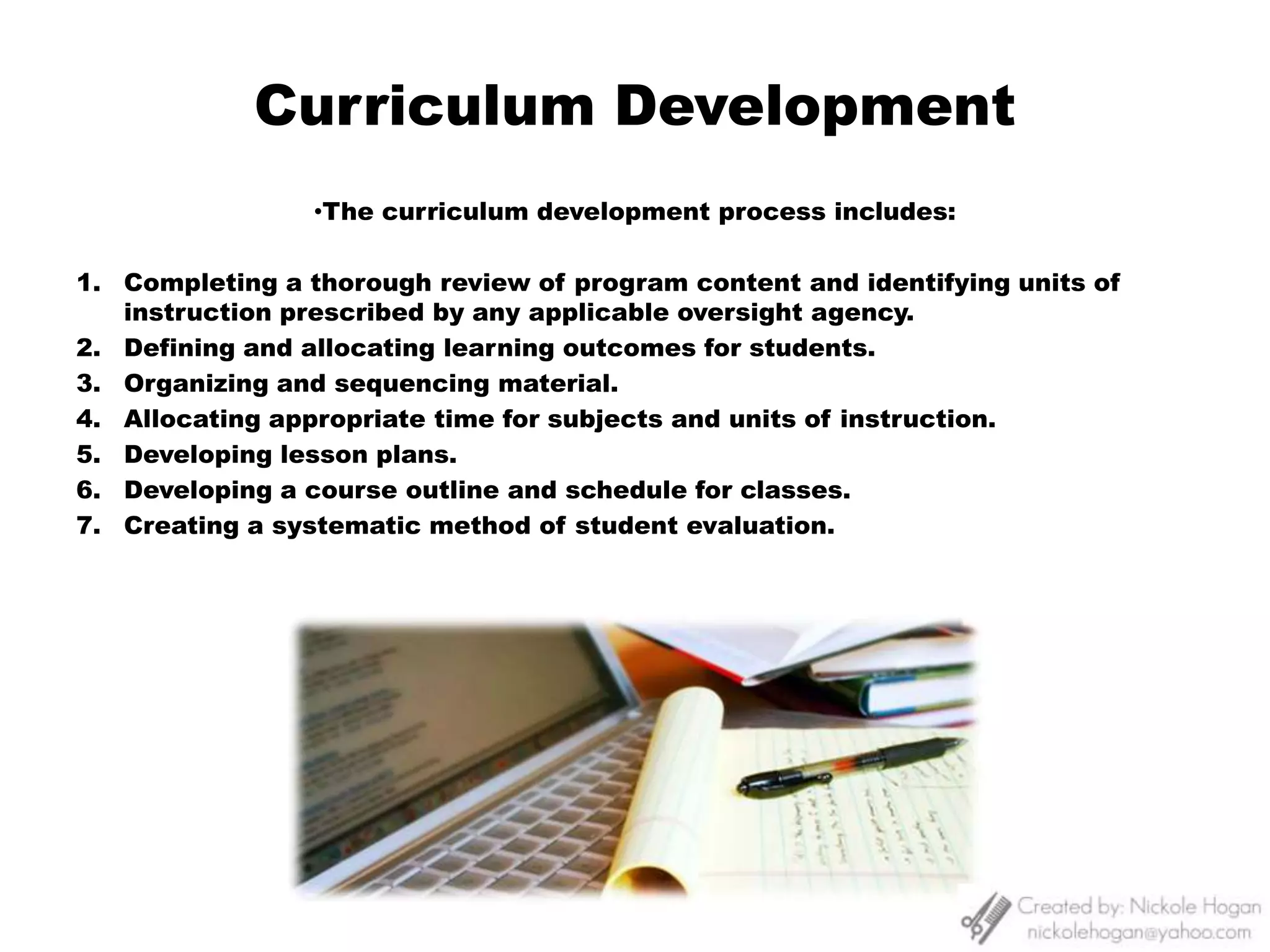
Curriculum DevelopmentThe curriculum development process includes:Completing a thorough review of program content and identifying units of instruction prescribed by any applicable oversight agency.Defining and allocating learning outcomes for students.Organizing and sequencing material.Allocating appropriate time for subjects and units of instruction.Developing lesson plans.Developing a course outline and schedule for classes.Creating a systematic method of student evaluation.
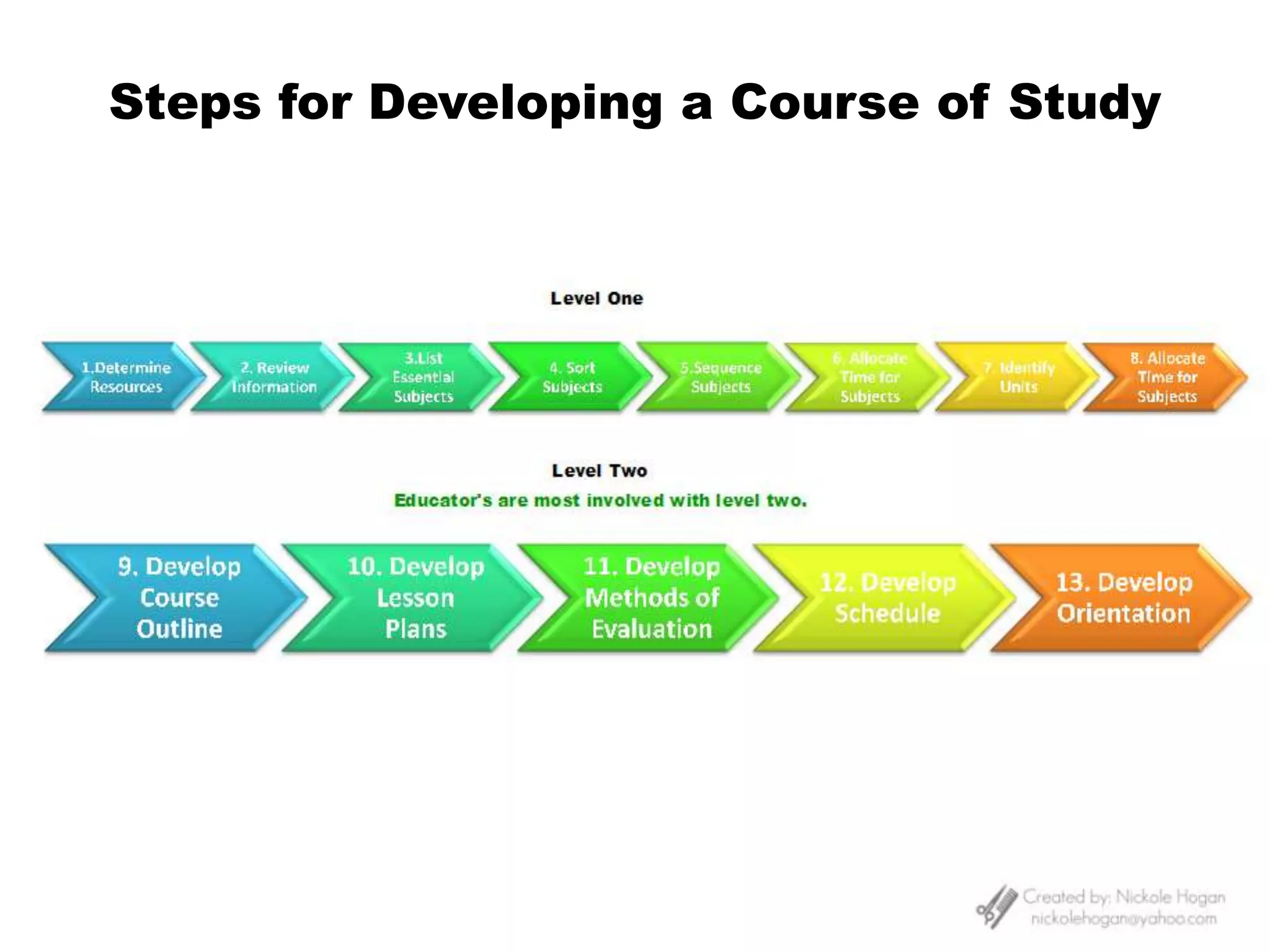
Steps for Developing a Course of Study
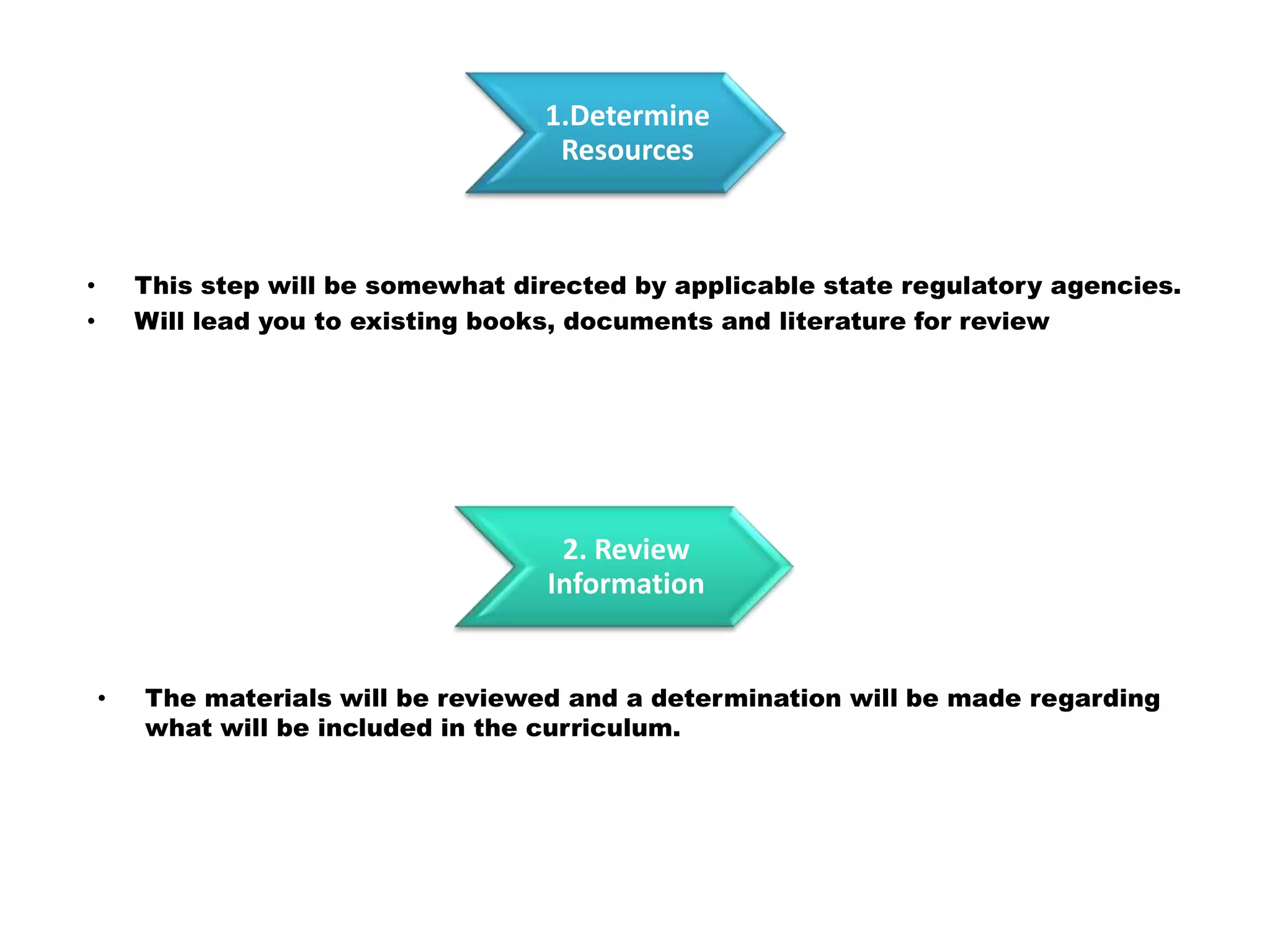
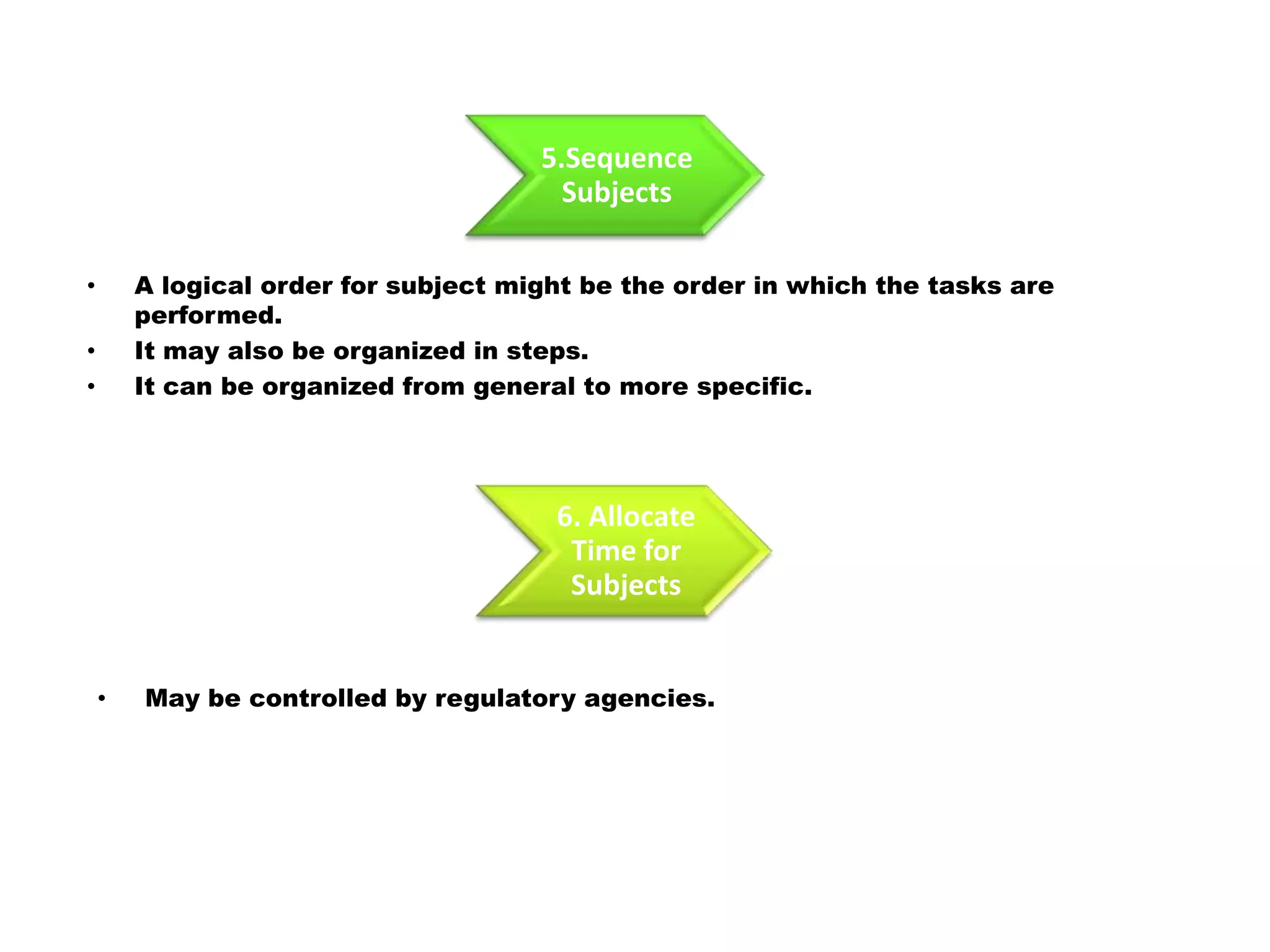
1.Determine Resources2. Review InformationThis step will be somewhat directed by applicable state regulatory agencies.
Will lead you to existing books, documents and literature for review
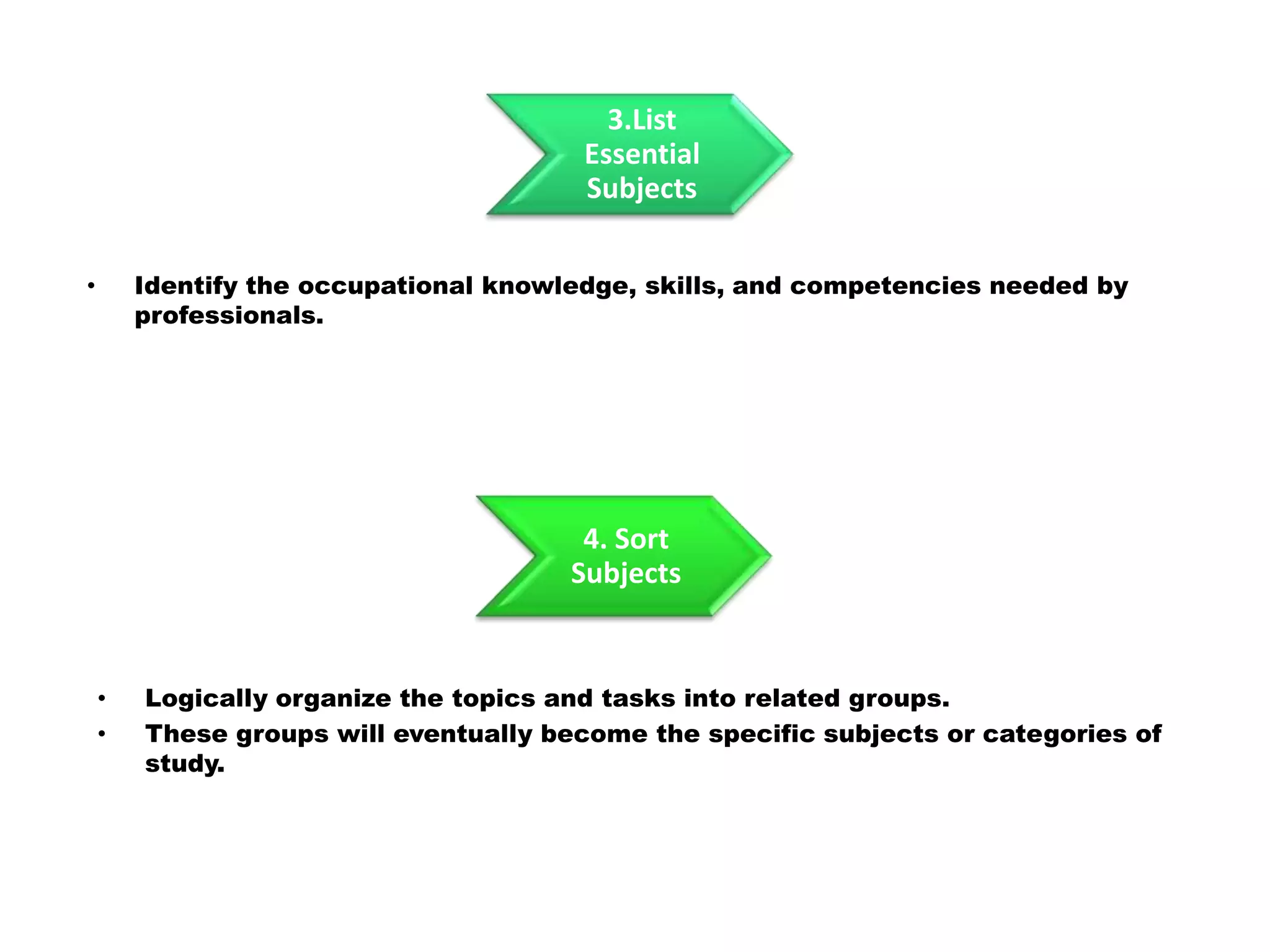
The materials will be reviewed and a determination will be made regarding what will be included in the curriculum.3.List Essential Subjects4. Sort SubjectsIdentify the occupational knowledge, skills, and competencies needed by professionals.
Logically organize the topics and tasks into related groups.
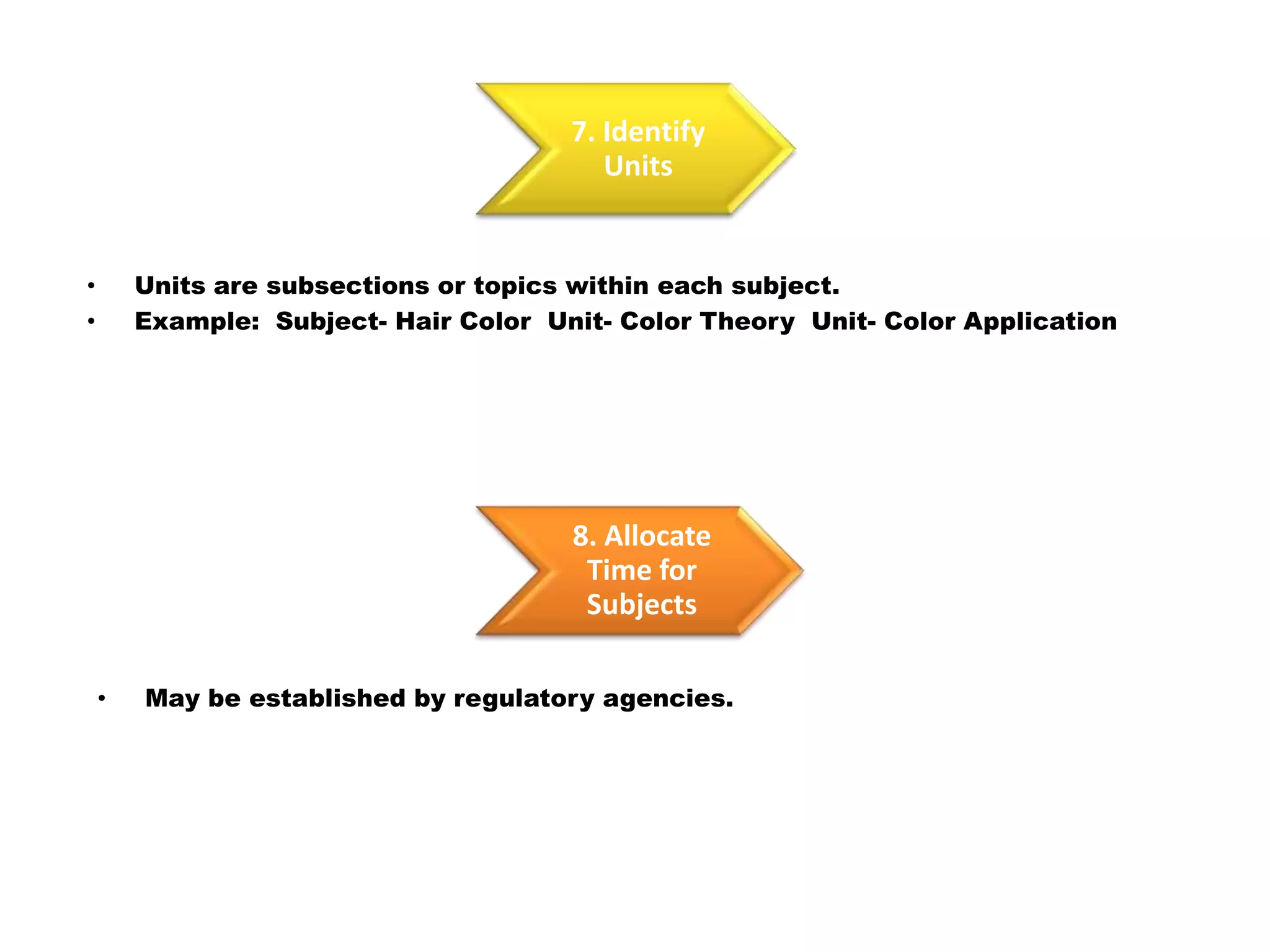
These groups will eventually become the specific subjects or categories of study.5.Sequence Subjects6. Allocate Time for SubjectsA logical order for subject might be the order in which the tasks are performed.
It may also be organized in steps.
It can be organized from general to more specific.
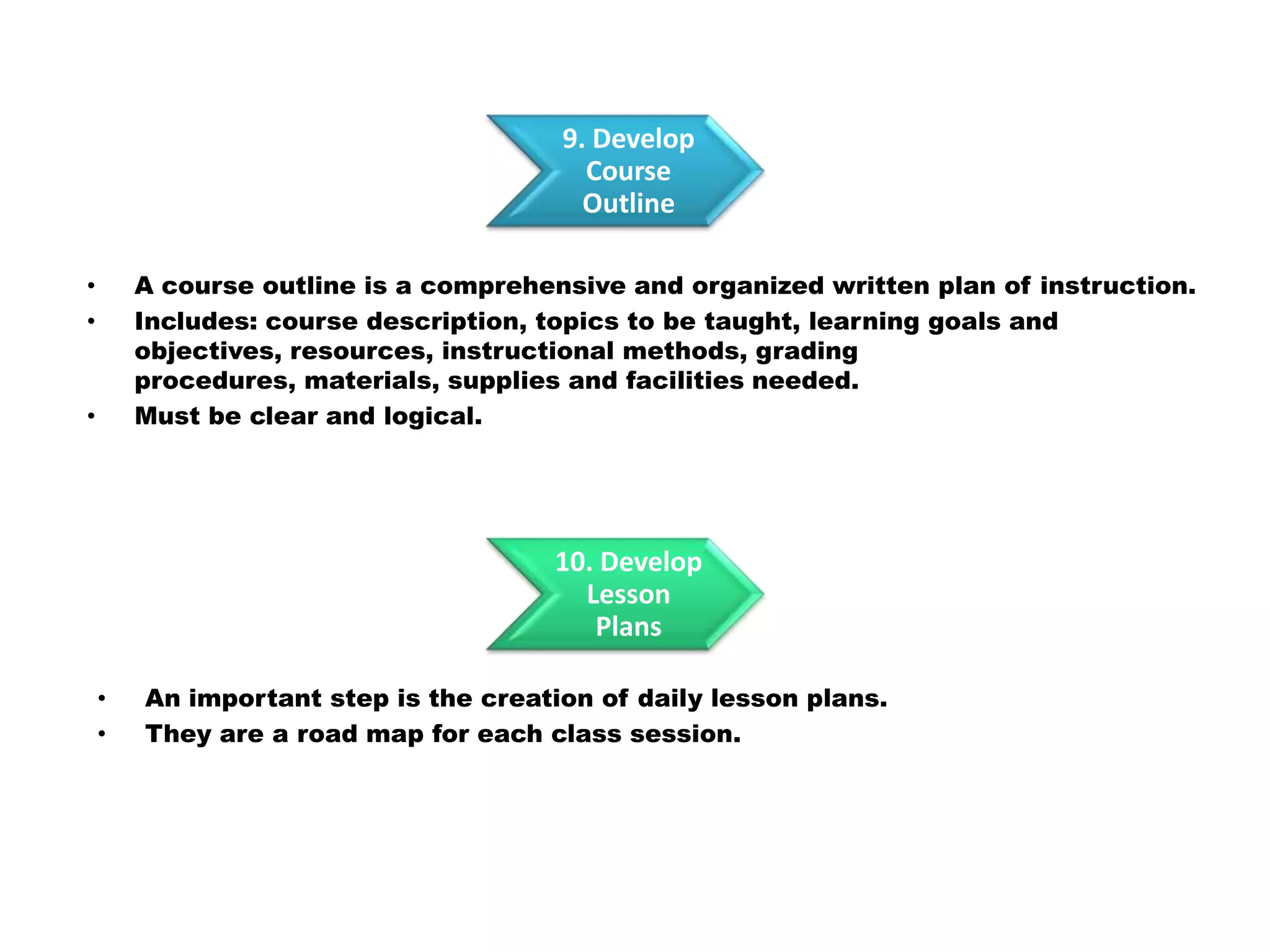
May be controlled by regulatory agencies.7. Identify Units8. Allocate Time for SubjectsUnits are subsections or topics within each subject.
Example:  Subject- Hair Color  Unit- Color Theory  Unit- Color Application
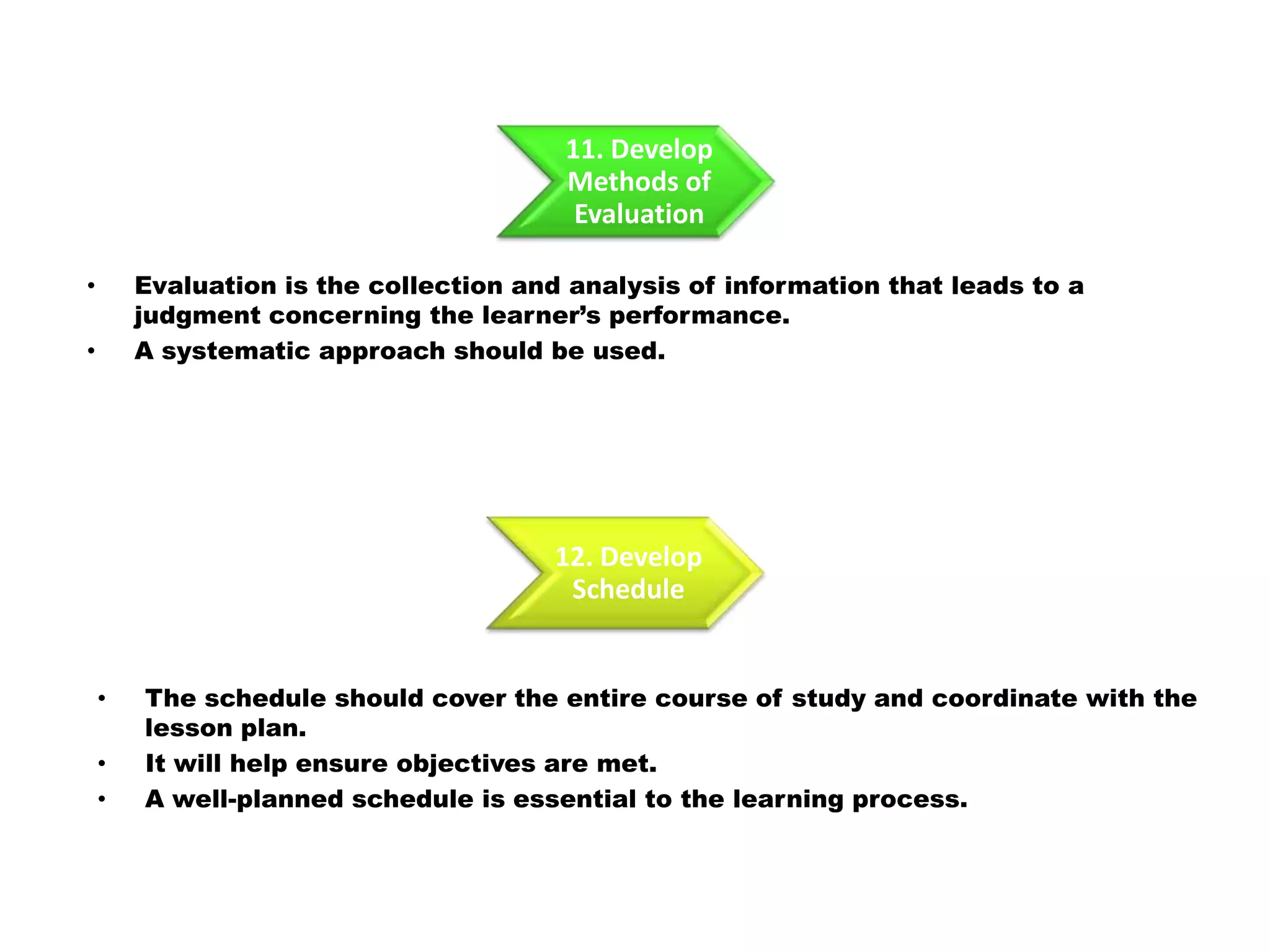
May be established by regulatory agencies.9. Develop Course Outline10. Develop Lesson PlansA course outline is a comprehensive and organized written plan of instruction.
Includes: course description, topics to be taught, learning goals and objectives, resources, instructional methods, grading procedures, materials, supplies and facilities needed.
Must be clear and logical.
An important step is the creation of daily lesson plans.
They are a road map for each class session.11. Develop Methods of Evaluation12. Develop ScheduleEvaluation is the collection and analysis of information that leads to a judgment concerning the learner’s performance.
A systematic approach should be used.
The schedule should cover the entire course of study and coordinate with the lesson plan.
It will help ensure objectives are met.
A well-planned schedule is essential to the learning process.13. Develop OrientationIt should provide information about the educational program.

Chapter 6

  • 1.
    Curriculum DevelopmentThe curriculumdevelopment process includes:Completing a thorough review of program content and identifying units of instruction prescribed by any applicable oversight agency.Defining and allocating learning outcomes for students.Organizing and sequencing material.Allocating appropriate time for subjects and units of instruction.Developing lesson plans.Developing a course outline and schedule for classes.Creating a systematic method of student evaluation.
  • 2.
    Steps for Developinga Course of Study
  • 3.
    1.Determine Resources2. ReviewInformationThis step will be somewhat directed by applicable state regulatory agencies.
  • 4.
    Will lead youto existing books, documents and literature for review
  • 5.
    The materials willbe reviewed and a determination will be made regarding what will be included in the curriculum.3.List Essential Subjects4. Sort SubjectsIdentify the occupational knowledge, skills, and competencies needed by professionals.
  • 6.
    Logically organize thetopics and tasks into related groups.
  • 7.
    These groups willeventually become the specific subjects or categories of study.5.Sequence Subjects6. Allocate Time for SubjectsA logical order for subject might be the order in which the tasks are performed.
  • 8.
    It may alsobe organized in steps.
  • 9.
    It can beorganized from general to more specific.
  • 10.
    May be controlledby regulatory agencies.7. Identify Units8. Allocate Time for SubjectsUnits are subsections or topics within each subject.
  • 11.
    Example: Subject-Hair Color Unit- Color Theory Unit- Color Application
  • 12.
    May be establishedby regulatory agencies.9. Develop Course Outline10. Develop Lesson PlansA course outline is a comprehensive and organized written plan of instruction.
  • 13.
    Includes: course description,topics to be taught, learning goals and objectives, resources, instructional methods, grading procedures, materials, supplies and facilities needed.
  • 14.
    Must be clearand logical.
  • 15.
    An important stepis the creation of daily lesson plans.
  • 16.
    They are aroad map for each class session.11. Develop Methods of Evaluation12. Develop ScheduleEvaluation is the collection and analysis of information that leads to a judgment concerning the learner’s performance.
  • 17.
    A systematic approachshould be used.
  • 18.
    The schedule shouldcover the entire course of study and coordinate with the lesson plan.
  • 19.
    It will helpensure objectives are met.
  • 20.
    A well-planned scheduleis essential to the learning process.13. Develop OrientationIt should provide information about the educational program.
  • 21.
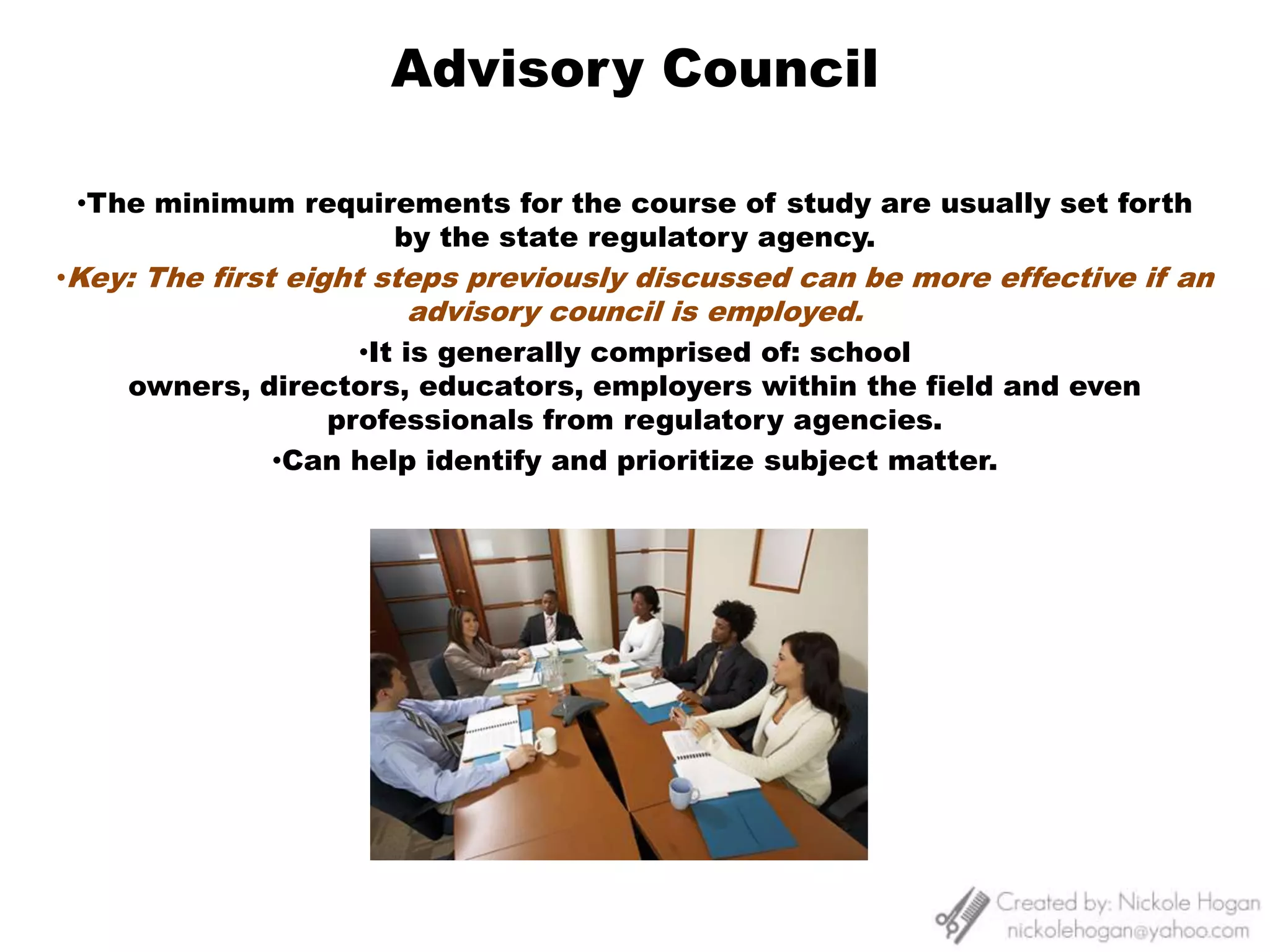
    It should coverthe detailed course syllabus and all its elements, school policies and procedures.Advisory CouncilThe minimum requirements for the course of study are usually set forth by the state regulatory agency.
  • 22.
    Key: The firsteight steps previously discussed can be more effective if an advisory council is employed.
  • 23.
    It is generallycomprised of: school owners, directors, educators, employers within the field and even professionals from regulatory agencies.
  • 24.
    Can help identifyand prioritize subject matter.Organizing MaterialOnce the steps have been completed, those subjects must be organized and sequenced in a logical manner to ensure maximum learning and retention by students.
  • 25.
    Important to avoidmajor gaps in or overlaps in subject matter.Instructional OutcomesThe key elements of course development revolve around intended learner outcomes.
  • 26.
    It is essentialthat the most important goals and objectives are identified.
  • 27.
    Goals, aims, objectives,and outcomes are used interchangeably.
  • 28.
    They address theoutcomes expected for the program of study.
  • 29.
    Goals are firstdefined for the overall program of study.
  • 30.
    Second, goals aredefined for each subject of study.
  • 31.
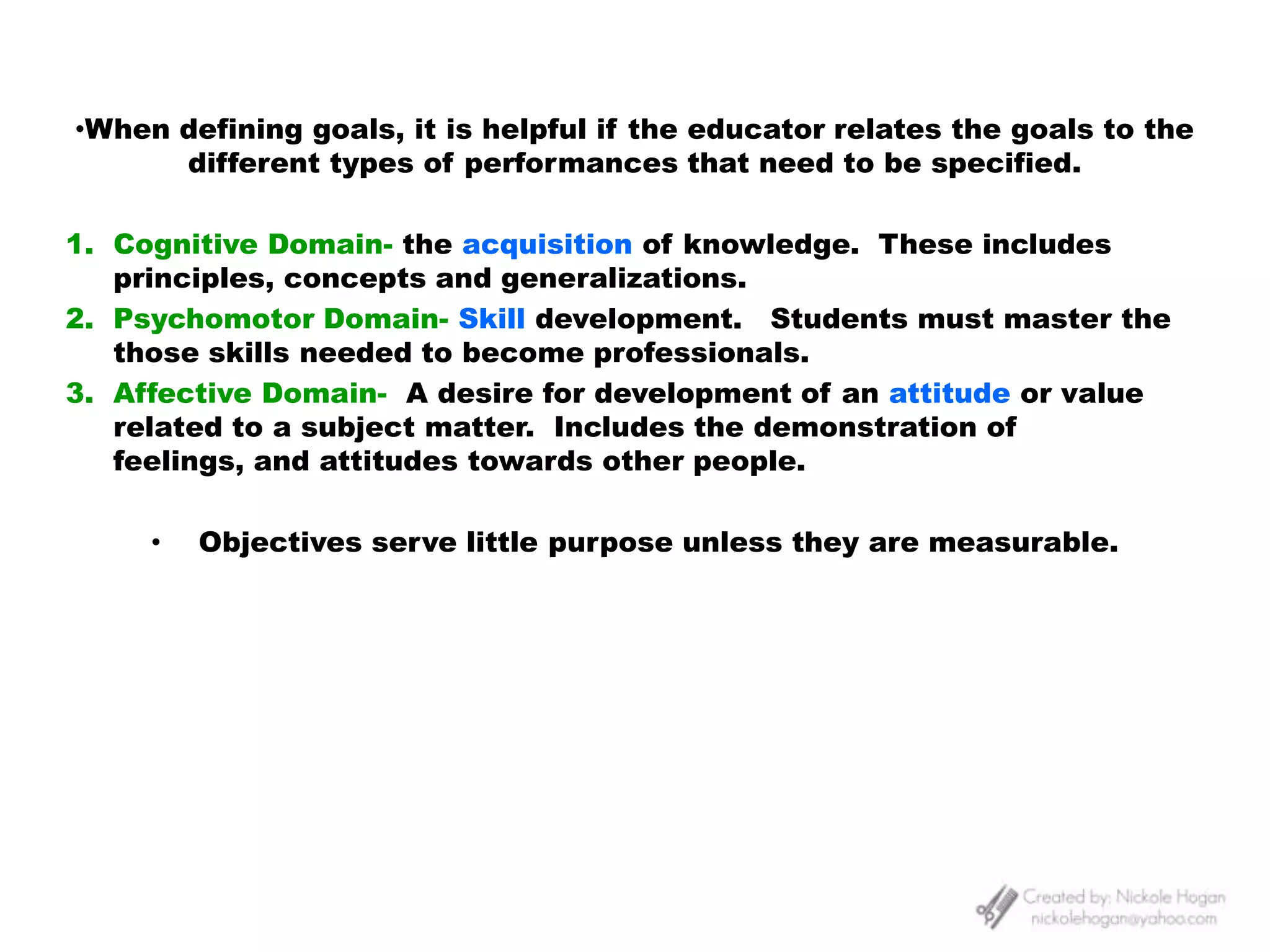
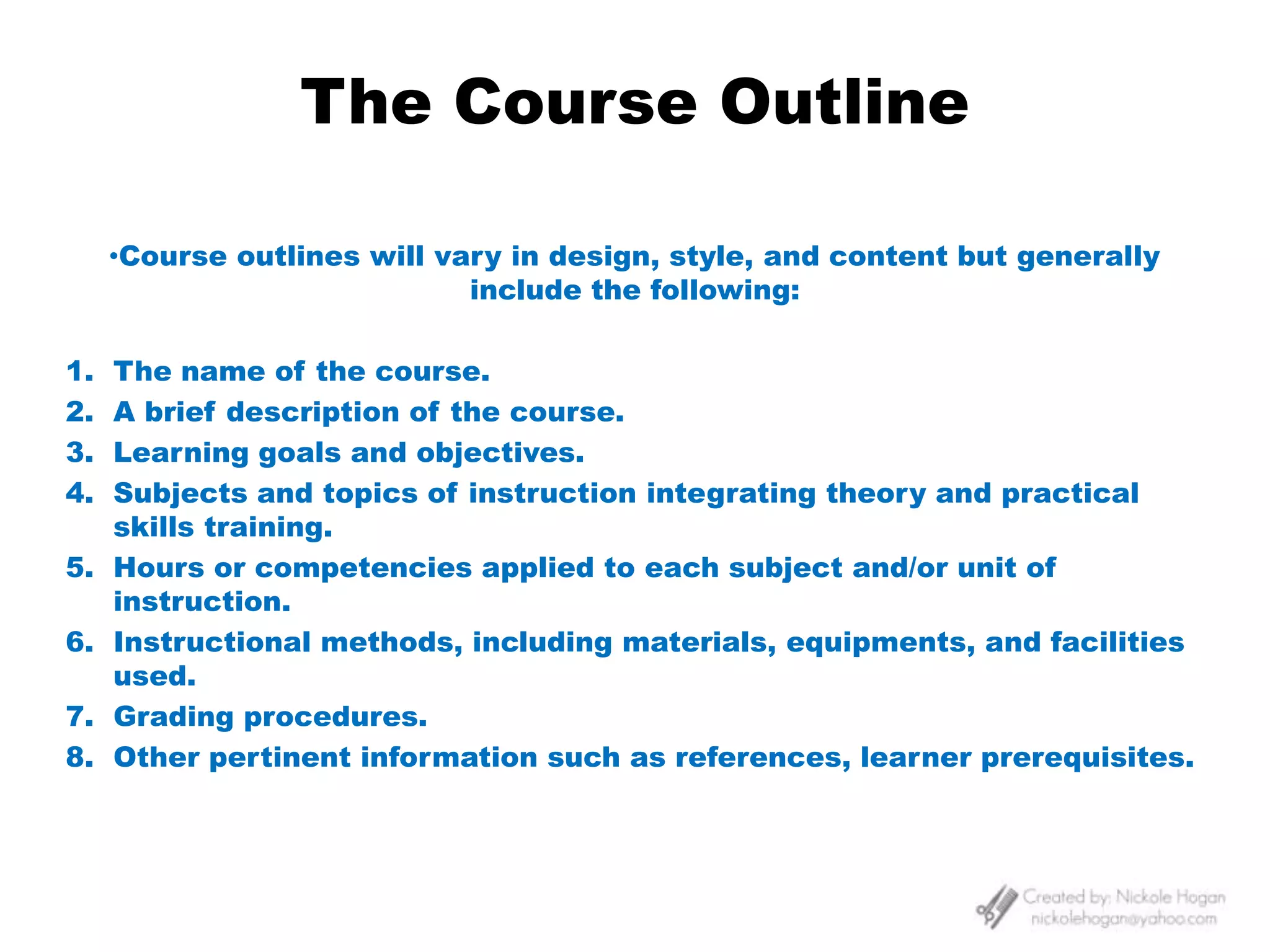
    Third, they aredefined for each unit of study.When defining goals, it is helpful if the educator relates the goals to the different types of performances that need to be specified.Cognitive Domain- the acquisitionof knowledge. These includes principles, concepts and generalizations.Psychomotor Domain- Skill development. Students must master the those skills needed to become professionals.Affective Domain- A desire for development of an attitude or value related to a subject matter. Includes the demonstration of feelings, and attitudes towards other people. Objectives serve little purpose unless they are measurable. The Course OutlineCourse outlines will vary in design, style, and content but generally include the following:The name of the course.A brief description of the course.Learning goals and objectives.Subjects and topics of instruction integrating theory and practical skills training.Hours or competencies applied to each subject and/or unit of instruction.Instructional methods, including materials, equipments, and facilities used.Grading procedures.Other pertinent information such as references, learner prerequisites.
  • 32.
    Orientation ProgramOrientation shouldbe scheduled on or before the first day of class.
  • 33.
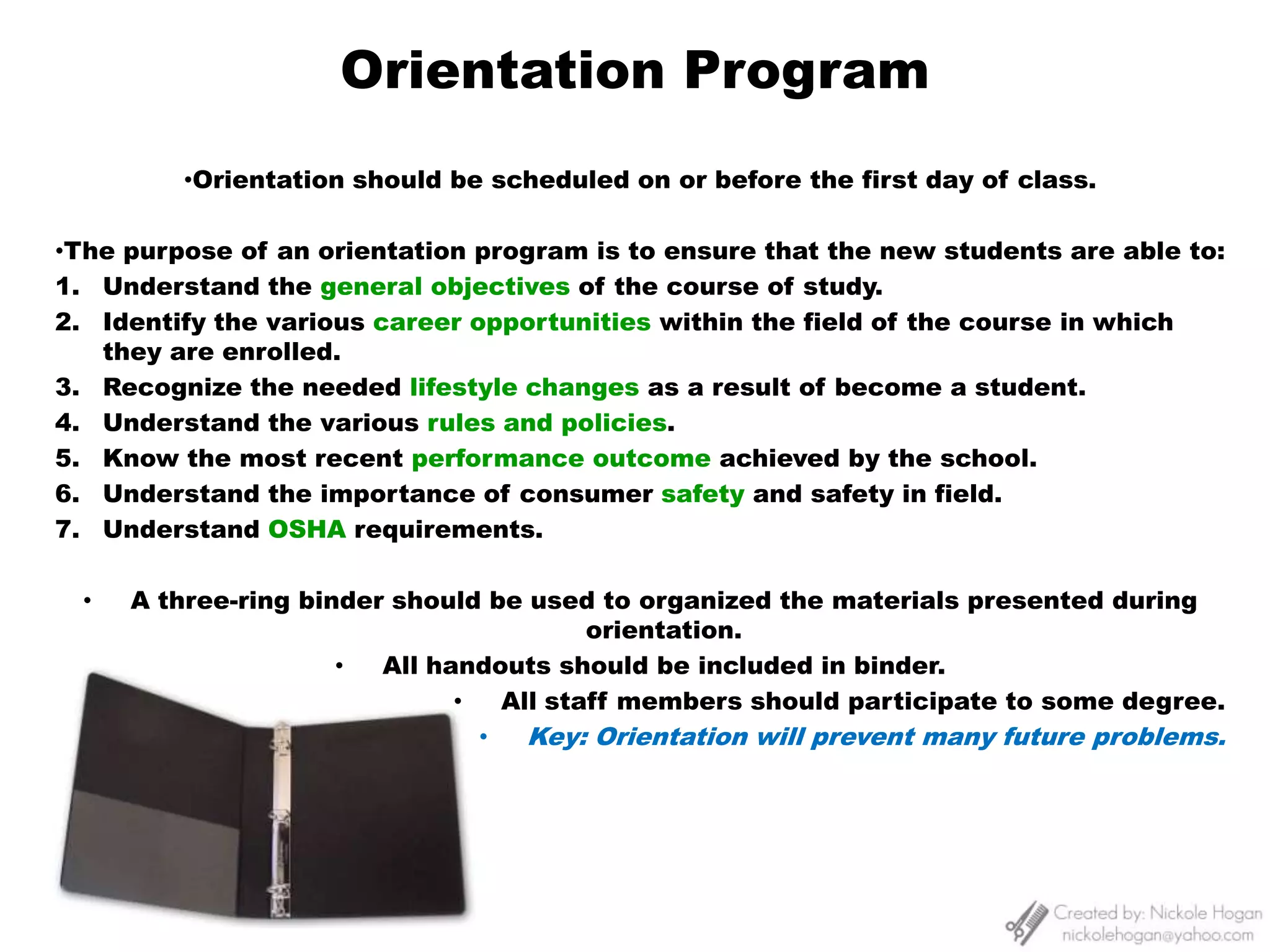
    The purpose ofan orientation program is to ensure that the new students are able to:Understand the general objectives of the course of study.Identify the various career opportunities within the field of the course in which they are enrolled.Recognize the needed lifestyle changes as a result of become a student.Understand the various rules and policies.Know the most recent performance outcome achieved by the school.Understand the importance of consumer safety and safety in field.Understand OSHA requirements.A three-ring binder should be used to organized the materials presented during orientation.
  • 34.
    All handouts shouldbe included in binder.
  • 35.
    All staff membersshould participate to some degree.
  • 36.
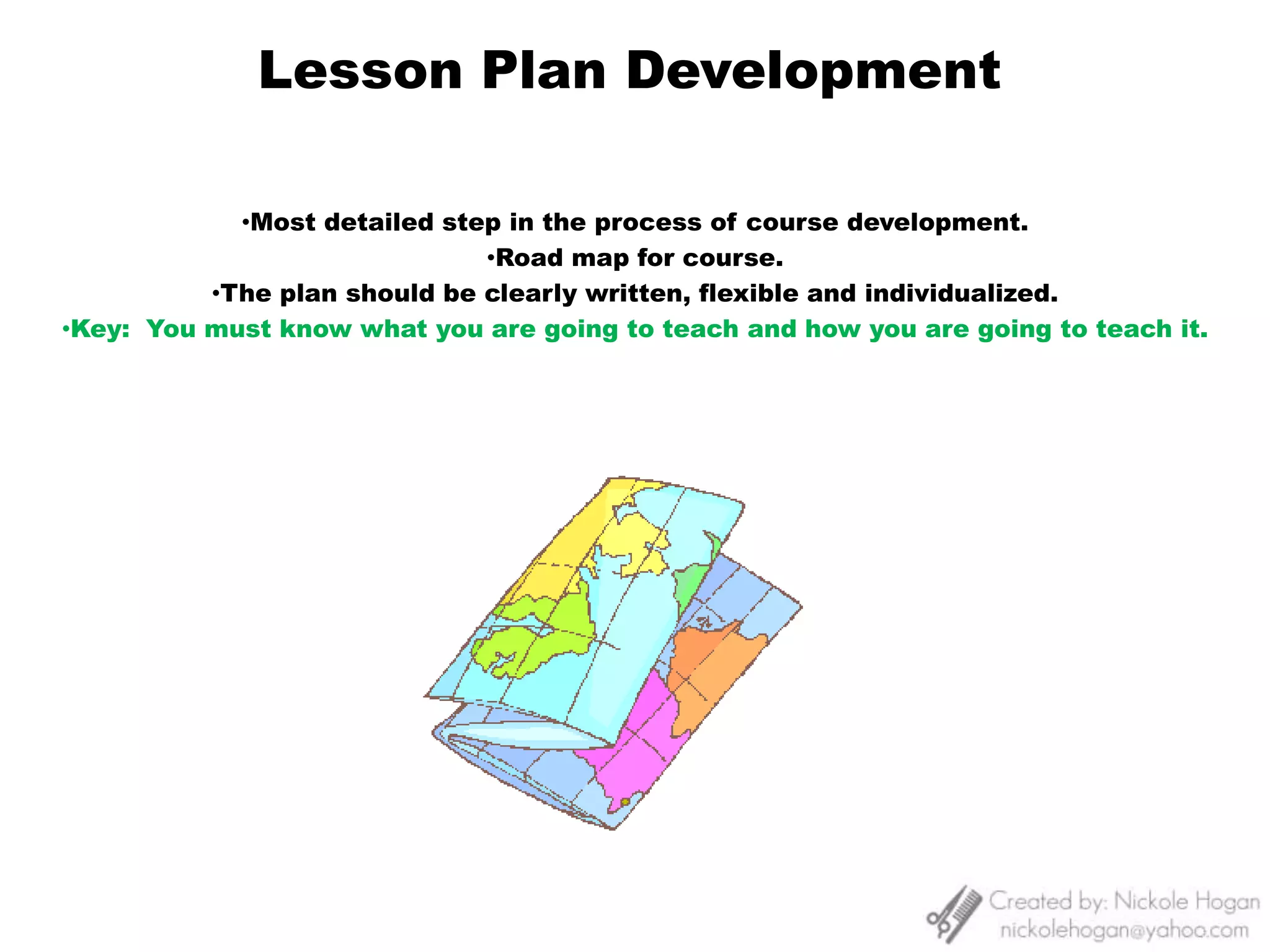
    Key: Orientation willprevent many future problems.Lesson Plan DevelopmentMost detailed step in the process of course development.
  • 37.
  • 38.
    The plan shouldbe clearly written, flexible and individualized.
  • 39.
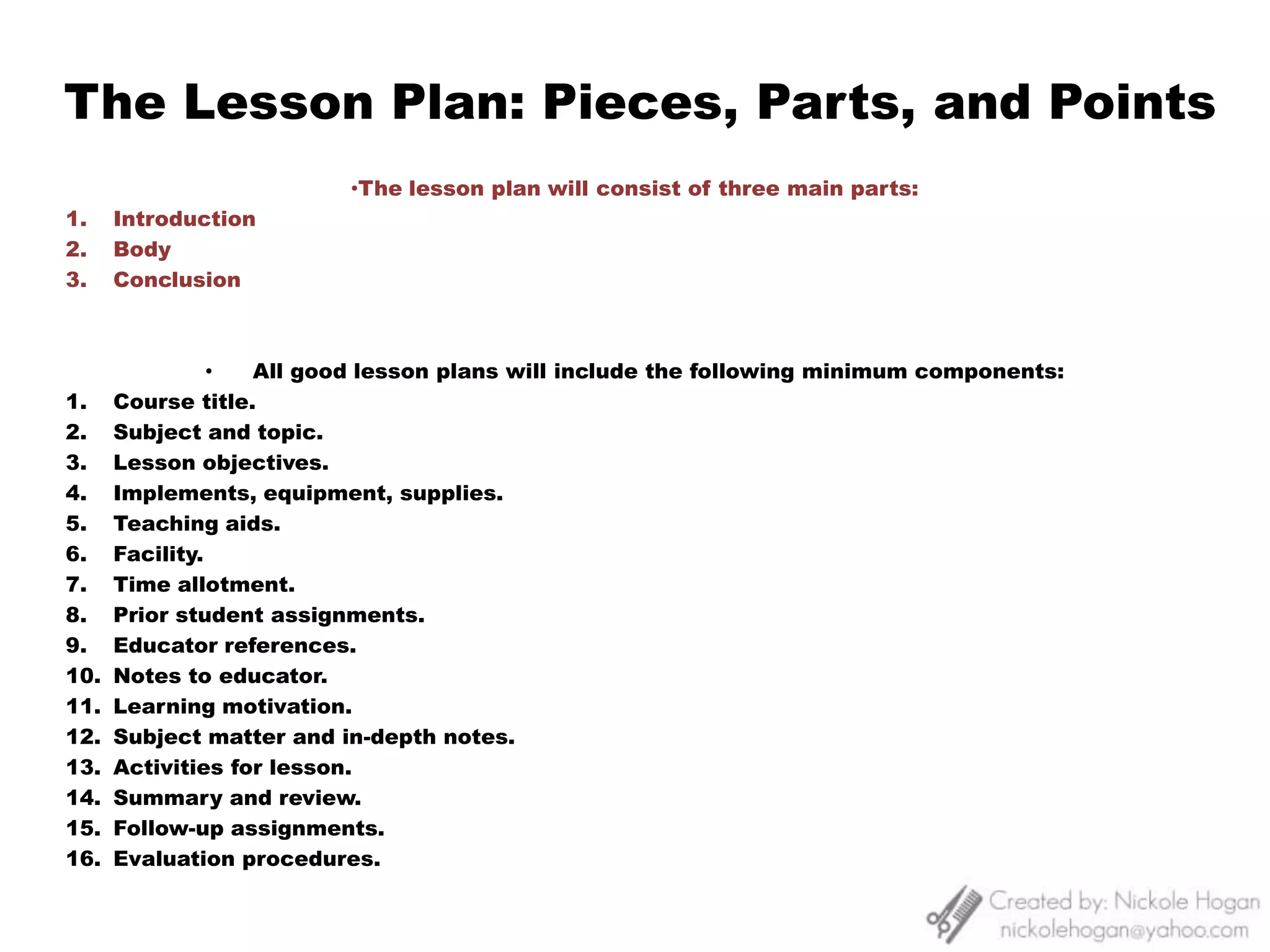
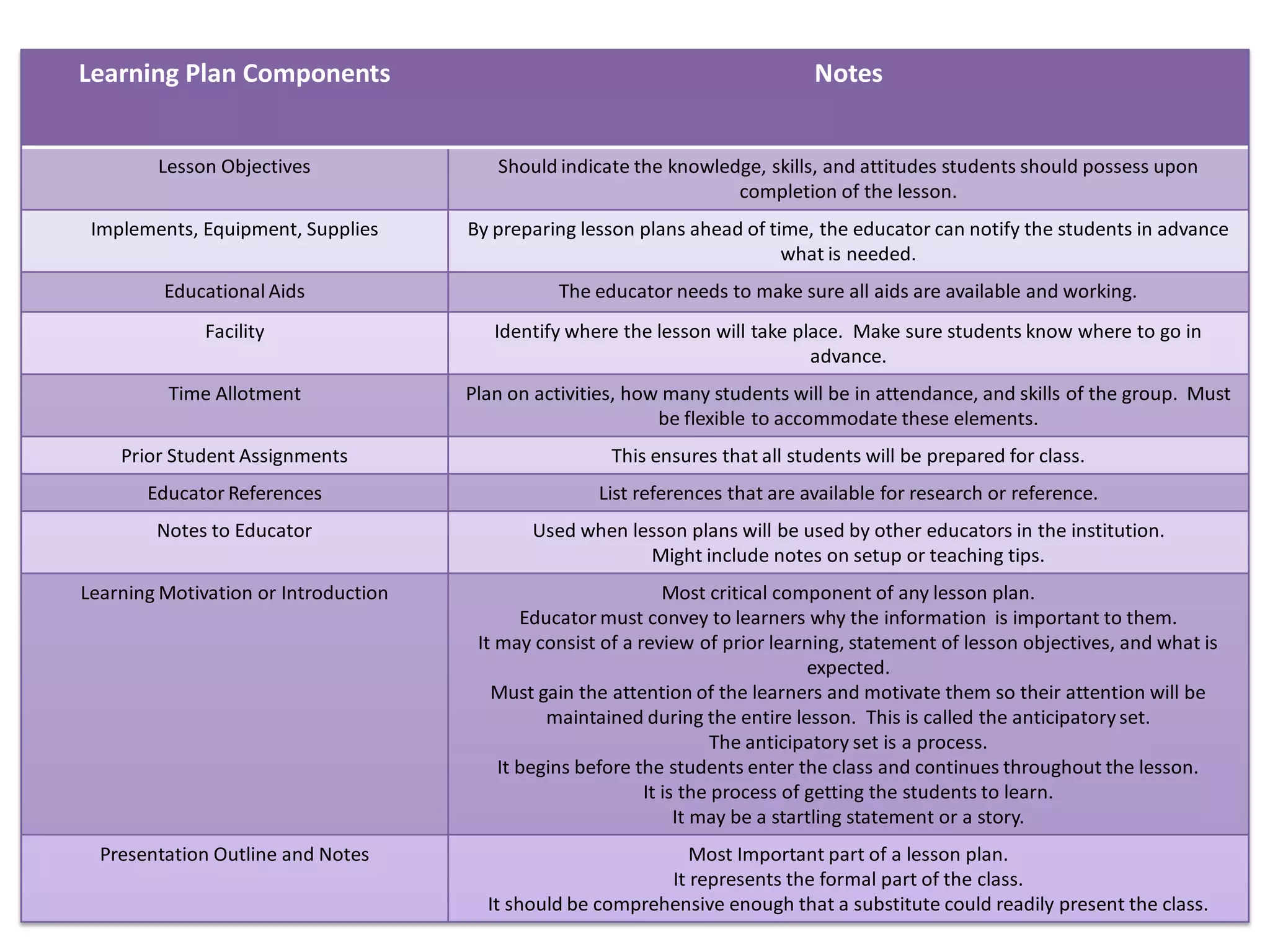
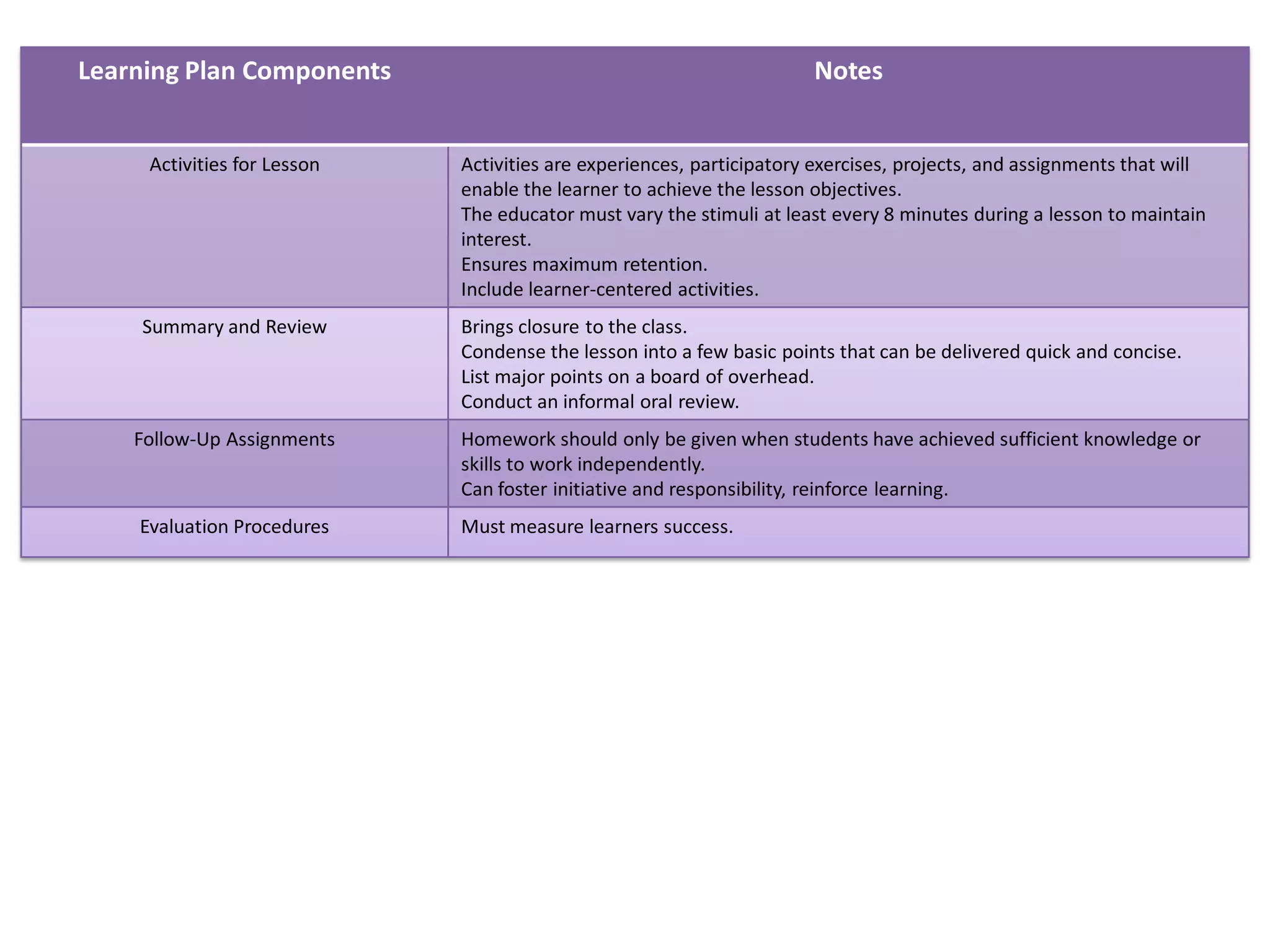
    Key: Youmust know what you are going to teach and how you are going to teach it.The Lesson Plan: Pieces, Parts, and PointsThe lesson plan will consist of three main parts:IntroductionBodyConclusionAll good lesson plans will include the following minimum components:Course title.Subject and topic.Lesson objectives.Implements, equipment, supplies.Teaching aids.Facility.Time allotment.Prior student assignments.Educator references.Notes to educator.Learning motivation.Subject matter and in-depth notes.Activities for lesson.Summary and review.Follow-up assignments.Evaluation procedures.
  • 42.
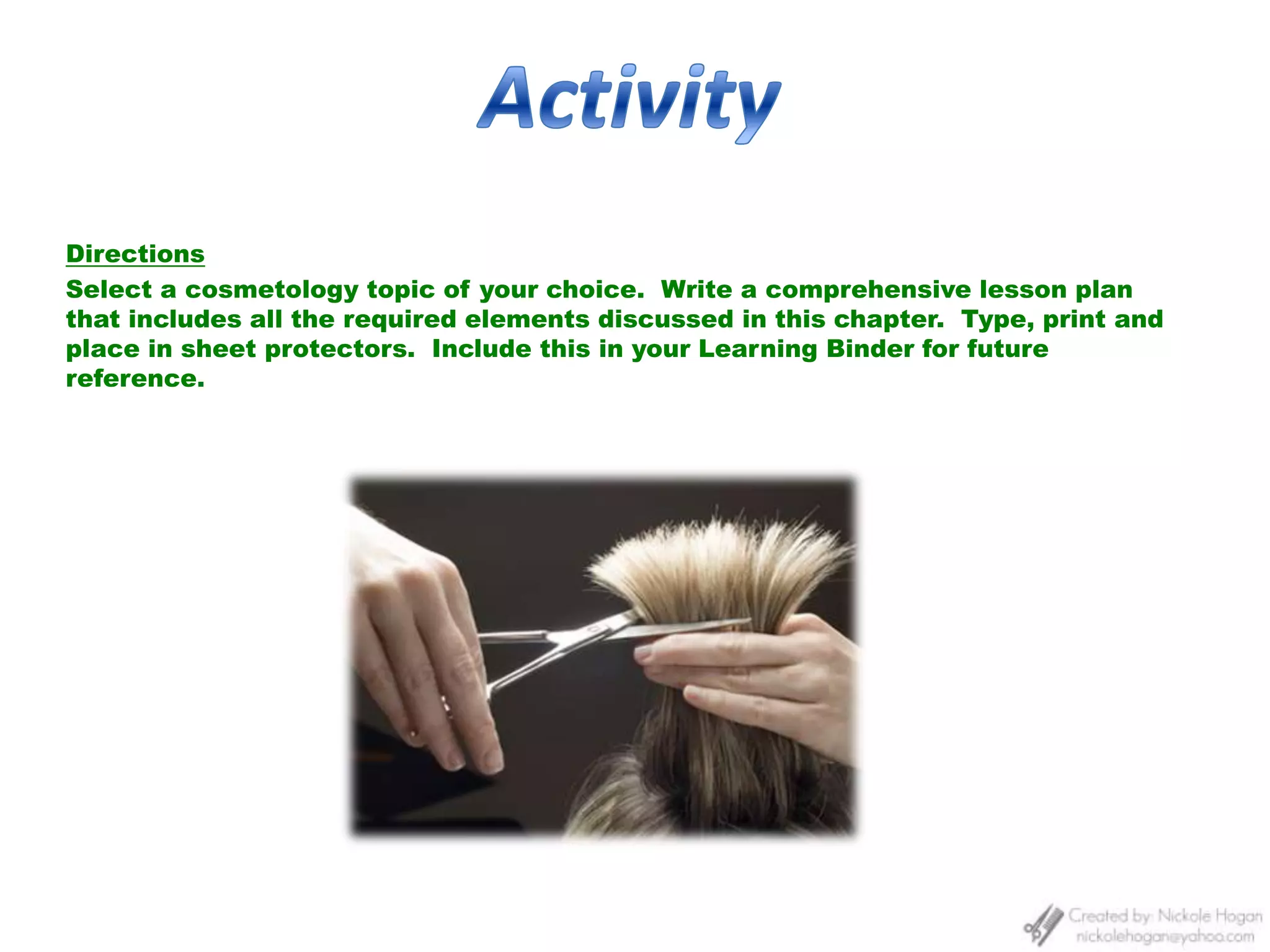
    ActivityDirectionsSelect a cosmetologytopic of your choice. Write a comprehensive lesson plan that includes all the required elements discussed in this chapter. Type, print and place in sheet protectors. Include this in your Learning Binder for future reference.