
Chapter 2: Introductory
Biochemistry
Anatomy and Physiology
Chemistry
 Elements – cannot be broken down into
simpler form
 Chemical symbol – represented with letters
(first always capital and second is small)
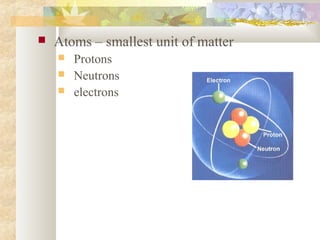
 Atoms – smallest unit of matter
 Protons
 Neutrons
 electrons
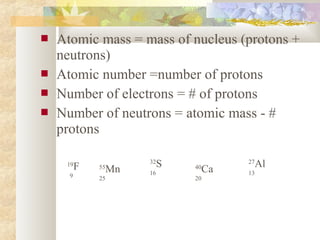
 Atomic mass = mass of nucleus (protons +
neutrons)
 Atomic number =number of protons
 Number of electrons = # of protons
 Number of neutrons = atomic mass - #
protons
19
F
9
55
Mn
25
32
S
16
40
Ca
20
27
Al
13
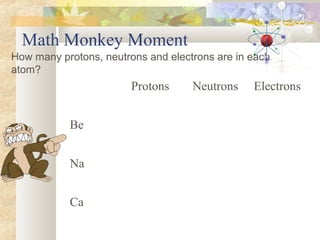
Math Monkey Moment
How many protons, neutrons and electrons are in each
atom?
Protons Neutrons Electrons
Be
Na
Ca
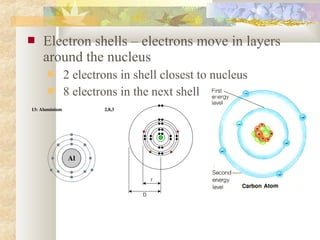
 Electron shells – electrons move in layers
around the nucleus
 2 electrons in shell closest to nucleus
 8 electrons in the next shell
 Ions – atoms that give up or gain electrons
when bonding to another atom become
positive or negative (charge). i.e. Ca2+
or K-
 Molecule – 2 or more atoms share
electrons
Compound – 2 or more different
types of atoms bonded together.
H2O and C6H12O6 are compounds
and molecules
O2 and N2 are molecules not
compounds
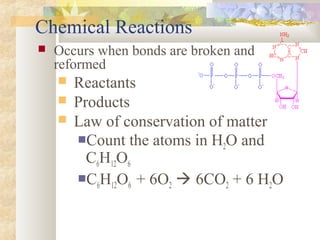
Chemical Reactions
 Occurs when bonds are broken and
reformed
 Reactants
 Products
 Law of conservation of matter
Count the atoms in H2O and
C6H12O6
C6H12O6 + 6O2  6CO2 + 6 H2O
 Chemical energy - Energy stored in chemical
bonds and is a form of potential energy
 Anabolic reactions build substances and
generally require energy which is then stored
in their chemical bonds. i.e. glycogen
 Catabolic reactions break down substances
and release energy. i.e. fat catabolism
 ATP – adenosine triphosphate is the
compound of energy used for the work of
cells in living organisms
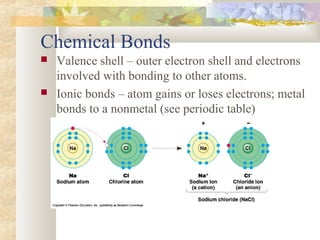
Chemical Bonds
 Valence shell – outer electron shell and electrons
involved with bonding to other atoms.
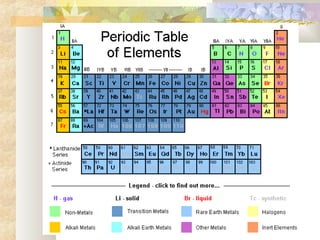
 Ionic bonds – atom gains or loses electrons; metal
bonds to a nonmetal (see periodic table)
Cation – positively charged ion
Anion – negatively charged ion
Electrolytes – ionic compound
that breaks apart into cations
and anions when dissolved
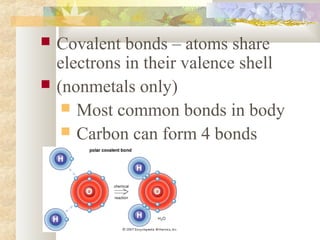
 Covalent bonds – atoms share
electrons in their valence shell
 (nonmetals only)
 Most common bonds in body
 Carbon can form 4 bonds
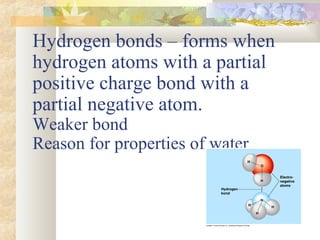
Hydrogen bonds – forms when
hydrogen atoms with a partial
positive charge bond with a
partial negative atom.
Weaker bond
Reason for properties of water
Vocabulary Cards
Anabolic
Catabolic
Cation
anion
Ionic bond
Covalent
bond
Hydrogen
bond
Inorganic Compounds Organic – carbon containing compounds
(except CO2)
 Inorganic – all others including CO2
 Water is most important and abundant
inorganic compound in living systems. 5
properties
 Excellent solvent
Solutes that are polar (slightly
charged) are hydrophilic and dissolve
in water.
Solutes that are nonpolar are
hydrophobic and do not dissolve in
water.
 Participates in chemical reactions
 Absorbs and releases heat slowly –
helps moderate changes in body
temp.
 Requires a lot of heat to change
from liquid to gas
 Serves as a lubricant: major
component of mucus
Acids and bases
 Acids break apart or dissociate into
one or more hydrogen ions (H+
)
 Bases break apart or dissociate into
one or more hydroxide ions (OH-
)
 Salt dissociates into cations and anions
that are neither H+
nor OH-
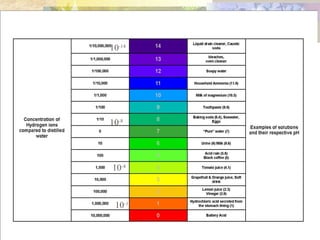
 pH
 Scale of 0-14
 Below 7, greater H+
than OH-
and are acids
 Above 7, greater OH-
than H+
and are bases
 7 is neutral
10-1
10-4
10-8
10-14
Buffers
 Living systems are very sensitive to
changes in pH
 Buffer systems keep pH stable by giving
up H+
or OH-
depending on what is needed
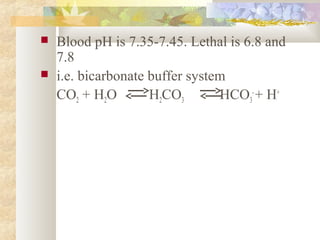
 Blood pH is 7.35-7.45. Lethal is 6.8 and
7.8
 i.e. bicarbonate buffer system
CO2 + H2O H2CO3 HCO3
-
+ H+
Organic compounds
 Most common elements of living
organisms: CHNOPS
 Made of monomers or building blocks
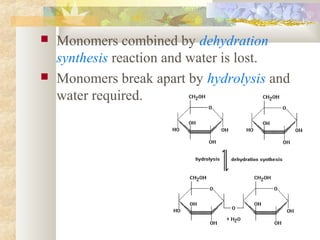
 Monomers combined by dehydration
synthesis reaction and water is lost.
 Monomers break apart by hydrolysis and
water required.
Vocabulary Cards
Organic
Inorganic
Dehydration
synthesis
Hydrolysis
Buffer
pH
Organic Macromolecules
 Carbohydrates
 Lipids
 Proteins
 Nucleic Acids
Carbohydrates
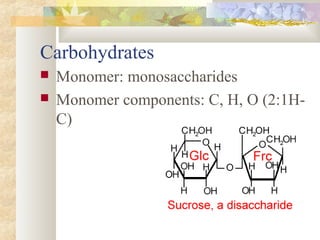
 Monomer: monosaccharides
 Monomer components: C, H, O (2:1H-
C)
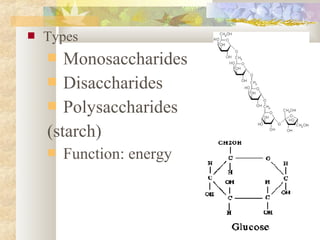
 Types
 Monosaccharides
 Disaccharides
 Polysaccharides
(starch)
 Function: energy
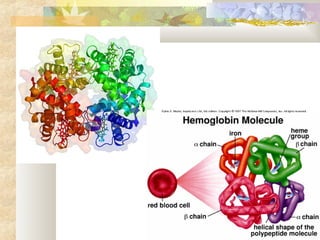
Proteins
 Monomers: amino acids
 Monomer components:
 amino group (-NH2), carboxyl
group (-COOH), and side chain
(R group)
 C, H, O, N, S
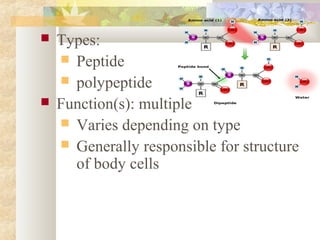
 Types:
 Peptide
 polypeptide
 Function(s): multiple
 Varies depending on type
 Generally responsible for structure
of body cells
Enzymes
 Proteins that are catalysts to
speed up chemical reactions
without being altered
themselves.
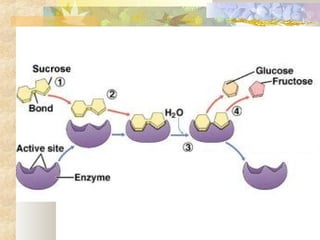
 Act as a lock and key
 Substrate is the key and binds
to the active site on the enzyme
 Enzyme is the lock or binding
site
 Form enzyme-substrate
complex
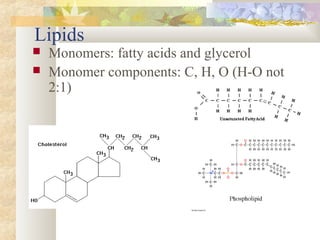
Lipids
 Monomers: fatty acids and glycerol
 Monomer components: C, H, O (H-O not
2:1)
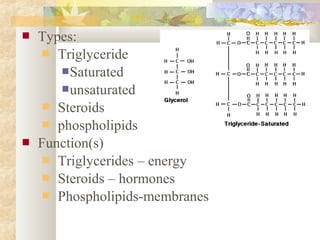
 Types:
 Triglyceride
Saturated
unsaturated
 Steroids
 phospholipids
 Function(s)
 Triglycerides – energy
 Steroids – hormones
 Phospholipids-membranes
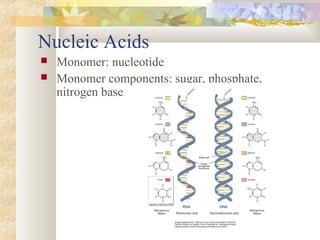
Nucleic Acids
 Monomer: nucleotide
 Monomer components: sugar, phosphate,
nitrogen base
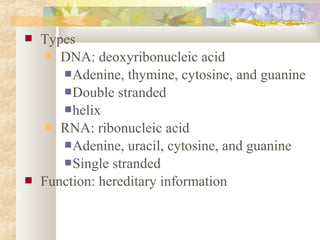
 Types
 DNA: deoxyribonucleic acid
Adenine, thymine, cytosine, and guanine
Double stranded
helix
 RNA: ribonucleic acid
Adenine, uracil, cytosine, and guanine
Single stranded
 Function: hereditary information
Vocabulary
Cards
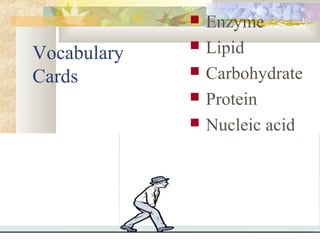
 Enzyme
 Lipid
 Carbohydrate
 Protein
 Nucleic acid
ANY QUESTIONS?

Chapter 2 chemistry notes

  • 1.
  • 2.
    Chemistry  Elements –cannot be broken down into simpler form  Chemical symbol – represented with letters (first always capital and second is small)
  • 3.
     Atoms –smallest unit of matter  Protons  Neutrons  electrons
  • 4.
     Atomic mass= mass of nucleus (protons + neutrons)  Atomic number =number of protons  Number of electrons = # of protons  Number of neutrons = atomic mass - # protons 19 F 9 55 Mn 25 32 S 16 40 Ca 20 27 Al 13
  • 5.
    Math Monkey Moment Howmany protons, neutrons and electrons are in each atom? Protons Neutrons Electrons Be Na Ca
  • 6.
     Electron shells– electrons move in layers around the nucleus  2 electrons in shell closest to nucleus  8 electrons in the next shell
  • 7.
     Ions –atoms that give up or gain electrons when bonding to another atom become positive or negative (charge). i.e. Ca2+ or K-  Molecule – 2 or more atoms share electrons
  • 8.
    Compound – 2or more different types of atoms bonded together. H2O and C6H12O6 are compounds and molecules O2 and N2 are molecules not compounds
  • 9.
    Chemical Reactions  Occurswhen bonds are broken and reformed  Reactants  Products  Law of conservation of matter Count the atoms in H2O and C6H12O6 C6H12O6 + 6O2  6CO2 + 6 H2O
  • 10.
     Chemical energy- Energy stored in chemical bonds and is a form of potential energy  Anabolic reactions build substances and generally require energy which is then stored in their chemical bonds. i.e. glycogen  Catabolic reactions break down substances and release energy. i.e. fat catabolism  ATP – adenosine triphosphate is the compound of energy used for the work of cells in living organisms
  • 11.
    Chemical Bonds  Valenceshell – outer electron shell and electrons involved with bonding to other atoms.  Ionic bonds – atom gains or loses electrons; metal bonds to a nonmetal (see periodic table)
  • 12.
    Cation – positivelycharged ion Anion – negatively charged ion Electrolytes – ionic compound that breaks apart into cations and anions when dissolved
  • 13.
     Covalent bonds– atoms share electrons in their valence shell  (nonmetals only)  Most common bonds in body  Carbon can form 4 bonds
  • 14.
    Hydrogen bonds –forms when hydrogen atoms with a partial positive charge bond with a partial negative atom. Weaker bond Reason for properties of water
  • 16.
  • 17.
    Inorganic Compounds Organic– carbon containing compounds (except CO2)  Inorganic – all others including CO2  Water is most important and abundant inorganic compound in living systems. 5 properties  Excellent solvent
  • 18.
    Solutes that arepolar (slightly charged) are hydrophilic and dissolve in water. Solutes that are nonpolar are hydrophobic and do not dissolve in water.
  • 19.
     Participates inchemical reactions  Absorbs and releases heat slowly – helps moderate changes in body temp.  Requires a lot of heat to change from liquid to gas  Serves as a lubricant: major component of mucus
  • 20.
    Acids and bases Acids break apart or dissociate into one or more hydrogen ions (H+ )  Bases break apart or dissociate into one or more hydroxide ions (OH- )  Salt dissociates into cations and anions that are neither H+ nor OH-
  • 21.
     pH  Scaleof 0-14  Below 7, greater H+ than OH- and are acids  Above 7, greater OH- than H+ and are bases  7 is neutral
  • 22.
  • 23.
    Buffers  Living systemsare very sensitive to changes in pH  Buffer systems keep pH stable by giving up H+ or OH- depending on what is needed
  • 24.
     Blood pHis 7.35-7.45. Lethal is 6.8 and 7.8  i.e. bicarbonate buffer system CO2 + H2O H2CO3 HCO3 - + H+
  • 25.
    Organic compounds  Mostcommon elements of living organisms: CHNOPS  Made of monomers or building blocks
  • 26.
     Monomers combinedby dehydration synthesis reaction and water is lost.  Monomers break apart by hydrolysis and water required.
  • 27.
  • 28.
    Organic Macromolecules  Carbohydrates Lipids  Proteins  Nucleic Acids
  • 29.
    Carbohydrates  Monomer: monosaccharides Monomer components: C, H, O (2:1H- C)
  • 30.
     Types  Monosaccharides Disaccharides  Polysaccharides (starch)  Function: energy
  • 31.
    Proteins  Monomers: aminoacids  Monomer components:  amino group (-NH2), carboxyl group (-COOH), and side chain (R group)  C, H, O, N, S
  • 32.
     Types:  Peptide polypeptide  Function(s): multiple  Varies depending on type  Generally responsible for structure of body cells
  • 34.
    Enzymes  Proteins thatare catalysts to speed up chemical reactions without being altered themselves.
  • 35.
     Act asa lock and key  Substrate is the key and binds to the active site on the enzyme  Enzyme is the lock or binding site  Form enzyme-substrate complex
  • 37.
    Lipids  Monomers: fattyacids and glycerol  Monomer components: C, H, O (H-O not 2:1)
  • 38.
     Types:  Triglyceride Saturated unsaturated Steroids  phospholipids  Function(s)  Triglycerides – energy  Steroids – hormones  Phospholipids-membranes
  • 39.
    Nucleic Acids  Monomer:nucleotide  Monomer components: sugar, phosphate, nitrogen base
  • 40.
     Types  DNA:deoxyribonucleic acid Adenine, thymine, cytosine, and guanine Double stranded helix  RNA: ribonucleic acid Adenine, uracil, cytosine, and guanine Single stranded  Function: hereditary information
  • 43.
    Vocabulary Cards  Enzyme  Lipid Carbohydrate  Protein  Nucleic acid
  • 44.