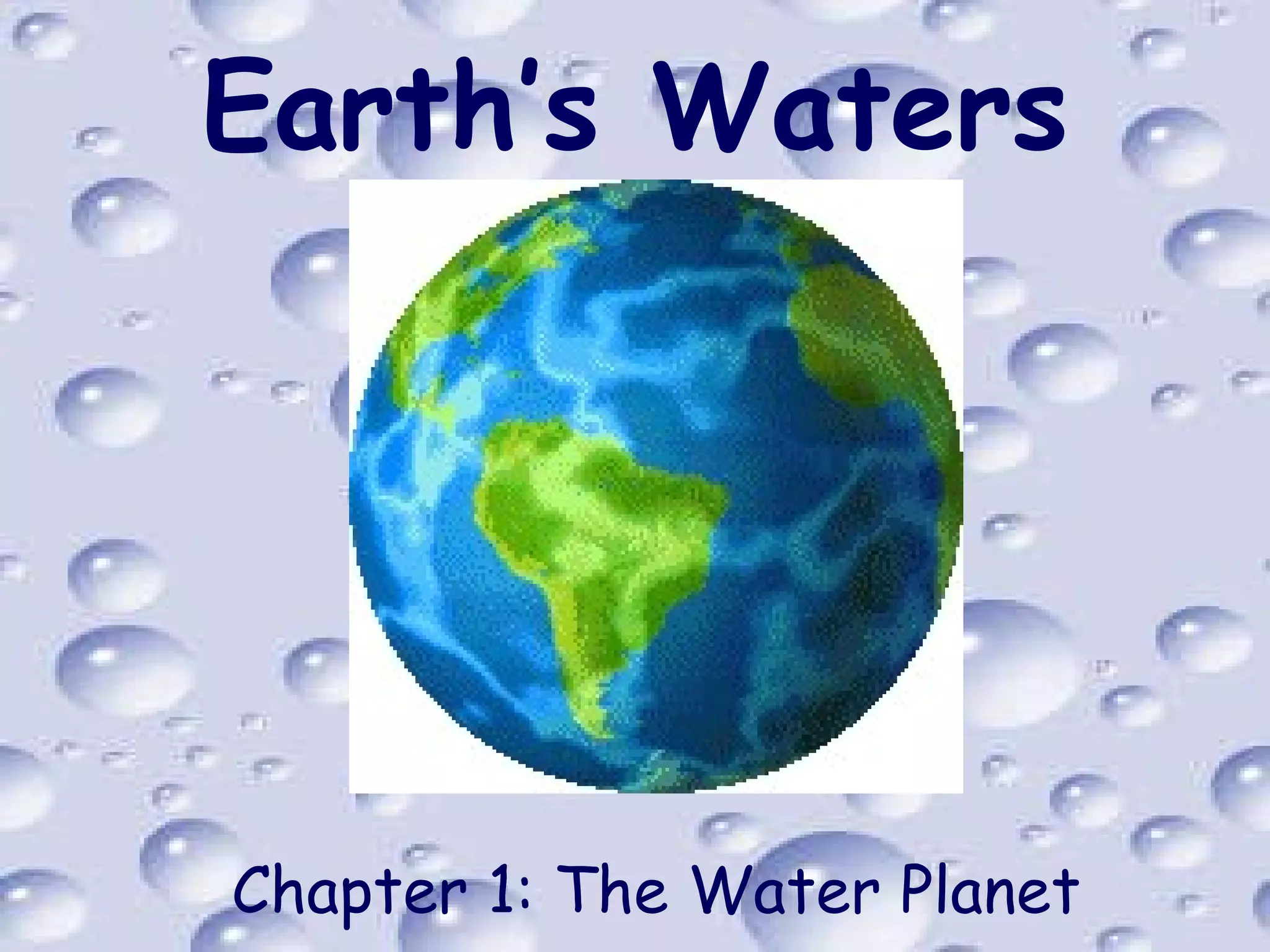
Earth’s Waters Chapter 1: The Water Planet
Section 1.1 Water Continuously Cycles
Water is a unique substance. Earth is the only planet with a large amount of liquid water. Because of water, Earth can support life. Water is the only substance on Earth that exists in all three physical states at normal temperature.
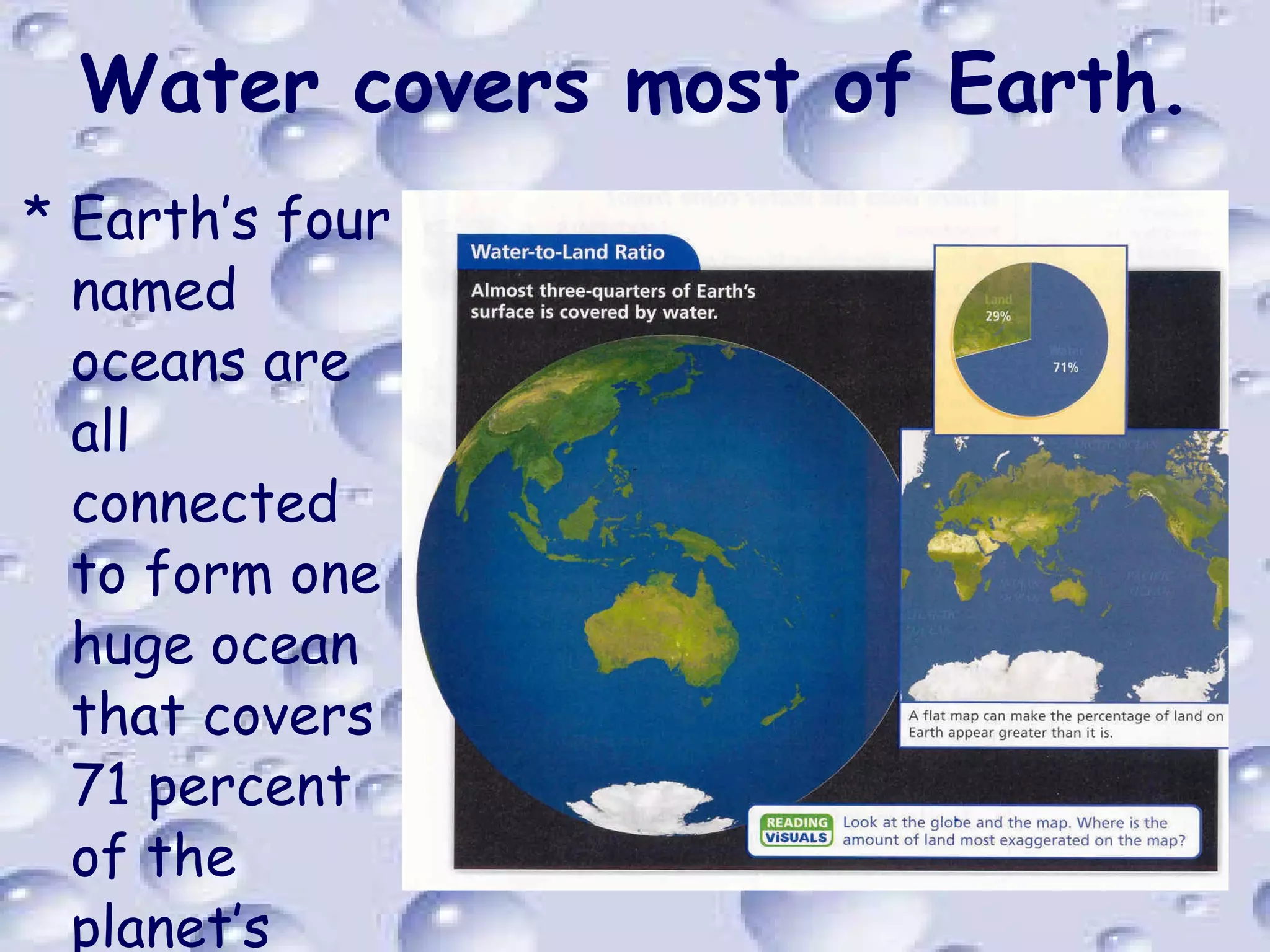
Water covers most of Earth. Earth’s four named oceans are all connected to form one huge ocean that covers 71 percent of the planet’s surface.
Continued ALL life is dependent on water. The human body is two-thirds water. Most rivers and lakes contain fresh water, which is not salty and has little taste. The oceans contain salt water, which has many dissolved minerals. Most (97%) water on Earth is salt water.
Water moves in a worldwide cycle.
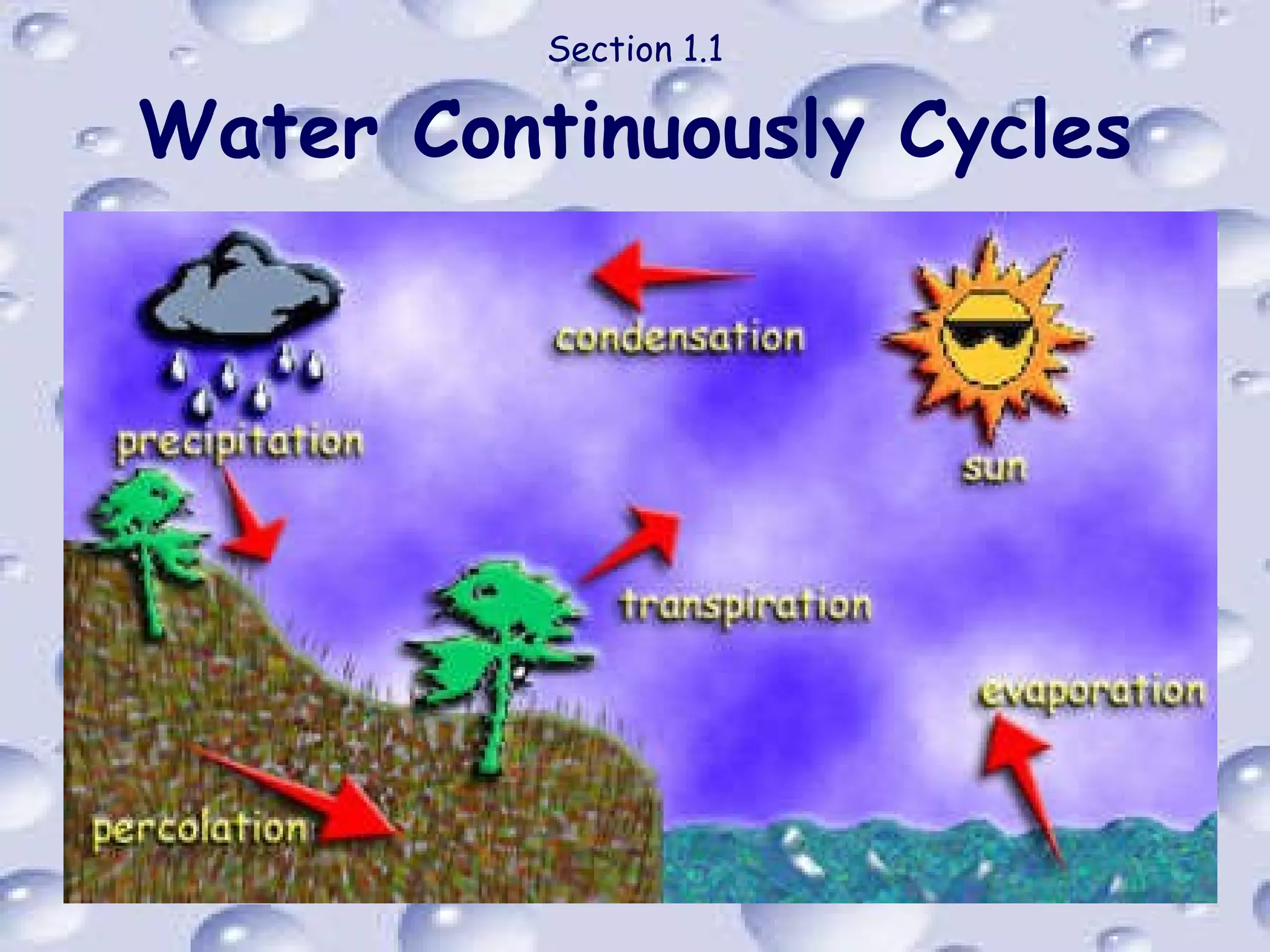
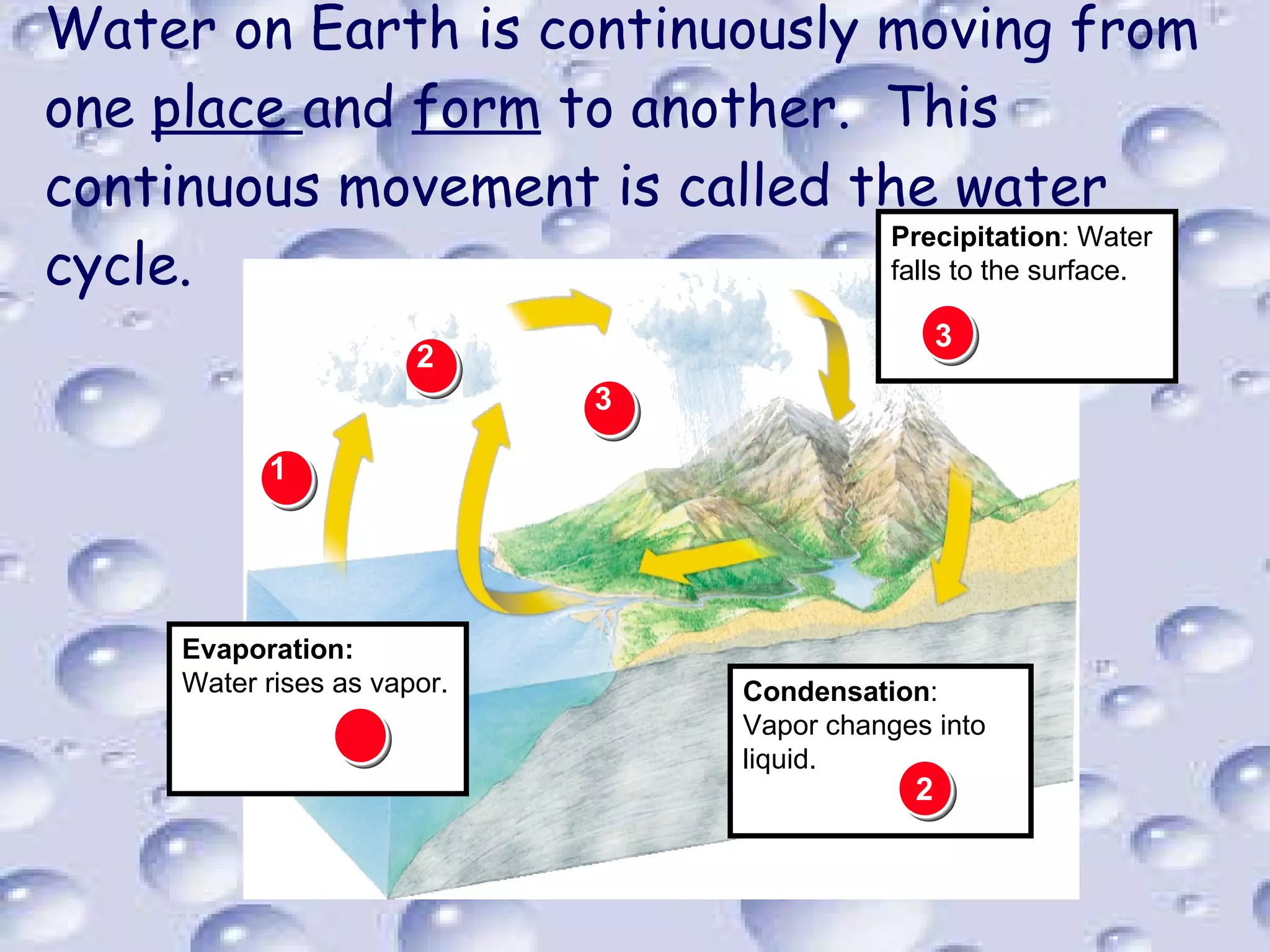
Water on Earth is continuously moving from one  place  and  form  to another.  This continuous movement is called the water cycle. 1 2  3 1 Condensation : Vapor changes into liquid. 2 Precipitation : Water falls to the surface. 3 Evaporation:   Water rises as vapor.
Continued The water cycle involves three processes. Evaporation: water changes from a liquid to a gas (vapor). Condensation: Water changes from a gas (vapor) to a liquid. Precipitation: any form of water that falls from clouds after condensation has taken place.
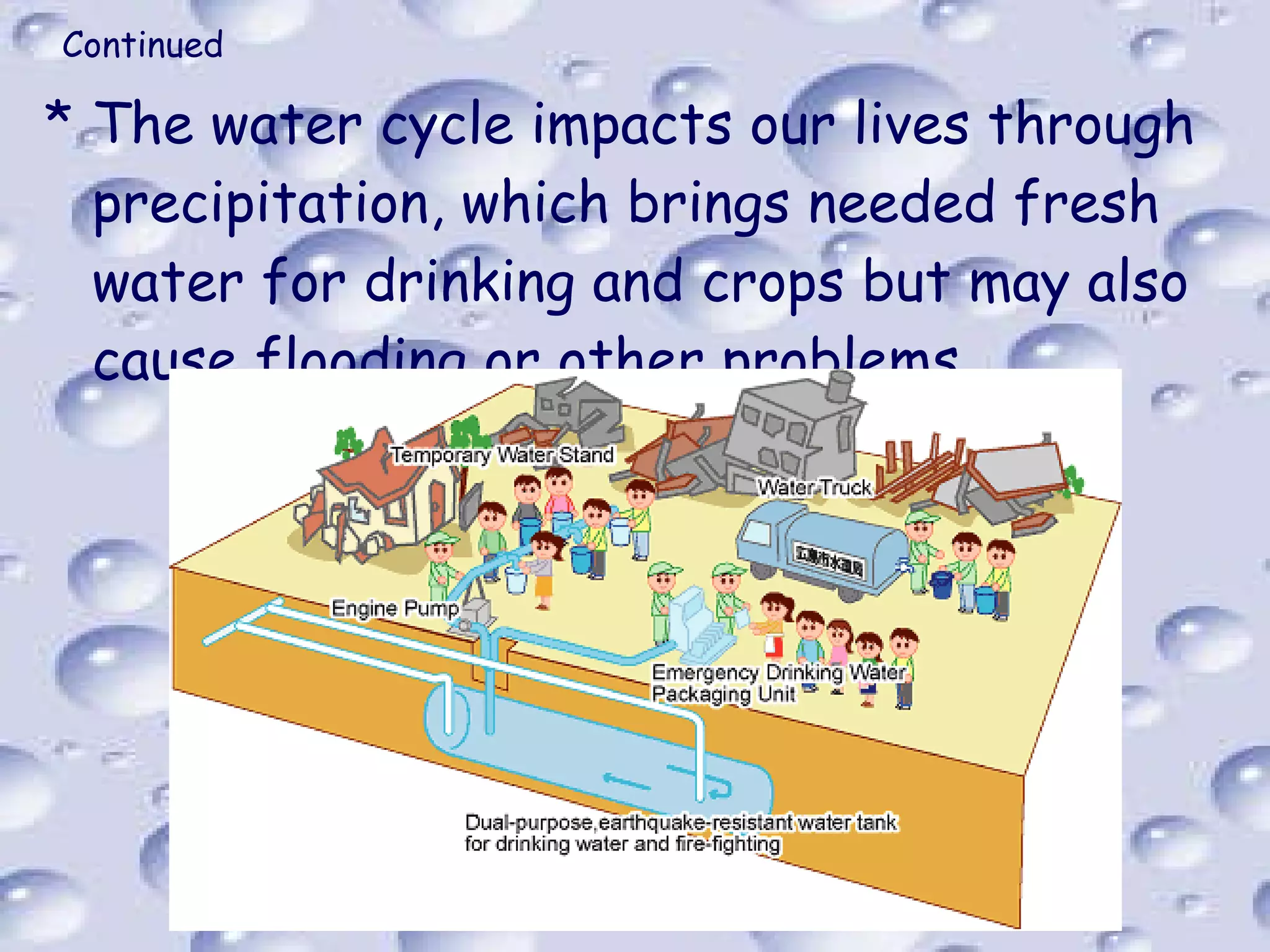
Continued The water cycle impacts our lives through precipitation, which brings needed fresh water for drinking and crops but may also cause flooding or other problems.
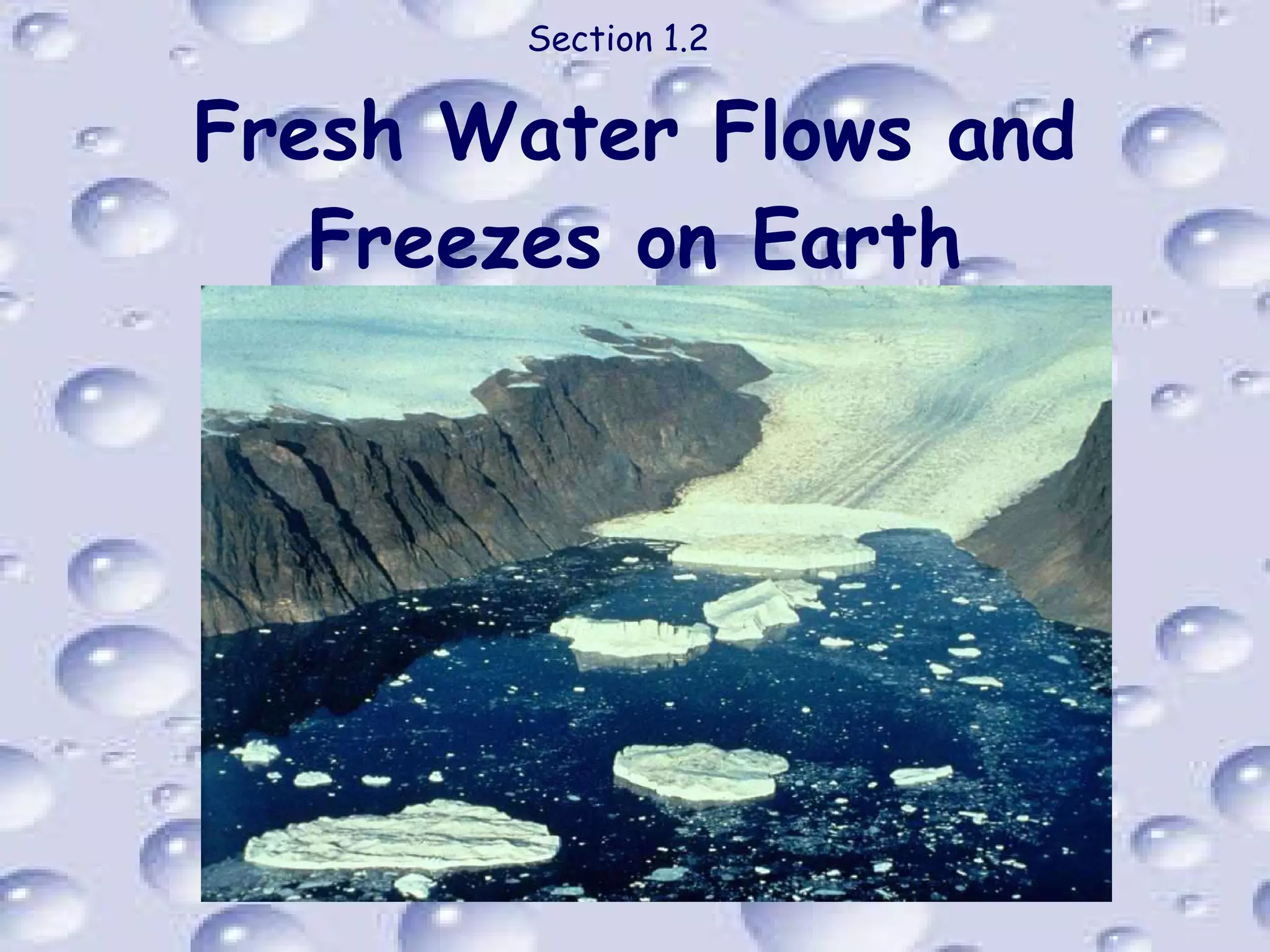
Section 1.2   Fresh Water Flows and Freezes on Earth
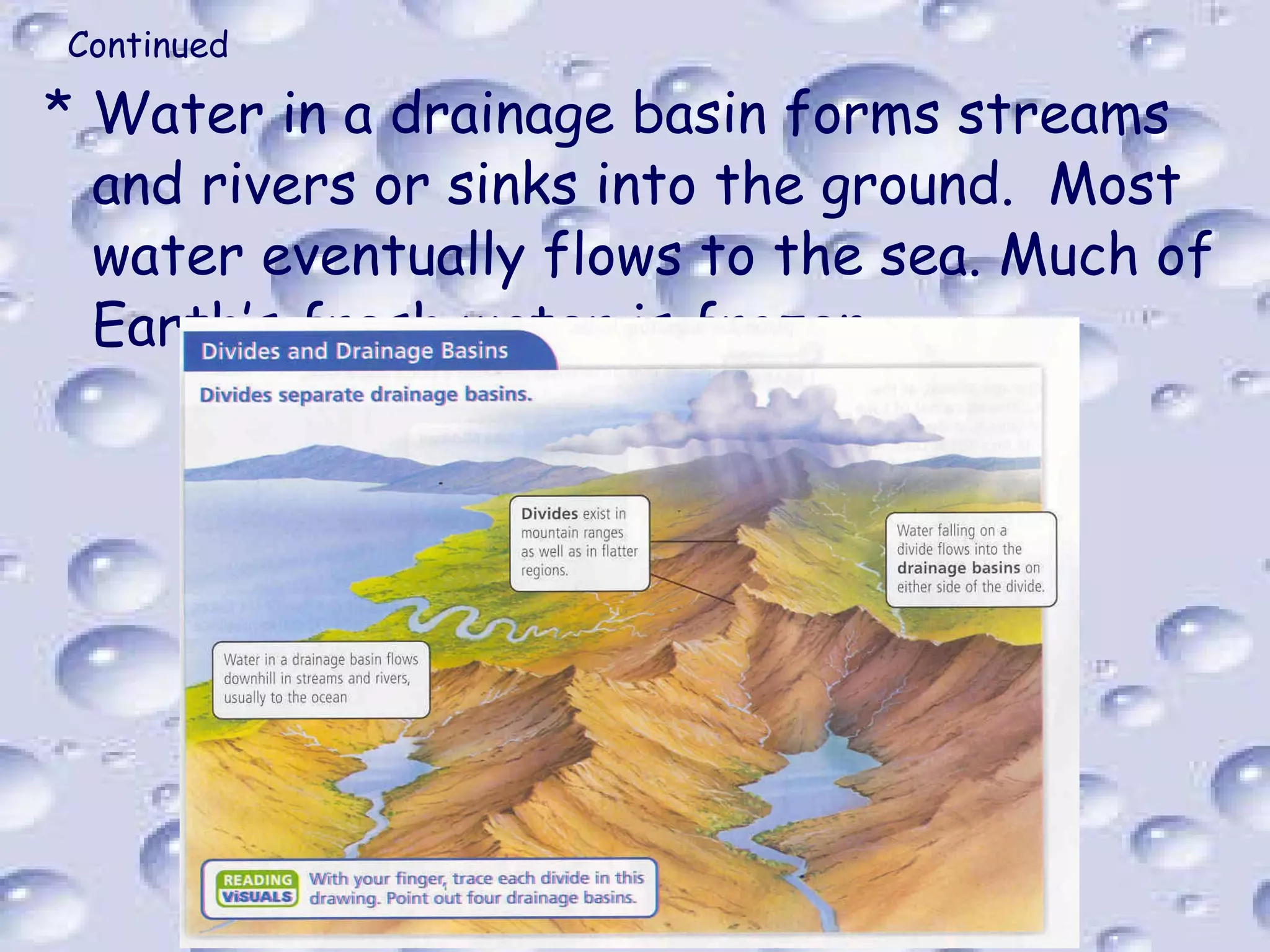
Water flows and collects on Earth’s surface. The force of gravity pulls water downward.  When precipitation falls on a high ridge that forms a  divide , it flows away in different directions.  All the water flowing downward on one side of a divide flows into a  drainage basin.
Continued Water in a drainage basin forms streams and rivers or sinks into the ground.  Most water eventually flows to the sea. Much of Earth’s fresh water is frozen.
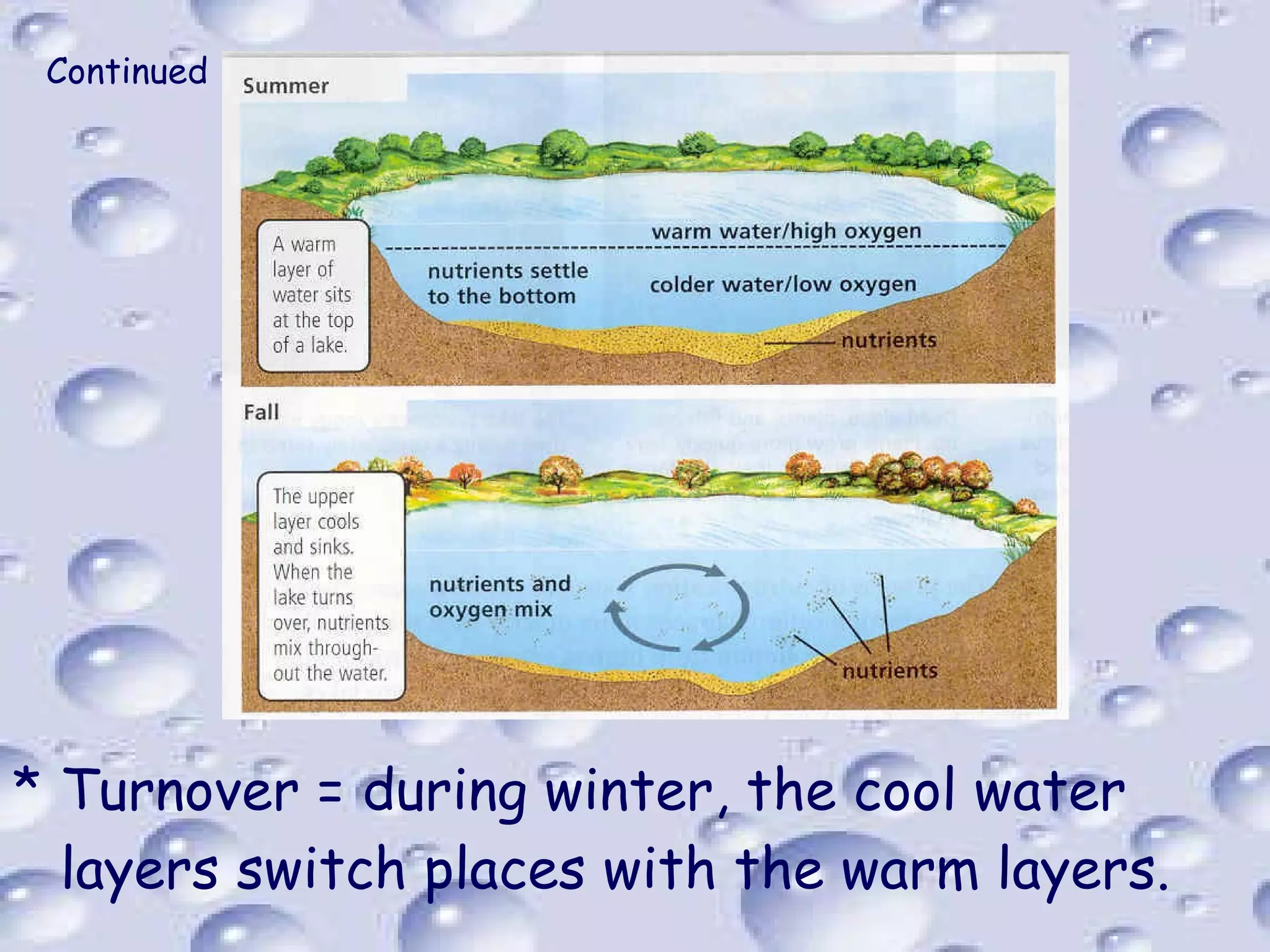
Surface water collects in ponds and lakes. Water collects in low areas to form ponds and lakes. Water enters as precipitation or run off from streams. Lake = larger than pond, can’t usually see the bottom (deep). Pond = smaller than lake, usually filled with plants. Turnover = during winter, the cool water layers switch places with the warm layers
Continued Turnover = during winter, the cool water layers switch places with the warm layers.
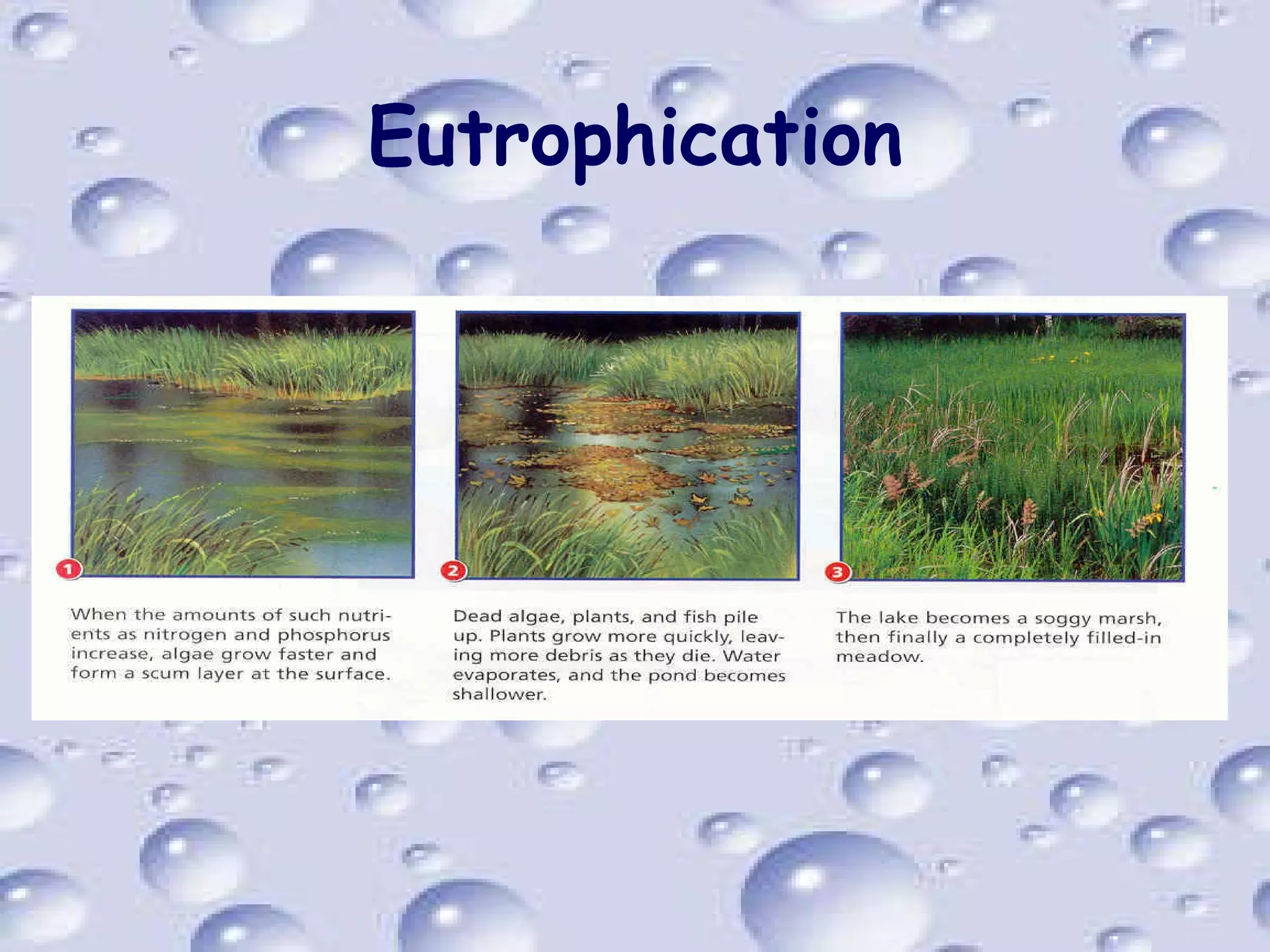
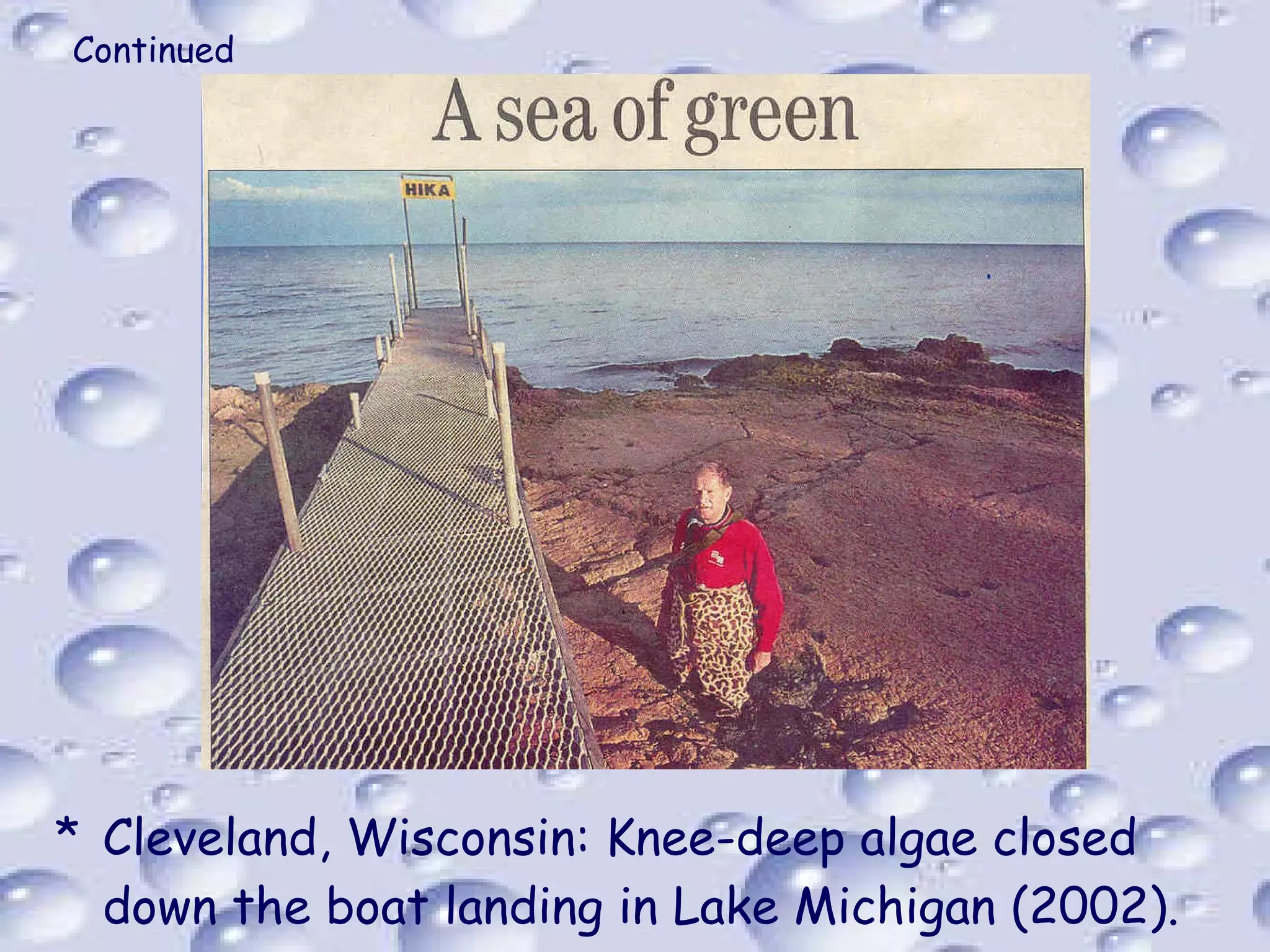
Continued Eutrophication An increase of nutrient level in a lake or pond. Caused by buildup of deadly organisms or by pollution such as fertilizers and phosphates from detergents. Causes increase in algae in water which causes oxygen depletion in water, then the plants and animals die.
Eutrophication
Continued Cleveland, Wisconsin: Knee-deep algae closed down the boat landing in Lake Michigan (2002).
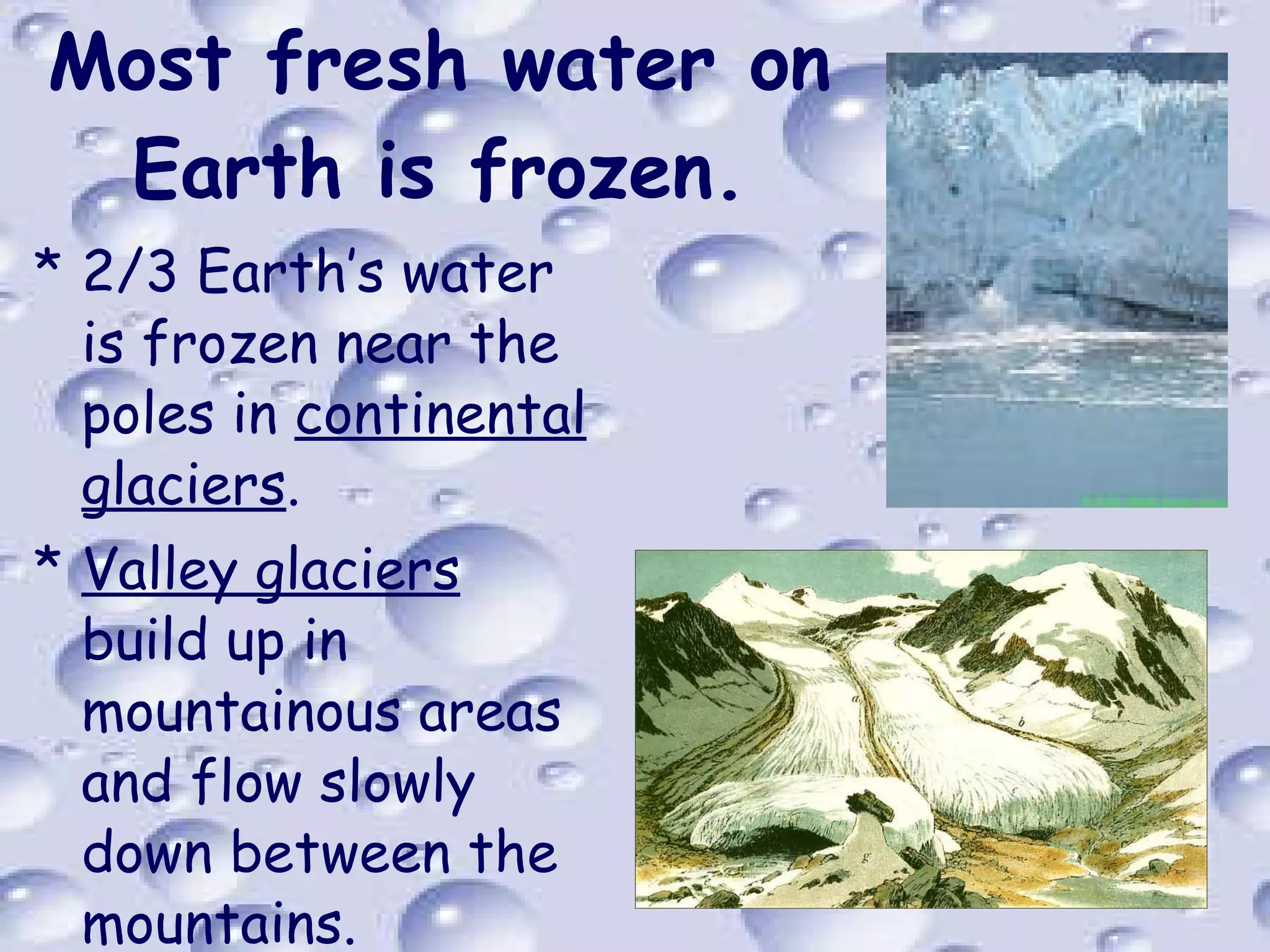
Most fresh water on Earth is frozen. 2/3 Earth’s water is frozen near the poles in  continental glaciers . Valley glaciers  build up in mountainous areas and flow slowly down between the mountains.
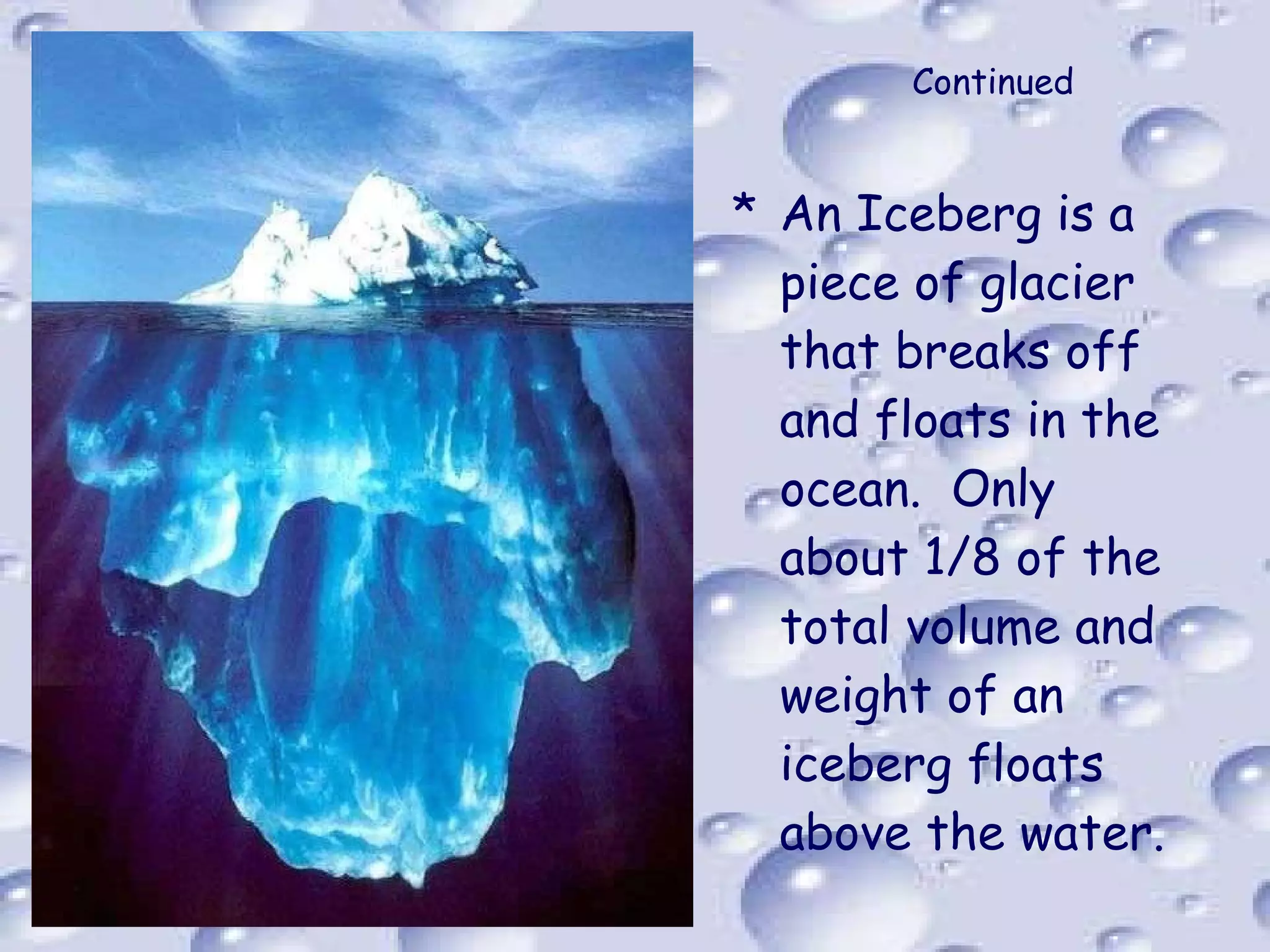
Continued An Iceberg is a piece of glacier that breaks off and floats in the ocean.  Only about 1/8 of the total volume and weight of an iceberg floats above the water.
Section 1.3 Fresh Water Flows Underground
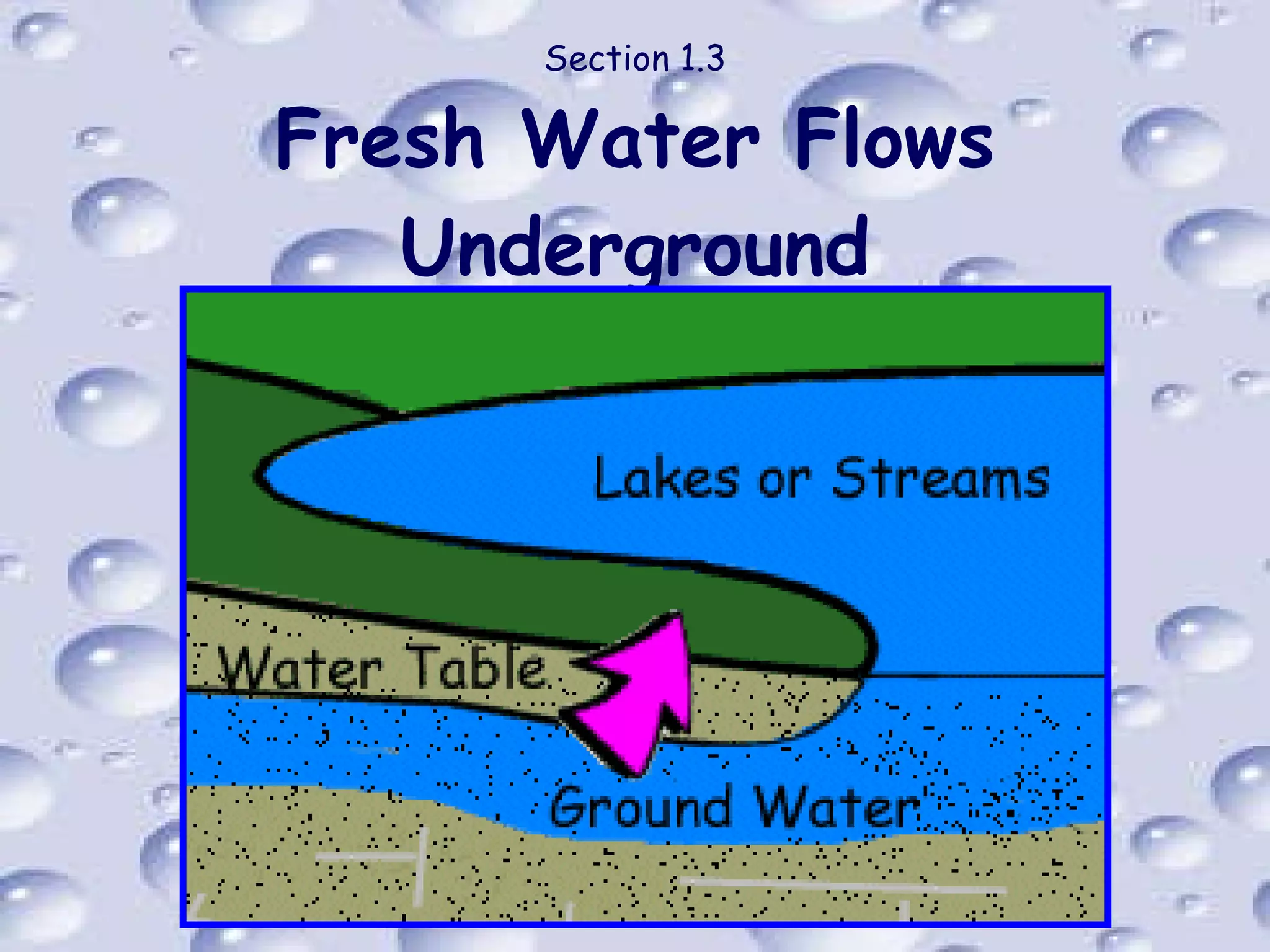
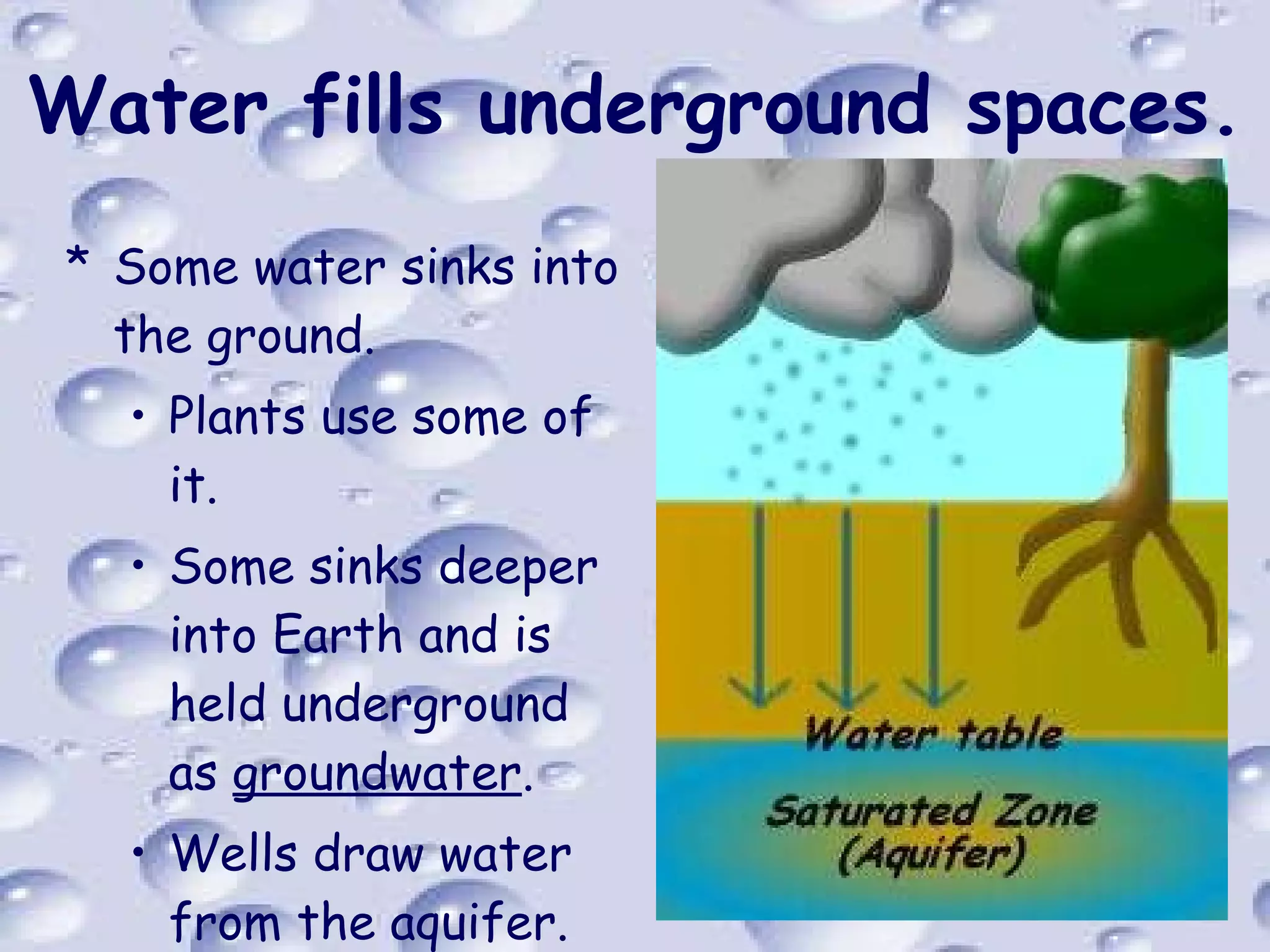
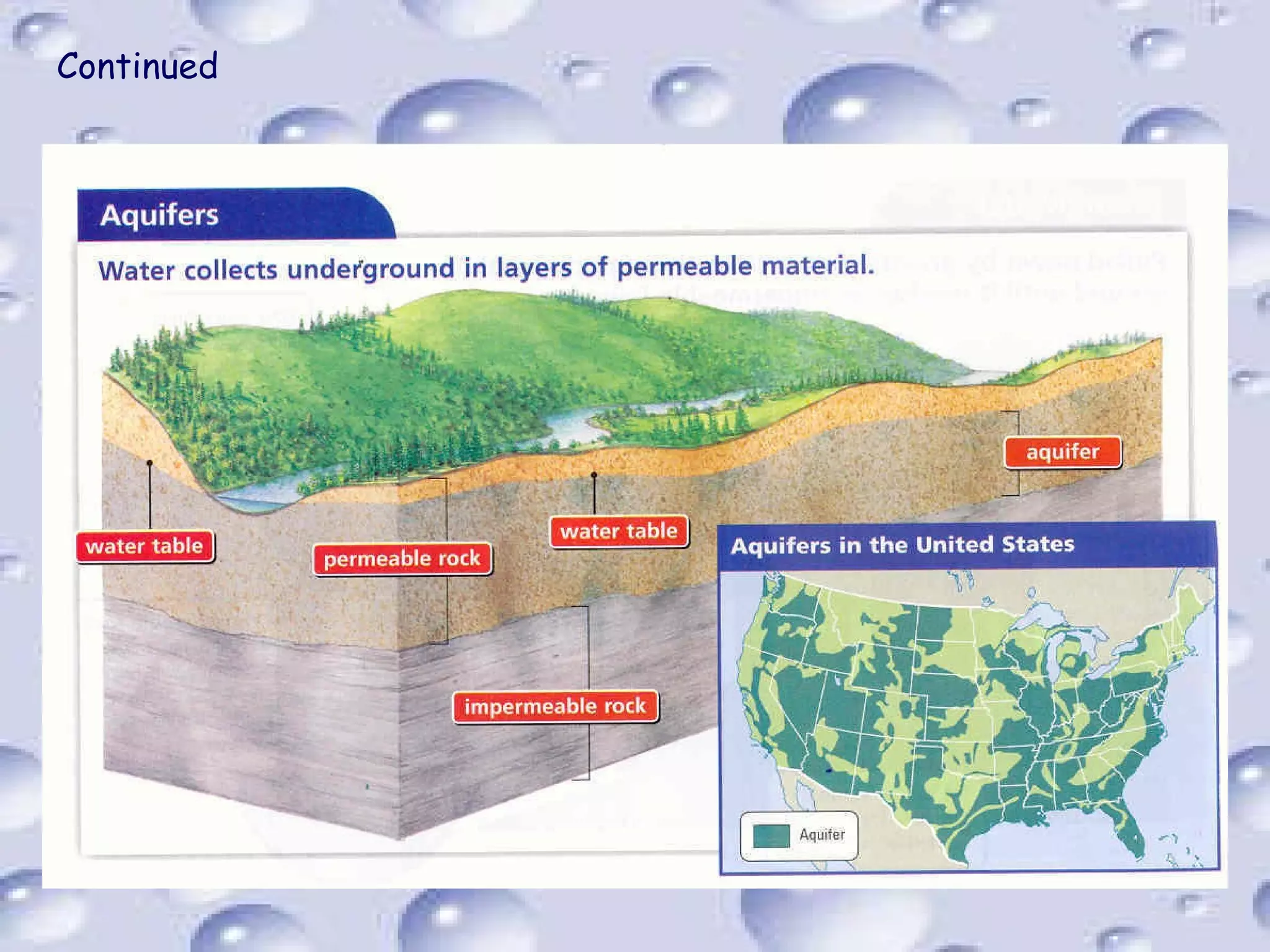
Water fills underground spaces. Some water sinks into the ground. Plants use some of it. Some sinks deeper into Earth and is held underground as  groundwater . Wells draw water from the aquifer.
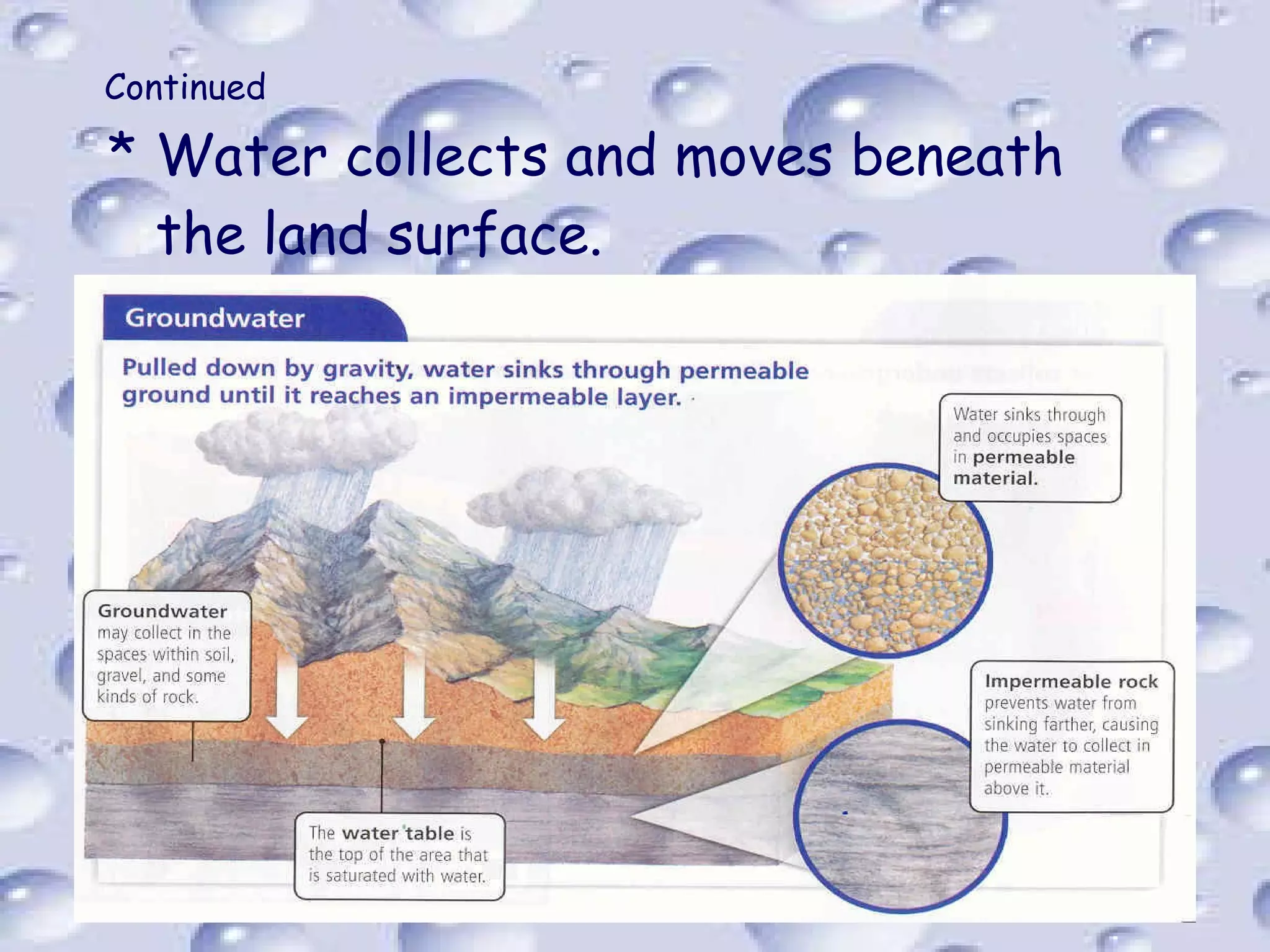
Continued Water collects and moves beneath the land surface.
Continued Either ground materials are: Permeabl e: water can flow through them. (sandstone, sand, gravel, soil) Impermeable : water can not flow through them. (water table) Water continues to sink  until it reaches an impermeable layer. The water table is the top of the area that is saturated with water.
Continued Aquifer: An underground layer of permeable rock or sediment that contains water . Ground water is stored here. Located over or beside impermeable rock . The water is constantly replenished. Aquifers filter and clean water. Provide fresh water source.
Continued
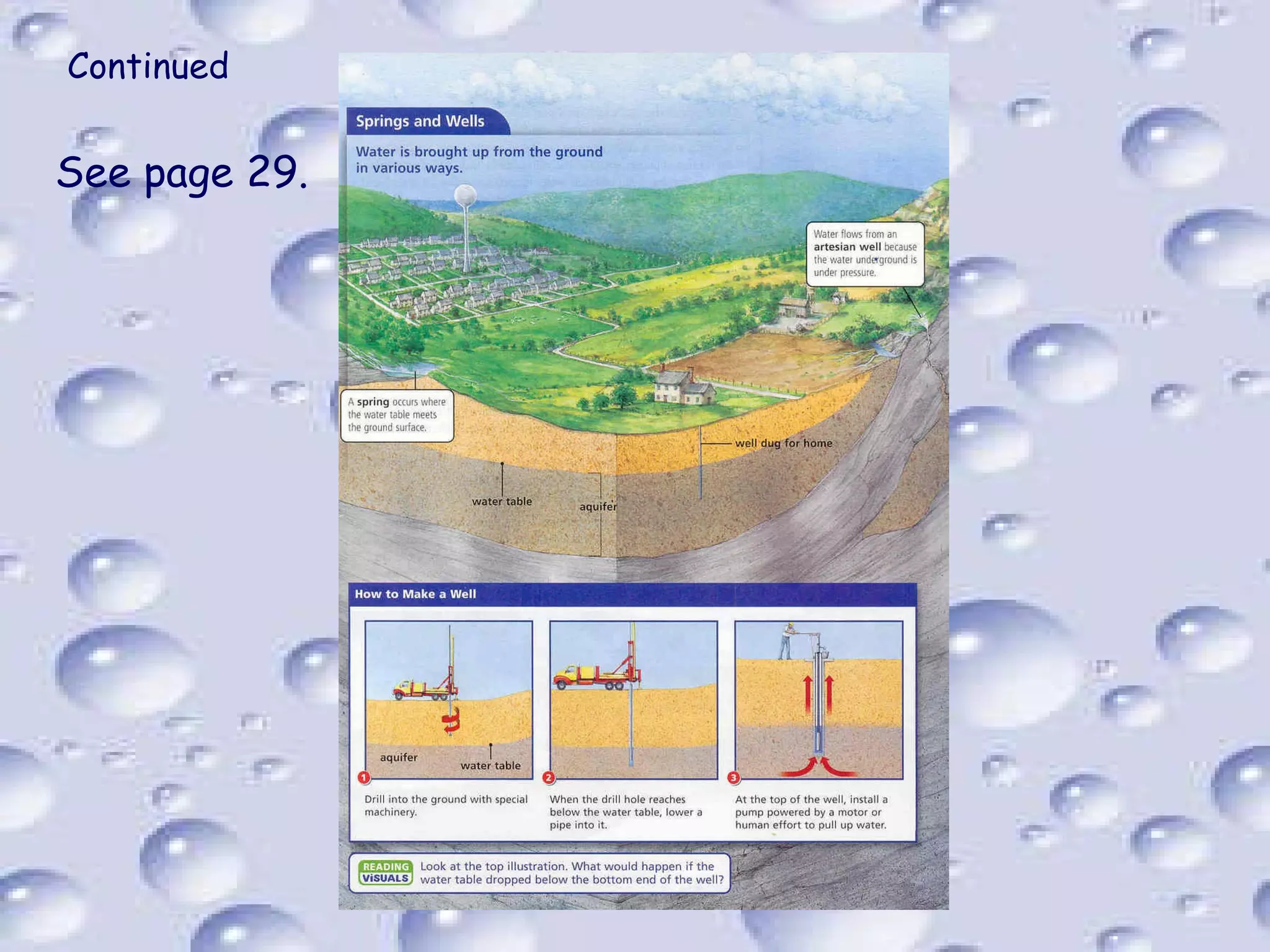
Underground water can be brought to the surface. People collect water from wells and springs. Spring: where the surface of the land dips below the water table and water bubbles up from underground. Technology is helpful in dry and remote regions. Well: a hole drilled into the ground to reach groundwater.
Continued See page 29.
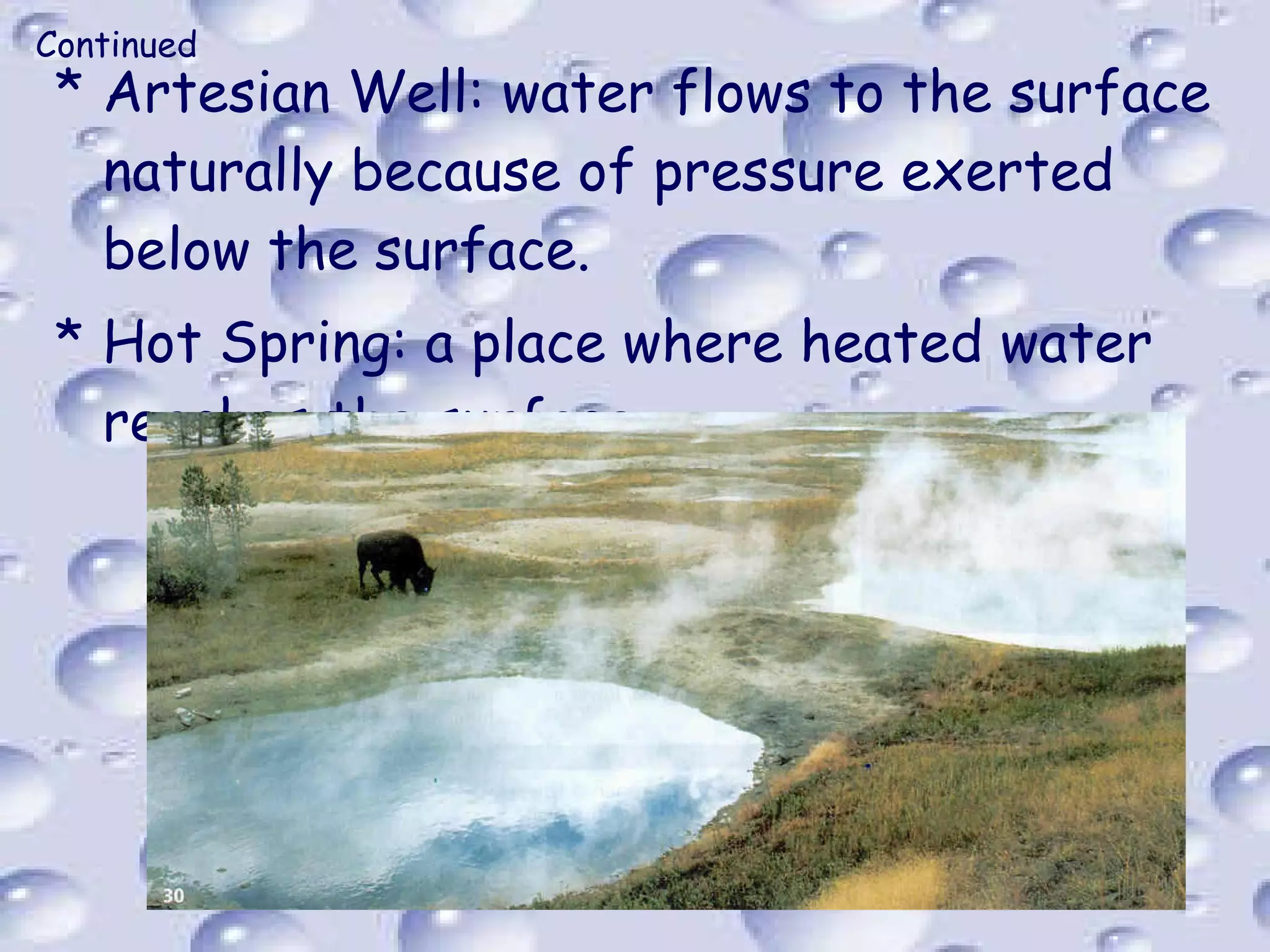
Continued  Artesian Well: water flows to the surface naturally because of pressure exerted below the surface. Hot Spring: a place where heated water reaches the surface.
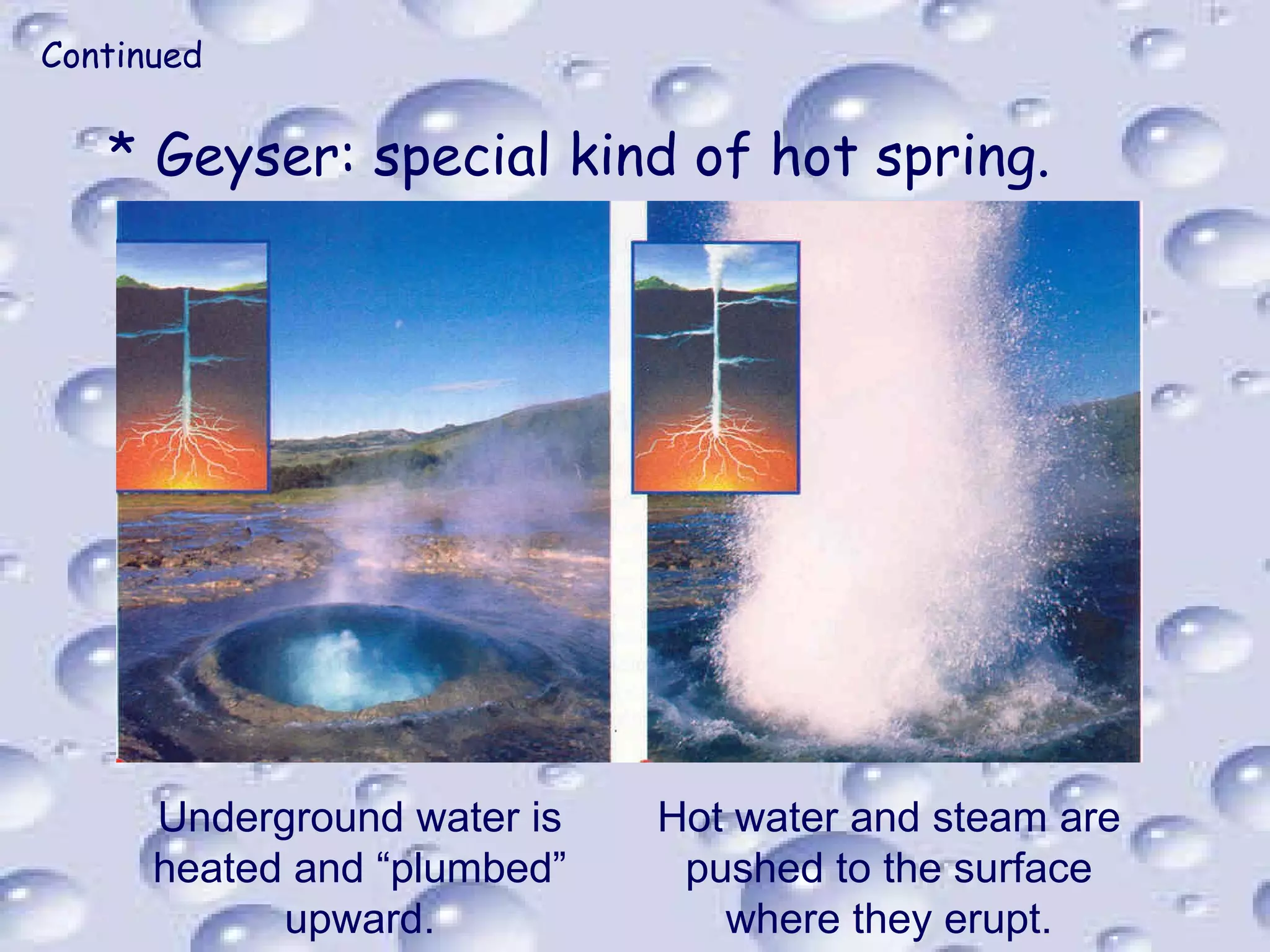
Continued Geyser: special kind of hot spring. Underground water is heated and “plumbed” upward. Hot water and steam are pushed to the surface where they erupt.

Chapter 1 The Water Planet

  • 1.
    Earth’s Waters Chapter1: The Water Planet
  • 2.
    Section 1.1 WaterContinuously Cycles
  • 3.
    Water is aunique substance. Earth is the only planet with a large amount of liquid water. Because of water, Earth can support life. Water is the only substance on Earth that exists in all three physical states at normal temperature.
  • 4.
    Water covers mostof Earth. Earth’s four named oceans are all connected to form one huge ocean that covers 71 percent of the planet’s surface.
  • 5.
    Continued ALL lifeis dependent on water. The human body is two-thirds water. Most rivers and lakes contain fresh water, which is not salty and has little taste. The oceans contain salt water, which has many dissolved minerals. Most (97%) water on Earth is salt water.
  • 6.
    Water moves ina worldwide cycle.
  • 7.
    Water on Earthis continuously moving from one place and form to another. This continuous movement is called the water cycle. 1 2 3 1 Condensation : Vapor changes into liquid. 2 Precipitation : Water falls to the surface. 3 Evaporation: Water rises as vapor.
  • 8.
    Continued The watercycle involves three processes. Evaporation: water changes from a liquid to a gas (vapor). Condensation: Water changes from a gas (vapor) to a liquid. Precipitation: any form of water that falls from clouds after condensation has taken place.
  • 9.
    Continued The watercycle impacts our lives through precipitation, which brings needed fresh water for drinking and crops but may also cause flooding or other problems.
  • 10.
    Section 1.2 Fresh Water Flows and Freezes on Earth
  • 11.
    Water flows andcollects on Earth’s surface. The force of gravity pulls water downward. When precipitation falls on a high ridge that forms a divide , it flows away in different directions. All the water flowing downward on one side of a divide flows into a drainage basin.
  • 12.
    Continued Water ina drainage basin forms streams and rivers or sinks into the ground. Most water eventually flows to the sea. Much of Earth’s fresh water is frozen.
  • 13.
    Surface water collectsin ponds and lakes. Water collects in low areas to form ponds and lakes. Water enters as precipitation or run off from streams. Lake = larger than pond, can’t usually see the bottom (deep). Pond = smaller than lake, usually filled with plants. Turnover = during winter, the cool water layers switch places with the warm layers
  • 14.
    Continued Turnover =during winter, the cool water layers switch places with the warm layers.
  • 15.
    Continued Eutrophication Anincrease of nutrient level in a lake or pond. Caused by buildup of deadly organisms or by pollution such as fertilizers and phosphates from detergents. Causes increase in algae in water which causes oxygen depletion in water, then the plants and animals die.
  • 16.
  • 17.
    Continued Cleveland, Wisconsin:Knee-deep algae closed down the boat landing in Lake Michigan (2002).
  • 18.
    Most fresh wateron Earth is frozen. 2/3 Earth’s water is frozen near the poles in continental glaciers . Valley glaciers build up in mountainous areas and flow slowly down between the mountains.
  • 19.
    Continued An Icebergis a piece of glacier that breaks off and floats in the ocean. Only about 1/8 of the total volume and weight of an iceberg floats above the water.
  • 20.
    Section 1.3 FreshWater Flows Underground
  • 21.
    Water fills undergroundspaces. Some water sinks into the ground. Plants use some of it. Some sinks deeper into Earth and is held underground as groundwater . Wells draw water from the aquifer.
  • 22.
    Continued Water collectsand moves beneath the land surface.
  • 23.
    Continued Either groundmaterials are: Permeabl e: water can flow through them. (sandstone, sand, gravel, soil) Impermeable : water can not flow through them. (water table) Water continues to sink until it reaches an impermeable layer. The water table is the top of the area that is saturated with water.
  • 24.
    Continued Aquifer: Anunderground layer of permeable rock or sediment that contains water . Ground water is stored here. Located over or beside impermeable rock . The water is constantly replenished. Aquifers filter and clean water. Provide fresh water source.
  • 25.
  • 26.
    Underground water canbe brought to the surface. People collect water from wells and springs. Spring: where the surface of the land dips below the water table and water bubbles up from underground. Technology is helpful in dry and remote regions. Well: a hole drilled into the ground to reach groundwater.
  • 27.
  • 28.
    Continued ArtesianWell: water flows to the surface naturally because of pressure exerted below the surface. Hot Spring: a place where heated water reaches the surface.
  • 29.
    Continued Geyser: specialkind of hot spring. Underground water is heated and “plumbed” upward. Hot water and steam are pushed to the surface where they erupt.