HYDROSPHERE
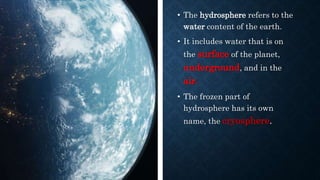
• The hydrosphere refers to the
water content of the earth.
• It includes water that is on
the surface of the planet,
underground, and in the
air.
• The frozen part of
hydrosphere has its own
name, the cryosphere.
WATER IN THE AIR
• Water moves through the hydrosphere in a cycle.
Water collects in clouds, and then falls to the
earth in the form of rain or snow. This water
collects in rivers, lakes and ocean. Then it
evaporates into the atmosphere to start the cycle
over again. It called the cycle
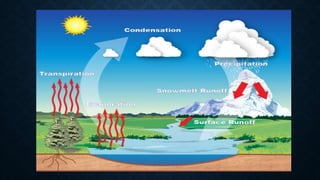
• The water cycle starts with the evaporation of water from the oceans into the
atmosphere and then condenses forming clouds. Transpiration also occurs as the
water in plants evaporates and as well as condenses forming clouds. Precipitation
occurs is released from the clods in the form of rain, sleet, snow or hail. This is the
process in which the water is returned to the Earth as subsurface runoff or surface
runoff. Then the cycle is periodically transpiring.
WATER IN THE LAND
• Surface Water – are water found in the surface of the Earth in the form of stream,
river, lake, spring, swamps and marshes. Surface water makes up only 0.25% of
total water found on Earth and is extremely important to the lives of all land
dwelling animals, including humans.
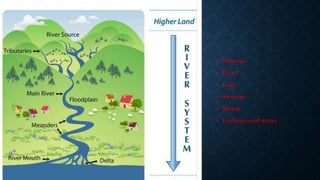
• When it rains the water flows down in mountain slopes and forms gullies. Gullies
are trenches that were worn by running water after the rain. Gullies join together
forming streams until it become a large streams of water. Streams that become quite
big are called rivers. Rivers are large streams that are fed by smaller streams which
are called tributaries. The place where a river flows into the ocean are called river
mouth. Streams run year-round and some are fed by ground water that seeps into
the streambed
• Streams
• River
• Lake
• Swamps
• Marsh
• Underground water
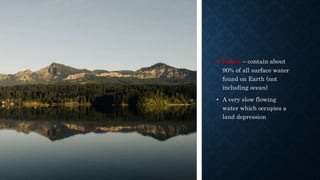
• Lakes – contain about
90% of all surface water
found on Earth (not
including ocean)
• A very slow flowing
water which occupies a
land depression
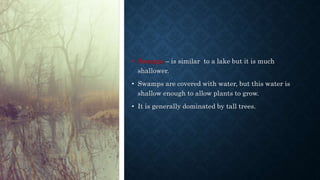
• Swamps – is similar to a lake but it is much
shallower.
• Swamps are covered with water, but this water is
shallow enough to allow plants to grow.
• It is generally dominated by tall trees.
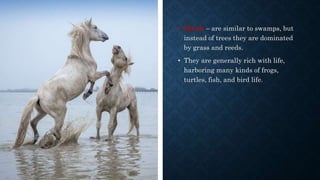
• Marsh – are similar to swamps, but
instead of trees they are dominated
by grass and reeds.
• They are generally rich with life,
harboring many kinds of frogs,
turtles, fish, and bird life.
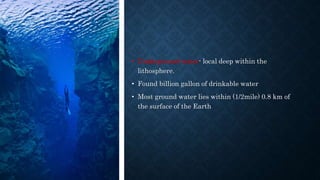
• Underground water- local deep within the
lithosphere.
• Found billion gallon of drinkable water
• Most ground water lies within (1/2mile) 0.8 km of
the surface of the Earth
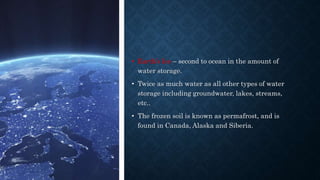
• Earth’s Ice – second to ocean in the amount of
water storage.
• Twice as much water as all other types of water
storage including groundwater, lakes, streams,
etc..
• The frozen soil is known as permafrost, and is
found in Canada, Alaska and Siberia.
WATER IN THE SEA
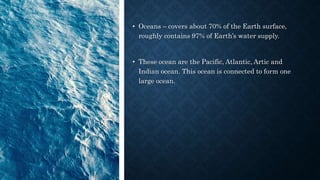
• Oceans – covers about 70% of the Earth surface,
roughly contains 97% of Earth’s water supply.
• These ocean are the Pacific, Atlantic, Artic and
Indian ocean. This ocean is connected to form one
large ocean.

Hydrosphere1-1.pptx

  • 1.
  • 2.
    • The hydrosphererefers to the water content of the earth. • It includes water that is on the surface of the planet, underground, and in the air. • The frozen part of hydrosphere has its own name, the cryosphere.
  • 3.
    WATER IN THEAIR • Water moves through the hydrosphere in a cycle. Water collects in clouds, and then falls to the earth in the form of rain or snow. This water collects in rivers, lakes and ocean. Then it evaporates into the atmosphere to start the cycle over again. It called the cycle
  • 5.
    • The watercycle starts with the evaporation of water from the oceans into the atmosphere and then condenses forming clouds. Transpiration also occurs as the water in plants evaporates and as well as condenses forming clouds. Precipitation occurs is released from the clods in the form of rain, sleet, snow or hail. This is the process in which the water is returned to the Earth as subsurface runoff or surface runoff. Then the cycle is periodically transpiring.
  • 6.
    WATER IN THELAND • Surface Water – are water found in the surface of the Earth in the form of stream, river, lake, spring, swamps and marshes. Surface water makes up only 0.25% of total water found on Earth and is extremely important to the lives of all land dwelling animals, including humans. • When it rains the water flows down in mountain slopes and forms gullies. Gullies are trenches that were worn by running water after the rain. Gullies join together forming streams until it become a large streams of water. Streams that become quite big are called rivers. Rivers are large streams that are fed by smaller streams which are called tributaries. The place where a river flows into the ocean are called river mouth. Streams run year-round and some are fed by ground water that seeps into the streambed
  • 7.
    • Streams • River •Lake • Swamps • Marsh • Underground water
  • 8.
    • Lakes –contain about 90% of all surface water found on Earth (not including ocean) • A very slow flowing water which occupies a land depression
  • 9.
    • Swamps –is similar to a lake but it is much shallower. • Swamps are covered with water, but this water is shallow enough to allow plants to grow. • It is generally dominated by tall trees.
  • 10.
    • Marsh –are similar to swamps, but instead of trees they are dominated by grass and reeds. • They are generally rich with life, harboring many kinds of frogs, turtles, fish, and bird life.
  • 11.
    • Underground water-local deep within the lithosphere. • Found billion gallon of drinkable water • Most ground water lies within (1/2mile) 0.8 km of the surface of the Earth
  • 12.
    • Earth’s Ice– second to ocean in the amount of water storage. • Twice as much water as all other types of water storage including groundwater, lakes, streams, etc.. • The frozen soil is known as permafrost, and is found in Canada, Alaska and Siberia.
  • 13.
  • 14.
    • Oceans –covers about 70% of the Earth surface, roughly contains 97% of Earth’s water supply. • These ocean are the Pacific, Atlantic, Artic and Indian ocean. This ocean is connected to form one large ocean.