Chapter 1
Introduction to Approaches and
Methods
Approaches to Behavior and Classroom Management Chapter 1: Introduction to Approaches and Methods
Overview
 Defining approaches
 Categorizing approaches
 Types of methods
 Choosing methods
Approaches to Behavior and Classroom Management Chapter 1: Introduction to Approaches and Methods
Approaches
 Approaches are defined by:
 Meanings given to core concepts
 Values and value hierarchies
 Assumptions about what is needed to manage
behavior and classrooms effectively
Approaches to Behavior and Classroom Management Chapter 1: Introduction to Approaches and Methods
Approaches (cont.)
 Approaches can be categorized by:
1. How much and what type of control a teacher has
over students
2. Which components are emphasized
3. Theories of change
4. Culture
Approaches to Behavior and Classroom Management Chapter 1: Introduction to Approaches and Methods
Baumrind’s Categories of Parenting
Styles
 Authoritarian
 Authoritative
 Permissive
Approaches to Behavior and Classroom Management Chapter 1: Introduction to Approaches and Methods
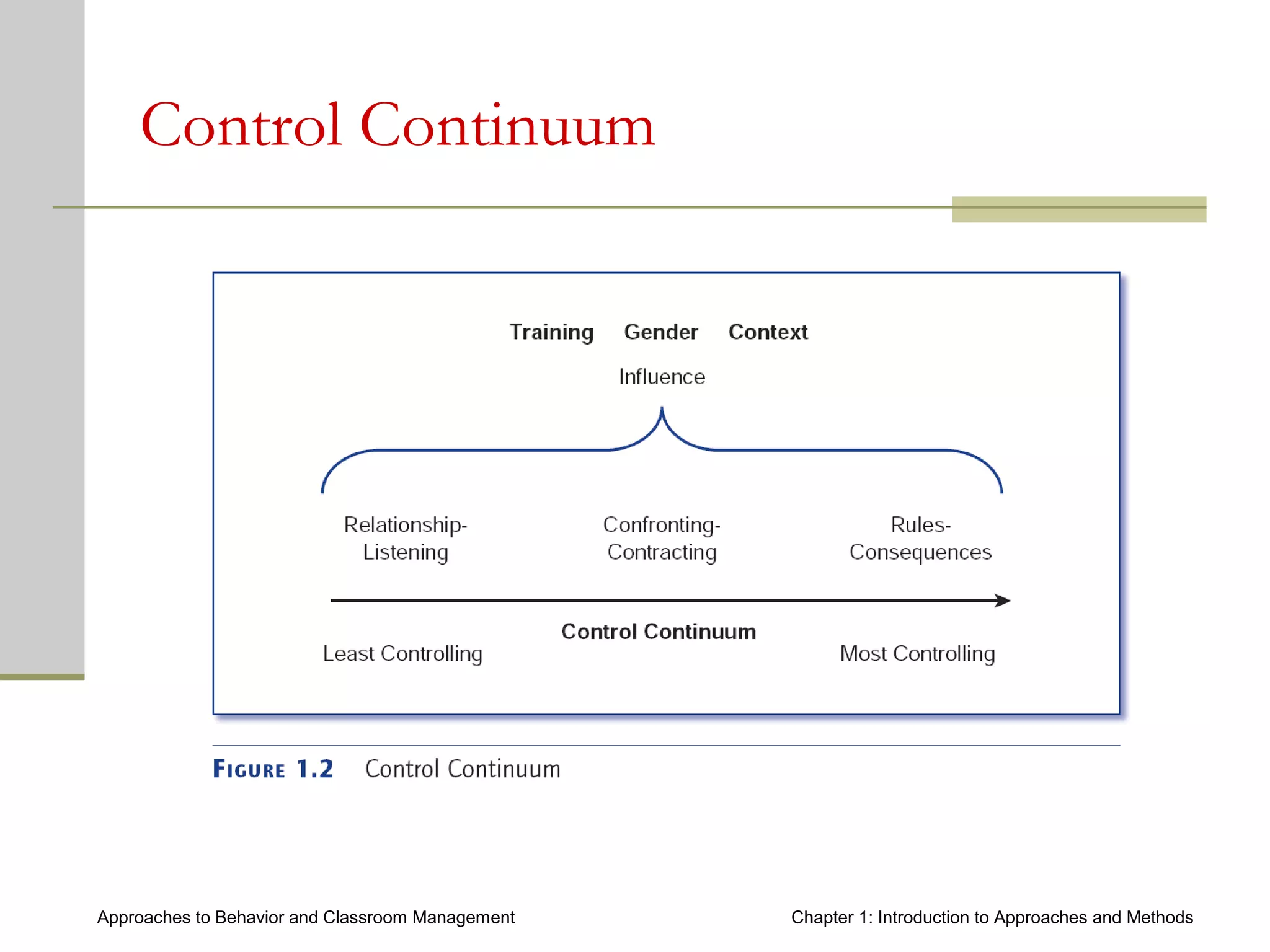
Control Continuum of Teaching Types
 Relationship-listening
 Confronting-contracting
 Rules-consequences
Approaches to Behavior and Classroom Management Chapter 1: Introduction to Approaches and Methods
Control Continuum
Approaches to Behavior and Classroom Management Chapter 1: Introduction to Approaches and Methods
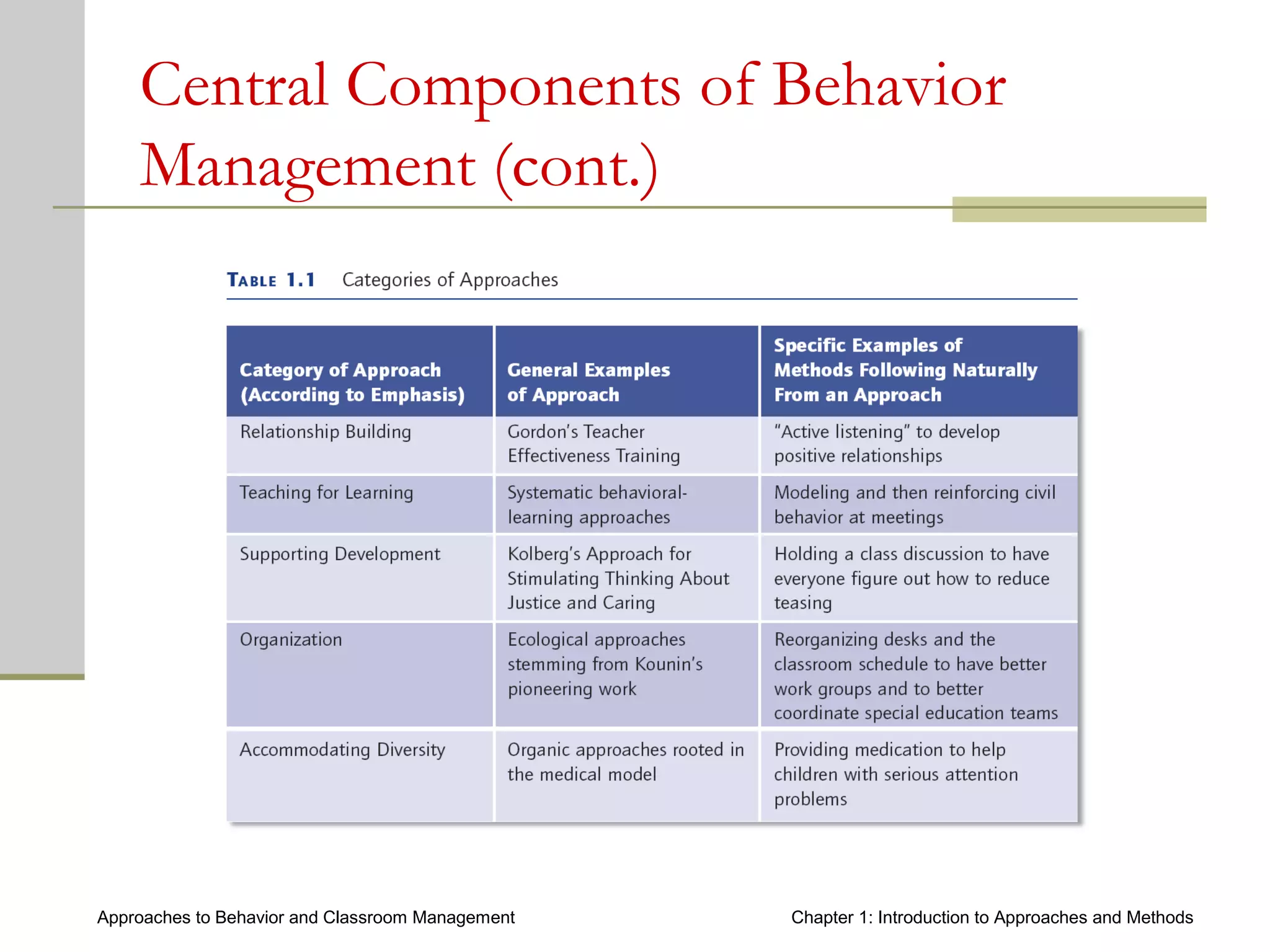
Central Components of Behavior
Management
 The basic concepts of any developed approach to
behavior and classroom management include:
 Relationship building
 Learning (teaching for learning)
 Development (supporting development)
 Organization
Approaches to Behavior and Classroom Management Chapter 1: Introduction to Approaches and Methods
Central Components of Behavior
Management (cont.)
Approaches to Behavior and Classroom Management Chapter 1: Introduction to Approaches and Methods
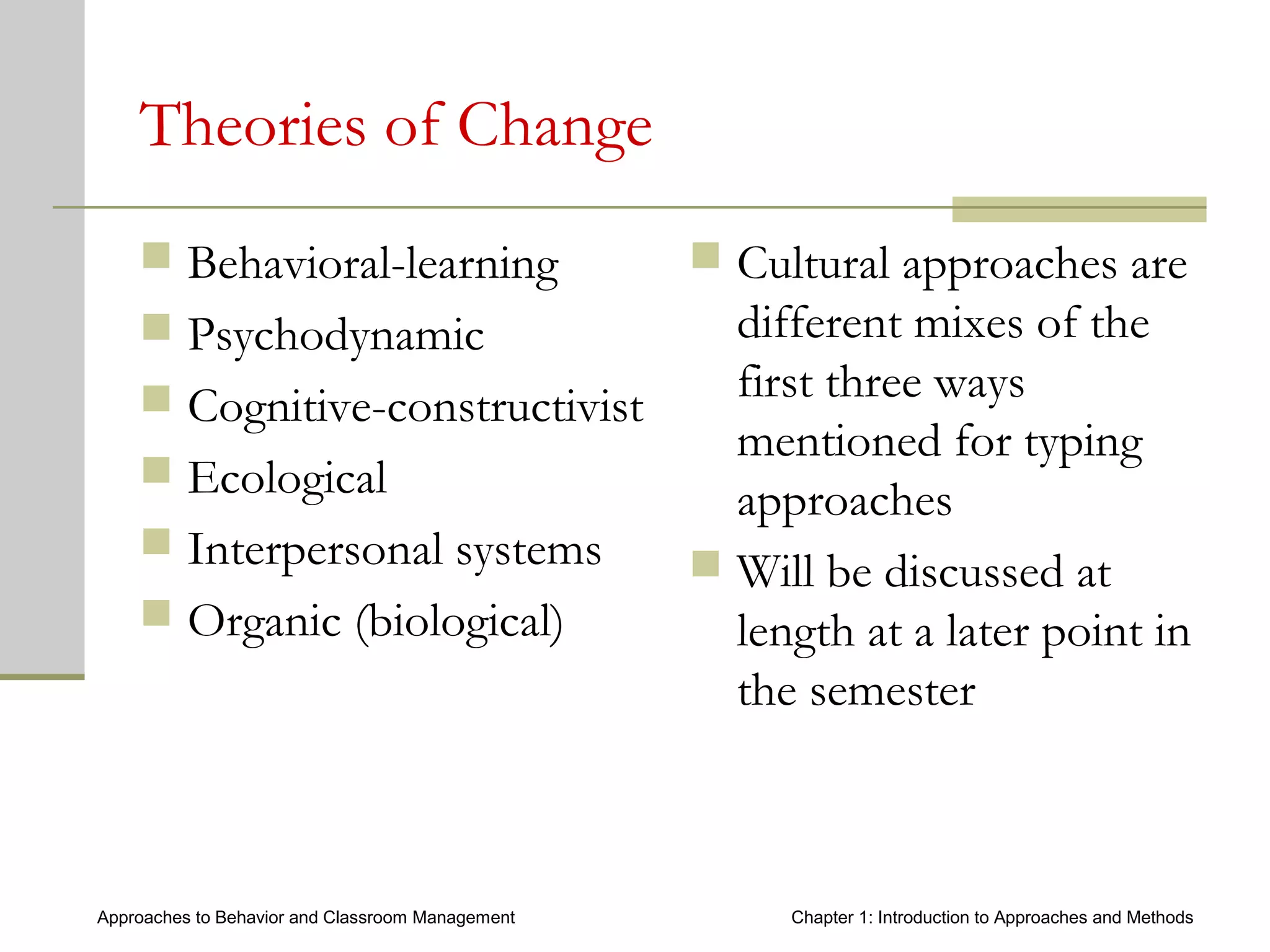
Theories of Change
 Behavioral-learning
 Psychodynamic
 Cognitive-constructivist
 Ecological
 Interpersonal systems
 Organic (biological)
 Cultural approaches are
different mixes of the
first three ways
mentioned for typing
approaches
 Will be discussed at
length at a later point in
the semester
Approaches to Behavior and Classroom Management Chapter 1: Introduction to Approaches and Methods
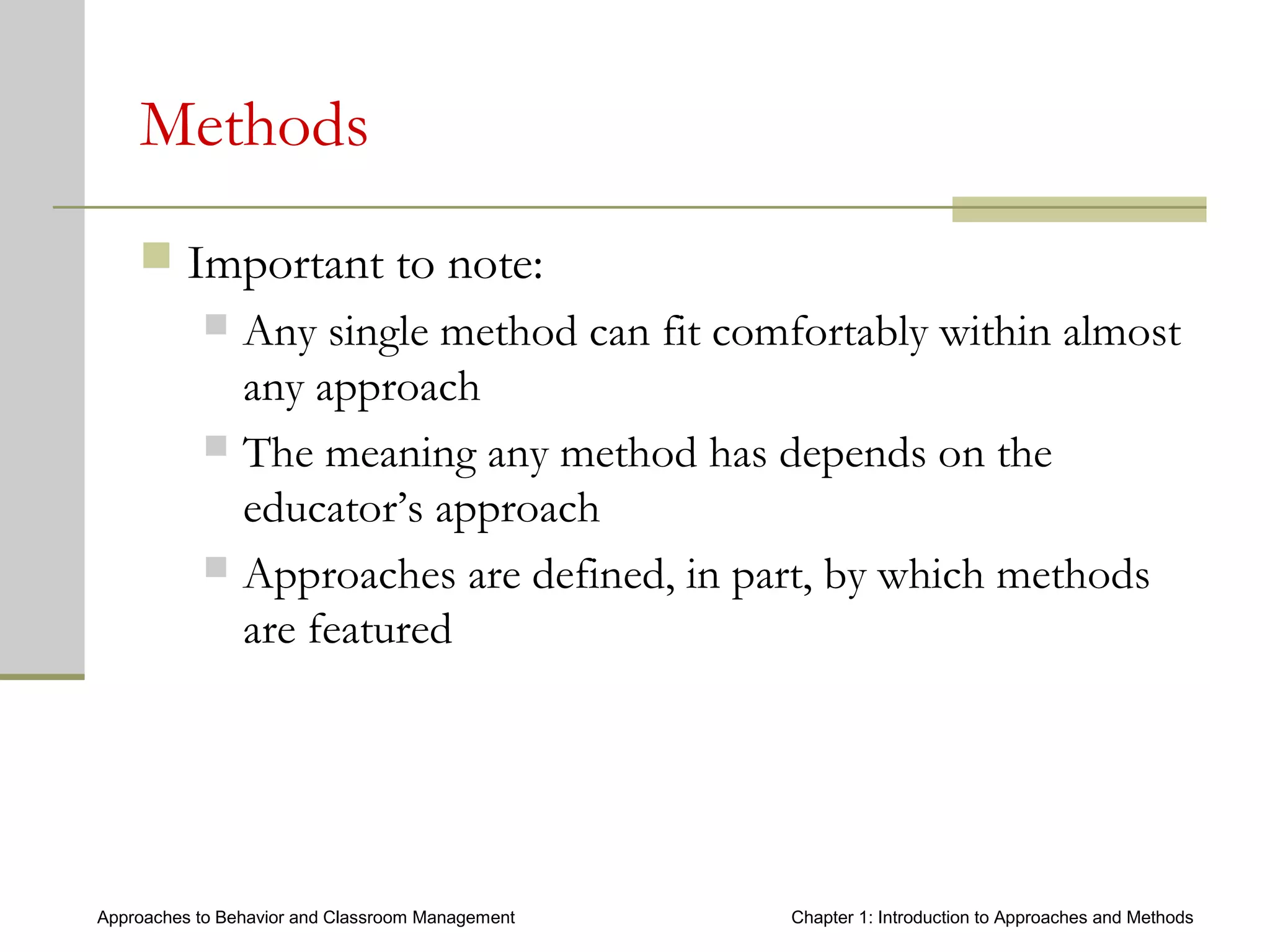
Methods
 Important to note:
 Any single method can fit comfortably within almost
any approach
 The meaning any method has depends on the
educator’s approach
 Approaches are defined, in part, by which methods
are featured
Approaches to Behavior and Classroom Management Chapter 1: Introduction to Approaches and Methods
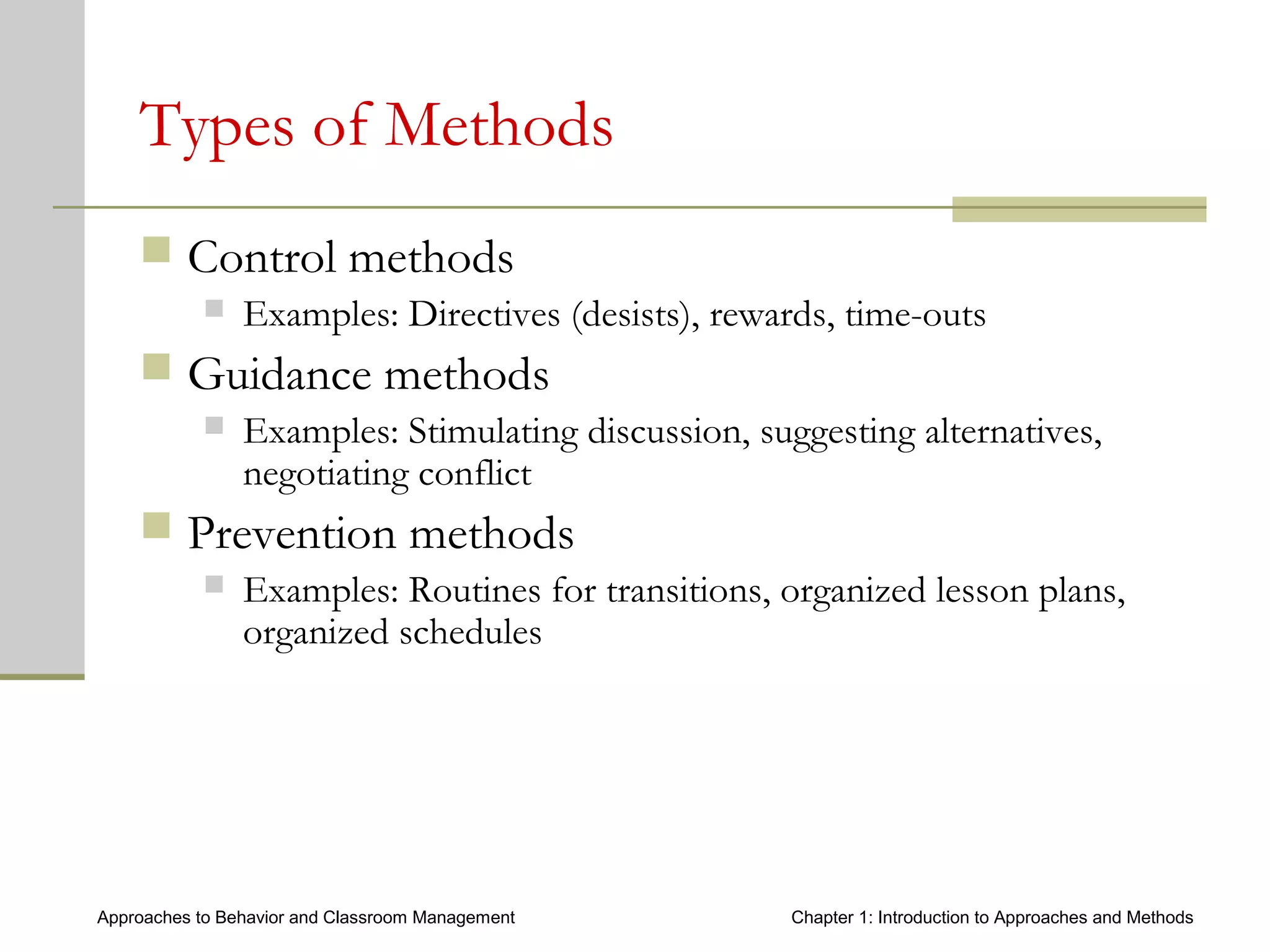
Types of Methods
 Control methods
 Examples: Directives (desists), rewards, time-outs
 Guidance methods
 Examples: Stimulating discussion, suggesting alternatives,
negotiating conflict
 Prevention methods
 Examples: Routines for transitions, organized lesson plans,
organized schedules
Approaches to Behavior and Classroom Management Chapter 1: Introduction to Approaches and Methods
How Methods Relate to Approaches
 Professionals are mindful that their methods derive
from their approaches
 Have more control over choosing the right methods
—because they can keep in mind the big picture
while attending to details of the moment
 Can change approaches if the situation calls for
change
Approaches to Behavior and Classroom Management Chapter 1: Introduction to Approaches and Methods
Choosing Methods
 Matching methods to children and circumstances
 Adopting different points of entry
 Managing dilemmas:
 Short-term vs. long-term needs
 Needs of the individual vs. needs of the group
Approaches to Behavior and Classroom Management Chapter 1: Introduction to Approaches and Methods
Reflection Questions
 Take a moment to reflect upon your own “natural
approach.” Think about the meanings, values and
assumptions that you bring into your own work with
children and adolescents. How does your natural
approach effect how you are as a teacher?

Chapter 1 Intro to Teaching

  • 1.
    Chapter 1 Introduction toApproaches and Methods
  • 2.
    Approaches to Behaviorand Classroom Management Chapter 1: Introduction to Approaches and Methods Overview  Defining approaches  Categorizing approaches  Types of methods  Choosing methods
  • 3.
    Approaches to Behaviorand Classroom Management Chapter 1: Introduction to Approaches and Methods Approaches  Approaches are defined by:  Meanings given to core concepts  Values and value hierarchies  Assumptions about what is needed to manage behavior and classrooms effectively
  • 4.
    Approaches to Behaviorand Classroom Management Chapter 1: Introduction to Approaches and Methods Approaches (cont.)  Approaches can be categorized by: 1. How much and what type of control a teacher has over students 2. Which components are emphasized 3. Theories of change 4. Culture
  • 5.
    Approaches to Behaviorand Classroom Management Chapter 1: Introduction to Approaches and Methods Baumrind’s Categories of Parenting Styles  Authoritarian  Authoritative  Permissive
  • 6.
    Approaches to Behaviorand Classroom Management Chapter 1: Introduction to Approaches and Methods Control Continuum of Teaching Types  Relationship-listening  Confronting-contracting  Rules-consequences
  • 7.
    Approaches to Behaviorand Classroom Management Chapter 1: Introduction to Approaches and Methods Control Continuum
  • 8.
    Approaches to Behaviorand Classroom Management Chapter 1: Introduction to Approaches and Methods Central Components of Behavior Management  The basic concepts of any developed approach to behavior and classroom management include:  Relationship building  Learning (teaching for learning)  Development (supporting development)  Organization
  • 9.
    Approaches to Behaviorand Classroom Management Chapter 1: Introduction to Approaches and Methods Central Components of Behavior Management (cont.)
  • 10.
    Approaches to Behaviorand Classroom Management Chapter 1: Introduction to Approaches and Methods Theories of Change  Behavioral-learning  Psychodynamic  Cognitive-constructivist  Ecological  Interpersonal systems  Organic (biological)  Cultural approaches are different mixes of the first three ways mentioned for typing approaches  Will be discussed at length at a later point in the semester
  • 11.
    Approaches to Behaviorand Classroom Management Chapter 1: Introduction to Approaches and Methods Methods  Important to note:  Any single method can fit comfortably within almost any approach  The meaning any method has depends on the educator’s approach  Approaches are defined, in part, by which methods are featured
  • 12.
    Approaches to Behaviorand Classroom Management Chapter 1: Introduction to Approaches and Methods Types of Methods  Control methods  Examples: Directives (desists), rewards, time-outs  Guidance methods  Examples: Stimulating discussion, suggesting alternatives, negotiating conflict  Prevention methods  Examples: Routines for transitions, organized lesson plans, organized schedules
  • 13.
    Approaches to Behaviorand Classroom Management Chapter 1: Introduction to Approaches and Methods How Methods Relate to Approaches  Professionals are mindful that their methods derive from their approaches  Have more control over choosing the right methods —because they can keep in mind the big picture while attending to details of the moment  Can change approaches if the situation calls for change
  • 14.
    Approaches to Behaviorand Classroom Management Chapter 1: Introduction to Approaches and Methods Choosing Methods  Matching methods to children and circumstances  Adopting different points of entry  Managing dilemmas:  Short-term vs. long-term needs  Needs of the individual vs. needs of the group
  • 15.
    Approaches to Behaviorand Classroom Management Chapter 1: Introduction to Approaches and Methods Reflection Questions  Take a moment to reflect upon your own “natural approach.” Think about the meanings, values and assumptions that you bring into your own work with children and adolescents. How does your natural approach effect how you are as a teacher?

Editor's Notes

  • #5 - Clicking after slide appears will change the color of bullet point #1, about control, as the following two slides focus on this issue
  • #9 - Clicking after slide appears will change the color of bullet point #2, about emphasis of components, as the following slide focuses on this issue
  • #12 - Clicking after slide appears will change the color of bullet point #3, about types of methods, as the following slides focus on this issue