Evaluation is such an essential part of
teaching and learning. Evaluation is a
process of judging the effectiveness of
educational experiences .It is collective
process of collecting, recording,
assembling and interpreting
information .
INTRODUCTION
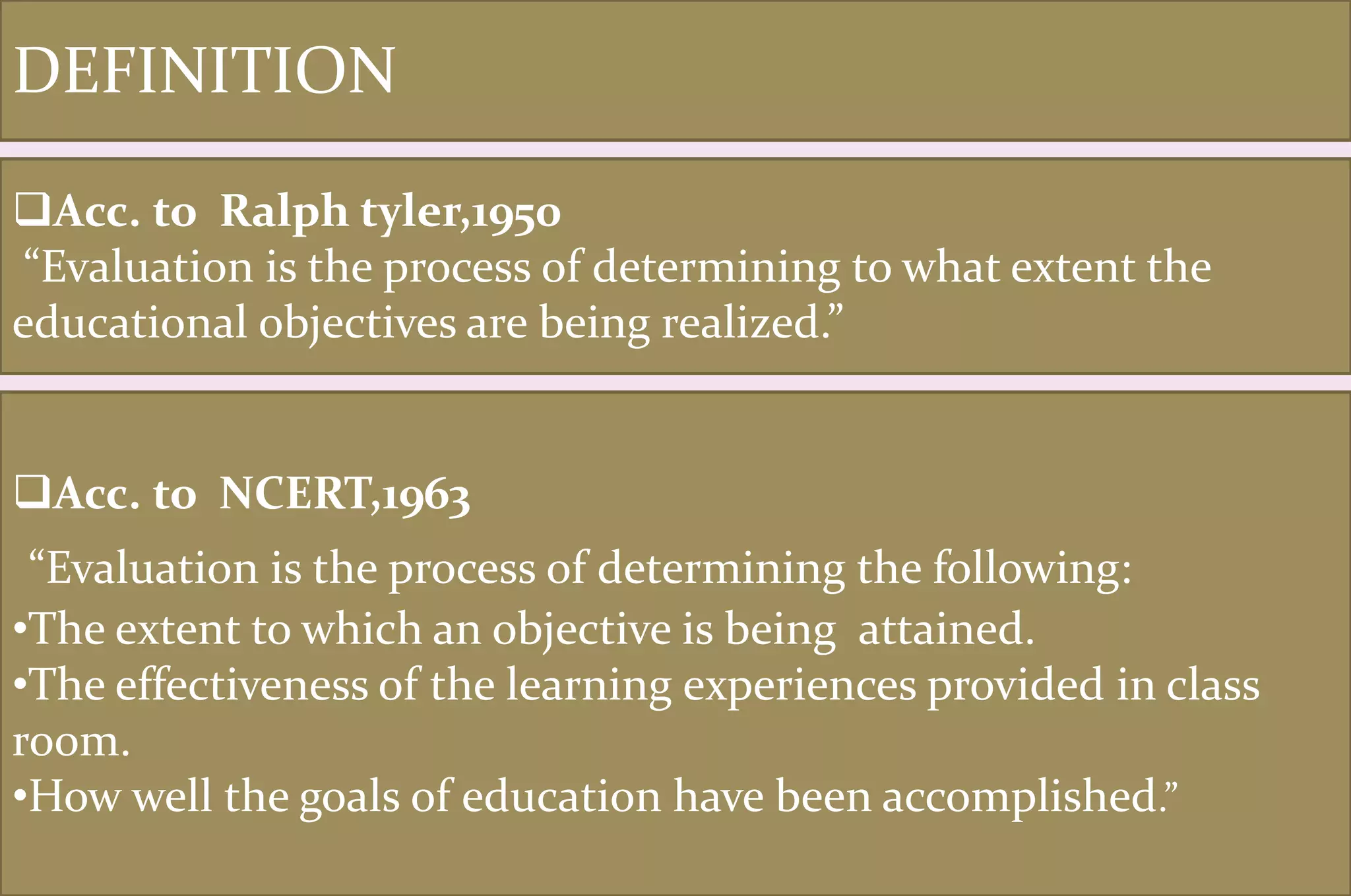
DEFINITION
Acc. to Ralph tyler,1950
“Evaluation is the process of determining to what extent the
educational objectives are being realized.”
Acc. to NCERT,1963
“Evaluation is the process of determining the following:
•The extent to which an objective is being attained.
•The effectiveness of the learning experiences provided in class
room.
•How well the goals of education have been accomplished.”
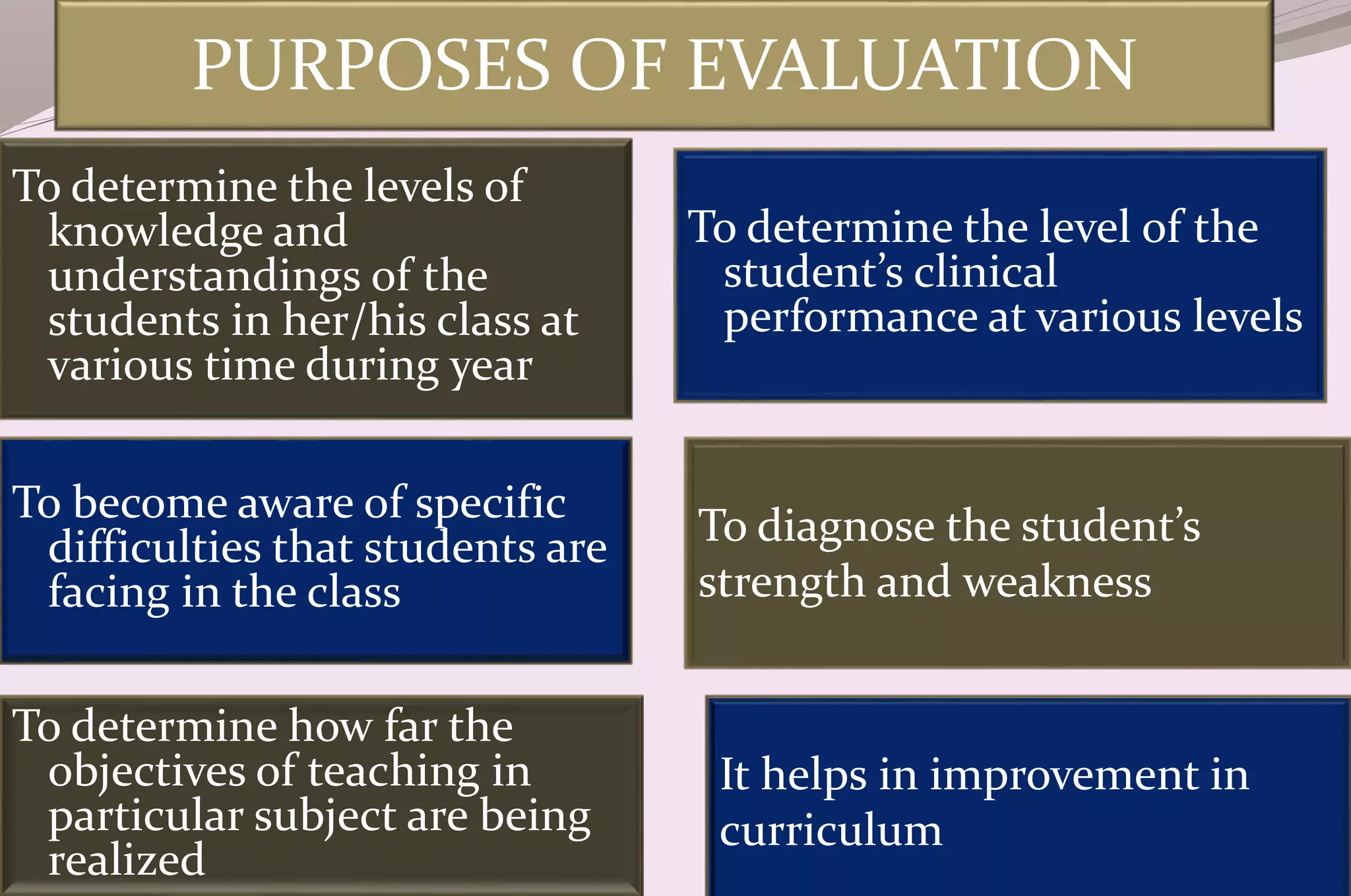
PURPOSES OF EVALUATION
To determine the levels of
knowledge and
understandings of the
students in her/his class at
various time during year
To become aware of specific
difficulties that students are
facing in the class
To determine the level of the
student’s clinical
performance at various levels
To determine how far the
objectives of teaching in
particular subject are being
realized
To diagnose the student’s
strength and weakness
It helps in improvement in
curriculum
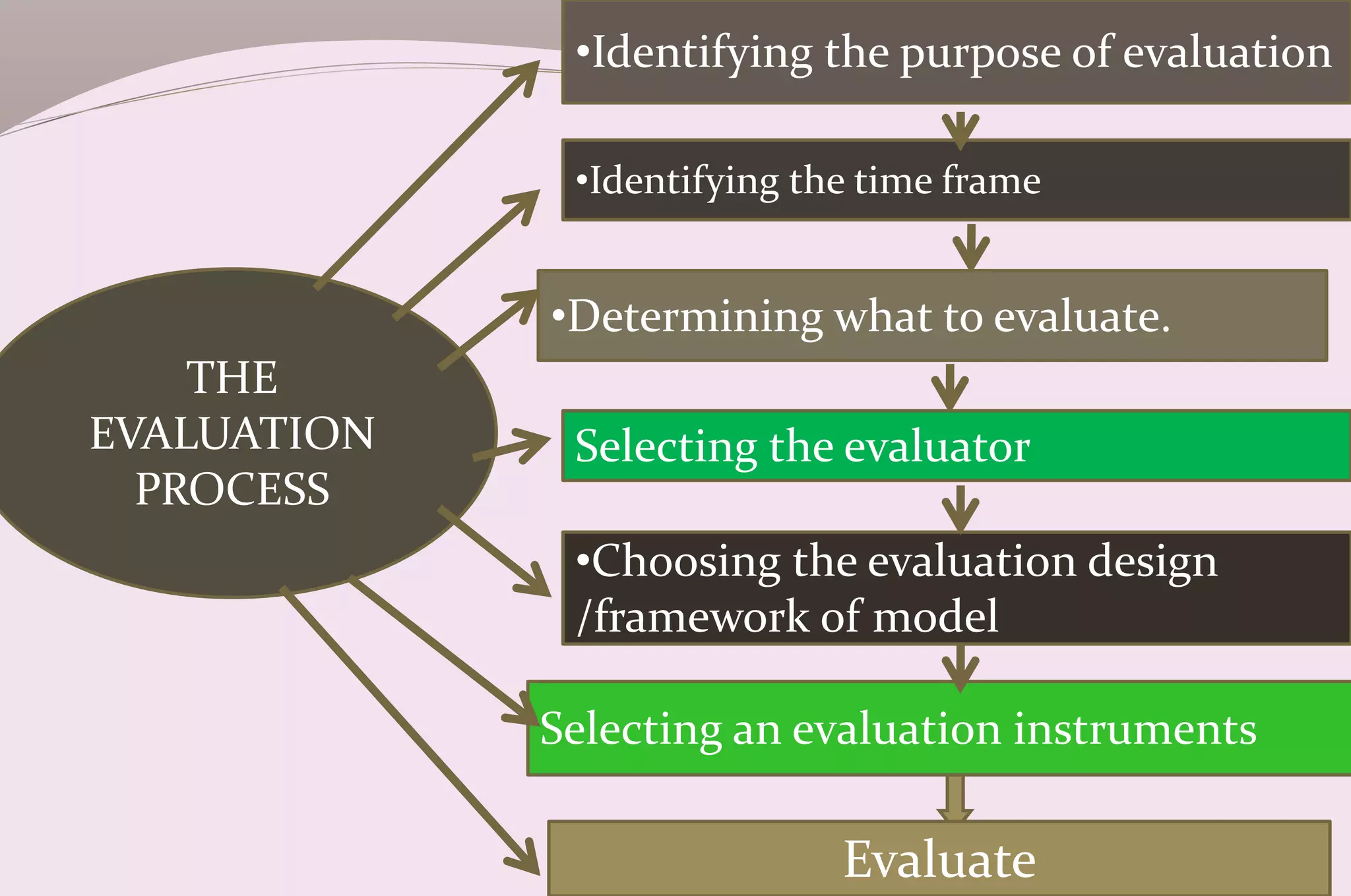
•Identifying the purpose of evaluation
THE
EVALUATION
PROCESS
•Identifying the time frame
•Determining what to evaluate.
Selecting the evaluator
•Choosing the evaluation design
/framework of model
Selecting an evaluation instruments
Evaluate
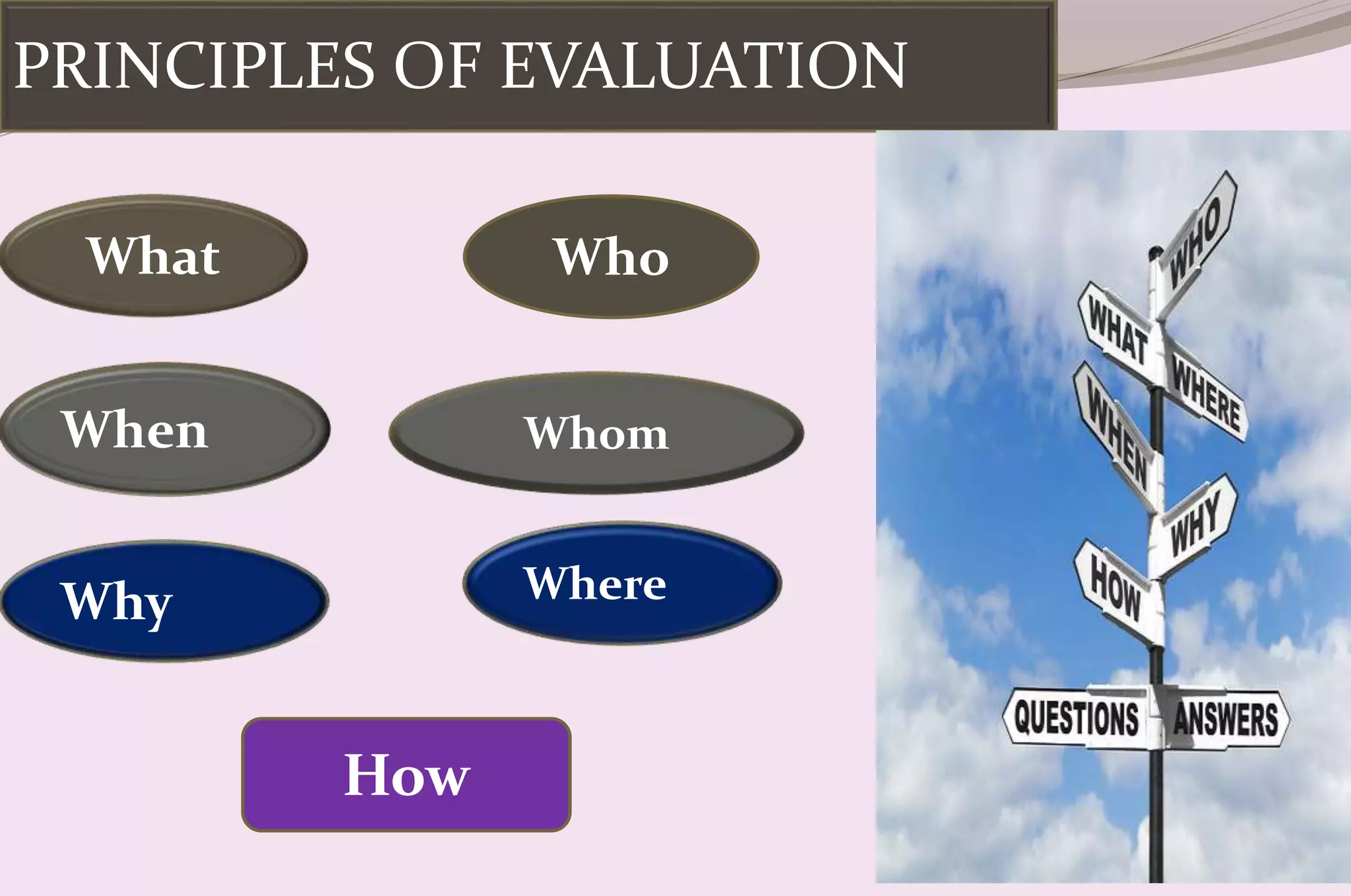
What
Why
Whom
Where
When
PRINCIPLES OF EVALUATION
Who
How
CHARACTERISTICS OF GOOD EVALUATION
Useful
Acceptable
Feasible
Reliable
Valid
Should follow best
practice
Strong impact in the right
direction
Goals should be clear from
the start
TYPES OF EVALUATION
FORMATIVE SUMMATIVE
DIMENTIONS OF
DIFFERENCE
FORMATIVE SUMMATIVE
PURPOSE TO MONITOR PROGRESS OF
STUDENT BY GETTING
FEEDBACK
TO CHECK FINAL STATUS OF
THE STUDENTS
FOCUS OF MEASUREMENT PROCESS- ORIENTED : How
learning is going on
PRODUCT-ORIENTED : what’s
been learned
RELATIONSHIP BETWEEN
ADMINISTRATOR AND
RECIPIENT
REFLECTIVE-internally defined
criteria
PRESPECTIVE-externally
imposed standards
FINDINGS DIGNOSTIC-identify area for
improvement
JUDGEMENTAL-arrive at an
overall grade
ONGOING CRITERIA FLEXIBLE-adjust as problems
are clarified
FIXED
STANDARDS OF
MEASUREMENT
ABSOLUTE- COMPARITIVE
CONTENT FOCUS METHOD DAILY ASSIGNMENTS AND
OBSERVATIONS
TESTS,EXAMS,AND PROJECTS
SUMMATIVE
Questions
Examination
Short Answer
Very Short Answer
Essay
MCQ
Observation
Conversation
Project
Attendance
Case study
Daily records
Seminar
performance
Question
Test
FORMATIVE
TOOLS &
TECHNIQUES
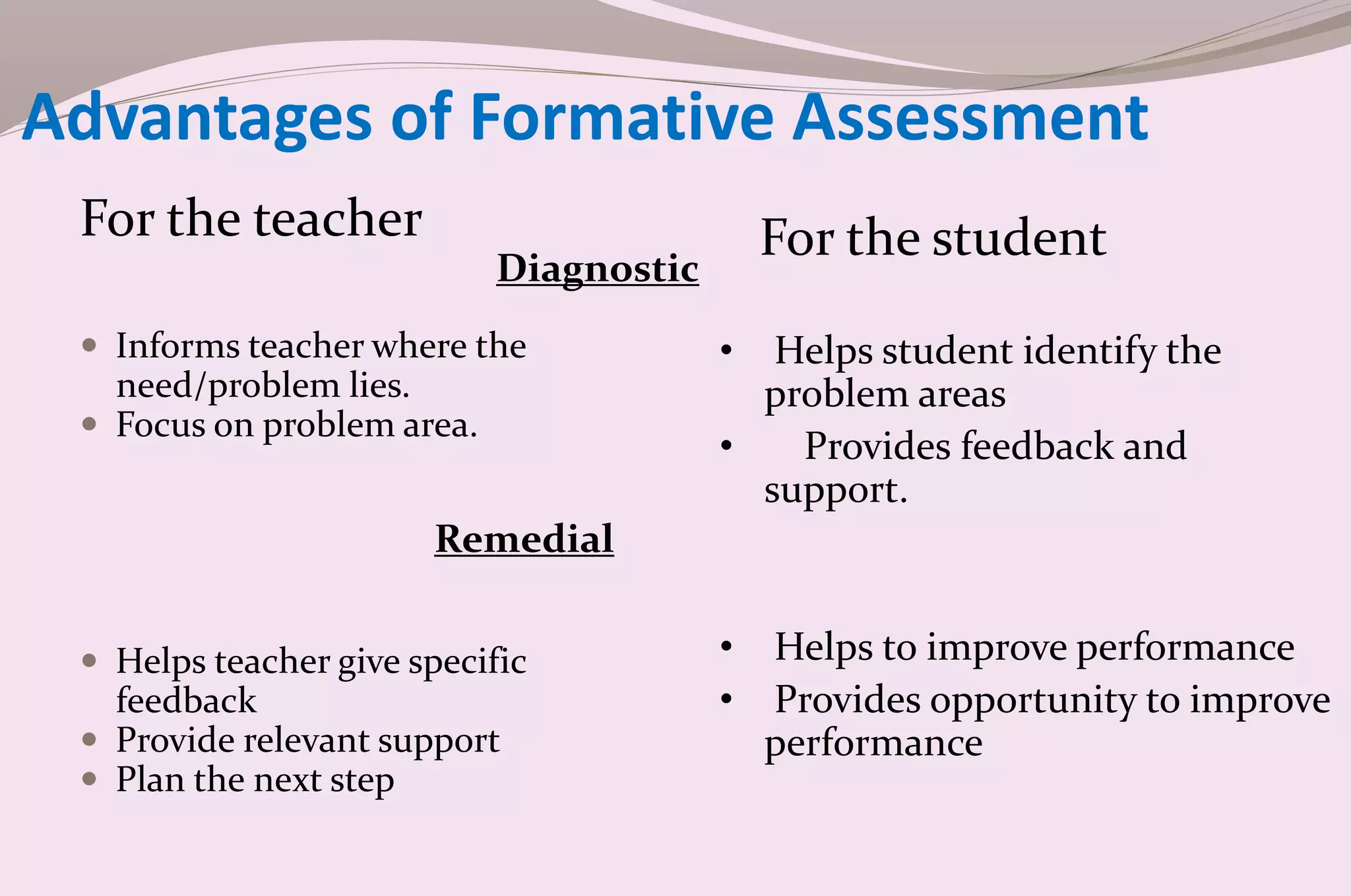
Advantages of Formative Assessment
For the teacher
 Informs teacher where the
need/problem lies.
 Focus on problem area.
 Helps teacher give specific
feedback
 Provide relevant support
 Plan the next step
For the student
• Helps student identify the
problem areas
• Provides feedback and
support.
• Helps to improve performance
• Provides opportunity to improve
performance
Remedial
Diagnostic
Advantages of summative evaluation
 Allows for a broad range of
demonstration of
knowledge
 Allows for legitimate self
assessment.
 Individual strengths and
abilities are recognized.
 Goals (objectives) are clearly
stated in the beginning of a
unit of study.
Learning goals (objectives) are
shared with students before
material is introduced.
Students know exactly what
you want them to learn.
Gives a clearer and broader
picture of each students
abilities, strengths and
knowledge.
For the Teacher For the student
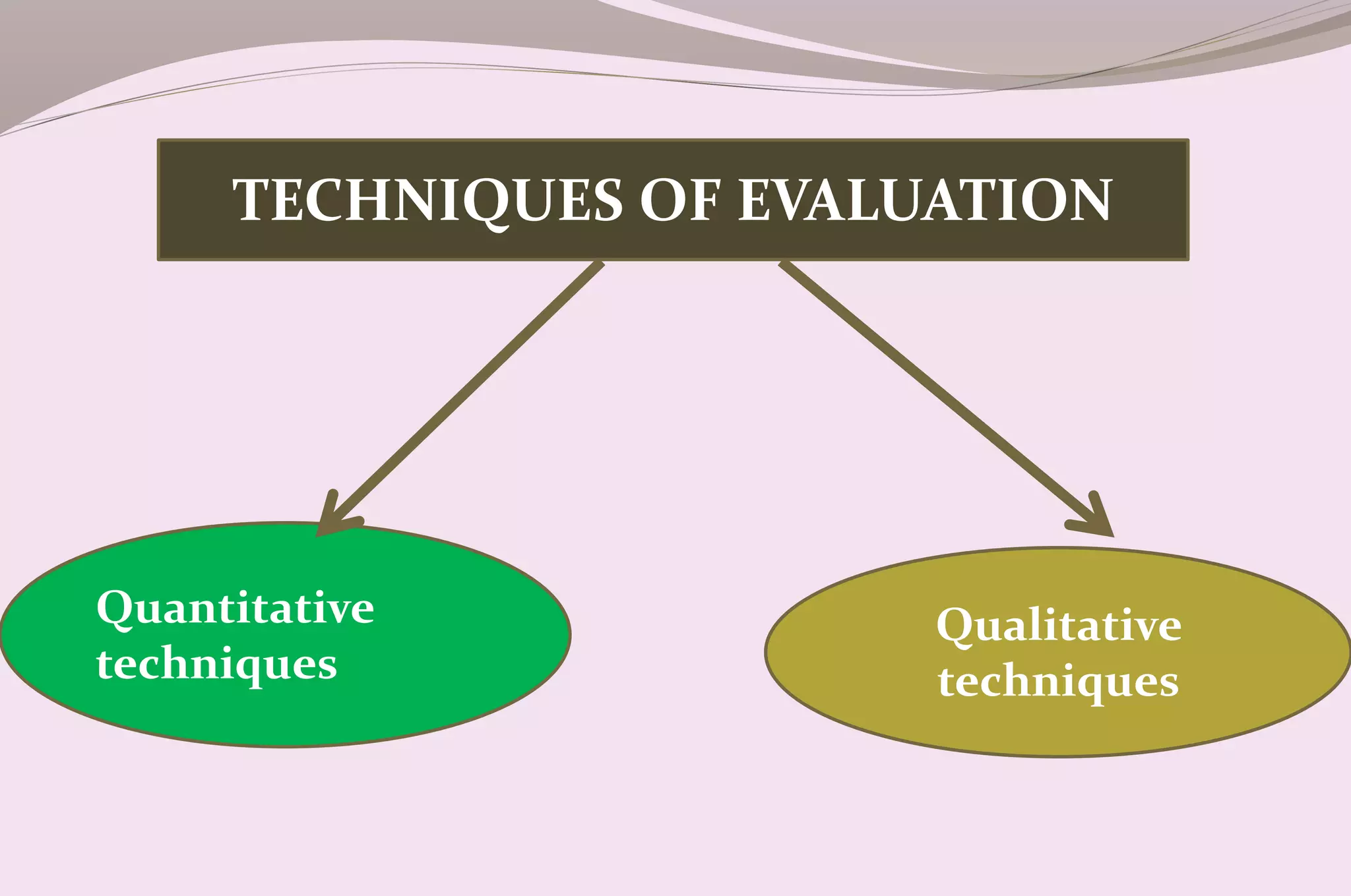
TECHNIQUES OF EVALUATION
Quantitative
techniques
Qualitative
techniques
QUANTITATIVE TECHNIQUES-
Oral Written
Practical
QUALITATIVE TECHNIQUES-
Observational
techniques-charts ,
checklist ,rating
scale, anecdotal
records ,cumulative
records
Projective
techniques-
sentence
completion ,
interpretation of
the pictures.
Self reporting
technique-
interview
,attitude scale,
questionnaires
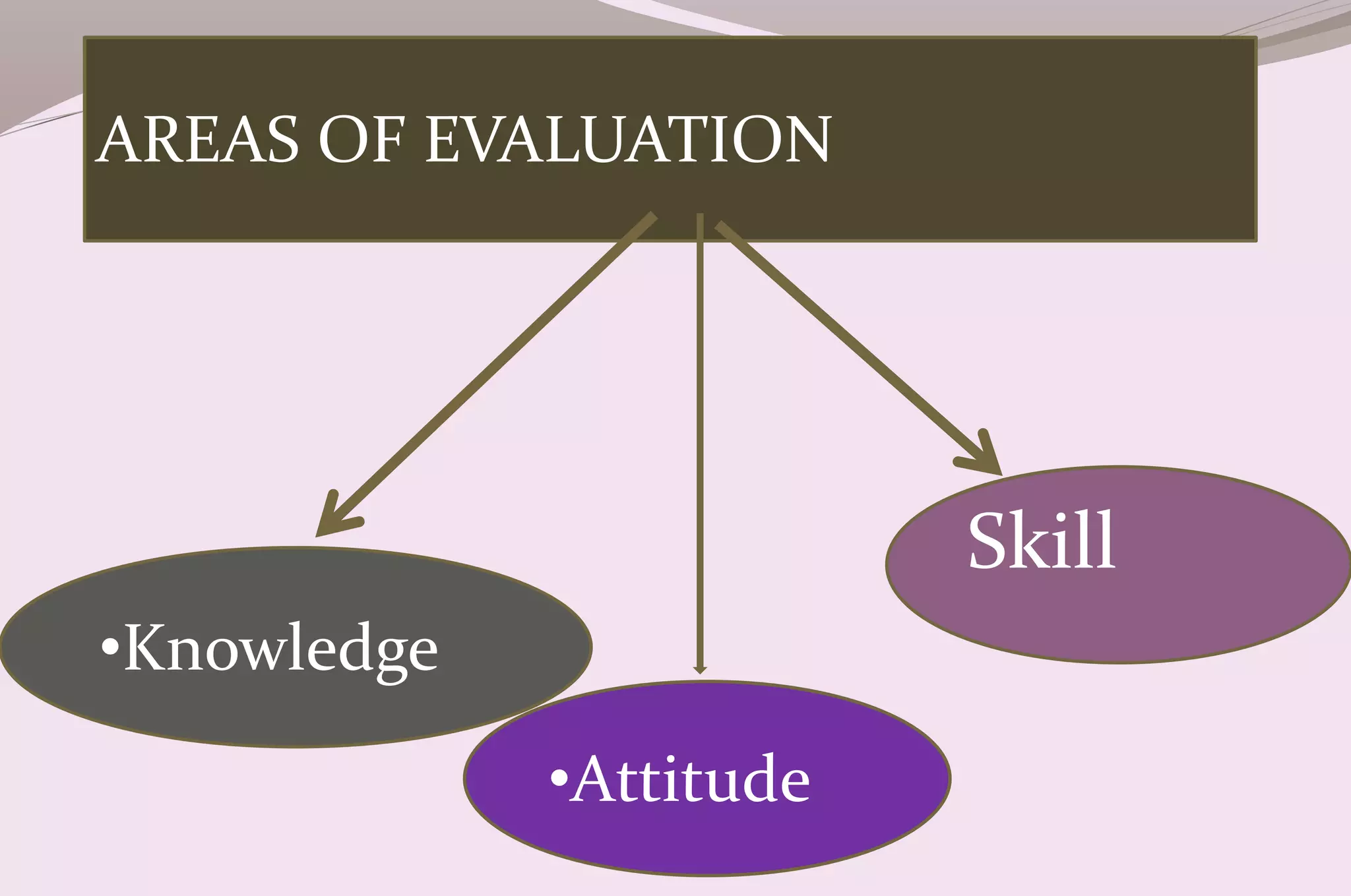
AREAS OF EVALUATION
•Knowledge
Skill
•Attitude
The methods used for the evaluation of
knowledge:
Oral test
Written
test
•Problem
solving
type
ORAL EXAMINATION
Oral test-oral examination or the test is a face to face questions
and answer activity between examiner and examinee.
Types of oral examination-
•Interview
•Viva voice
•Quiz contest
•Group discussion
WRITTEN EXAMINATION
Written examination or
the test is the test in
which student has to
give answer by using pen
or pencil.
TYPES OF
WRITTEN TEST
Subjective type-long
essay type and short
essay type
Objective type
ESSAY TYPE QUESTIONS
•It is the test containing questions requiring the
student to respond in writing .It emphasis recall
rather then recognizing of correct alternative.
•The student can demonstrate her ability to
organize ideas and express them effectively in
logical fashion.
•Test the ability to communicate in writing depth
of knowledge and understanding.
•It require short time for a teacher to pre pare
•It can be successfully employed for all the school
subjects.
TYPES OF ESSAY TYPE QUESTIONS
Descriptive
questions Comparison
Problem
solving
Short notes
Narrative
questions
Essay type question
Precise –
writing
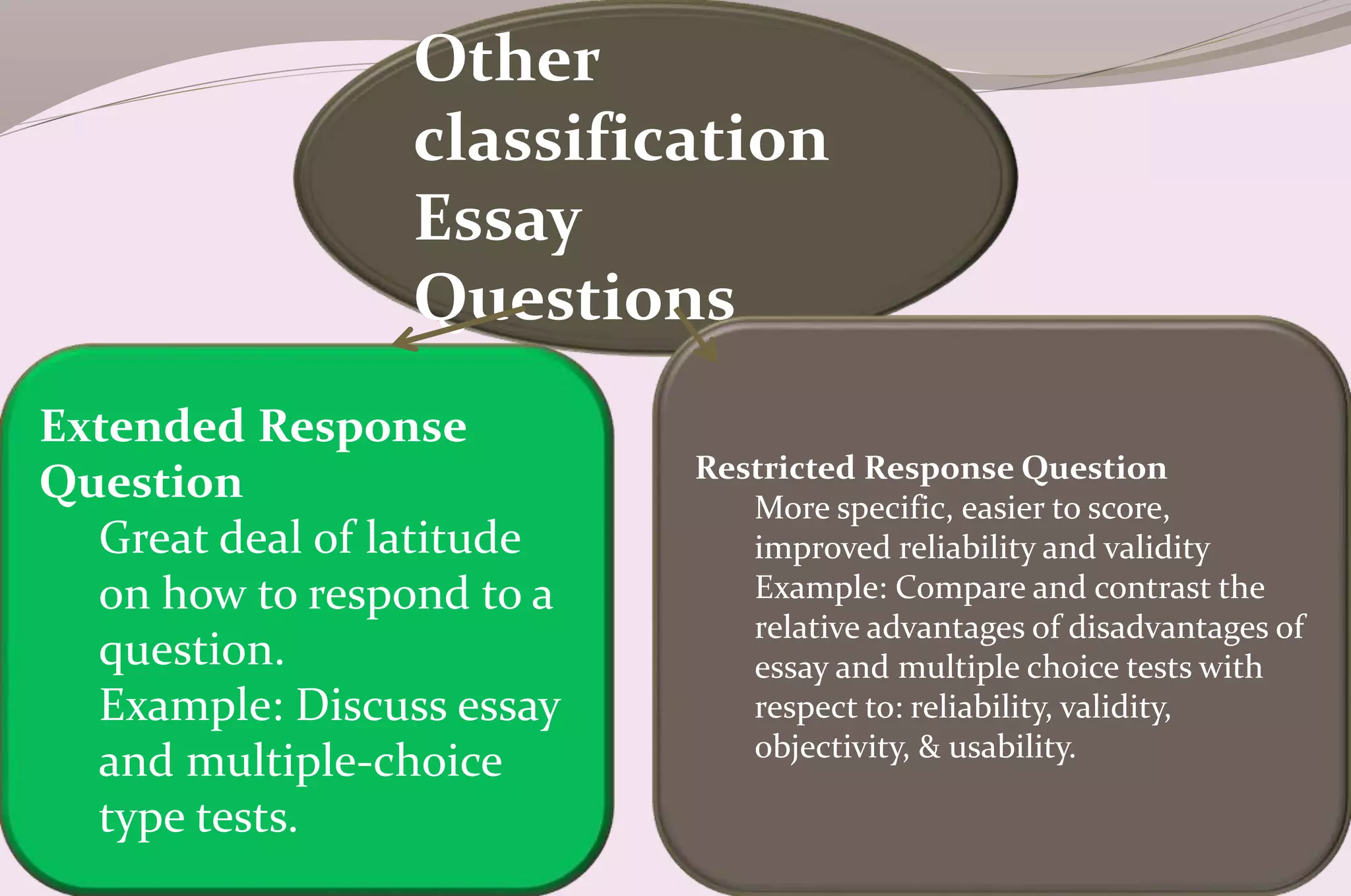
Other
classification
Essay
Questions
Extended Response
Question
Great deal of latitude
on how to respond to a
question.
Example: Discuss essay
and multiple-choice
type tests.
Restricted Response Question
More specific, easier to score,
improved reliability and validity
Example: Compare and contrast the
relative advantages of disadvantages of
essay and multiple choice tests with
respect to: reliability, validity,
objectivity, & usability.
OBJECTIVE TYPE QUESTIONS
It refers to any written test that requires the examinee to
select the correct answer from among one or more of
several alternatives or supply a word or two and that
demands on objective judgement when it is scored.
Multiple-
Choice
Items Matching
Items
Completion
Fill-In
True-
False
Items
Types of objective
type questions-
PROBLEM SOLVING TYPE
•Designed to assess the student’s ability for critical
thinking.
•The student is presented with written description
of nursing problem and then asked to respond to
questions relative to situation.
•E.g -what are you feeling about Ms Janki as you
prepare to plan her care?
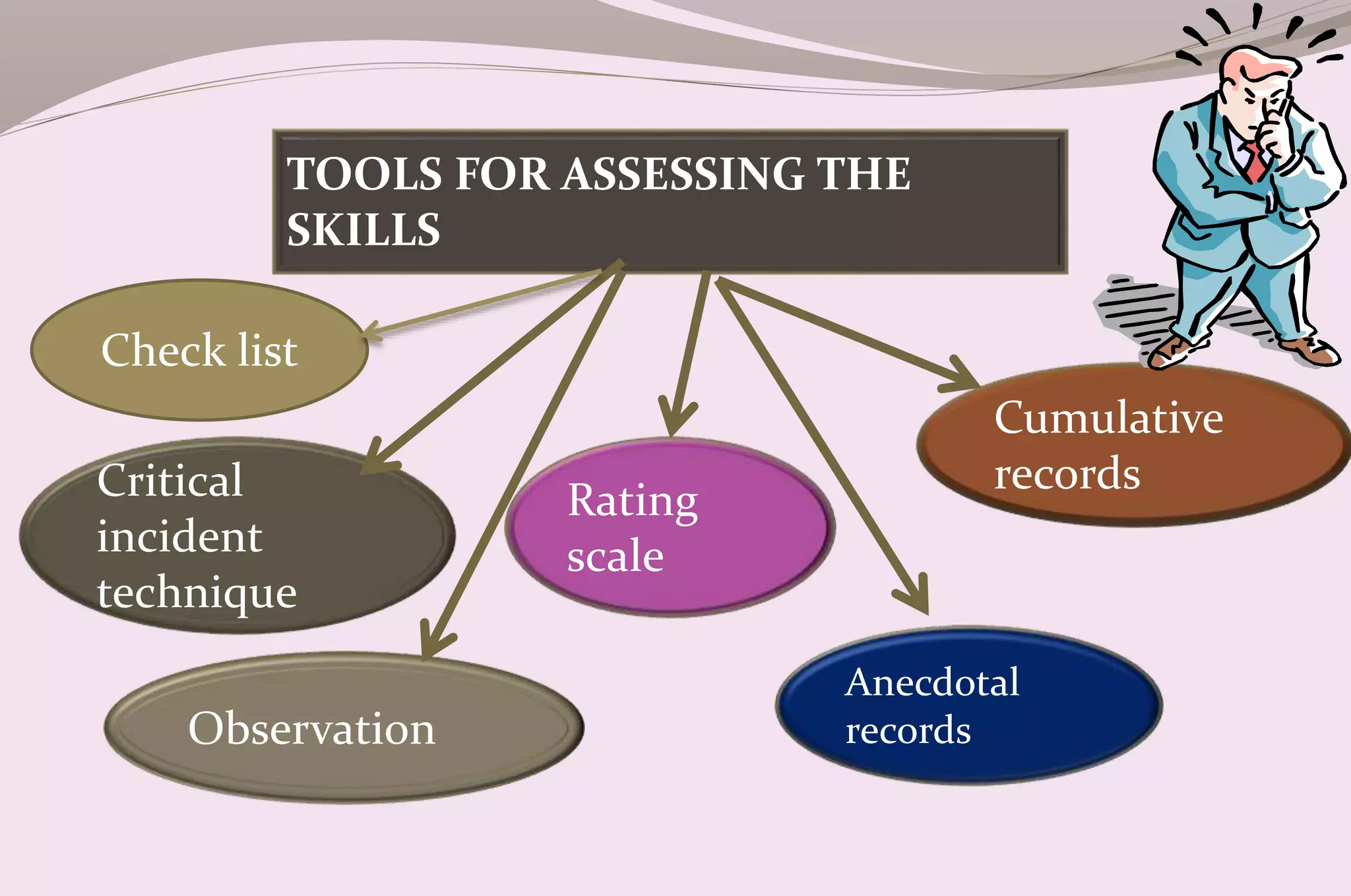
Critical
incident
technique
Rating
scale
Cumulative
records
Anecdotal
records
Observation
TOOLS FOR ASSESSING THE
SKILLS
Check list
OBSERVATION
It is used at all the stages of
evaluation
It is useful for evaluating the
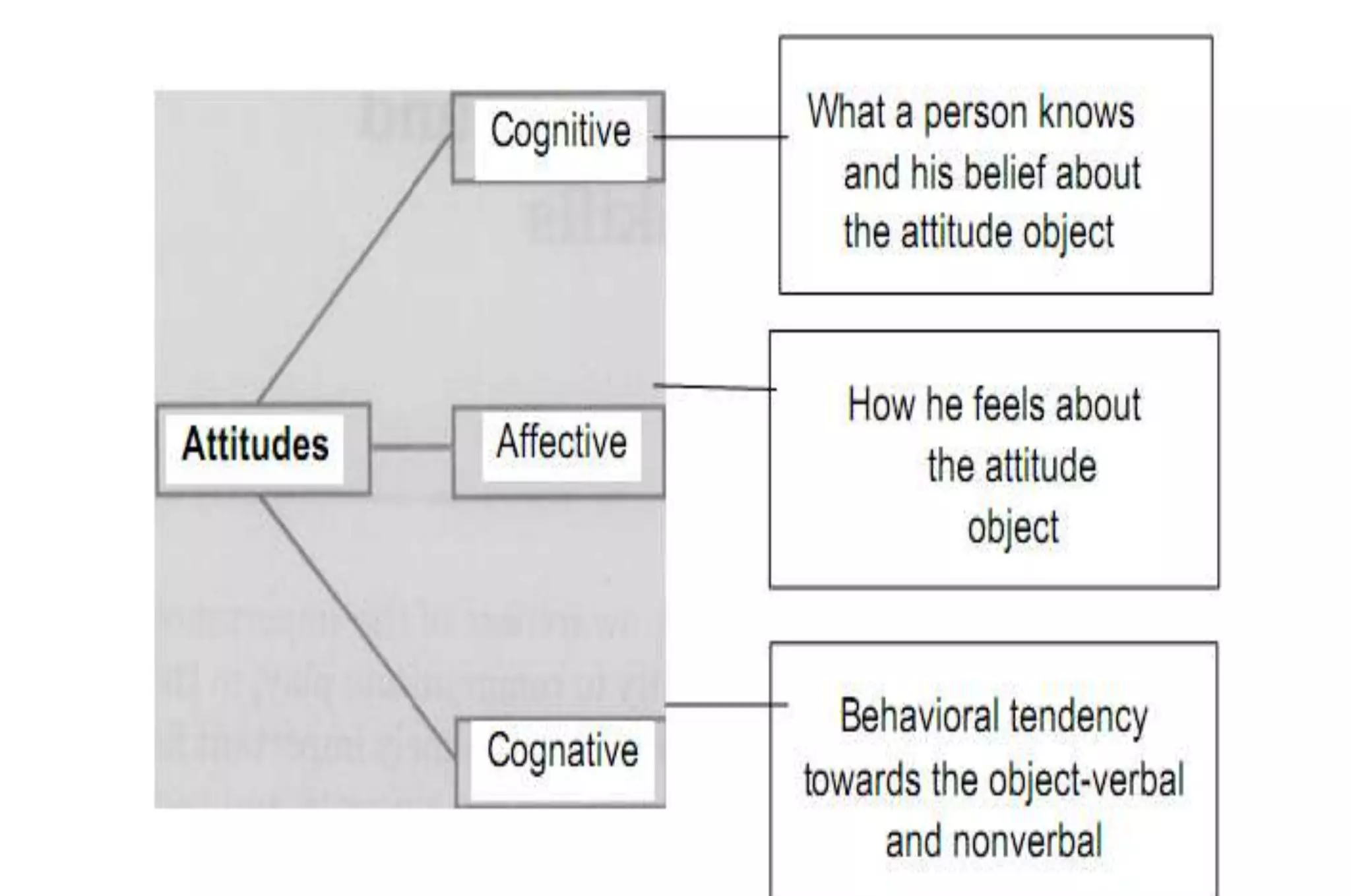
cognitive , affective and
psychomotor abilities.
The class room interaction and
performance of proceeding can be
evaluated by this observation
method
CUMMULATIVE RECORDS
Physical health
Sports Co-curricular
activities
Participation in
games
Attendance
Result of monthly,
half yearly test
Educational
progress
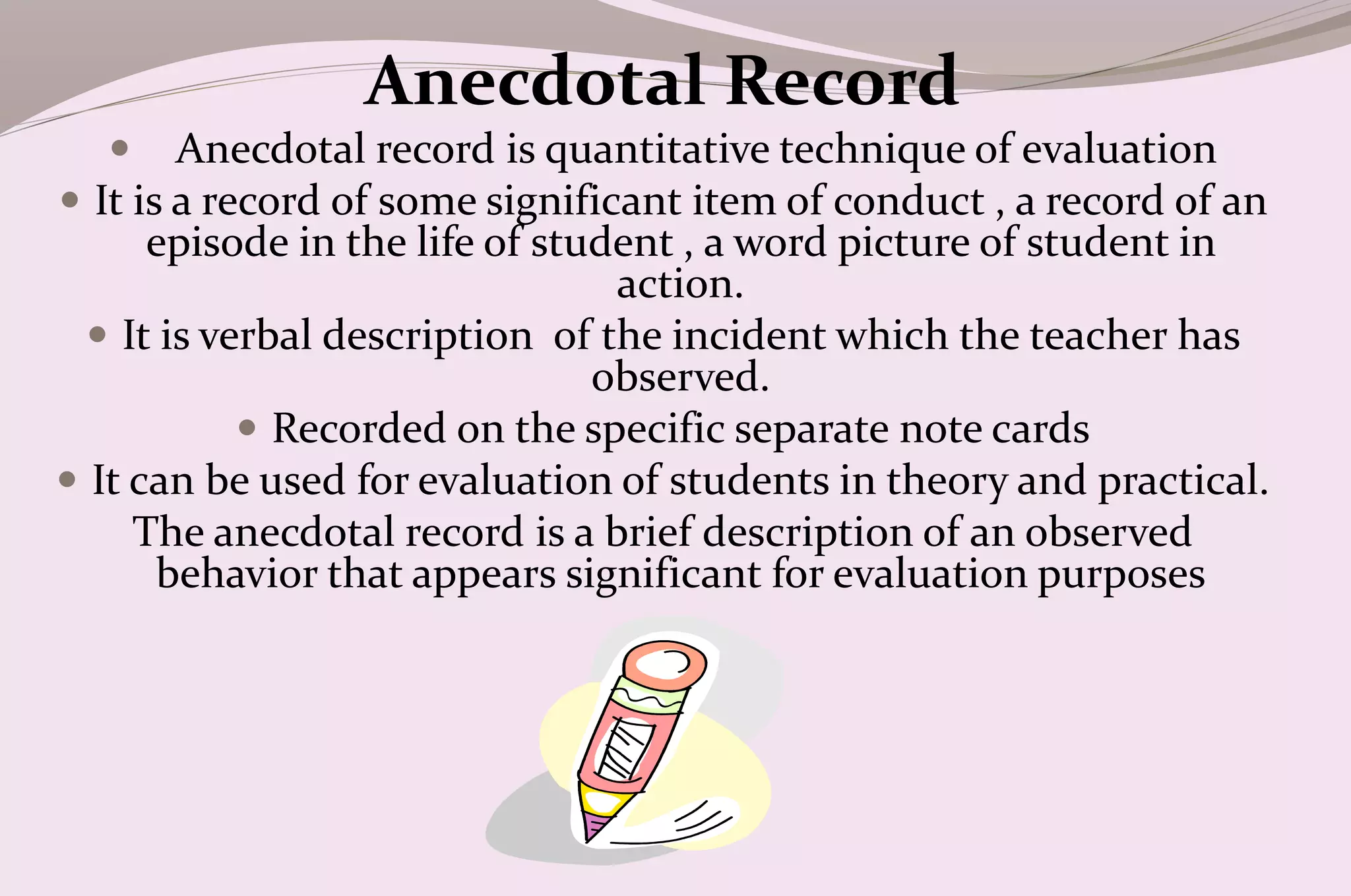
Anecdotal Record
 Anecdotal record is quantitative technique of evaluation
 It is a record of some significant item of conduct , a record of an
episode in the life of student , a word picture of student in
action.
 It is verbal description of the incident which the teacher has
observed.
 Recorded on the specific separate note cards
 It can be used for evaluation of students in theory and practical.
The anecdotal record is a brief description of an observed
behavior that appears significant for evaluation purposes

ITEMS OF ANECDOTAL RECORD
Interpretation of the behavior
Signature of the observer
Setting background of incident
Date of observation
Class and school
Name of the student
Recommendations concerning
the behavior
CRITICAL INCIDENT TECHNIQUE
•Similar to the anecdotal records
•Method of assessing the student’s analytic and
problem solving competences.
•In this student performance can be recorded and
evaluated acc. to stated criteria
CHECK LIST
Check list is prepared test of
statement or a list of essential
components of a task , skill or
activity ,relating to formulae of
action , behavior and product of
some performance . Each
statement in the list is checked
by yes or no to indicate the
presence and absence of
particular traits and action
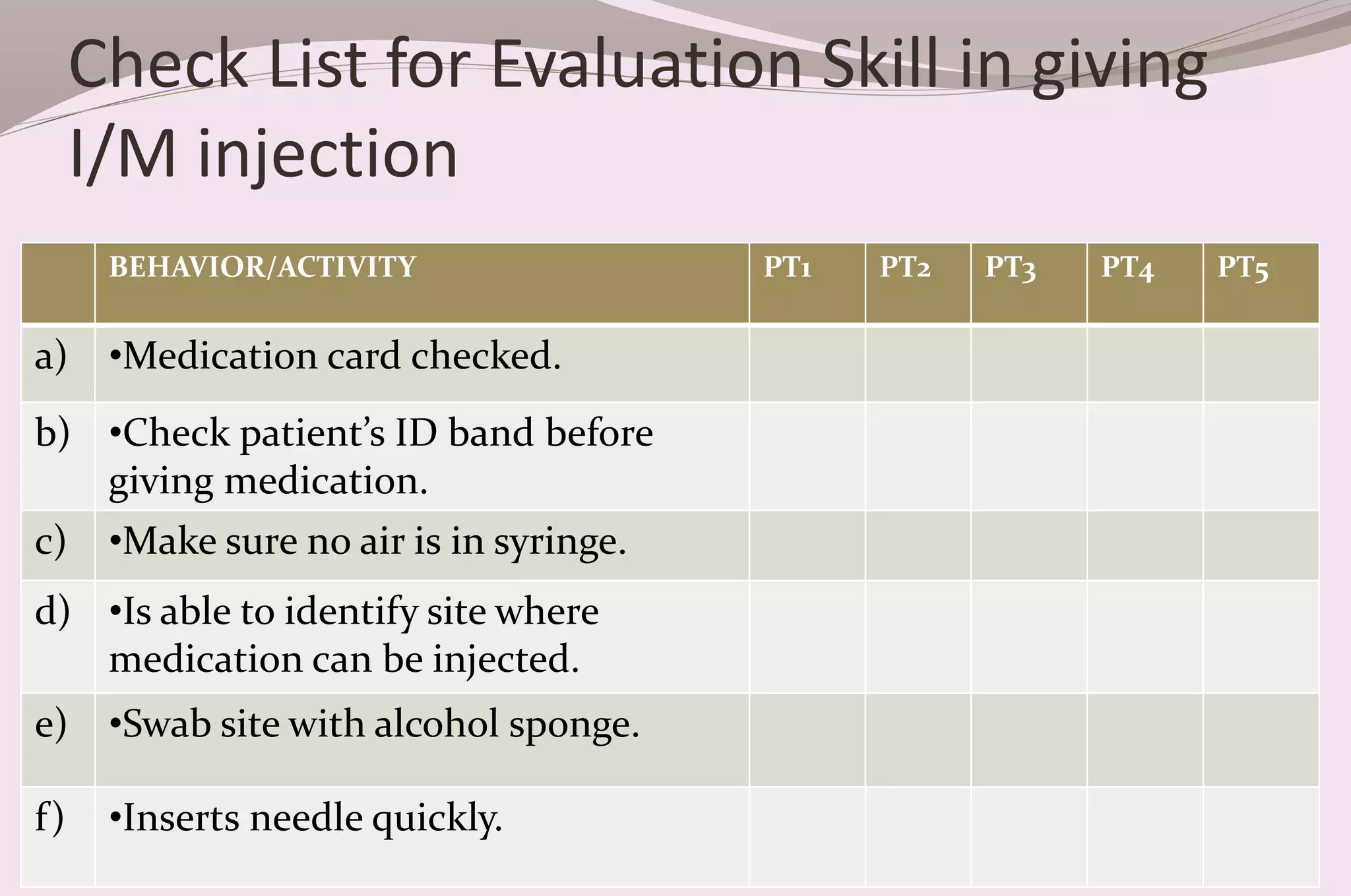
Check List for Evaluation Skill in giving
I/M injection
BEHAVIOR/ACTIVITY PT1 PT2 PT3 PT4 PT5
a) •Medication card checked.
b) •Check patient’s ID band before
giving medication.
c) •Make sure no air is in syringe.
d) •Is able to identify site where
medication can be injected.
e) •Swab site with alcohol sponge.
f) •Inserts needle quickly.
BEHAVIOR/ACTIVITY PT1 PT2 PT3 PT4 PT5
g) •Aspirate to be sure needle is not in
blood vessels.
h) •Inject medication & withdraw
needle.
i) •Dispose of needle in proper draws
needle.
j) •Charts medication as given
including site.
RATING SCALES
 Rating scale provide an indication of degree
or extent to which a particular characteristic
or behaviour has been observed
 Assess performance on a several-point scale
ranging from low to high, which may have as
few as 3 points or as many as 10.
TYPES OF RATING SCALE
Descriptive Numerical
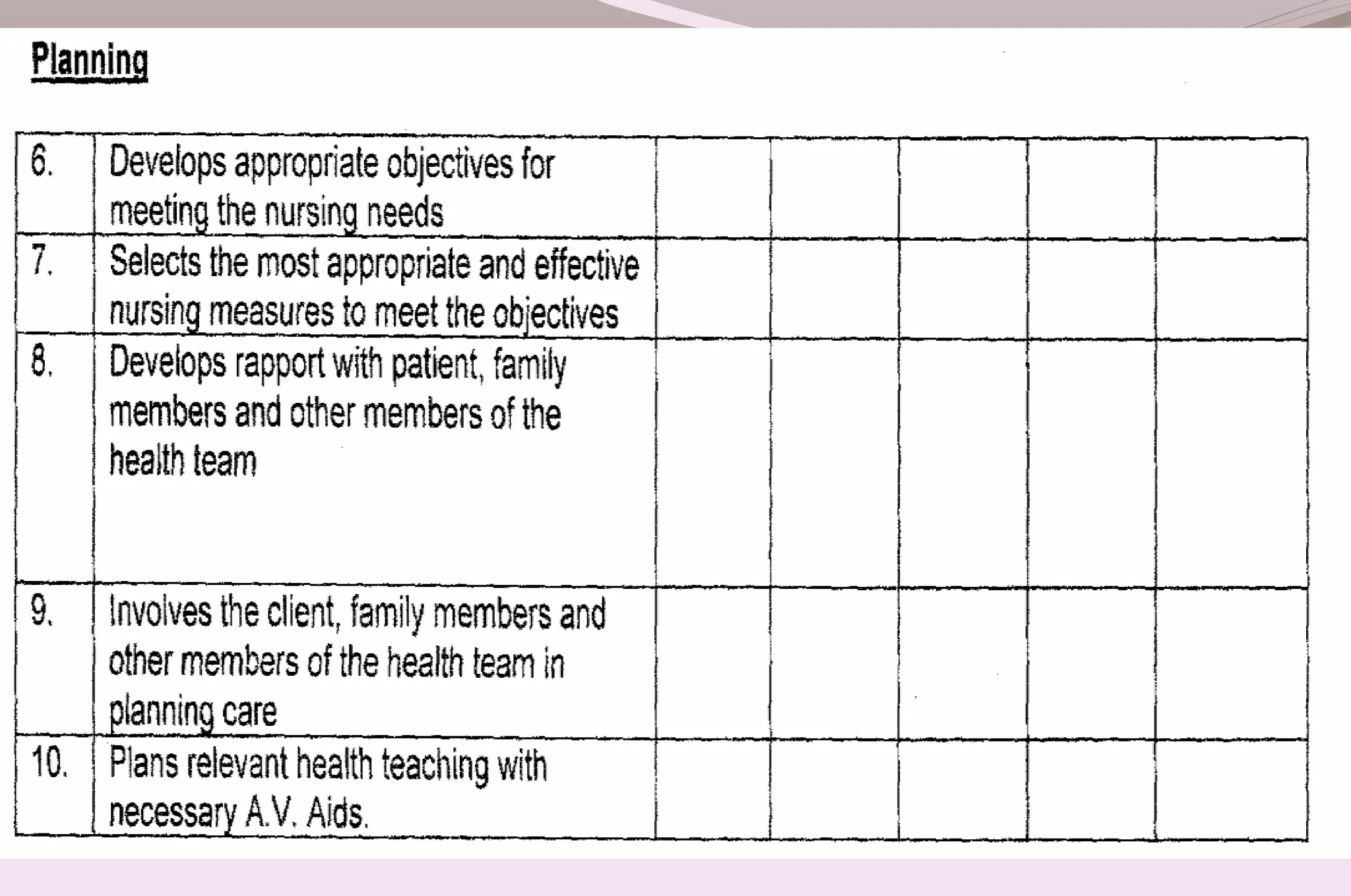
Criteria for Evaluation of Clinical
Experience
PERFORMANCE 4 3 2 1
•IPR •Utilize proper approach , develop IPR.
•Assessment •Utilize suitable method to collect data related to
health of individual , family and community.
•Make interview with individual.
•Make clinical observation.
•Accurately identify the problem.
•Planning •State the problem on basis of subjective &
objective.
• Formulate objectives relevant to problem.
•Write out standard nursing care plan in clear &
measurable term.
•Involve client or other key person in planning
care.
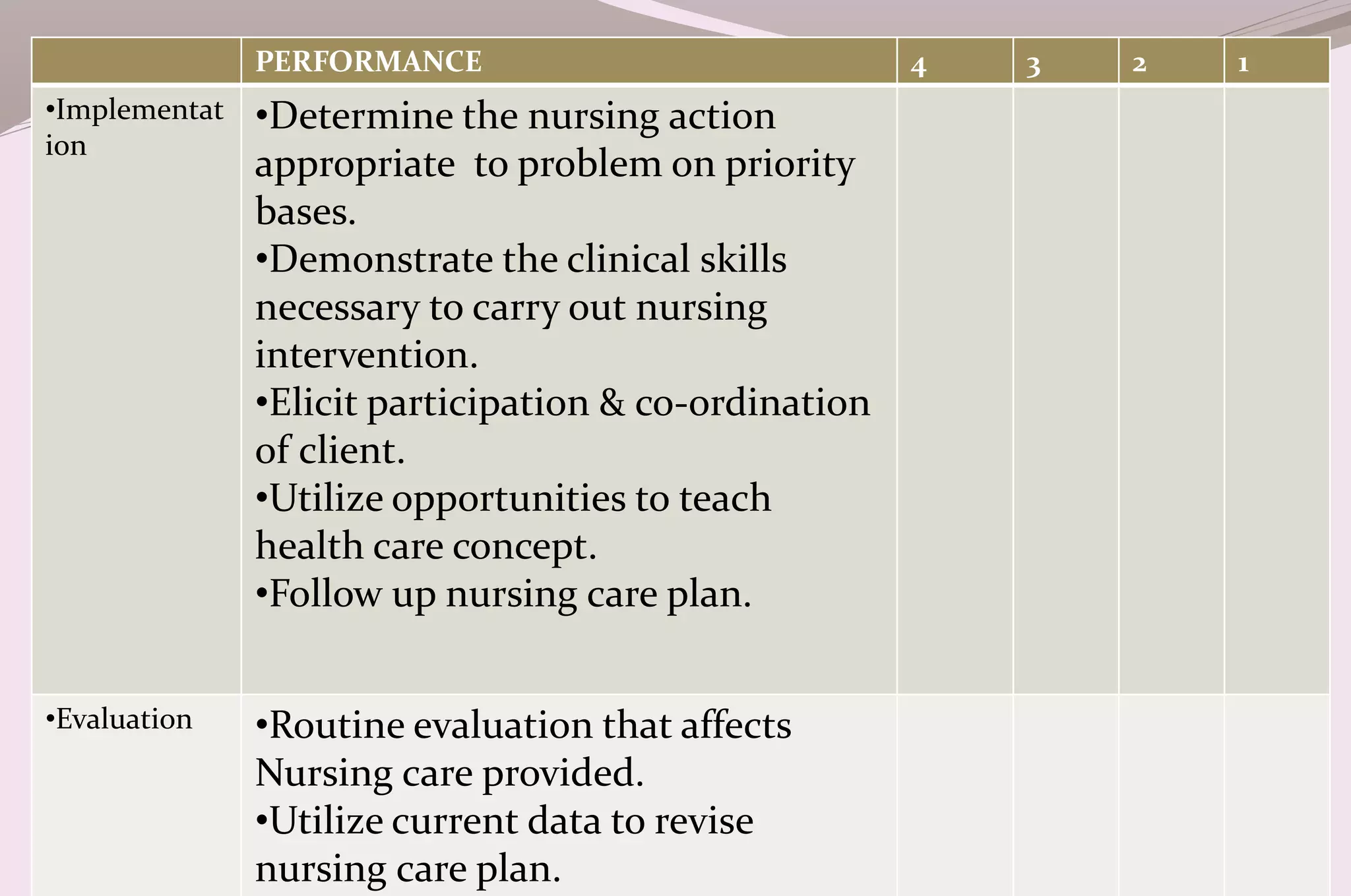
PERFORMANCE 4 3 2 1
•Implementat
ion
•Determine the nursing action
appropriate to problem on priority
bases.
•Demonstrate the clinical skills
necessary to carry out nursing
intervention.
•Elicit participation & co-ordination
of client.
•Utilize opportunities to teach
health care concept.
•Follow up nursing care plan.
•Evaluation •Routine evaluation that affects
Nursing care provided.
•Utilize current data to revise
nursing care plan.
Methods of assessing the attitude
Critical incident technique
Observation during
performance
Anecdotal record
Cumulative record
Assignment
Discussion
EVALUATION CRITERIA FOR THEORY FOR
B.Sc NURSING FINAL YEAR
Item No. of
items
Marks
Internal examination test 3 10
Case presentation 10
Assignments 5
EVALUATION OF STUDENTS IN PRACTICAL
Tools used for students evaluation in the practical-
 Observation technique
1. Checklist
2. Rating scale
3. Anecdotal records
4. Critical incidents
 Writing communication methods
1. Nurses notes
2. Problem oriented notes
3. Process recording
 Oral communication method
1. Nursing patient care conferences
2. Team conferences
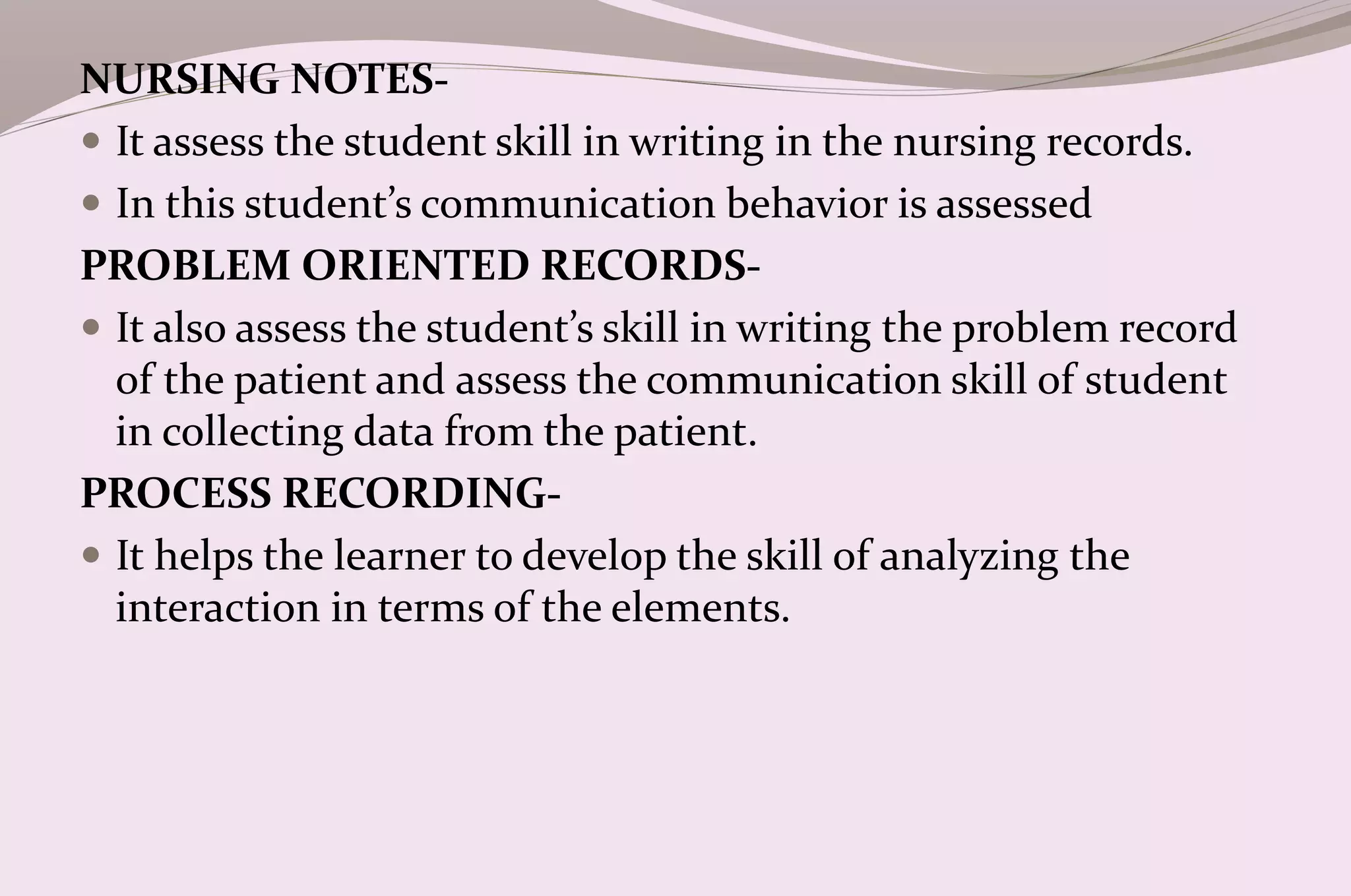
NURSING NOTES-
 It assess the student skill in writing in the nursing records.
 In this student’s communication behavior is assessed
PROBLEM ORIENTED RECORDS-
 It also assess the student’s skill in writing the problem record
of the patient and assess the communication skill of student
in collecting data from the patient.
PROCESS RECORDING-
 It helps the learner to develop the skill of analyzing the
interaction in terms of the elements.
EVALUATION CRITERIA FOR PRACTICAL FOR
B.Sc FINAL YEAR
Item No.of items Marks
Practical (nursing
care,procedure,viva,record
book,grooming and dressing)
3 20
Clinical case presentation 2 20
Clinical assignment 3 10
Evaluation

Evaluation

  • 2.
    Evaluation is suchan essential part of teaching and learning. Evaluation is a process of judging the effectiveness of educational experiences .It is collective process of collecting, recording, assembling and interpreting information . INTRODUCTION
  • 3.
    DEFINITION Acc. to Ralphtyler,1950 “Evaluation is the process of determining to what extent the educational objectives are being realized.” Acc. to NCERT,1963 “Evaluation is the process of determining the following: •The extent to which an objective is being attained. •The effectiveness of the learning experiences provided in class room. •How well the goals of education have been accomplished.”
  • 4.
    PURPOSES OF EVALUATION Todetermine the levels of knowledge and understandings of the students in her/his class at various time during year To become aware of specific difficulties that students are facing in the class To determine the level of the student’s clinical performance at various levels To determine how far the objectives of teaching in particular subject are being realized To diagnose the student’s strength and weakness It helps in improvement in curriculum
  • 5.
    •Identifying the purposeof evaluation THE EVALUATION PROCESS •Identifying the time frame •Determining what to evaluate. Selecting the evaluator •Choosing the evaluation design /framework of model Selecting an evaluation instruments Evaluate
  • 6.
  • 7.
    CHARACTERISTICS OF GOODEVALUATION Useful Acceptable Feasible Reliable Valid Should follow best practice Strong impact in the right direction Goals should be clear from the start
  • 8.
  • 9.
    DIMENTIONS OF DIFFERENCE FORMATIVE SUMMATIVE PURPOSETO MONITOR PROGRESS OF STUDENT BY GETTING FEEDBACK TO CHECK FINAL STATUS OF THE STUDENTS FOCUS OF MEASUREMENT PROCESS- ORIENTED : How learning is going on PRODUCT-ORIENTED : what’s been learned RELATIONSHIP BETWEEN ADMINISTRATOR AND RECIPIENT REFLECTIVE-internally defined criteria PRESPECTIVE-externally imposed standards FINDINGS DIGNOSTIC-identify area for improvement JUDGEMENTAL-arrive at an overall grade ONGOING CRITERIA FLEXIBLE-adjust as problems are clarified FIXED STANDARDS OF MEASUREMENT ABSOLUTE- COMPARITIVE CONTENT FOCUS METHOD DAILY ASSIGNMENTS AND OBSERVATIONS TESTS,EXAMS,AND PROJECTS
  • 10.
    SUMMATIVE Questions Examination Short Answer Very ShortAnswer Essay MCQ Observation Conversation Project Attendance Case study Daily records Seminar performance Question Test FORMATIVE TOOLS & TECHNIQUES
  • 11.
    Advantages of FormativeAssessment For the teacher  Informs teacher where the need/problem lies.  Focus on problem area.  Helps teacher give specific feedback  Provide relevant support  Plan the next step For the student • Helps student identify the problem areas • Provides feedback and support. • Helps to improve performance • Provides opportunity to improve performance Remedial Diagnostic
  • 12.
    Advantages of summativeevaluation  Allows for a broad range of demonstration of knowledge  Allows for legitimate self assessment.  Individual strengths and abilities are recognized.  Goals (objectives) are clearly stated in the beginning of a unit of study. Learning goals (objectives) are shared with students before material is introduced. Students know exactly what you want them to learn. Gives a clearer and broader picture of each students abilities, strengths and knowledge. For the Teacher For the student
  • 13.
  • 14.
  • 15.
    QUALITATIVE TECHNIQUES- Observational techniques-charts , checklist,rating scale, anecdotal records ,cumulative records Projective techniques- sentence completion , interpretation of the pictures. Self reporting technique- interview ,attitude scale, questionnaires
  • 16.
  • 17.
    The methods usedfor the evaluation of knowledge: Oral test Written test •Problem solving type
  • 18.
    ORAL EXAMINATION Oral test-oralexamination or the test is a face to face questions and answer activity between examiner and examinee. Types of oral examination- •Interview •Viva voice •Quiz contest •Group discussion
  • 19.
    WRITTEN EXAMINATION Written examinationor the test is the test in which student has to give answer by using pen or pencil.
  • 20.
    TYPES OF WRITTEN TEST Subjectivetype-long essay type and short essay type Objective type
  • 21.
    ESSAY TYPE QUESTIONS •Itis the test containing questions requiring the student to respond in writing .It emphasis recall rather then recognizing of correct alternative. •The student can demonstrate her ability to organize ideas and express them effectively in logical fashion. •Test the ability to communicate in writing depth of knowledge and understanding. •It require short time for a teacher to pre pare •It can be successfully employed for all the school subjects.
  • 22.
    TYPES OF ESSAYTYPE QUESTIONS Descriptive questions Comparison Problem solving Short notes Narrative questions Essay type question Precise – writing
  • 23.
    Other classification Essay Questions Extended Response Question Great dealof latitude on how to respond to a question. Example: Discuss essay and multiple-choice type tests. Restricted Response Question More specific, easier to score, improved reliability and validity Example: Compare and contrast the relative advantages of disadvantages of essay and multiple choice tests with respect to: reliability, validity, objectivity, & usability.
  • 24.
    OBJECTIVE TYPE QUESTIONS Itrefers to any written test that requires the examinee to select the correct answer from among one or more of several alternatives or supply a word or two and that demands on objective judgement when it is scored.
  • 25.
  • 26.
    PROBLEM SOLVING TYPE •Designedto assess the student’s ability for critical thinking. •The student is presented with written description of nursing problem and then asked to respond to questions relative to situation. •E.g -what are you feeling about Ms Janki as you prepare to plan her care?
  • 27.
  • 28.
    OBSERVATION It is usedat all the stages of evaluation It is useful for evaluating the cognitive , affective and psychomotor abilities. The class room interaction and performance of proceeding can be evaluated by this observation method
  • 29.
    CUMMULATIVE RECORDS Physical health SportsCo-curricular activities Participation in games Attendance Result of monthly, half yearly test Educational progress
  • 30.
    Anecdotal Record  Anecdotalrecord is quantitative technique of evaluation  It is a record of some significant item of conduct , a record of an episode in the life of student , a word picture of student in action.  It is verbal description of the incident which the teacher has observed.  Recorded on the specific separate note cards  It can be used for evaluation of students in theory and practical. The anecdotal record is a brief description of an observed behavior that appears significant for evaluation purposes 
  • 31.
    ITEMS OF ANECDOTALRECORD Interpretation of the behavior Signature of the observer Setting background of incident Date of observation Class and school Name of the student Recommendations concerning the behavior
  • 33.
    CRITICAL INCIDENT TECHNIQUE •Similarto the anecdotal records •Method of assessing the student’s analytic and problem solving competences. •In this student performance can be recorded and evaluated acc. to stated criteria
  • 34.
    CHECK LIST Check listis prepared test of statement or a list of essential components of a task , skill or activity ,relating to formulae of action , behavior and product of some performance . Each statement in the list is checked by yes or no to indicate the presence and absence of particular traits and action
  • 37.
    Check List forEvaluation Skill in giving I/M injection BEHAVIOR/ACTIVITY PT1 PT2 PT3 PT4 PT5 a) •Medication card checked. b) •Check patient’s ID band before giving medication. c) •Make sure no air is in syringe. d) •Is able to identify site where medication can be injected. e) •Swab site with alcohol sponge. f) •Inserts needle quickly.
  • 38.
    BEHAVIOR/ACTIVITY PT1 PT2PT3 PT4 PT5 g) •Aspirate to be sure needle is not in blood vessels. h) •Inject medication & withdraw needle. i) •Dispose of needle in proper draws needle. j) •Charts medication as given including site.
  • 39.
    RATING SCALES  Ratingscale provide an indication of degree or extent to which a particular characteristic or behaviour has been observed  Assess performance on a several-point scale ranging from low to high, which may have as few as 3 points or as many as 10.
  • 40.
    TYPES OF RATINGSCALE Descriptive Numerical
  • 41.
    Criteria for Evaluationof Clinical Experience PERFORMANCE 4 3 2 1 •IPR •Utilize proper approach , develop IPR. •Assessment •Utilize suitable method to collect data related to health of individual , family and community. •Make interview with individual. •Make clinical observation. •Accurately identify the problem. •Planning •State the problem on basis of subjective & objective. • Formulate objectives relevant to problem. •Write out standard nursing care plan in clear & measurable term. •Involve client or other key person in planning care.
  • 42.
    PERFORMANCE 4 32 1 •Implementat ion •Determine the nursing action appropriate to problem on priority bases. •Demonstrate the clinical skills necessary to carry out nursing intervention. •Elicit participation & co-ordination of client. •Utilize opportunities to teach health care concept. •Follow up nursing care plan. •Evaluation •Routine evaluation that affects Nursing care provided. •Utilize current data to revise nursing care plan.
  • 45.
    Methods of assessingthe attitude Critical incident technique Observation during performance Anecdotal record Cumulative record Assignment Discussion
  • 47.
    EVALUATION CRITERIA FORTHEORY FOR B.Sc NURSING FINAL YEAR Item No. of items Marks Internal examination test 3 10 Case presentation 10 Assignments 5
  • 48.
    EVALUATION OF STUDENTSIN PRACTICAL Tools used for students evaluation in the practical-  Observation technique 1. Checklist 2. Rating scale 3. Anecdotal records 4. Critical incidents  Writing communication methods 1. Nurses notes 2. Problem oriented notes 3. Process recording  Oral communication method 1. Nursing patient care conferences 2. Team conferences
  • 49.
    NURSING NOTES-  Itassess the student skill in writing in the nursing records.  In this student’s communication behavior is assessed PROBLEM ORIENTED RECORDS-  It also assess the student’s skill in writing the problem record of the patient and assess the communication skill of student in collecting data from the patient. PROCESS RECORDING-  It helps the learner to develop the skill of analyzing the interaction in terms of the elements.
  • 50.
    EVALUATION CRITERIA FORPRACTICAL FOR B.Sc FINAL YEAR Item No.of items Marks Practical (nursing care,procedure,viva,record book,grooming and dressing) 3 20 Clinical case presentation 2 20 Clinical assignment 3 10