Microbiology: A
nd
Systems Approach, 2
ed.
Chapter 1: The Main Themes of
Microbiology
1.1 The Scope of Microbiology


Microbiology: The study of living things
too small to be seen without magnification




Microorganisms or microbes- these
microscopic organisms
Commonly called “germs, viruses, agents…”
but not all cause disease and many more are
useful or essential for human life
Major Groups of
Microorganisms
 Bacteria, algae, protozoa, helminthes,

and fungi
 Viruses- noncellular, parasitic, proteincoated genetic elements that can infect all
living things, including other
microorganisms
Branches of Microbiology
 Agricultural microbiology
 Biotechnology
 Food, dairy, and aquatic microbiology
 Genetic engineering and recombinant

DNA technology
 Public health microbiology and
epidemiology
 Immunology
 Many, many more
Emerging Areas of Microbiology
 Geomicrobiology
 Marine microbiology
 Astromicrobiology
1.2 The Impact of Microbes on
Earth: Small Organisms with a
Giant Effect

 Microorganisms have a profound influence

on all aspects of the earth and its
residents
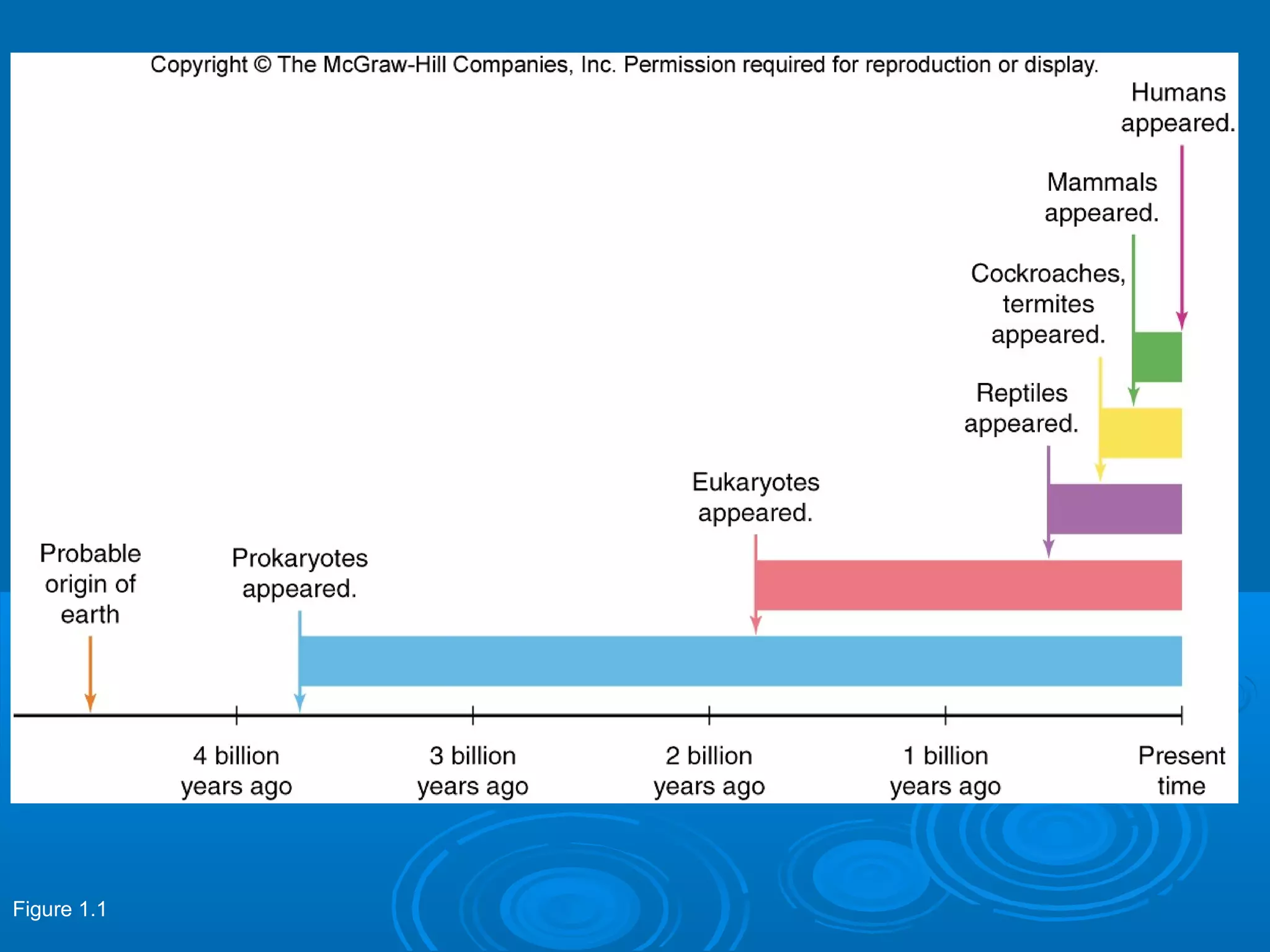
 Bacterial-like organisms in the fossil
record as far back as 3.5 billion years ago
(prokaryotes- organisms without a true
nucleus)
 2 billion years later, eukaryotes
(organisms with a true nucleus) emerged
Figure 1.1
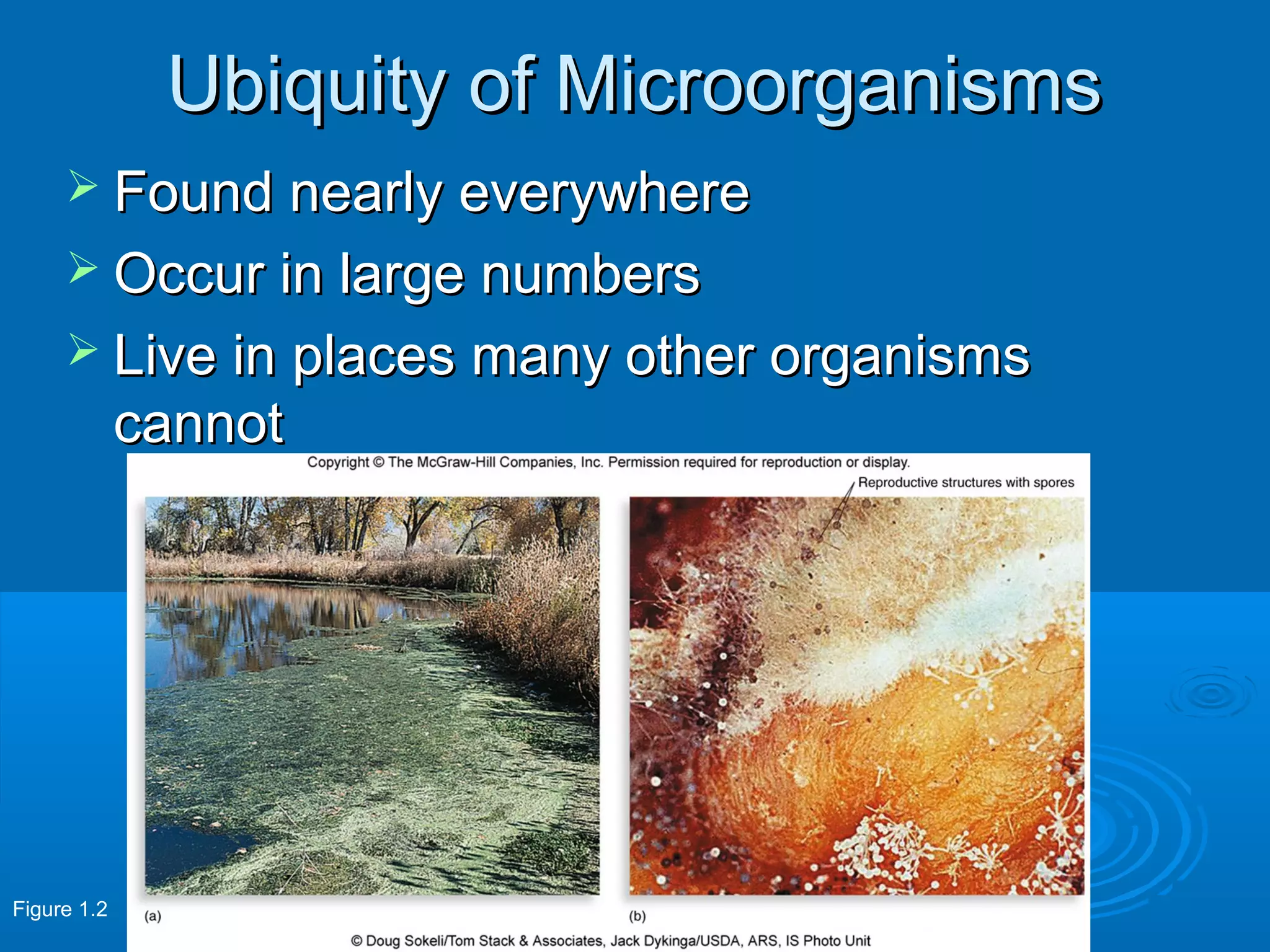
Ubiquity of Microorganisms
 Found nearly everywhere
 Occur in large numbers
 Live in places many other organisms

cannot

Figure 1.2
Microbial Involvement in Energy
and Nutrient Flow
 Bacteria conducted

photosynthesis
before plants appeared



Anoxygenic photosynthesis
Oxygenic photosynthesis

 Biological decomposition

recycling

and nutrient
1.3 Human Use of
Microorganisms
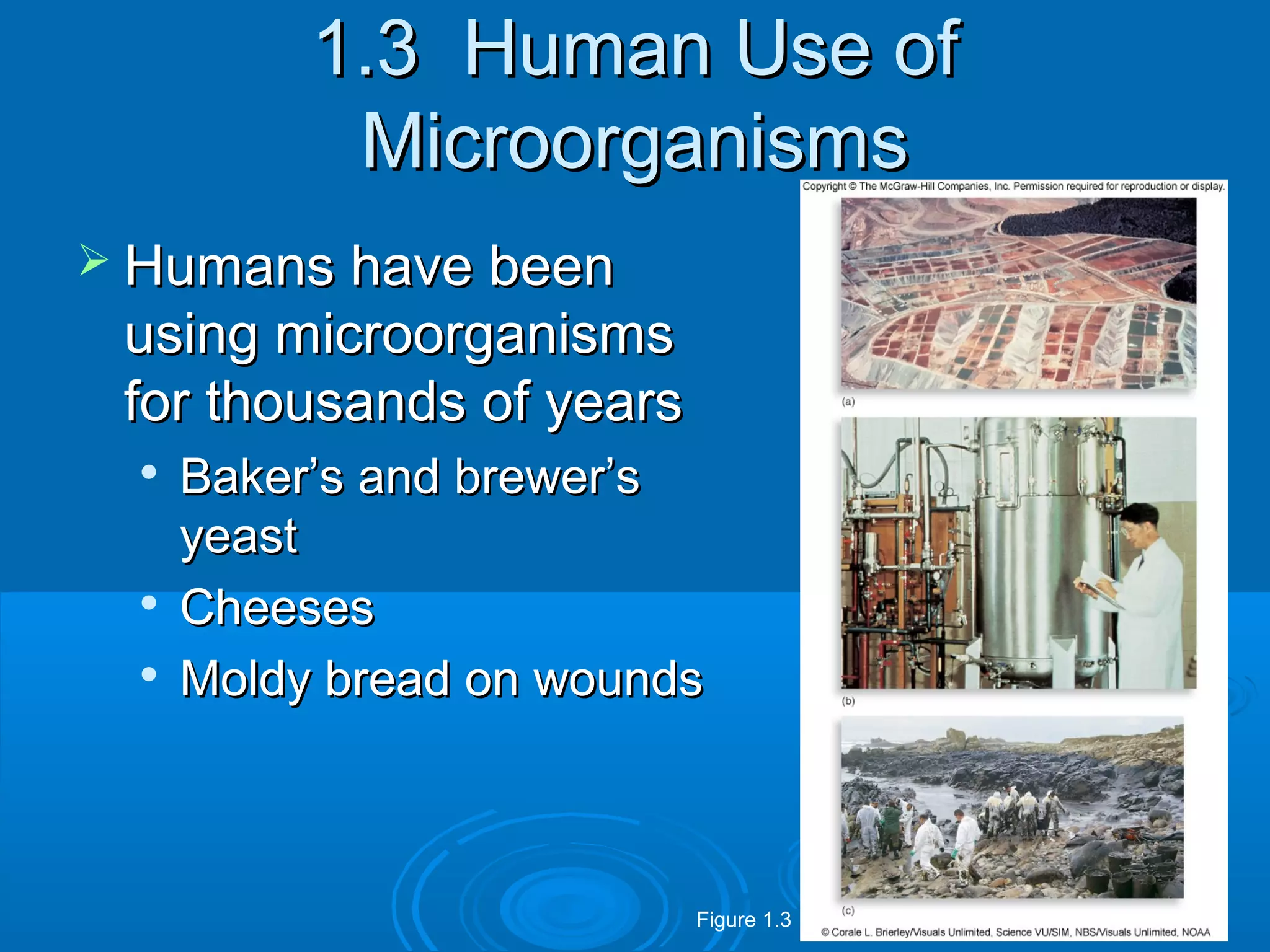
 Humans have been

using microorganisms
for thousands of years





Baker’s and brewer’s
yeast
Cheeses
Moldy bread on wounds

Figure 1.3
Biotechnology and
Bioremediation


Biotechnology- when humans manipulate
microorganisms to make products in an industrial
setting






Genetic engineering- create new products and
genetically modified organisms (GMOs)
Recombinant DNA technology- allows microbes to be
engineered to synthesize desirable proteins (i.e. drugs,
hormones, and enzymes)

Bioremediation- introducing microbes in to the
environment to restore stability or clean up toxic
pollutants




Oil spills
Chemical spills
Water and sewage treatment
1.4 Infectious Diseases and the
Human Condition
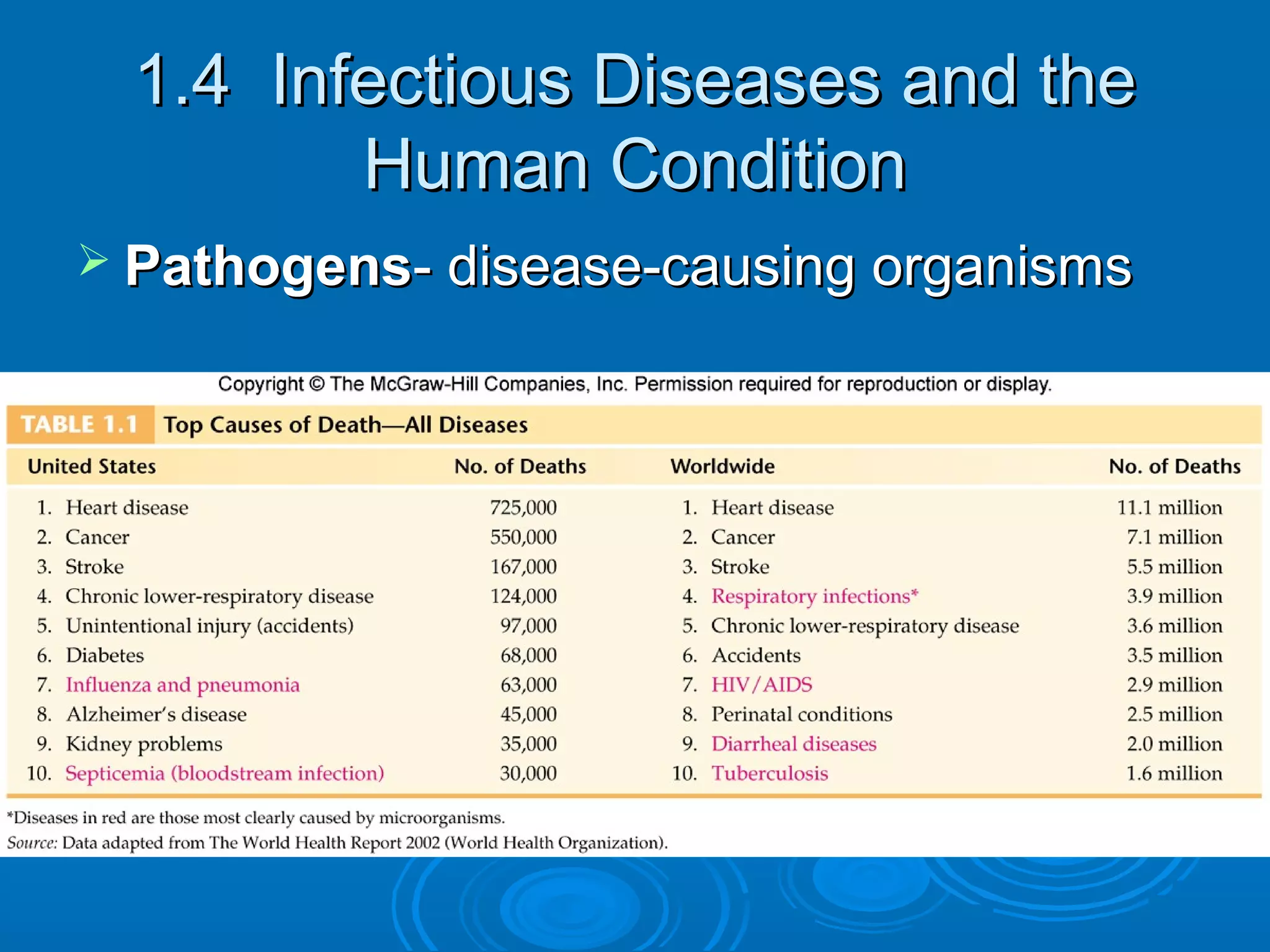
 Pathogens- disease-causing organisms
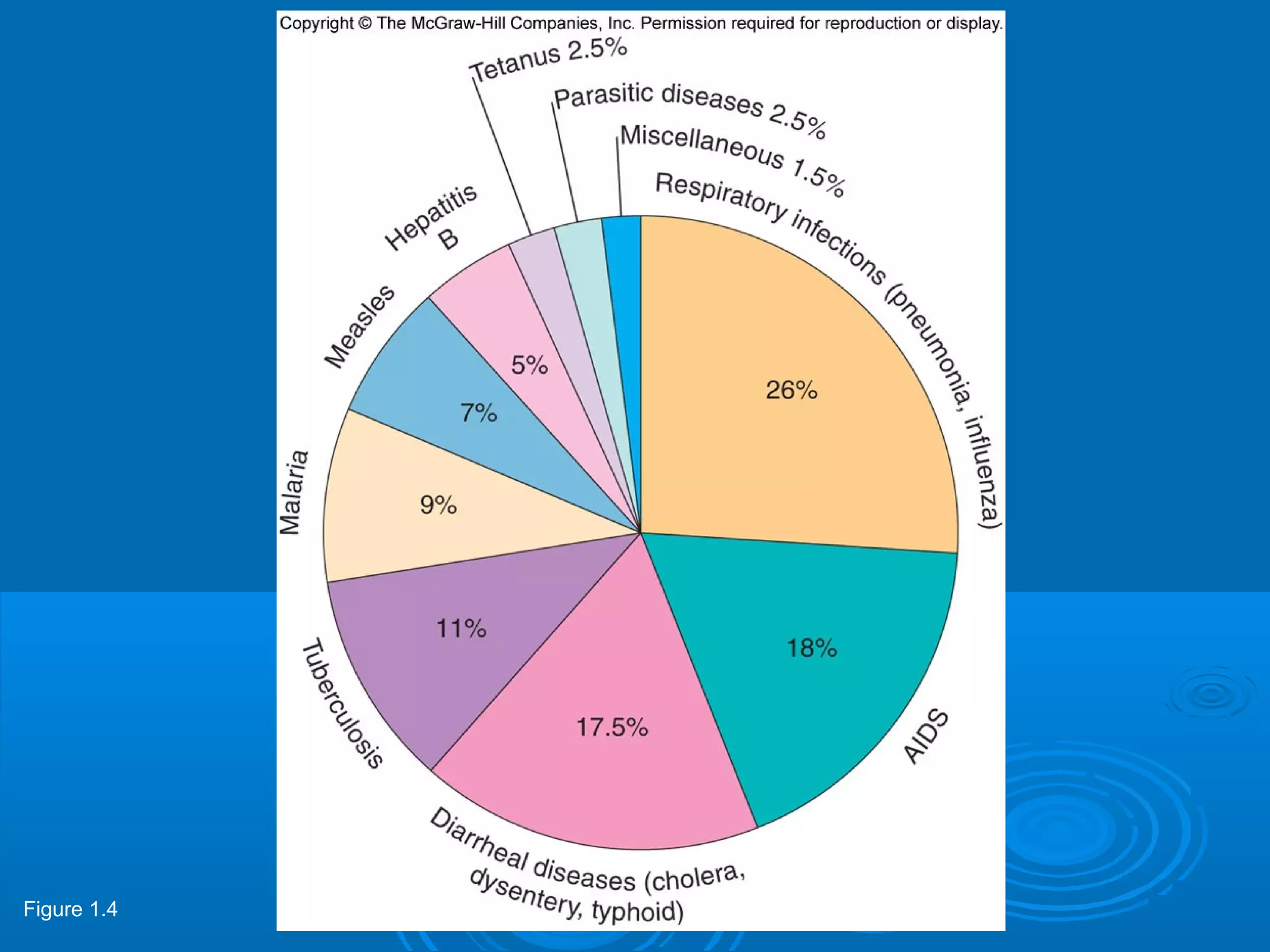
Figure 1.4
Worldwide Infectious Diseases
 Increasing number of emerging diseases

(SARS, AIDS, hepatitis C, viral
encephalitis)
 Other diseases previously not linked to
microorganisms now are (gastric ulcers,
certain cancers, schizophrenia, multiple
sclerosis, obsessive compulsive disorder,
coronary artery disease)
 Increasing number of drug resistant
strains
1.5 The General Characteristics of
Microorganisms
 Cellular Organization


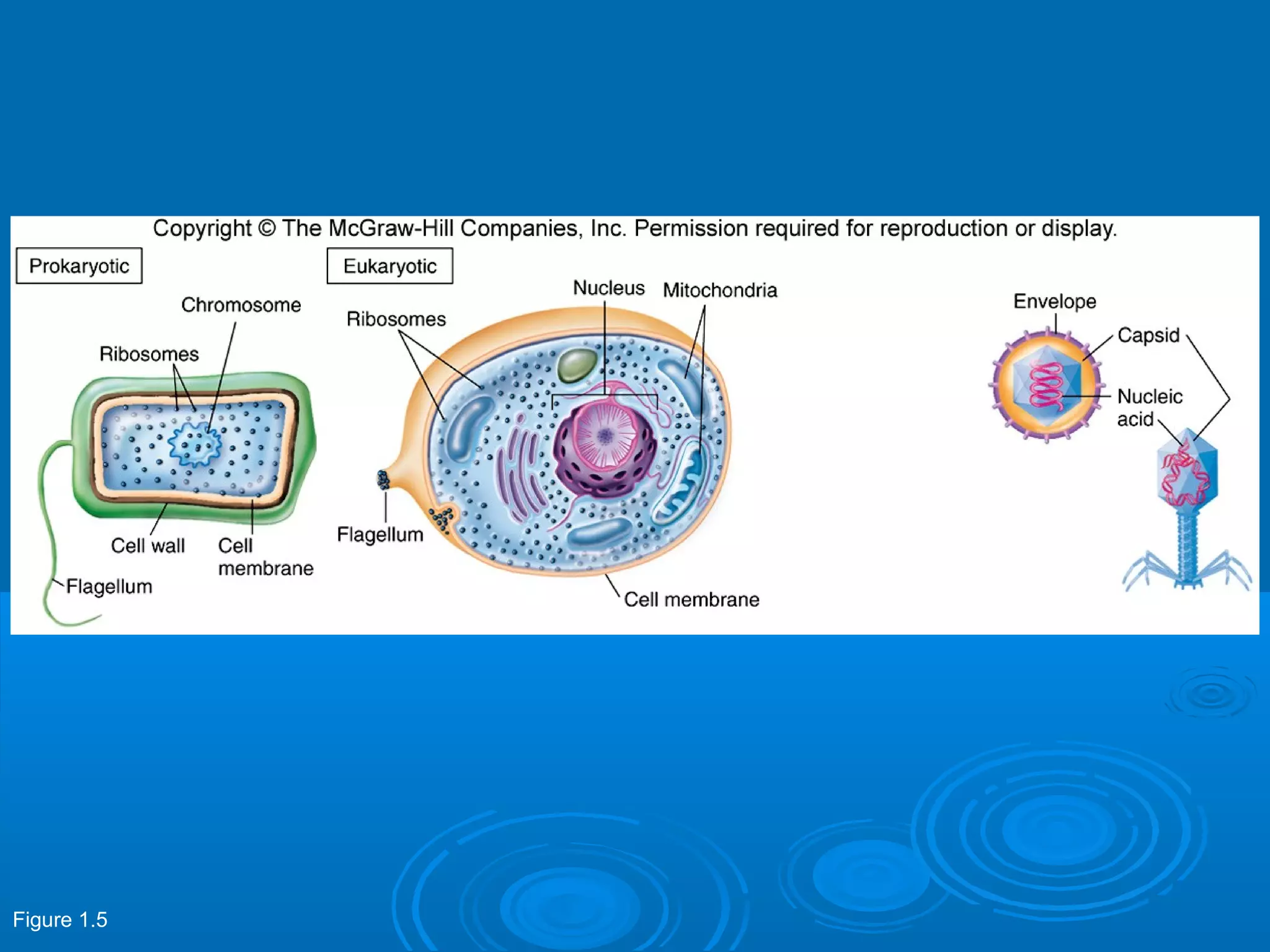
Prokaryotic vs. eukaryotic cells
• Prokaryotic cells are about 10 times smaller than
eukaryotic cells
• Prokaryotic cells lack many cell structures such as
organelles
• All prokaryotes are microorganisms, but only some
eukaryotes are
Figure 1.5
Viruses
Not independently living
cellular organisms
 Much simpler than cellsbasically a small amount of
DNA or RNA wrapped in
protein and sometimes by a
lipid membrane
 Individuals are called a virus
particle or virion
 Depend on the infected cell’s
machinery to multiply and
disperse

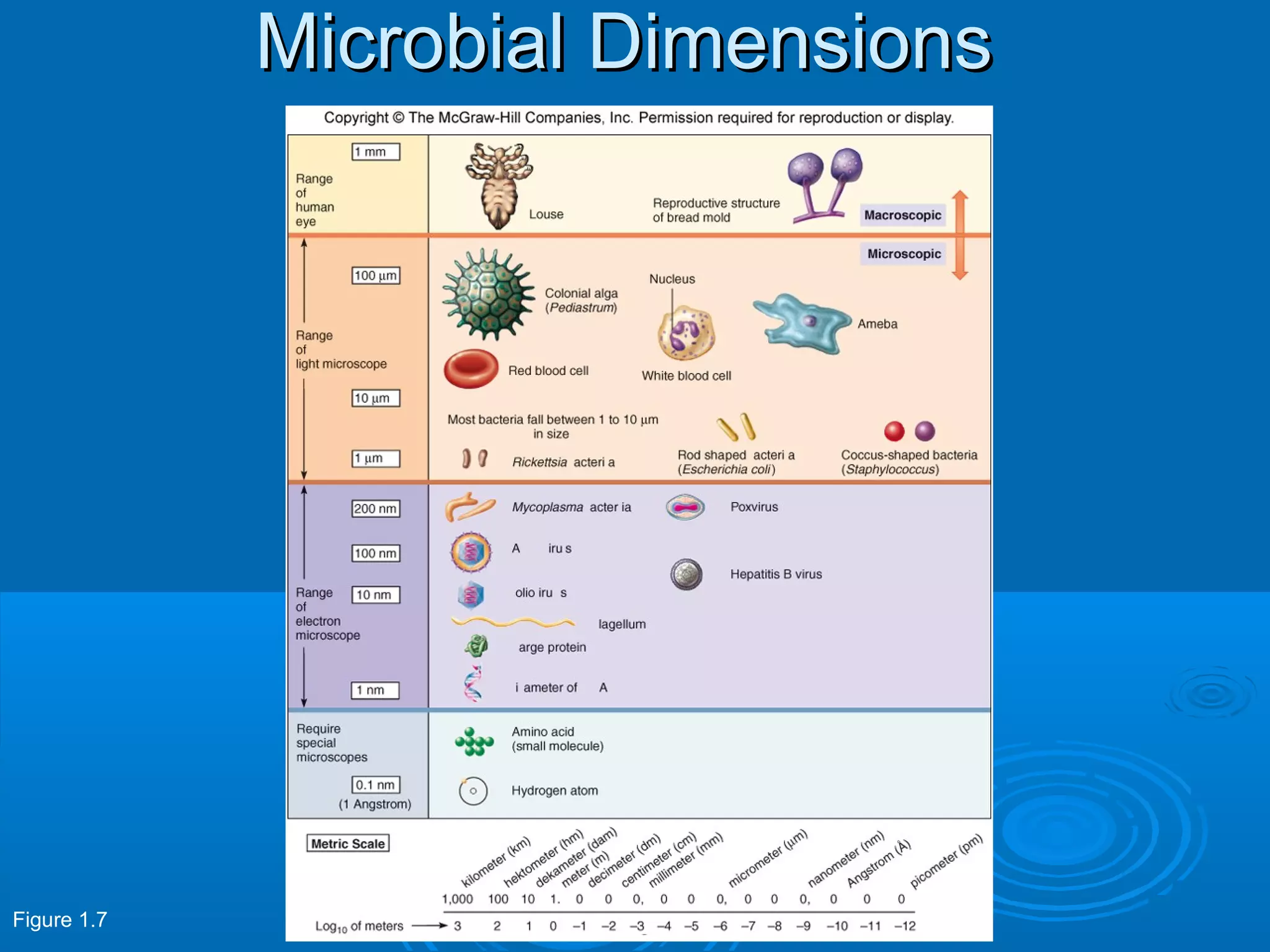
Microbial Dimensions

Figure 1.7
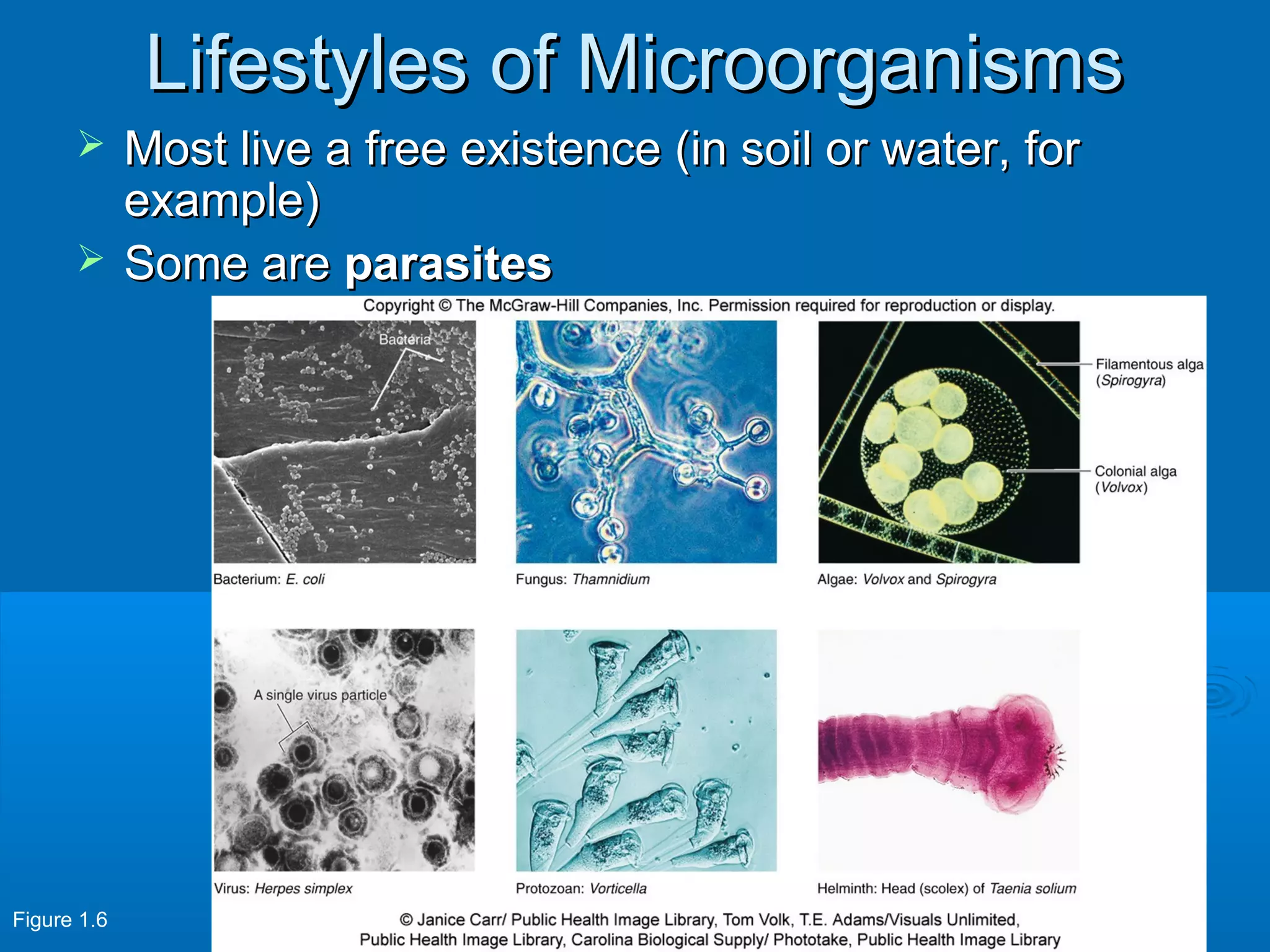
Lifestyles of Microorganisms
Most live a free existence (in soil or water, for
example)
 Some are parasites


Figure 1.6
1.6 The Historical Foundations of
Microbiology
 Key to the study of microorganisms was

the development of the microscope
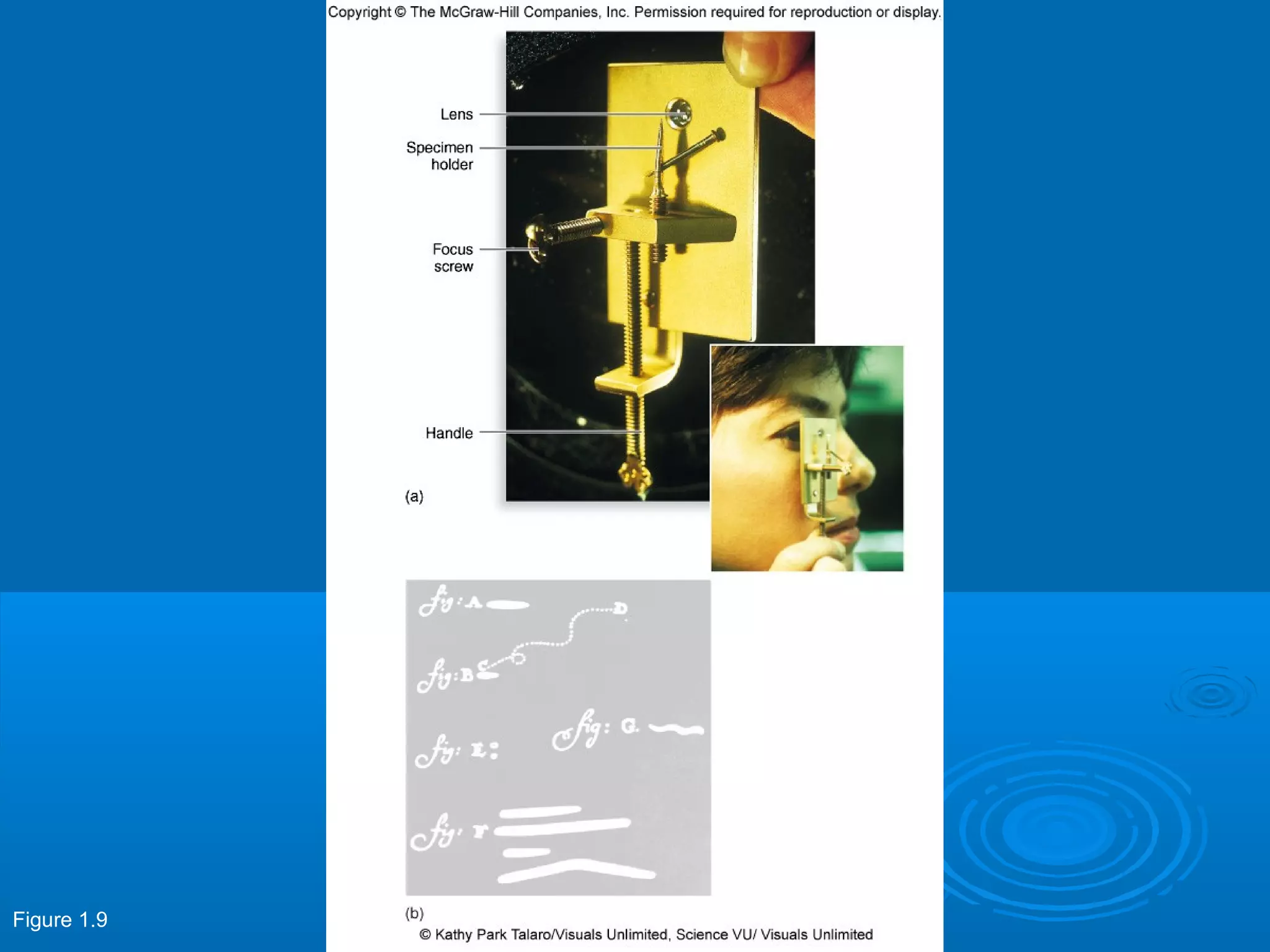
 Earliest record of microbes was from the
work of Robert Hooke in the 1660s
 The most careful observations of microbes
was possible after Antonie van
Leeuwenhoek created the single-lens
microscope


Known as the father of bacteriology and
protozoology
Figure 1.9
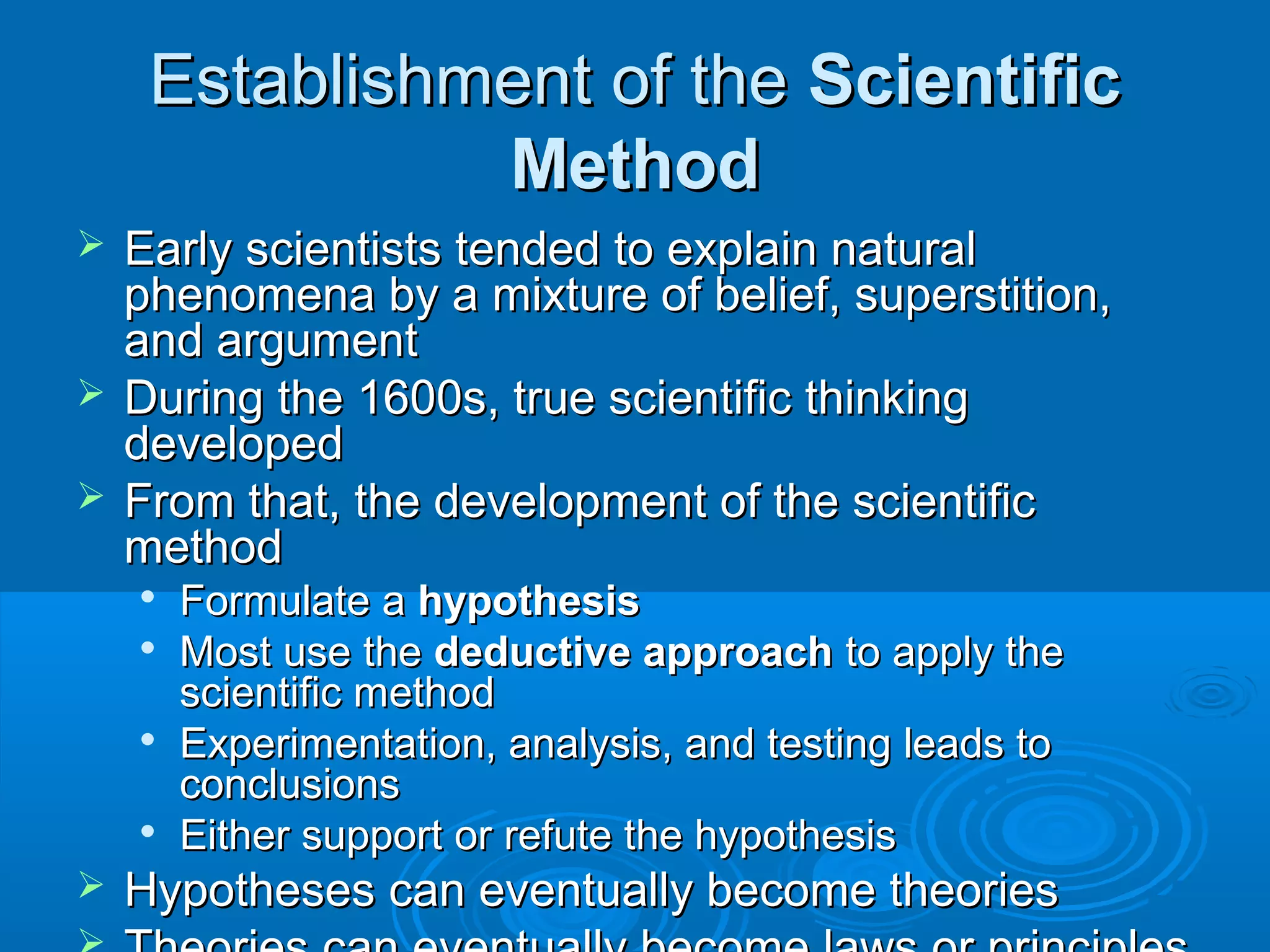
Establishment of the Scientific
Method
Early scientists tended to explain natural
phenomena by a mixture of belief, superstition,
and argument
 During the 1600s, true scientific thinking
developed
 From that, the development of the scientific
method











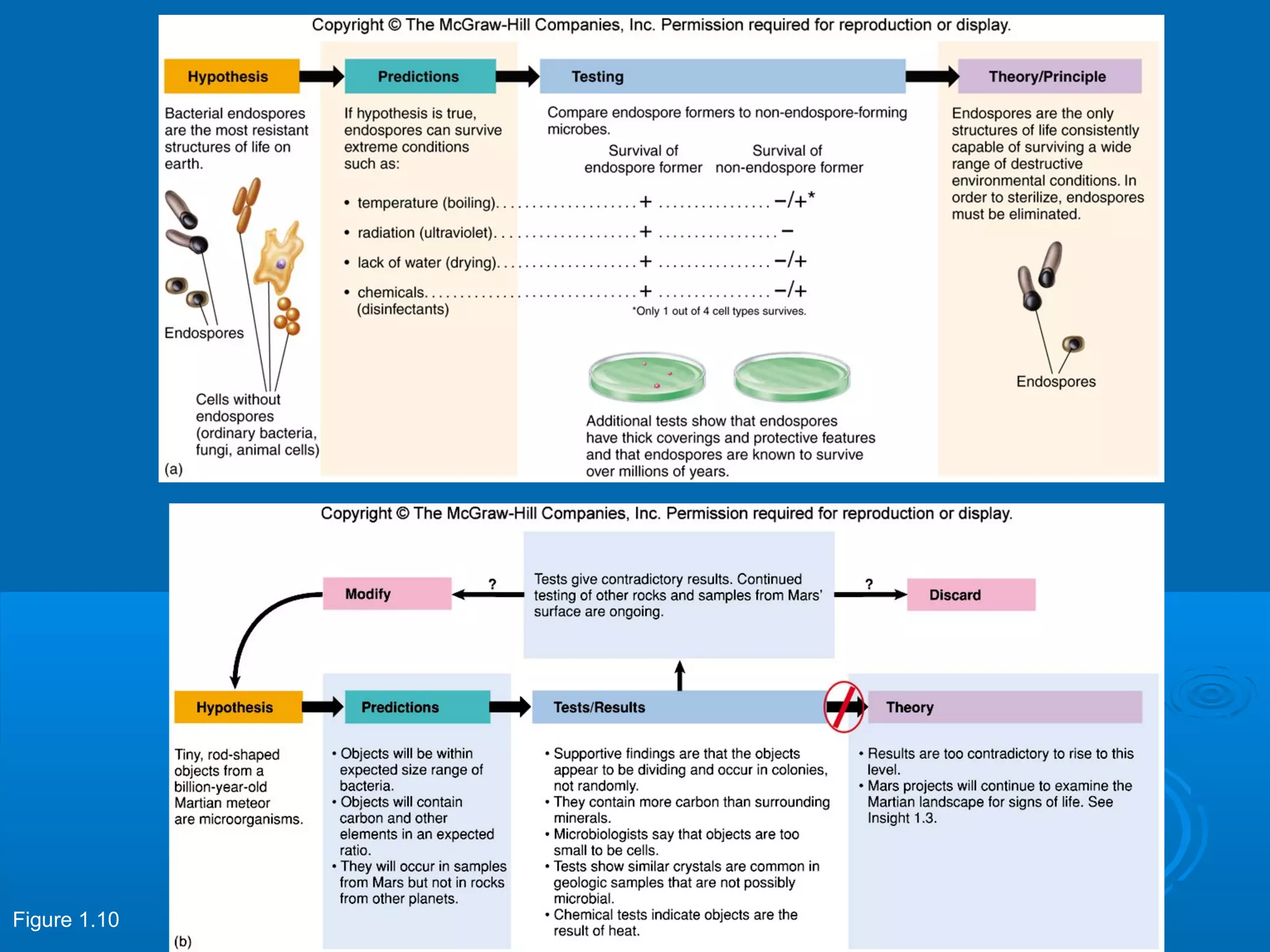
Formulate a hypothesis
Most use the deductive approach to apply the
scientific method
Experimentation, analysis, and testing leads to
conclusions
Either support or refute the hypothesis

Hypotheses can eventually become theories
Figure 1.10
The Development of Medical
Microbiology


The Discovery of Spores and Sterilization








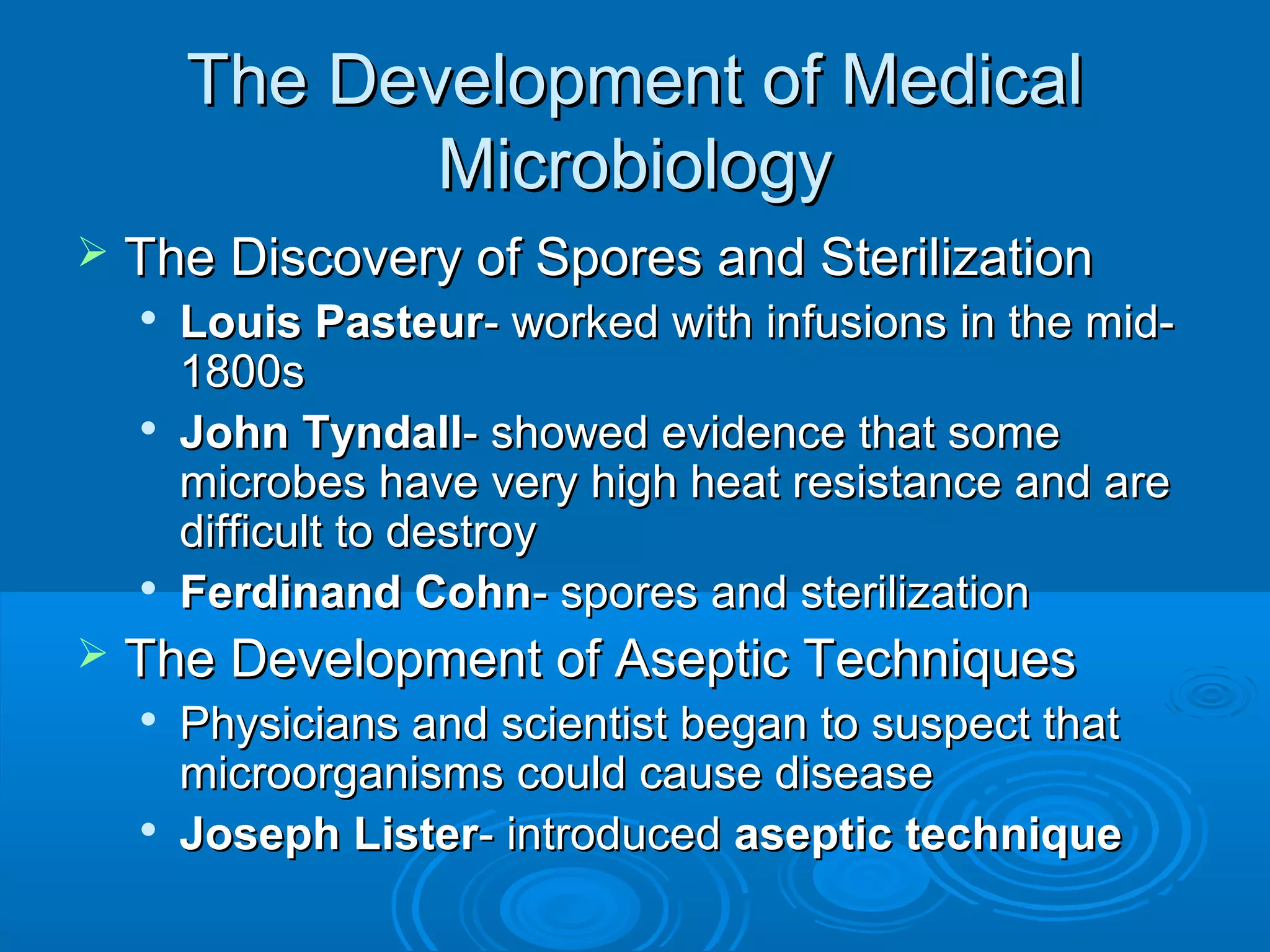
Louis Pasteur- worked with infusions in the mid1800s
John Tyndall- showed evidence that some
microbes have very high heat resistance and are
difficult to destroy
Ferdinand Cohn- spores and sterilization

The Development of Aseptic Techniques




Physicians and scientist began to suspect that
microorganisms could cause disease
Joseph Lister- introduced aseptic technique


The Discovery of
Pathogens and the
Germ Theory of
Disease


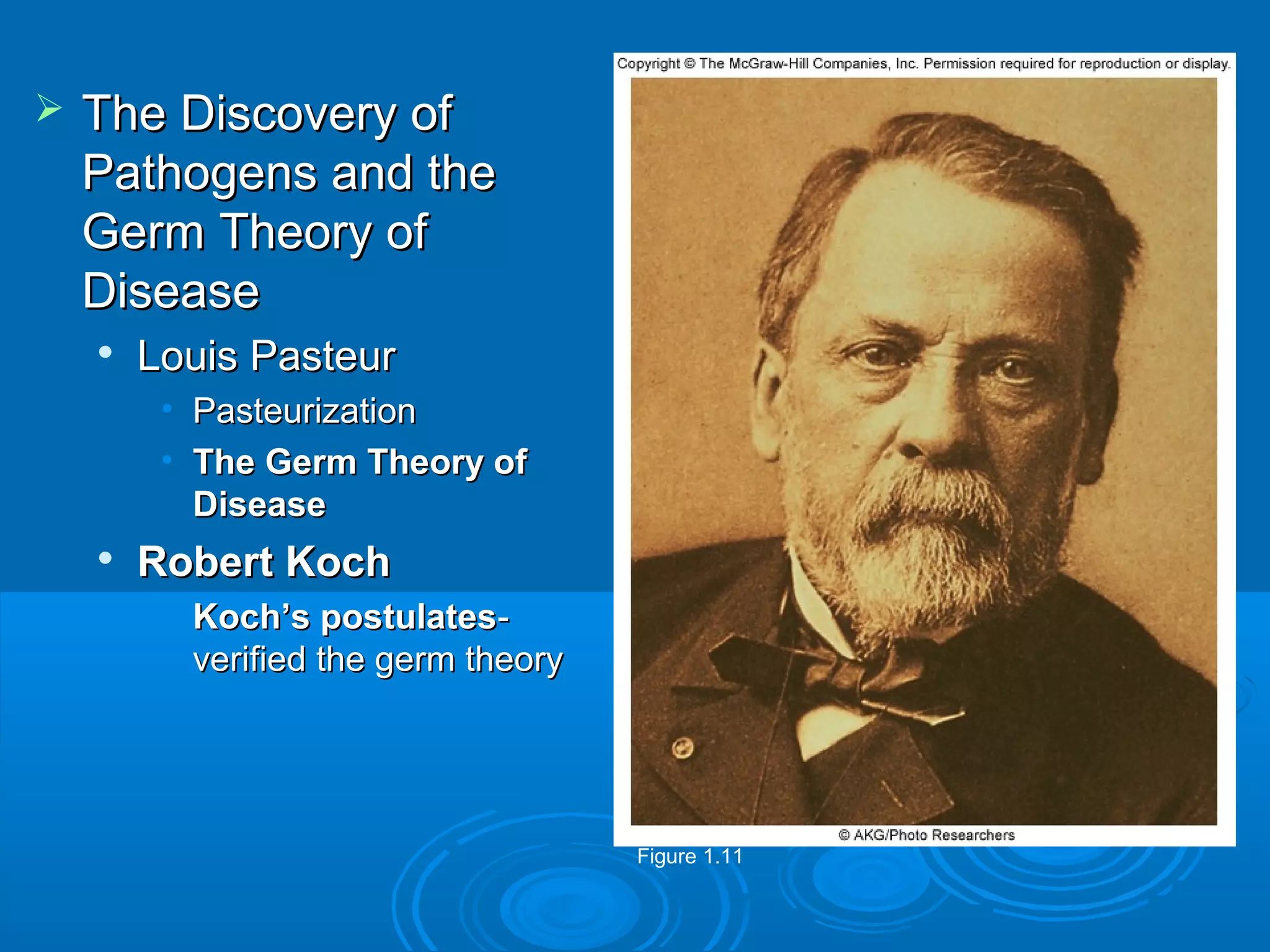
Louis Pasteur
• Pasteurization
• The Germ Theory of
Disease



Robert Koch
• Koch’s postulatesverified the germ theory

Figure 1.11
1.7 Taxonomy: Naming,
Classifying, and Identifying
Microorganisms

Microbial nomenclature- naming
microorganisms
 Taxonomy- classifying living things




Originated over 250 years ago with the work
of Carl von Linné

 Identification- discovering and recording

the traits of organisms so they can be
named and classified
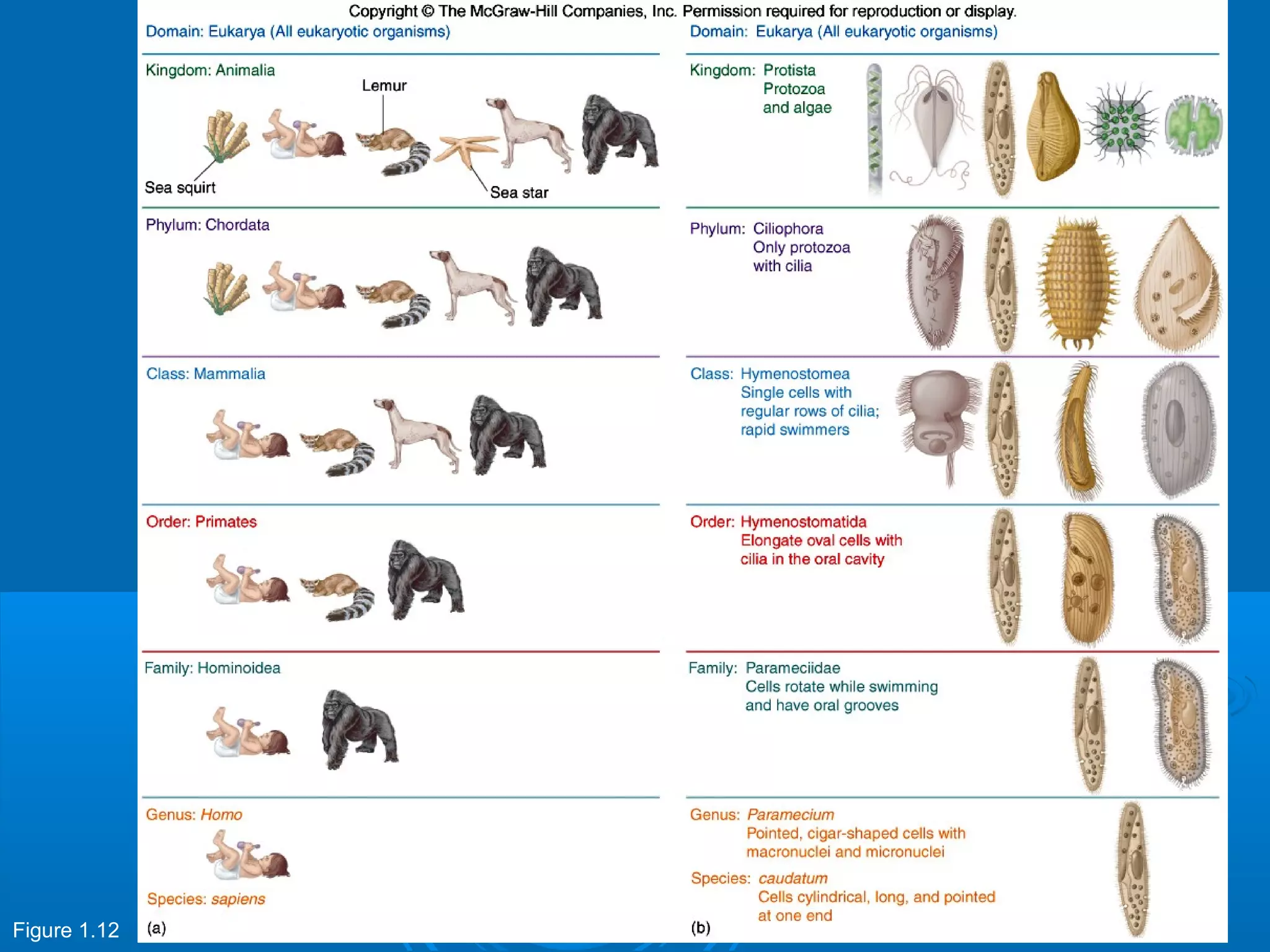
 Levels of Classification
Figure 1.12
Assigning Specific Names
A standardized nomenclature allows
scientists from all over the world to exchange
information
 The binomial system of nomenclature









The generic (genus) name followed by the
species name
Generic part is capitalized, species is lowercase
Both are italicized or underlined if italics aren’t
available
Staphylococcus aureus
The Origin and Evolution of
Microorganisms
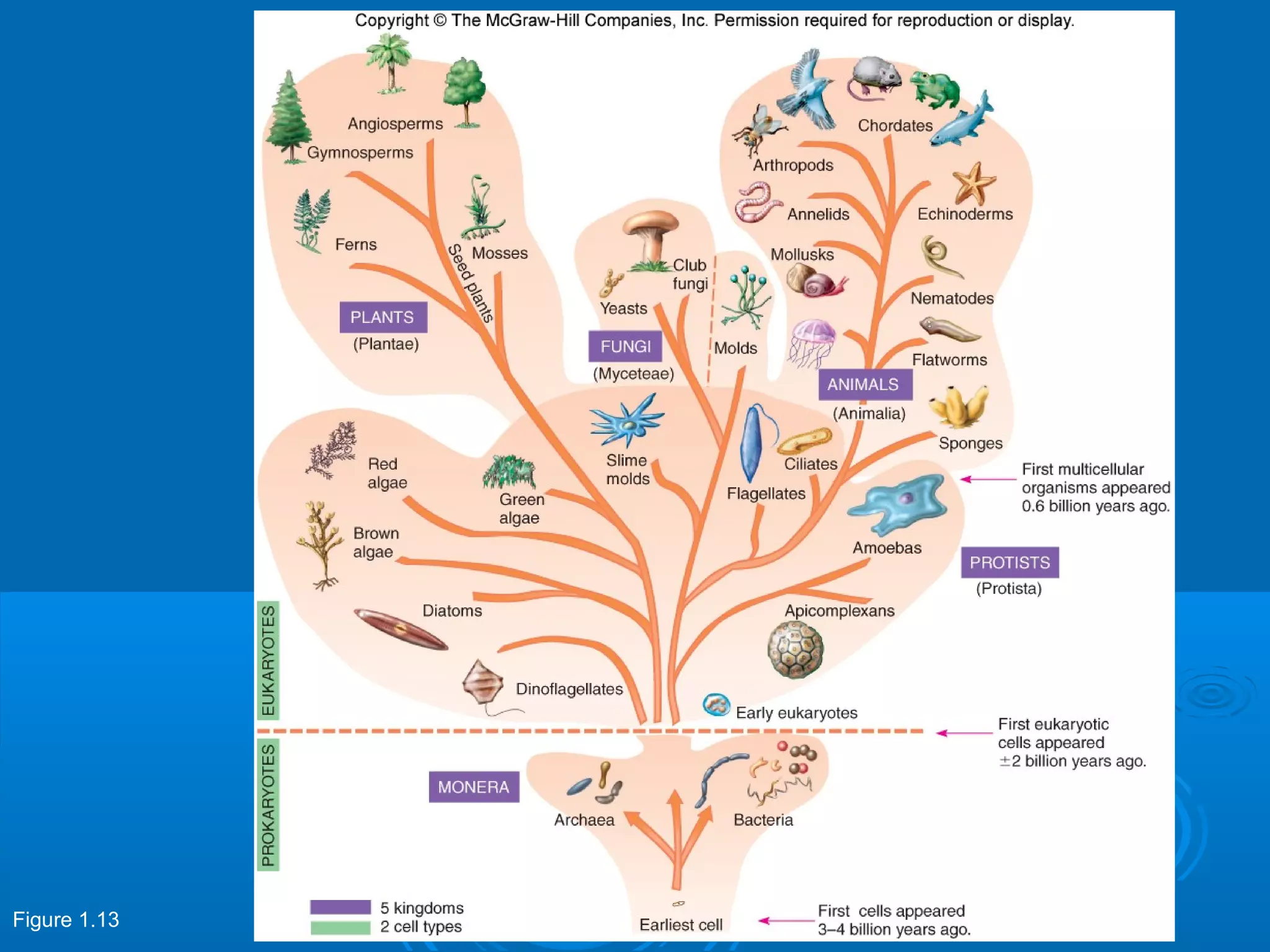
Phylogeny- the degree of relatedness between
groups of living things
 Based on the process of evolution- hereditary
information in living things changes gradually
through time; these changes result in structural
and functional changes through many generations




Two preconceptions:

• All new species originate from preexisting species
• Closely related organisms have similar features because
they evolved from a common ancestor



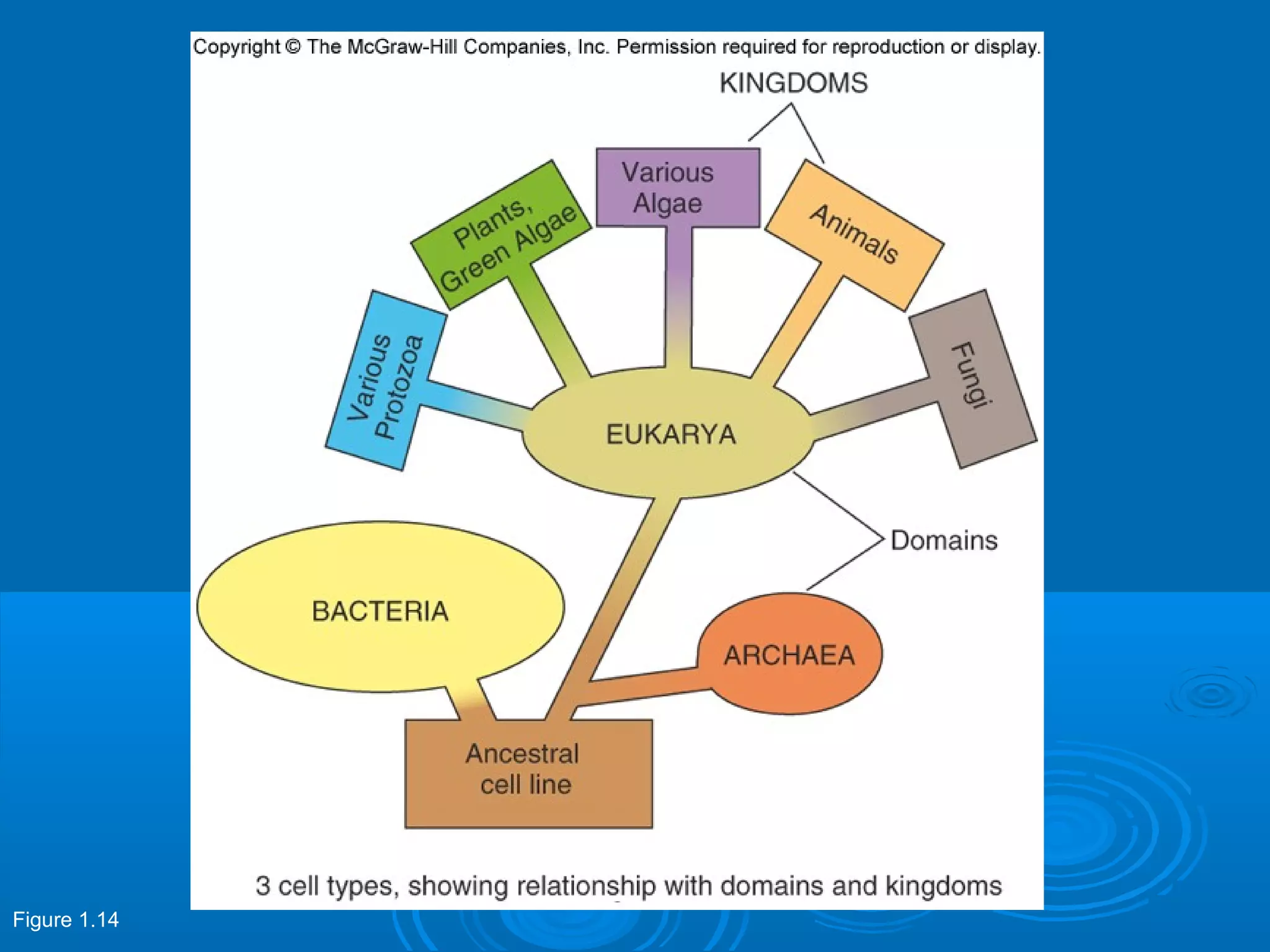
Phylogeny usually represented by a tree- showing
the divergent nature of evolution
Figure 1.13
Figure 1.14

Ch 1 mircobio lecture

  • 1.
    Microbiology: A nd Systems Approach,2 ed. Chapter 1: The Main Themes of Microbiology
  • 2.
    1.1 The Scopeof Microbiology  Microbiology: The study of living things too small to be seen without magnification   Microorganisms or microbes- these microscopic organisms Commonly called “germs, viruses, agents…” but not all cause disease and many more are useful or essential for human life
  • 3.
    Major Groups of Microorganisms Bacteria, algae, protozoa, helminthes, and fungi  Viruses- noncellular, parasitic, proteincoated genetic elements that can infect all living things, including other microorganisms
  • 4.
    Branches of Microbiology Agricultural microbiology  Biotechnology  Food, dairy, and aquatic microbiology  Genetic engineering and recombinant DNA technology  Public health microbiology and epidemiology  Immunology  Many, many more
  • 5.
    Emerging Areas ofMicrobiology  Geomicrobiology  Marine microbiology  Astromicrobiology
  • 6.
    1.2 The Impactof Microbes on Earth: Small Organisms with a Giant Effect  Microorganisms have a profound influence on all aspects of the earth and its residents  Bacterial-like organisms in the fossil record as far back as 3.5 billion years ago (prokaryotes- organisms without a true nucleus)  2 billion years later, eukaryotes (organisms with a true nucleus) emerged
  • 7.
  • 8.
    Ubiquity of Microorganisms Found nearly everywhere  Occur in large numbers  Live in places many other organisms cannot Figure 1.2
  • 9.
    Microbial Involvement inEnergy and Nutrient Flow  Bacteria conducted photosynthesis before plants appeared   Anoxygenic photosynthesis Oxygenic photosynthesis  Biological decomposition recycling and nutrient
  • 10.
    1.3 Human Useof Microorganisms  Humans have been using microorganisms for thousands of years    Baker’s and brewer’s yeast Cheeses Moldy bread on wounds Figure 1.3
  • 11.
    Biotechnology and Bioremediation  Biotechnology- whenhumans manipulate microorganisms to make products in an industrial setting    Genetic engineering- create new products and genetically modified organisms (GMOs) Recombinant DNA technology- allows microbes to be engineered to synthesize desirable proteins (i.e. drugs, hormones, and enzymes) Bioremediation- introducing microbes in to the environment to restore stability or clean up toxic pollutants    Oil spills Chemical spills Water and sewage treatment
  • 12.
    1.4 Infectious Diseasesand the Human Condition  Pathogens- disease-causing organisms
  • 13.
  • 14.
    Worldwide Infectious Diseases Increasing number of emerging diseases (SARS, AIDS, hepatitis C, viral encephalitis)  Other diseases previously not linked to microorganisms now are (gastric ulcers, certain cancers, schizophrenia, multiple sclerosis, obsessive compulsive disorder, coronary artery disease)  Increasing number of drug resistant strains
  • 15.
    1.5 The GeneralCharacteristics of Microorganisms  Cellular Organization  Prokaryotic vs. eukaryotic cells • Prokaryotic cells are about 10 times smaller than eukaryotic cells • Prokaryotic cells lack many cell structures such as organelles • All prokaryotes are microorganisms, but only some eukaryotes are
  • 16.
  • 17.
    Viruses Not independently living cellularorganisms  Much simpler than cellsbasically a small amount of DNA or RNA wrapped in protein and sometimes by a lipid membrane  Individuals are called a virus particle or virion  Depend on the infected cell’s machinery to multiply and disperse 
  • 18.
  • 19.
    Lifestyles of Microorganisms Mostlive a free existence (in soil or water, for example)  Some are parasites  Figure 1.6
  • 20.
    1.6 The HistoricalFoundations of Microbiology  Key to the study of microorganisms was the development of the microscope  Earliest record of microbes was from the work of Robert Hooke in the 1660s  The most careful observations of microbes was possible after Antonie van Leeuwenhoek created the single-lens microscope  Known as the father of bacteriology and protozoology
  • 21.
  • 22.
    Establishment of theScientific Method Early scientists tended to explain natural phenomena by a mixture of belief, superstition, and argument  During the 1600s, true scientific thinking developed  From that, the development of the scientific method       Formulate a hypothesis Most use the deductive approach to apply the scientific method Experimentation, analysis, and testing leads to conclusions Either support or refute the hypothesis Hypotheses can eventually become theories
  • 23.
  • 24.
    The Development ofMedical Microbiology  The Discovery of Spores and Sterilization     Louis Pasteur- worked with infusions in the mid1800s John Tyndall- showed evidence that some microbes have very high heat resistance and are difficult to destroy Ferdinand Cohn- spores and sterilization The Development of Aseptic Techniques   Physicians and scientist began to suspect that microorganisms could cause disease Joseph Lister- introduced aseptic technique
  • 25.
     The Discovery of Pathogensand the Germ Theory of Disease  Louis Pasteur • Pasteurization • The Germ Theory of Disease  Robert Koch • Koch’s postulatesverified the germ theory Figure 1.11
  • 26.
    1.7 Taxonomy: Naming, Classifying,and Identifying Microorganisms Microbial nomenclature- naming microorganisms  Taxonomy- classifying living things   Originated over 250 years ago with the work of Carl von Linné  Identification- discovering and recording the traits of organisms so they can be named and classified  Levels of Classification
  • 27.
  • 28.
    Assigning Specific Names Astandardized nomenclature allows scientists from all over the world to exchange information  The binomial system of nomenclature      The generic (genus) name followed by the species name Generic part is capitalized, species is lowercase Both are italicized or underlined if italics aren’t available Staphylococcus aureus
  • 29.
    The Origin andEvolution of Microorganisms Phylogeny- the degree of relatedness between groups of living things  Based on the process of evolution- hereditary information in living things changes gradually through time; these changes result in structural and functional changes through many generations   Two preconceptions: • All new species originate from preexisting species • Closely related organisms have similar features because they evolved from a common ancestor  Phylogeny usually represented by a tree- showing the divergent nature of evolution
  • 30.
  • 31.