Definition, Scope of Microbiology
Course : B.SC. (MICRO)
Subject: ELEMENTARY MICROBIOLOGY
Unit: 1.1
1
Microbiology
• Definition- Greek- mikros- small; bios-life
– the branch of biology that studies microorganisms
and their effects on humans.
– The study of organisms that are usually too small
to be seen with the naked eye- requires a
microscope
– Includes bacteria, algae, protozoan, fungi,
parasitic worms, viruses
2
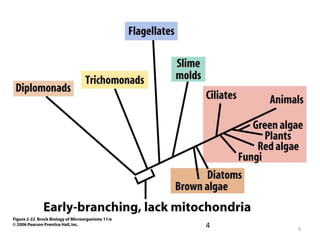
Microbial World
• Viruses
• Bacteria (Eubacteria) and Archaeabacteria
• Fungi (Yeasts and Molds)
• Protozoa
• Microscopic Algae
3
Benefits
• Maintain balance of environment
(microbial ecology)
• Basis of food chain
• Nitrogen fixation
• Photosynthesis
• Digestion, synthesis of vitamins
• Manufacture of food and drink
4
Benefits
• Genetic engineering
• Synthesis of chemical products
• Recycling sewage
• Bioremediation: use microbes to remove
toxins (oil spills)
• Use of microbes to control crop pests
• Normal microbiota
5
Branches of Microbiology
• Bacteriology: study of bacteria
• Mycology: study of fungi
• Immunology: study of immunity
– Edward Jenner, UK: developed vaccination (1798)
– Metchnikoff, RU: discovered phagocytes (1884)
– Paul Ehrlich, DE: theory of immunity (1890)
• Virology: study of viruses
– Beijerinck, NE: discovered intracellular reproduction of
TMV; coined the term “virus” (1899)
6
Branches of Microbiology
• Parasitology: study of protozoa and parasitic worms
• Chemotherapy
– Treatment of disease by using chemical means
– Antibiotics produced naturally
– Synthetic drugs
– Paul Ehrlich (1878) – used arsenic compounds to fight
disease – ‘magic bullet’
7
Branches of Microbiology
• Chemotherapy
– Alexander Fleming, Scotland (1928) discovered
penicillin
– Selman Waksman, Ukraine (1944) discovered
streptomycin
• Problems
– Toxicity of drugs => Selective toxicity
– Resistance of bacteria to drugs
8
Branches of Microbiology
• Recombinant DNA Technology
– Recombinant DNA
– Genetic engineering/biotechnology
– Microbial genetics – mechanism by which
microbes inherit genes
– Molecular biology – structure and function
(expression) of genes
– Molecular epidemiology/diagnostics
9
Branches of Microbiology
• Biotechnology
– GMOs/GEMs for industrial, pharmaceutical and
agricultural applications
– Improvements of agriculture (plants and animals)
– Gene therapy: inserting a missing gene or replacing a
defective one in human cells
10
References:
1. Microbiology VI Edition, M.J. Pelczar, E.C.S. Chan
and N.R. Kreig, Tata McGraw Hill
2. Brock Biology of Microorganisms (13th Edition) by
Michael T. Madigan, John M. Martinko, David Stahl.
3. Microbiology by Gerard J. Tortora, Christine L Case,
and Berdell R. Funke
4. Microbiology by Prescott, Harley, and Klein's
Microbiology Joanne M. Willey, Linda M
11

B.sc. (micro) i em unit 1.4 pro & euk org

  • 1.
    Definition, Scope ofMicrobiology Course : B.SC. (MICRO) Subject: ELEMENTARY MICROBIOLOGY Unit: 1.1 1
  • 2.
    Microbiology • Definition- Greek-mikros- small; bios-life – the branch of biology that studies microorganisms and their effects on humans. – The study of organisms that are usually too small to be seen with the naked eye- requires a microscope – Includes bacteria, algae, protozoan, fungi, parasitic worms, viruses 2
  • 3.
    Microbial World • Viruses •Bacteria (Eubacteria) and Archaeabacteria • Fungi (Yeasts and Molds) • Protozoa • Microscopic Algae 3
  • 4.
    Benefits • Maintain balanceof environment (microbial ecology) • Basis of food chain • Nitrogen fixation • Photosynthesis • Digestion, synthesis of vitamins • Manufacture of food and drink 4
  • 5.
    Benefits • Genetic engineering •Synthesis of chemical products • Recycling sewage • Bioremediation: use microbes to remove toxins (oil spills) • Use of microbes to control crop pests • Normal microbiota 5
  • 6.
    Branches of Microbiology •Bacteriology: study of bacteria • Mycology: study of fungi • Immunology: study of immunity – Edward Jenner, UK: developed vaccination (1798) – Metchnikoff, RU: discovered phagocytes (1884) – Paul Ehrlich, DE: theory of immunity (1890) • Virology: study of viruses – Beijerinck, NE: discovered intracellular reproduction of TMV; coined the term “virus” (1899) 6
  • 7.
    Branches of Microbiology •Parasitology: study of protozoa and parasitic worms • Chemotherapy – Treatment of disease by using chemical means – Antibiotics produced naturally – Synthetic drugs – Paul Ehrlich (1878) – used arsenic compounds to fight disease – ‘magic bullet’ 7
  • 8.
    Branches of Microbiology •Chemotherapy – Alexander Fleming, Scotland (1928) discovered penicillin – Selman Waksman, Ukraine (1944) discovered streptomycin • Problems – Toxicity of drugs => Selective toxicity – Resistance of bacteria to drugs 8
  • 9.
    Branches of Microbiology •Recombinant DNA Technology – Recombinant DNA – Genetic engineering/biotechnology – Microbial genetics – mechanism by which microbes inherit genes – Molecular biology – structure and function (expression) of genes – Molecular epidemiology/diagnostics 9
  • 10.
    Branches of Microbiology •Biotechnology – GMOs/GEMs for industrial, pharmaceutical and agricultural applications – Improvements of agriculture (plants and animals) – Gene therapy: inserting a missing gene or replacing a defective one in human cells 10
  • 11.
    References: 1. Microbiology VIEdition, M.J. Pelczar, E.C.S. Chan and N.R. Kreig, Tata McGraw Hill 2. Brock Biology of Microorganisms (13th Edition) by Michael T. Madigan, John M. Martinko, David Stahl. 3. Microbiology by Gerard J. Tortora, Christine L Case, and Berdell R. Funke 4. Microbiology by Prescott, Harley, and Klein's Microbiology Joanne M. Willey, Linda M 11