Chapter 3:
The Project Management
Process Groups: A Case Study
Learning Objectives
• Describe the five project management process
groups, the typical level of activity for each,
and the interactions among them
• Understand how the project management
process groups relate to the project
management knowledge areas
• Discuss how organizations develop
information technology project management
methodologies to meet their needs
Learning Objectives
• Review a case study of an organization
applying the project management process
groups to manage an information technology
project
• Understand the contribution that effective
project initiation, project planning, project
execution, project control, and project closing
makes to project success
Project Management Process
Groups
• Project management can be viewed as a number
of interlinked processes
• The project management process groups include
– initiating processes
– planning processes
– executing processes
– controlling processes
– closing processes
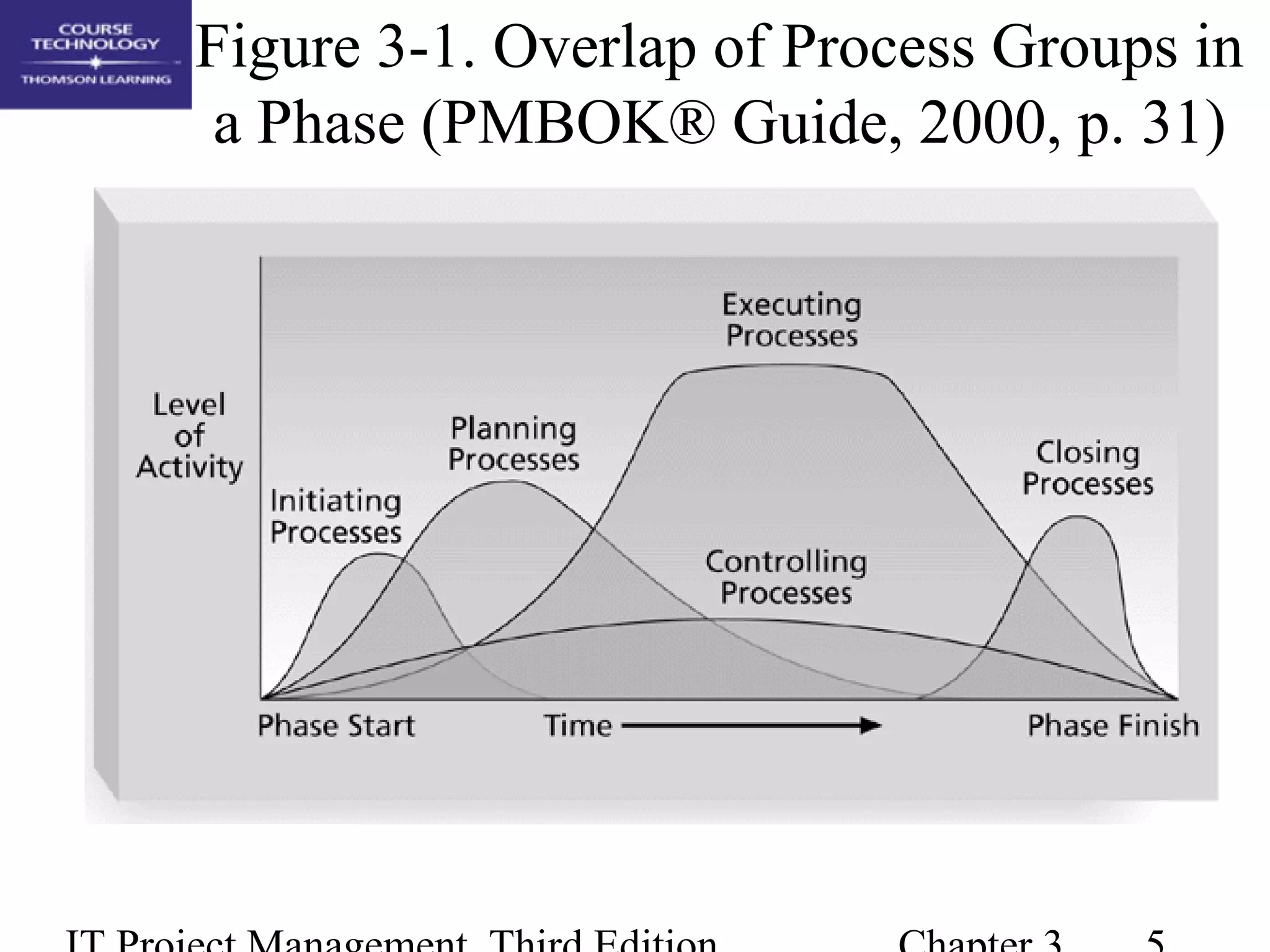
Figure 3-1. Overlap of Process Groups in
a Phase (PMBOK® Guide, 2000, p. 31)
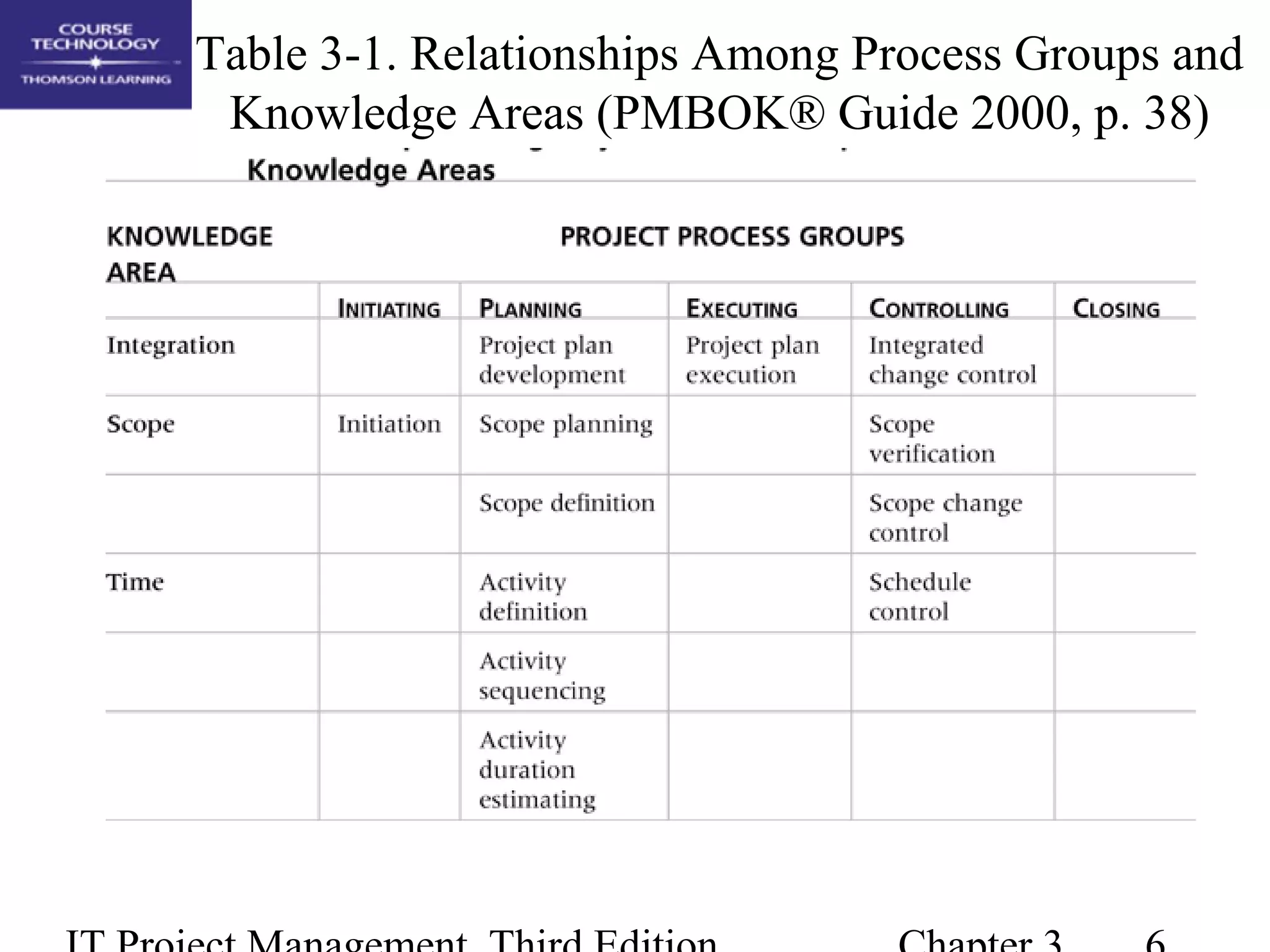
Table 3-1. Relationships Among Process Groups and
Knowledge Areas (PMBOK® Guide 2000, p. 38)
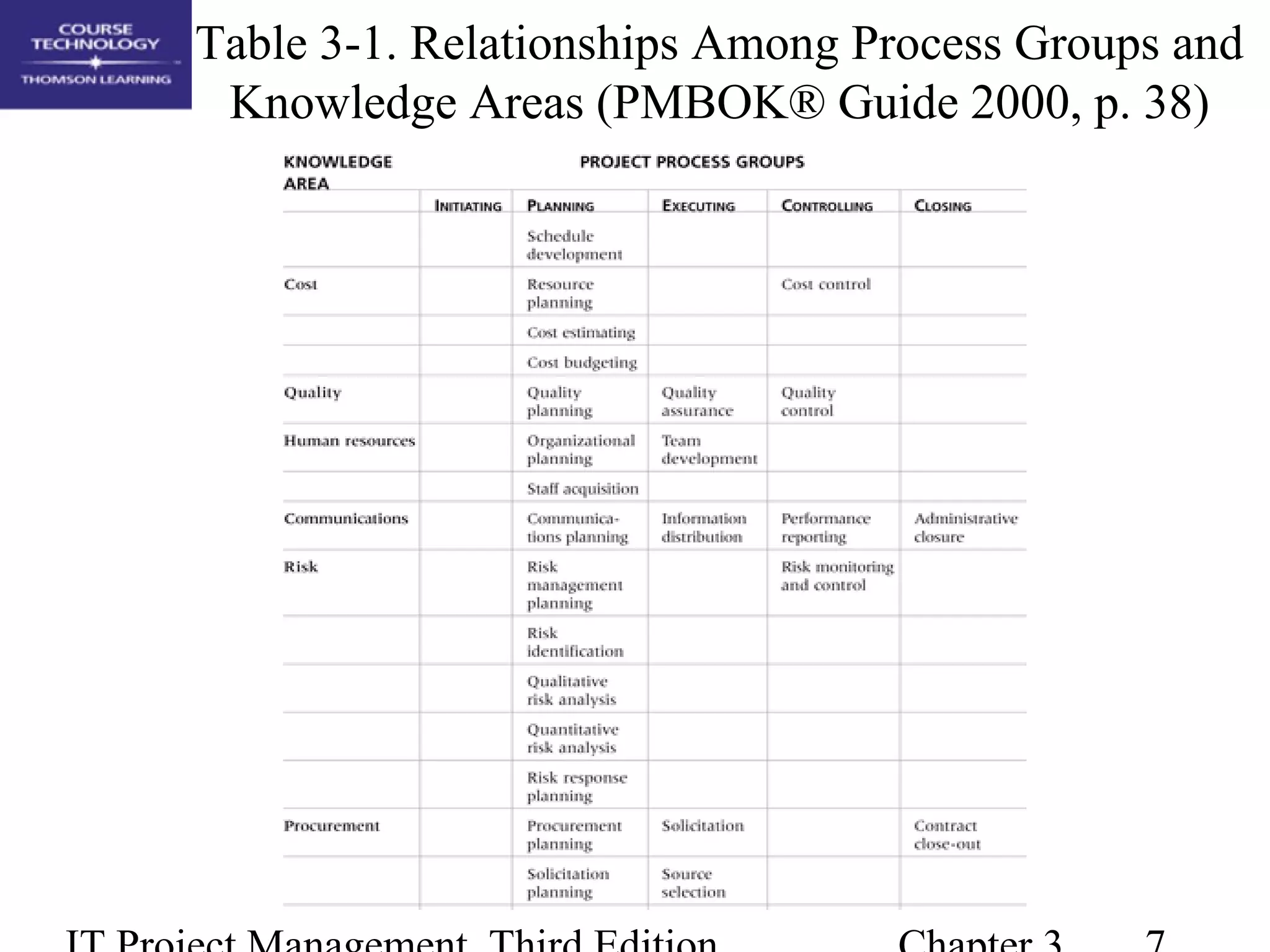
Table 3-1. Relationships Among Process Groups and
Knowledge Areas (PMBOK® Guide 2000, p. 38)
Developing an IT Project
Management Methodology
• Just as projects are unique, so are approaches to
project management
• Many organizations develop their own project
management methodologies, especially for IT
projects
• Blue Cross Blue Shield of Michigan used the
PMBOK as a guide in developing their IT
project management methodology
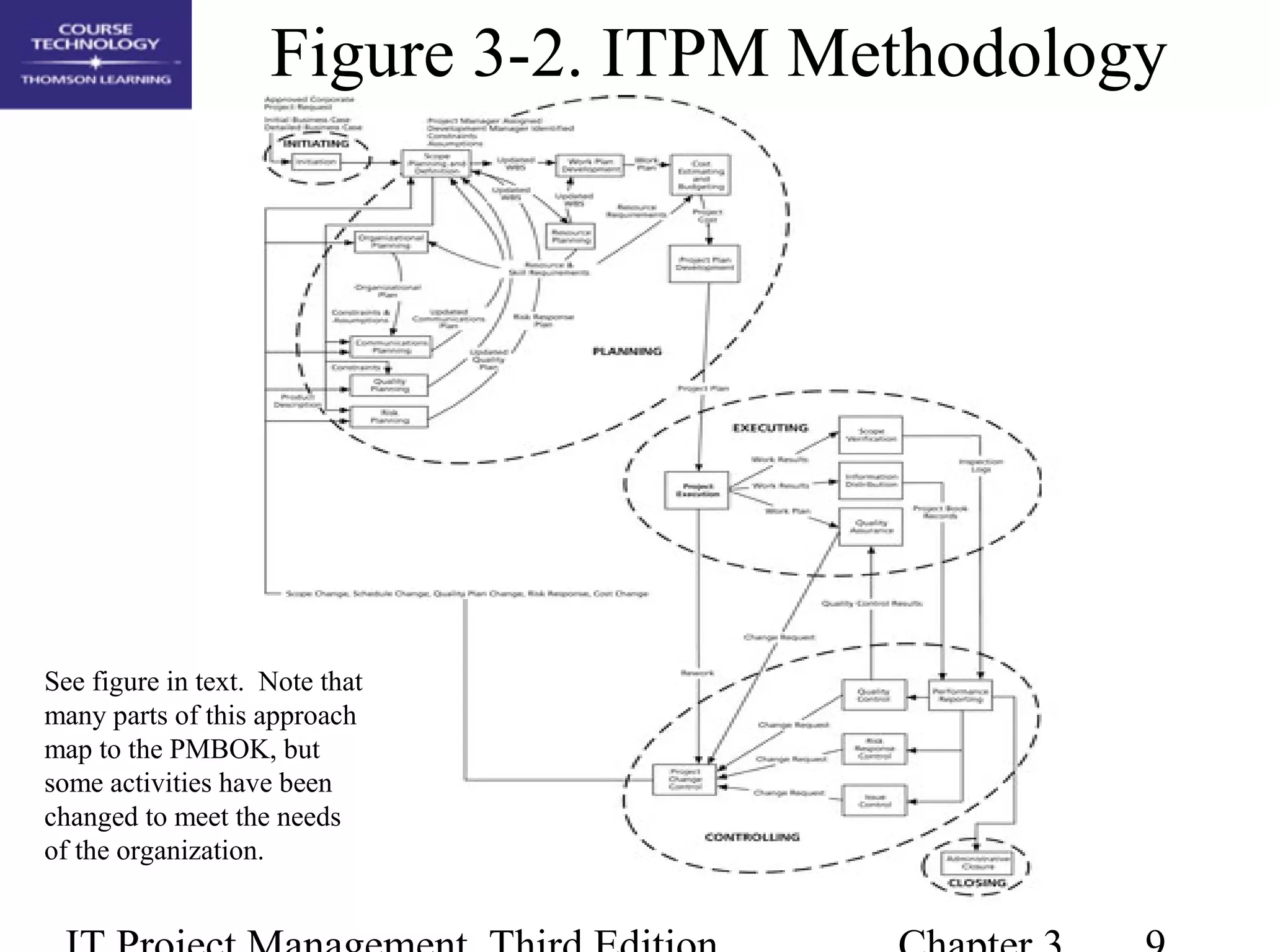
Figure 3-2. ITPM Methodology
See figure in text. Note that
many parts of this approach
map to the PMBOK, but
some activities have been
changed to meet the needs
of the organization.
Case Study: JWD Consulting’s
Project Management Intranet Site
• This case study provides an example of what’s
involved in initiating, planning, executing,
controlling, and closing an IT project
• You can download templates for creating your
own project management documents from the
companion Web site for this text
• Note: This case study provides a big picture
view of managing a project. Later chapters
provide detailed information on each knowledge
area.
Project Initiation
• Initiating a project includes recognizing and starting a
new project or project phase
• Some organizations use a pre-initiation phase, while
others include items like developing a business case as
part of initiation
• The main goal is to formally select and start off
projects
• Key outputs include:
– Assigning the project manager
– Identifying key stakeholders
– Completing a business case
– Completing a project charter and getting signatures on it
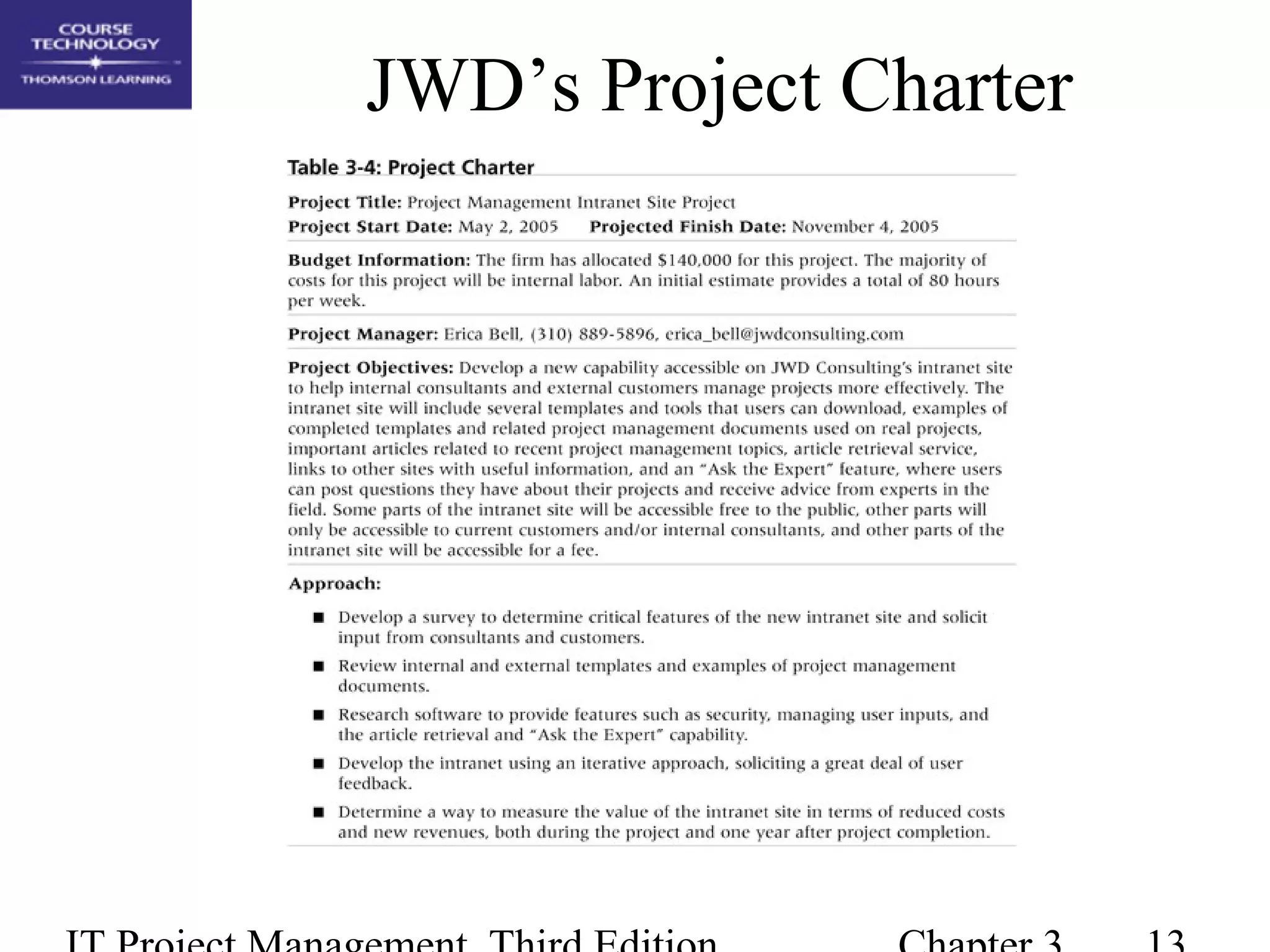
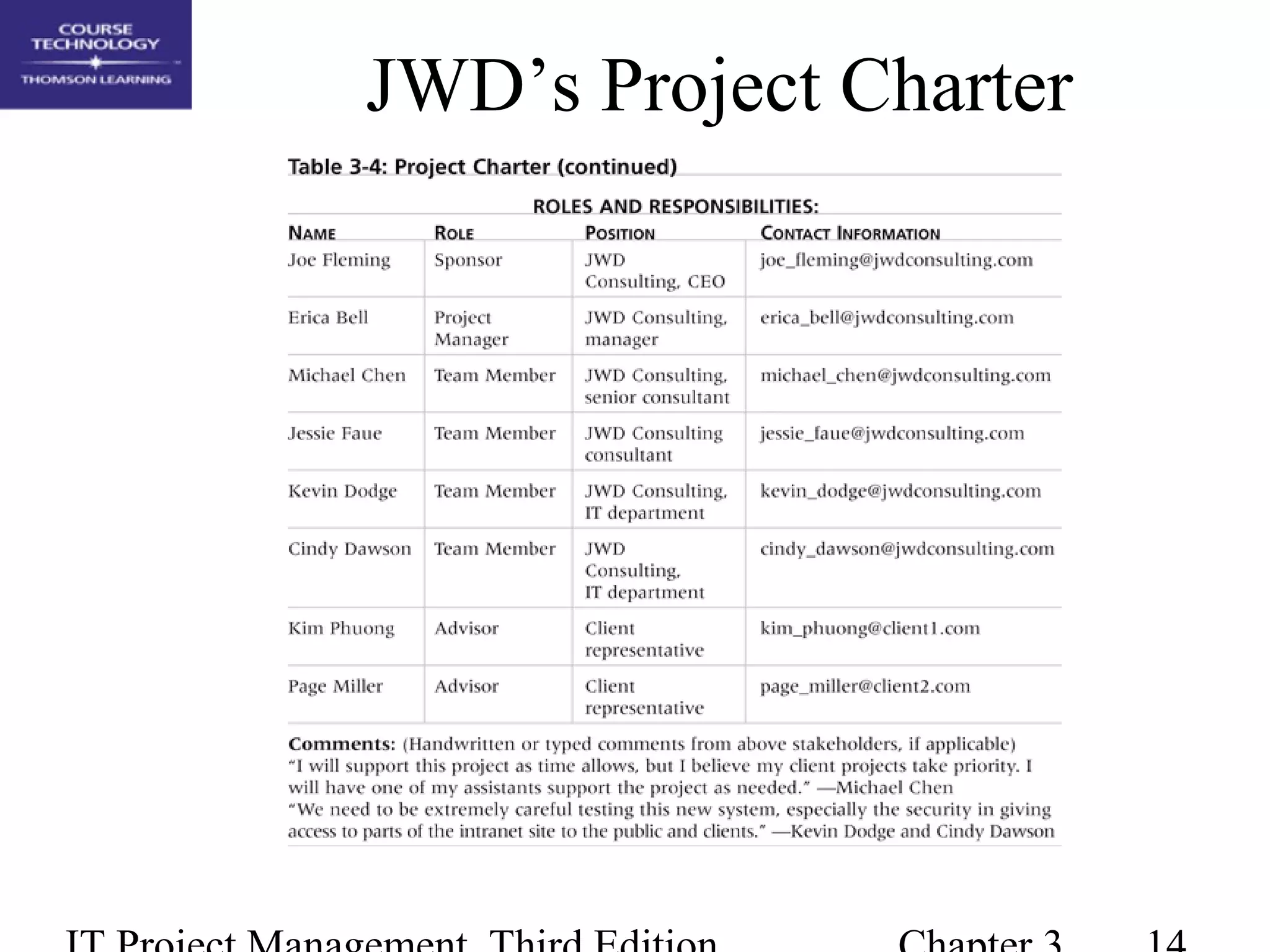
Project Initiation Documents
• Business case: See pages 74-76
• Charter: See pages 77-78, also shown on next
two slides
• Note: Every organization has its own variations
of what documents are required for project
initiation. It’s important to identify the need for
projects, who the stakeholders are, and what the
main goals are for the project
JWD’s Project Charter
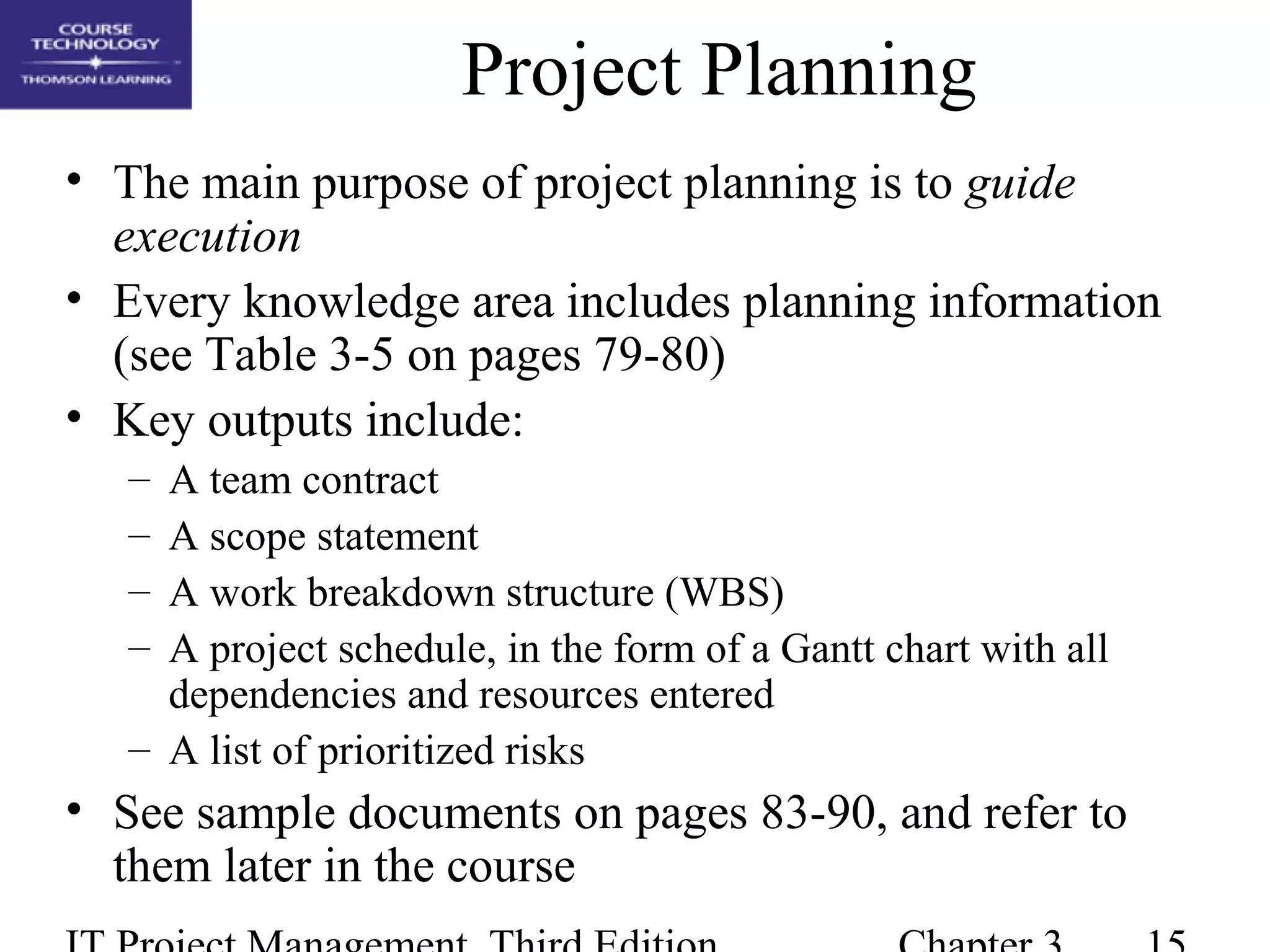
Project Planning
• The main purpose of project planning is to guide
execution
• Every knowledge area includes planning information
(see Table 3-5 on pages 79-80)
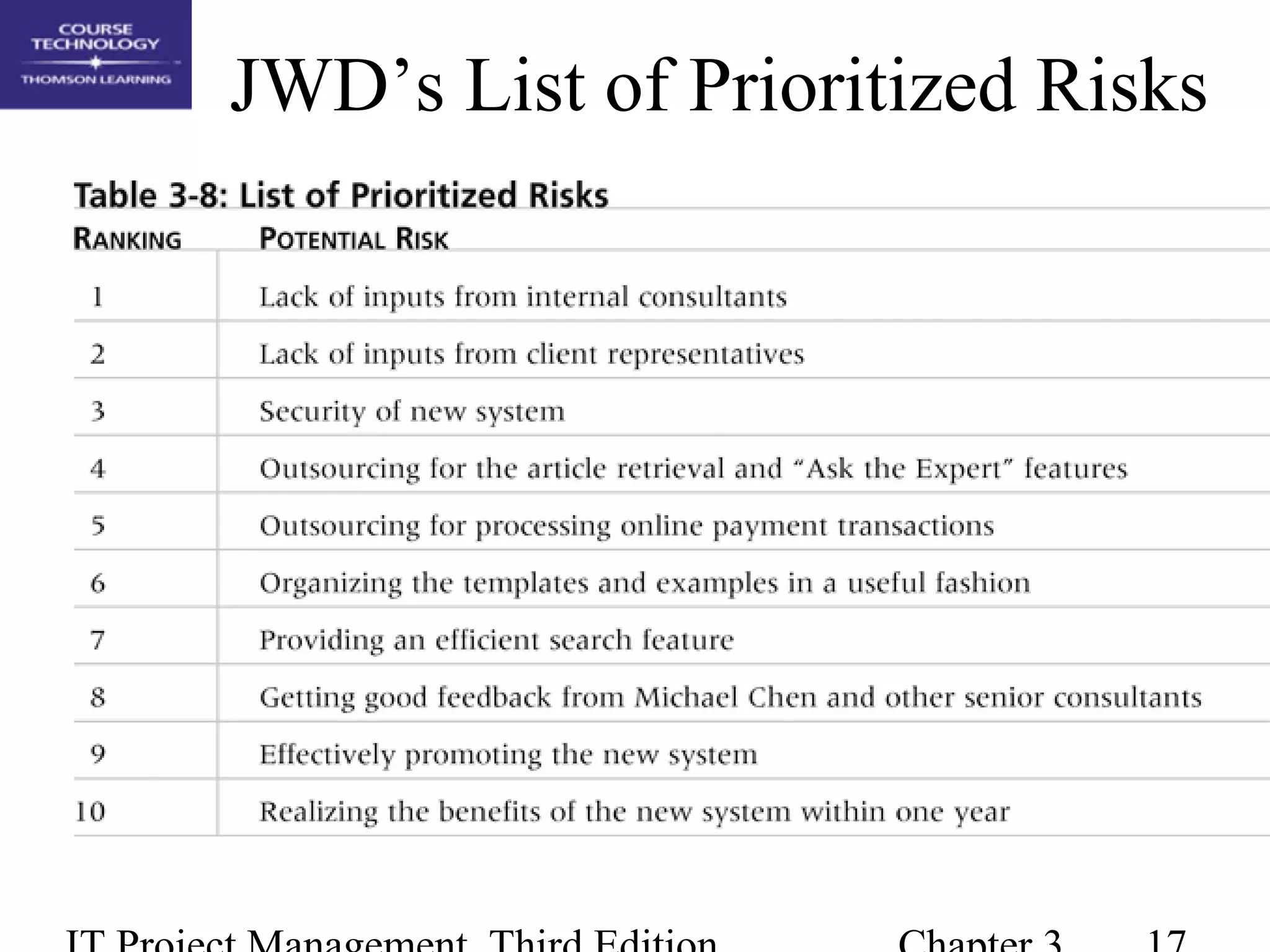
• Key outputs include:
– A team contract
– A scope statement
– A work breakdown structure (WBS)
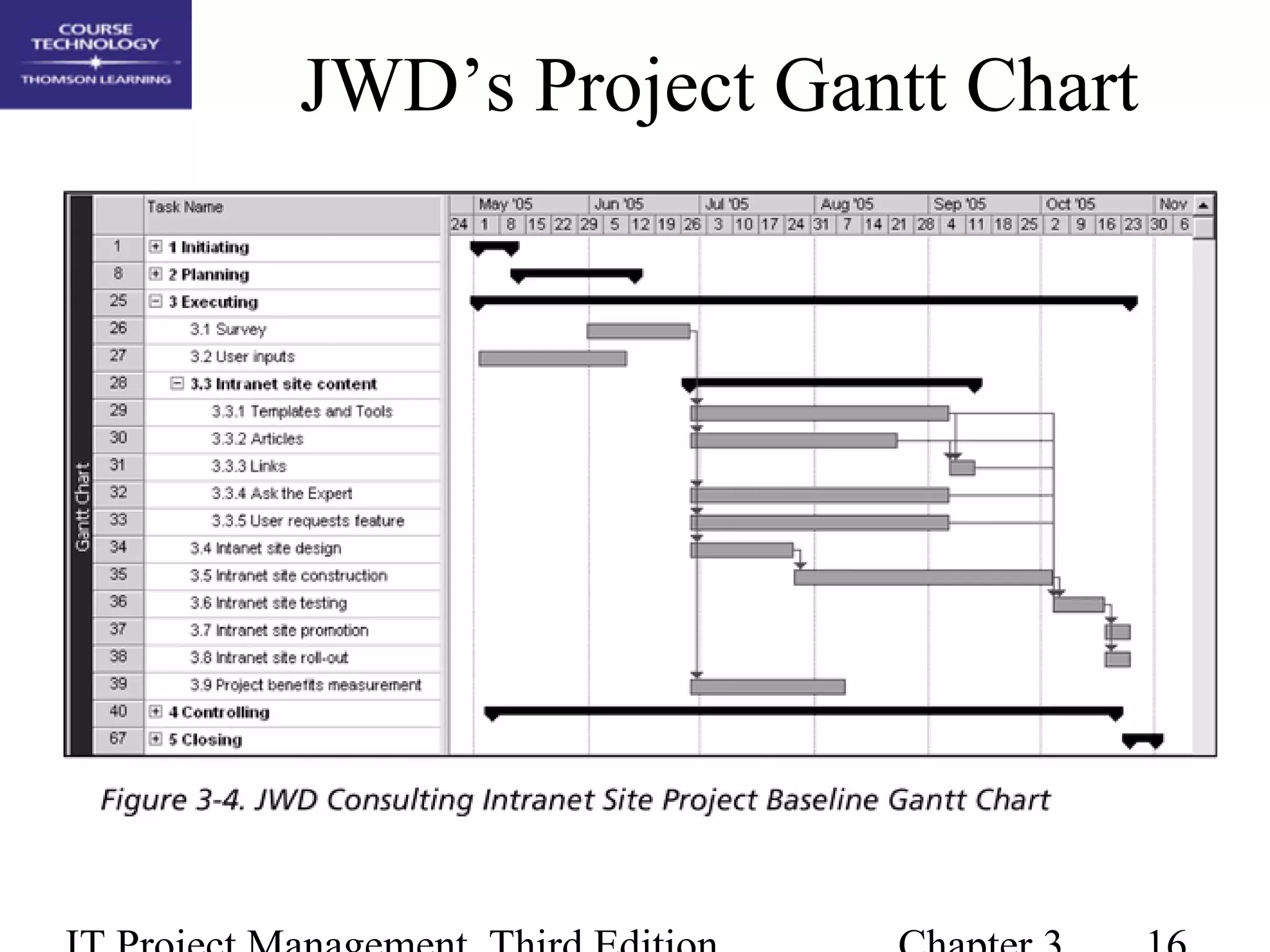
– A project schedule, in the form of a Gantt chart with all
dependencies and resources entered
– A list of prioritized risks
• See sample documents on pages 83-90, and refer to
them later in the course
JWD’s Project Gantt Chart
JWD’s List of Prioritized Risks
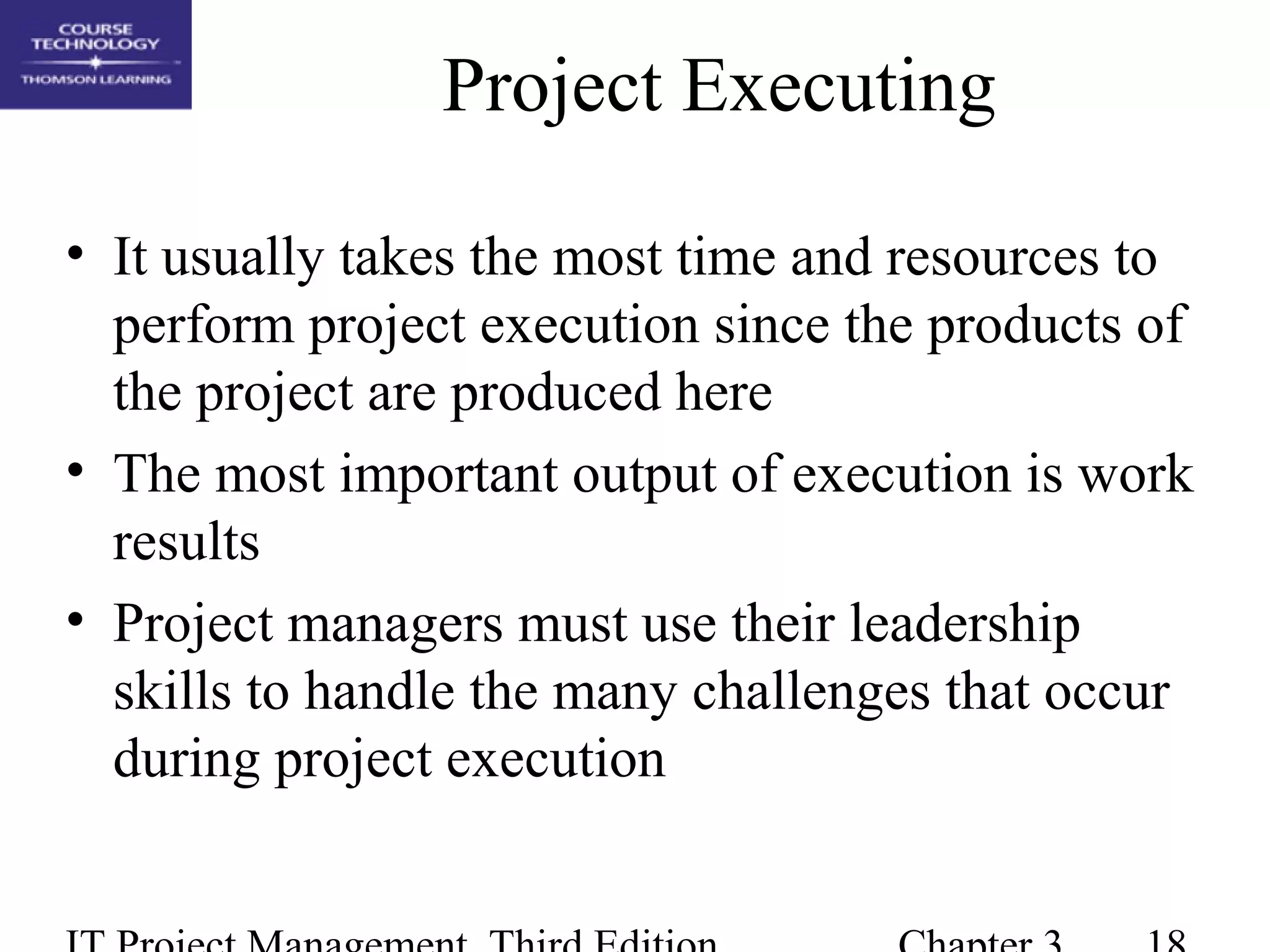
Project Executing
• It usually takes the most time and resources to
perform project execution since the products of
the project are produced here
• The most important output of execution is work
results
• Project managers must use their leadership
skills to handle the many challenges that occur
during project execution
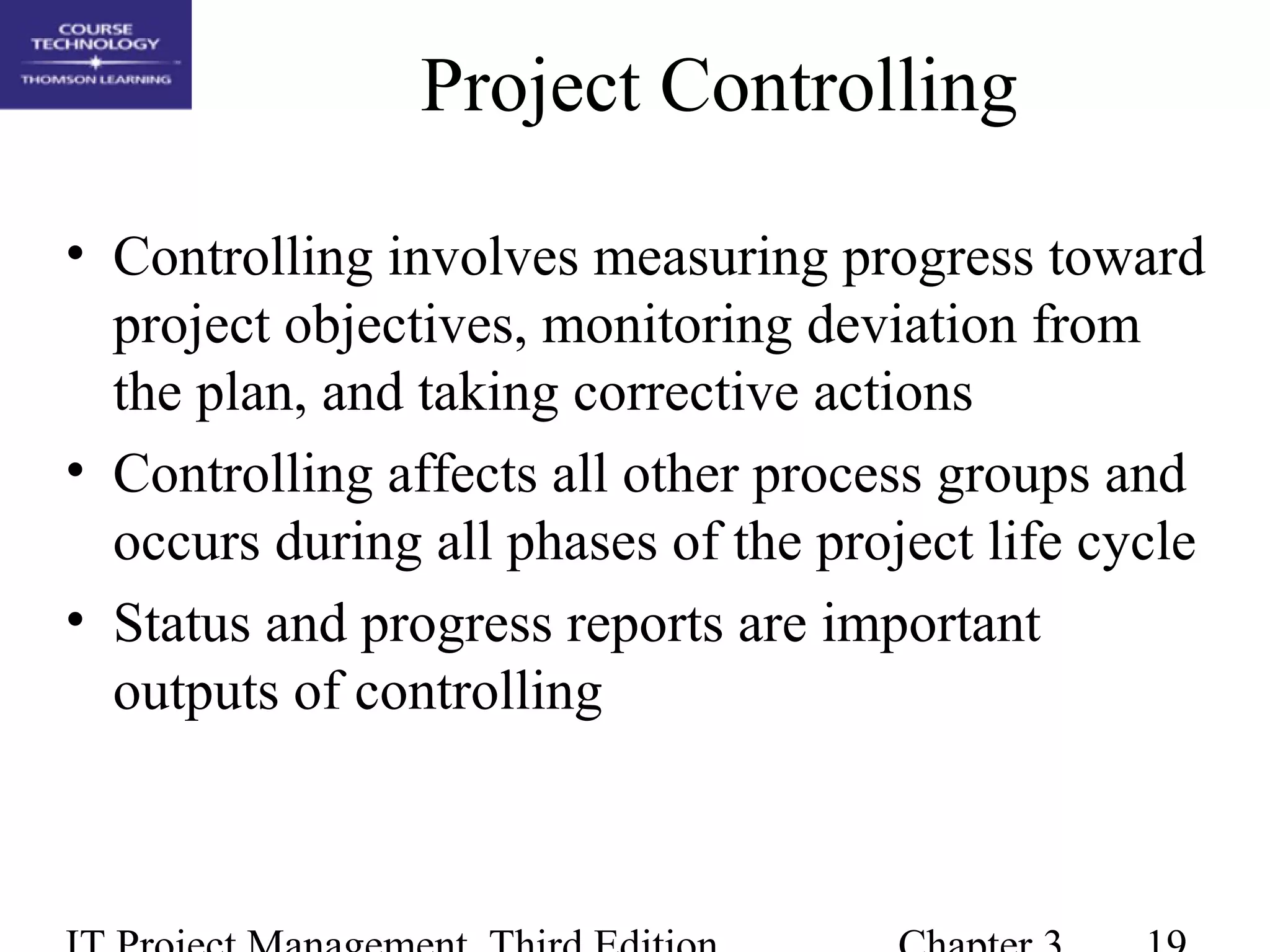
Project Controlling
• Controlling involves measuring progress toward
project objectives, monitoring deviation from
the plan, and taking corrective actions
• Controlling affects all other process groups and
occurs during all phases of the project life cycle
• Status and progress reports are important
outputs of controlling
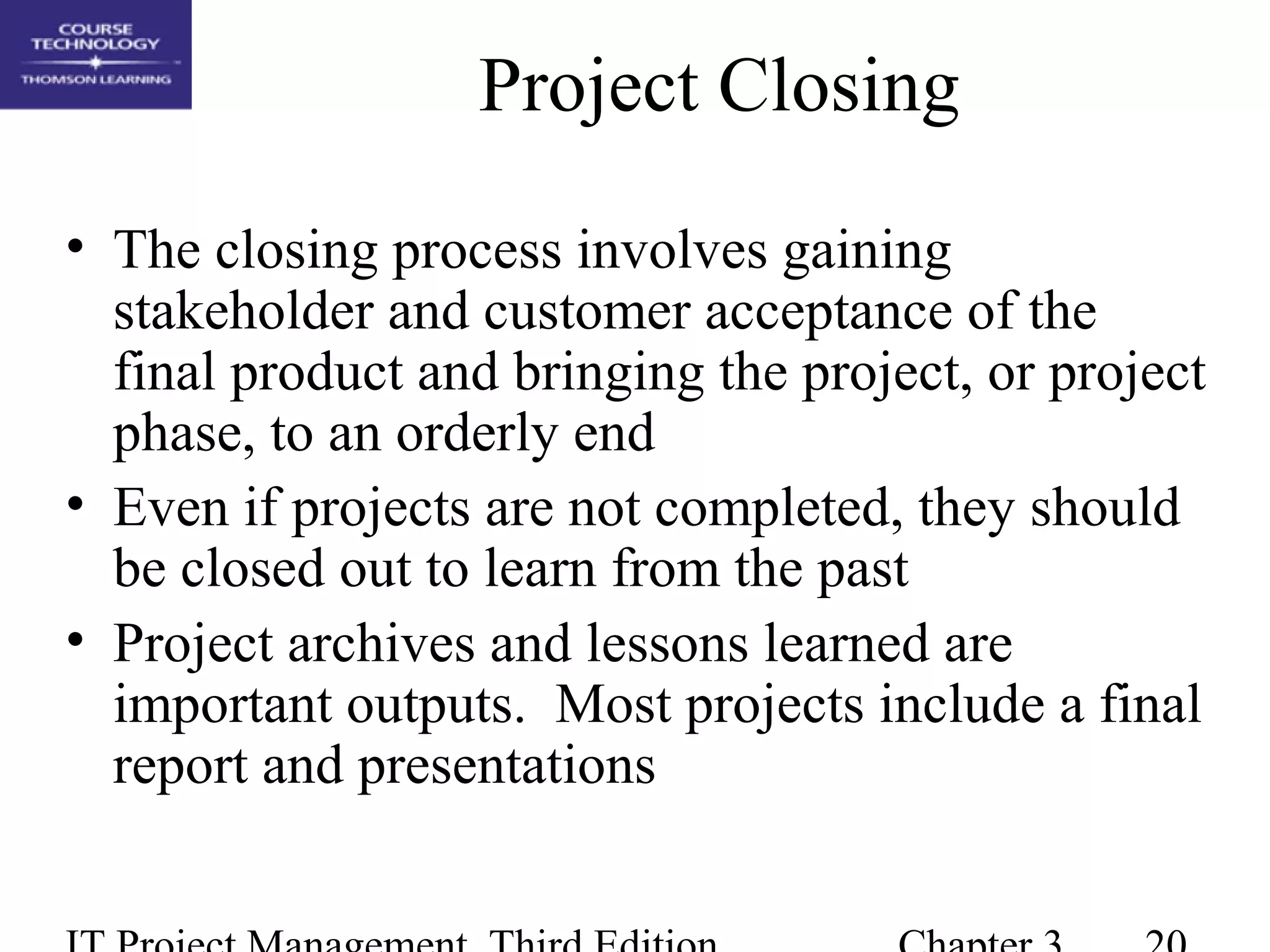
Project Closing
• The closing process involves gaining
stakeholder and customer acceptance of the
final product and bringing the project, or project
phase, to an orderly end
• Even if projects are not completed, they should
be closed out to learn from the past
• Project archives and lessons learned are
important outputs. Most projects include a final
report and presentations
Post-Project Follow-up
• Many organizations have realized that it’s
important to review the results of projects a year
or so after they have been completed
• Many projects project potential savings, so it’s
important to review the financial estimates and
help learn from the past in preparing new
estimates

Chap03 the project management process groups

  • 1.
    Chapter 3: The ProjectManagement Process Groups: A Case Study
  • 2.
    Learning Objectives • Describethe five project management process groups, the typical level of activity for each, and the interactions among them • Understand how the project management process groups relate to the project management knowledge areas • Discuss how organizations develop information technology project management methodologies to meet their needs
  • 3.
    Learning Objectives • Reviewa case study of an organization applying the project management process groups to manage an information technology project • Understand the contribution that effective project initiation, project planning, project execution, project control, and project closing makes to project success
  • 4.
    Project Management Process Groups •Project management can be viewed as a number of interlinked processes • The project management process groups include – initiating processes – planning processes – executing processes – controlling processes – closing processes
  • 5.
    Figure 3-1. Overlapof Process Groups in a Phase (PMBOK® Guide, 2000, p. 31)
  • 6.
    Table 3-1. RelationshipsAmong Process Groups and Knowledge Areas (PMBOK® Guide 2000, p. 38)
  • 7.
    Table 3-1. RelationshipsAmong Process Groups and Knowledge Areas (PMBOK® Guide 2000, p. 38)
  • 8.
    Developing an ITProject Management Methodology • Just as projects are unique, so are approaches to project management • Many organizations develop their own project management methodologies, especially for IT projects • Blue Cross Blue Shield of Michigan used the PMBOK as a guide in developing their IT project management methodology
  • 9.
    Figure 3-2. ITPMMethodology See figure in text. Note that many parts of this approach map to the PMBOK, but some activities have been changed to meet the needs of the organization.
  • 10.
    Case Study: JWDConsulting’s Project Management Intranet Site • This case study provides an example of what’s involved in initiating, planning, executing, controlling, and closing an IT project • You can download templates for creating your own project management documents from the companion Web site for this text • Note: This case study provides a big picture view of managing a project. Later chapters provide detailed information on each knowledge area.
  • 11.
    Project Initiation • Initiatinga project includes recognizing and starting a new project or project phase • Some organizations use a pre-initiation phase, while others include items like developing a business case as part of initiation • The main goal is to formally select and start off projects • Key outputs include: – Assigning the project manager – Identifying key stakeholders – Completing a business case – Completing a project charter and getting signatures on it
  • 12.
    Project Initiation Documents •Business case: See pages 74-76 • Charter: See pages 77-78, also shown on next two slides • Note: Every organization has its own variations of what documents are required for project initiation. It’s important to identify the need for projects, who the stakeholders are, and what the main goals are for the project
  • 13.
  • 14.
  • 15.
    Project Planning • Themain purpose of project planning is to guide execution • Every knowledge area includes planning information (see Table 3-5 on pages 79-80) • Key outputs include: – A team contract – A scope statement – A work breakdown structure (WBS) – A project schedule, in the form of a Gantt chart with all dependencies and resources entered – A list of prioritized risks • See sample documents on pages 83-90, and refer to them later in the course
  • 16.
  • 17.
    JWD’s List ofPrioritized Risks
  • 18.
    Project Executing • Itusually takes the most time and resources to perform project execution since the products of the project are produced here • The most important output of execution is work results • Project managers must use their leadership skills to handle the many challenges that occur during project execution
  • 19.
    Project Controlling • Controllinginvolves measuring progress toward project objectives, monitoring deviation from the plan, and taking corrective actions • Controlling affects all other process groups and occurs during all phases of the project life cycle • Status and progress reports are important outputs of controlling
  • 20.
    Project Closing • Theclosing process involves gaining stakeholder and customer acceptance of the final product and bringing the project, or project phase, to an orderly end • Even if projects are not completed, they should be closed out to learn from the past • Project archives and lessons learned are important outputs. Most projects include a final report and presentations
  • 21.
    Post-Project Follow-up • Manyorganizations have realized that it’s important to review the results of projects a year or so after they have been completed • Many projects project potential savings, so it’s important to review the financial estimates and help learn from the past in preparing new estimates