Copyright 2002 Prentice-Hall, Inc.
Modern Systems Analysis
and Design
Third Edition
Jeffrey A. Hoffer
Joey F. George
Joseph S. Valacich
Chapter 19
Rapid Application Development
19.1
Learning Objectives
Explain the Rapid Application Development
(RAD) approach and how it differs from
traditional approaches to information systems
development
Describe the systems development
components essential to RAD
Discuss the conceptual pillars that support
the RAD approach
Explain the advantages and disadvantages of
RAD as an exclusive systems development
methodology
19.2
Rapid Applications
Development (RAD)
Systems development methodology created
to radically decrease the time needed to
design and implement information systems
radically.
Five key factors
1. Extensive user involvement
2. Joint Application Design sessions
3. Prototyping
4. Integrated CASE tools
5. Code generators
19.3
The Process of Developing an
Application Rapidly
RAD is a general strategy rather than a
single methodology
Goals
 To analyze a business process rapidly
 To design a viable system solution through
intense cooperation between users and
developers
 To get the finished application into the hands of
the users quickly
Traditional SDLC steps are followed, but
phases are combined
Iteration is limited to design and
development phases
19.4
Components of RAD
User involvement is key to success
Prototyping is conducted in sessions
similar to Joint Application Design
(JAD)
Prototyping screens become screens
within the production system
CASE tools are used to design the
prototypes
19.5
Approaches to RAD
Martin’s pillars of RAD
 Four pillars
 Tools
 People
 Methodology
 Management
 Conversion to RAD within organization should be
done with a small group of well-trained and
dedicated professionals, called a RAD cell
 Over time, cell can grow until RAD is the
predominant approach of the information systems
unit
19.6
Approaches to RAD
McConnell’s pillars of RAD
 Four pillars
 Avoid classic mistakes
 Apply development fundamentals
 Manage risks to avoid catastrophic setbacks
 Apply schedule-oriented practices
 Table 19-1 lists some of McConnell’s 36
classic development mistakes
19.7
Approaches to RAD
McConnell’s pillars of RAD (continued)
 Development mistakes
 Weak personnel
 Employees that are not as well trained in skills necessary
for success of the project
 Silver-bullet syndrome
 Occurs when developers believe that a new and untried
technology is all that is needed to cure the ills of any
development project
 Feature creep
 More and more features are added to a system over
course of development
 Requirements gold-plating
 Project may have more requirements than needed
19.8
Approaches to RAD
Software tools
 Case tools can be used for
 Prototyping
 Code generation
 Example: COOL:Gen
 Visual Development Environments
 Visual Basic
 Delphi
19.9
Approaches to RAD
Martin’s RAD Life Cycle
 Systems requirement determination is done in
context of a discussion of business problems and
business areas
 User Design
 End users and IS professionals participate in JAD
workshops
 CASE tools are used to support prototyping
 Construction
 Designer creates code using code generator
 End user validates screens and other aspects of design
 Cutover
 New system is delivered to end users
19.10
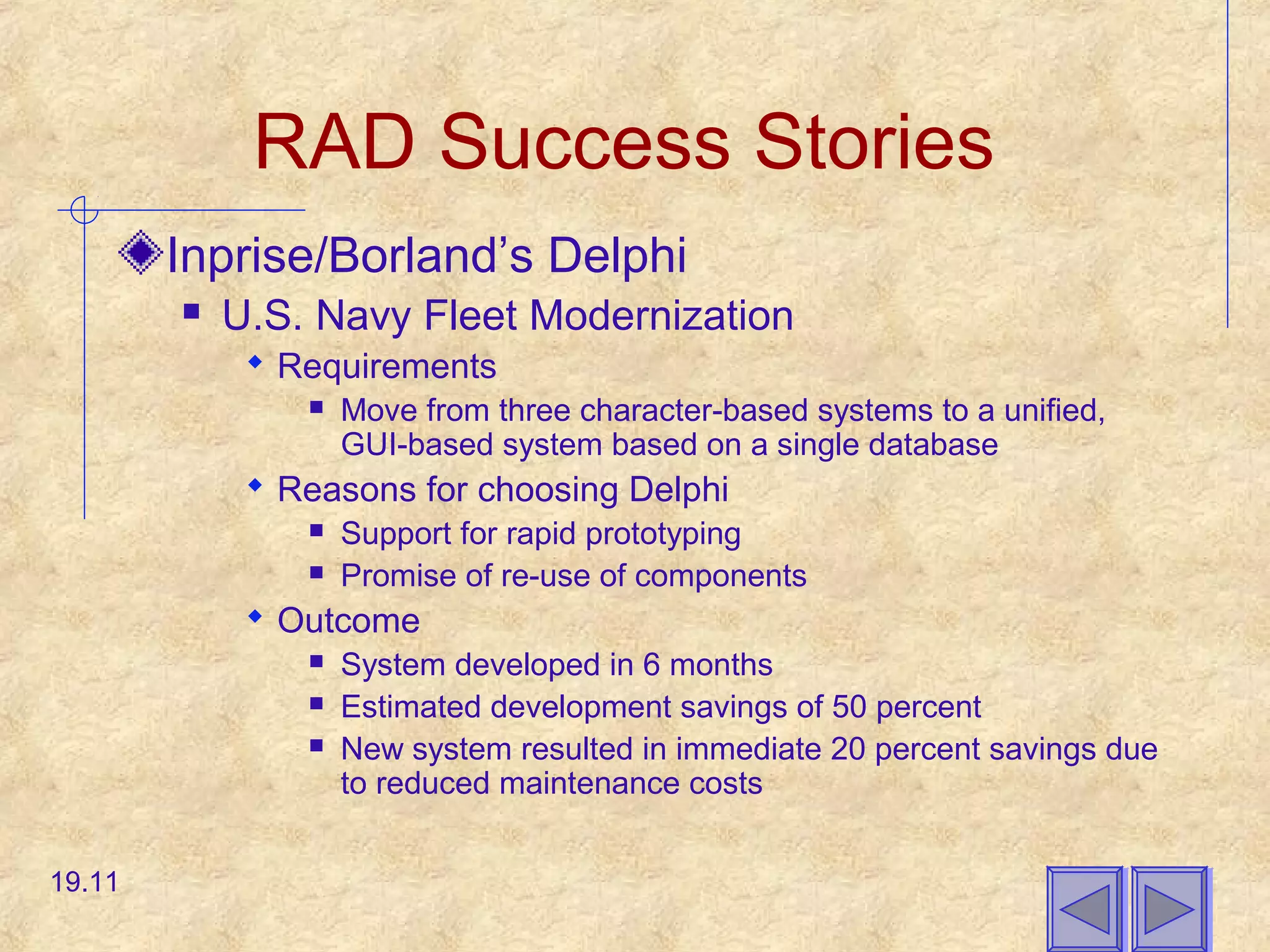
RAD Success Stories
Inprise/Borland’s Delphi
 U.S. Navy Fleet Modernization
 Requirements
 Move from three character-based systems to a unified,
GUI-based system based on a single database
 Reasons for choosing Delphi
 Support for rapid prototyping
 Promise of re-use of components
 Outcome
 System developed in 6 months
 Estimated development savings of 50 percent
 New system resulted in immediate 20 percent savings due
to reduced maintenance costs
19.11
RAD Success Stories
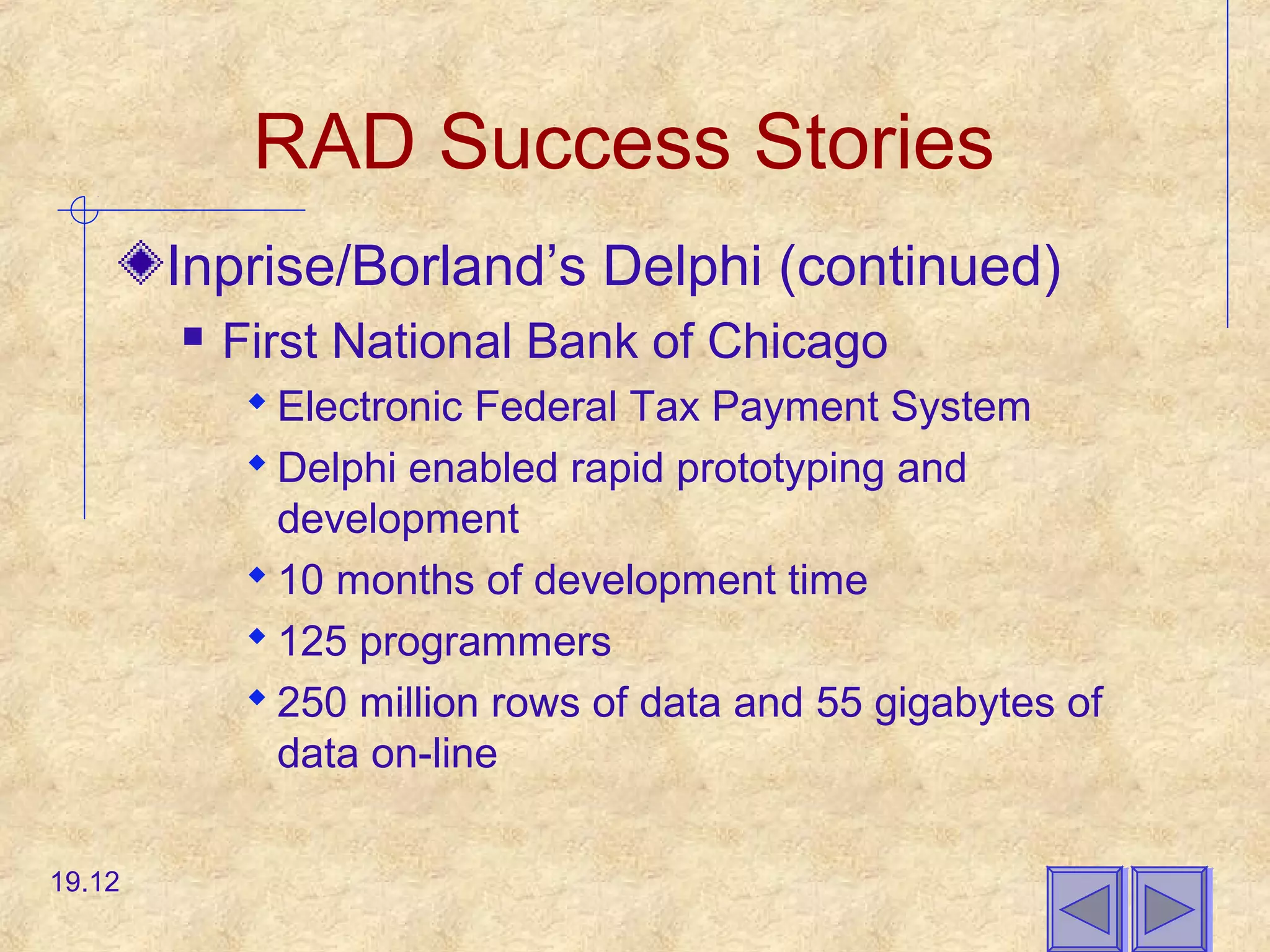
Inprise/Borland’s Delphi (continued)
 First National Bank of Chicago
 Electronic Federal Tax Payment System
 Delphi enabled rapid prototyping and
development
 10 months of development time
 125 programmers
 250 million rows of data and 55 gigabytes of
data on-line
19.12
RAD Success Stories
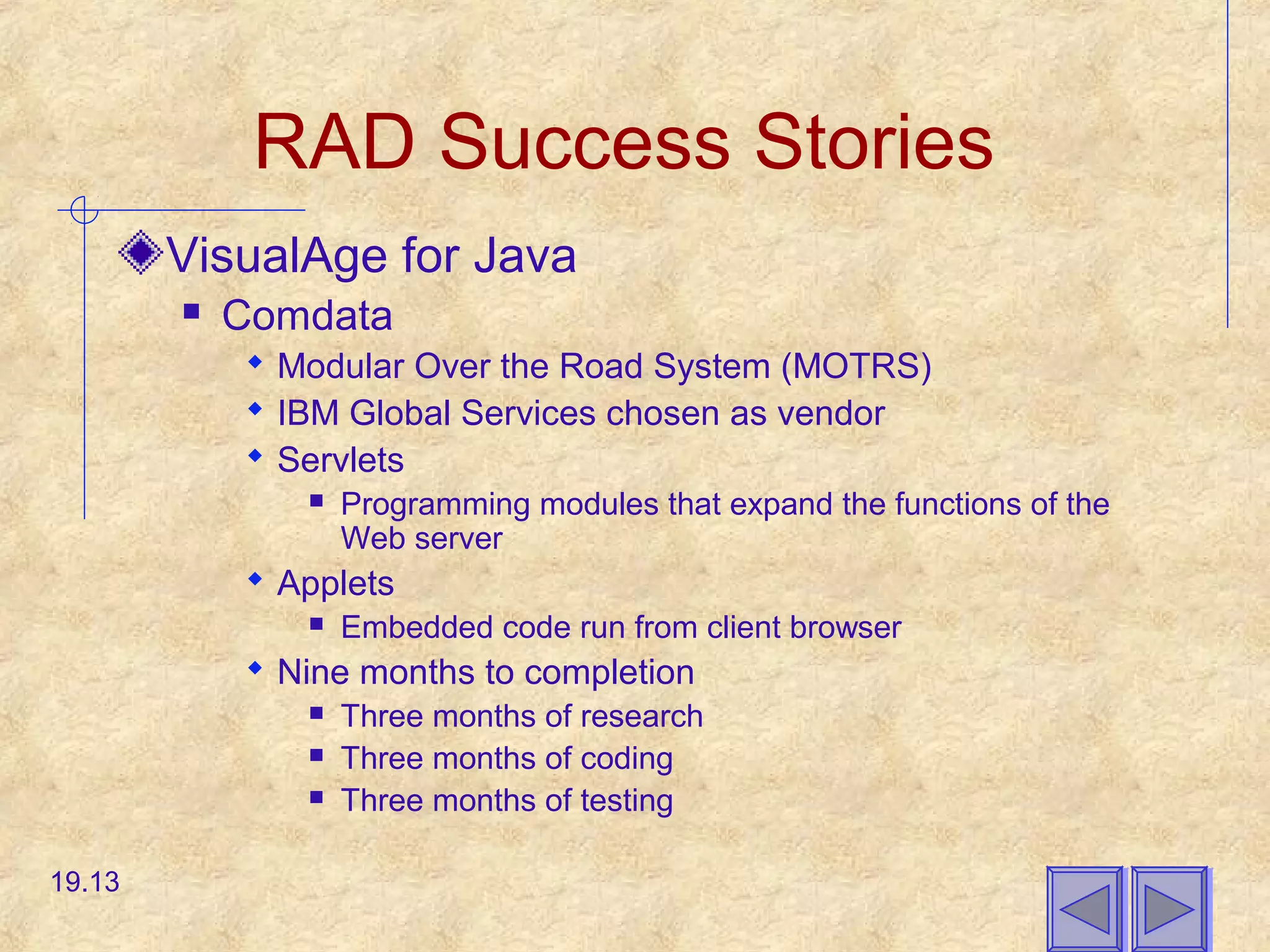
VisualAge for Java
 Comdata
 Modular Over the Road System (MOTRS)
 IBM Global Services chosen as vendor
 Servlets
 Programming modules that expand the functions of the
Web server
 Applets
 Embedded code run from client browser
 Nine months to completion
 Three months of research
 Three months of coding
 Three months of testing
19.13
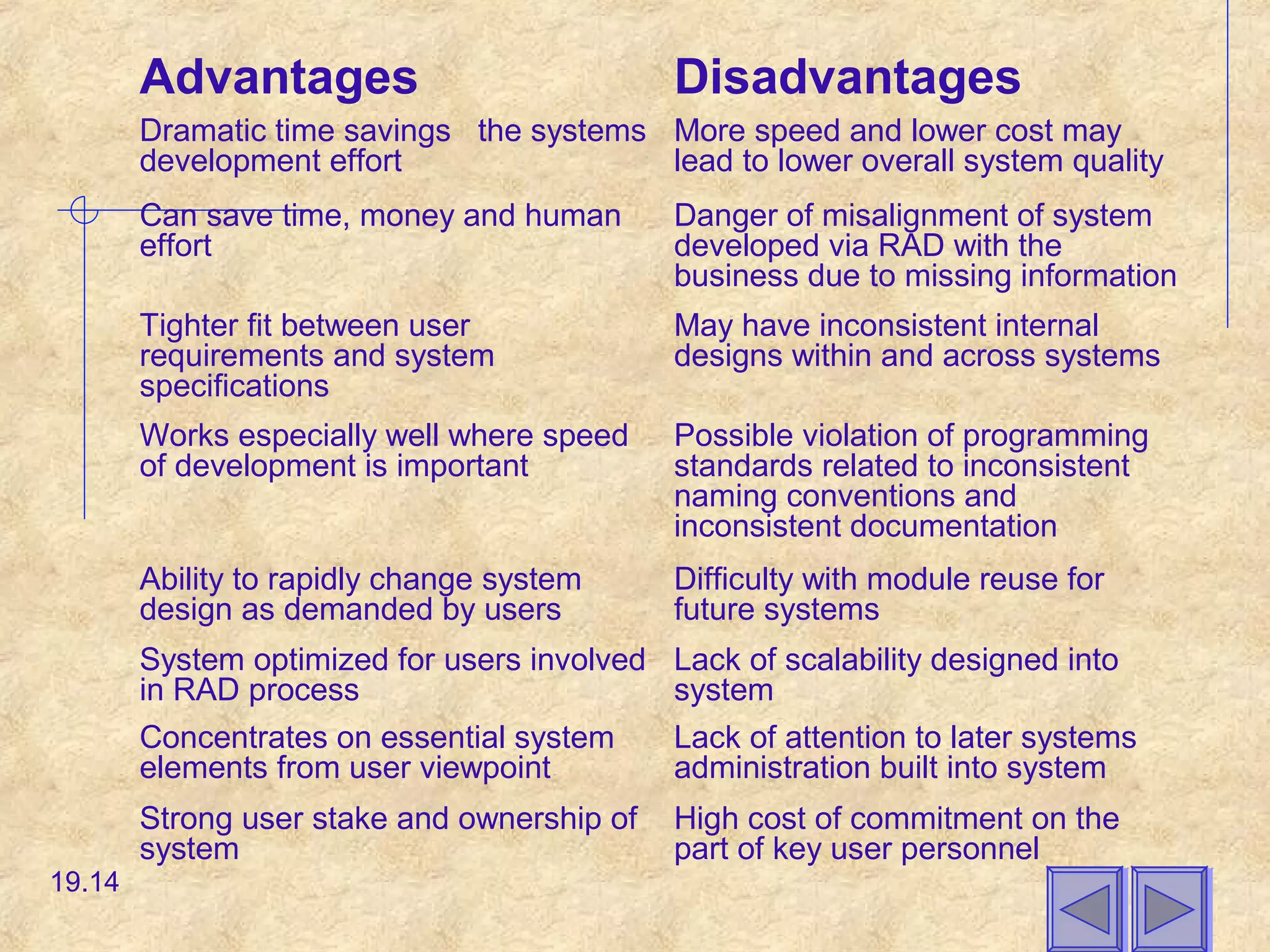
Advantages Disadvantages
Dramatic time savings the systems
development effort
More speed and lower cost may
lead to lower overall system quality
Can save time, money and human
effort
Danger of misalignment of system
developed via RAD with the
business due to missing information
Tighter fit between user
requirements and system
specifications
May have inconsistent internal
designs within and across systems
Works especially well where speed
of development is important
Possible violation of programming
standards related to inconsistent
naming conventions and
inconsistent documentation
Ability to rapidly change system
design as demanded by users
Difficulty with module reuse for
future systems
System optimized for users involved
in RAD process
Lack of scalability designed into
system
Concentrates on essential system
elements from user viewpoint
Lack of attention to later systems
administration built into system
Strong user stake and ownership of
system
High cost of commitment on the
part of key user personnel
19.14
Summary
Rapid Application Development
Approach (RAD)
Components of RAD
Conceptual pillars that support RAD
RAD success stories
Advantages and Disadvantages of RAD
19.15

Chapter19 rapid application development

  • 1.
    Copyright 2002 Prentice-Hall,Inc. Modern Systems Analysis and Design Third Edition Jeffrey A. Hoffer Joey F. George Joseph S. Valacich Chapter 19 Rapid Application Development 19.1
  • 2.
    Learning Objectives Explain theRapid Application Development (RAD) approach and how it differs from traditional approaches to information systems development Describe the systems development components essential to RAD Discuss the conceptual pillars that support the RAD approach Explain the advantages and disadvantages of RAD as an exclusive systems development methodology 19.2
  • 3.
    Rapid Applications Development (RAD) Systemsdevelopment methodology created to radically decrease the time needed to design and implement information systems radically. Five key factors 1. Extensive user involvement 2. Joint Application Design sessions 3. Prototyping 4. Integrated CASE tools 5. Code generators 19.3
  • 4.
    The Process ofDeveloping an Application Rapidly RAD is a general strategy rather than a single methodology Goals  To analyze a business process rapidly  To design a viable system solution through intense cooperation between users and developers  To get the finished application into the hands of the users quickly Traditional SDLC steps are followed, but phases are combined Iteration is limited to design and development phases 19.4
  • 5.
    Components of RAD Userinvolvement is key to success Prototyping is conducted in sessions similar to Joint Application Design (JAD) Prototyping screens become screens within the production system CASE tools are used to design the prototypes 19.5
  • 6.
    Approaches to RAD Martin’spillars of RAD  Four pillars  Tools  People  Methodology  Management  Conversion to RAD within organization should be done with a small group of well-trained and dedicated professionals, called a RAD cell  Over time, cell can grow until RAD is the predominant approach of the information systems unit 19.6
  • 7.
    Approaches to RAD McConnell’spillars of RAD  Four pillars  Avoid classic mistakes  Apply development fundamentals  Manage risks to avoid catastrophic setbacks  Apply schedule-oriented practices  Table 19-1 lists some of McConnell’s 36 classic development mistakes 19.7
  • 8.
    Approaches to RAD McConnell’spillars of RAD (continued)  Development mistakes  Weak personnel  Employees that are not as well trained in skills necessary for success of the project  Silver-bullet syndrome  Occurs when developers believe that a new and untried technology is all that is needed to cure the ills of any development project  Feature creep  More and more features are added to a system over course of development  Requirements gold-plating  Project may have more requirements than needed 19.8
  • 9.
    Approaches to RAD Softwaretools  Case tools can be used for  Prototyping  Code generation  Example: COOL:Gen  Visual Development Environments  Visual Basic  Delphi 19.9
  • 10.
    Approaches to RAD Martin’sRAD Life Cycle  Systems requirement determination is done in context of a discussion of business problems and business areas  User Design  End users and IS professionals participate in JAD workshops  CASE tools are used to support prototyping  Construction  Designer creates code using code generator  End user validates screens and other aspects of design  Cutover  New system is delivered to end users 19.10
  • 11.
    RAD Success Stories Inprise/Borland’sDelphi  U.S. Navy Fleet Modernization  Requirements  Move from three character-based systems to a unified, GUI-based system based on a single database  Reasons for choosing Delphi  Support for rapid prototyping  Promise of re-use of components  Outcome  System developed in 6 months  Estimated development savings of 50 percent  New system resulted in immediate 20 percent savings due to reduced maintenance costs 19.11
  • 12.
    RAD Success Stories Inprise/Borland’sDelphi (continued)  First National Bank of Chicago  Electronic Federal Tax Payment System  Delphi enabled rapid prototyping and development  10 months of development time  125 programmers  250 million rows of data and 55 gigabytes of data on-line 19.12
  • 13.
    RAD Success Stories VisualAgefor Java  Comdata  Modular Over the Road System (MOTRS)  IBM Global Services chosen as vendor  Servlets  Programming modules that expand the functions of the Web server  Applets  Embedded code run from client browser  Nine months to completion  Three months of research  Three months of coding  Three months of testing 19.13
  • 14.
    Advantages Disadvantages Dramatic timesavings the systems development effort More speed and lower cost may lead to lower overall system quality Can save time, money and human effort Danger of misalignment of system developed via RAD with the business due to missing information Tighter fit between user requirements and system specifications May have inconsistent internal designs within and across systems Works especially well where speed of development is important Possible violation of programming standards related to inconsistent naming conventions and inconsistent documentation Ability to rapidly change system design as demanded by users Difficulty with module reuse for future systems System optimized for users involved in RAD process Lack of scalability designed into system Concentrates on essential system elements from user viewpoint Lack of attention to later systems administration built into system Strong user stake and ownership of system High cost of commitment on the part of key user personnel 19.14
  • 15.
    Summary Rapid Application Development Approach(RAD) Components of RAD Conceptual pillars that support RAD RAD success stories Advantages and Disadvantages of RAD 19.15