Chapter 3:Initiating ProjectsNote: See the text itself for full citations.
Learning ObjectivesDescribe the five project management process groups, map them to the project management knowledge areas, discuss why organizations develop their own project management methodologies, and understand the importance of top management commitment and organizational standards in project managementDiscuss the initiating process used by Global Construction, including pre-initiating tasks, breaking large projects down into smaller projects, and initiating tasks2
Learning Objectives (continued)Prepare a business case to justify the need for a projectIdentify project stakeholders and perform a stakeholder analysisCreate a project charter to formally initiate a projectDescribe the importance of holding a good project kick-off meeting3
Project Management Process GroupsProject management process groups progress from initiating activities to planning activities, executing activities, monitoring and controlling activities, and closing activitiesA process is a series of actions directed toward a particular result4
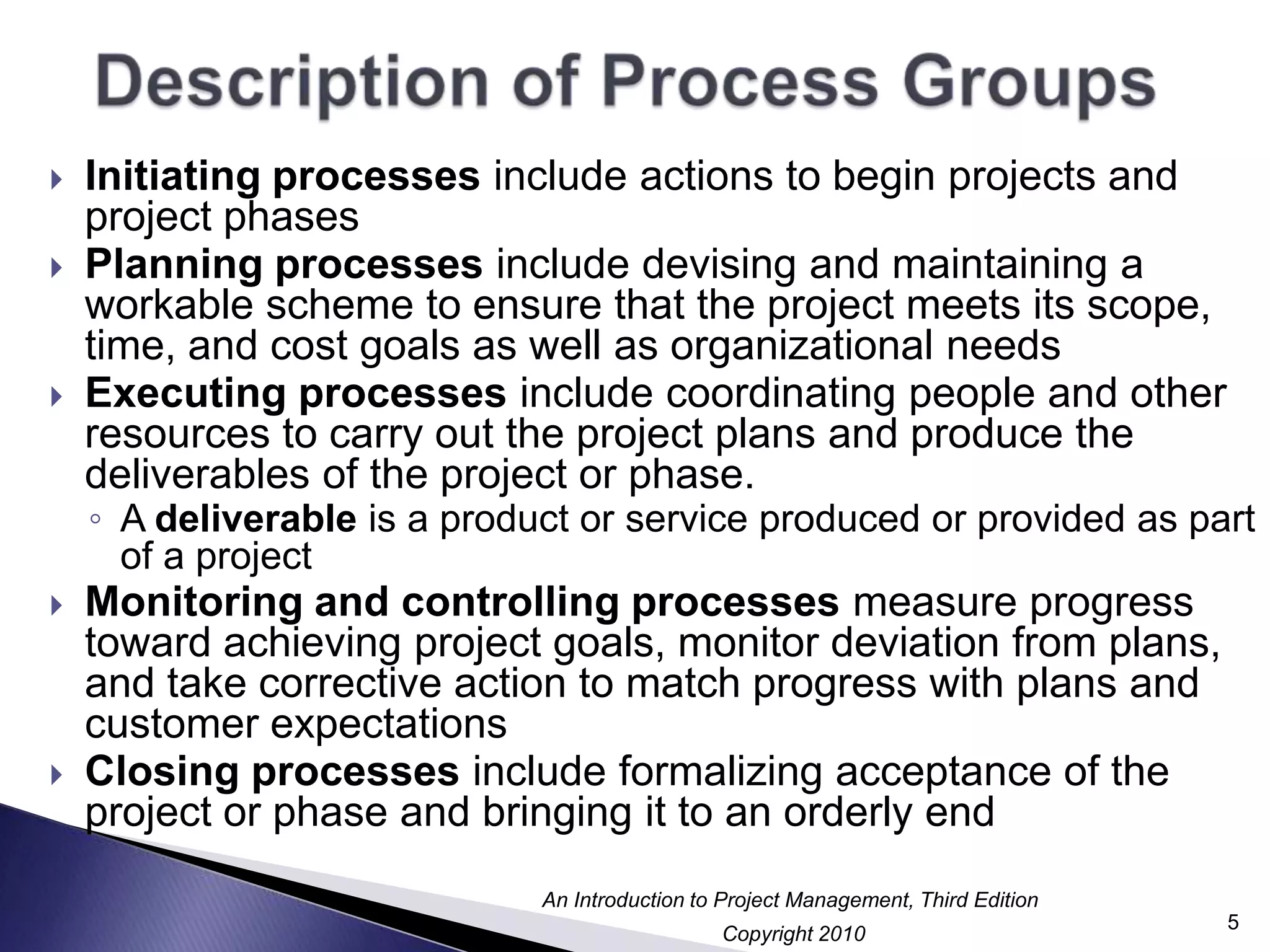
Description of Process GroupsInitiating processes include actions to begin projects and project phasesPlanning processes include devising and maintaining a workable scheme to ensure that the project meets its scope, time, and cost goals as well as organizational needsExecuting processes include coordinating people and other resources to carry out the project plans and produce the deliverables of the project or phase.A deliverable is a product or service produced or provided as part of a projectMonitoring and controlling processes measure progress toward achieving project goals, monitor deviation from plans, and take corrective action to match progress with plans and customer expectationsClosing processes include formalizing acceptance of the project or phase and bringing it to an orderly end5
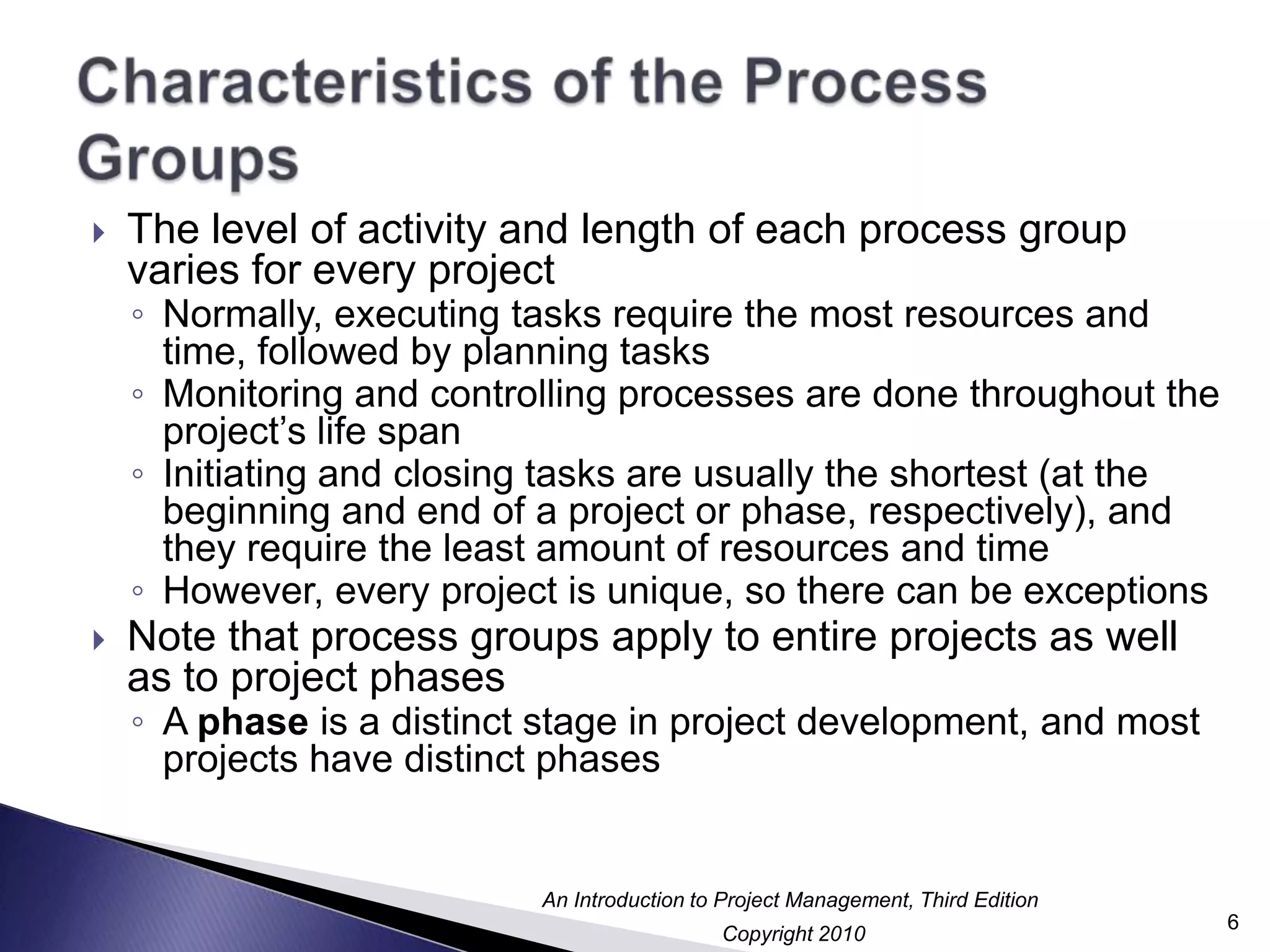
Characteristics of the Process GroupsThe level of activity and length of each process group varies for every projectNormally, executing tasks require the most resources and time, followed by planning tasksMonitoring and controlling processes are done throughout the project’s life spanInitiating and closing tasks are usually the shortest (at the beginning and end of a project or phase, respectively), and they require the least amount of resources and timeHowever, every project is unique, so there can be exceptionsNote that process groups apply to entire projects as well as to project phasesA phase is a distinct stage in project development, and most projects have distinct phases6
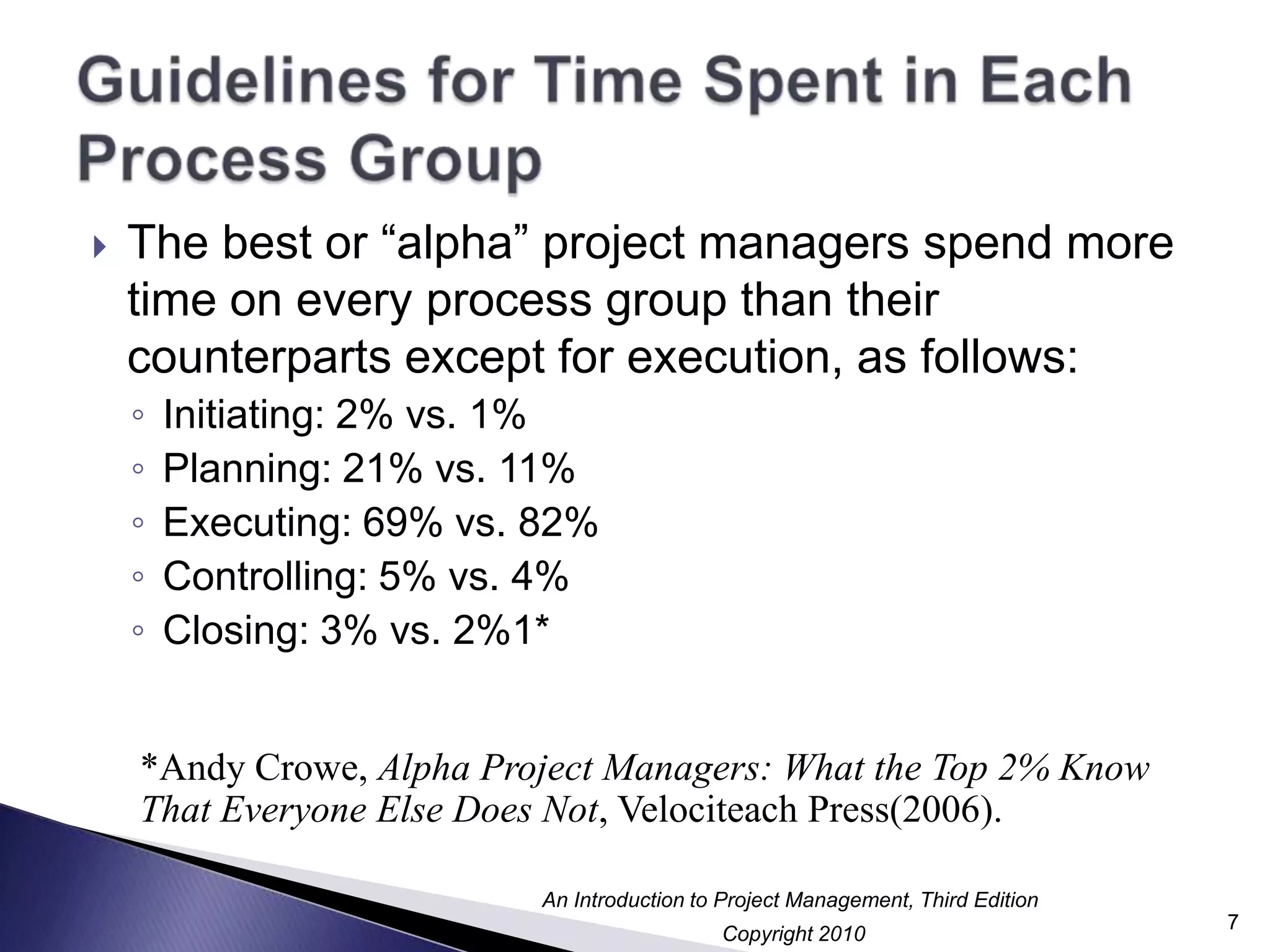
The best or “alpha” project managers spend more time on every process group than their counterparts except for execution, as follows:Initiating: 2% vs. 1%Planning: 21% vs. 11%Executing: 69% vs. 82%Controlling: 5% vs. 4%Closing: 3% vs. 2%1*Guidelines for Time Spent in Each Process Group*Andy Crowe, Alpha Project Managers: What the Top 2% Know That Everyone Else Does Not, Velociteach Press(2006).7
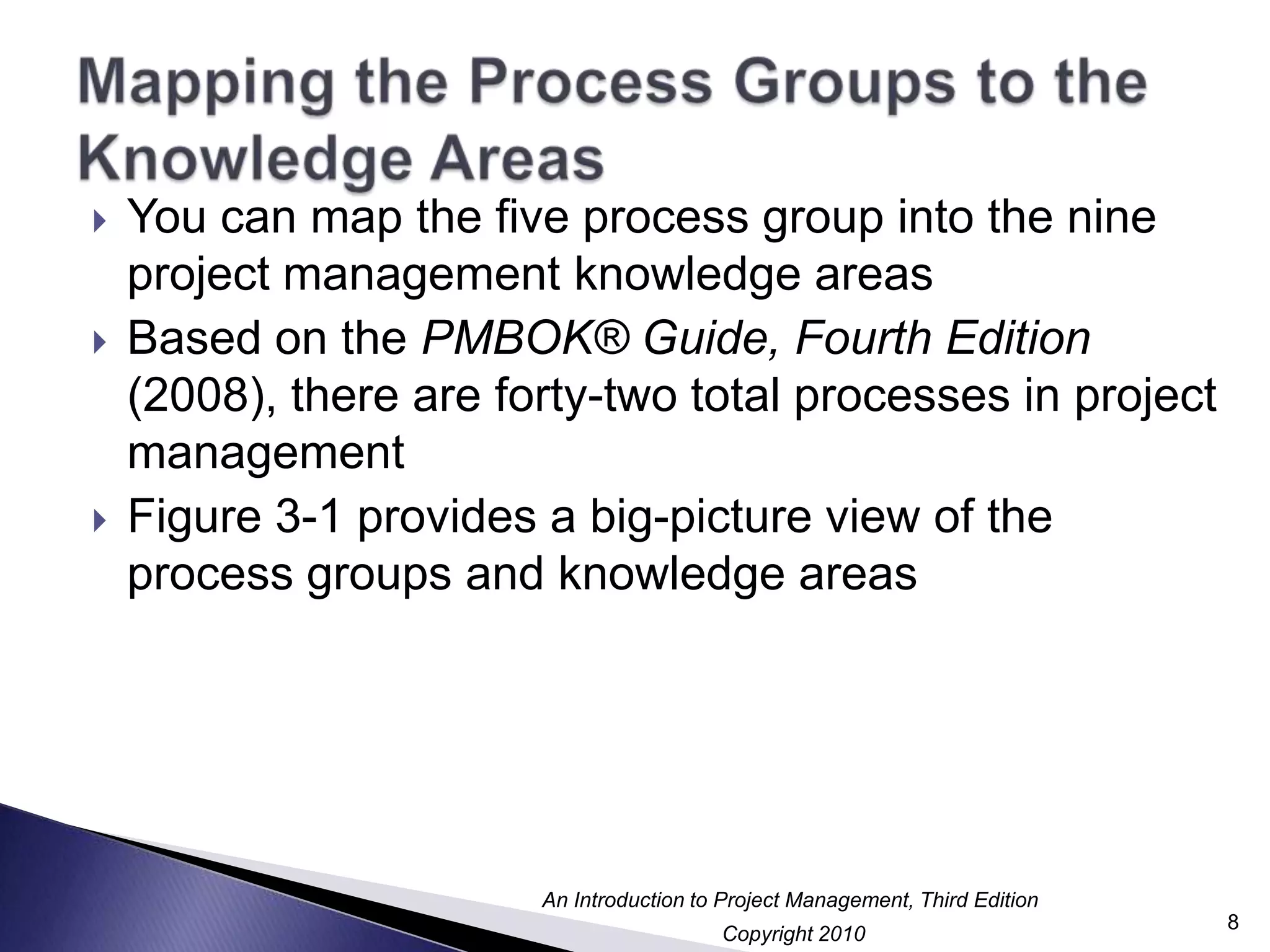
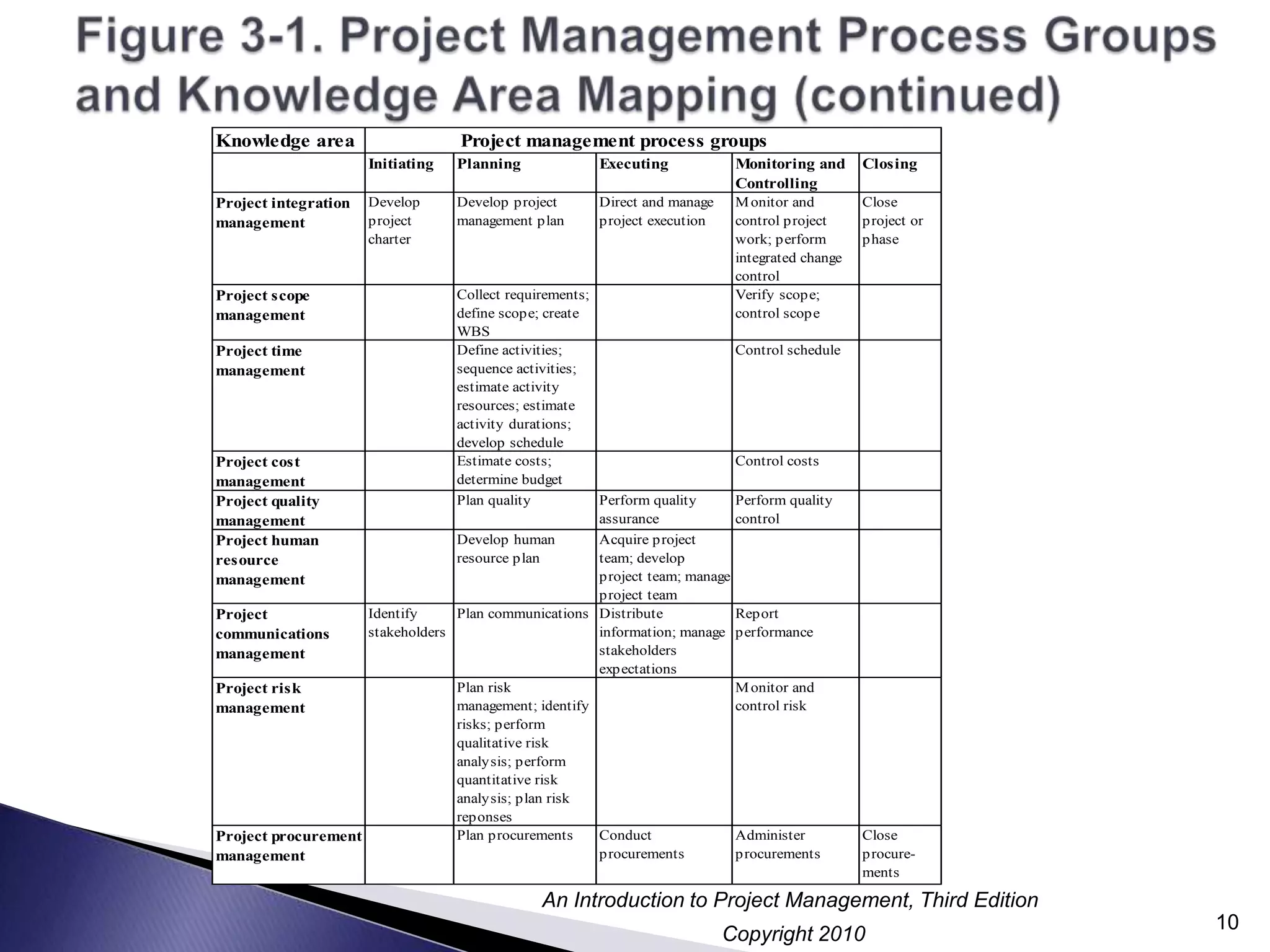
Mapping the Process Groups to the Knowledge AreasYou can map the five process group into the nine project management knowledge areasBased on the PMBOK® Guide, Fourth Edition (2008), there are forty-two total processes in project managementFigure 3-1 provides a big-picture view of the process groups and knowledge areas8
Figure 3-1. Project Management Process Groups and Knowledge Area Mapping 9
Figure 3-1. Project Management Process Groups and Knowledge Area Mapping (continued)10
Developing a Project Management MethodologyThe PMBOK® Guide is a standard that describes best practices for what should be done to manage a projectA methodology describes how things should be done, and different organizations often have different ways of doing thingsSuccessful organizations develop and follow a customized, formal project management process11
Other MethodologiesPRojects IN Controlled Environments (PRINCE2): Originally developed forIT projects, PRINCE2 was released in 1996 as a generic project management methodology by the U.K. Office of Government Commerce. It is the defacto standard in the U.K. and is used in over 50 countriesAgile methodologies: Many software development projects use an iterative workflow and incremental delivery of software. Popular agile methodologies include extreme programming, scrum, feature driven development, and lean software developmentRational Unified Process (RUP) framework: RUP is an iterative software development process that focuses on team productivity and delivers software best practices to all team membersSix Sigma: Many organizations have projects underway that use Six Sigma methodologies. Six Sigma’s target for perfection is the achievement of no more than 3.4 defects, errors, or mistakes per million opportunities12
What Went Right?Key findings from a five-year study by Ibbs and Reginato:Organizations with more mature project management practices have better project performance, which result in projects completed on time and within budget much more often than most projectsProject management maturity is strongly correlated with a more predictable project schedule and cost performanceOrganizations that follow good project management methodologies have lower direct costs of project management (6 percent) than those that do not (11 percent)*Several experts have warned against cutting back on project and portfolio management during touch economic times*William Ibbs and Justin Reginato, Quantifying the Value of Project Management, Project Management Institute (2002).13
The Importance of Top Management CommitmentWithout top management commitment, many projects will failSome projects have a senior manager called a champion who acts as a key proponent for a projectProjects are part of the larger organizational environment, and many factors that might affect a project are out of the project manager’s control14
How Top Managers Can Help Project Managers SucceedProvide adequate resourcesApprove unique project needs in a timely mannerEncourage cooperation from people in other parts of the organization and deal with political issuesMentor and coach them on leadership issuesDevelop and enforce organizational standardsSupport a project management office (PMO)15
Project Management Office (PMO)A project management office (PMO) is an organizational entity created to assist project managers in achieving project goalsA PMO can help development standards and methodologies, provide career paths for project managers, and assist project managers with training and certification16
Best PracticeIt is very important to follow best practices while initiating projects, especially to avoid major scope problems. Senior management must take an active role in following these best practices:Keep the scope realisticInvolve users from the startUse off-the-shelf hardware and software whenever possibleFollow good project management processes17
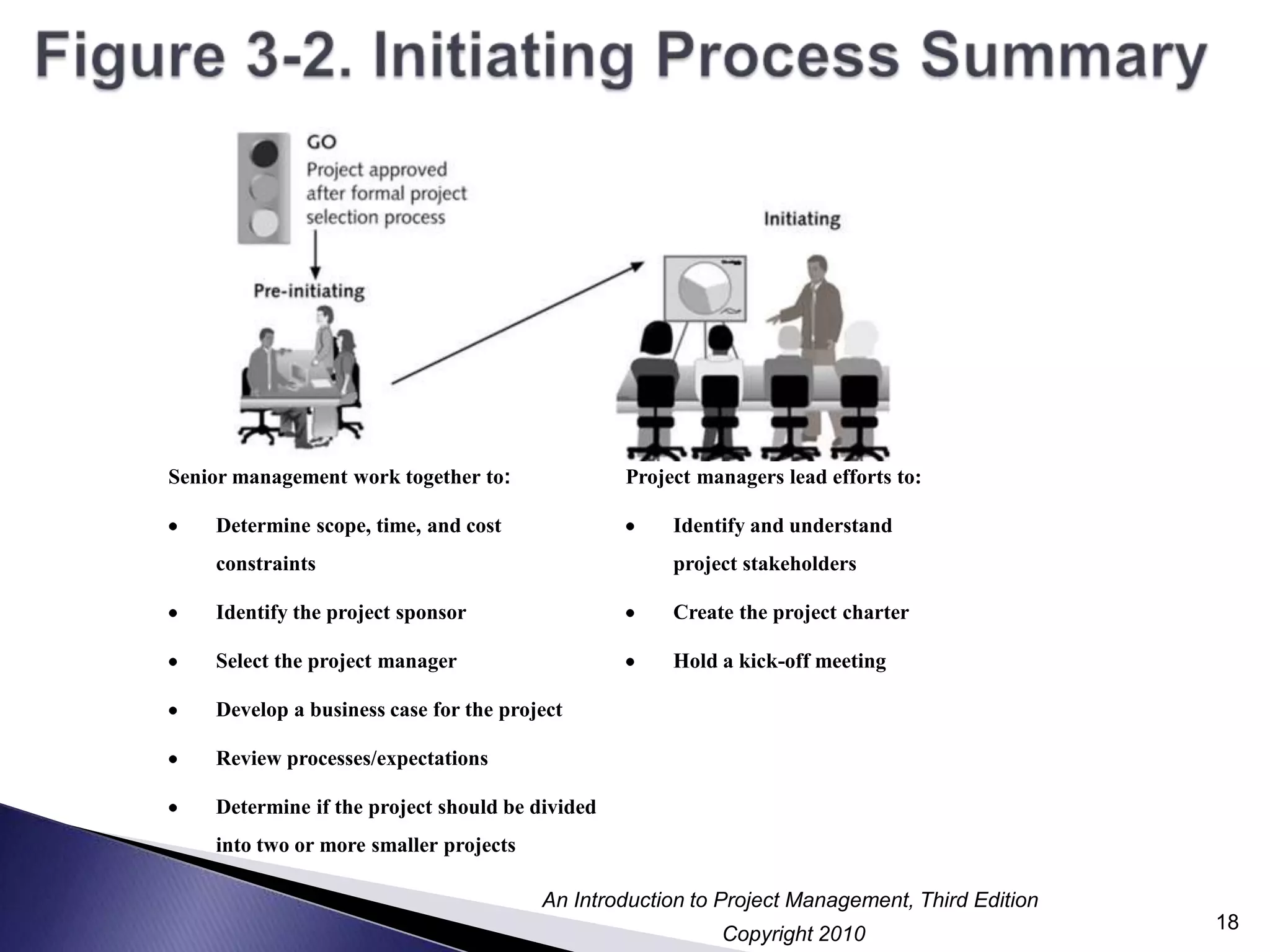
Figure 3-2. Initiating Process Summary18
Pre-initiating TasksIt is good practice to lay the groundwork for a project before it officially startsAfter a project is approved, senior managers should meet to accomplish the following tasks:Determine the scope, time, and cost constraints for the projectIdentify the project sponsorSelect the project managerMeet with the project manager to review the process and expectations for managing the projectDetermine if the project should be divided into two or more smaller projects (like the Just-In-Time Training Project was) because it is easier to manage smaller projects than larger ones19
Figure 3-3. Summary Information for the Just-In-Time Training Phase I Project20Scope GoalsInvestigate and document the training taken in the last two years by all internal employees.Determine what courses were taken, the cost of all training, the process for approving/assigning training, and the evaluation of the training by participants, if available.Survey employees to get their input on what training they believe they’ll need in the next two years, how they’d like to take the training (i.e., instructor-led in-house, instructor-led through a local college, university, or training company, Web-based, CD/ROM, etc.). Also hold focus groups to determine training needs.Recommend how to provide the most valuable training for Global Construction employees in the next two years.Determine the scope, time, and cost goals for the development and implementation of the Just-In-Time Training Phase II project.
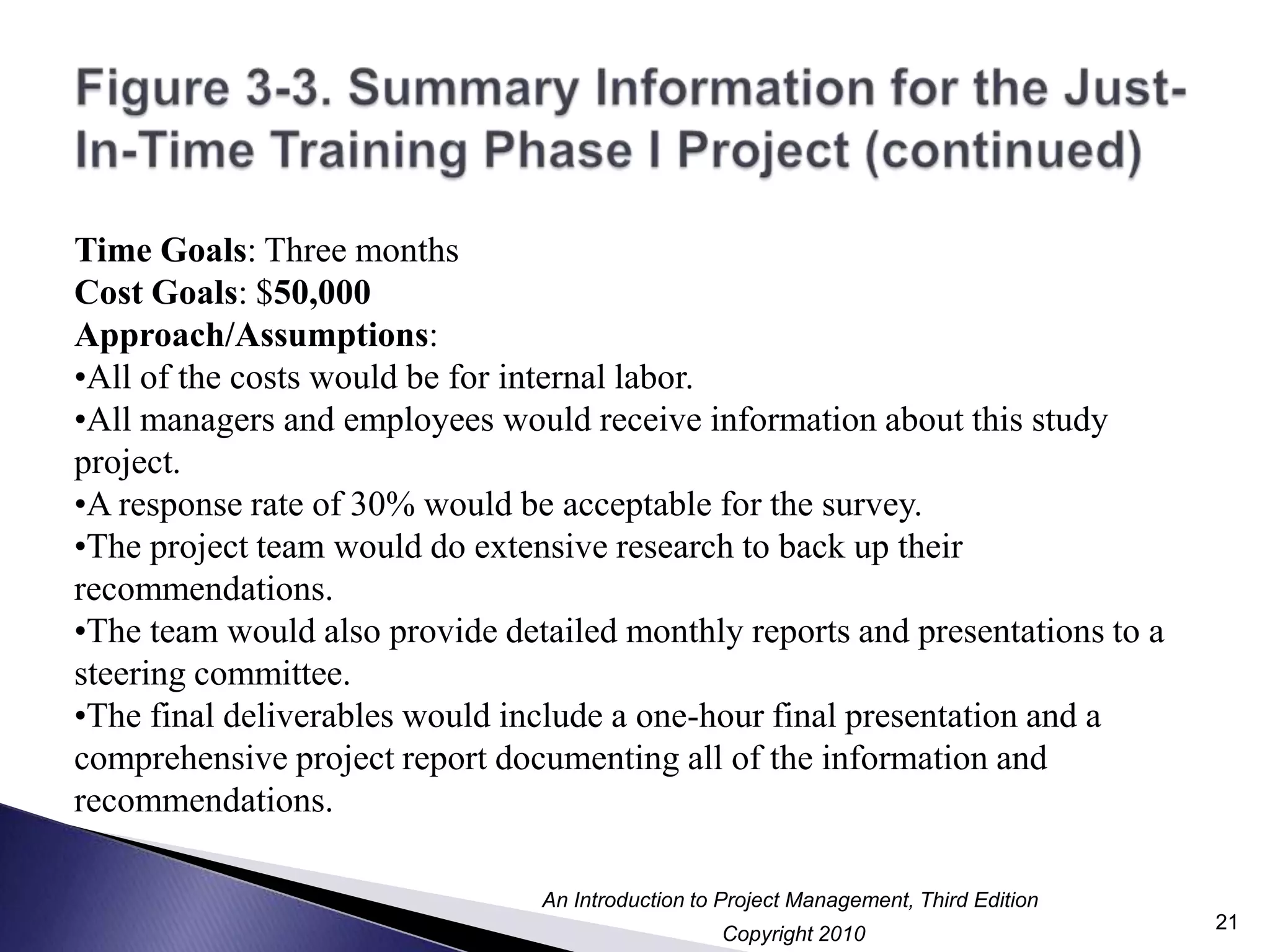
Figure 3-3. Summary Information for the Just-In-Time Training Phase I Project (continued)21Time Goals: Three monthsCost Goals: $50,000Approach/Assumptions:All of the costs would be for internal labor.All managers and employees would receive information about this study project. A response rate of 30% would be acceptable for the survey.The project team would do extensive research to back up their recommendations.The team would also provide detailed monthly reports and presentations to a steering committee.The final deliverables would include a one-hour final presentation and a comprehensive project report documenting all of the information and recommendations.
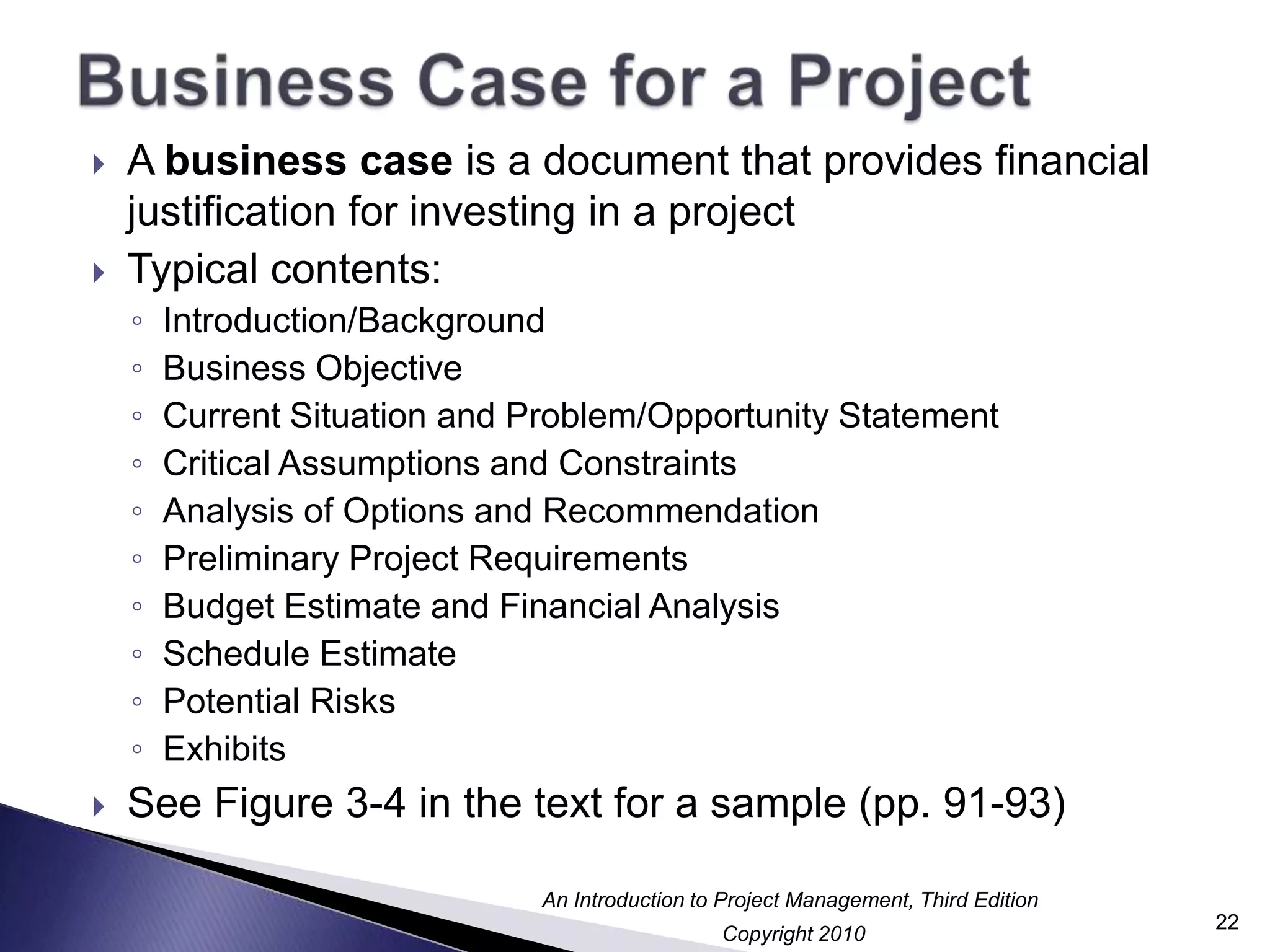
Business Case for a ProjectA business case is a document that provides financial justification for investing in a projectTypical contents:Introduction/BackgroundBusiness ObjectiveCurrent Situation and Problem/Opportunity StatementCritical Assumptions and ConstraintsAnalysis of Options and RecommendationPreliminary Project RequirementsBudget Estimate and Financial AnalysisSchedule EstimatePotential RisksExhibitsSee Figure 3-4 in the text for a sample (pp. 91-93)22
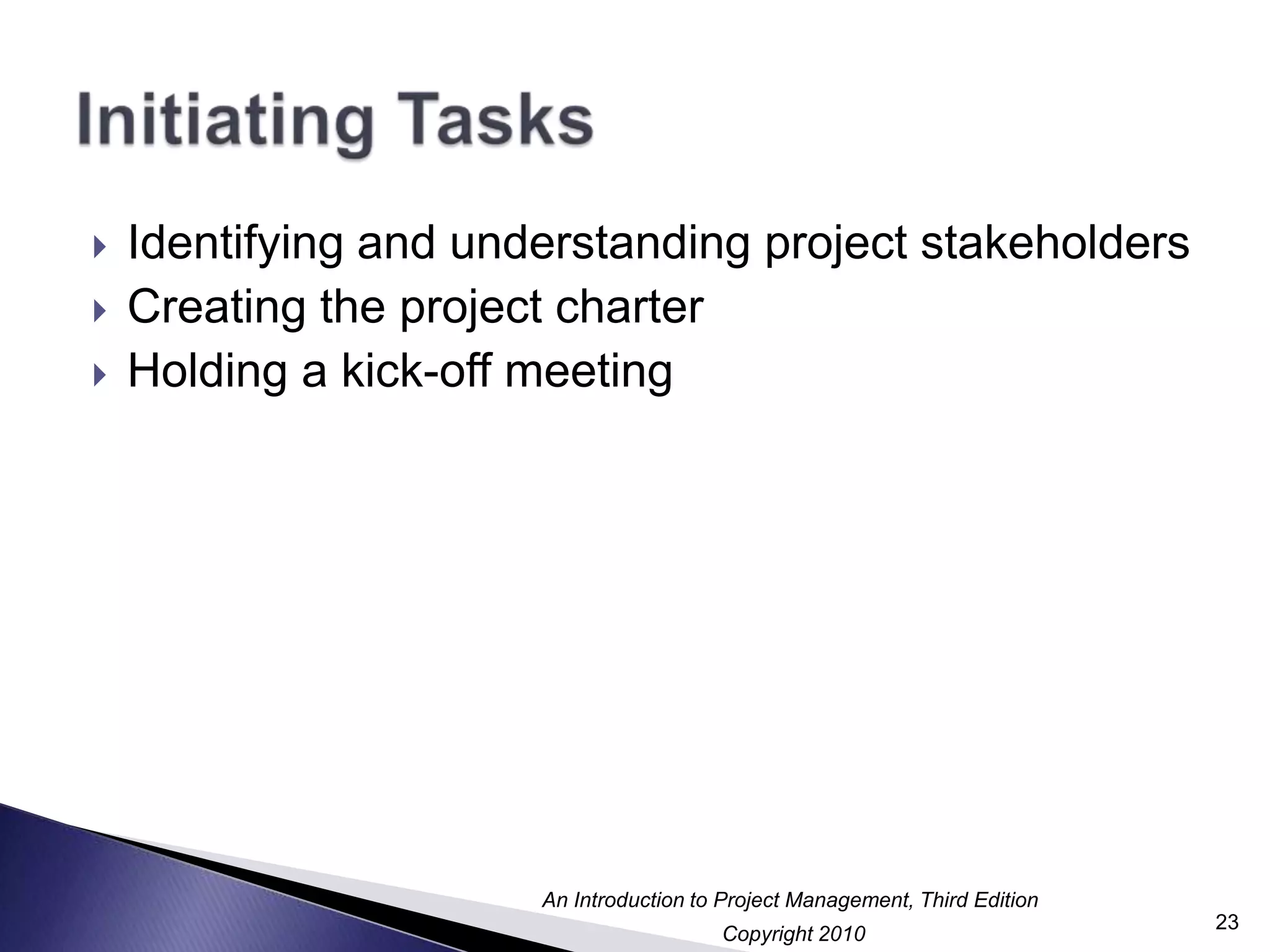
Initiating TasksIdentifying and understanding project stakeholdersCreating the project charterHolding a kick-off meeting23
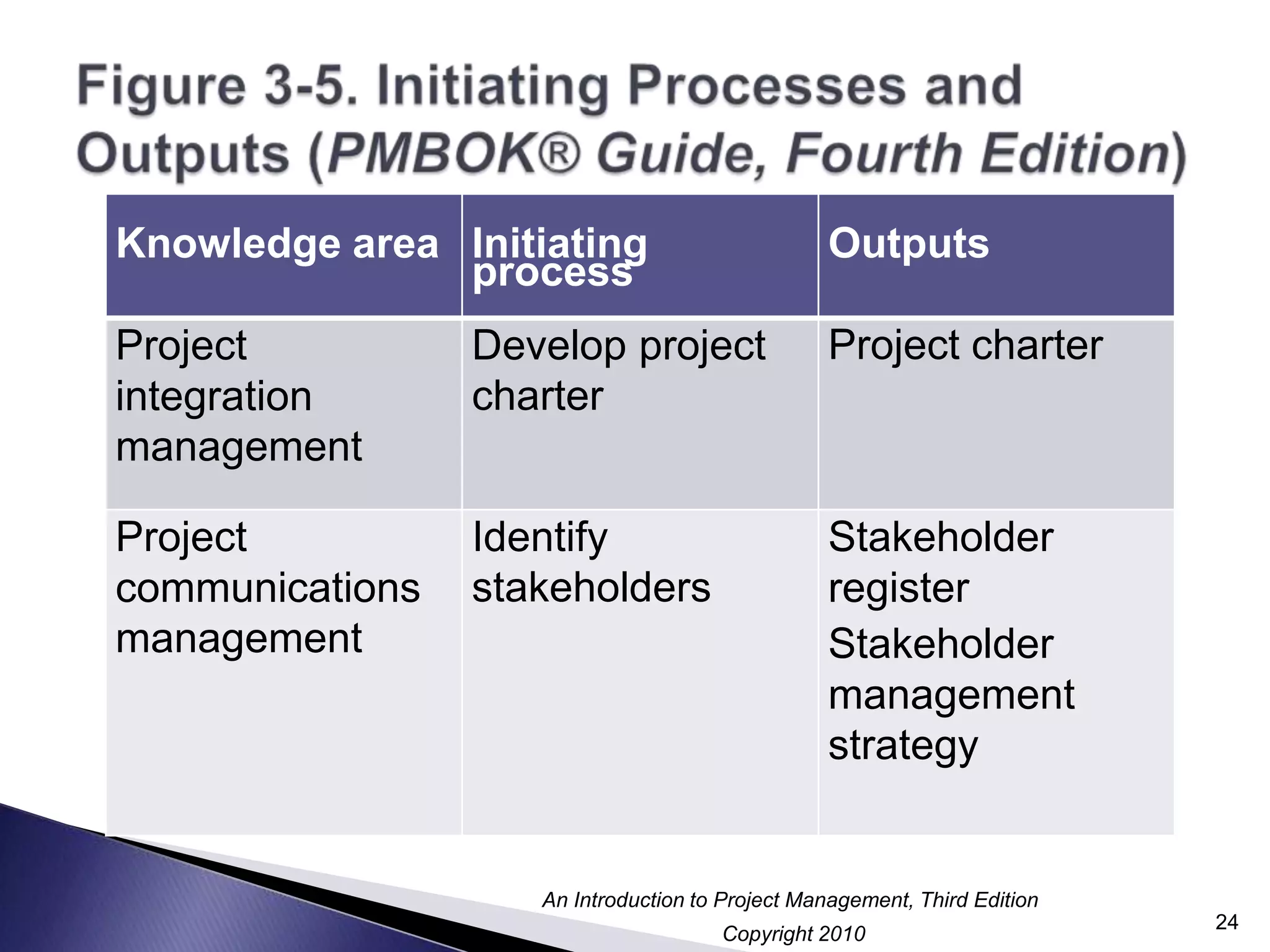
Figure 3-5. Initiating Processes and Outputs (PMBOK® Guide, Fourth Edition)24
Identifying and Understanding Project StakeholdersProject stakeholders are the people involved in or affected by project activities Internal project stakeholders generally include the project sponsor, project team, support staff, and internal customers for the project. Other internal stakeholders include top management, other functional managers, and other project managersExternal project stakeholders include the project’s customers (if they are external to the organization), competitors, suppliers, and other external groups that are potentially involved in or affected by the project, such as government officials and concerned citizens25
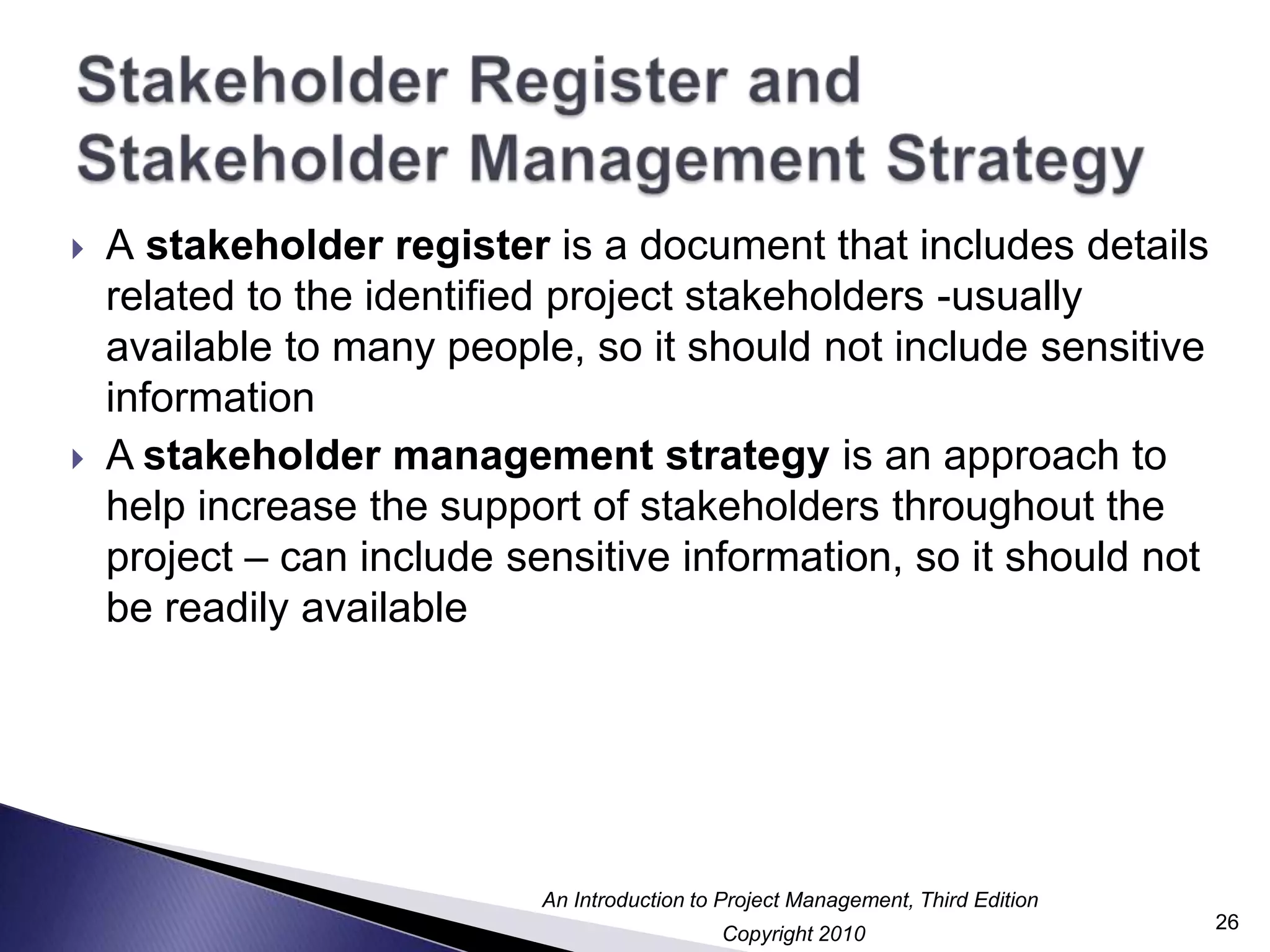
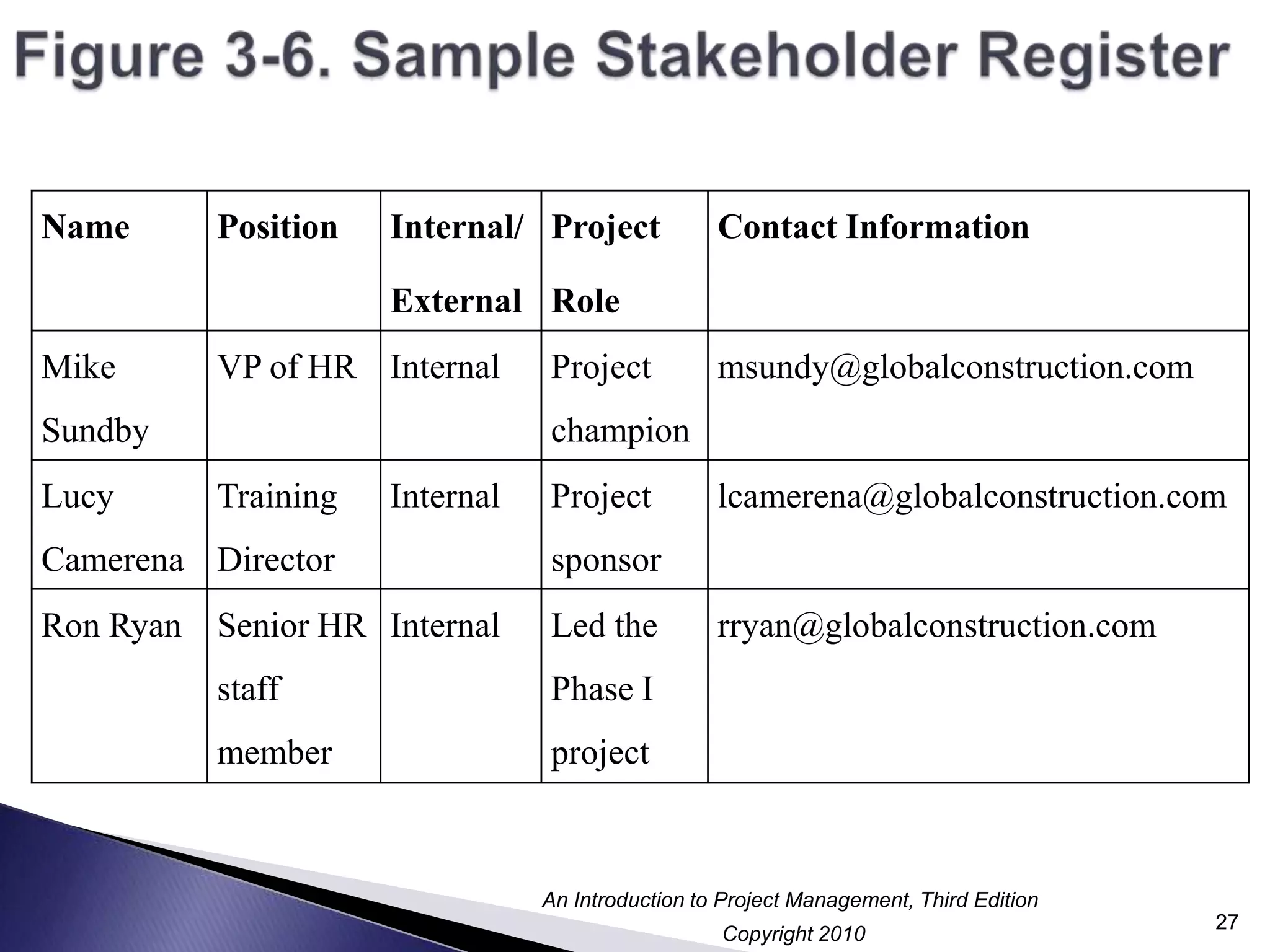
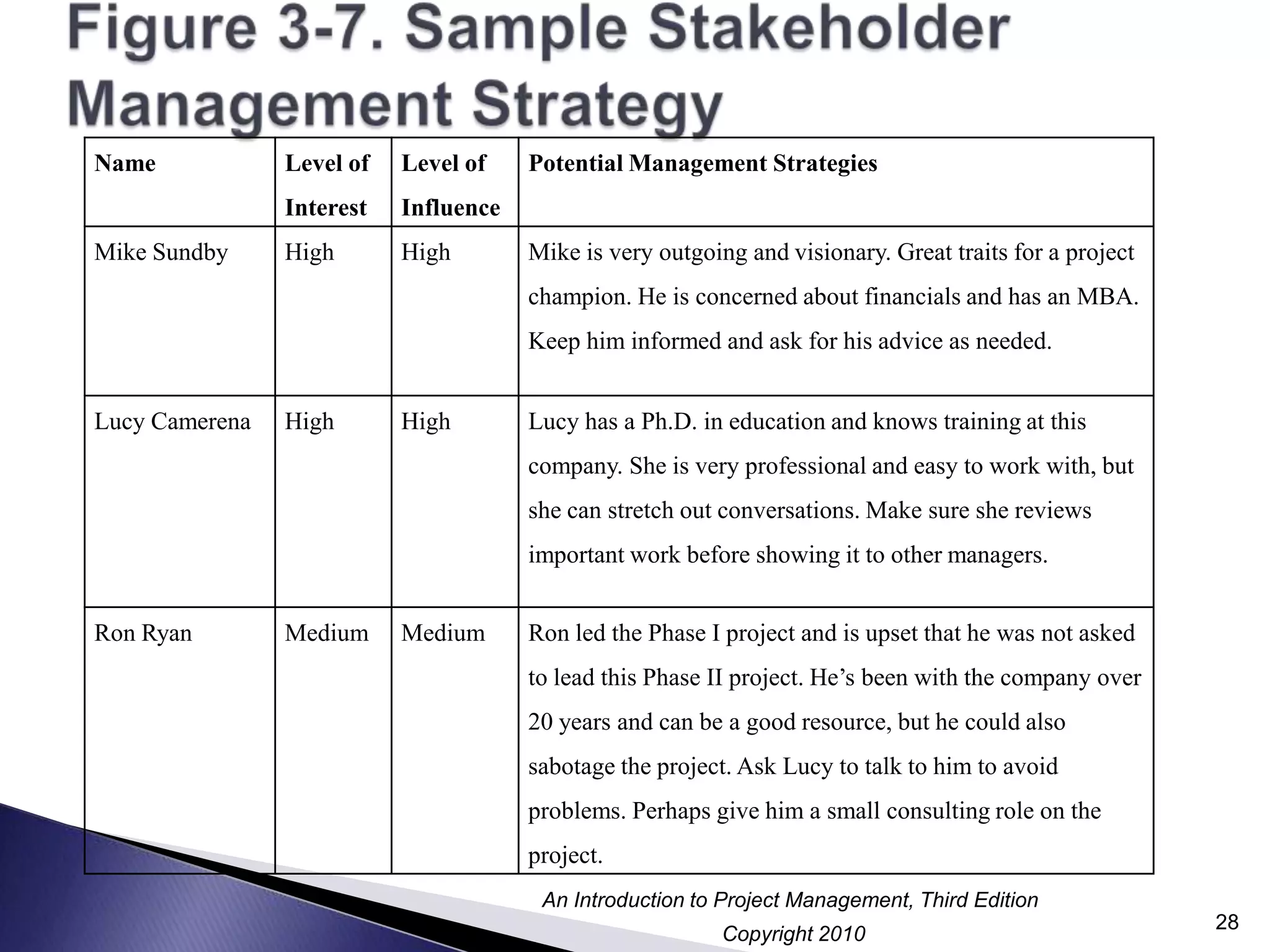
Stakeholder Register and Stakeholder Management StrategyA stakeholder register is a document that includes details related to the identified project stakeholders -usually available to many people, so it should not include sensitive informationA stakeholder management strategy is an approach to help increase the support of stakeholders throughout the project – can include sensitive information, so it should not be readily available26
Figure 3-6. Sample Stakeholder Register27
Figure 3-7. Sample Stakeholder Management Strategy28
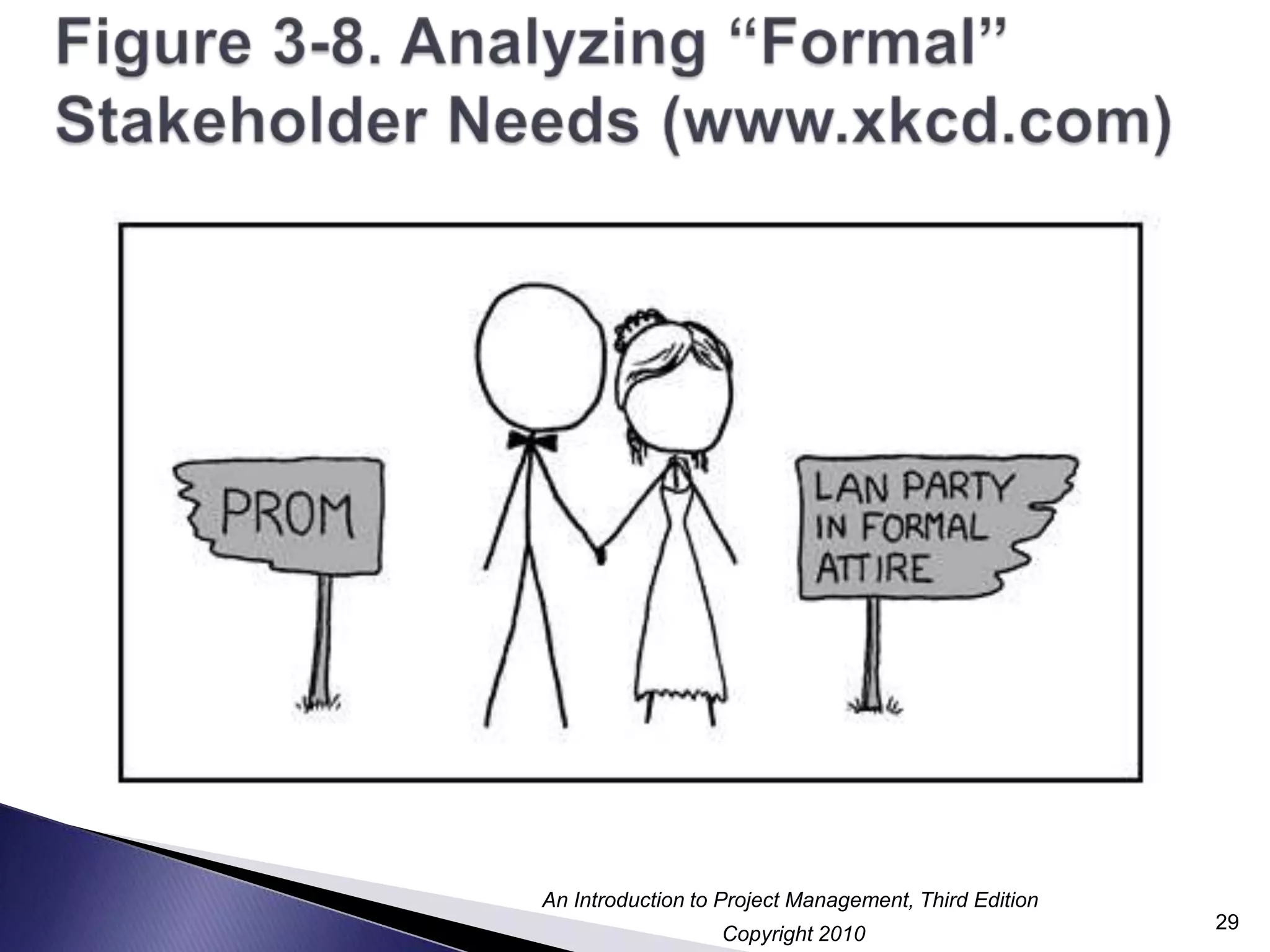
Figure 3-8. Analyzing “Formal” Stakeholder Needs (www.xkcd.com)29
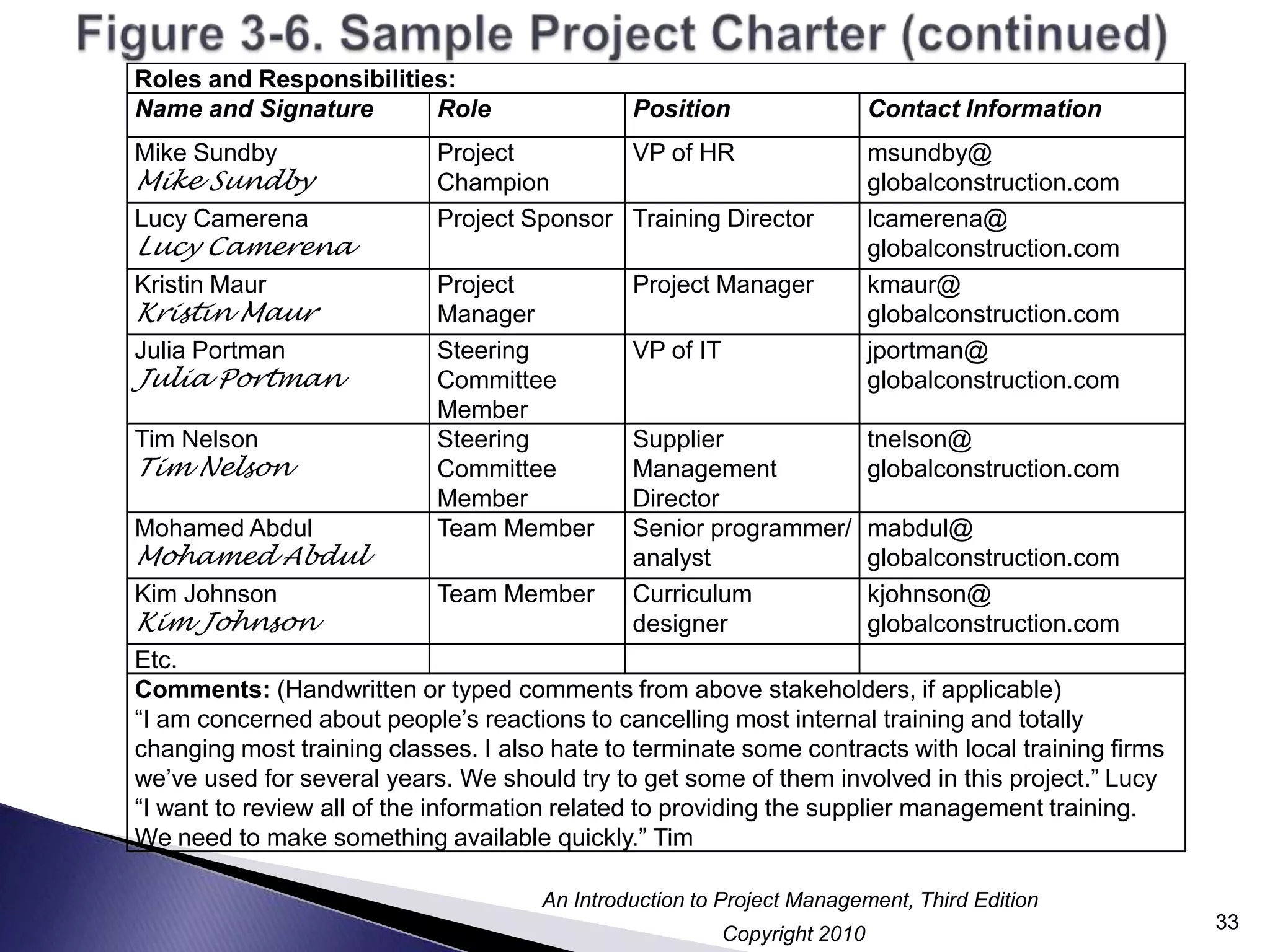
Creating a Project CharterA project charter is a document that formally recognizes the existence of a project and provides a summary of the project’s objectives and managementIt authorizes the project manager to use organizational resources to complete the projectIdeally, the project manager will play a major role in developing the project charterInstead of project charters, some organizations initiate projects using a simple letter of agreement or formal contractsA crucial part of the project charter is the sign-off section30
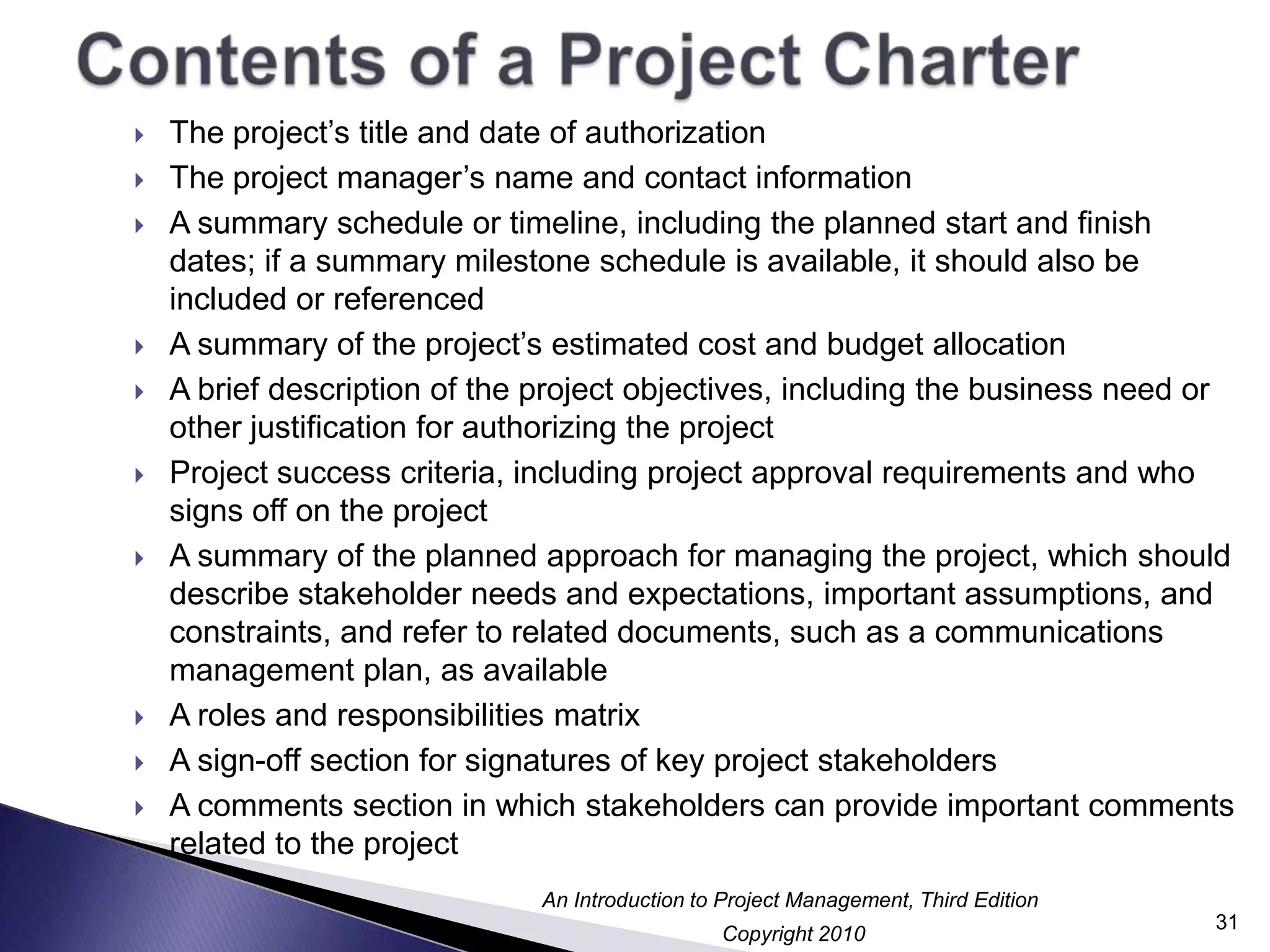
Contents of a Project CharterThe project’s title and date of authorizationThe project manager’s name and contact informationA summary schedule or timeline, including the planned start and finish dates; if a summary milestone schedule is available, it should also be included or referencedA summary of the project’s estimated cost and budget allocationA brief description of the project objectives, including the business need or other justification for authorizing the projectProject success criteria, including project approval requirements and who signs off on the projectA summary of the planned approach for managing the project, which should describe stakeholder needs and expectations, important assumptions, and constraints, and refer to related documents, such as a communications management plan, as availableA roles and responsibilities matrixA sign-off section for signatures of key project stakeholdersA comments section in which stakeholders can provide important comments related to the project31
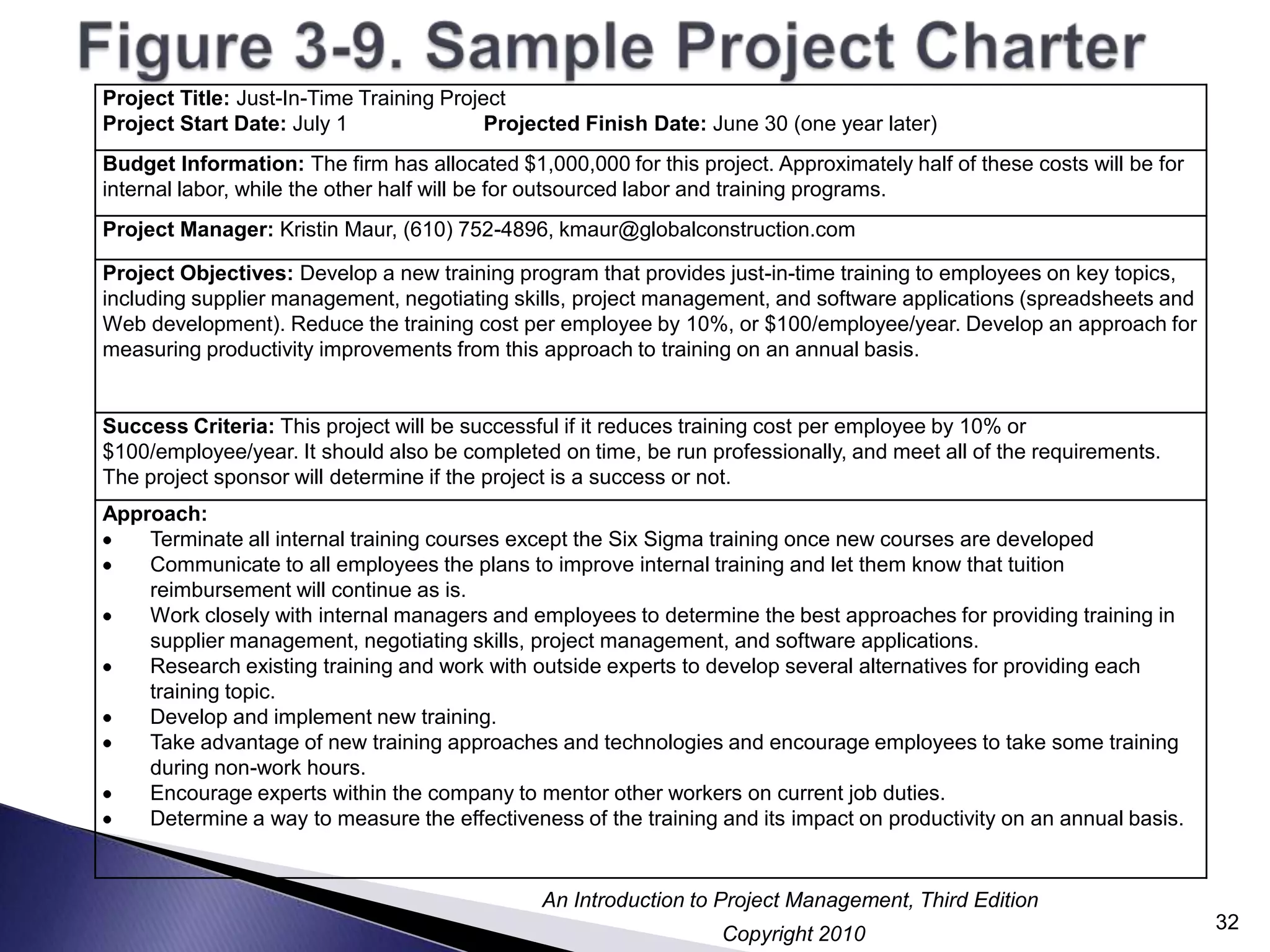
Figure 3-9. Sample Project Charter32
Figure 3-6. Sample Project Charter (continued)33
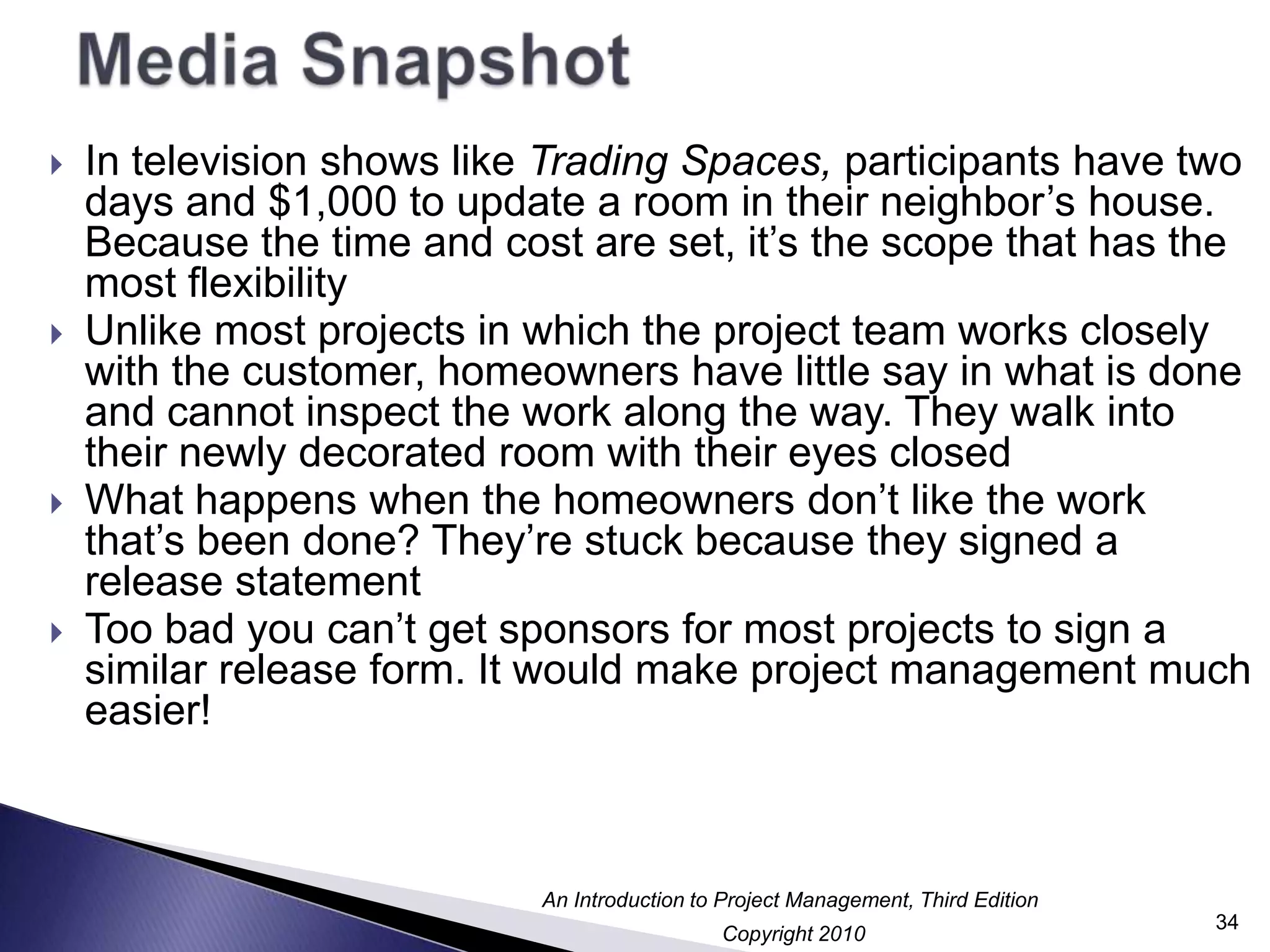
Media SnapshotIn television shows like Trading Spaces, participants have two days and $1,000 to update a room in their neighbor’s house. Because the time and cost are set, it’s the scope that has the most flexibilityUnlike most projects in which the project team works closely with the customer, homeowners have little say in what is done and cannot inspect the work along the way. They walk into their newly decorated room with their eyes closedWhat happens when the homeowners don’t like the work that’s been done? They’re stuck because they signed a release statementToo bad you can’t get sponsors for most projects to sign a similar release form. It would make project management much easier!34
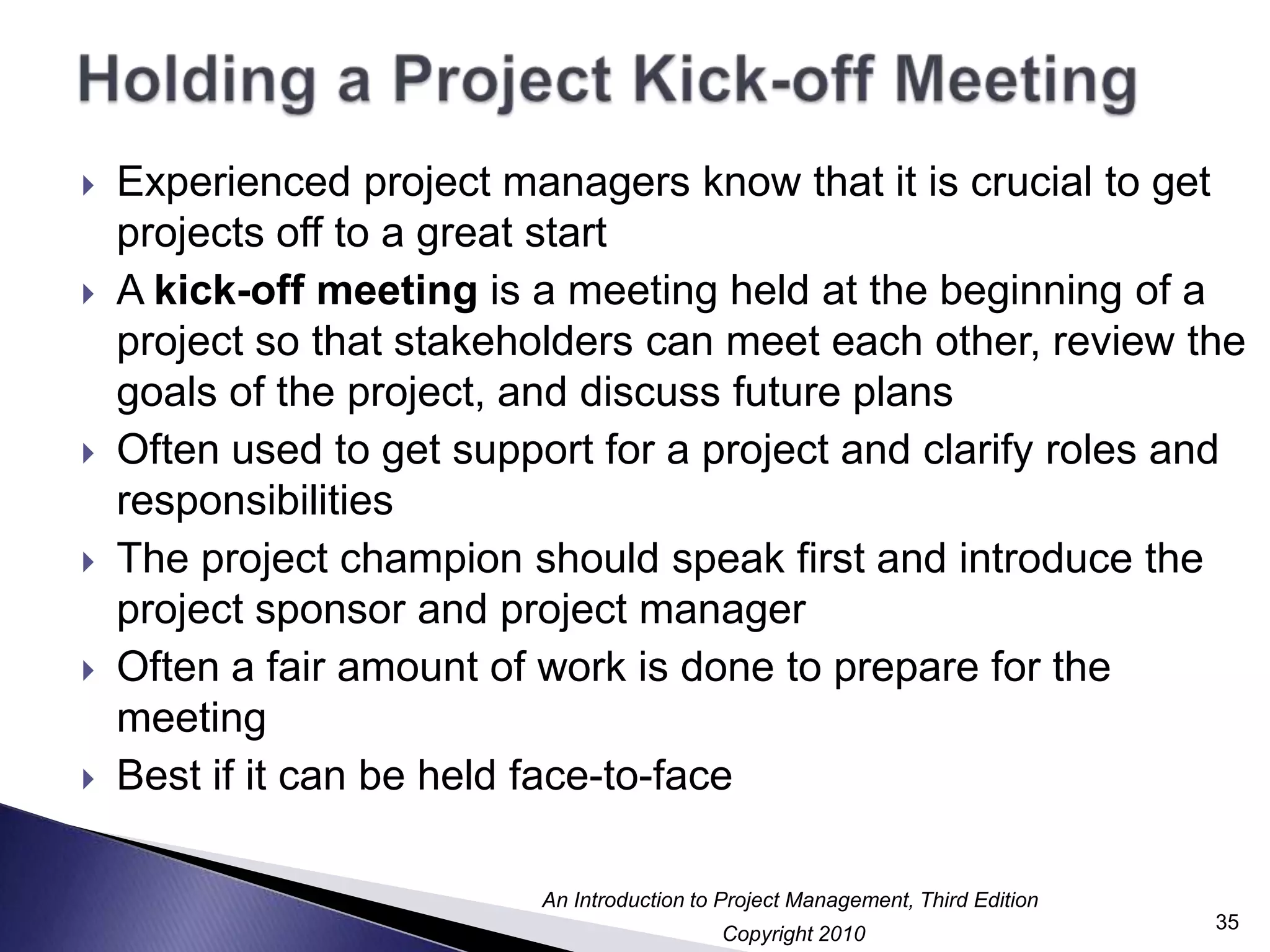
Holding a Project Kick-off MeetingExperienced project managers know that it is crucial to get projects off to a great startA kick-off meeting is a meeting held at the beginning of a project so that stakeholders can meet each other, review the goals of the project, and discuss future plansOften used to get support for a project and clarify roles and responsibilitiesThe project champion should speak first and introduce the project sponsor and project managerOften a fair amount of work is done to prepare for the meetingBest if it can be held face-to-face35
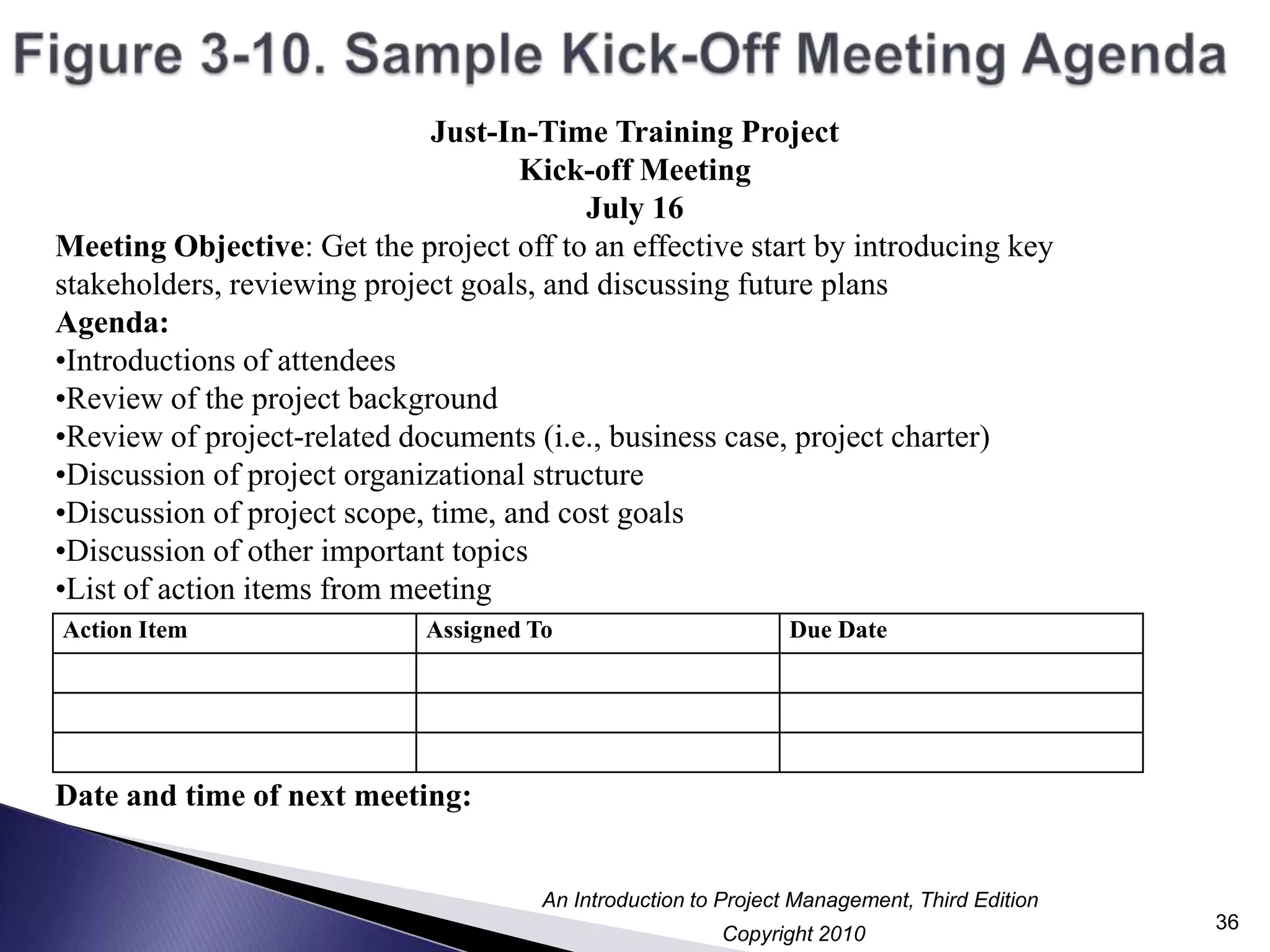
Figure 3-10. Sample Kick-Off Meeting Agenda36Just-In-Time Training ProjectKick-off MeetingJuly 16Meeting Objective: Get the project off to an effective start by introducing key stakeholders, reviewing project goals, and discussing future plans Agenda:Introductions of attendees
Review of the project background
Review of project-related documents (i.e., business case, project charter)

Chapter 3 Lecture Slides

  • 1.
    Chapter 3:Initiating ProjectsNote:See the text itself for full citations.
  • 2.
    Learning ObjectivesDescribe thefive project management process groups, map them to the project management knowledge areas, discuss why organizations develop their own project management methodologies, and understand the importance of top management commitment and organizational standards in project managementDiscuss the initiating process used by Global Construction, including pre-initiating tasks, breaking large projects down into smaller projects, and initiating tasks2
  • 3.
    Learning Objectives (continued)Preparea business case to justify the need for a projectIdentify project stakeholders and perform a stakeholder analysisCreate a project charter to formally initiate a projectDescribe the importance of holding a good project kick-off meeting3
  • 4.
    Project Management ProcessGroupsProject management process groups progress from initiating activities to planning activities, executing activities, monitoring and controlling activities, and closing activitiesA process is a series of actions directed toward a particular result4
  • 5.
    Description of ProcessGroupsInitiating processes include actions to begin projects and project phasesPlanning processes include devising and maintaining a workable scheme to ensure that the project meets its scope, time, and cost goals as well as organizational needsExecuting processes include coordinating people and other resources to carry out the project plans and produce the deliverables of the project or phase.A deliverable is a product or service produced or provided as part of a projectMonitoring and controlling processes measure progress toward achieving project goals, monitor deviation from plans, and take corrective action to match progress with plans and customer expectationsClosing processes include formalizing acceptance of the project or phase and bringing it to an orderly end5
  • 6.
    Characteristics of theProcess GroupsThe level of activity and length of each process group varies for every projectNormally, executing tasks require the most resources and time, followed by planning tasksMonitoring and controlling processes are done throughout the project’s life spanInitiating and closing tasks are usually the shortest (at the beginning and end of a project or phase, respectively), and they require the least amount of resources and timeHowever, every project is unique, so there can be exceptionsNote that process groups apply to entire projects as well as to project phasesA phase is a distinct stage in project development, and most projects have distinct phases6
  • 7.
    The best or“alpha” project managers spend more time on every process group than their counterparts except for execution, as follows:Initiating: 2% vs. 1%Planning: 21% vs. 11%Executing: 69% vs. 82%Controlling: 5% vs. 4%Closing: 3% vs. 2%1*Guidelines for Time Spent in Each Process Group*Andy Crowe, Alpha Project Managers: What the Top 2% Know That Everyone Else Does Not, Velociteach Press(2006).7
  • 8.
    Mapping the ProcessGroups to the Knowledge AreasYou can map the five process group into the nine project management knowledge areasBased on the PMBOK® Guide, Fourth Edition (2008), there are forty-two total processes in project managementFigure 3-1 provides a big-picture view of the process groups and knowledge areas8
  • 9.
    Figure 3-1. ProjectManagement Process Groups and Knowledge Area Mapping 9
  • 10.
    Figure 3-1. ProjectManagement Process Groups and Knowledge Area Mapping (continued)10
  • 11.
    Developing a ProjectManagement MethodologyThe PMBOK® Guide is a standard that describes best practices for what should be done to manage a projectA methodology describes how things should be done, and different organizations often have different ways of doing thingsSuccessful organizations develop and follow a customized, formal project management process11
  • 12.
    Other MethodologiesPRojects INControlled Environments (PRINCE2): Originally developed forIT projects, PRINCE2 was released in 1996 as a generic project management methodology by the U.K. Office of Government Commerce. It is the defacto standard in the U.K. and is used in over 50 countriesAgile methodologies: Many software development projects use an iterative workflow and incremental delivery of software. Popular agile methodologies include extreme programming, scrum, feature driven development, and lean software developmentRational Unified Process (RUP) framework: RUP is an iterative software development process that focuses on team productivity and delivers software best practices to all team membersSix Sigma: Many organizations have projects underway that use Six Sigma methodologies. Six Sigma’s target for perfection is the achievement of no more than 3.4 defects, errors, or mistakes per million opportunities12
  • 13.
    What Went Right?Keyfindings from a five-year study by Ibbs and Reginato:Organizations with more mature project management practices have better project performance, which result in projects completed on time and within budget much more often than most projectsProject management maturity is strongly correlated with a more predictable project schedule and cost performanceOrganizations that follow good project management methodologies have lower direct costs of project management (6 percent) than those that do not (11 percent)*Several experts have warned against cutting back on project and portfolio management during touch economic times*William Ibbs and Justin Reginato, Quantifying the Value of Project Management, Project Management Institute (2002).13
  • 14.
    The Importance ofTop Management CommitmentWithout top management commitment, many projects will failSome projects have a senior manager called a champion who acts as a key proponent for a projectProjects are part of the larger organizational environment, and many factors that might affect a project are out of the project manager’s control14
  • 15.
    How Top ManagersCan Help Project Managers SucceedProvide adequate resourcesApprove unique project needs in a timely mannerEncourage cooperation from people in other parts of the organization and deal with political issuesMentor and coach them on leadership issuesDevelop and enforce organizational standardsSupport a project management office (PMO)15
  • 16.
    Project Management Office(PMO)A project management office (PMO) is an organizational entity created to assist project managers in achieving project goalsA PMO can help development standards and methodologies, provide career paths for project managers, and assist project managers with training and certification16
  • 17.
    Best PracticeIt isvery important to follow best practices while initiating projects, especially to avoid major scope problems. Senior management must take an active role in following these best practices:Keep the scope realisticInvolve users from the startUse off-the-shelf hardware and software whenever possibleFollow good project management processes17
  • 18.
    Figure 3-2. InitiatingProcess Summary18
  • 19.
    Pre-initiating TasksIt isgood practice to lay the groundwork for a project before it officially startsAfter a project is approved, senior managers should meet to accomplish the following tasks:Determine the scope, time, and cost constraints for the projectIdentify the project sponsorSelect the project managerMeet with the project manager to review the process and expectations for managing the projectDetermine if the project should be divided into two or more smaller projects (like the Just-In-Time Training Project was) because it is easier to manage smaller projects than larger ones19
  • 20.
    Figure 3-3. SummaryInformation for the Just-In-Time Training Phase I Project20Scope GoalsInvestigate and document the training taken in the last two years by all internal employees.Determine what courses were taken, the cost of all training, the process for approving/assigning training, and the evaluation of the training by participants, if available.Survey employees to get their input on what training they believe they’ll need in the next two years, how they’d like to take the training (i.e., instructor-led in-house, instructor-led through a local college, university, or training company, Web-based, CD/ROM, etc.). Also hold focus groups to determine training needs.Recommend how to provide the most valuable training for Global Construction employees in the next two years.Determine the scope, time, and cost goals for the development and implementation of the Just-In-Time Training Phase II project.
  • 21.
    Figure 3-3. SummaryInformation for the Just-In-Time Training Phase I Project (continued)21Time Goals: Three monthsCost Goals: $50,000Approach/Assumptions:All of the costs would be for internal labor.All managers and employees would receive information about this study project. A response rate of 30% would be acceptable for the survey.The project team would do extensive research to back up their recommendations.The team would also provide detailed monthly reports and presentations to a steering committee.The final deliverables would include a one-hour final presentation and a comprehensive project report documenting all of the information and recommendations.
  • 22.
    Business Case fora ProjectA business case is a document that provides financial justification for investing in a projectTypical contents:Introduction/BackgroundBusiness ObjectiveCurrent Situation and Problem/Opportunity StatementCritical Assumptions and ConstraintsAnalysis of Options and RecommendationPreliminary Project RequirementsBudget Estimate and Financial AnalysisSchedule EstimatePotential RisksExhibitsSee Figure 3-4 in the text for a sample (pp. 91-93)22
  • 23.
    Initiating TasksIdentifying andunderstanding project stakeholdersCreating the project charterHolding a kick-off meeting23
  • 24.
    Figure 3-5. InitiatingProcesses and Outputs (PMBOK® Guide, Fourth Edition)24
  • 25.
    Identifying and UnderstandingProject StakeholdersProject stakeholders are the people involved in or affected by project activities Internal project stakeholders generally include the project sponsor, project team, support staff, and internal customers for the project. Other internal stakeholders include top management, other functional managers, and other project managersExternal project stakeholders include the project’s customers (if they are external to the organization), competitors, suppliers, and other external groups that are potentially involved in or affected by the project, such as government officials and concerned citizens25
  • 26.
    Stakeholder Register andStakeholder Management StrategyA stakeholder register is a document that includes details related to the identified project stakeholders -usually available to many people, so it should not include sensitive informationA stakeholder management strategy is an approach to help increase the support of stakeholders throughout the project – can include sensitive information, so it should not be readily available26
  • 27.
    Figure 3-6. SampleStakeholder Register27
  • 28.
    Figure 3-7. SampleStakeholder Management Strategy28
  • 29.
    Figure 3-8. Analyzing“Formal” Stakeholder Needs (www.xkcd.com)29
  • 30.
    Creating a ProjectCharterA project charter is a document that formally recognizes the existence of a project and provides a summary of the project’s objectives and managementIt authorizes the project manager to use organizational resources to complete the projectIdeally, the project manager will play a major role in developing the project charterInstead of project charters, some organizations initiate projects using a simple letter of agreement or formal contractsA crucial part of the project charter is the sign-off section30
  • 31.
    Contents of aProject CharterThe project’s title and date of authorizationThe project manager’s name and contact informationA summary schedule or timeline, including the planned start and finish dates; if a summary milestone schedule is available, it should also be included or referencedA summary of the project’s estimated cost and budget allocationA brief description of the project objectives, including the business need or other justification for authorizing the projectProject success criteria, including project approval requirements and who signs off on the projectA summary of the planned approach for managing the project, which should describe stakeholder needs and expectations, important assumptions, and constraints, and refer to related documents, such as a communications management plan, as availableA roles and responsibilities matrixA sign-off section for signatures of key project stakeholdersA comments section in which stakeholders can provide important comments related to the project31
  • 32.
    Figure 3-9. SampleProject Charter32
  • 33.
    Figure 3-6. SampleProject Charter (continued)33
  • 34.
    Media SnapshotIn televisionshows like Trading Spaces, participants have two days and $1,000 to update a room in their neighbor’s house. Because the time and cost are set, it’s the scope that has the most flexibilityUnlike most projects in which the project team works closely with the customer, homeowners have little say in what is done and cannot inspect the work along the way. They walk into their newly decorated room with their eyes closedWhat happens when the homeowners don’t like the work that’s been done? They’re stuck because they signed a release statementToo bad you can’t get sponsors for most projects to sign a similar release form. It would make project management much easier!34
  • 35.
    Holding a ProjectKick-off MeetingExperienced project managers know that it is crucial to get projects off to a great startA kick-off meeting is a meeting held at the beginning of a project so that stakeholders can meet each other, review the goals of the project, and discuss future plansOften used to get support for a project and clarify roles and responsibilitiesThe project champion should speak first and introduce the project sponsor and project managerOften a fair amount of work is done to prepare for the meetingBest if it can be held face-to-face35
  • 36.
    Figure 3-10. SampleKick-Off Meeting Agenda36Just-In-Time Training ProjectKick-off MeetingJuly 16Meeting Objective: Get the project off to an effective start by introducing key stakeholders, reviewing project goals, and discussing future plans Agenda:Introductions of attendees
  • 37.
    Review of theproject background
  • 38.
    Review of project-relateddocuments (i.e., business case, project charter)
  • 39.
    Discussion of projectorganizational structure
  • 40.
    Discussion of projectscope, time, and cost goals
  • 41.
    Discussion of otherimportant topics
  • 42.
    List of actionitems from meetingDate and time of next meeting:
  • 43.
    Chapter SummaryThe fiveproject management process groups are initiating, planning, executing, monitoring and controlling, and closing. These processes occur at varying levels of intensity throughout each phase of a project, and specific outcomes are produced as a result of each processMapping the main activities of each project management process group into the nine project management knowledge areas provides a big picture of what activities are involved in project management37
  • 44.
    Chapter Summary (continued)GlobalConstruction’s Just-In-Time Training project demonstrates the process of initiating a project. After a project is approved, senior managers often meet to perform several pre-initiating tasksThe main tasks normally involved in project initiation are the following:Identifying and understanding project stakeholdersCreating the project charterHolding a kick-off meeting38