Information Technology Project Management  TJ Rains, PMP  Associate CIO, Enterprise Systems Emporia State University [email_address]
Agenda Introduction Associate CIO, Enterprise Systems ERP Project Manager Project Management Professional (PMP) Certified What is a project? Why do projects succeed? Why do projects fail? Project Management Lifecycle (In a nutshell) Q/A
What is a project? A temporary endeavor undertaken to create a unique product or service. Features Definable purpose with established goals Cost, time and performance requirements Multiple resources across organizational lines Element of risk Temporary activity Managed phases/ project life cycle
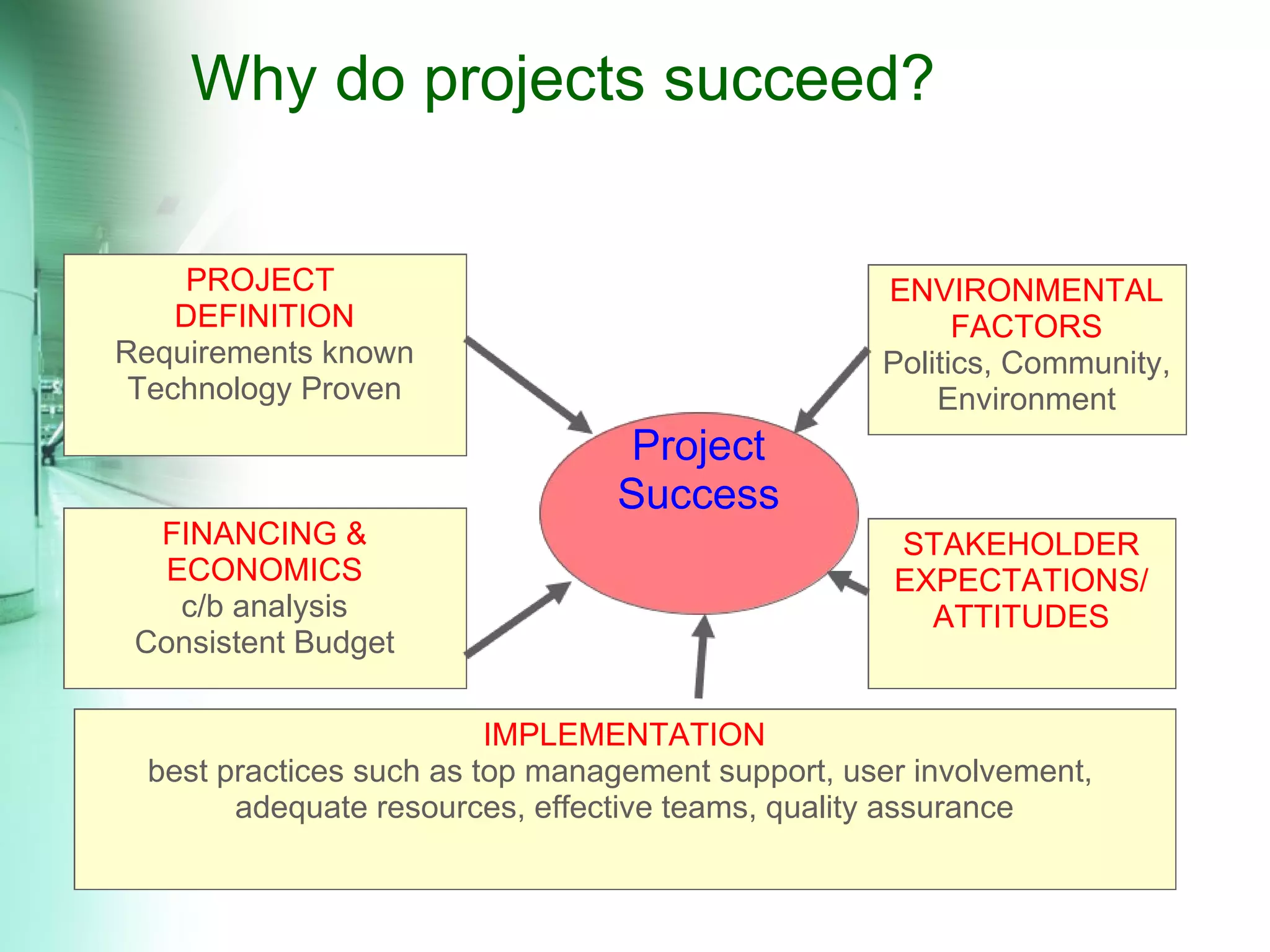
Why do projects succeed? ENVIRONMENTAL FACTORS Politics, Community, Environment FINANCING & ECONOMICS c/b analysis Consistent Budget IMPLEMENTATION best practices such as top management support, user involvement,  adequate resources, effective teams, quality assurance PROJECT  DEFINITION Requirements known Technology Proven STAKEHOLDER EXPECTATIONS/ ATTITUDES Project Success
Why do projects fail? #1 – SCOPE CREEP!!  Insufficient planning No risk or issues management Poor communication Lack of commitment and responsibility by stakeholders
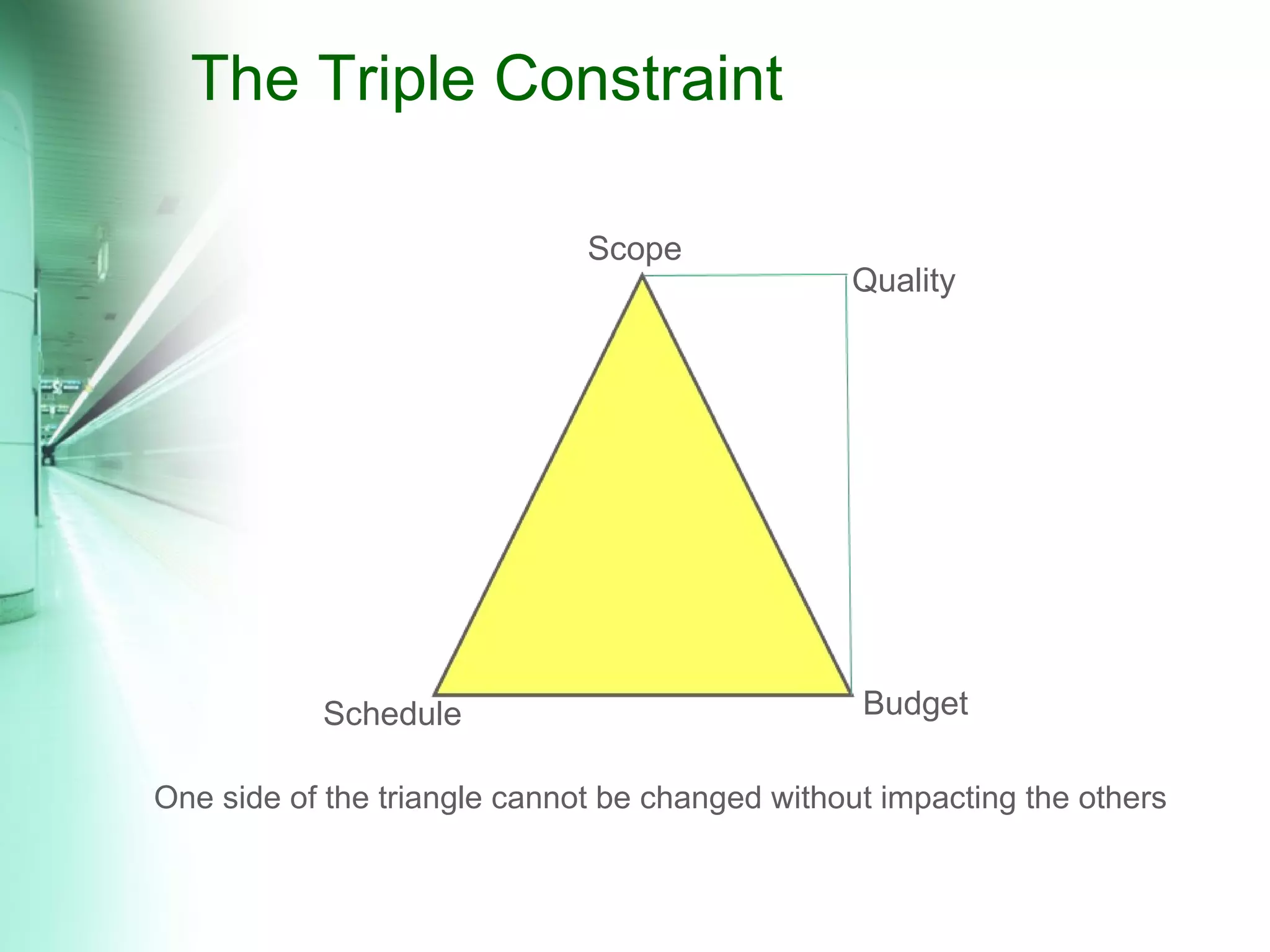
The Triple Constraint Scope Schedule Budget Quality One side of the triangle cannot be changed without impacting the others
Project Phases and Lifecycle A  project life cycle  is a collection of project phases that defines: What work will be performed in each phase. What deliverables will be produced and when. Who is involved in each phase.  How management will control and approve work produced in each phase. A  deliverable  is a product or service produced or provided as part of a project.
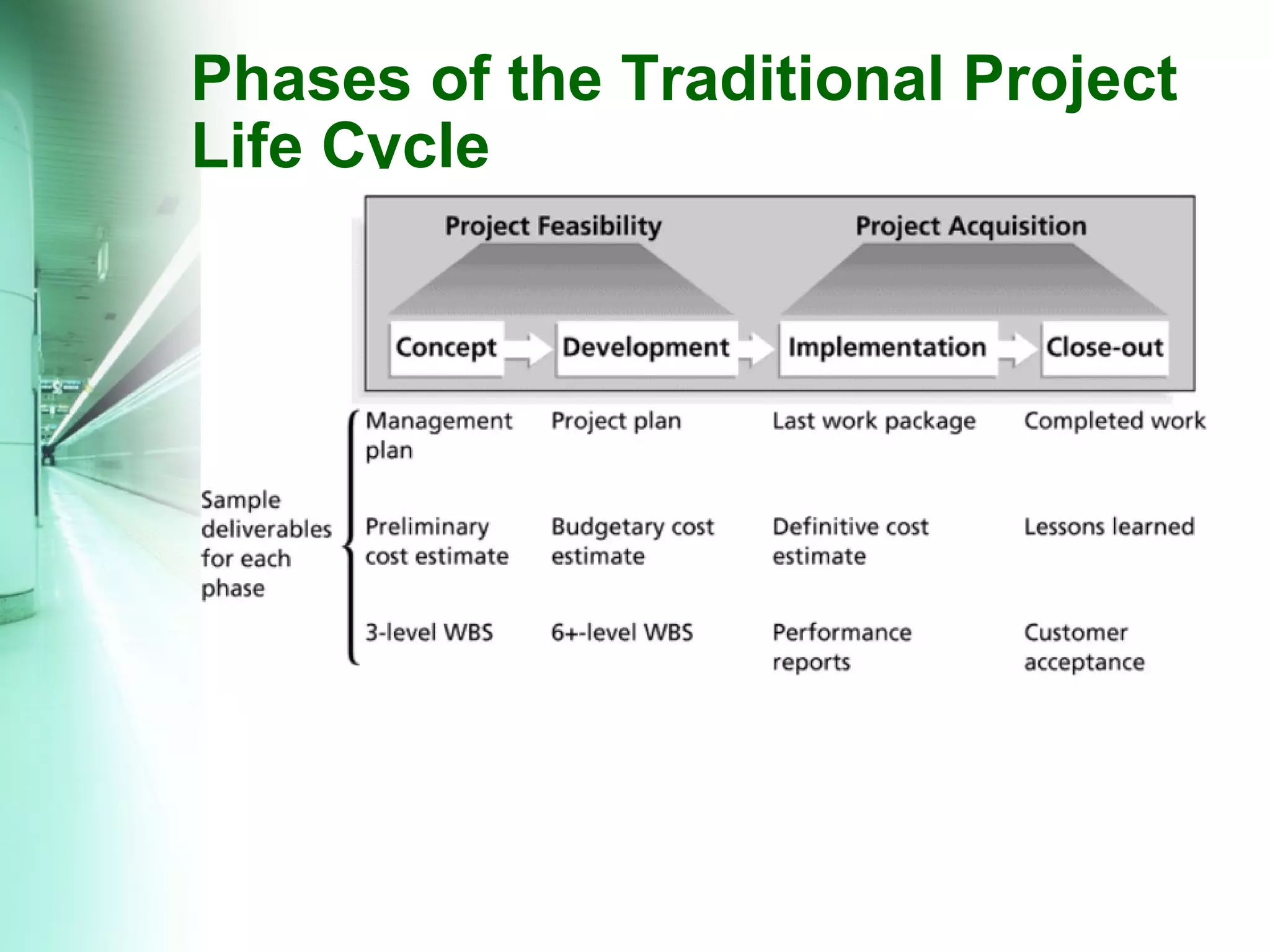
Phases of the Traditional Project Life Cycle
Project Phases and Management Reviews A project should successfully pass through each of the project phases in order to continue on to the next. Management reviews, also called  phase exits  or  kill points , should occur after each phase to evaluate the project’s progress, likely success, and continued compatibility with organizational goals.
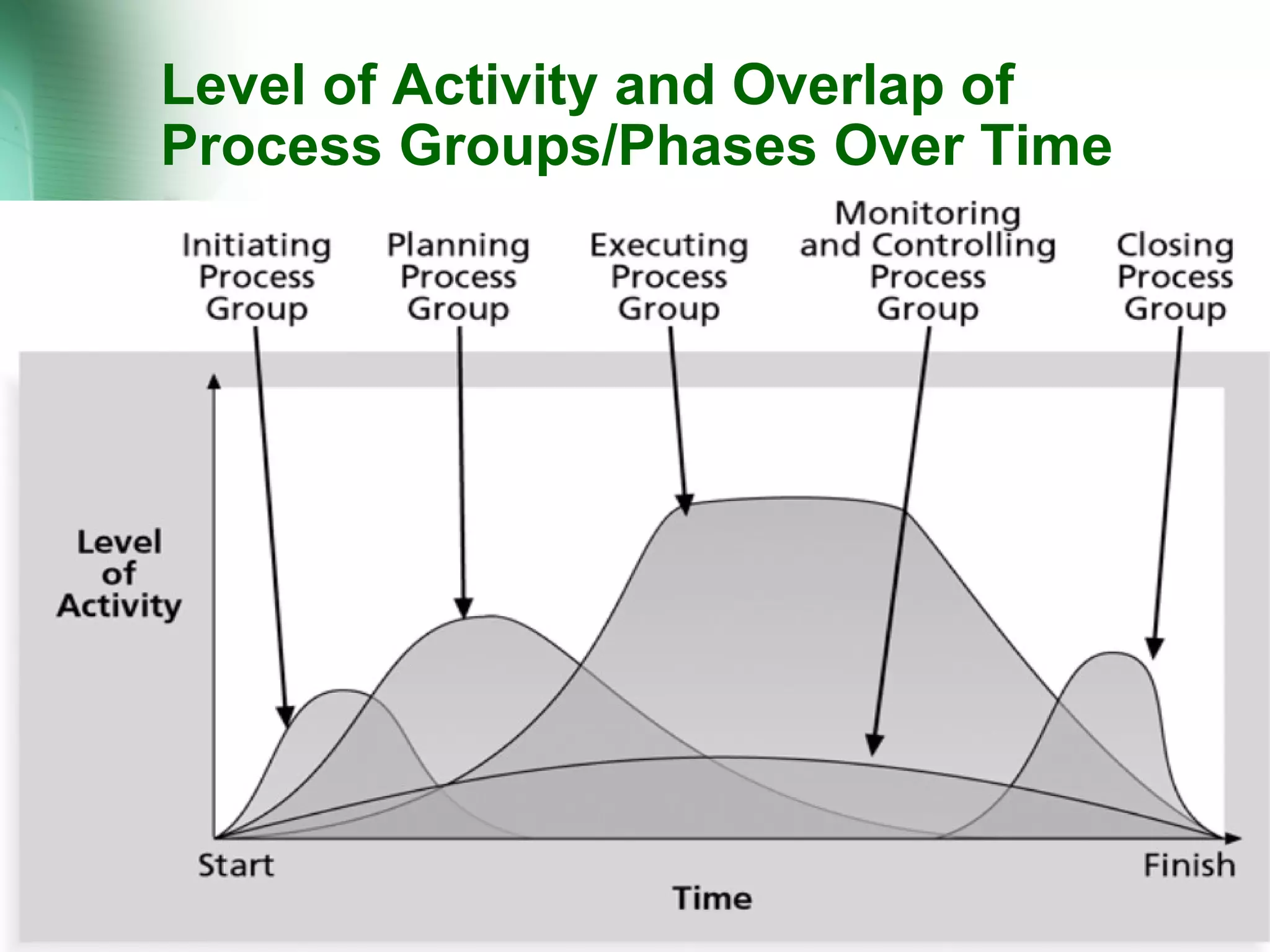
Project Management Processes A  process  is a series of actions directed toward a particular result. Project management can be viewed as a number of interlinked processes. The project management process groups/phases include: Initiating Planning Executing Monitoring and controlling Closing
Project Initiation/Concept Business case Charter Every organization has its own variations of what documents are required to initiate a project. It’s important to identify the project need, stakeholders, and main goals.
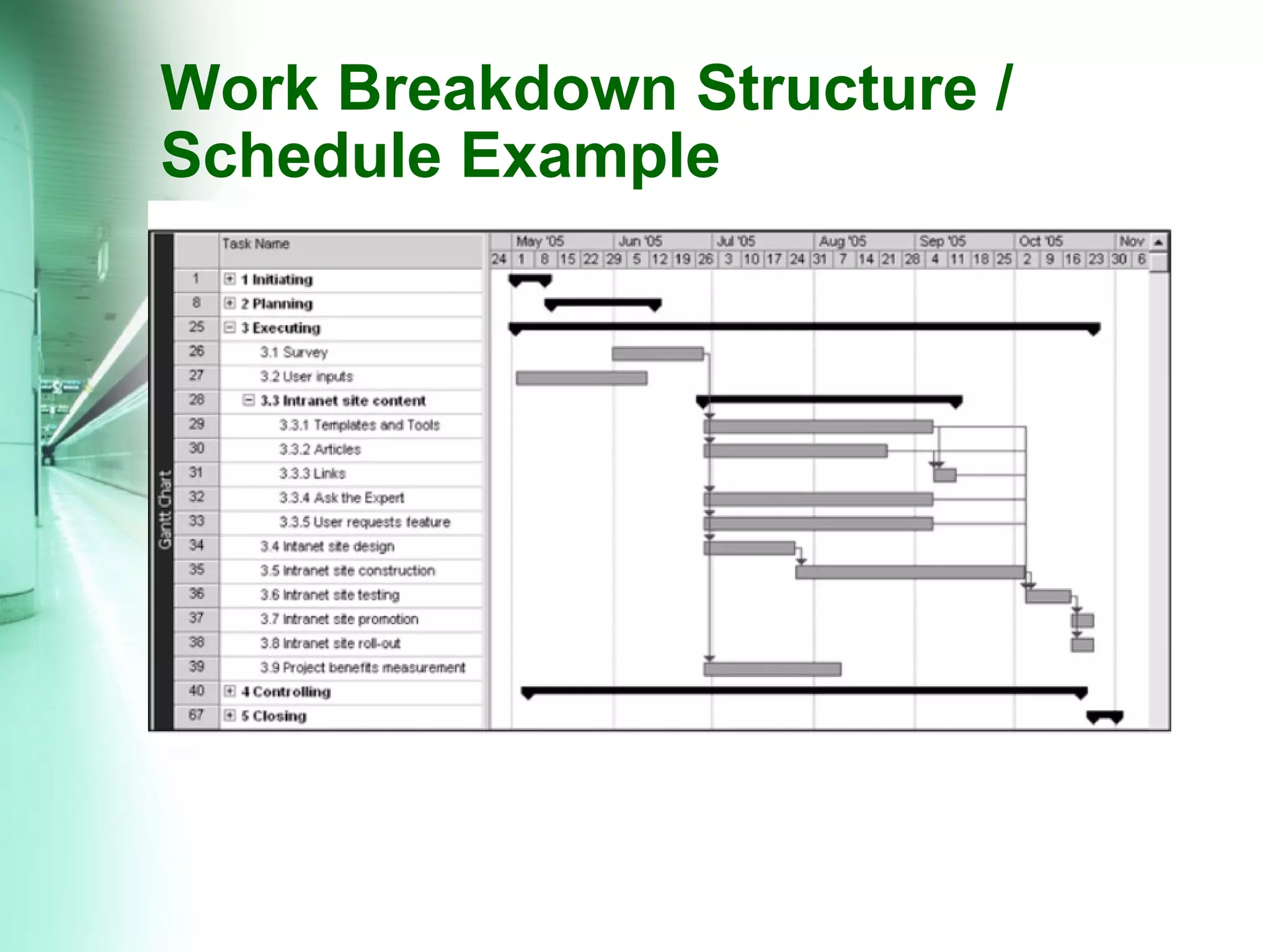
Planning The main purpose of project planning is to  guide execution . Every knowledge area includes planning information Key outputs include: A team contract. A scope statement. A work breakdown structure (WBS). A project schedule, in the form of a Gantt chart with all dependencies and resources entered. A list of prioritized risks (part of a risk register).
Work Breakdown Structure / Schedule Example
Executing Project execution usually takes the most time and resources.  Project managers must use their leadership skills to handle the many challenges that occur during project execution. Many project sponsors and customers focus on deliverables related to providing the products, services, or results desired from the project. A milestone report can keep the focus on completing major milestones.
Monitoring and Controlling Involves measuring progress toward project objectives, monitoring deviation from the plan, and taking corrective action to match progress with the plan. Affects all other process groups and occurs during all phases of the project life cycle. Outputs include performance reports, requested changes, and updates to various plans.
Closing Involves gaining stakeholder and customer acceptance of the final products and services.  Even if projects are not completed, they should be formally closed in order to reflect on what can be learned to improve future projects. Outputs include project archives and lessons learned, which are part of organizational process assets. Most projects also include a final report and presentation to the sponsor or senior management.
Level of Activity and Overlap of Process Groups/Phases Over Time
For More Information Project Management Institute www.pmi.org International Standards Organization www.iso.org GANTTHEAD.com www.gantthead.com
Questions     Do you use software to track projects? If so, which one?      How often do you hold full staff meetings to review all projects?      How do you track 'stakeholders' attached to the project?      How do project team members update the project or project manager?    How does the project manager celebrate the completion of a project? How is resource usage across projects communicated to decision makers?      How are project statistics communicated to stakeholders, project team members, and other interested parties?     What strategies have they found successful in engaging stakeholders in the process?
 

It Project Management

  • 1.
    Information Technology ProjectManagement TJ Rains, PMP Associate CIO, Enterprise Systems Emporia State University [email_address]
  • 2.
    Agenda Introduction AssociateCIO, Enterprise Systems ERP Project Manager Project Management Professional (PMP) Certified What is a project? Why do projects succeed? Why do projects fail? Project Management Lifecycle (In a nutshell) Q/A
  • 3.
    What is aproject? A temporary endeavor undertaken to create a unique product or service. Features Definable purpose with established goals Cost, time and performance requirements Multiple resources across organizational lines Element of risk Temporary activity Managed phases/ project life cycle
  • 4.
    Why do projectssucceed? ENVIRONMENTAL FACTORS Politics, Community, Environment FINANCING & ECONOMICS c/b analysis Consistent Budget IMPLEMENTATION best practices such as top management support, user involvement, adequate resources, effective teams, quality assurance PROJECT DEFINITION Requirements known Technology Proven STAKEHOLDER EXPECTATIONS/ ATTITUDES Project Success
  • 5.
    Why do projectsfail? #1 – SCOPE CREEP!! Insufficient planning No risk or issues management Poor communication Lack of commitment and responsibility by stakeholders
  • 6.
    The Triple ConstraintScope Schedule Budget Quality One side of the triangle cannot be changed without impacting the others
  • 7.
    Project Phases andLifecycle A project life cycle is a collection of project phases that defines: What work will be performed in each phase. What deliverables will be produced and when. Who is involved in each phase. How management will control and approve work produced in each phase. A deliverable is a product or service produced or provided as part of a project.
  • 8.
    Phases of theTraditional Project Life Cycle
  • 9.
    Project Phases andManagement Reviews A project should successfully pass through each of the project phases in order to continue on to the next. Management reviews, also called phase exits or kill points , should occur after each phase to evaluate the project’s progress, likely success, and continued compatibility with organizational goals.
  • 10.
    Project Management ProcessesA process is a series of actions directed toward a particular result. Project management can be viewed as a number of interlinked processes. The project management process groups/phases include: Initiating Planning Executing Monitoring and controlling Closing
  • 11.
    Project Initiation/Concept Businesscase Charter Every organization has its own variations of what documents are required to initiate a project. It’s important to identify the project need, stakeholders, and main goals.
  • 12.
    Planning The mainpurpose of project planning is to guide execution . Every knowledge area includes planning information Key outputs include: A team contract. A scope statement. A work breakdown structure (WBS). A project schedule, in the form of a Gantt chart with all dependencies and resources entered. A list of prioritized risks (part of a risk register).
  • 13.
    Work Breakdown Structure/ Schedule Example
  • 14.
    Executing Project executionusually takes the most time and resources. Project managers must use their leadership skills to handle the many challenges that occur during project execution. Many project sponsors and customers focus on deliverables related to providing the products, services, or results desired from the project. A milestone report can keep the focus on completing major milestones.
  • 15.
    Monitoring and ControllingInvolves measuring progress toward project objectives, monitoring deviation from the plan, and taking corrective action to match progress with the plan. Affects all other process groups and occurs during all phases of the project life cycle. Outputs include performance reports, requested changes, and updates to various plans.
  • 16.
    Closing Involves gainingstakeholder and customer acceptance of the final products and services. Even if projects are not completed, they should be formally closed in order to reflect on what can be learned to improve future projects. Outputs include project archives and lessons learned, which are part of organizational process assets. Most projects also include a final report and presentation to the sponsor or senior management.
  • 17.
    Level of Activityand Overlap of Process Groups/Phases Over Time
  • 18.
    For More InformationProject Management Institute www.pmi.org International Standards Organization www.iso.org GANTTHEAD.com www.gantthead.com
  • 19.
    Questions   Do you use software to track projects? If so, which one?     How often do you hold full staff meetings to review all projects?     How do you track 'stakeholders' attached to the project?     How do project team members update the project or project manager?   How does the project manager celebrate the completion of a project? How is resource usage across projects communicated to decision makers?     How are project statistics communicated to stakeholders, project team members, and other interested parties?    What strategies have they found successful in engaging stakeholders in the process?
  • 20.