ORGANIZATIONAL
CHANGE
-Ayush Agarwal
-PM/2015/402 .
 Introduction
 Types of change
 Forces of change
 Resistance to change
 Managing Organizational change
 Lewin’s change model
 Kotter’s eight step model
 Prosci’s ADKAR model
 Conclusion
Contents
 Organizational Change refers to a modification or
transformation of the organization’s structure, processes
or goods.
 It can be defined as change that has an impact on the
way work is performed and has significant effects on
staff.
Introduction
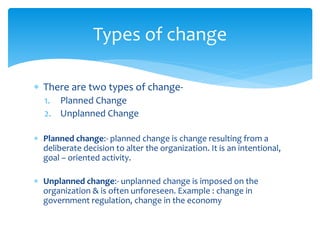
 There are two types of change-
1. Planned Change
2. Unplanned Change
 Planned change:- planned change is change resulting from a
deliberate decision to alter the organization. It is an intentional,
goal – oriented activity.
 Unplanned change:- unplanned change is imposed on the
organization & is often unforeseen. Example : change in
government regulation, change in the economy
Types of change
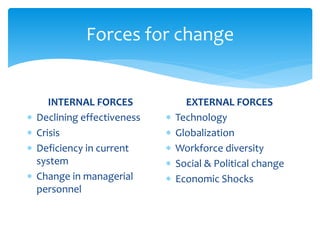
Forces for change
INTERNAL FORCES
 Declining effectiveness
 Crisis
 Deficiency in current
system
 Change in managerial
personnel
EXTERNAL FORCES
 Technology
 Globalization
 Workforce diversity
 Social & Political change
 Economic Shocks
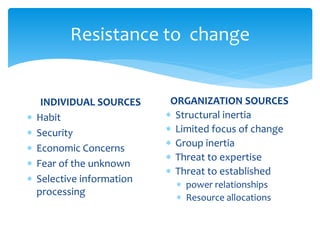
Resistance to change
INDIVIDUAL SOURCES
 Habit
 Security
 Economic Concerns
 Fear of the unknown
 Selective information
processing
ORGANIZATION SOURCES
 Structural inertia
 Limited focus of change
 Group inertia
 Threat to expertise
 Threat to established
 power relationships
 Resource allocations
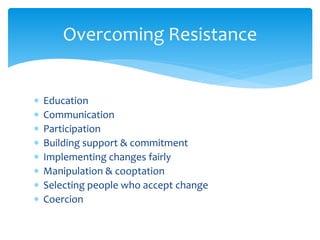
 Education
 Communication
 Participation
 Building support & commitment
 Implementing changes fairly
 Manipulation & cooptation
 Selecting people who accept change
 Coercion
Overcoming Resistance
 There are three approaches in managing
organizational change-
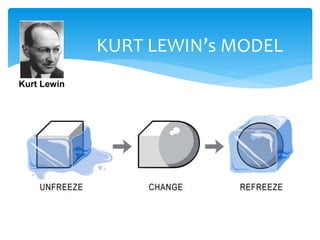
1. Lewin’s three step change model
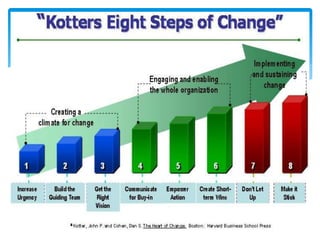
2. Kotter’s eight step plan for implementation
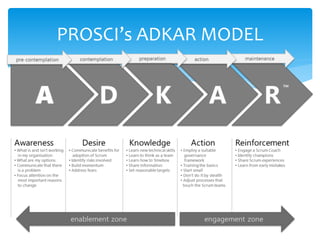
3. Prosci’s ADKAR model
Organizational Change Management
KURT LEWIN’s MODEL
Kurt Lewin
KOTTER’s CHANGE MODEL
PROSCI’s ADKAR MODEL
 Organizational changes are either planned or
unplanned and driven by internal or external forces.
 Although there is possibility that too many changes
may disrupt the stability of organization but change is
important at different intervals of time to move along
with the changing world.
Conclusion
Organizational Change

Organizational Change

  • 1.
  • 2.
     Introduction  Typesof change  Forces of change  Resistance to change  Managing Organizational change  Lewin’s change model  Kotter’s eight step model  Prosci’s ADKAR model  Conclusion Contents
  • 3.
     Organizational Changerefers to a modification or transformation of the organization’s structure, processes or goods.  It can be defined as change that has an impact on the way work is performed and has significant effects on staff. Introduction
  • 4.
     There aretwo types of change- 1. Planned Change 2. Unplanned Change  Planned change:- planned change is change resulting from a deliberate decision to alter the organization. It is an intentional, goal – oriented activity.  Unplanned change:- unplanned change is imposed on the organization & is often unforeseen. Example : change in government regulation, change in the economy Types of change
  • 5.
    Forces for change INTERNALFORCES  Declining effectiveness  Crisis  Deficiency in current system  Change in managerial personnel EXTERNAL FORCES  Technology  Globalization  Workforce diversity  Social & Political change  Economic Shocks
  • 6.
    Resistance to change INDIVIDUALSOURCES  Habit  Security  Economic Concerns  Fear of the unknown  Selective information processing ORGANIZATION SOURCES  Structural inertia  Limited focus of change  Group inertia  Threat to expertise  Threat to established  power relationships  Resource allocations
  • 7.
     Education  Communication Participation  Building support & commitment  Implementing changes fairly  Manipulation & cooptation  Selecting people who accept change  Coercion Overcoming Resistance
  • 8.
     There arethree approaches in managing organizational change- 1. Lewin’s three step change model 2. Kotter’s eight step plan for implementation 3. Prosci’s ADKAR model Organizational Change Management
  • 9.
  • 10.
  • 11.
  • 12.
     Organizational changesare either planned or unplanned and driven by internal or external forces.  Although there is possibility that too many changes may disrupt the stability of organization but change is important at different intervals of time to move along with the changing world. Conclusion