Chapter 4 Notes
 
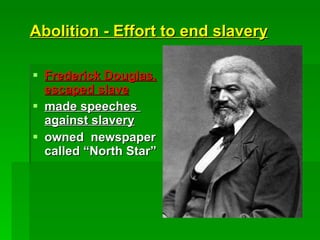
Frederick Douglas, escaped slave made speeches  against slavery owned  newspaper called “North Star” Abolition - Effort to end slavery
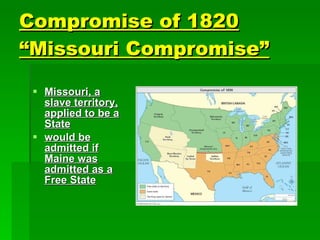
Compromise of 1820 “Missouri Compromise”   Missouri, a slave territory, applied to be a State would be admitted if Maine was admitted as a Free State
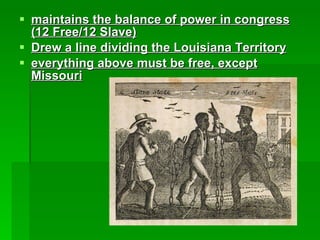
maintains the balance of power in congress (12 Free/12 Slave) Drew a line dividing the Louisiana Territory everything above must be free, except Missouri
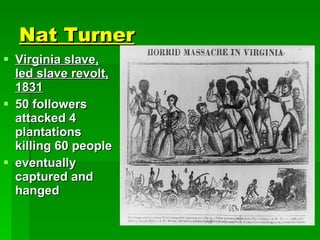
Nat Turner Virginia slave, led slave revolt, 1831   50 followers attacked 4 plantations killing 60 people eventually captured and hanged
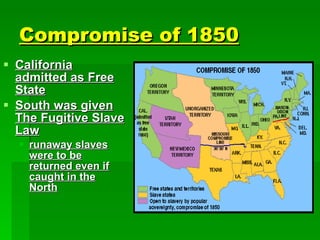
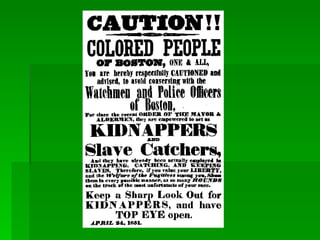
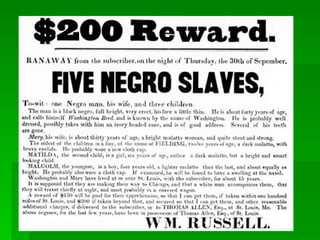
Compromise of 1850 California admitted as Free State South was given The Fugitive Slave Law runaway slaves were to be returned even if caught in the North
 
 
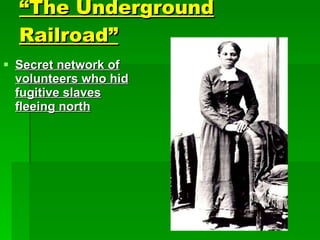
“ The Underground Railroad”   Secret network of volunteers who hid fugitive slaves fleeing north
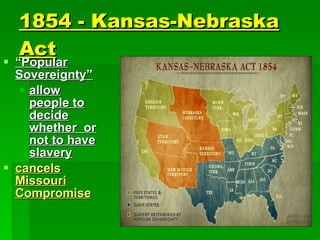
1854 - Kansas-Nebraska Act “ Popular Sovereignty” allow people to decide whether  or not to have slavery cancels Missouri Compromise
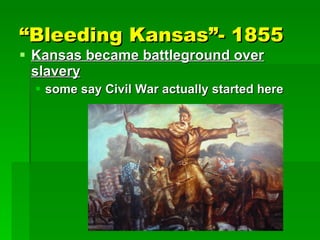
“ Bleeding Kansas”- 1855 Kansas became battleground over slavery some say Civil War actually started here
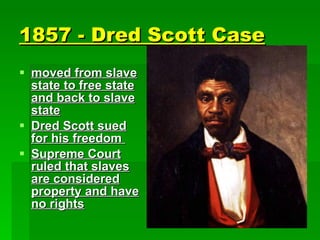
1857 - Dred Scott Case   moved from slave state to free state and back to slave state Dred Scott sued for his freedom  Supreme Court ruled that slaves are considered property and have no rights
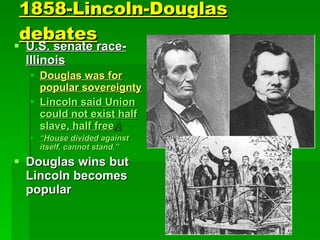
1858-Lincoln-Douglas debates U.S. senate race- Illinois Douglas was for popular sovereignty Lincoln said Union could not exist half slave, half free A   “ House divided  against itself, cannot stand.” Douglas wins but Lincoln becomes popular
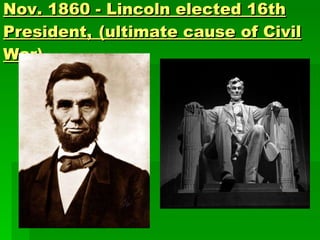
Nov. 1860 - Lincoln elected 16th   President,   (ultimate cause of Civil War)
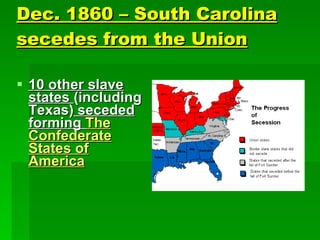
Dec. 1860 – South Carolina secedes from the Union 10 other slave states  (including Texas)  seceded forming  The Confederate States of America
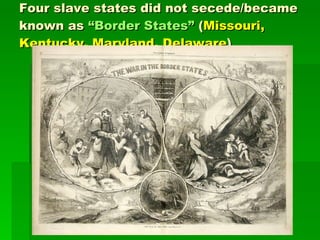
Four slave states did not secede/became known as  “Border States”  ( Missouri, Kentucky, Maryland, Delaware )
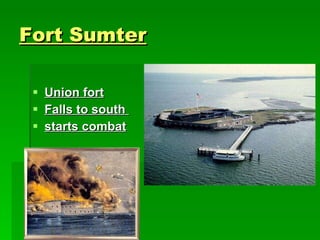
Fort Sumter Union fort Falls to south  starts combat
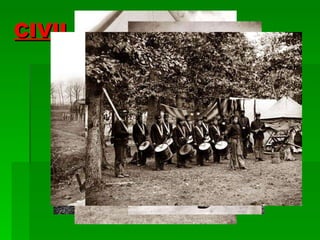
CIVIL WAR 1861-1865
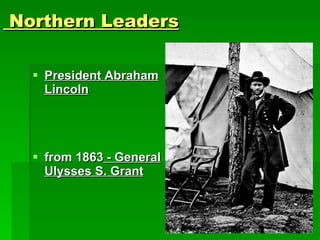
Northern Leaders President Abraham Lincoln from 1863  - General Ulysses S. Grant
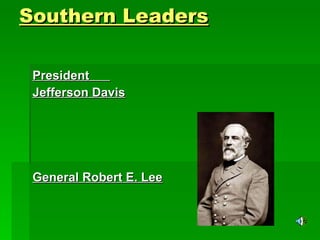
Southern Leaders President  Jefferson Davis General Robert E. Lee
Strategies North blockade southern ports Stop trade with Europe split South in half by capturing Mississippi River capture Richmond, Virginia  South’s capital South  Fight a defensive war attack if possible
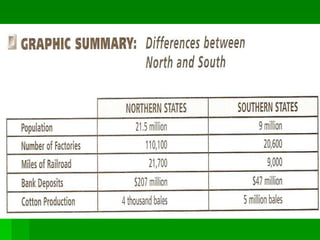
Union ADVANTAGES  DISADVANTAGES Population Larger military More Factories More Rail lines Poor leaders Did not know the land No Cause (save the Union) until 1863 (Free the slaves)
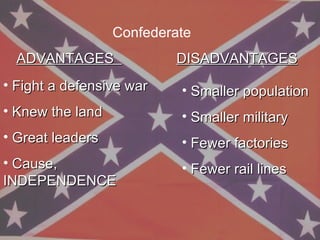
  Confederate  ADVANTAGES  DISADVANTAGES Fight a defensive war Knew the land Great leaders Cause,  INDEPENDENCE Smaller population Smaller military Fewer factories Fewer rail lines
 
Major Battles
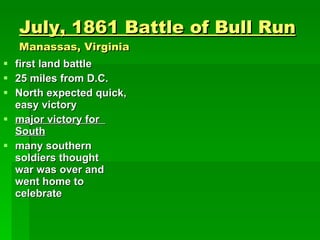
July, 1861 Battle of Bull Run Manassas, Virginia first land battle 25 miles from D.C. North expected quick, easy victory major victory for  South many southern soldiers thought   war was over and  went home to  celebrate
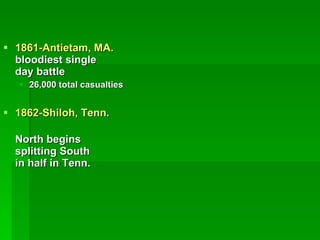
1861-Antietam, MA.  bloodiest single  day battle 26,000 total casualties 1862-Shiloh, Tenn.   North begins  splitting South  in half in Tenn.
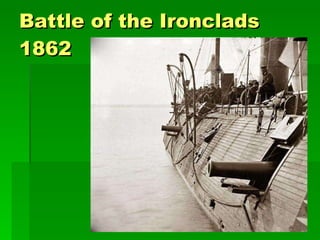
Battle of the Ironclads  1862
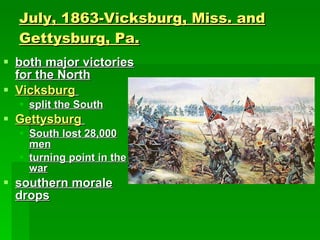
July, 1863-Vicksburg, Miss. and Gettysburg, Pa. both major victories for the North Vicksburg   split the South Gettysburg   South lost 28,000 men turning point in the war southern morale drops
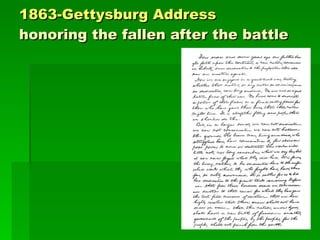
1863-Gettysburg Address honoring the fallen after the battle
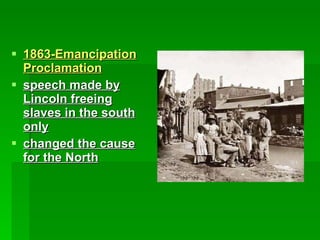
1863-Emancipation Proclamation speech made by Lincoln freeing slaves in the south only changed the cause for the North
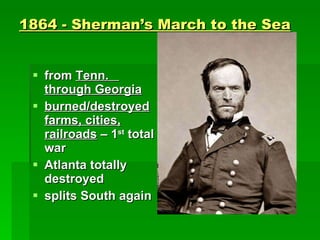
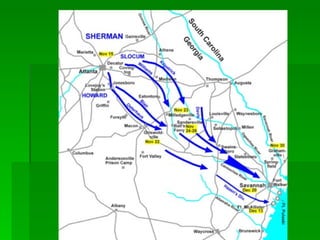
1864 - Sherman’s March to the Sea from  Tenn.  through Georgia burned/destroyed farms, cities, railroads  – 1 st  total war Atlanta totally destroyed splits South again
 
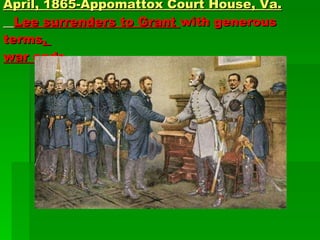
April, 1865-Appomattox Court House, Va.   Lee surrenders to Grant  with generous terms ,  war ends
THE RECONSTRUCTION ERA (1865-1877)
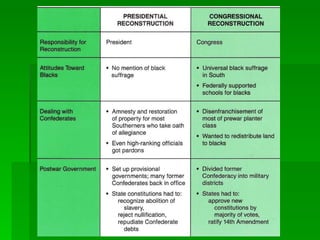
Two Different Plans Lincoln’s Plan  reunite the nation very lenient Radical Republicans make the South “pay” for starting the war military occupation of the South  Black suffrage Voting rights
 
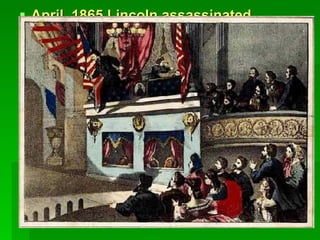
April, 1865 Lincoln assassinated  By John Wilkes Booth at Ford’s Theatre Radical Reconstruction wins control
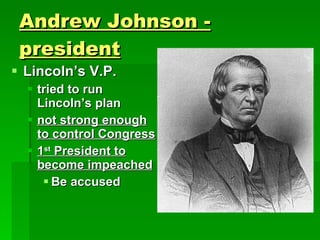
Andrew Johnson - president Lincoln’s V.P.  tried to run Lincoln’s plan  not strong enough to control Congress 1 st  President to become impeached Be accused
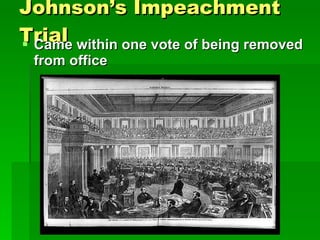
Johnson’s Impeachment Trial Came within one vote of being removed from office
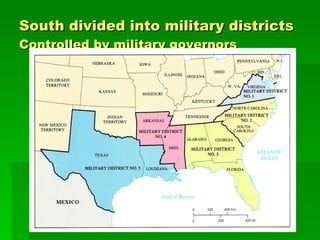
South divided into military districts   Controlled by military governors
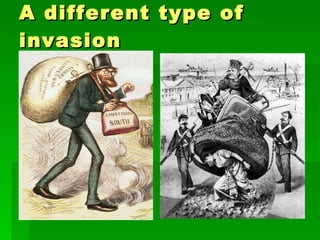
A different type of invasion
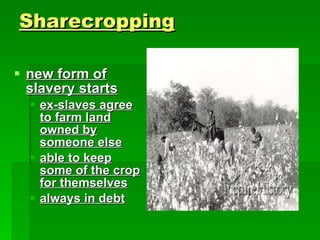
Sharecropping new form of slavery starts ex-slaves agree to farm land owned by someone else able to keep some of the crop for themselves always in debt
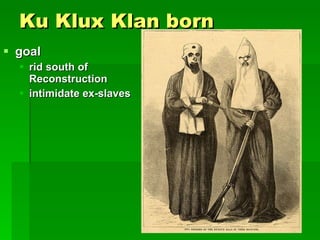
Ku Klux Klan born goal  rid south of Reconstruction intimidate ex-slaves
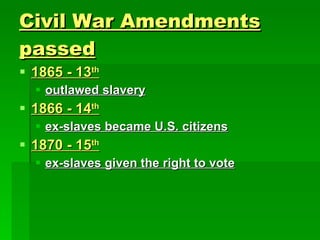
Civil War Amendments passed 1865 - 13 th outlawed slavery 1866 - 14 th ex-slaves became U.S. citizens 1870 - 15 th ex-slaves given the right to vote
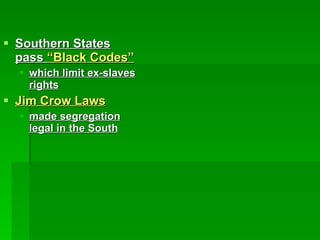
Southern States pass  “Black Codes” which limit ex-slaves rights Jim Crow Laws made segregation legal in the South

Ch.4 powerpoint

  • 1.
  • 2.
  • 3.
    Frederick Douglas, escapedslave made speeches against slavery owned newspaper called “North Star” Abolition - Effort to end slavery
  • 4.
    Compromise of 1820“Missouri Compromise” Missouri, a slave territory, applied to be a State would be admitted if Maine was admitted as a Free State
  • 5.
    maintains the balanceof power in congress (12 Free/12 Slave) Drew a line dividing the Louisiana Territory everything above must be free, except Missouri
  • 6.
    Nat Turner Virginiaslave, led slave revolt, 1831 50 followers attacked 4 plantations killing 60 people eventually captured and hanged
  • 7.
    Compromise of 1850California admitted as Free State South was given The Fugitive Slave Law runaway slaves were to be returned even if caught in the North
  • 8.
  • 9.
  • 10.
    “ The UndergroundRailroad” Secret network of volunteers who hid fugitive slaves fleeing north
  • 11.
    1854 - Kansas-NebraskaAct “ Popular Sovereignty” allow people to decide whether or not to have slavery cancels Missouri Compromise
  • 12.
    “ Bleeding Kansas”-1855 Kansas became battleground over slavery some say Civil War actually started here
  • 13.
    1857 - DredScott Case moved from slave state to free state and back to slave state Dred Scott sued for his freedom Supreme Court ruled that slaves are considered property and have no rights
  • 14.
    1858-Lincoln-Douglas debates U.S.senate race- Illinois Douglas was for popular sovereignty Lincoln said Union could not exist half slave, half free A “ House divided against itself, cannot stand.” Douglas wins but Lincoln becomes popular
  • 15.
    Nov. 1860 -Lincoln elected 16th President, (ultimate cause of Civil War)
  • 16.
    Dec. 1860 –South Carolina secedes from the Union 10 other slave states (including Texas) seceded forming The Confederate States of America
  • 17.
    Four slave statesdid not secede/became known as “Border States” ( Missouri, Kentucky, Maryland, Delaware )
  • 18.
    Fort Sumter Unionfort Falls to south starts combat
  • 19.
  • 20.
    Northern Leaders PresidentAbraham Lincoln from 1863 - General Ulysses S. Grant
  • 21.
    Southern Leaders President Jefferson Davis General Robert E. Lee
  • 22.
    Strategies North blockadesouthern ports Stop trade with Europe split South in half by capturing Mississippi River capture Richmond, Virginia South’s capital South Fight a defensive war attack if possible
  • 23.
    Union ADVANTAGES DISADVANTAGES Population Larger military More Factories More Rail lines Poor leaders Did not know the land No Cause (save the Union) until 1863 (Free the slaves)
  • 24.
    Confederate ADVANTAGES DISADVANTAGES Fight a defensive war Knew the land Great leaders Cause, INDEPENDENCE Smaller population Smaller military Fewer factories Fewer rail lines
  • 25.
  • 26.
  • 27.
    July, 1861 Battleof Bull Run Manassas, Virginia first land battle 25 miles from D.C. North expected quick, easy victory major victory for South many southern soldiers thought war was over and went home to celebrate
  • 28.
    1861-Antietam, MA. bloodiest single day battle 26,000 total casualties 1862-Shiloh, Tenn. North begins splitting South in half in Tenn.
  • 29.
    Battle of theIronclads 1862
  • 30.
    July, 1863-Vicksburg, Miss.and Gettysburg, Pa. both major victories for the North Vicksburg split the South Gettysburg South lost 28,000 men turning point in the war southern morale drops
  • 31.
    1863-Gettysburg Address honoringthe fallen after the battle
  • 32.
    1863-Emancipation Proclamation speechmade by Lincoln freeing slaves in the south only changed the cause for the North
  • 33.
    1864 - Sherman’sMarch to the Sea from Tenn. through Georgia burned/destroyed farms, cities, railroads – 1 st total war Atlanta totally destroyed splits South again
  • 34.
  • 35.
    April, 1865-Appomattox CourtHouse, Va. Lee surrenders to Grant with generous terms , war ends
  • 36.
  • 37.
    Two Different PlansLincoln’s Plan reunite the nation very lenient Radical Republicans make the South “pay” for starting the war military occupation of the South Black suffrage Voting rights
  • 38.
  • 39.
    April, 1865 Lincolnassassinated By John Wilkes Booth at Ford’s Theatre Radical Reconstruction wins control
  • 40.
    Andrew Johnson -president Lincoln’s V.P. tried to run Lincoln’s plan not strong enough to control Congress 1 st President to become impeached Be accused
  • 41.
    Johnson’s Impeachment TrialCame within one vote of being removed from office
  • 42.
    South divided intomilitary districts Controlled by military governors
  • 43.
    A different typeof invasion
  • 44.
    Sharecropping new formof slavery starts ex-slaves agree to farm land owned by someone else able to keep some of the crop for themselves always in debt
  • 45.
    Ku Klux Klanborn goal rid south of Reconstruction intimidate ex-slaves
  • 46.
    Civil War Amendmentspassed 1865 - 13 th outlawed slavery 1866 - 14 th ex-slaves became U.S. citizens 1870 - 15 th ex-slaves given the right to vote
  • 47.
    Southern States pass “Black Codes” which limit ex-slaves rights Jim Crow Laws made segregation legal in the South