THE PROGRESSIVE ERA Chapter 9 AMERICA SEEKS REFORMS IN THE EARLY 20TH CENTURY
LOBBYING   -  INFLUENCING DECISIONS MADE BY GOVERNMENT FOR THE BENEFIT OF ITS CITIZENS USUALLY ON BEHALF OF A SPECIAL INTEREST ANTI-TRUST   -  OPPOSING OR INTENDED TO RESTRAIN TRUSTS, MONOPOLIES, OR OTHER LARGE COMBINATIONS OF BUSINESS AND CAPITAL TO MAINTAIN AND PROMOTE COMPETITION . Academic Vocabulary Petition  -  A formal written document requesting a right or benefit from a person or group in authority.
Section 1 The Origins of Progressivism
Warm up – top of pg. 9 R What does progressive mean? Why were people pushing so hard for these progressive reforms?
Melton Money – define lobbying, petition, and anti-trust – show me the correct definitions Wednesday
 
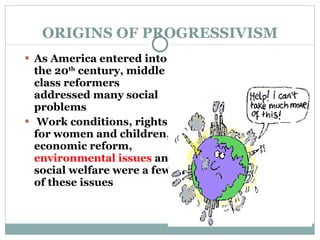
ORIGINS OF PROGRESSIVISM As America entered into the 20 th  century, middle class reformers addressed many social problems  Work conditions, rights for women and children, economic reform,  environmental issues  and social welfare were a few of these issues
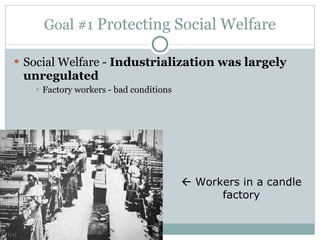
Goal #1  Protecting Social Welfare Social Welfare -  Industrialization was largely unregulated Factory workers - bad conditions    Workers in a candle factory
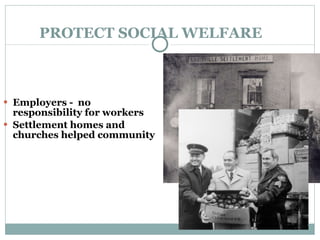
PROTECT SOCIAL WELFARE Employers -  no responsibility for workers Settlement homes and churches helped community
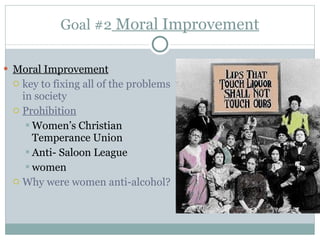
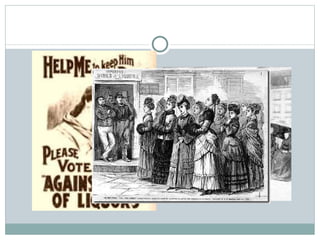
Goal #2  Moral Improvement Moral Improvement key to fixing all of the problems in society Prohibition Women’s Christian Temperance Union Anti- Saloon League women Why were women anti-alcohol?
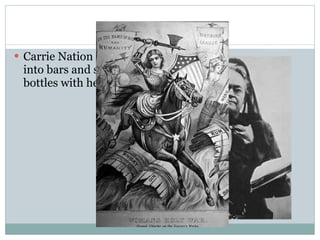
Carrie Nation – walked into bars and smashed bottles with her ax
 
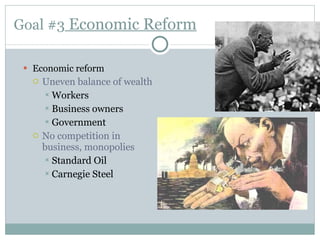
Goal #3  Economic Reform Economic reform Uneven balance of wealth Workers Business owners Government No competition in business, monopolies Standard Oil Carnegie Steel
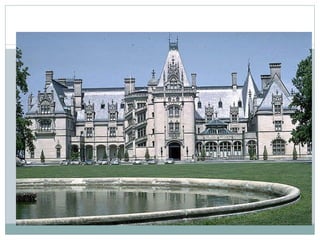
The Biltmore Mansion- Asheville NC Home of the Vanderbilt’s
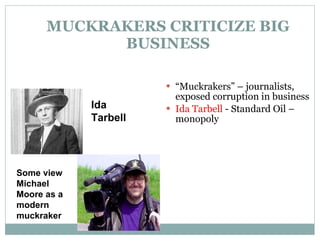
MUCKRAKERS CRITICIZE BIG BUSINESS “ Muckrakers” – journalists, exposed corruption in business Ida Tarbell  - Standard Oil –monopoly Ida Tarbell   Some view Michael Moore as a modern muckraker
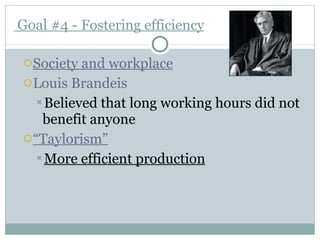
  Goal #4 -  Fostering efficiency Society and workplace Louis Brandeis Believed that long working hours did not benefit anyone “ Taylorism” More efficient production
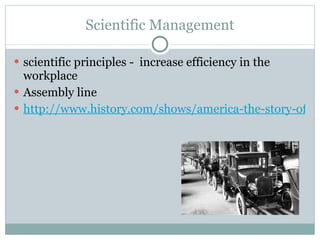
Scientific Management scientific principles -  increase efficiency in the workplace Assembly line http://www.history.com/shows/america-the-story-of-us/videos/playlists/exclusive-video#henry-ford-and-the-model-t
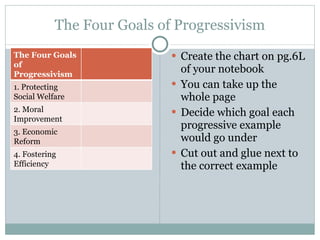
The Four Goals of Progressivism Create the chart on pg.6L of your notebook You can take up the whole page Decide which goal each progressive example would go under Cut out and glue next to the correct example The Four Goals of Progressivism 1. Protecting Social Welfare 2. Moral Improvement 3. Economic Reform 4. Fostering Efficiency
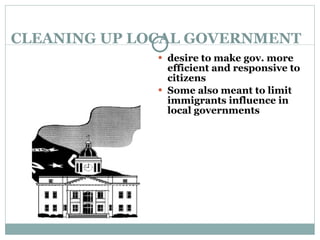
CLEANING UP LOCAL GOVERNMENT desire to make gov. more efficient and responsive to citizens Some also meant to limit immigrants influence in local governments
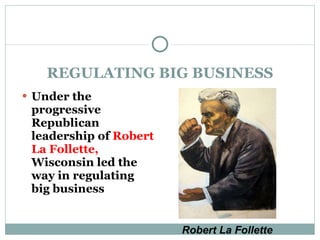
REGULATING BIG BUSINESS Under the progressive Republican leadership of  Robert La Follette,  Wisconsin led the way in regulating big business Robert La Follette
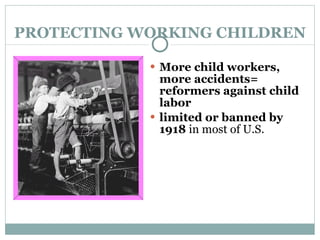
PROTECTING WORKING CHILDREN More child workers, more accidents= reformers against child labor limited or banned by 1918  in most of U.S.
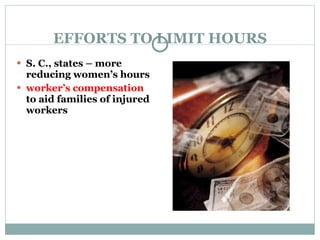
EFFORTS TO LIMIT HOURS S. C., states – more reducing women’s hours worker’s compensation  to aid families of injured workers
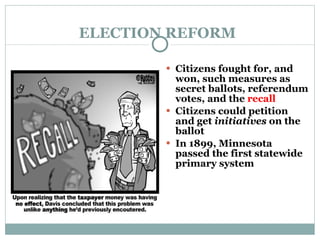
ELECTION REFORM Citizens fought for, and won, such measures as secret ballots, referendum votes, and the  recall Citizens could petition and get  initiatives   on   the ballot In 1899, Minnesota passed the first statewide primary system
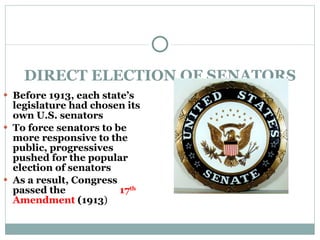
DIRECT ELECTION OF SENATORS Before 1913, each state’s legislature had chosen its own U.S. senators To force senators to be more responsive to the public, progressives pushed for the popular election of senators As a result, Congress passed the  17 th  Amendment  (1913 )
Section 2 Women in Public Life
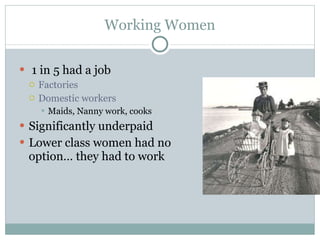
Working Women 1 in 5 had a job Factories Domestic workers Maids, Nanny work, cooks Significantly underpaid Lower class women had no option… they had to work
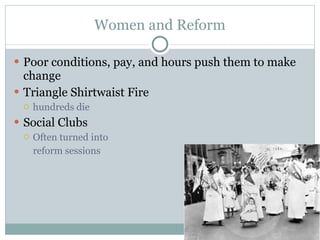
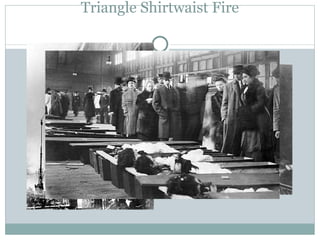
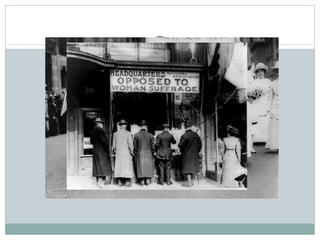
Women and Reform Poor conditions, pay, and hours push them to make change Triangle Shirtwaist Fire hundreds die Social Clubs Often turned into reform sessions
Triangle Shirtwaist Fire
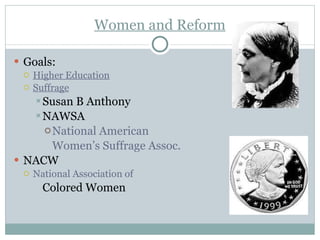
Women and Reform Goals: Higher Education Suffrage Susan B Anthony NAWSA National American Women’s Suffrage Assoc.  NACW National Association of  Colored Women
 
Section 3 Teddy Roosevelt’s Square Deal
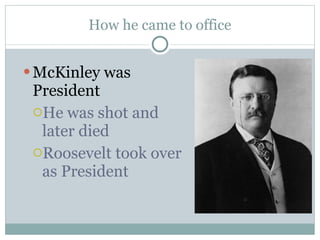
How he came to office McKinley was President He was shot and later died Roosevelt took over as President
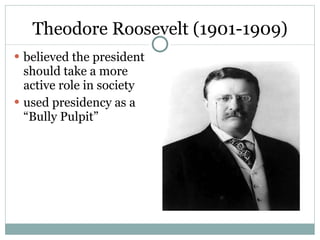
Theodore Roosevelt (1901-1909) believed the president should take a more active role in society used presidency as a “Bully Pulpit”
Teddy’s Goals Progressive Reforms – Square Deal Big Business- Trust busting Rail Road Regulation Health Environment
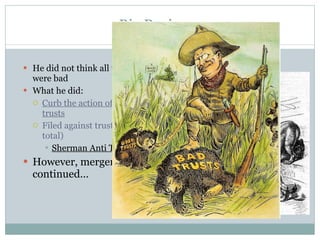
Big Business He did not think all trusts were bad What he did: Curb the action of existing trusts Filed against trusts (44 total) Sherman Anti Trust Act However, mergers continued…
Rail Road Regulation He wanted federal regulation of the RR Passed many acts to build on the Interstate Commerce Commission Elkins Act Hepburn Act This gave the government more power to intervene.
 
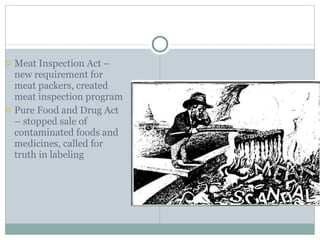
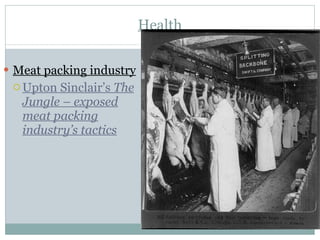
Health Meat packing industry Upton Sinclair’s  The Jungle – exposed meat packing industry’s tactics
Meat Inspection Act – new requirement for meat packers, created meat inspection program Pure Food and Drug Act – stopped sale of contaminated foods and medicines, called for truth in labeling
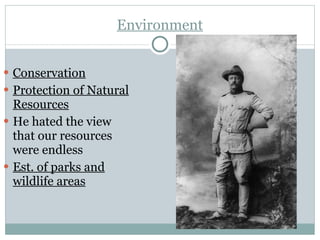
Environment Conservation Protection of Natural Resources He hated the view that our resources were endless Est. of parks and wildlife areas
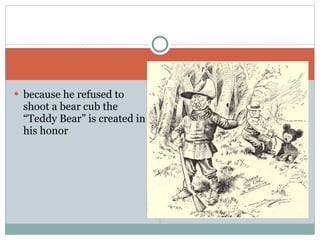
because he refused to shoot a bear cub the “Teddy Bear” is created in his honor
Roosevelt and Civil Rights This was not a big issue of concern for him He did a few things for PR purposes Booker T Washington for dinner This is the time of segregation NAACP is founded
Section 4 Progressivism Under Taft
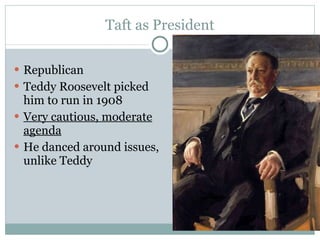
Taft as President Republican Teddy Roosevelt picked him to run in 1908 Very cautious, moderate agenda He danced around issues, unlike Teddy
The Republican Party Splits The Old guys - Conservatives The New progressives Same party- different ideas This causes the split People are mad Living is costing too much Conservation issues
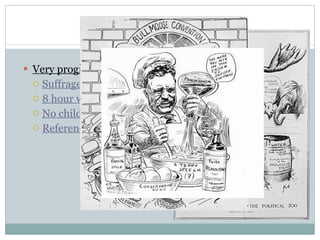
Bull Moose Forms Very progressive Suffrage 8 hour work day No child labor Referendum and recall
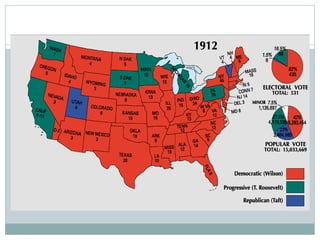
Election of 1912 Democrats Woodrow Wilson Progressives Teddy Roosevelt Republicans William H. Taft Socialists  Eugene V Debbs
 
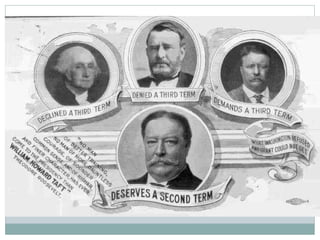
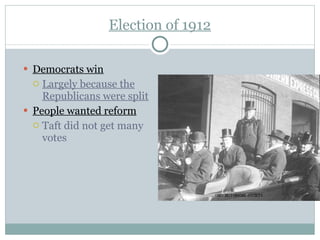
Election of 1912 Democrats win Largely because the Republicans were split People wanted reform Taft did not get many votes
Section 5 Wilson’s New Freedom
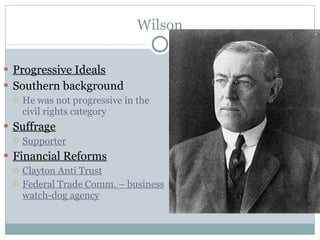
Wilson Progressive Ideals Southern background He was not progressive in the civil rights category Suffrage Supporter Financial Reforms Clayton Anti Trust Federal Trade Comm. – business watch-dog agency
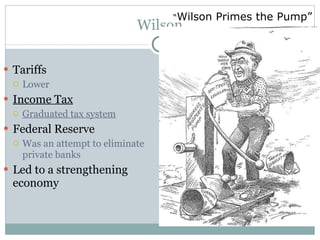
Wilson Tariffs Lower Income Tax Graduated tax system Federal Reserve Was an attempt to eliminate private banks Led to a strengthening economy “ Wilson Primes the Pump”
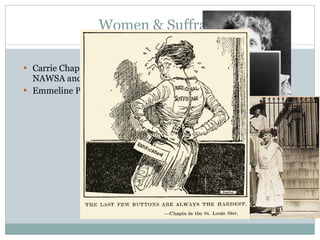
Women & Suffrage Carrie Chapman Catt –led NAWSA and national effort Emmeline Pankhurst
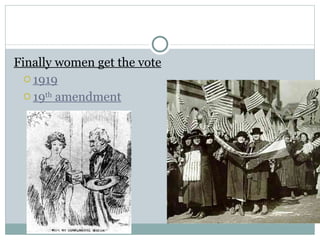
Finally women get the vote 1919 19 th  amendment

Chapter 9 us

  • 1.
    THE PROGRESSIVE ERAChapter 9 AMERICA SEEKS REFORMS IN THE EARLY 20TH CENTURY
  • 2.
    LOBBYING - INFLUENCING DECISIONS MADE BY GOVERNMENT FOR THE BENEFIT OF ITS CITIZENS USUALLY ON BEHALF OF A SPECIAL INTEREST ANTI-TRUST - OPPOSING OR INTENDED TO RESTRAIN TRUSTS, MONOPOLIES, OR OTHER LARGE COMBINATIONS OF BUSINESS AND CAPITAL TO MAINTAIN AND PROMOTE COMPETITION . Academic Vocabulary Petition - A formal written document requesting a right or benefit from a person or group in authority.
  • 3.
    Section 1 TheOrigins of Progressivism
  • 4.
    Warm up –top of pg. 9 R What does progressive mean? Why were people pushing so hard for these progressive reforms?
  • 5.
    Melton Money –define lobbying, petition, and anti-trust – show me the correct definitions Wednesday
  • 6.
  • 7.
    ORIGINS OF PROGRESSIVISMAs America entered into the 20 th century, middle class reformers addressed many social problems Work conditions, rights for women and children, economic reform, environmental issues and social welfare were a few of these issues
  • 8.
    Goal #1 Protecting Social Welfare Social Welfare - Industrialization was largely unregulated Factory workers - bad conditions  Workers in a candle factory
  • 9.
    PROTECT SOCIAL WELFAREEmployers - no responsibility for workers Settlement homes and churches helped community
  • 10.
    Goal #2 Moral Improvement Moral Improvement key to fixing all of the problems in society Prohibition Women’s Christian Temperance Union Anti- Saloon League women Why were women anti-alcohol?
  • 11.
    Carrie Nation –walked into bars and smashed bottles with her ax
  • 12.
  • 13.
    Goal #3 Economic Reform Economic reform Uneven balance of wealth Workers Business owners Government No competition in business, monopolies Standard Oil Carnegie Steel
  • 14.
    The Biltmore Mansion-Asheville NC Home of the Vanderbilt’s
  • 15.
    MUCKRAKERS CRITICIZE BIGBUSINESS “ Muckrakers” – journalists, exposed corruption in business Ida Tarbell - Standard Oil –monopoly Ida Tarbell Some view Michael Moore as a modern muckraker
  • 16.
    Goal#4 - Fostering efficiency Society and workplace Louis Brandeis Believed that long working hours did not benefit anyone “ Taylorism” More efficient production
  • 17.
    Scientific Management scientificprinciples - increase efficiency in the workplace Assembly line http://www.history.com/shows/america-the-story-of-us/videos/playlists/exclusive-video#henry-ford-and-the-model-t
  • 18.
    The Four Goalsof Progressivism Create the chart on pg.6L of your notebook You can take up the whole page Decide which goal each progressive example would go under Cut out and glue next to the correct example The Four Goals of Progressivism 1. Protecting Social Welfare 2. Moral Improvement 3. Economic Reform 4. Fostering Efficiency
  • 19.
    CLEANING UP LOCALGOVERNMENT desire to make gov. more efficient and responsive to citizens Some also meant to limit immigrants influence in local governments
  • 20.
    REGULATING BIG BUSINESSUnder the progressive Republican leadership of Robert La Follette, Wisconsin led the way in regulating big business Robert La Follette
  • 21.
    PROTECTING WORKING CHILDRENMore child workers, more accidents= reformers against child labor limited or banned by 1918 in most of U.S.
  • 22.
    EFFORTS TO LIMITHOURS S. C., states – more reducing women’s hours worker’s compensation to aid families of injured workers
  • 23.
    ELECTION REFORM Citizensfought for, and won, such measures as secret ballots, referendum votes, and the recall Citizens could petition and get initiatives on the ballot In 1899, Minnesota passed the first statewide primary system
  • 24.
    DIRECT ELECTION OFSENATORS Before 1913, each state’s legislature had chosen its own U.S. senators To force senators to be more responsive to the public, progressives pushed for the popular election of senators As a result, Congress passed the 17 th Amendment (1913 )
  • 25.
    Section 2 Womenin Public Life
  • 26.
    Working Women 1in 5 had a job Factories Domestic workers Maids, Nanny work, cooks Significantly underpaid Lower class women had no option… they had to work
  • 27.
    Women and ReformPoor conditions, pay, and hours push them to make change Triangle Shirtwaist Fire hundreds die Social Clubs Often turned into reform sessions
  • 28.
  • 29.
    Women and ReformGoals: Higher Education Suffrage Susan B Anthony NAWSA National American Women’s Suffrage Assoc. NACW National Association of Colored Women
  • 30.

  • 31.
    Section 3 TeddyRoosevelt’s Square Deal
  • 32.
    How he cameto office McKinley was President He was shot and later died Roosevelt took over as President
  • 33.
    Theodore Roosevelt (1901-1909)believed the president should take a more active role in society used presidency as a “Bully Pulpit”
  • 34.
    Teddy’s Goals ProgressiveReforms – Square Deal Big Business- Trust busting Rail Road Regulation Health Environment
  • 35.
    Big Business Hedid not think all trusts were bad What he did: Curb the action of existing trusts Filed against trusts (44 total) Sherman Anti Trust Act However, mergers continued…
  • 36.
    Rail Road RegulationHe wanted federal regulation of the RR Passed many acts to build on the Interstate Commerce Commission Elkins Act Hepburn Act This gave the government more power to intervene.
  • 37.
  • 38.
    Health Meat packingindustry Upton Sinclair’s The Jungle – exposed meat packing industry’s tactics
  • 39.
    Meat Inspection Act– new requirement for meat packers, created meat inspection program Pure Food and Drug Act – stopped sale of contaminated foods and medicines, called for truth in labeling
  • 40.
    Environment Conservation Protectionof Natural Resources He hated the view that our resources were endless Est. of parks and wildlife areas
  • 41.
    because he refusedto shoot a bear cub the “Teddy Bear” is created in his honor
  • 42.
    Roosevelt and CivilRights This was not a big issue of concern for him He did a few things for PR purposes Booker T Washington for dinner This is the time of segregation NAACP is founded
  • 43.
  • 44.
    Taft as PresidentRepublican Teddy Roosevelt picked him to run in 1908 Very cautious, moderate agenda He danced around issues, unlike Teddy
  • 45.
    The Republican PartySplits The Old guys - Conservatives The New progressives Same party- different ideas This causes the split People are mad Living is costing too much Conservation issues
  • 46.
    Bull Moose FormsVery progressive Suffrage 8 hour work day No child labor Referendum and recall
  • 47.
    Election of 1912Democrats Woodrow Wilson Progressives Teddy Roosevelt Republicans William H. Taft Socialists Eugene V Debbs
  • 48.
  • 49.
    Election of 1912Democrats win Largely because the Republicans were split People wanted reform Taft did not get many votes
  • 50.
  • 51.
    Wilson Progressive IdealsSouthern background He was not progressive in the civil rights category Suffrage Supporter Financial Reforms Clayton Anti Trust Federal Trade Comm. – business watch-dog agency
  • 52.
    Wilson Tariffs LowerIncome Tax Graduated tax system Federal Reserve Was an attempt to eliminate private banks Led to a strengthening economy “ Wilson Primes the Pump”
  • 53.
    Women & SuffrageCarrie Chapman Catt –led NAWSA and national effort Emmeline Pankhurst
  • 54.
    Finally women getthe vote 1919 19 th amendment